
Tootjad
Hind
Tüübi järgi
Firmad
logo

The University of Chicago Press Defense of Judgment

GTIN: 9780226770154

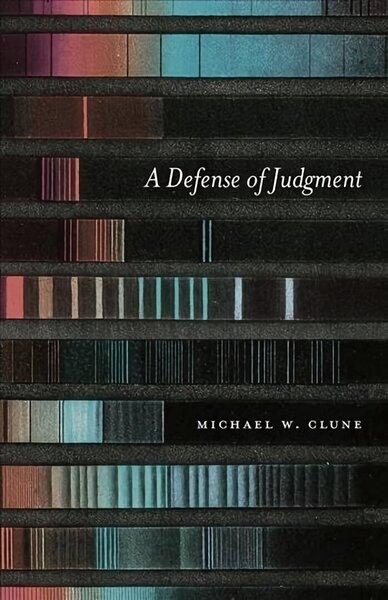
"If professors of literature have an expertise, it is in making judgments about value. They select works that deserve their students' attention because they are powerful, beautiful, surprising, strange, insightful. The intellectual coherence and social role of literary studies depend on the ability of literature professors to make such claims. Yet literary studies has largely disavowed judgments of artistic value on the grounds that they are inevitably grounded in prejudice or entangled in problems of social status. Michael W. Clune's provocative book challenges these objections to judgment and offers a positive account of literary studies as an institution of aesthetic education. Literature professors' most basic challenge to aesthetic judgment is that it violates their commitment to equality. Clune argues that rejecting judgment on these grounds ratifies the market's monopoly on value and disables aesthetic education's political potential. Clune envisions a progressive politics freed from the strictures of dogmatic equality and enlivened by education in aesthetic judgment. Moving from theory to practice, he takes up works by Emily Dickinson, John Keats, Gwendolyn Brooks, Samuel Beckett, and Thomas Bernhard, showing how close reading-the profession's traditional key skill-harnesses judgment to open new modes of perception"-- Teachers of literature make judgments about value. They tell their students which works are powerful, beautiful, surprising, strange, or insightful—and thus, which are more worthy of time and attention than others. Yet the field of literary studies has largely disavowed judgments of artistic value on the grounds that they are inevitably rooted in prejudice or entangled in problems of social status. For several decades now, professors have called their work value-neutral, simply a means for students to gain cultural, political, or historical knowledge. ?Michael W. Clune’s provocative book challenges these objections to judgment and offers a positive account of literary studies as an institution of aesthetic education. It is impossible, Clune argues, to separate judgments about literary value from the practices of interpretation and analysis that constitute any viable model of literary expertise. Clune envisions a progressive politics freed from the strictures of dogmatic equality and enlivened by education in aesthetic judgment, transcending consumer culture and market preferences. Drawing on psychological and philosophical theories of knowledge and perception, Clune advocates for the cultivation of what John Keats called “negative capability,” the capacity to place existing criteria in doubt and to discover new concepts and new values in artworks. Moving from theory to practice, Clune takes up works by Keats, Emily Dickinson, Gwendolyn Brooks, Samuel Beckett, and Thomas Bernhard, showing how close reading—the profession’s traditional key skill—harnesses judgment to open new modes of perception. Autorid: Michael W. Clune

Pakkumised

Näidatud hind kehtib Kaup24 PLUS liikmetele.
E-pood ja salong
33,43 €
Tasuta transport
E-pood ja salong
Tellimisel (tarne 10-14 tp)
35,40 €

Toote tehnilised andmed

Min. hind33.43
Max. hind35.40
Toode lisatud2026-01-13

Kommentaarid

Ole esimene, kes toodet kommenteerib