
Tootjad
Hind
Tüübi järgi
Firmad
logo

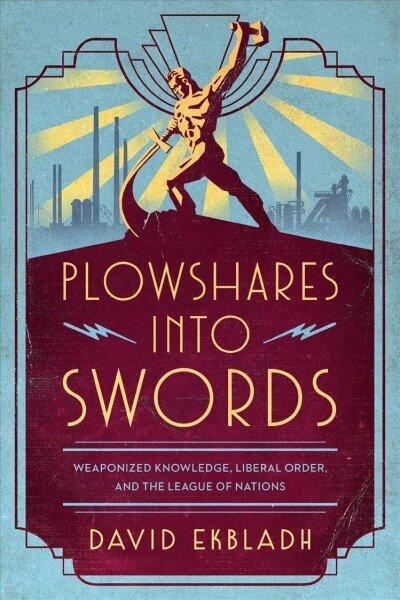
The University of Chicago Press Plowshares into Swords: Weaponized Knowledge, Liberal Order, and the League of Nations

GTIN: 9780226820491
"David Ekbladh focuses on the economic analyses pioneered by the League of Nations in Geneva and how, after the League's demise, they came to be developed at the Institute for Advanced Study in Princeton. In an era when information did not flow as freelyas today, who specifically abetted this move and why? This transplantation came amid a growing consciousness about the global economy and its centrality to worldwide political stability. Information and analysis were becoming crucial currencies in the creation and sustenance of a modern, liberal global order, requiring the cooperation of people across an interconnected international society that the United States sought increasingly to shape"-- An in-depth look at how the ideas formulated by the interwar League of Nations shaped American thinking on the modern global order. In Plowshares into Swords, David Ekbladh recaptures the power of knowledge and information developed between World War I and World War II by an international society of institutions and individuals committed to liberal international order and given focus by the League of Nations in Geneva. That information and analysis revolutionized critical debates in a world in crisis. In doing so, Ekbladh transforms conventional understandings of the United States’ postwar hegemony, showing that important elements of it were profoundly influenced by ideas that emerged from international exchanges. The League’s work was one part of a larger transnational movement that included the United States and which saw the emergence of concepts like national income, gross domestic product, and other attempts to define and improve the standards of living, as well as new approaches to old questions about the role of government. Forged as tools for peace these ideas were beaten into weapons as World War II threatened. Ekbladh recounts how, though the US had never been a member of the organization, vital parts of the League were rescued after the fall of France in 1940 and given asylum at the Institute for Advanced Study in Princeton. However, this presence in the US is just one reason its already well-regarded economic analyses and example were readily mobilized by influential American and international figures for an Allied “war of ideas,” plans for a postwar world, and even blueprints for the new United Nations. How did this body of information become so valuable? As Ekbladh makes clear, the answer is that information and analysis themselves became crucial currencies in global affairs: to sustain a modern, liberal global order, a steady stream of information about economics, politics, and society was, and remains, indispensable. Autorid: David Ekbladh

Pakkumised

E-pood ja salong
46,00 €
Tasuta transport
E-pood ja salong
Tellimisel (tarne 10-14 tp)
46,00 €

Toote tehnilised andmed

Min. hind 46.00
Max. hind 46.00
Toode lisatud 2026-01-13

Kommentaarid

Ole esimene, kes toodet kommenteerib