

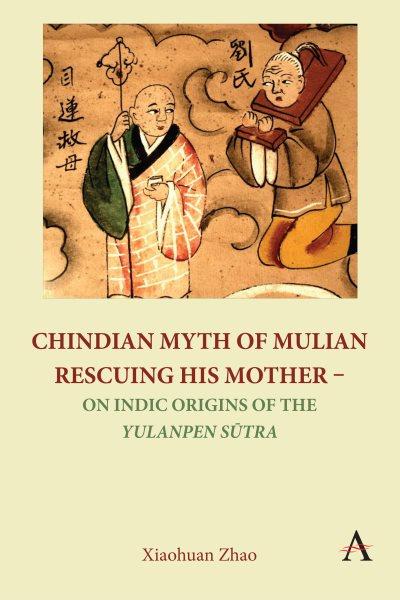
Anthem Press Chindian Myth of Mulian Rescuing His Mother On Indic Origins of the Yulanpen Stra: Debate and Discussion
GTIN: 9781839986963
The scriptural source for the Ghost Festival in East Asia is the Yulanpen Sutra, which, however, is overwhelmingly considered apocryphal in modern scholarship. This book challenges this widely held belief by demonstrating that the sutra is a Chinese creative translation rather than an indigenous Chinese composition. This book addresses the thorny issue regarding the authenticity of the Yulanpen Sutra with a view to clearing up the centuries-long confusion and controversy surrounding its translation and transmission in China. The main objective of this study is thus to check and confirm the authenticity of the Yulanpen Sutra, which features Mulian adventuring into the Preta realm to rescue his mother. Traditionally attributed to the Indo-Scythian Dharmarak a (Ch. Zhu Fahu, ca. 266308) as the translator, the sutra is now widely believed to have been created by Chinese Buddhists to foster sinicisation and transformation of Indian Buddhism on the grounds that there is no extant Yulanpen Sutra in Indic sources and that the sutra stresses Confucian filial piety and ancestor worship, amongst others. Through a critical review of the major arguments prevailing in modern scholarship against its authenticity and a close examination of textual and contextual evidence concerning the Yulanpen Sutra, this book demonstrates that filial piety and ancestor worship are also deeply rooted in ancient Indian culture and that the Mulian myth reflects the recurring motif of rescuing the hungry ghost of a sinful mother in Indian mythology and religious literature. In so doing, this book sheds new light on the Indic origins of the Yulanpen Sutra and the Ghost Festival in general and of the Mulian myth and the Mulian drama the oldest Chinese ritual drama that has been alive onstage for nearly one thousand years in particular. This book addresses the thorny issue regarding the authenticity of the Yulanpen Sutra, the scriptural source for the Yulanpen Festival or Hungry Ghost Festival in East Asia. The sutra, which features Mulian (Skr. Maudgalyayana) adventuring into the Preta realm to rescue his mother, is catalogued in the Chinese Buddhist bibliography with the Indo-Scythian Dharmarak a (Ch. Zhu Fahu, ca. 266308) given as the translator. However, in modern Chinese, Japanese, and Western scholarship, the sutra is more often than not regarded as a Chinese Buddhist apocryphal scripture and the Mulian myth as an apocryphal story created by Chinese Buddhists to foster the sinicisation and transformation of Indian Buddhism mainly on the grounds that there is no extant Yulanpen Sutra in Indic sources and that the sutra stresses Confucian filial piety and ancestor worship. This book challenges these widely held beliefs by demonstrating that filial piety and ancestor worship are not peculiar to Confucian China but also inherent in Indic traditions and that the sutra is a Chinese creative translation rather than an indigenous Chinese composition. Autorid: Xiaohuan Zhao
Pakkumised
Tellimisel (tarne 10-14 tp) | 31,34 € | ||
34,79 € | |||
Hinnapakkumised on indikatiivsed. Hinnavaatlus ei vastuta hindade, laoseisude ega tooteinfo õigsuse eest. Lõpliku hinnapakkumise tootele saab toote müüjalt. | |||


Toote tehnilised andmed
| Min. hind | 31.34 |
| Max. hind | 34.79 |
| Toode lisatud | 2026-01-19 |
Ole esimene, kes toodet kommenteerib