

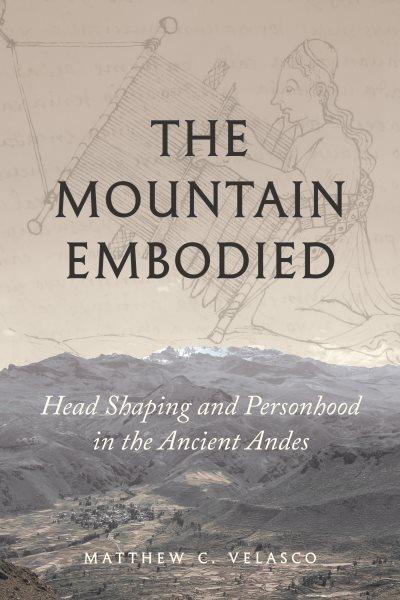
University of Texas Press Mountain Embodied: Head Shaping and Personhood in the Ancient Andes
GTIN: 9781477331514
"The ancient Andean practice of head-shaping--literally binding and reshaping an infant's head--has long served as a convenient marker of ethnic identity. What is less understood is what it meant within the cultures that practiced it. Head shaping was entangled with the politics of gender, kinship, and status at the local level, leading to different life experiences even among those with similar head shape. The approach strikes me as a kind of ancient intersectionalism; the author suggests we can think of head shape as we sometimes do skin color--it creates different conditions for different individuals based on many factors. Velasco is drawing on both ethnohistory and the actual bones to understand how head shaping functioned in the making of personhoodfor the people of Peru's Colca Valley. By situating cranial modification in both a local cultural history and in the individual life histories written in bone, he argues for a more dynamic understanding of what it meant to be modified--one that takes seriously the Indigenous worldviews and practices that animated relations between mountains and the heads shaped to resemble them"-- A study of the ancient practice of Andean head shaping and its cultural connotations. In the late sixteenth century, Spanish conquerors in Perus Colca Valley encountered the Collaguas and Cavanas, Indigenous people who undertook a striking form of body modification: Collaguas bound the heads of infants and children so that their skulls grew narrow and elongated, and Cavanas so that their skulls became wide and squat. Head shaping resulted in craniums that resembled two specific mountains associated with the groups. For Europeans, shaped skulls immediately and durably became a marker of territorialized ethnic difference. The Mountain Embodied offers a more nuanced story. Having studied hundreds of samples of human remains, bioarchaeologist Matthew Velasco argues that reducing head shape to a mere ethnic marker is a colonial invention. Instead, the social significance of head shaping was protean and intersected with other structures of difference, such as gender, kinship, and status, influencing experience within the community. Head shaping, then, was one factor in the construction of a locally embedded kind of subjectivity. An outsider could deduce group identity from head shape, but for practitioners, head shaping reflected something else: nothing less than personhood itself. A study of the ancient practice of Andean head shaping and its cultural connotations. Autorid: Matthew C. Velasco
Pakkumised
Tellimisel (tarne 10-14 tp) | 70,30 € | ||
Hinnapakkumised on indikatiivsed. Hinnavaatlus ei vastuta hindade, laoseisude ega tooteinfo õigsuse eest. Lõpliku hinnapakkumise tootele saab toote müüjalt. | |||

Toote tehnilised andmed
| Min. hind | 70.30 |
| Max. hind | 70.30 |
| Toode lisatud | 2026-01-19 |
Ole esimene, kes toodet kommenteerib