

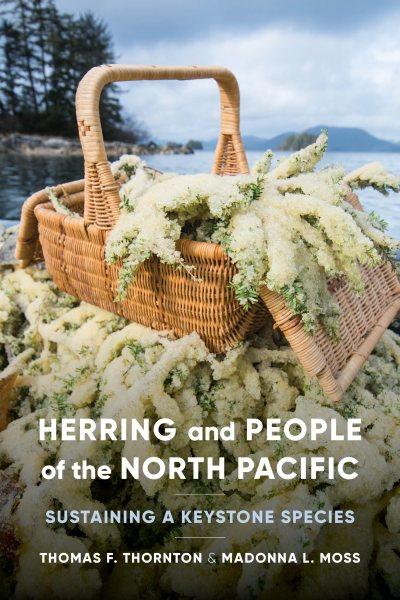
University of Washington Press Herring and People of the North Pacific: Sustaining a Keystone Species
GTIN: 9780295748290
"Herring (Clupea pallasii) is vital to the productivity and health of marine systems, and socio-ecologically is the most important fish species in the northern hemisphere, where it is valued for its oil, bait, eggs, and sac roe. This comprehensive case study traces the development of fisheries in Southeast Alaska from pre-contact indigenous relationships to herring to the post-contact fisheries, with comparative reference to other North Pacific cultures. Its interdisciplinary approach, which combines ethnological, historical, archaeological, and political perspectives, makes Herring and People in the North Pacific unique in literature on indigenous peoples, fisheries management, and marine social-ecological systems.Among the volume's findings are that: *present herring stocks, even in highly productive areas of Southeast Alaska and British Columbia, are being managed in a depleted status, representing a fraction of their historical abundance and distribution; * significant long-term impacts on herring distribution and abundance have been anthropogenic; * human dependence on herring as a food resource evolved through interactions with key spawning areas with abundant substrates for egg deposition (such as macrocystis kelp, rockweed, and eelgrass); and * maintenance of diverse spawning locations in Southeast Alaska is critical to conserving intraspecies biodiversity. Local and traditional knowledge (LTK)-in combination with archeological, historical, and biological data-is shown to play a critical role in developing understanding of marine ecology, valuation of herring in North Pacific social-ecological systems, and restoration of herring stocks toward their former abundance"-- Herring are vital to the productivity and health of marine systems, and socio-ecologically Pacific herring (Clupea pallasii) is one of the most important fish species in the Northern Hemisphere. Human dependence on herring has evolved for millennia through interactions with key spawning areasbut humans have also significantly impacted the species distribution and abundance. Combining ethnological, historical, archaeological, and political perspectives with comparative reference to other North Pacific cultures, Herring and People of the North Pacific traces fishery development in Southeast Alaska from precontact Indigenous relationships with herring to postcontact focus on herring products. Revealing new findings about current herring stocks as well as the fishs significance to the conservation of intraspecies biodiversity, the book explores the role of traditional local knowledge, in combination with archeological, historical, and biological data, in both understanding marine ecology and restoring herring to their former abundance. Autorid: Thomas F. Thornton, Madonna L. Moss
Pakkumised
Tellimisel (tarne 10-14 tp) | 46,13 € | ||
Hinnapakkumised on indikatiivsed. Hinnavaatlus ei vastuta hindade, laoseisude ega tooteinfo õigsuse eest. Lõpliku hinnapakkumise tootele saab toote müüjalt. | |||

Toote tehnilised andmed
| Min. hind | 46.13 |
| Max. hind | 46.13 |
| Toode lisatud | 2026-01-20 |
Ole esimene, kes toodet kommenteerib