

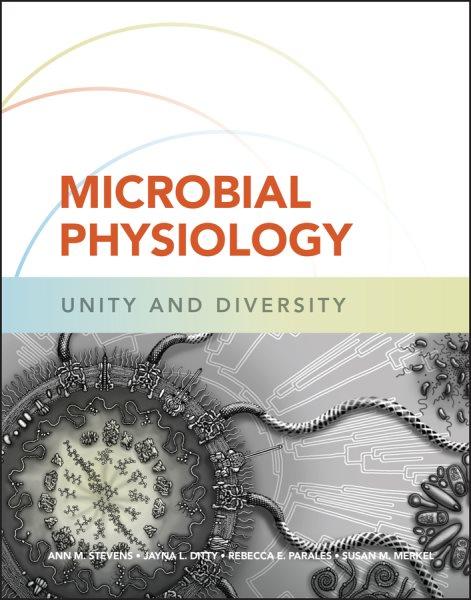
American Society for Microbiology Microbial Physiology: Unity and Diversity
GTIN: 9781683673675
"Unlike cells in higher organisms, whose environment is tightly regulated by the body, microbial cells are directly affected by their immediate environment. They employ unique mechanisms to survive in the face of often drastic changes in nutrient availability, temperature, salinity and other factors that affect their physiological state. Understanding the physiology of a microbial cell therefore requires an understanding of how microbes interact with their environment, including the building of microbialcommunities and the evolution of different cellular states that allow bacteria to survive in even the most hostile environments"-- MICROBIAL PHYSIOLOGY UNITY AND DIVERSITY Explore the fascinating world of microbes in Microbial Physiology: Unity and Diversity. This comprehensive, advanced undergraduate-level textbook takes readers on a captivating journey through the intricate and often underappreciated world of microbial physiology, emphasizing both the common features that unify microbes and the diversity that makes them unique. In Part I: Unity, the book lays a strong foundation in the basics of microbial physiology. Delve into the three domains of life, get an intimate look at the metabolic pathways that fuel the microbial world, and take a deep dive into the cellular components that constitute a microbe. Further, explore the principles of cellular growth, bioenergetics, and the mechanics of respiration and fermentation. The Unity section concludes with a comprehensive discussion of regulation at posttranslational and gene levels, paving the way for a rich understanding of microbial function. Part II: Diversity, takes the reader into the broad and versatile world of microbial metabolism, exploring the range of energy sources and metabolic pathways microbes employ. This section leads readers through topics such as autotrophy, phototrophy, chemotrophy, and microbial contributions to the carbon, sulfur, and nitrogen cycles. The complexity of microbial cell envelope structures, transport processes, and protein transport are explored, along with bacterial motility, chemotaxis, and the phenomenon of quorum sensing. The section concludes with an exploration of stress responses and the diverse lifestyles that bacteria can adopt. Microbial Physiology: Unity and Diversity will engage readers with its accessible yet thorough treatment of this critical field of microbiology. Each chapter contains detailed illustrations that concisely explain complex topics and concludes with robust end-of-chapter questions that not only test understanding but also provide an opportunity for readers to dig deeper into the content. This book is a must-have for students studying microbiology, as well as researchers and professionals keen to brush up their knowledge or explore new facets of microbial physiology. Autorid: Ann M. Stevens, Jayna L. Ditty, Rebecca E. Parales, Susan M. Merkel
Pakkumised
Hinnapakkumised on indikatiivsed. Hinnavaatlus ei vastuta hindade, laoseisude ega tooteinfo õigsuse eest. Lõpliku hinnapakkumise tootele saab toote müüjalt. | |||
Toote tehnilised andmed
| Toode lisatud | 2026-01-20 |
Ole esimene, kes toodet kommenteerib