
Tootjad
Hind
Tüübi järgi
Firmad
logo

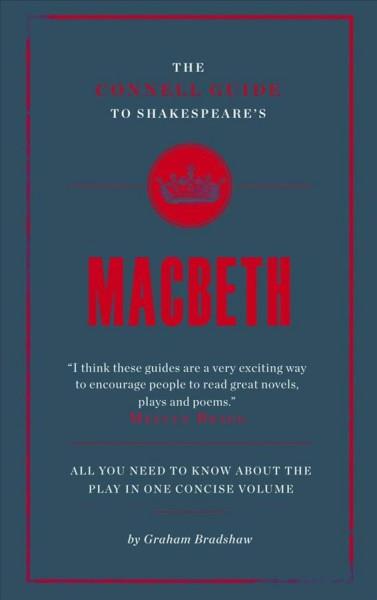
CONNELL PUBLISHING LTD Connell Guide To Shakespeare's Macbeth

GTIN: 9781907776045

In this concise guide, Graham Bradshaw shows that Shakespeare's 'Macbeth' is much more terrifying than traditional critics allow and offers how own incisive view. Macbeth may well be the most terrifying play in the English language, but it hasn't always been seen that way. It has divided critics more deeply than any other Shakespearian tragedy ' and the argument, in essence, has been about just how terrifying the play really is and about how we should react, or do react, to Macbeth himself. No Shakespearian tragedy gives as much attention to its hero as Macbeth. With the exception of Lady Macbeth, there is much less emphasis on the figures round the hero than there is in Hamlet or Othello. Unlike King Lear, with its parallel story of Gloucester and his sons, Macbeth has no sub-plot. And its imagery of sharp contrasts ' of day and night, light and dark, innocent life and murder ' adds to the almost claustrophobic intensity of this most intense of plays. So why are critics so divided about Macbeth? Why is it so disturbing? Why do we feel compelled to admire its hero even as we condemn him? How reassuring is the last scene, when Macbeth is killed and Malcolm becomes king? Do we see this as the intervention of a divine providence, a restoration of goodness after all the evil? Or do we see instead signs that the whole cycle of violence and murder could be about to begin all over again? And what does the play really tell us about good and evil? In this book Graham Bradshaw answers these questions, and shows how it is only in recent years that the extent of Shakespeare's achievement in Macbeth, and the nature of his vision in the play, has really been grasped. Macbeth may well be the most terrifying play in the English language, but it hasn't always been seen that way. It has divided critics more deeply than any other Shakespearian tragedy ' and the argument, in essence, has been about just how terrifying the play really is and about how we should react, or do react, to Macbeth himself. No Shakespearian tragedy gives as much attention to its hero as Macbeth. With the exception of Lady Macbeth, there is much less emphasis on the figures round the hero than there is in Hamlet or Othello. Unlike King Lear, with its parallel story of Gloucester and his sons, Macbeth has no sub-plot. And its imagery of sharp contrasts ' of day and night, light and dark, innocent life and murder ' adds to the almost claustrophobic intensity of this most intense of plays. So why are critics so divided about Macbeth? Why is it so disturbing? Why do we feel compelled to admire its hero even as we condemn him? How reassuring is the last scene, when Macbeth is killed and Malcolm becomes king? Do we see this as the intervention of a divine providence, a restoration of goodness after all the evil? Or do we see instead signs that the whole cycle of violence and murder could be about to begin all over again? And what does the play really tell us about good and evil? In this book Graham Bradshaw answers these questions, and shows how it is only in recent years that the extent of Shakespeare's achievement in Macbeth, and the nature of his vision in the play, has really been grasped. Autorid: Graham Bradshaw, Jolyon Connell, Kate Sanderson

Pakkumised

E-pood ja salong
14,94 €
Tasuta transport
E-pood ja salong
Tellimisel (tarne 10-14 tp)
14,94 €

Toote tehnilised andmed

Min. hind 14.94
Max. hind 14.94
Toode lisatud 2026-02-02

Kommentaarid

Ole esimene, kes toodet kommenteerib