

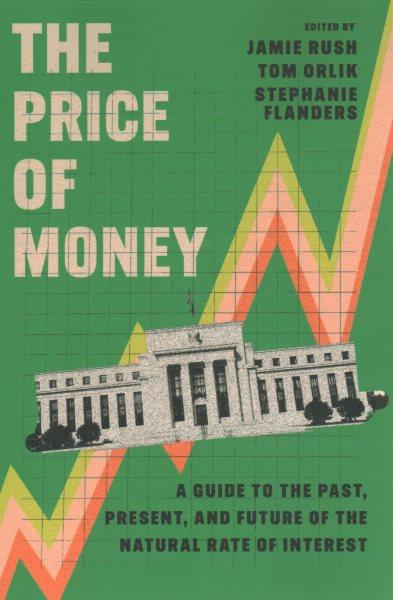
Oxford University Press Inc Price of Money: A Guide to the Past, Present, and Future of the Natural Rate of Interest
GTIN: 9780197800911
"In the final decades of the 20th century and the first decade of the 21st, long-term borrowing costs fell - with significant consequences for the global economy and financial markets. The Price of Money introduces a new model of the natural rate of interest, bringing together a top-down estimate of the level, with bottom-up estimates of the drivers. The results show that falling trend growth and baby boom savers accounted for about half of the three-percentage point decline in the natural rate for the US between 1970 and a trough in the mid-2010s. Global spillovers account for most of the rest of the decline. The model suggests the natural rate has climbed more than half a percentage point since the trough, partly the result of massive fiscal stimulus. Drawing on forecasts for the key drivers, The Price of Money projects the natural rate for the US and other advanced economies in the decades ahead. The main finding: borrowing costs have further to climb"-- An accessible guide to the natural rate of interest, why it is likely going up, and what that means for the future of the global economy and markets. Ask most people who sets interest rates, and they'll say it's the central bank. At a fundamental level, though, decisions by the Federal Reserve, European Central Bank, and their peers around the world are constrained by the natural rate of interest. The natural rate - the interest rate that balances supply of saving and demand for investment, whilst keeping inflation low and employment high - has moved from academic obscurity to a central role in monetary policy, and the operation of the economy and financial markets.For almost half a century from the 1970s to the 2010s, the natural rate in the US and other advanced economies fell. In the last decade, it has started to rise. In the years ahead, the cost of borrowing has further to climb. That shift from falling to rising borrowing costs reflects seismic shifts in demographics, technology, and geopolitics. In the years ahead, risk factors from war to artificial intelligence and climate change could accelerate its rise. For everyone from Ministers of Finance balancing the books to Wall Street titans making the next big bet, the shift from falling to rising borrowing costs has profound consequences. In a world where money is more expensive, the cost of managing it poorly gets higher.In The Price of Money, the Bloomberg Economics team explain the evolution of the natural rate, the forces driving it, where it is headed, and what that means for everything from government debt to saving for retirement. From the 1970s to the 2010s, the natural rate of interest in the US and other advanced economies fell. In the last decade, it has started to rise, and it has further to climb. That change reflects seismic shifts in demographics, technology, and geopolitics. In the future, risks from war to artificial intelligence and climate change could accelerate the rise. The Price of Money explains the evolution of the natural rate, the forces driving it, where it is headed, and what that means for everyone from Wall Street titans to 401K investors. Autorid: Jamie Rush, Tom Orlik, Stephanie Flanders
Pakkumised
Tellimisel (tarne 10-14 tp) | 29,99 € | ||
39,58 € +0,13 € | |||
Hinnapakkumised on indikatiivsed. Hinnavaatlus ei vastuta hindade, laoseisude ega tooteinfo õigsuse eest. Lõpliku hinnapakkumise tootele saab toote müüjalt. | |||


Toote tehnilised andmed
| Min. hind | 29.99 |
| Max. hind | 39.58 |
| Toode lisatud | 2026-03-22 |
Ole esimene, kes toodet kommenteerib