

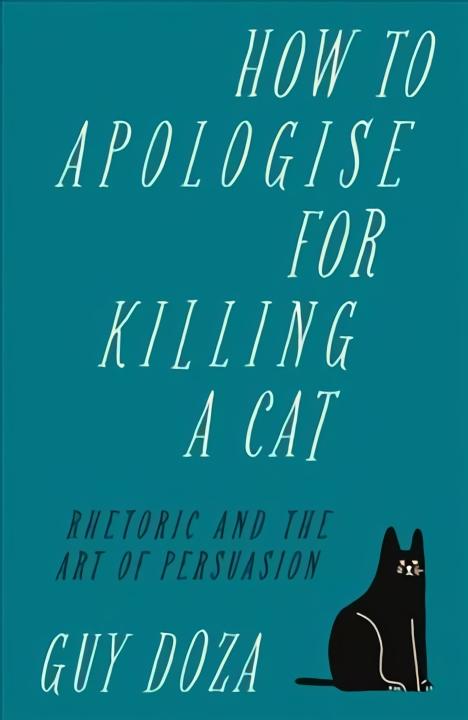
Canbury Press How to Apologise for Killing a Cat: Rhetoric and the Art of Persuasion
GTIN: 9781912454709
Most books on persuasion teach the few how to sway the many. With wit and vim, Guy has given us something else: an X-ray into the tactics of those trying to change our minds and behaviour. - Stephen Krupin, former speechwriter for Barack Obama How to Apologise for Killing a Cat is an illustrated, modern guide to rhetoric, persuasive language and critical thinking. Its for anyone who wants to understand how words shape decisions in politics, business and everyday life and for anyone who wants to become a clearer, more confident communicator. Guy Doza takes the dark art of persuasion (from Aristotle and Cicero to todays media and social platforms) and explains it in plain English with humour, sharp examples and practical takeaways. Rhetoric isnt just for parliament, courtrooms and keynote stages. It lives in meetings, texts, emails, adverts, interviews, speeches, debates, dating apps, pub arguments and those tense moments when you have to say sorry and make it stick. If youve ever felt talked into something, talked over, or talked around, this book is your toolbox. Youll learn how influence works, why certain arguments feel true even when theyre built on shaky logic, and how skilled speakers use style, structure, emotion and credibility to win an audience. Youll also learn how to defend yourself against manipulation, spin, propaganda and fake-news evidence without losing your cool. What youll learn and practise: The three pillars of classical rhetoric: logos (logic), ethos (authority/credibility) and pathos (emotion) and how to balance them in persuasive writing and public speaking Speechwriting and presentation skills: audience analysis, framing, emphasis, rhythm, tone, storytelling, rhetorical questions and memorable phrasing Rhetorical devices and figures of speech that make messages stick: such as repetition, the rule of three (tricolon), anaphora, and epistrophe How arguments work under the hood: syllogisms, informal logic, evidence, and how walls of logic can be built from bad assumptions The classic dirty tricks of persuasion: character attacks, reputation management, comprobatio (strategic flattery), occultatio (saying something by pretending you wont) and more Logical fallacies, misleading statistics and rhetorical sleight of hand plus how to spot them in marketing, advertising, political rhetoric and workplace debate How to apologise: sincere apologies, strategic apologies, public apologies, crisis communication, reputation repair and what makes an apology backfire Persuasion in real life: negotiations, leadership communication, sales and pitching, conflict resolution, office politics, and the often messy rhetoric of sex, flirting and relationships This is the ideal rhetoric book for readers of communication skills, debate, argumentation, psychology, media literacy and public speaking. Its a smart companion for students, writers, marketers, managers, entrepreneurs, teachers, lawyers and anyone who needs to convince, influence, or simply hold their ground in a difficult conversation. Unlike gimmicky mind control manuals, How to Apologise for Killing a Cat teaches you to think as well as speak: to analyse language, question claims and choose words intentionally. With witty, memorable illustrations throughout, it turns classical theory into a practical, entertaining handbook youll want to reread. Each chapter breaks down key techniques with real examples from history, modern politics, pop culture and everyday conversation, then shows you how to apply them yourself in persuasive writing, copywriting, speeches and negotiation. Theres even a final quiz to test your new persuasion and argument skills and the illustrations help lock the concepts into memory. Learn the art of persuasion, strengthen your bullshit detector, and start using rhetoric with confidence whether youre writing a speech, handling a crisis, negotiating a raise, or finding the right words when youve done something bad. Buy the book and start enlightening yourself. You'll never hear a speech or marketing slogan the same way again! About the author Guy Doza is a speechwriter and trainer. He has a Masters degree in Rhetoric from the University of London and uses rhetoric in the speeches he writes for senior politicians and business leaders. He trains government speechwriters in logic and rhetoric. Introduction Have you ever had that unpleasant anxiety of taking your car to the mechanic and feeling like youre being swindled? Most of you will probably know exactly what I am talking about. We dont know how cars work, we dont know what the parts are called and we dont know how to fix them ourselves. This lack of knowledge makes us vulnerable and susceptible to exploitation, and we know it. So does the mechanic. Now, most mechanics are honest individuals, not rogues, but can we say the same of people who run countries and big companies? When it comes to ordinary life away from the car engine or central heating boiler, most of us dont even realise just how vulnerable we are. People can use persuasive language to swindle us, cheat us, and exploit us to the hilt. And the worst part is that we are not even aware that it is happening. Welcome to rhetoric, the art of persuasion. Rhetoric is a superpower. It can alter the way we think, the way we behave and sometimes even the way we live our lives. And its most explosive charge lies in its subtlety. We need to be aware of how such persuasive language is used, not only so that we can be more persuasive ourselves, but defend ourselves against the rhetorical advances of those who would seek to exploit us. A Dark Art? For too long, rhetoric has been a dark and ancient art confined to the secretive circles of politics and academia. This mystery and misunderstanding has often led to the public to consider it to be the tool of crooks, spin doctors and villains. But no more! The time has come to bring rhetoric out of the darkness and show it for what it is: a mighty linguistic tool. Whether it is a conversation between friends in a café, a pathetic attempt to flirt at a bar, or a meaningful conversation with a world renowned philosopher, rhetoric is everywhere. It is how we invoke authenticity, how we convey meaning, and how we convince. So as well as looking at the grand speeches of eloquent orators and established speakers, this book will delve into the street rhetoric that we encounter in our everyday lives. Whether its a cheap use of ethos or a dodgy use of occultatio, rhetoric is thriving in our offices, dwelling in our pubs and lurking in our very homes. We are going to look at some of the forms that rhetoric can take as it attempts to twist our thoughts and muddy our reasoning. Sadly, reading this book will not turn you into an eloquent millionaire who is able to close billion dollar business deals, perform Jedi mind tricks, and convince anyone of anything. There are plenty of gimmicky books out there if that is what you are looking for. Rather, this book is designed to help you become more aware of the role that rhetoric plays in the world around us: the good, the bad and the ugly. And, with a certain amount of caution, you will be more prepared to use it yourself while simultaneously being conscious of how it might be used against you, whether for morality, for manipulation, money, or malice. Autorid: Guy Doza
Pakkumised
24,12 € | |||
Tellimisel (tarne 10-14 tp) | 25,94 € | ||
Hinnapakkumised on indikatiivsed. Hinnavaatlus ei vastuta hindade, laoseisude ega tooteinfo õigsuse eest. Lõpliku hinnapakkumise tootele saab toote müüjalt. | |||


Toote tehnilised andmed
| Min. hind | 24.12 |
| Max. hind | 25.94 |
| Toode lisatud | 2026-05-18 |

Ole esimene, kes toodet kommenteerib