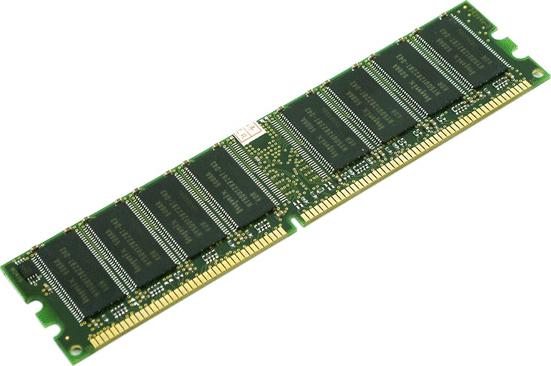
DRAM is a type of RAM (random access memory) used as the main memory in several computing devices, such as desktop and notebook computers, servers, and high-end workstations. It is the most widely used semiconductor memory used in current generation computers, and offers several significant advantages, such as structural simplicity, very high packing densities (number of bytes that can be stored per unit of chip area), low power consumption, and sufficiently high data read/write speeds. Several types of DRAM are presently available for deployment on various computing platforms, such as home/personal computers, portable computers, and network servers. This type of memory has undergone several innovative technological developments and offers very high price/performance ratios.Two types of DRAM are widely used for deployment in current generation servers: registered memory, and fully-buffered (FB) memory. Both these memory types are commercially available as DIMMs (dual inline memory modules). Registered DIMMs (or RDIMMs) are designed with an additional hardware register between the DRAM module and the system’s memory controller. RDIMMs present several advantages for the system, such as a lower electrical load on the memory controller and sustained stability even with an increase in the number of installed memory modules. Thus, RDIMMs are often the default choice for deployment in server-class computing systems. Fully-buffered DIMMs (or FB-DIMMs) are intended to be used in systems requiring higher memory densities with limited board space. As opposed to the parallel data transfer technique used in normal DRAM, FB-DIMMs transfer data in a serial format, using an additional buffer, known as advanced memory buffer (AMB) between the memory controller and the FB-DIMM modules. The AMB acts as an intermediary and handles all data reads/writes for the memory modules, taking care of issues such as signal degradation and error correction and reducing any overhead on the memory controller. Thus, FB-DIMMs prove to be a reliable alternative for deployment in server-grade machines.Sisemälu16 GBSisemälu tüüpDDR4Mälu taktsagedus2400 MHzKomponentPC/serverMälu kujutegur288-pin DIMMMälu paigutus (moodulid x suurus)1 x 16 GBCAS-latentsusaeg17Mälu pinge1.2 VMälu pingerida2RoHS-vastavusJahHalogeenivabaJahLaius133,3 mmKõrgus31,2 mm
For expanding your Synology NAS server's memory capacity. RAM capacity can be expanded on selected Synology NAS servers for boosted performance and responsiveness under high system loads. To ensure the optimum durability and compatibility, always select Synology authentic RAM modules from your local distributors and follow the installation instructions in your product quick installation guides. Synology will not provide complete product warranty or technical support if non-Synology RAM modules are used for memory upgrade. Sisemälu 32 GB Sisemälu tüüp DDR4 Mälu taktsagedus 2133 MHz Komponent PC/server Mälu kujutegur 288-pin DIMM Mälu paigutus (moodulid x suurus) 1 x 16 GB CAS-latentsusaeg 15 Mälu pinge 1.2 V ECC Jah Registreeritud Jah Ühilduvad tooted Synology FlashStation FS3017
SK hynix Registered DDR3 SDRAM DIMMs (Registered Double Data Rate Synchronous DRAM Dual In-Line Memory Modules) are low power, high-speed operation memory modules that use DDR3L SDRAM devices. These Registered SDRAM DIMMs are intended for use as main memory when installed in systems such as servers and workstations.Sisemälu2 GBSisemälu tüüpDDR3Mälu taktsagedus1600 MHzMälu kujutegur240-pin DIMMCAS-latentsusaeg11Mälu pinge1.35 V
Samsung DDR4 Registered DIMMs (or RDIMMs) are designed with an additional hardware register between the DRAM module and the system’s memory controller. RDIMMs present several advantages for the system, such as a lower electrical load on the memory controller and sustained stability even with an increase in the number of installed memory modules. Thus, RDIMMs are often the default choice for deployment in server-class computing systems. In addition to Registered DIMM’s features, Samsung DDR4 memory is available as Registered DIMM that it provides an optimized solution for highly virtualized environments, high-performance computing and networking. Semiconductor modules of Samsung DDR4 are designed with new system circuit architecture to deliver higher performance with low power requirements than previously available memory products. Doubled bandwidth, along with reduced voltage and dramatically lower power consumption, improves performance and optimizes the total cost of ownership. Samsung DDR4's enhanced reliability, availability and serviceability (RAS) features provide enhanced reliability and improved signal integrity (S/I).Sisemälu8 GBSisemälu tüüpDDR4Mälu taktsagedus1200 MHzKomponentPC/serverMälu kujutegur288-pin DIMMMälu paigutus (moodulid x suurus)1 x 8 GBKõrgus31,3 mm
RAM capacity can be expanded on selected Synology NAS servers for boosted performance and responsiveness under high system loads. To ensure the optimum durability and compatibility, always select Synology authentic RAM modules from your local distributors and follow the installation instructions in your product quick installation guides. Synology will not provide complete product warranty or technical support if non-Synology RAM modules are used for memory upgrade.Sisemälu8 GBSisemälu tüüpDDR3Mälu taktsagedus1600 MHzKomponentPC/serverMälu kujutegur240-pin DIMMMälu paigutus (moodulid x suurus)2 x 4 GBMälu pinge1.5 VECCJah