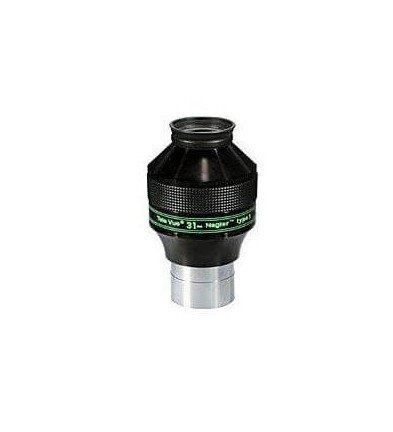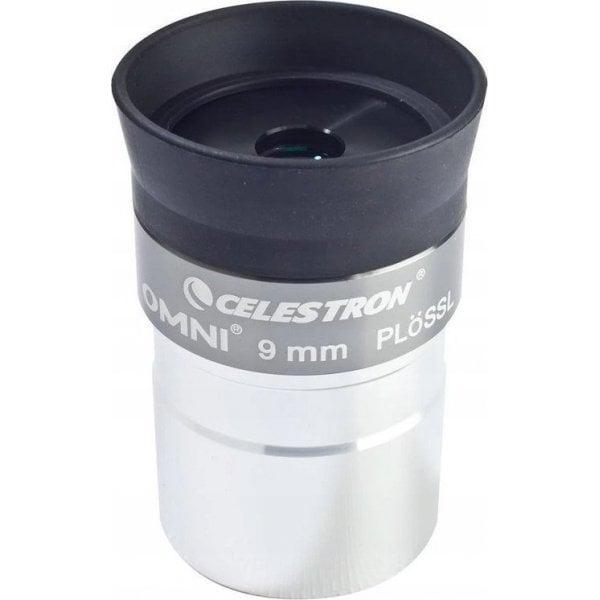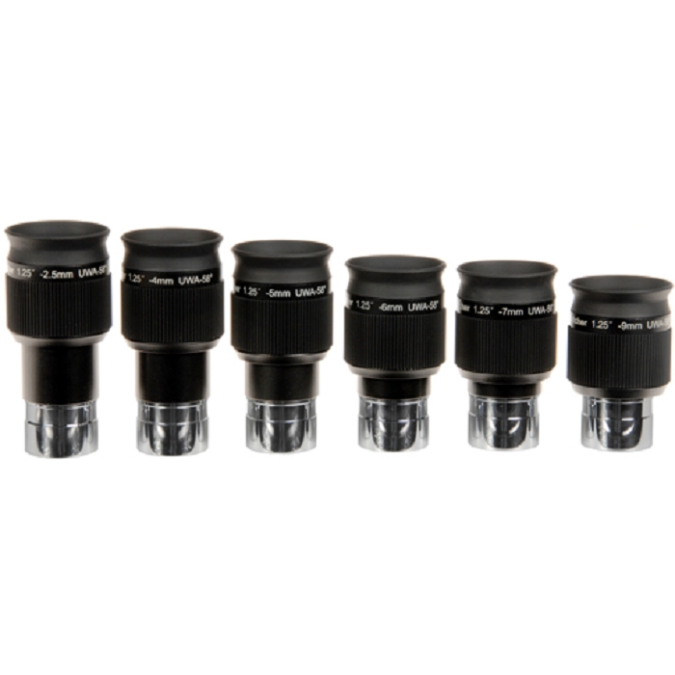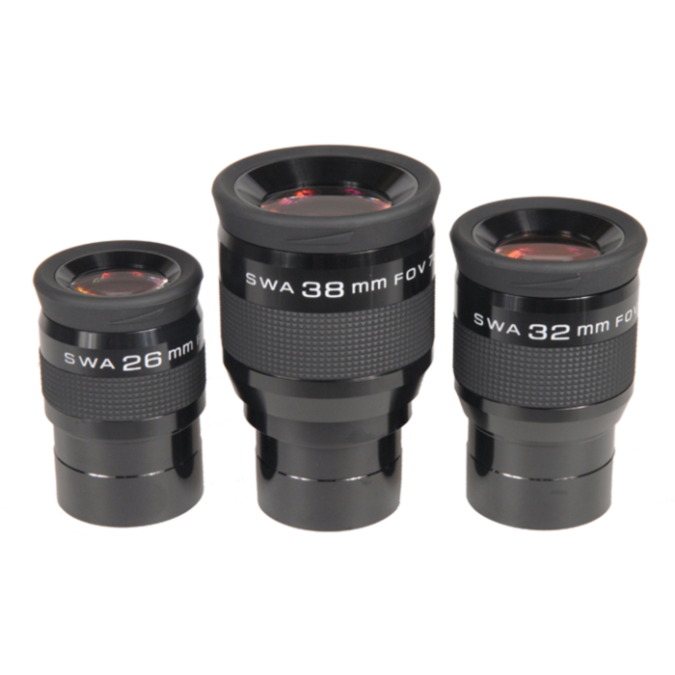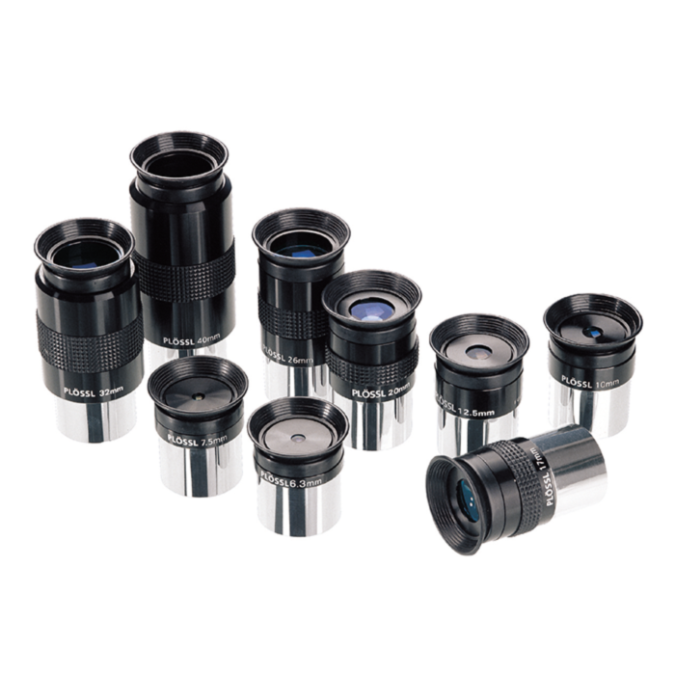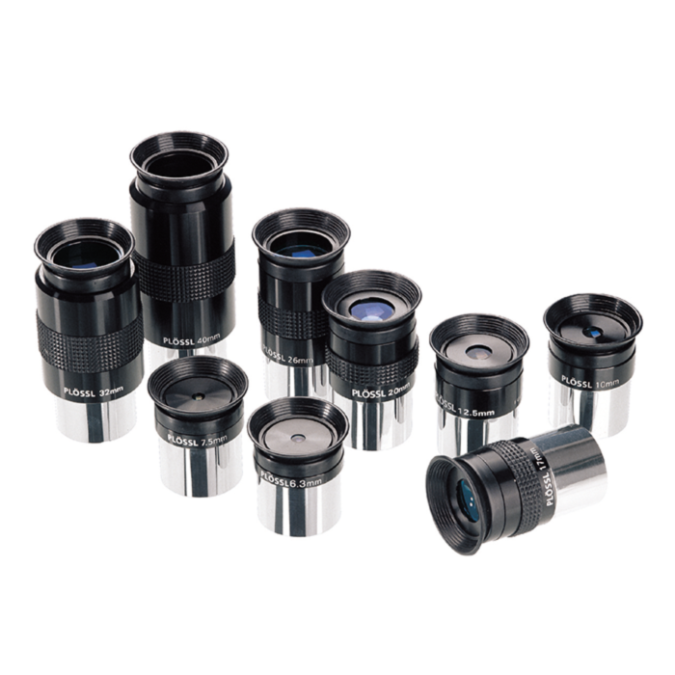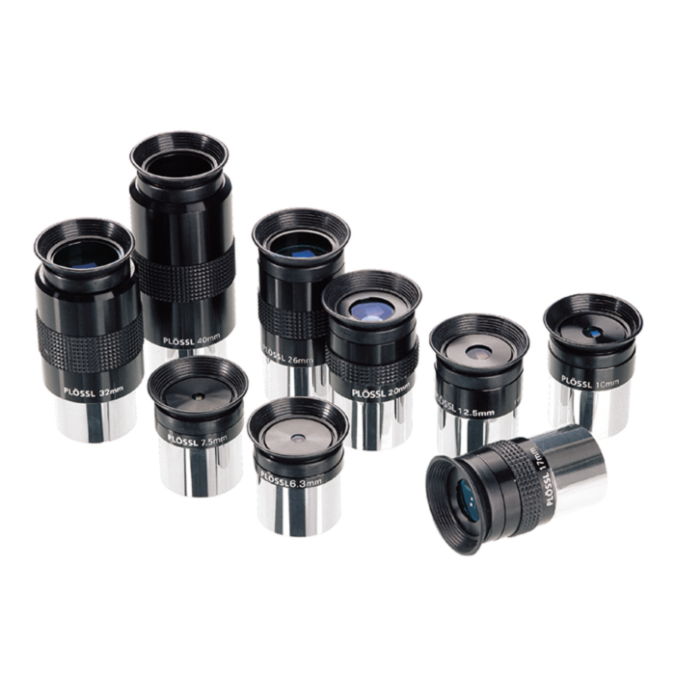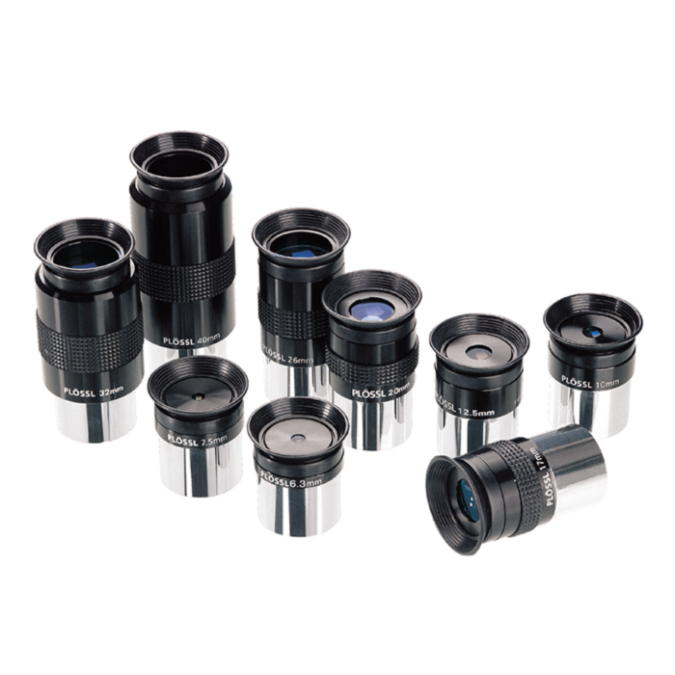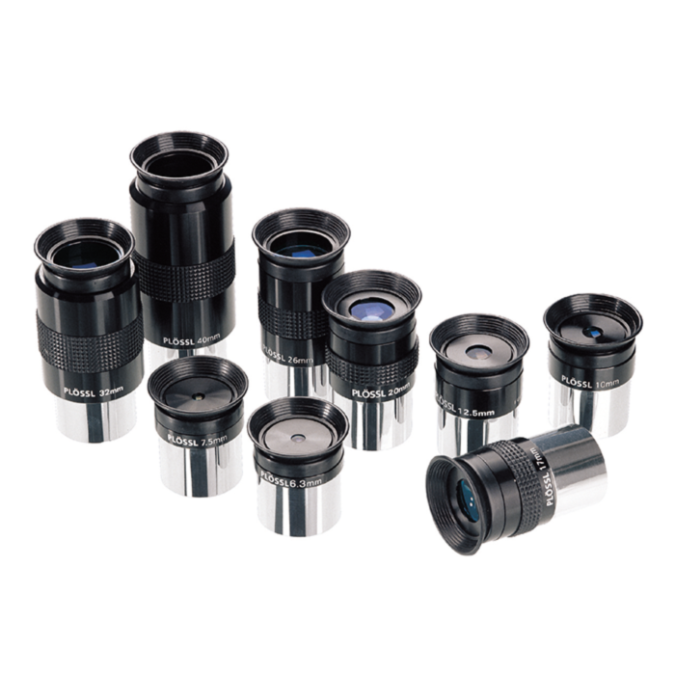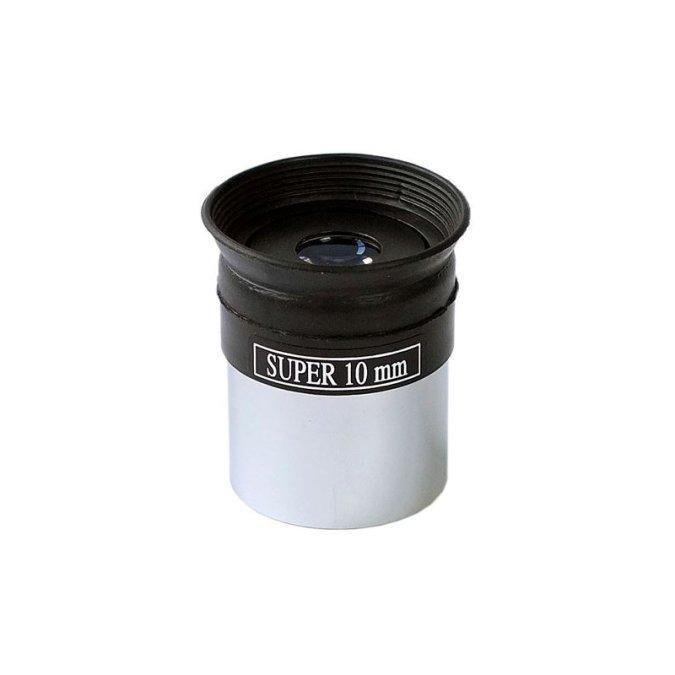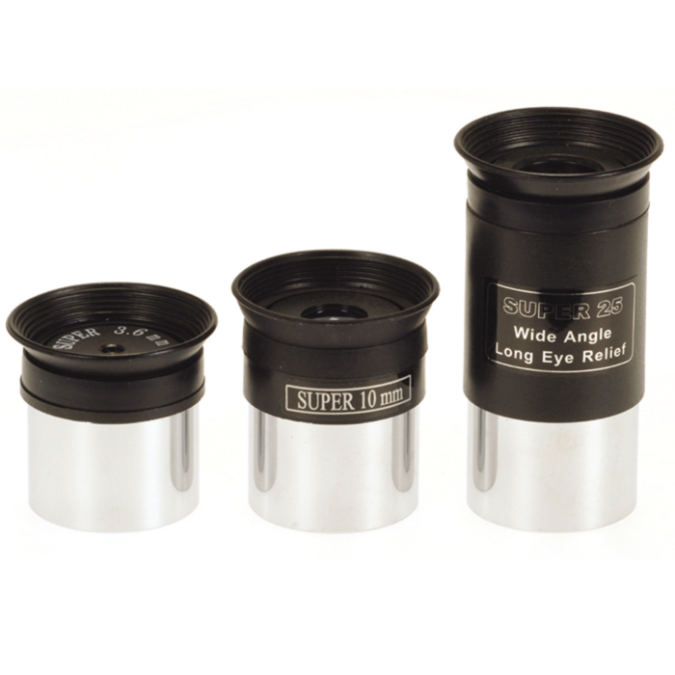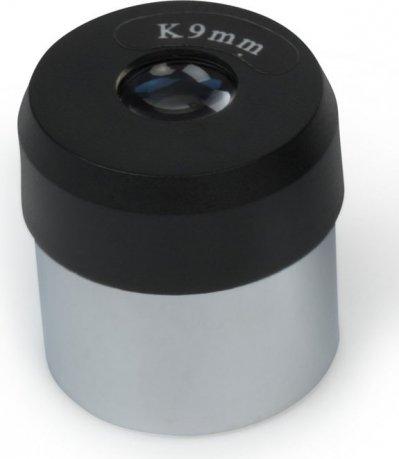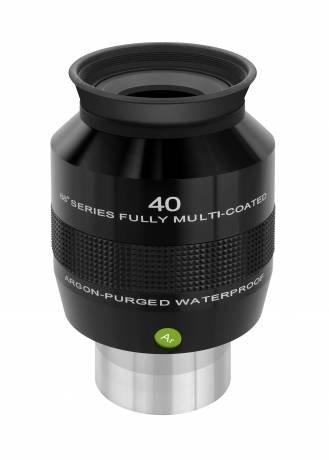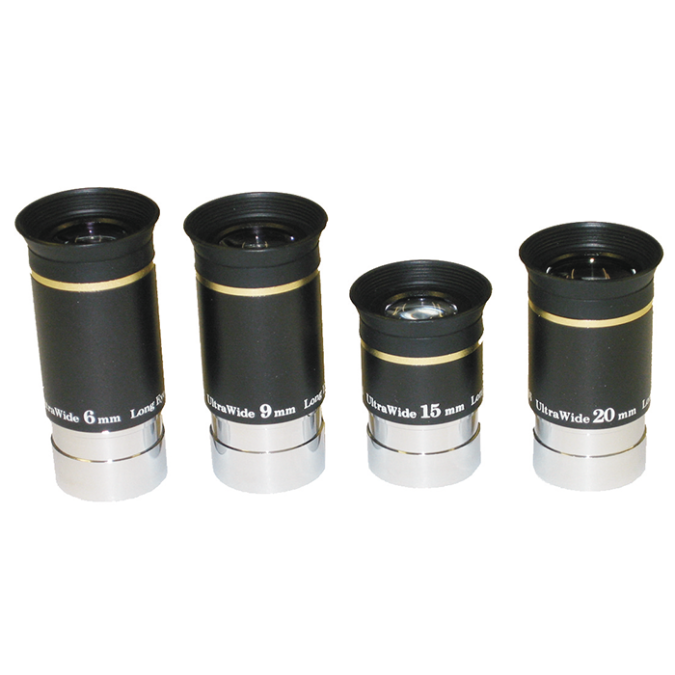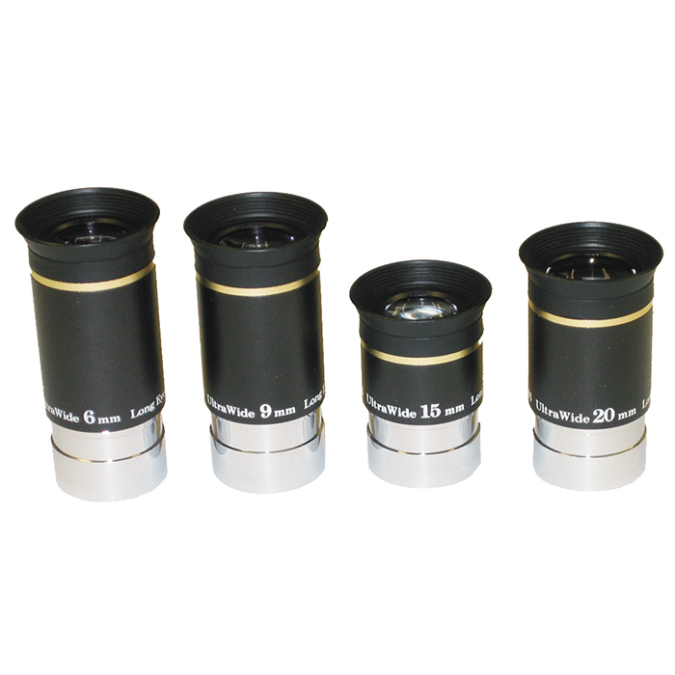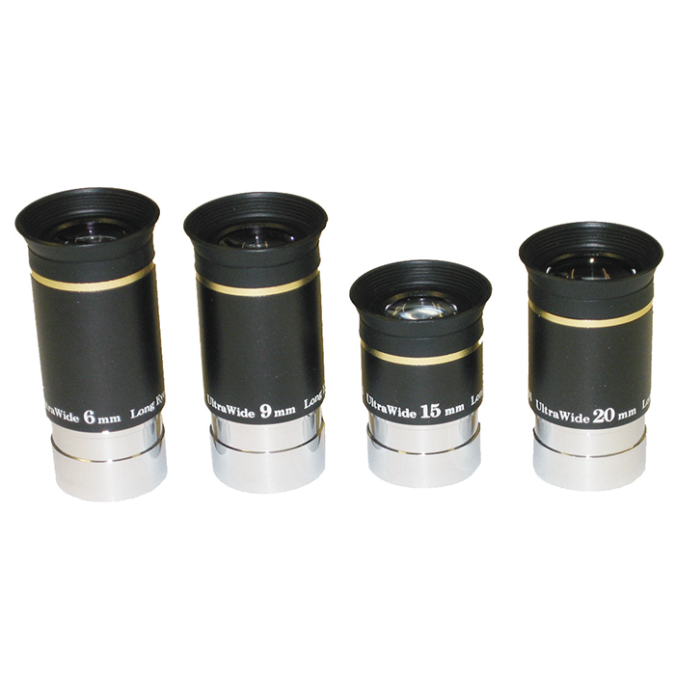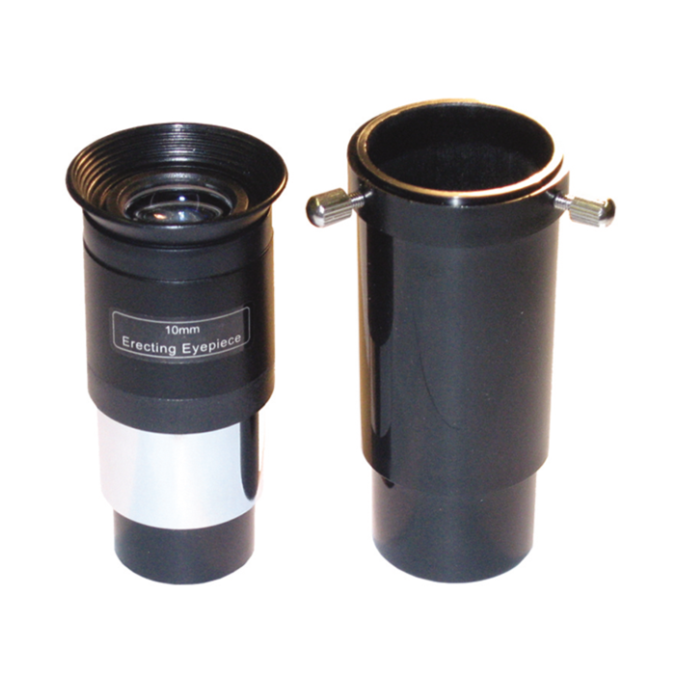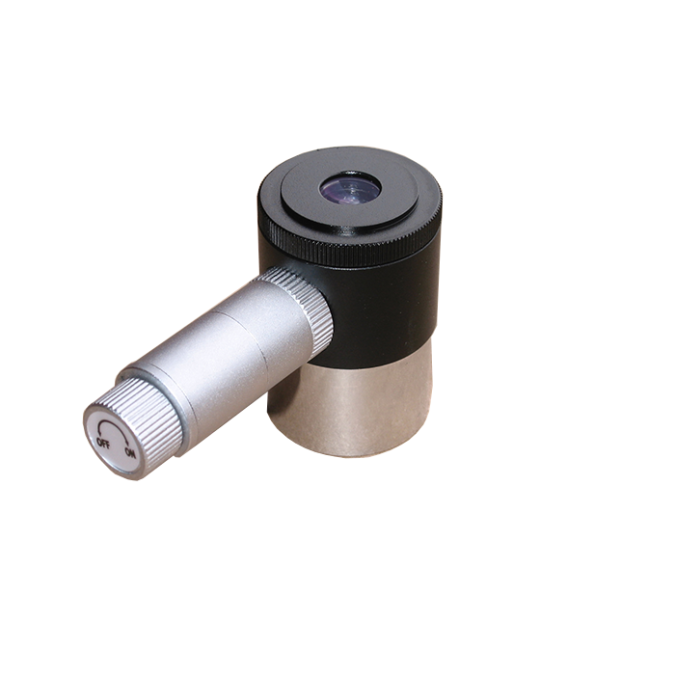
The Plossl eyepiece design has set a new standard for quality and has been in use for decades. Its popularity is due to the good performance at an unusually low price. Super Plossls are state of the art Plossl eyepieces with outstanding optical quality. They are particularly well suited for observing planets and the moon. Their image sharpness and their high transmission make them ideal eyepieces for many applications. Quality Features of the Super Plössl eyepieces: High-Grade Multi-Coating: A special high-grade multicoating on all glass-to-air surfaces provides for excellent light transmission, image clarity and colour fidelity. For further information on this FMC coating please see "user reports"! Blackened lens edges for suppression of stray light inside the eyepiece. This is particularly important when viewing bright objects Rubber eyeguard for better viewing comfort. The eyeguard also keeps stray light from the side out of your eyes.
The LF2090, 2" Neutral Density 50 Filter (ND50), transmits 50% of all incident light while blocking 50%. For lunar and planetary observing, and splitting double stars. Lumicon Neutral Density Filters are made from renowned Schott and Hoya optical glass and allow for maximum contrast on viewing planetary and lunar detail. Individually precision ground highly polished with maximum light transmission coatings on both sides. For 1.25 eyepieces.
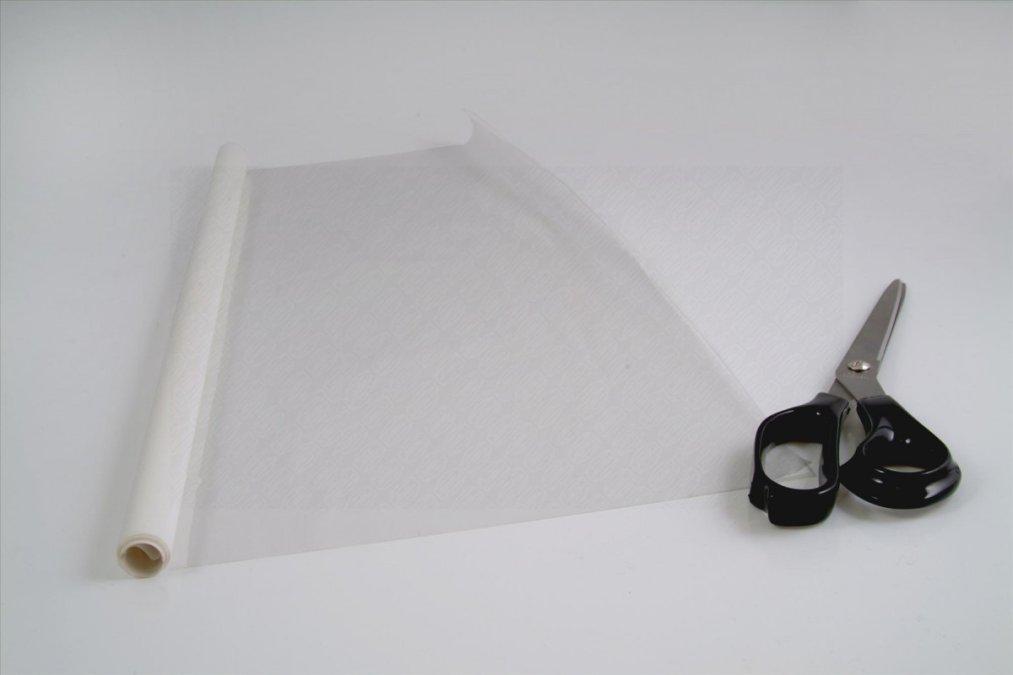
AstroSolar Photo Film (imaging only), telescope quality, Optical Density OD = 3.8; Digital solar imaging at highest magnifications and short exposure times. Not suitable for visual observation; This highest precision film consistently produces strehl ratios of 94 to 96 percent at interferometric tests – thus it performs optically; like a Fluorite Triplet Lens by Carl Zeiss or Astro Physics; AstroSolar Photo Film OD 3.8 is only intended to be used by well-experienced Astro-imagers. This material is not intended to serve; for protection during visual solar observation.
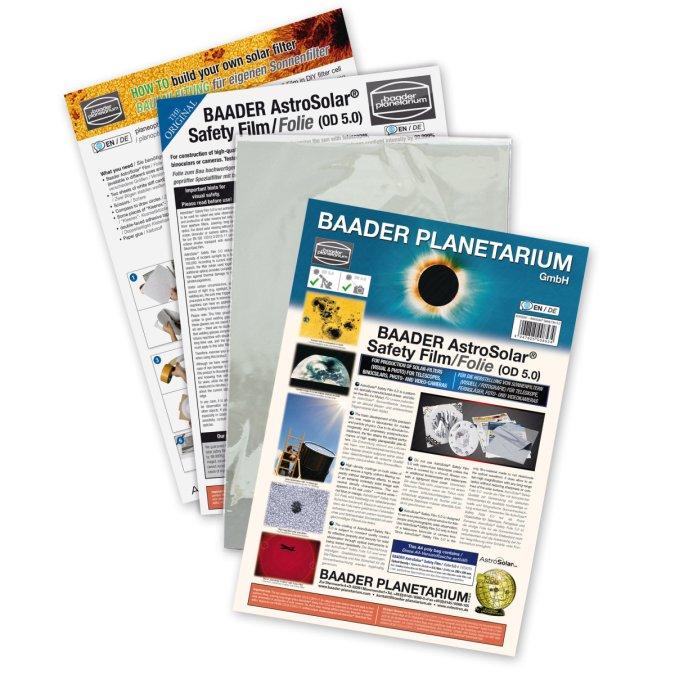
When using AstroSolar® Safety Film 5.0 – mounted in front of your optics – you can image the Sun and safely look through the viewfinder of your camera – or you can directly look into the Sun with telescopes and binoculars at any suitable magnification. The coating of AstroSolar® Safety Film 5.0 is subject to constant quality control. Its reflective property and security for solar observation through optical instruments is being tested repeatedly. AstroSolar® Safety Film 5.0 reduces the intensity of solar radiation by 99,999% to a factor of 1 : 100 000 of the initial value. Multiple coating processes on both sides of the carrier film are adding up during production to result in a perfectly uniform filtering result and help in neutralizing the effect of microscopic pores in the coating hat plague conventional glass solar filters which are commonly only coated on one side of the glass.
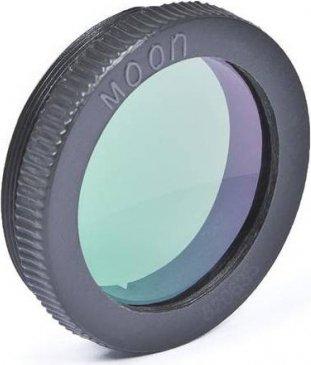
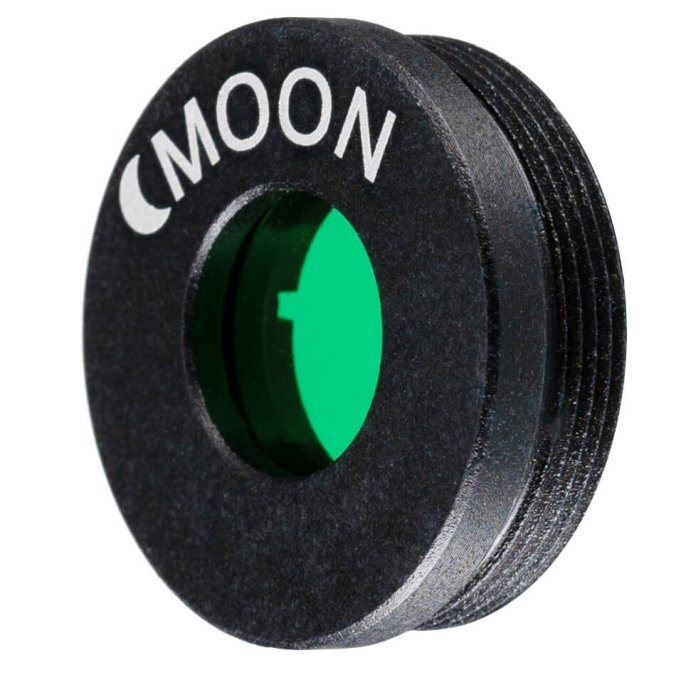
Omegon 1.25" Skylum filter - the easy way to discover more on Mars and Jupiter Would you like more detail and contrast when observing the Moon and planets? And that the object should still look natural? - then the Omegon Skylum filter is the 'star' in your eyepiece. It amplifies details in the red or blue parts of the spectrum - see the bands on Jupiter more vividly and make out more detail on Mars. The advantages in a nutshell stronger contrast with Jupiter and Mars - see how the red details stand out deep sky objects - improved contrast with nebulae and galaxies ideal for small telescopes - the image in the eyepiece is still bright and clear 1.25" filter with filter thread also suitable for astrophotography An 'expert' for the entire night sky You do not need to spend time considering which filter might be useful for your object. The Skylum filter is universal and is suitable for many astronomical objects. It turns the night sky background slightly darker and highlights blue and red colours. It will produce more vivid details, even in reddish nebulae. One has to say - it has a real 'sky glow' effect. The filter increases contrast, but causes little attenuation. It is useful for observing the crescent phases of the Moon. It prevents blooming when observing bright planets. And what are the advantages for you? - in future, you will be able to observe these objects in even more detail. Nullifies artificial light Similar to a nebula filter, the Skylum filter only allows certain wavelengths to pass through, and reduces scattered light. In addition, it blocks the light of many street lamps - for example the spectral lines from sodium vapour lamps. The light of the astronomical objects is therefore seen more intensely by the eye. For small and large telescopes The Skylum filter has high light transmission. This makes it ideal for visual observing with small or large telescopes. It will do a good job even with an 80mm telescope. The 'nice' filter for star clusters and galaxies Do the stars looking like glittering diamonds on black velvet? That would be nice. But from the city, the sky sometimes looks like a grey concrete wall. Bur you do not have to put up with this - put the Skylum filter into your eyepiece and to start enjoying star clusters and galaxies. Already the sky looks much darker and the objects clearly more beautiful. Make more of your observing!
Your NexStar carrying case is designed to safely carry your NexStar 4/5/6 telescope as well as any Celestron 8" SCT/EdgeHD optical tube. The case is EVA molded to protect your telescope with a hard yet flexible shell. Your case also comes with a convenient storage zipper pocket that holds all your telescope's standard accessories with room to expand. Inside the case includes two dense foam spacers and a built-in compression strap designed to customize the case for each telescope model. Includes a durable Nylon handle for easy transportation. External Dimensions: 23” x 15” x 14”.Internal Dimensions: 19” x 11” x 10”.
Geoptik transport bags are sturdy, weatherproof and are also padded to protect the instrument from shocks.The contents are well protected from extreme shocks, thanks to the excellent lining.The outer material is made of a water-repellent material, which keeps the contents dry even in heavy rain.
The aluminium construction is black anodized on the inside and on the outside. FEATURES: 15mm optical path length; Telescope side T-2 internal thread; Focus side T-2 external thread; For eyepiece projection with shift/sliding focuser.
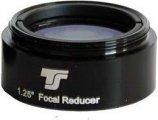
TS Optics f/6.3 Reducer and Corrector for Schmidt-Cassegrain Telescopes This high-quality corrector system was especially developed for SC telescopes. With this 4-element system, you can make a fast telescope for astrophotography out of your SCT. Features and applications of the corrector: The corrector fits to all Schmidt-Cassegrain telescopes from Celestron and Meade. It is simply screwed to the 2" thread at the back of the telescope. At the eyepiece side, the f/6.3 corrector also has the SC thread. You can use your accessories as before. The optimal working distance from the SC thread of the corrector is 85 mm. You can exceed or under-run this distance by 15% without appreciable loss of quality. The focal length of the SC telescopes is reduced with the factor 0.63 - 2000 mm become 1260 mm focal length. The speed is considerably increased. You achieve the same saturation with only 40% exposure time, compared to the photography without corrector. The optical correcture system flattenes the curved field of the Schmidt-Cassegrain telescope, offering a fully corrected image area of 24 mm diameter. The corrector offers an improvement also visually, the sharpness at the edge is enhanced and the yield of true field of view is obvious. We recommend to use the corrector with 1.25" eyepieces. Adaption of the SC corrector to 2": Many amateur astronomers use a separate focuser at their SC telescope for more precise focusing and avoid mirror shifting.
The Omegon 3x Barlow lens trebles the magnification when used together with an eyepiece. The 1.25" eyepiece is simply inserted into the Barlow lens and secured with the side locking screw. You then insert the complete assembly into the focuser. For example, if you normally get 20 x magnification with your eyepiece, this is then increased to 60 x with the Omegon Barlow lens. If you want to initially do without having to acquire a complete set of eyepieces, then this Barlow lens fits the bill.
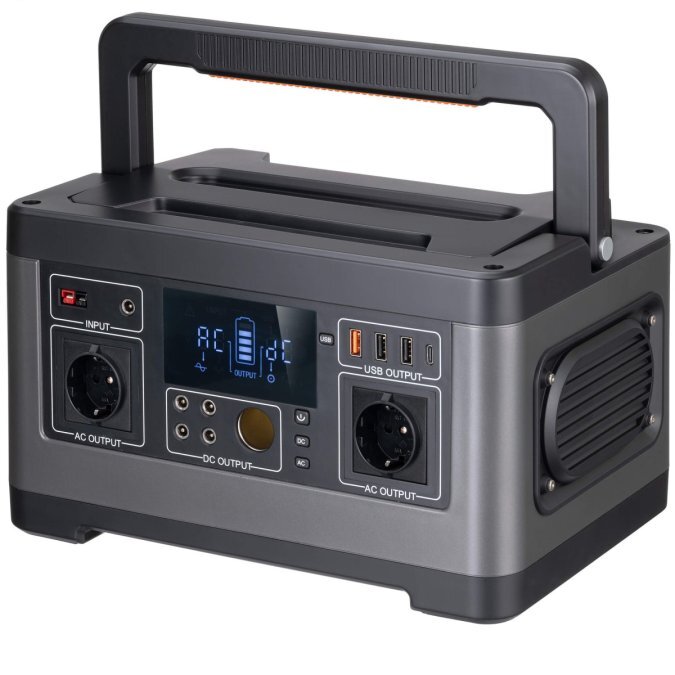
Multi-purpose Rechargeable Power Supply ideal for use with Sky-Watcher SynScan, Syntrek, SupaTrak, AllView and Virtuoso mountings, and computerised telescopes of other brands requiring a 12V DC power supply. Also useful camping accessory device. Specifications: Built-in 12V 7Ah Sealed Lead Acid Rechargeable Battery with Diagostic LED Display, Protective Fuse. Built-in Multi-angle with 30 x high-output LED Spotlight 2 x DC 12V output car jack 2 x USB output sockets (5V, 1.5A) Built-in flashlight with ON/OFF/FLASH function Built-in Circuit Breaker for safety operation DC power cord with car cigarrete lighter plug is included Light diffuser for flashlight is included Mains charger, with UK & Euro adaptor plugs
The 2.3m Observatory is suitable if you have a 14" SC- or RC-Telescope. With sufficiently place for an instrument and two to three persons the Home model is particularly meant for ambitionierte amateurs, is suitable however perhaps even for smaller associations. The Home-Model is not motorised, motorisation for dome rotation and/or shutters is optional available. Specification: Total height: 2.83m Wall height: 1.5m Dome diameter: 2.3m Aperture width: 0.6m Aperture length (to Zenit): 250mm Wind speed: 144km/h Door size: 1.15m × 0.8m Included Observatory with walls, Race and attachment ring for existing foundation.
The School model with a diameter of 3.5m sufficient place for instruments with an opening of up to 600mm. This dome size is suitable for Newton telescopes, SC telescopes (like the LX200GPS 16") or a RC-telescope with 500mm opening on an equatorial Mount. The School Model is for associations and schools, up to 9 persons. The School-Model is not motorised, motorisation for dome rotation and/or shutters is optional available. Specification: Total height: 3.25m Wall height: 1.5m Dome diameter: 3.5m Aperture width: 1.0m Aperture length (to Zenit): 400mm Wind speed: 144km/h Door size: 1.15m × 1.0m Included Observatory with walls, Race and attachment ring for existing foundation.
In addition to our 2.3 metre Home Model, 3.5m School Model and 6.7m University Models, demand from customers has meant we have increased the size of the Sirius family to include the 5 metre College Model. This latest design gives plenty of room, yet is still small enough that it can be put together without a specialist supervisor. An easy to follow instruction manual is sent with every observatory sold. All our observatories are made from extremely high quality materials, yielding a deterioration rate of only 0.1% per annum after 20 years under normal conditions, if properly maintained. We can provide them in any colour, although most people choose white to keep things cool in the summer months. For those that prefer a simple approach to life, the 2.3m and 3.5m can come in either a manual or a motorised version. (The 5m and 6.7m are too large to operate manually.) All sizes can have a Maxdome motor installed to co-ordinate the shutters; the dome rotation and the telescope direction. Developed and built in Australia, our observatories withstand some of the coldest regions on the planet (including northern Finland), to some of the warmest (including Australia, the Utah desert, Arizona etc). Specifications: Wall height: 1,8m Dome Only Height: 2,65m Total Height: 4,45m Dome Outer Diameter: 5,0m Dome Inner Diameter: 4,8m Included Observatory with walls, Race and attachment ring for existing foundation.
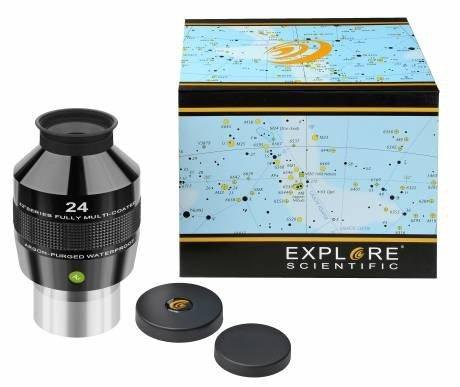
Top Offer! TS Optics 17 mm Plössl Eyepiece with 1.25" barrel sizeA good Plössl eyepiece outperforms a simple Kellner. Through bulk purchase, we can offer this type of eyepiece at a price for which you would get only more simple eyepieces elsewhere. Nevertheless, the features are quite impressive. The 17 mm Plössl is a fine all-round eyepiece, it delivers a good performance on planets, but also when viewing nebulae and galaxies. It is often chosen for binoviewers, too, due to the very good ease of view. Areas of application of Plössl eyepieces:Through the four-element design, the Plössl is a true all-rouder. It does not introduce an additional chromatic aberration to the system, in opposite to more simple eyepieces with fewer elements. As a consequence, these eyepieces can be very well used for observing moon and planets with higher magnifications. At lower magnifications, Plössl eyepieces are well suited for observing nebulae, star clusters and galaxies, they convince with a field of view relatively free of distortion. Astrophotographers can also work well with Plössl eyepieces, as they are well suited for eyepiece projection. The MgF2 coating prevents disturbing reflections and provide good contrast. However, many projection adapters are too narrow for the Plössl eyepieces with 32 or 40 mm focal length.
A good Plössl eyepiece outperforms a simple Kellner. Through bulk purchase, we can offer this type of eyepiece at a price for which you would get only more simple eyepieces elsewhere. Nevertheless, the features are quite impressive.The 40 mm Plössl offers maximum field of view with 1.25" and is a fine overview eyepiece. With its long focal length of 40 mm, it is especially suited for slow telescopes like Cassegrains or refractors not faster than f/8. The image stays still bright, making the eyepiece well siuted for observing nebulae, open star clusters and galaxies, but also for centering of objects. Areas of application of Plössl eyepieces: Through the four-element design, the Plössl is a true all-rouder. It does not introduce an additional chromatic aberration to the system, in opposite to more simple eyepieces with fewer elements. As a consequence, these eyepieces can be very well used for observing moon and planets with higher magnifications.At lower magnifications, Plössl eyepieces are well suited for observing nebulae, star clusters and galaxies, they convince with a field of view relatively free of distortion.Astrophotographers can also work well with Plössl eyepieces, as they are well suited for eyepiece projection. The MgF2 coating prevents disturbing reflections and provide good contrast.However, many projection adapters are too narrow for the Plössl eyepieces with 32 or 40 mm focal length.
Omegon T-2 ring for Minolta AF - basic adapter for bayonet to T2 thread This Omegon T-ring lets you adapt the bayonet of your SLR camera to the T-2 thread used as a standard fitting in amateur astronomy. There are a large range of adapters that use it. What do I need to connect my camera to the telescope? First, remove the lens from your camera. Then attach this T-2 ring onto the bayonet fitting. You will then see a T-2 female thread, to which you can connect virtually any astronomical adapter. You can connect, for example, a T-2 camera adapter (item 1250) or a focal reducer. These adapters have a T-2 male thread and fit directly onto your T-ring. This combination fits directly onto the focuser of your telescope - firmly attaching your camera to the telescope. The advantages in a nutshell: T-2 ring from the camera bayonet to T-2 base ring for connecting an SLR camera to a telescope connect any T-2 adapter to this ring
This ring lets you connect all Sony Nex3 and Nex5 cameras, and all Sony-á interchangeable lens cameras possessing an E bayonet, to a T2 thread. The optical path is exactly 55mm, from the telescope side T2 thread to the sensor. TS Optics is a Telescopic Service trademark.
APM Barlow 2" This is the 2" counterpart of our famed 1.25", 2x/1.5x Barlow lens. It is well made both in design and craftmanship. Both lenses are fully multicoated for best-possible contrast and transmission. The lenses have a diameter of 37mm, thus you can even use 2" wide angle eyepieces without vignetting. Further uses: With a 2" extension tube - 50mm - you will attain a magnification of 2.7x compared to an eyepiece without the Barlow lens. That way you turn a 30mm wide angle eyepiece into an 11mm wide angle eyepiece with comfortable eye relief. Remove the black anodized lens cell from the Barlow lens and screw it directly into your eyepiece to attain a magnification of 1.5x.
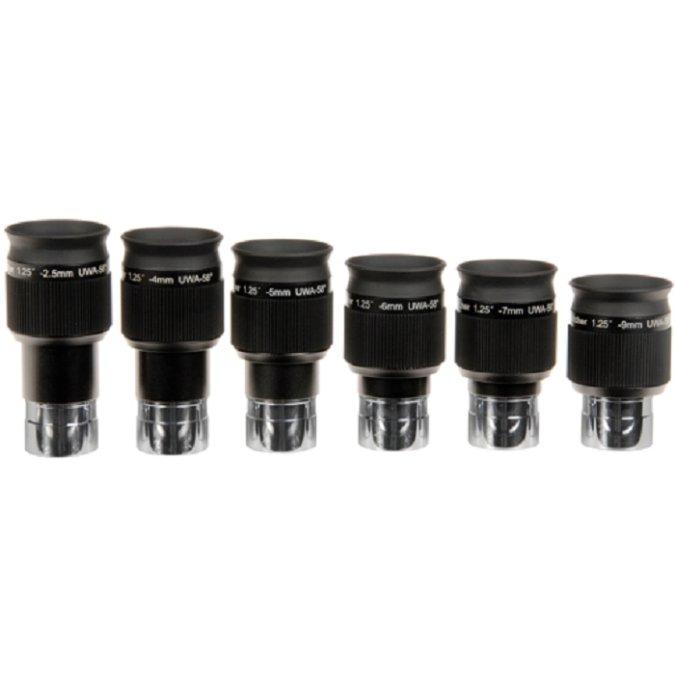
Omegon LE Planetary eyepieces – powerful eyepieces for star-studded excursions through the night skyThese eyepieces offer an extraordinary combination of elegance and top optical performance to enhance your observations.The LE Planetary eyepieces from Omegon have been engineered for extremely high sharpness and contrast at levels not found in this class.The Omegon LE Planetary eyepieces have an outstanding optical design that caters precisely to the needs of stargazers.Even with Newton telescopes with a fast lens, the LE Planetary eyepieces offer absolute distortion-free images up to the extremes of the field of view.These 1.25” eyepieces are available in focal lengths of 3mm, 5mm, 6mm, 9mm, 12.5mm, 14.5mm and 18mm.Their interior design is comprised of seven lens elements in four groups (18 mm model: five elements in three groups). All lens edges are blackened and glass/air surfaces coated with a multi-layer, high-impact anti-reflex coating.One major difference from traditional eyepieces is the long, 20mm interocular distance, which provides a very pleasant viewing experience. Even spectacle wearers can observe the entire field of view. The apparent field of view is 55°.Compared with similar eyepieces, tests produced greater transparency and more brilliant images with a dark sky background and no interfering stray light.The interior aperture system makes a decisive contribution to reducing stray light. All focal lengths have eyepieces 21 mm across. Omegon LE Planetary eyepieces don’t just artificially enlarge the field of view on its edges, but display a real field without much distortion to the edge area.Using the LE Planetary eyepieces, the exact optical axis does not need to be maintained during observation. The observation is not impaired through vibrations when you look into the device, since there is no vignetting – also known as the kidney bean effect.
Astronomik ProPlanet 742 IR-pass filter Ideal filters for the reception of the moon and planets, notably Mars, with telescopes from 6” (150mm) aperture. The ProPlanet IR 742 only allows infrared light with wavelengths of more than 742 nm to pass. In this wavelength range the effects of seeing are significantly lower than in the visible spectrum of the human eye. This allows much sharper images than are usually obtained from your device and location. Another advantage is that the sky background of advanced dawn is dark and so the filter even allows photography of the planets and the moon at daylight. Main use The Astronomik ProPlanet IR 742 cuts off the visible part of the spectrum and allows the light of wavelengths longer then 742nm to pass. Due to this behavior the part of the spectrum that is most sensitive to bad seeing is rejected. This approach does a big improvement to the imaging of planets and the moon. The image is more steady than the image in the visible light with nearly identical exposure times.
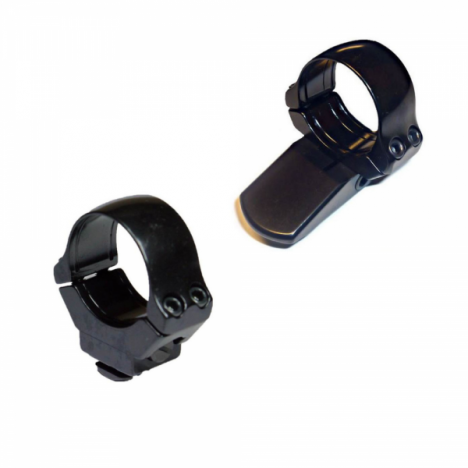
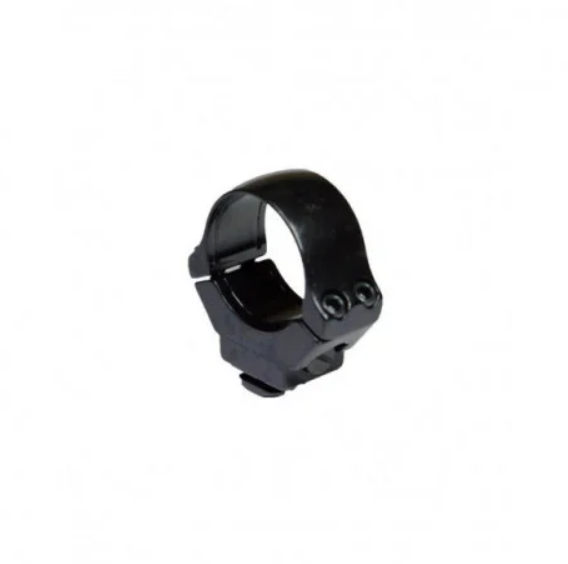
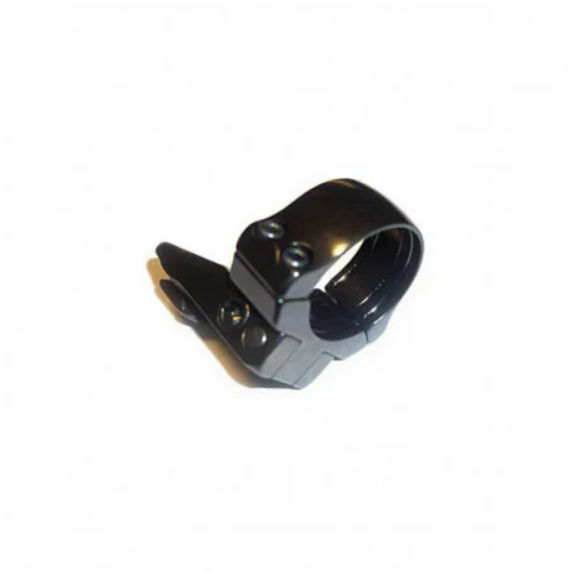
With One Inch Adapter, See-through Style, Easy to Use, Design for use on Real Fire Caliber, Full Metal Compact accessory rail clamps directly to scope tube to provide mounting space for holographic sights, lasers, IR illuminators, flashlights, and other accessories that fit Picatinny style rails. Increases accessory mounting options, without restricting your scope base and ring options. Install on 30mm and 25.4mm one inch riflescope Top rail length: 45mm (1.8 inch), ring length 18mm (0.7 inch) Weight (net): 28g (1.0 ounce) High quality aluminum alloy in durable black matte finish Shock proof and design for use on real fire caliber Can assemble laser, flashlight and red dot sight Can mount either side of the scope Easy to use without special tools With 30mm to 25.4mm (one inch) adapter