Müüja | Saadavus | ||||
|---|---|---|---|---|---|
| Libristo | Programming from the Ground Up GTIN: 9780975283844 Computer programming / software engineering Programming from the Ground Up uses Linux assembly language to teach new programmers the most important concepts in programming. It takes you a step at a time through these concepts: * How the processor views memory * How the processor operates * How programs interact with the operating system * How computers represent data internally * How to do low-level and high-level optimization Most beginning-level programming books attempt to shield the reader from how their computer really works. Programming from the Ground Up starts by teaching how the computer works under the hood, so that the programmer will have a sufficient background to be successful in all areas of programming. This book is being used by Princeton University in their COS 217 "Introduction to Programming Systems" course. | 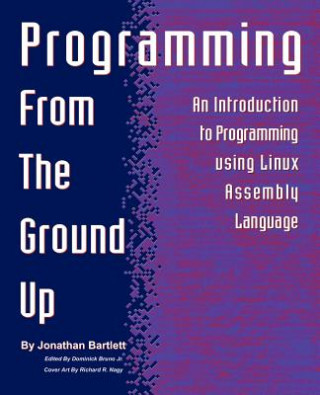 | 14 | 26,19 € | Poodi |
| Libristo | Programming in C GTIN: 9780321776419 Computer programming / software engineering Programming in C, Fourth Edition is a newly revised and updated edition of Steven Kochan's classic C programming tutorial: a book that has helped thousands of students master C over the past 25+ years. This edition fully reflects current developments in C programming, including the latest version (C11). Crafted to help students master C regardless of their intended platform or applications, it includes substantial new coverage of mobile and gaming applications where C's elegance and speed make it indispensable. Kochan brings a unique ability to connect with readers, understand their needs, and explain a language with exceptional clarity and relevance. Here, he begins with the fundamentals, then covers every facet of C programming: variables, data types, arithmetic expressions, program looping, making decisions, arrays, functions, structures, strings, pointers, operations on bits, preprocessors, I/O, and more. You'll find up-to-date chapters on writing larger programs; debugging, and object-oriented fundamentals.Appendices include a complete language summary; an introduction to the current Standard C Library; coverage of compiling and running programs using gcc; and avoiding common coding mistakes. This edition contains improved examples and explanations, as well as new material on C-based object languages such as Objective-C (reflecting Kochan's unique experience as author of Programming in Objective-C 2.0, today's leading Objective-C tutorial). | 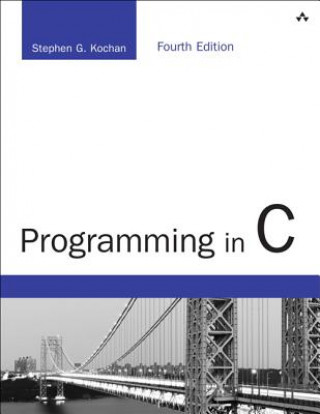 | 14 | 46,59 € | Poodi |
| Krisostomus | Programming in C 4th edition GTIN: 9780321776419 Raamatud Introduces the C programming language, covering such topics as language fundamentals, variables, data types, arithmetic expressions, program looping, functions, and arrays, with complete C programs to illustrate each new concept discussed. Programming in C will teach you how to write programs in the C programming language. Whether youre a novice or experienced programmer, this book will provide you with a clear understanding of this language, which is the foundation for many object-oriented programming languages such as C++, Objective-C, C#, and Java.This book teaches C by example, with complete C programs used to illustrate each new concept along the way. Stephen Kochan provides step-by-step explanations for all C functions. You will learn both the language fundamentals and good programming practices. Exercises at the end of each chapter make the book ideally suited for classroom use or for self-instruction.All the features of the C language are covered in this book, including the latest additions added with the C11 standard. Appendixes provide a detailed summary of the language and the standard C library, both organized for quick reference.Absolutely the best book for anyone starting out programming in C. This is an excellent introductory text with frequent examples and good text. This is the book I used to learn Cits a great book.Vinit S. Carpenter, Learn C/C++ TodayRegister your book at informit.com/register for convenient access to downloads, updates, and corrections as they become available. <br><br> Autorid: Stephen Kochan <br> |  | Tellimisel (tarne 10-14 tp) | 52,94 € | Poodi |
| Libristo | Programming in Lua, fourth edition GTIN: 9788590379867 Programming & scripting languages: general Lua is spreading more and more throughout different areas of software, from embedded systems and mobile devices to the Web and the Internet of Things. Besides, it has a major role in the game industry, where knowledge of Lua has become an indisputable asset. Lua is the language of choice for anyone who needs a scripting language that is simple, efficient, extensible, portable, and free.Programming in Lua is the official book about the language, providing a solid base to any programmer who wants to use Lua. Authored by Roberto Ierusalimschy, the chief architect of the language, it covers all aspects of Lua 5---from the basics to its API with C. The book is the main source of programming patterns for Lua, with numerous code examples that help the reader to make the most of Lua's flexibility and powerful mechanisms.Programming in Lua is targeted at people with some programming background, but does not assume any prior knowledge about Lua or other scripting languages.This Fourth Edition updates the book to Lua 5.3 and marks a complete reorganization of the text. Building on his many years of experience teaching Lua, Roberto has restructured the book to present the material in a growing order of complexity, allowing the reader to better absorb the character of the language. | 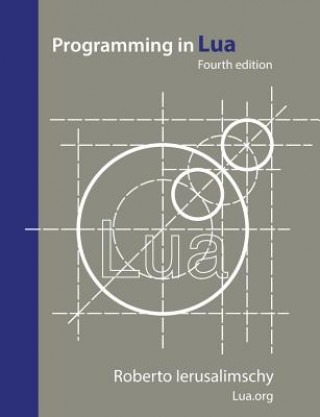 | 14 | 36,49 € | Poodi |
| Krisostomus | Programming in Scala, Fifth Edition 5th edition GTIN: 9780997148008 Raamatud This book is the authoritative tutorial on the Scala programming language, co-written by the language's designer, Martin Odersky. This fifth edition is a major rewrite of the entire book, adding new material to cover the many changes in Scala 3.0. In fact we have added so much new material that we split the book into two volumes. This volume is a tutorial of Scala and functional programming. The Scala language, which blends object-oriented and functional programming concepts, has been exploding in popularity in recent years. This book is a comprehensive, step-by-step guide to learning Scala. If you are a programmer wanting to do your next software project in Scala, looking to expand your horizons by learning new concepts, or currently using Java and want to expand your knowledge of functional programmingor all of the abovethen this book is for you. <br><br> Autorid: Martin Odersky, Lex Spoon, Bill Venners, Frank Sommers <br> |  | Tellimisel (tarne 10-14 tp) | 59,69 € | Poodi |
| Krisostomus | Programming Kotlin: Create Elegant, Expressive, and Performant JVM and Android Applications GTIN: 9781680506358 Raamatud Programmers don't just use Kotlin, they love it. Even Google has adopted it as a first-class language for Android development. With Kotlin, you can intermix imperative, functional, and object-oriented styles of programming and benefit from the approach that's most suitable for the problem at hand. Learn to use the many features of this highly concise, fluent, elegant, and expressive statically typed language with easy-to-understand examples. Learn to write easy-to-maintain, high-performing JVM and Android applications, create DSLs, program asynchrony, and much more. Kotlin is a highly concise, elegant, fluent, and expressive statically typed multi-paradigm language. It is one of the few languages that compiles down to both Java bytecode and JavaScript. You can use it to build server-side, front-end, and Android applications. With Kotlin, you need less code to accomplish your tasks, while keeping the code type-safe and less prone to error. If you want to learn the essentials of Kotlin, from the fundamentals to more advanced concepts, you've picked the right book. Fire up your favorite IDE and practice hundreds of examples and exercises to sharpen your Kotlin skills. Learn to build standalone small programs to run as scripts, create type safe code, and then carry that knowledge forward to create fully object-oriented and functional style code that's easier to extend. Learn how to program with elegance but without compromising efficiency or performance, and how to use metaprogramming to build highly expressive code and create internal DSLs that exploit the fluency of the language. Explore coroutines, program asynchrony, run automated tests, and intermix Kotlin with Java in your enterprise applications. This book will help you master one of the few languages that you can use for the entire full stack - from the server to mobile devices - to create performant, concise, and easy to maintain applications. What You Need: To try out the examples in the book you'll need a computer with Kotlin SDK, JDK, and a text editor or a Kotlin IDE installed in it. <br><br> Autorid: Venkat Subramaniam <br> |  | Tellimisel (tarne 10-14 tp) | 59,03 € | Poodi |
| Krisostomus | Programming Kubernetes: Developing Cloud-Native Applications GTIN: 9781492047100 Raamatud If youre looking to develop native applications in Kubernetes, this is your guide. Developers and AppOps administrators will learn how to build Kubernetes-native applications that interact directly with the API server to query or update the state of resources. AWS developer advocate Michael Hausenblas and Red Hat principal software engineer Stefan Schimanski explain the characteristics of these apps and show you how to program Kubernetes to build them. Youll explore the basic building blocks of Kubernetes, including the client-go API library and custom resources. All you need to get started is a rudimentary understanding of development and system administration tools and practices, such as package management, the Go programming language, and Git. Walk through Kubernetes API basics and dive into the servers inner structure Explore Kubernetess programming interface in Go, including Kubernetes API objects Learn about custom resourcesthe central extension tools used in the Kubernetes ecosystem Use tags to control Kubernetes code generators for custom resources Write custom controllers and operators and make them production ready Extend the Kubernetes API surface by implementing a custom API server <br><br> Autorid: Michael Hausenblas, Stefan Schimanski <br> |  | Tellimisel (tarne 10-14 tp) | 63,36 € | Poodi |
| Krisostomus | Programming Language Explorations 2nd edition GTIN: 9781032110844 Raamatud Programming Language Explorations helps its readers gain proficiency in programming language practice and theory by presenting both example-focused, chapter-length explorations of fourteen important programming languages and detailed discussions of the major concepts transcending multiple languages. A language-by-language approach is sandwiched between an introductory chapter that motivates and lays out the major concepts of the field and a final chapter that brings together all that was learned in the middle chapters into a coherent and organized view of the field.Each of the featured languages in the middle chapters is introduced with a common trio of example programs and followed by a tour of its basic language features and coverage of interesting aspects from its type system, functional forms, scoping rules, concurrency patterns, and metaprogramming facilities. These chapters are followed by a brief tour of over 40 additional languages designed to enhance the readers appreciation of the breadth of the programming language landscape and to motivate further study.Targeted to both professionals and advanced college undergraduates looking to expand the range of languages and programming patterns they can apply in their work and studies, the book pays attention to modern programming practices, keeps a focus on cutting-edge programming patterns, and provides many runnable examples, all of which are available in the books companion GitHub repository. The combination of conceptual overviews with exploratory example-focused coverage of individual programming languages provides its readers with the foundation for more effectively authoring programs, prompting AI programming assistants, and, perhaps most importantly, learningand creatingnew languages. Programming Language Explorations helps its readers gain proficiency in programming language practice and theory by presenting both example-focused, chapter-length explorations of fourteen important programming languages and detailed discussions of the major concepts transcending multiple languages. <br><br> Autorid: Ray Toal, Sage Strieker, Marco Berardini <br> |  | Tellimisel (tarne 10-14 tp) | 71,84 € | Poodi |
| Libristo | Programming Language Pragmatics GTIN: 9780323999663 Computer programming / software engineering Programming Language Pragmatics is the most comprehensive programming language textbook available today, with nearly 1000 pages of content in the book, plus hundreds more pages of reference materials and ancillaries online. Michael Scott takes theperspective that language design and language implementation are tightly interconnected, and that neither can be fully understood in isolation. In an approachable, readable style, he discusses more than 50 languages in the context of understanding how code isinterpreted or compiled, providing an organizational framework for learning new languages, regardless of platform. This edition has been thoroughly updated to cover the most recent developments in programming language design and provides both a solid understanding of the most important issues driving software development today Complete re-write of the chapter on semantic analysis, using formal inference rulesHeavy revision of the chapter on type systemsSignificant updates to the chapters on composite types, object orientation, and code generationNew material on ownership types, safe concurrency, asynchronous programming, traits, move constructors, template "concepts,” the LLVM compiler infrastructure, and many other topicsUpdated coverage of the most recent languages and standards, including Rust, Web Assembly, TypeScript, and C/C++ '23 | 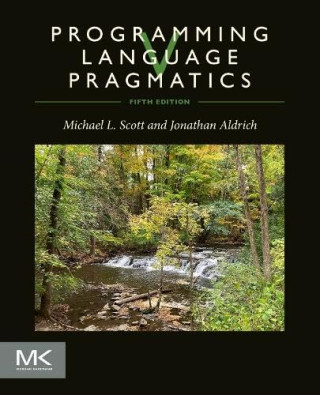 | 14 | 103,19 € | Poodi |
| Krisostomus | Programming Languages: Principles and Paradigms 2nd ed. 2023 GTIN: 9783031341434 Raamatud This textbook is a thorough, up-to-date introduction to the principles and techniques that guide the design and implementation of modern programming languages. The goal of the book is to provide the basis for a critical understanding of most modern programming languages. Thus, rather than focusing on a specific language, the book identifies the most important principles shared by large classes of languages. The notion of abstract machine is a unifying concept that helps to maintain an accurate and elementary treatment. The book introduces, analyses in depth, and compares the imperative, object-oriented, functional, logic, concurrent, constraint-based, and service-oriented programming paradigms. All material coming from the first English edition has been updated and extended, clarifying some tricky points, and discussing newer programming languages. This second edition contains new chapters dedicated to constraint, concurrent, and service-oriented programming.Topics and features:Requires familiarity with one programming language is a prerequisiteProvides a chapter on history offering context for most of the constructs in use todayPresents an elementary account of semantical approaches and of computabilityIntroduces new examples in modern programming languages like Python or ScalaOffers a chapter that opens a perspective on applications in artificial intelligenceConceived as a university textbook, this unique volume will also be suitable for IT specialists who want to deepen their knowledge of the mechanisms behind the languages they use. The choice of themes and the presentation style are largely influenced by the experience of teaching the content as part of a bachelor's degree in computer science. <br><br> Autorid: Maurizio Gabbrielli, Simone Martini, Saverio Giallorenzo <br> |  | Tellimisel (tarne 10-14 tp) | 53,50 € | Poodi |
| Krisostomus | Programming Large Language Models with Azure Open AI: Conversational programming and prompt engineering with LLMs GTIN: 9780138280376 Raamatud Use LLMs to build better business software applications Autonomously communicate with users and optimize business tasks with applications built to make the interaction between humans and computers smooth and natural. Artificial Intelligence expert Francesco Esposito illustrates several scenarios for which a LLM is effective: crafting sophisticated business solutions, shortening the gap between humans and software-equipped machines, and building powerful reasoning engines. Insight into prompting and conversational programmingwith specific techniques for patterns and frameworksunlock how natural language can also lead to a new, advanced approach to coding. Concrete end-to-end demonstrations (featuring Python and ASP.NET Core) showcase versatile patterns of interaction between existing processes, APIs, data, and human input. Artificial Intelligence expert Francesco Esposito helps you: Understand the history of large language models and conversational programming Apply prompting as a new way of coding Learn core prompting techniques and fundamental use-cases Engineer advanced prompts, including connecting LLMs to data and function calling to build reasoning engines Use natural language in code to define workflows and orchestrate existing APIs Master external LLM frameworks Evaluate responsible AI security, privacy, and accuracy concerns Explore the AI regulatory landscape Build and implement a personal assistant Apply a retrieval augmented generation (RAG) pattern to formulate responses based on a knowledge base Construct a conversational user interface For IT Professionals and Consultants For software professionals, architects, lead developers, programmers, and Machine Learning enthusiasts For anyone else interested in natural language processing or real-world applications of human-like language in software <br><br> Autorid: Francesco Esposito <br> |  | Tellimisel (tarne 10-14 tp) | 51,59 € | Poodi |
| Krisostomus | Programming Machine Learning: From Coding to Deep Learning GTIN: 9781680506600 Raamatud You've decided to tackle machine learning - because you're job hunting, embarking on a new project, or just think self-driving cars are cool. But where to start? It's easy to be intimidated, even as a software developer. The good news is that it doesn't have to be that hard. Master machine learning by writing code one line at a time, from simple learning programs all the way to a true deep learning system. Tackle the hard topics by breaking them down so they're easier to understand, and build your confidence by getting your hands dirty. Peel away the obscurities of machine learning, starting from scratch and going all the way to deep learning. Machine learning can be intimidating, with its reliance on math and algorithms that most programmers don't encounter in their regular work. Take a hands-on approach, writing the Python code yourself, without any libraries to obscure what's really going on. Iterate on your design, and add layers of complexity as you go. Build an image recognition application from scratch with supervised learning. Predict the future with linear regression. Dive into gradient descent, a fundamental algorithm that drives most of machine learning. Create perceptrons to classify data. Build neural networks to tackle more complex and sophisticated data sets. Train and refine those networks with backpropagation and batching. Layer the neural networks, eliminate overfitting, and add convolution to transform your neural network into a true deep learning system. Start from the beginning and code your way to machine learning mastery. What You Need: The examples in this book are written in Python, but don't worry if you don't know this language: you'll pick up all the Python you need very quickly. Apart from that, you'll only need your computer, and your code-adept brain. <br><br> Autorid: Paolo Perrotta <br> |  | Tellimisel (tarne 10-14 tp) | 54,98 € | Poodi |
| Libristo | Programming Massively Parallel Processors GTIN: 9780323912310 Grid & parallel computing Programming Massively Parallel Processors: A Hands-on Approach shows both student and professional alike the basic concepts of parallel programming and GPU architecture. Various techniques for constructing parallel programs are explored in detail. Case studies demonstrate the development process, which begins with computational thinking and ends with effective and efficient parallel programs. Topics of performance, floating-point format, parallel patterns, and dynamic parallelism are covered in depth. For this new edition, the authors are updating their coverage of CUDA, including the concept of unified memory, and expanding content in areas such as threads, while still retaining its concise, intuitive, practical approach based on years of road-testing in the authors' own parallel computing courses. Teaches computational thinking and problem-solving techniques that facilitate high-performance parallel computing Updated to utilize CUDA version 10.0, NVIDIA's software development tool created specifically for massively parallel environments Features new content on unified memory, as well as expanded content on threads, streams, warp divergence, and OpenMP Includes updated and new case studies | 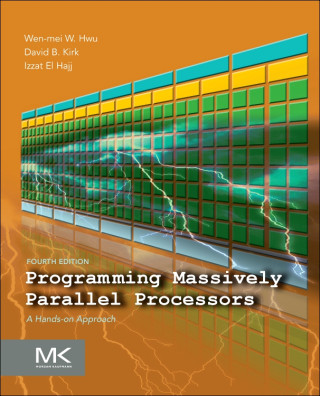 | 14 | 95,49 € | Poodi |
| Krisostomus | Programming Massively Parallel Processors: A Hands-on Approach 4th edition GTIN: 9780323912310 Raamatud Programming Massively Parallel Processors: A Hands-on Approach shows both student and professional alike the basic concepts of parallel programming and GPU architecture. Various techniques for constructing parallel programs are explored in detail. Case studies demonstrate the development process, which begins with computational thinking and ends with effective and efficient parallel programs. Topics of performance, floating-point format, parallel patterns, and dynamic parallelism are covered in depth. For this new edition, the authors are updating their coverage of CUDA, including the concept of unified memory, and expanding content in areas such as threads, while still retaining its concise, intuitive, practical approach based on years of road-testing in the authors' own parallel computing courses. Teaches computational thinking and problem-solving techniques that facilitate high-performance parallel computing Updated to utilize CUDA version 10.0, NVIDIA's software development tool created specifically for massively parallel environments Features new content on unified memory, as well as expanded content on threads, streams, warp divergence, and OpenMP Includes updated and new case studies <br><br> Autorid: Wen-mei W. Hwu, David B. Kirk, Izzat El Hajj <br> |  | Tellimisel (tarne 10-14 tp) | 96,08 € | Poodi |
| Libristo | Programming Pearls GTIN: 9780201657883 Computer programming / software engineering "The first edition of Programming Pearls was one of the most influential books I read early in my career, and many of the insights I first encountered in that book stayed with me long after I read it. Jon has done a wonderful job of updating the material. I am very impressed at how fresh the new examples seem." --Steve McConnell When programmers list their favorite books, Jon Bentley's collection of programming pearls is commonly included among the classics. Just as natural pearls grow from grains of sand that irritate oysters, programming pearls have grown from real problems that have irritated real programmers. With origins beyond solid engineering, in the realm of insight and creativity, Bentley's pearls offer unique and clever solutions to those nagging problems. Illustrated by programs designed as much for fun as for instruction, the book is filled with lucid and witty descriptions of practical programming techniques and fundamental design principles. It is not at all surprising that Programming Pearls has been so highly valued by programmers at every level of experience.In this revision, the first in 14 years, Bentley has substantially updated his essays to reflect current programming methods and environments.In addition, there are three new essays on / testing, debugging, and timing / set representations / string problems All the original programs have been rewritten, and an equal amount of new code has been generated. Implementations of all the programs, in C or C++, are now available on the Web. What remains the same in this new edition is Bentley's focus on the hard core of programming problems and his delivery of workable solutions to those problems. Whether you are new to Bentley's classic or are revisiting his work for some fresh insight, the book is sure to make your own list of favorites. 0201657880B04062001 |  | 90 | 42,29 € | Poodi |
| Krisostomus | Programming Phoenix LiveView: Interactive Elixir Web Programming Without Writing Any JavaScript GTIN: 9781680508215 Raamatud The days of the traditional request-response web application are long gone, but you don't have to wade through oceans of JavaScript to build the interactive applications today's users crave. The innovative Phoenix LiveView library empowers you to build applications that are fast and highly interactive, without sacrificing reliability. This definitive guide to LiveView isn't a reference manual. Learn to think in LiveView. Write your code layer by layer, the way the experts do. Explore techniques with experienced teachers to get the best possible performance.Instead of settling for traditional manuals and tutorials, get insights that can only be learned from experience. Start with the Elixir language techniques that effortlessly marry your client templates and server-side handlers. Design your systems with the right layers in the right places so that your code is easier to understand, change, and support. Explore features like multi-part uploads and learn how to comprehensively test your live views. Roll into advanced techniques to tie your code to other services through the powerful publish-subscribe interface.LiveView brings the most important programming techniques from the popular Elm and JavaScript React frameworks to Elixir. You'll experience firsthand how to harness that power by working side by side with some of the first LiveView users. You will write your programs to change data on the server, and you'll see how LiveView efficiently detects those changes and reflects them on the web page. Start from scratch, use built-in generators, and craft reusable components. Your single-purpose reducers will transform server data that your renderers can turn into efficient client-side diffs.Don't settle for knowing how things work. To get the most out of LiveView, you need to know why they work that way. Co-authored by one of the most prolific authors and teachers in all of Elixir, this book is your perfect guide to one of the most important new frameworks of our generation.What You Need:Programming Phoenix LiveView uses Phoenix version 1.5, and any Elixir version compatible with it. You will also want PostgreSQL and JavaScript Node. <br><br> Autorid: Bruce A. Tate, Sophie DeBenedetto <br> |  | Tellimisel (tarne 10-14 tp) | 75,23 € | Poodi |
| Krisostomus | Programming PHP: Creating Dynamic Web Pages 4th Revised edition GTIN: 9781492054139 Raamatud Why is PHP the most widely used programming language on the web? This updated edition teaches everything you need to know to create effective web applications using the latest features in PHP 7.4. You&;ll start with the big picture and then dive into language syntax, programming techniques, and other details, using examples that illustrate both correct usage and common idioms. If you have a working knowledge of HTML, authors Kevin Tatroe and Peter MacIntyre provide many style tips and practical programming advice in a clear and concise manner to help you become a top-notch PHP programmer.Understand what&;s possible when you use PHP programsLearn language fundamentals, including data types, variables, operators, and flow control statementsExplore functions, strings, arrays, and objectsApply common web application techniques, such as form processing, data validation, session tracking, and cookiesInteract with relational databases like MySQL or NoSQL databases such as MongoDBGenerate dynamic images, create PDF files, and parse XML filesLearn secure scripts, error handling, performance tuning, and other advanced topicsGet a quick reference to PHP core functions and standard extensions <br><br> Autorid: Kevin Tatroe, Peter MacIntyre <br> |  | Tellimisel (tarne 10-14 tp) | 63,36 € +0,17 € | Poodi |
| Krisostomus | Programming Python 4th edition GTIN: 9780596158101 Raamatud Provides information and tutorials on Python's application domains and its use in databases, networking, scripting layers, and text processing. Once you've come to grips with the core Python language, learning how to build Python applications presents a far more interesting challenge. Many critics consider this classic book, now updated for Python 3.x, to be the industry standard for learning Python application programming. With clear and concise explanations of Python syntax and programming techniques, and numerous examples that illustrate both correct usage and common idioms, Programming Python shows you the right way to code with Python. You'll start with in-depth discussions of core concepts and then progress toward complete programs in different application domains, including: GUI programming Internet scripting Parallel processing Database management Networked applications System administration Text processing When you begin to tap this book's wealth of practical advice, snippets of code, and patterns of program design on a daily basis, you'll be much more productive. <br><br> Autorid: Mark Lutz <br> |  | Tellimisel (tarne 10-14 tp) | 71,39 € +0,17 € | Poodi |
| Libristo | Programming Quantum Computers GTIN: 9781492039686 Software Engineering Quantum computers are poised to kick-start a new computing revolution--and you can join in right away. If you're in software engineering, computer graphics, data science, or just an intrigued computerphile, this book provides a hands-on programmer's gui | 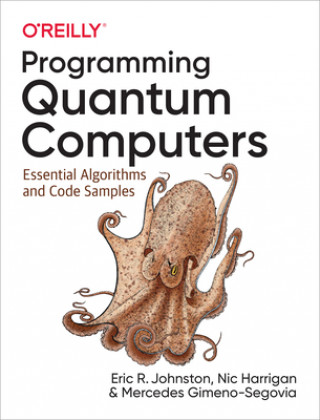 | 14 | 57,39 € | Poodi |
| Krisostomus | Programming Quantum Computers: Essential Algorithms and Code Samples GTIN: 9781492039686 Raamatud Quantum computers are poised to kick-start a new computing revolution—and you can join in right away. If you’re in software engineering, computer graphics, data science, or just an intrigued computerphile, this book provides a hands-on programmer’s guide to understanding quantum computing. Rather than labor through math and theory, you’ll work directly with examples that demonstrate this technology’s unique capabilities.Quantum computing specialists Eric Johnston, Nic Harrigan, and Mercedes Gimeno-Segovia show you how to build the skills, tools, and intuition required to write quantum programs at the center of applications. You’ll understand what quantum computers can do and learn how to identify the types of problems they can solve.This book includes three multichapter sections:Programming for a QPU—Explore core concepts for programming quantum processing units, including how to describe and manipulate qubits and how to perform quantum teleportation.QPU Primitives—Learn algorithmic primitives and techniques, including amplitude amplification, the Quantum Fourier Transform, and phase estimation.QPU Applications—Investigate how QPU primitives are used to build existing applications, including quantum search techniques and Shor’s factoring algorithm. <br><br> Autorid: Mercedes Gimeno-Segovia, Nic Harrigan, Eric R. Johnston <br> |  | Tellimisel (tarne 10-14 tp) | 75,98 € | Poodi |
| Krisostomus | Programming Ruby 3.2: The Pragmatic Programmers' Guide 5th New edition GTIN: 9781680509823 Raamatud Ruby is one of the most important programming languages in use for web development. It powers the Rails framework, which is the backing of some of the most important sites on the web. The Pickaxe Book, named for the tool on the cover, is the definitive reference on Ruby, a highly-regarded, fully object-oriented programming language. This updated edition is a comprehensive reference on the language itself, with a tutorial on the most important features of Ruby - including pattern matching and Ractors - and describes the language through Ruby 3.2.Would you like to go from first idea to working code much, much faster? Do you currently spend more time satisfying the compiler instead of your clients or end users? Are you frustrated with demanding languages that seem to get in your way instead of helping you get the work done? Are you using Rails and want to dig deeper into the underlying Ruby language? If so, then we've got a language and book for you!Ruby is a fully object-oriented language. The combination of the power of a pure object-oriented language with the convenience of a scripting language makes Ruby a favorite tool of programmers that want to get things done quickly and cleanly.This comprehensive reference manual for Ruby includes a description of the most important standard library modules, built-in classes, and modules. It also includes all the new and changed syntax and semantics introduced through Ruby 3.2, including pattern matching and Ractors, and describes the language through Ruby 3.2.What You Need:This book assumes you have a basic understanding of object-oriented programming.In general, Ruby programmers tend to favor the the command line for running their code, and they tend to use text editors rather than IDEs.Ruby runs on Windows, Linux, and MacOS. <br><br> Autorid: Noel Rappin <br> |  | Tellimisel (tarne 10-14 tp) | 74,54 € | Poodi |
| Libristo | Programming Rust GTIN: 9781492052593 Computer science Systems programming provides the foundation for the world's computation. Writing performance-sensitive code requires a programming language that puts programmers in control of how memory, processor time, and other system resources are used. The Rust systems programming language combines that control with a modern type system that catches broad classes of common mistakes, from memory management errors to data races between threads.With this practical guide, experienced systems programmers will learn how to successfully bridge the gap between performance and safety using Rust. Jim Blandy, Jason Orendorff, and Leonora Tindall demonstrate how Rust's features put programmers in control over memory consumption and processor use by combining predictable performance with memory safety and trustworthy concurrency.You'll learn:Rust's fundamental data types and the core concepts of ownership and borrowingHow to write flexible, efficient code with traits and genericsHow to write fast, multithreaded code without data racesRust's key power tools: closures, iterators, and asynchronous programmingCollections, strings and text, input and output, macros, unsafe code, and foreign function interfacesThis revised, updated edition covers the Rust 2021 Edition. | 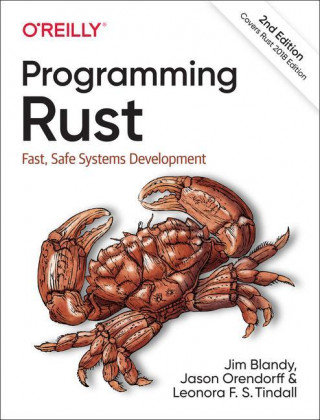 | 14 | 58,99 € | Poodi |
| Krisostomus | Programming Rust: Fast, Safe Systems Development 2nd Revised edition GTIN: 9781492052593 Raamatud Systems programming provides the foundation for the world's computation. Developing performance-sensitive code requires a programming language that puts programmers in control of how memory, processor time, and other system resources are used. The Rust systems programming language combines that control with a modern type system that catches broad classes of common mistakes, from memory management errors to interthread data races.With this practical guide, experienced systems programmers will learn how to successfully bridge the gap between performance and safety using Rust. Jim Blandy, Jason Orendorff, and Leonora Tindall demonstrate how Rust's features put programmers in control over memory consumption and processor use by combining predictable performance with memory safety and trustworthy concurrency.You'll learn:Rust's fundamental data types and the core concepts of ownership and borrowingLanguage basics including error handling, crates and modules, structs, and enumsHow to write flexible, efficient code with traits and genericsRust's key power tools: closures, iterators, and asynchronous programmingCollections, strings and text, input and output, concurrency, macros, unsafe code, and interfacing with foreign functions <br><br> Autorid: Jim Blandy, Jason Orendorff, Leonora F. S. Tindall <br> |  | Tellimisel (tarne 10-14 tp) | 75,98 € | Poodi |
| Krisostomus | Programming the BBC micro:bit: Getting Started with MicroPython GTIN: 9781260117585 Raamatud Quickly write innovative programs for your micro:bitno experience necessary!This easy-to-follow guide shows, step-by-step, how to quickly get started with programming and creating fun applications on your micro:bit.. Written in the straightforward style that Dr. Simon Monk is famous for, Programming the BBC micro:bit: Getting Started with MicroPython begins with basic concepts and gradually progresses to more advanced techniques. You will discover how to use the micro:bit's built-in hardware, use the LED display, accept input from sensors, attach external electronics, and handle wireless communication.Connect your micro:bit to a computer and start programming!Learn how to use the two most popular MicroPython editors Work with built-in functions and methodsand see how to write your ownDisplay text, images, and animations on the micro:bits LED matrixProcess data from the accelerometer, compass, and touch sensorControl external hardware by attaching it to the edge connectorSend and receive messages via the built-in radio moduleGraphically build programs with the JavaScript Blocks Editor <br><br> Autorid: Simon Monk <br> |  | Tellimisel (tarne 10-14 tp) | 23,15 € | Poodi |
| Libristo | Programming the ESP32 In C Using the Arduino Library GTIN: 9781871962925 The Espressif ESP32 is a remarkable device. It is low cost but with many different subsystems that make it more powerful than you might think. You can use it for simple applications because it is cheap, but you can also use it for more sophisticated applications because it is capable.C is the ideal choice of language to program the ESP32, ensuring that your programs are fast and efficient, and here it is used with the customized ESP version of the Arduino library and its associated IDE which makes the device as easy to use as possible. The Arduino library runs on top of the official Espressif ESP32 IoT Development Framework as a simplifying layer and you can always drop down a level and make use of its additional features when required.The purpose of this book is to reveal what you can do with the ESP32's GPIO lines together with widely used sensors, servos and motors and ADCs. After covering the GPIO, outputs and inputs, events and interrupts, it gives you hands-on experience of PWM (Pulse Width Modulation), the SPI bus, the I2C bus and the 1-Wire bus, the UARTs and, of course, WiFi. To round out, it covers direct access to the hardware, adding an SD Card reader, sleep states to save power, the RTC, RMT and touch sensors. It also devotes a chapter to FreeRTOS which takes us into the realm of asynchronous processing.This is not a projects book, although there isn't much left for you to do to round out the embryonic projects that are used as examples. Instead it is about understanding concepts and the acquisition of skills. The hope is that by the end of the book you will know how to tackle your own projects and get them safely to completion without wasting time in trial and error.Harry Fairhead is the author of Programming the ESP32 in C Using the Espressif IDF and co-author of Programming the ESP32 in MicroPython. C is his programming language of choice and he is the author of Fundamental C: Getting Closer To The Machine and Applying C For The IoT With Linux. His other books on programming single-board computers include Programming the Raspberry Pi Pico/W in C; Raspberry Pi IoT In C; Raspberry Pi IoT in C With Linux Drivers and Micro:bit IoT in C. |  | 14 | 31,29 € | Poodi |
| Libristo | Programming the ESP32 in MicroPython GTIN: 9781871962826 Programming & scripting languages: general There is a new edition of this book: Programming the ESP32 in MicroPython Second EditionThe ESP32 is a remarkable device. It is low cost but with many different subsystems that make it more powerful than you might think. You can use it for simple applications because it is cheap, but you can also use it for more sophisticated applications because it is capable. MicroPython is a good choice of language to program the ESP32. Although it is a slower language than C, most of the time this doesn't matter and it is much easier to use. As a high-level language, MicroPython is based on Python 3 and is fully object-oriented. In general, you can take an existing Python 3 program and simply run it under MicroPython. If there are any changes to make, they are generally minor.Another good thing about MicroPython on the ESP32 is that it is very easy to get started. After a simple installation procedure you have a working MicroPython machine which you can program almost at once using the Thonny IDE or PyCharm which has more extensive syntax checking and input prompting.The purpose of the book is to reveal what you can do with the ESP's GPIO lines together with widely used sensors, servos and motors and ADCs. After covering the GPIO, outputs and inputs, events and interrupts, it gives you hands-on experience of PWM (Pulse Width Modulation), the SPI bus, the I2C bus and the 1-Wire bus. We also cover direct access to the hardware, adding an SD Card reader, sleep states to save power, the RTC, RMT and touch sensors, not to mention how to use WiFi.The ESP32 has so many resources that a comprehensive account would fill a book twice this size. In order to make things fit in the space available we have concentrated on things that are accessible from MicroPython and that are basic to getting started. We have avoided "advanced" topics which generally lead the beginner into deep water far too quickly. However, we do cover of use of uasyncio, and asynchronous programming, in general as they are essential to networking.Jointly authored by Harry Fairhead and Mike James, this book combines Harry's expertise in electronics and the IoT with Mike's knowledge of Python. Their previous books include Programming the Raspberry Pi Pico/W in MicroPython, Raspberry Pi IoT In Python, Raspberry Pi IoT In Python Using Linux Drivers while Harry Fairhead is the author of the C language counterparts. His other books include Fundamental C: Getting Closer To The Machine, Applying C For The IoT With Linux, and Micro:bit IoT in C. Mike James is the author of the Programmer's Python: Something Completely Different series of books and several other programming and computer science titles in the I Programmer Library. |  | 14 | 31,29 € | Poodi |
| Libristo | Programming the ESP32 in MicroPython, 2nd Edition GTIN: 9781871962932 Programming & scripting languages: general New in this edition is support for the ESP32 S3 and the Arduino Nano ESP32.The ESP32 is a remarkable device. It is low cost but with many different subsystems that make it more powerful than you might think. You can use it for simple applications because it is cheap, but you can also use it for more sophisticated applications because it is capable. MicroPython is a good choice of language to program the ESP32. Although it is a slower language than C, most of the time this doesn't matter and it is much easier to use. As a high-level language, MicroPython is based on Python 3 and is fully object-oriented. In general, you can take an existing Python 3 program and simply run it under MicroPython. If there are any changes to make, they are generally minor.Another good thing about MicroPython on the ESP32 is that it is very easy to get started. After a simple installation procedure you have a working MicroPython machine which you can program almost at once using the Thonny IDE or PyCharm which has more extensive syntax checking and input prompting.The purpose of the book is to reveal what you can do with the ESP's GPIO lines together with widely used sensors, servos and motors and ADCs. After covering the GPIO, outputs and inputs, events and interrupts, it gives you hands-on experience of PWM (Pulse Width Modulation), the SPI bus, the I2C bus and the 1-Wire bus. We also cover direct access to the hardware, adding an SD Card reader, sleep states to save power, the RTC, RMT and touch sensors, not to mention how to use WiFi.Jointly authored by Harry Fairhead and Mike James, this book combines Harry's expertise in electronics and the IoT with Mike's knowledge of Python. Their other collaborations include Programming the Raspberry Pi Pico/W in MicroPython, Raspberry Pi IoT In Python Using GPIO Zero and Raspberry Pi IoT In Python Using Linux Drivers.Harry Fairhead is the author of Programming the ESP32 in C Using the Arduino Library, Programming the ESP32 in C Using the Espressif IDF and the C language counterparts of books on the Raspberry Pi and the Pico. He is also the author of Fundamental C: Getting Closer To The Machine and Applying C For The IoT With Linux.Mike James is the author of the Programmer's Python: Something Completely Different series of books and several other programming and computer science titles in the I Programmer Library. |  | 14 | 31,29 € | Poodi |
| Krisostomus | Programming the Internet of Things: An Introduction to Building Integrated, Device-to-Cloud IoT Solutions GTIN: 9781492081418 Raamatud Learn how to program the Internet of Things with this hands-on guide. By breaking down IoT programming complexities in step-by-step, building-block fashion, author and educator Andy King shows you how to design and build your own full stack, end-to-end IoT solution--from device to cloud. This practical book walks you through tooling, development environment setup, solution design, and implementation.You'll learn how a typical IoT ecosystem works, as well as how to tackle integration challenges that crop up when implementing your own IoT solution. Whether you're an engineering student learning the basics of the IoT, a tech-savvy executive with a company embarking on an IoT journey, or a programmer building your own smart house solution, this practical book will help you get started.Design an end-to-end solution that implements an IoT use caseSet up an IoT-centric development and testing environmentOrganize your software design by creating abstractions in Python and JavaUse MQTT, CoAP, and other protocols to connect IoT devices and servicesCreate a custom JSON-based data format that's consumable across a range of platforms and servicesUse cloud services to support your IoT ecosystem and provide business value for stakeholders <br><br> Autorid: Andrew King <br> |  | Tellimisel (tarne 10-14 tp) | 75,98 € | Poodi |
| Krisostomus | Programming the Raspberry Pi, Third Edition: Getting Started with Python 3rd edition GTIN: 9781264257355 Raamatud An up-to-date guide to creating your own fun and useful Raspberry Pi programs This fully updated guide shows how to create inventive programs and fun games on your powerful Raspberry Piwith no programming experience required. Programming the Raspberry Pi: Getting Started with Python, Third Edition addresses physical changes and new setup procedures as well as OS updates to the current version 4. You will discover how to configure hardware and software, write Python scripts, create user-friendly GUIs, and control external electronics. Step-by-step projects include a digital clock prototype and a fully functioning Raspberry Pi robot.Configure your Raspberry Pi and explore its featuresStart writing and debugging Python programsUse strings, lists, functions, and dictionariesWork with modules, classes, and methodsApply object-oriented development methodsCreate user-friendly games using PygameBuild intuitive user interfaces with guizeroInterface with hardware using the gpiozero libraryAttach external electronics through the GPIO portAdd powerful Web features to your projects <br><br> Autorid: Simon Monk <br> |  | Tellimisel (tarne 10-14 tp) | 19,19 € | Poodi |
| Krisostomus | Programming TypeScript: Making Your JavaScript Applications Scale GTIN: 9781492037651 Raamatud Any programmer working in a dynamically typed language will tell you how hard it is to scale that language to more lines of code and to more engineers. That’s why Facebook, Google, and Microsoft invented gradual static type layers for their dynamically typed JavaScript and Python code. TypeScript is one such type layer, and does something unique among them: it makes programming fun with its powerful, modern, static type system.With this book, programmers who understand JavaScript at an intermediate level will learn how to master the TypeScript language. You’ll understand how TypeScript can help you get rid of bugs in your code, scale your code across 10x more engineers, and make programming fun again. <br><br> Autorid: Boris Cherny <br> |  | Tellimisel (tarne 10-14 tp) | 54,18 € | Poodi |
| Krisostomus | Programming with GitHub Copilot: Write Better Code--Faster! GTIN: 9781394263370 Raamatud Accelerate your programming with the most popular AI coding tool on the market: GitHub Copilot In Programming with GitHub Copilot: Write Better Code Faster, veteran software developer and GitHub community hero Kurt Dowswell delivers an insightful and hands-on exploration of GitHub's powerful, new AI coding assistant, Copilot. In the book, you'll discover how to use the tool's capabilities to push the boundaries of what you thought was possible in programming. Even if you've used autocomplete toolslike VS Code's TabNine extensionbefore, you'll be floored by GitHub Copilot's potential to transform the way you code. You'll learn how to install, configure, and use the software, from employing it's most common and widely used features to deploying business and enterprise functionality. You'll even discover how to fix runtime and compilation bugs and write unit, integration, and end-to-end tests. You'll also find: Prompt strategies to get GitHub Copilot to help you brainstorm new code solutions What the future looks like for AI-assisted coding, including discussions of issues like code licensing and ethics Directions for chatting with Copilot, including common commands and prompts to help you guide the conversation to where you want it to go Perfect for practicing programmers, developers, and software engineers, Programming with GitHub Copilot is also an essential resource for coders and other IT practitioners-in-training who want to expand their knowledge and improve the scope and depth of their programming skillsets. <br><br> Autorid: Kurt Dowswell <br> |  | Tellimisel (tarne 10-14 tp) | 67,12 € | Poodi |
| Krisostomus | Programming with MicroPython: Embedded Programming with Microcontrollers and Python GTIN: 9781491972731 Raamatud It’s an exciting time to get involved with MicroPython, the re-implementation of Python 3 for microcontrollers and embedded systems. This practical guide delivers the knowledge you need to roll up your sleeves and create exceptional embedded projects with this lean and efficient programming language. If you’re familiar with Python as a programmer, educator, or maker, you’re ready to learn—and have fun along the way.Author Nicholas Tollervey takes you on a journey from first steps to advanced projects. You’ll explore the types of devices that run MicroPython, and examine how the language uses and interacts with hardware to process input, connect to the outside world, communicate wirelessly, make sounds and music, and drive robotics projects.Work with MicroPython on four typical devices: PyBoard, the micro:bit, Adafruit’s Circuit Playground Express, and ESP8266/ESP32 boardsExplore a framework that helps you generate, evaluate, and evolve embedded projects that solve real problemsDive into practical MicroPython examples: visual feedback, input and sensing, GPIO, networking, sound and music, and roboticsLearn how idiomatic MicroPython helps you express a lot with the minimum of resourcesTake the next step by getting involved with the Python community <br><br> Autorid: Nicholas H. Tollervey <br> |  | Tellimisel (tarne 10-14 tp) | 48,44 € | Poodi |
| Krisostomus | Programming with STM32: Getting Started with the Nucleo Board and C/Cplusplus GTIN: 9781260031317 Raamatud Create your own STM32 programs with ease!Get up and running programming the STM32 line of microcontrollers from STMicroelectronics using the hands-on information contained in this easy-to-follow guide. Written by an experienced electronics hobbyist and author, Programming with STM32: Getting Started with the Nucleo Board and C/C++ features start-to-finish projects that clearly demonstrate each technique. Discover how to set up a stable development toolchain, write custom programs, download your programs to the development board, and execute them. You will even learn how to work with external servos and LED displays!Explore the features of STM32 microcontrollers from STMicroelectonicsConfigure your Nucleo-64 Microcontroller development boardEstablish a toolchain and start developing interesting applications Add specialized code and create cool custom functionsAutomatically generate C code using the STM32CubeMX applicationWork with the ARM Cortex Microcontroller Software Interface Standard and the STM hardware abstraction layer (HAL).Control servos, LEDs, and other hardware using PWMTransfer data to and from peripheral devices using DMAGenerate waveforms and pulses through your microcontrollers DAC <br><br> Autorid: Donald Norris <br> |  | Tellimisel (tarne 10-14 tp) | 29,58 € | Poodi |
| Libristo | Progress GTIN: 9780745691008 Sociology The idea of progress guided human expectations and actions for over two centuries. From the Enlightenment onwards, it was widely believed that the condition of humankind could be radically improved. History had embarked on an unstoppable forward trajectory, realizing the promise of freedom and reason. The scientific revolution, the industrial revolution, and the French Revolution, in some views also the socialist revolution, were milestones on this march of progress. But since the late twentieth century the idea of progress has largely disappeared from public debate. Sometimes it has been explicitly declared dead. The wide horizon of future possibilities has closed. The best we can hope for, some say, is to avoid regress. What happened to progress? Why did we stop believing in it, if indeed we did? This book offers answers to these questions. It reviews both the conceptual history of progress and the social and political experiences with progress over the past two centuries, and it comes to a surprising conclusion: The idea of progress was misconceived from its beginnings, and the failure of progress in practice was a result of this flawed conception.The experiences of the past half century, in turn, has allowed us to rethink progress in a more adequate way. Rather than the end of progress, they may herald the beginning of a new, reconstructed idea of progress. |  | 14 | 21,19 € | Poodi |
| Libristo | PROGRESS & REGRESSION GTIN: 9780674298019 Philosophy A landmark work of social and political philosophy that finds this leading heir to the Frankfurt School at the height of her powers. Despite widespread technological innovation, scientific and medical breakthroughs, and strides toward gender and racial equity, few believe that humanity is on the road of progress. Indeed, many are increasingly skeptical of the very notion of progress, seeing it as the stuff of hollow political speeches. Nevertheless, this impassioned book argues that we are lost without a shared idea of progress. In the tradition of critical theory, Rahel Jaeggi defends a vision of progress that avoids Eurocentric and teleological distortions. Progress here is not an inevitable developmental trend but a kind of compass directing society's never-ending journey toward emancipation. A nimble practitioner of dialectical reasoning, Jaeggi revitalizes progress by confronting its opposite: regression. Her analysis-sober and thoughtful, but urgent-reckons with the myriad signs of regression today, including growing inequality, ecological destruction, and above all the assault on educational institutions, critical thinking, and reason itself. The task of imagining a human solidarity capable of transcending difference and promoting universal welfare has seldom been more pressing-or more complex. Progress and Regression is an indispensable resource for those ready to take up the challenge. |  | 14 | 32,19 € | Poodi |
| Libristo | Progress and Religion GTIN: 9780813210155 Cultural studies In this volume Christopher Dawson outlines his main thesis for the history of culture, which was his life's work. He contends that religion is the soul of a culture and that a society or culture which has lost its spiritual roots is a dying culture. The work challenges the doctrine of progress. |  | 14 | 27,59 € | Poodi |
| Krisostomus | Progress in Computing: Key Stage 3 GTIN: 9781398323452 Raamatud Reboot your Key Stage 3 classroom with this all-in-one textbook that will inspire you to deliver creative Computing lessons with confidence. > Boost knowledge and skills in bite-sized chunks: every double-page spread represents a lesson's worth of targeted content and activities > Build understanding of the principles of Computing and improve IT skills with a range of engaging activities > Challenge students to think creatively about what they are learning and how it can be applied in the real world > Empower students to check and drive their own progress through Key Stage 3 and to GCSE, Cambridge Nationals and BTEC, and beyond, with regular knowledge check-ins and activities > Ensure complete coverage of the National Curriculum, with an easy-to-follow Progression Framework We've listened to how you teach Computing at Key Stage 3 and designed our brand-new toolkit of digital and printed resources around you! Comprising of everything you will need to confidently deliver the National Curriculum in Computing and develop students' ICT skills, Progress in Computing: Key Stage 3 combines lesson plans, presentations, interactive resources, quizzes and assessments with a Student Book. The Progress in Computing digital and print 'toolkit' will be formed of 16 modules that can be used flexibly to suit a teacher's context. Our brand-new digital platform will also give you unparalleled flexibility in terms of choosing your own pathway through the resources, with the bonus of all elements being tagged clearly against the curriculum, our 2 and 3-year Scheme of Work and progression to Key Stage 4 qualifications. Digital resources include: - videos, animations, online self-marking coding challenges and worksheets - teaching and learning support and lesson plans including course planners for centres in England and Wales - a mixture of teacher-led, teacher-facilitated, plugged and unplugged activities - baseline assessment and an end of Key Stage 3 assessment, with auto-marked homework quizzes and end-of-module assessments track progress throughout the course. <br><br> Autorid: George Rouse, Lorne Pearcey, Ben Barnes, Tristan Kirkpatrick, Graham Hastings, Mark Clarkson <br> |  | Tellimisel (tarne 10-14 tp) | 38,10 € | Poodi |
| Krisostomus | Progress in Geography Skills: Key Stage 3 GTIN: 9781510477575 Raamatud Highly Commended in the GA Publishers' Awards 2021: "This comprehensive resource has been designed to work alongside Progress in Geography and uses the same format and recognisable layout. It can also be used as a standalone text and is packed full of resources, well-framed activities, support and practice to help students to develop key geographical skills and think critically about what they're learning. The judges also felt it could be a useful reference for non-specialists and trainee teachers." This book is designed to help students build up and apply geographical skills throughout KS3. A wide range of skills are introduced in Unit 1, and then revisited and progressed in different contexts in Units 2-15 as part of a learning journey to becoming a geographer. These skills are progressed as an integral component of an enquiry process. The book provides a firm foundation for the geographical skills required at GCSE level and beyond. A wide range of geographical data is provided including satellite images and a large number of OS maps at a variety of scales, often linked to other data, such as ground and aerial photos. Progress in Geography Skills: Key Stage 3 can be used independently or alongside the Progress in Geography: Key Stage 3 Student book. Each page has a specific learning objective and skills focus, such as: - Conducting geographical enquiries; considering different points of view and making decisions - Drawing field sketches, linked to OS maps and locating places using lines of latitude and longitude on an atlas or grid references on OS maps - Understanding and drawing a wide variety of graphs - Analysis and presentation of statistical data - Comparing ground level photographs with Ordnance Survey maps and being able to identify coastal, glacial and river landforms on OS maps - Using newspapers to investigate issues, and detect bias - Using websites, including online GiS, as part of enquiries and investigating data <br><br> Autorid: David Gardner <br> |  | Tellimisel (tarne 10-14 tp) | 25,28 € | Poodi |
| Krisostomus | Progress in Geography: Key Stage 3, Second Edition GTIN: 9781398378896 Raamatud Progress in Geography: Key Stage 3, Second Edition was awarded the Highly Commended Publishers' Award by the GA in 2025, along with the accompanying Curriculum Handbook. Put progression at the heart of your curriculum with this hugely popular KS3 course from David Gardner, a leading authority in the Geography community. Fully reviewed and updated - with three new units - this forward-thinking course will fascinate young geographers, incorporating many diverse voices and exploring 'big ideas' such as place, the Earth's systems, the impact of colonialism and the complexities of development. > Choose the most cost-effective course. With 180 ready-made lessons in a single book, Progress in Geography provides a full three-year KS3. The free accompanying Progression Framework maps progress from Year 7 to Year 9, across the National Curriculum and towards the GCSE Assessment Objectives. > Ensure progress in geographical skills, knowledge and understanding. Every lesson and every unit builds upon prior learning and links to future learning, fully embedding geographical enquiry. Each double-page spread represents one lesson, with rich geographical resources, up-to-date data and case studies for pupils to interpret, analyse and evaluate. > Align with Ofsted's expectations. Curriculum expert David Gardner has fully integrated disciplinary, substantive and procedural knowledge, as recommended in Ofsted's 2023 Geography Subject Report and the GA Curriculum Framework. > Assess and demonstrate pupil progress. Ideal for formative assessment, lesson activities create a stepped approach to enquiry learning, guiding pupils through the geographical data as they answer each lesson's enquiry question. End-of-unit review lessons create a reflection point, facilitating medium-term summative assessment and giving a broader view of progress. > Lay firm foundations for GCSE. Key vocabulary, command words and concepts are introduced gradually, preparing pupils for the content and question types they will encounter at GCSE, with a particular focus on analysis and evaluation, plus newly added decision-making activities. <br><br> Autorid: David Gardner, Jo Coles, Catherine Owen, John Lyon, Eleanor Barker <br> |  | Tellimisel (tarne 10-14 tp) | 54,30 € | Poodi |
| Libristo | Progress Principle GTIN: 9781422198575 Personnel & human resources management What really sets the best managers above the rest? It s their power to build a cadre of employees who have great inner work lives consistently positive emotions; strong motivation; and favorable perceptions of the organization, their work, and their colleagues. The worst managers undermine inner work life, often unwittingly. §As Teresa Amabile and Steven Kramer explain in The Progress Principle , seemingly mundane workday events can make or break employees inner work lives. But it s forward momentum in meaningful work progress that creates the best inner work lives. Through rigorous analysis of nearly 12,000 diary entries provided by 238 employees in 7 companies, the authors explain how managers can foster progress and enhance inner work life every day.§The book shows how to remove obstacles to progress, including meaningless tasks and toxic relationships. It also explains how to activate two forces that enable progress: (1) catalysts events that directly facilitate project work, such as clear goals and autonomy and (2) nourishers interpersonal events that uplift workers, including encouragement and demonstrations of respect and collegiality. §Brimming with honest examples from the companies studied, The Progress Principle equips aspiring and seasoned leaders alike with the insights they need to maximize their people s performance. |  | 14 | 25,59 € | Poodi |
| Krisostomus | Progress Principle: Using Small Wins to Ignite Joy, Engagement, and Creativity at Work GTIN: 9781422198575 Raamatud What really sets the best managers above the rest? It’s their power to build a cadre of employees who have great inner work lives—consistently positive emotions; strong motivation; and favorable perceptions of the organization, their work, and their colleagues. The worst managers undermine inner work life, often unwittingly.As Teresa Amabile and Steven Kramer explain in The Progress Principle, seemingly mundane workday events can make or break employees’ inner work lives. But it’s forward momentum in meaningful work—progress—that creates the best inner work lives. Through rigorous analysis of nearly 12,000 diary entries provided by 238 employees in 7 companies, the authors explain how managers can foster progress and enhance inner work life every day.The book shows how to remove obstacles to progress, including meaningless tasks and toxic relationships. It also explains how to activate two forces that enable progress: (1) catalysts—events that directly facilitate project work, such as clear goals and autonomy—and (2) nourishers—interpersonal events that uplift workers, including encouragement and demonstrations of respect and collegiality.Brimming with honest examples from the companies studied, The Progress Principle equips aspiring and seasoned leaders alike with the insights they need to maximize their people’s performance. <br><br> Autorid: Teresa Amabile, Steven Kramer <br> |  | Tellimisel (tarne 10-14 tp) | 36,75 € | Poodi |
| Krisostomus | Progress Trap: The Modern Left and the False Authority of History GTIN: 9781509567621 Raamatud The idea of progress, one of the animating ideas of Western civilization, has now gone global. From Marxism and neoliberalism to todays mutant identity politics, it offers a framework of knowledge and confidence: an assurance that things will get better and that history is on our side. However, in doing this it creates a form of authority that is simultaneously imaginary and dishonest, resting on confidence in a future that is really contingent and unknowable. In The Progress Trap, Ben Cobley looks at this progressive mindset as a form of power, conferring a right to act and control others. Change, transformation and the new are the superior values, meaning destruction of the old: people, cultures and nature. It is a trap into which nearly all of us fall at times, so attractive are its stories and familiar its techniques. Hard-hitting but thoughtful, the book is a meditation on the sinister consequences of the progressive way of being: for ourselves, for our democracy, for our art and for the pursuit of real knowledge. <br><br> Autorid: Ben Cobley <br> |  | Tellimisel (tarne 10-14 tp) | 31,24 € | Poodi |
| Libristo | Progress with Oxford: Starting to Write Age 3-4 GTIN: 9780192765369 For National Curriculum Early Years (England & Wales) Progress with Oxford: Starting to Write Letters Age 3-4 builds writing skills while helping your child to work independently. Engaging activities, fun characters and stickers keep them motivated and a progress chart captures achievements. Additional activities and support on oxfordowl.co.uk help your child to make progress. |  | 7 | 4,49 € | Poodi |
| Krisostomus | Progress, Not Perfection: A Goal Journal for Embracing Your Journey GTIN: 9781454944720 Raamatud Trying to be perfect can get in the way of healthy changes you're trying to make. Learn how focusing on progress, not perfection, can put you on a path to success. Its easy to get wrapped up or lost while trying to achieve a goal, no matter what it isalways thinking about the finish line without appreciating the journey there. The steps you take along the way may be challenging, but if you take pride in each step you take, then the progress itself becomes as good as, if not better than, the goal. This timely 366-day journal includes simple prompts to help you learn to take it day by day; set realistic goals; identify constructive actions; and reframe past mistakes as progress. At the end of each week, take stock by tracking your thoughts. Inspirational quotes are interspersed throughout a cool two-color design. Its easy to get wrapped up or lost while trying to achieve a goal, no matter what it isalways thinking about the finish line without appreciating the journey there. The steps you take along the way may be challenging, but if you take pride in each step you take, then the progress itself becomes as good as, if not better than, the goal. This timely 366-day journal includes simple prompts to help you learn to take it day by day; set realistic goals; identify constructive actions; and reframe past mistakes as progress. At the end of each week, take stock by tracking your thoughts. Inspirational quotes are interspersed throughout a cool two-color design. <br><br> Autorid: Mary Flannery <br> |  | Tellimisel (tarne 10-14 tp) | 22,12 € | Poodi |
| Krisostomus | Progress: A History of Humanitys Worst Idea GTIN: 9780008462475 Raamatud 'A spirited skewering of the idea that things can only get better' The Guardian 'A new understanding of our past' Danny Dorling, author of Inequality and the 1% ________________________________ Progress is power. But our modern story of progress is a very dangerous fiction. In the pursuit of progress, of growth and expansion, we have levelled cities, flattened mountains, charted the globe and ushered in a new geological epoch unique in our planets 4.5-billion-year history. The idea of progress has compelled societies toward exploration, invention, and grandiosity on one hand, and on the other, genocide, slavery, ecocide, and conquest: it is the root of our civilizations success, as well as its looming demise. Geographer Samuel Miller McDonald offers a radical new perspective on the myth upon which the modern world is built, illuminating its blood-strewn lineage and suggesting an urgent alternative. He traces the history of how human societies broke from their pasts, broke from their environments, and broke from longstanding egalitarian values that sustained them, supplanting these with one imperative to rule all others: progress. If humanity is to have any chance of a future, then we must fundamentally change the way we think about one of our most basic political ideas. This landmark work shows us where to begin. ________________________________ 'Progress explodes the great myth of our time. Lucid and wise' David Farrier, author of Footprints 'If you think progress will take us to the promised land, this is a must-read' Alpa Shah, author of The Incarcerations <br><br> Autorid: Samuel Miller McDonald <br> |  | Tellimisel (tarne 10-14 tp) | 26,16 € | Poodi |
| Krisostomus | Progressing Students Language Day by Day GTIN: 9781506358833 Raamatud Because content and language learning go hand in handNew content standards integrate content and language in ways prior standards have never done. That’s why it’s so critically important that teachers attend to both content and language development when introducing new subject matter, especially for English learners. Here’s your opportunity to get started tomorrow and every day thereafter: Alison Bailey and Margaret Heritage’s all-new Progressing Students’ Language Day by Day.What’s so utterly ground-breaking about this book is Bailey and Heritage’s Dynamic Language Learning Progression (DLLP) process: research-based tools for obtaining much deeper insight into a student’s language progress, then for identifying the most appropriate instructional steps to elevate language proficiency and content knowledge. Step by step, Bailey and Heritage describe how to Engage with students to advance their development of sophisticated, high-leverage language features for explaining content Use the DLLP approach to formative assessment, then plan your teaching in response to assessment evidence Examine words, sentences, and discourse --the three dimensions of language that are part of the DLLP process for cultivating language development Discover how leadership support and communities of practice (CoPs) can facilitate a successful and sustainable implementation of the DLLP processListen more closely and uncover new ways to advance content learning with Progressing Students’ Language Day by Day directly by your side.“Alison Bailey and Margaret Heritage open our eyes to the often invisible and context-specific language demands embedded in content learning. Understanding the ubiq¬uitous and highly influential role of language in learning takes time and effort but leads to transformative practice. Progressing Students’ Language Learning Day by Day offers an insightful and concrete framework to begin this transformation.”— Paola Uccelli, Professor of Education, Harvard University <br><br> Autorid: Alison L. Bailey, Margaret Heritage <br> |  | Tellimisel (tarne 10-14 tp) | 40,79 € | Poodi |
| Libristo | Progressions GTIN: 9781947544734 Astrology With an updated and expanded ephemeris (1920-2120), Robert Blaschke's classic Progressions is an essential fixture on any serious astrologer's bookshelf. Blaschke takes you well beyond secondary progressions and demonstrates how the time keys of tertiary and minor progressions interface with the secondary progressed time scale. In addition, you will learn about converse progressions, progressions and synastry, as well as a thorough check-list to help you apply this material in a consultation setting.From the foreword to the first edition, by Rob Hand:"This book by Robert Blaschke on progressions is quite accessible to astrological readers of many levels, but it is not a beginner's book. It does not just give the basics of progressions. It goes beyond that to provide a practical and theoretical foundation for integrating the various methods of progression into a single body of method in which each method has its place and there is as little overlap as possible. [...] this book should advance the study of progressions in astrology on both the practical and theoretical level and for this we owe Robert Blaschke a vote of thanks."From the foreword to the second edition by Jenn Zahrt:"Twenty-six years after its first publication, Robert Blaschke's Progressions remains a definitive work on the theory and application of progressing natal charts. It was in this book that I first came across the concepts of tertiary and minor progressed time scales, converse progressions, and progressed time twins. These techniques grip me, and I see them coming to life all around me through my relationships. I happen to know an uncanny amount of people born within a month of me, and the secondary direct and converse progressions unfurl in a symphony of synastry. Astrology chooses you, and chooses you to transmit its living wisdom. It clearly chose Robert, and his work has been a major inspiration for my own, and that of so many astrologers in our community."Progressions is the first book in his five-volume Astrology: A Language of Life series. Robert had two more books planned before cancer took him from this world far too soon. As his great friend Mary Plumb wrote in a blog post for The Mountain Astrologer, "he passed away peacefully on January 18, 2011." He was 57. "Through his Earthwalk School of Astrology, Robert proudly bootstrapped his own publications. This means he had to maximize every millimeter of the page to squeeze the most value out of the print run. Thanks to the generous permission of Carol Cilliers Blaschke, Robert's books will be re-typeset and updated in second editions through Revelore Press to allow ample breathing room for his magnificent ideas to shine through. As pertains to Progressions, the ephemeris in the first edition provided data from 1920-2010; the second edition expands the ephemeris by another century to make this book a complete resource for decades to come."At the 2012 United Astrology Conference in New Orleans, Robert was posthumously nominated for-and won-the Marion D. March Regulus Award for Discovery, Innovation, and Research. When you read his volumes of Astrology: A Language of Life, you will know why." |  | 14 | 17,89 € | Poodi |
| Krisostomus | Progressives on the Hudson: Their Impact on New York State Politics and Policy GTIN: 9798855802535 Raamatud Chronicles the civic endeavors of progressive political activists in New York's Hudson Valley.Drawing on riveting firsthand accounts, Progressives on the Hudson highlights the influence of progressives in campaigns and elections, political parties, nongovernmental organizations, and the policy arena. Michael A. Armato explores these activities in the context of structural factors unique to the state of New York. Beyond simply serving as a study of one of New York's most historic regions, Armato shows that progressive civic engagement is not confined to America's largest cities. And, even more broadly, he provides readers with an in-depth discussion of progressive political ideology and illustrates that while progressives share some common ideas, they are by no means a monolith. Offering readers a rich description of civic life in the Hudson Valley, as told by progressive activists, and supplemented by local news sources and primary documents, Progressives on the Hudson skillfully contributes to our understanding of civic engagement and political ideology. <br><br> Autorid: Michael A. Armato <br> |  | Tellimisel (tarne 10-14 tp) | 32,70 € | Poodi |
| Krisostomus | Project, Program & Portfolio Management in easy steps Digital original GTIN: 9781840786262 Raamatud Project Program and Portfolio Management (P3M) represents project management taken to the enterprise level. It is increasingly being recognised as critical to the success of projects in large organizations, such as governments and multinational corporations. Conversely, it is also being recognised that failure to implement it in an organization will often result in a string of poor performing and failed projects. While P3M should therefore be considered critical for large organisations, it can also play a significant part in improving the success and financial payback of projects in any size of business. Whether you will be commissioning, running, involved in the delivery of, or are just interested in the possibilities that program and portfolio management can bring, Project Program and Portfolio Management in easy steps will give you a good understanding of the subject. The few books that have been published on the subject to date tend to be technical manuals or theoretical text books, rather than hands-on guides. So, if you need to get up to speed on the subject quickly, this book is for you. It will show you how to implement program and/or portfolio management in easy steps and how to get the greatest benefit from using one or both in your organization. Note from the author: In case you were wondering why there isnt a comma after Project in the title of the book, its because the book doesnt cover project management, it covers project program management and portfolio management, which are developments from and extensions to project management. A project program refers to a series of projects that are related, and together will achieve a major change in a business. A portfolio refers to the total set of all the projects and programs being carried out in a business at any given time. Although I have included a chapter on project management, it is not intended to be a complete coverage of the subject. It is only included to establish a baseline from which to compare and contrast program management and portfolio management. For a complete coverage of project management, I would recommend Effective Project Management in easy steps, 2nd edition or Agile Project Management in easy steps, 2nd edition if you are working in an agile project environment. <br><br> Autorid: John Carroll <br> |  | Tellimisel (tarne 10-14 tp) | 17,84 € | Poodi |
| Krisostomus | Providing Hyper-Localized Early Childhood Programming: A Framework from the Early Learning Neighborhood Collaborative (ELNC) GTIN: 9781032377780 Raamatud This important and engaging resource offers a step-by-step framework for developing early childhood community programming that centers the learning needs of children, supersedes socioeconomic barriers, and activates the power of community. This important and engaging resource offers a step-by-step framework for developing early childhood community programming that centers the learning needs of children, supersedes socioeconomic barriers, and activates the power of community.The book centers on an in-depth exploration of the Early Learning Neighborhood Collaborative (ELNC), a place-based, early learning collaborative that provides funding, innovative shared support services, and advocacy to partner organizations rooted in vulnerable communities, with the primary goal of readying children for the first day of kindergarten. The author details the concept and practice of a place-based intentional preschool system, including the lessons that were learned through the creation of ELNC and how it successfully prepares children of color for success in school and beyond. The program uses a two-generation approach in which families are coached to address barriers that keep them from being their childs first teachers and are supported in navigating community resources.Through the insightful model this book provides, education leaders and early childhood teachers can learn more about emerging best practices in community programming, identify ways to adapt the ELNC model and test it in their current programming, and use the ELNC process to change their own neighborhoods for the better. <br><br> Autorid: Nkechy Ezeh <br> |  | Tellimisel (tarne 10-14 tp) | 55,71 € | Poodi |

Kõik hinnakirjad
Tooted 651
– 700
/ 899
50