Müüja | Saadavus | ||||
|---|---|---|---|---|---|
| Kaup24 | Wolobox Pepe The Frog värvi muutev Led valgusti Usb öölamp ja dekoratsioon GTIN: 6023647903682 Lastetoa valgustid Wolobox Pepe The Frog värvi muutev Led valgusti Usb öölamp ja dekoratsioon |  | 56,75 € | Poodi | |
| Kaup24 | Work in Progress: The Road to Empowerment, The Journey Through Shame GTIN: 9781636983325 Eneseabiraamatud Work in Progress: The Road to Empowerment, The Journey Through Shame |  | 22,70 € | Poodi | |
| Kaup24 | World Trade and Investment Law Reimagined: A Progressive Agenda for an Inclusive Globalization GTIN: 9781783089727 Majandusalased raamatud World Trade and Investment Law Reimagined: A Progressive Agenda for an Inclusive Globalization |  | 202,53 € | Poodi | |
| Kaup24 | Write from the start: Unique Programme to Develop the Fine Motor and Perceptual Skills Necessary for Effective Handwriting GTIN: 9781855032453 Noortekirjandus Write from the start: Unique Programme to Develop the Fine Motor and Perceptual Skills Necessary for Effective Handwriting |  | 49,38 € | Poodi | |
| Kaup24 | Write Your Way To Success: Lessons Learned on my Path from Ordinary Developer to Author of Programming Books That Sell 1st ed. GTIN: 9781484239698 Majandusalased raamatud Write Your Way To Success: Lessons Learned on my Path from Ordinary Developer to Author of Programming Books That Sell 1st ed. |  | 31,10 € | Poodi | |
| InterCars | X-431 PROG 3 Tootekood: X-431 PROG 3 Töökoja seadmed > Autodiagnostika > Lisaseadmed > Lisatarvikud testerite ja diagnostika jaoks X-431 PROG3, seadme (mudeli) jaoks: EURO PRO4 / EURO PRO5 / EURO TURBO / EURO TURBO II / LINK / TAB II / TAB III / X-431 EURO TURBO II |  | Laos | 847,18 € | Poodi |
| Libristo | X64 Assembly Language Step-By-Step: Programming with Linux Tootekood: 43504158 GTIN: 9781394155248 Computer programming / software engineering The long-awaited x64 edition of the bestselling introduction to Intel assembly language In the newly revised fourth edition of x64 Assembly Language Step-by-Step: Programming with Linux, author Jeff Duntemann delivers an extensively rewritten introduction to assembly language with a strong focus on 64-bit long-mode Linux assembler. The book offers a lighthearted, robust, and accessible approach to a challenging technical discipline, giving you a step-by-step path to learning assembly code that's engaging and easy to read. x64 Assembly Language Step-by-Step makes quick work of programmable computing basics, the concepts of binary and hexadecimal number systems, the Intel x86/x64 computer architecture, and the process of Linux software development to dive deep into the x64 instruction set, memory addressing, procedures, macros, and interface to the C-language code libraries on which Linux is built. You'll also find:* A set of free and open-source development and debugging tools you can download and put to use immediately* Numerous examples woven throughout the book to illustrate the practical implementation of the ideas discussed within* Practical tips on software design, coding, testing, and debugging A one-stop resource for aspiring and practicing Intel assembly programmers, the latest edition of this celebrated text provides readers with an authoritative tutorial approach to x64 technology that's ideal for self-paced instruction. | 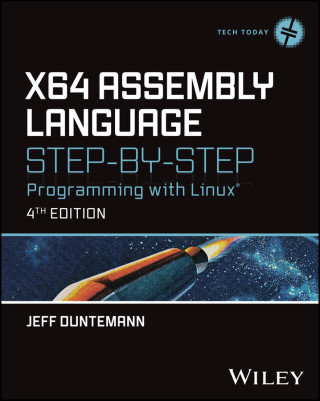 | 14 | 60,59 € | Poodi |
| Digizone | Xiaomi veekeetja | Electric Pressure Cooker EU | 1000 W | 4.8 L | Number of programs 6 | valge Tootekood: BHR8845EU Veekeetjad Xiaomi | Electric Pressure Cooker EU | 1000 W | 4.8 L | Number of programs 6 | White | 5-7tp | 103,96 € | Poodi | |
| Libristo | XSLT 2.0 and XPath 2.0 Programmer's Reference 4e Tootekood: 04081740 GTIN: 9780470192740 Computer programming / software engineering This book is primarily a practical reference book for professional XSLT developers. It assumes no previous knowledge of the language, and many developers have used it as their first introduction to XSLT; however, it is not structured as a tutorial, and there are other books on XSLT that provide a gentler approach for beginners. The book does assume a basic knowledge of XML, HTML, and the architecture of the Web, and it is written for experienced programmers. There's no assumption that you know any particular language such as Java or Visual Basic, just that you recognize the concepts that all programming languages have in common. The book is suitable both for XSLT 1.0 users upgrading to XSLT 2.0, and for newcomers to XSLT. The book is also equally suitable whether you work in the Java or .NET world. As befits a reference book, a key aim is that the coverage should be comprehensive and authoritative. It is designed to give you all the details, not just an overview of the 20 percent of the language that most people use 80 percent of the time.It's designed so that you will keep coming back to the book whenever you encounter new and challenging programming tasks, not as a book that you skim quickly and then leave on the shelf. If you like detail, you will enjoy this book; if not, you probably won't. But as well as giving the detail, this book aims to explain the concepts, in some depth. It's therefore a book for people who not only want to use the language but who also want to understand it at a deep level. The book aims to tell you everything you need to know about the XSLT 2.0 language. It gives equal weight to the things that are new in XSLT 2.0 and the things that were already present in version 1.0. The book is about the language, not about specific products. However, there are appendices about Saxon (the author's own implementation of XSLT 2.0), about the Altova XSLT 2.0 implementation, and about the Java and Microsoft APIs for controlling XSLT transformations, which will no doubt be upgraded to handle XSLT 2.0 as well as 1.0. A third XSLT 2.0 processor, Gestalt, was released shortly before the book went to press, too late to describe it in any detail. But the experience of XSLT 1.0 is that there has been a very high level of interoperability between different XSLT processors, and if you can use one of them, then you can use them all.In the previous edition we split XSLT 2.0 and XPath 2.0 into separate volumes. The idea was that some readers might be interested in XPath alone. However, many bought the XSLT 2.0 book without its XPath companion and were left confused as a result; so this time, the material is back together. The XPath reference information is in self-contained chapters, so it should still be accessible when you use XPath in contexts other than XSLT. The book does not cover XSL Formatting Objects, a big subject in its own right. Nor does it cover XML Schemas in any detail. If you want to use these important technologies in conjunction with XSLT, there are other books that do them justice. This book contains twenty chapters and eight appendixes (the last of which is a glossary) organized into four parts. The following section outlines what you can find in each part, chapter, and appendix. Part I: Foundations: The first part of the book covers essential concepts. You should read these before you start coding.If you ignore this advice, as most people do, then you read them when you get to that trough of despair when you find it impossible to make the language do anything but the most trivial tasks. XSLT is different from other languages, and to make it work for you, you need to understand how it was designed to be used. Chapter 1: XSLT in Context: This chapter explains how XSLT fits into the big picture: how the language came into being and how it sits alongside other technologies. It also has a few simple coding examples to keep you alert. Chapter 2: The XSLT Processing Model: This is about the architecture of an XSLT processor: the inputs, the outputs, and the data model. Understanding the data model is perhaps the most important thing that distinguishes an XSLT expert from an amateur; it may seem like information that you can't use immediately, but it's knowledge that will stop you making a lot of stupid mistakes. Chapter 3: Stylesheet Structure: XSLT development is about writing stylesheets, and this chapter takes a bird's eye view of what stylesheets look like.It explains the key concepts of rule-based programming using templates, and explains how to undertake programming-in-the-large by structuring your application using modules and pipelines. Chapter 4: Stylesheets and Schemas: A key innovation in XSLT 2.0 is that stylesheets can take advantage of knowledge about the structure of your input and output documents, provided in the form of an XML Schema. This chapter provides a quick overview of XML Schema to describe its impact on XSLT development. Not everyone uses schemas, and you can skip this chapter if you fall into that category. Chapter 5: The Type System: XPath 2.0 and XSLT 2.0 offer strong typing as an alternative to the weak typing approach of the 1.0 languages. This means that you can declare the types of your variables, functions, and parameters, and use this information to get early warning of programming errors. This chapter explains the data types available and the mechanisms for creating user-defined types. Part II: XSLT and XPath Reference: This section of the book contains reference material, organized in the hope that you can easily find what you need when you need it.It's not designed for sequential reading, though you might well want to leaf through the pages to discover what's there. Chapter 6: XSLT Elements: This monster chapter lists all the XSLT elements you can use in a stylesheet, in alphabetical order, giving detailed rules for the syntax and semantics of each element, advice on usage, and examples. This is probably the part of the book you will use most frequently as you become an expert XSLT user. It's a "no stone unturned" approach, based on the belief that as a professional developer you need to know what happens when the going gets tough, not just when the wind is in your direction. Chapter 7: XPath Fundamentals: This chapter explains the basics of XPath: the low-level constructs such as literals, variables, and function calls. It also explains the context rules, which describe how the evaluation of XPath expressions depends on the XSLT processing context in which they appear. Chapter 8: XPath: Operators on Items: XPath offers the usual range of operators for performing arithmetic, boolean comparison, and the like.However, these don't always behave exactly as you would expect, so it's worth reading this chapter to see what's available and how it differs from the last language that you used. Chapter 9: XPath: Path Expressions: Path expressions are what make XPath special; they enable you to navigate around the structure of an XML document. This chapter explains the syntax of path expressions, the 13 axes that you can use to locate the nodes that you need, and associated operators such as union, intersection, and difference. Chapter 10: XPath: Sequence Expressions: Unlike XPath 1.0, in version 2.0 all values are sequences (singletons are just a special case). Some of the most important operators in XPath 2.0 are those that manipulate sequences, notably the "for" expression, which translates one sequence into another by applying a mapping. Chapter 11: XPath: Type Expressions: The type system was explained in Chapter 5; this chapter explains the operations that you can use to take advantage of types. This includes the "cast" operation which is used to convert values from one type to another.A big part of this chapter is devoted to the detailed rules for how these conversions are done.Chapter 12: XSLT Patterns: This chapter returns from XPath to a subject that's specific to XSLT. Patterns are used to define template rules, the essence of XSLT's rule-based programming approach. The reason for explaining them now is that the syntax and semantics of patterns depends strongly on the corresponding rules for XPath expressions. Chapter 13: The Function Library: XPath 2.0 includes a library of functions that can be called from any XPath expression; XSLT 2.0 extends this with some additional functions that are available only when XPath is used within XSLT. The library has grown immensely since XPath 1.0. This chapter provides a single alphabetical reference for all these functions. Chapter 14: Regular Expressions: Processing of text is an area where XSLT 2.0 and XPath 2.0 are much more powerful than version 1.0, and this is largely through the use of constructs that exploit regular expressions. If you're familiar with regexes from languages such as Perl, this chapter tells you how XPath regular expressions differ. If you're new to the subject, it explains it from first principles.Chapter 15: Serialization: Serialization in XSLT means the ability to generate a textual XML document from the tree structure that's manipulated by a stylesheet. This isn't part of XSLT processing proper, so (following W3C's lead) it's separated it into its own chapter. You can control serialization from the stylesheet using an declaration, but many products also allow you to control it directly via an API. Part III: Exploitation: The final section of the book is advice and guidance on how to take advantage of XSLT to write real applications. It's intended to make you not just a competent XSLT coder, but a competent designer too. The best way of learning is by studying the work of others, so the emphasis here is on practical case studies. Chapter 16: Extensibility: This chapter describes the "hooks" provided in the XSLT specification to allow vendors and users to plug in extra functionality. The way this works will vary from one implementation to another, so we can't cover all possibilities, but one important aspect that the chapter does cover is how to use such extensions and still keep your code portable.Chapter 17: Stylesheet Design Patterns: This chapter explores a number of design and coding patterns for XSLT programming, starting with the simplest "fill-in-the-blanks" stylesheet, and extending to the full use of recursive programming in the functional programming style, which is needed to tackle problems of any computational complexity. This provides an opportunity to explain the thinking behind functional programming and the change in mindset needed to take full advantage of this style of development. Chapter 18: Case Study: XMLSpec: XSLT is often used for rendering documents, so where better to look for a case study than the stylesheets used by the W3C to render the XML and XSLT specifications, and others in the same family, for display on the web? The resulting stylesheets are typical of those you will find in any publishing organization that uses XML to develop a series of documents with a compatible look-and-feel. Chapter 19: Case Study: A Family Tree: Displaying a family tree is another typical XSLT application.This example with semi-structured data-a mixture of fairly complex data and narrative text-that can be presented in many different ways for different audiences. It also shows how to tackle another typical XSLT problem, conversion of the data into XML from a legacy text-based format. As it happens, this uses nearly all the important new XSLT 2.0 features in one short stylesheet. But another aim of this chapter is to show a collection of stylesheets doing different jobs as part of a complete application. Chapter 20: Case Study: Knight's Tour: Finding a route around a chessboard where a knight visits every square without ever retracing its steps might sound a fairly esoteric application for XSLT, but it's a good way of showing how even the most complex of algorithms are within the capabilities of the language. You may not need to tackle this particular problem, but if you want to construct an SVG diagram showing progress against your project plan, then the problems won't be that dissimilar. Part IV: Appendices: A ppendix A: XPath 2.0 Syntax Summary: Collects the XPath grammar rules and operator precedences into one place for ease of reference.Appendix B: Error Codes: A list of all the error codes defined in the XSLT and XPath language specifications, with brief explanations to help you understand what's gone wrong. Appendix C: Backward Compatibility: The list of things you need to look out for when converting applications from XSLT 1.0. Appendix D: Microsoft XSLT Processors: Although the two Microsoft XSLT processors don't yet support XSLT 2.0, we thought many readers would find it useful to have a quick summary here of the main objects and methods used in their APIs. Appendix E: JAXP: the Java API for XML Processing: JAXP is an interface rather than a product. Again, it doesn't have explicit support yet for XSLT 2.0, but Java programmers will often be using it in XSLT 2.0 projects, so the book includes an overview of the classes and methods available. Appendix F: Saxon: At the time of writing Saxon (developed by the author of this book) provides the most comprehensive implementation of XSLT 2.0 and XPath 2.0, so its interfaces and extensions are covered in some detail. Appendix G: Altova: Altova, the developers of XML Spy, have an XSLT 2.0 processor that can be used either as part of the development environment or as a freestanding component.This appendix gives details of its interfaces. Appendix H: Glossary Note: CD-ROM/DVD and other supplementary materials are not included as part of eBook file. | 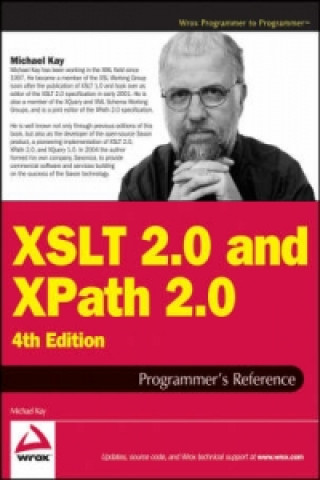 | 90 | 69,29 € | Poodi |
| Kaup24 | Yoga for Inflexible People: Improve Mobility, Strength and Balance with This Step-by-Step Starter Programme New edition GTIN: 9781859064559 Eneseabiraamatud Yoga for Inflexible People: Improve Mobility, Strength and Balance with This Step-by-Step Starter Programme New edition |  | 23,04 € | Poodi | |
| Kaup24 | Yoga Frog: Reflections from the Lily Pond GTIN: 9780762463824 Eneseabiraamatud Yoga Frog: Reflections from the Lily Pond |  | 14,94 € | Poodi | |
| Libristo | You Can't Say That to Me - Stopping the Pain of Verbal Abuse - An 8-Step Program Tootekood: 04887080 GTIN: 9780471003991 Psychology You can't say that to me! "Can't you do anything right?" "I can't believe you would feed that junk to your child!" "What is this? And don't tell me it's a casserole, I already know that." "If you really cared about me, you wouldn't behave this way." Sound familiar? Each of us occasionally feels the sting of very unpleasant language from those who are closest to us--spouses, employers, friends, relatives. But frequent and repeated use of unanswerable questions, scalding accusations, sarcasm, insinuations, and even icy silence is more than simply unpleasant; it is abusive, destructive, and frequently leads to escalating arguments and physical violence. Suzette Haden Elgin, creator of the "Gentle Art of Verbal Self-Defense," has developed a unique and revolutionary way to break the cycle of verbal violence and eliminate it from your life--without ruining your marriage, risking your job, or alienating friends or loved ones. Dr.Elgin shows you how to neutralize verbal attacks and discourage future abuse with: An 8-step program that helps you recognize the patterns of verbal abuse Specific language techniques that enable you to avoid escalating arguments and break the cycle of abuse using skills you already possess Questionnaires and diaries that help you analyze abusive situations, evaluate your responses to them, and track your progress In this book Dr. Elgin proves that verbal abuse is not caused by human nature, but by language. She helps you discover that you are an expert in your own language, already highly qualified to solve this problem for yourself, quickly and forever. |  | 90 | 18,59 € | Poodi |
| Kaup24 | Younger: The Breakthrough Programme to Reset our Genes and Reverse Ageing GTIN: 9781785041334 Eneseabiraamatud Younger: The Breakthrough Programme to Reset our Genes and Reverse Ageing |  | 22,34 € | Poodi | |
| Kaup24 | Your Code as a Crime Scene, Second Edition: Use Forensic Techniques to Arrest Defects, Bottlenecks, and Bad Design in Your Programs 2nd edition GTIN: 9798888650325 Majandusalased raamatud Your Code as a Crime Scene, Second Edition: Use Forensic Techniques to Arrest Defects, Bottlenecks, and Bad Design in Your Programs 2nd edition |  | 60,84 € | Poodi | |
| Kaup24 | Your Mental Health Workout: A 5 Week Programme to a Healthier, Happier Mind GTIN: 9781529354065 Eneseabiraamatud Your Mental Health Workout: A 5 Week Programme to a Healthier, Happier Mind |  | 27,99 € | Poodi | |
| Kaup24 | Žaidimas Jumping Frog Tootekood: TG71164 GTIN: 4900291685113 Lauamängud ja mõistatused Žaidimas Jumping Frog |  | Tellitav | 14,09 € | Poodi |

Kõik hinnakirjad
Tooted 951
– 966
/ 966
50
| Kaup24 | Wolobox Pepe The Frog värvi muutev Led valgusti Usb öölamp ja dekoratsioon GTIN: 6023647903682 Lastetoa valgustid | | 56,75 € | Poodi | |
| Kaup24 | Work in Progress: The Road to Empowerment, The Journey Through Shame GTIN: 9781636983325 Eneseabiraamatud | | 22,70 € | Poodi | |
| Kaup24 | World Trade and Investment Law Reimagined: A Progressive Agenda for an Inclusive Globalization GTIN: 9781783089727 Majandusalased raamatud | | 202,53 € | Poodi | |
| Kaup24 | Write from the start: Unique Programme to Develop the Fine Motor and Perceptual Skills Necessary for Effective Handwriting GTIN: 9781855032453 Noortekirjandus | | 49,38 € | Poodi | |
| Kaup24 | Write Your Way To Success: Lessons Learned on my Path from Ordinary Developer to Author of Programming Books That Sell 1st ed. GTIN: 9781484239698 Majandusalased raamatud | | 31,10 € | Poodi | |
| InterCars | X-431 PROG 3 Tootekood: X-431 PROG 3 Töökoja seadmed > Autodiagnostika > Lisaseadmed > Lisatarvikud testerite ja diagnostika jaoks | | 847,18 € | Poodi | |
| Libristo | X64 Assembly Language Step-By-Step: Programming with Linux Tootekood: 43504158 GTIN: 9781394155248 Computer programming / software engineering | | 60,59 € | Poodi | |
| Digizone | Xiaomi veekeetja | Electric Pressure Cooker EU | 1000 W | 4.8 L | Number of programs 6 | valge Tootekood: BHR8845EU Veekeetjad | 103,96 € | Poodi | ||
| Libristo | XSLT 2.0 and XPath 2.0 Programmer's Reference 4e Tootekood: 04081740 GTIN: 9780470192740 Computer programming / software engineering | | 69,29 € | Poodi | |
| Kaup24 | Yoga for Inflexible People: Improve Mobility, Strength and Balance with This Step-by-Step Starter Programme New edition GTIN: 9781859064559 Eneseabiraamatud | | 23,04 € | Poodi | |
| Kaup24 | Yoga Frog: Reflections from the Lily Pond GTIN: 9780762463824 Eneseabiraamatud | | 14,94 € | Poodi | |
| Libristo | You Can't Say That to Me - Stopping the Pain of Verbal Abuse - An 8-Step Program Tootekood: 04887080 GTIN: 9780471003991 Psychology | | 18,59 € | Poodi | |
| Kaup24 | Younger: The Breakthrough Programme to Reset our Genes and Reverse Ageing GTIN: 9781785041334 Eneseabiraamatud | | 22,34 € | Poodi | |
| Kaup24 | Your Code as a Crime Scene, Second Edition: Use Forensic Techniques to Arrest Defects, Bottlenecks, and Bad Design in Your Programs 2nd edition GTIN: 9798888650325 Majandusalased raamatud | | 60,84 € | Poodi | |
| Kaup24 | Your Mental Health Workout: A 5 Week Programme to a Healthier, Happier Mind GTIN: 9781529354065 Eneseabiraamatud | | 27,99 € | Poodi | |
| Kaup24 | | 14,09 € | Poodi |