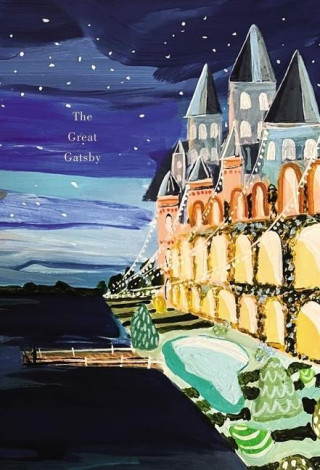
One of literature's most decadent stories is now available in an exclusive collector's edition, featuring beautiful cover art from artist Laci Fowler and decorative interior pages, making it ideal for fiction lovers and book collectors alike.Beloved by fans across the globe, Fitzgerald's third novel?The Great Gatsby?exposes the dark side of the American Dream. This time-honored classic is now available as an exclusive collector's edition. Whether you're buying it as a gift or for yourself, this remarkable edition features:A beautiful, high-end hardcover featuring Laci Fowler's distinctive hand-painted artEmbossed cover art and gold foiling?Decorative interior pages featuring pull quotes throughoutMatching ribbon marker and gold page edges?Part of a 4-volume collection including?The Wonderful Wizard of Oz,?Frankenstein,?and?The Return of Sherlock HolmesThe Great Gatsby?has been casting its hypnotic spell on readers since 1925, unveiling every decadence and overindulgence the "Roaring Twenties" label implies. Nick Carraway, Daisy and Tom Buchanan, Jordan Baker, and of course, Jay Gatsby himself weave a sordid tale of love and betrayal.Exploring the themes of social division, wealth and materialism, and excess, this unique collector's edition presents Fitzgerald's classic tale in a giftable new way.
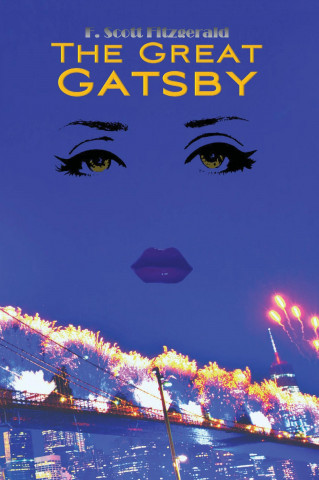
Discover the story of F. Scott Fitzgeralds Great Gatsby with this exquisite edition from Union Square & Co.s Signature Gilded Editions series! The stunning Great Gatsbyspecial edition features sprayed edges, color end pages, a built-in ribbon bookmark, and embossed foil cover. The beautiful design and attention to detail set this special edition book apart, whether youre reading for the first time or building a library of your favorite classic literature books. When Nick Carraway moves to West Egg, Long Island, he has no idea that the lavishly outfitted mansion next to his modest house is home to Jay Gatsby. Eventually, Nick becomes aware of Gatsby's intense interest in his cousin Daisy Buchanan, and when Daisy's brutish husband, Tom, probes Gatsby's background, he uncovers unsavory revelations about his rival's wealth. First published in 1925, F. Scott Fitzgerald's third novel offers a definitive portrait of the opulence and recklessness of the Jazz Age. The Great Gatsby by F. Scott Fitzgerald was first published in 1925. Set in the Jazz Age on Long Island, New York, it tells the story of Jay Gatsby, a wealthy, mysterious, and complex man driven by an obsession with his past, and Daisy Buchanan, a married woman he loved in his youth. Considered one of the greatest novels ever written, it explores the themes of love, loss, and the American Dream. The Great Gatsby has been adapted numerous times for film, most recently in 2013 starring Leonardo DiCaprio as Jay Gatsby. Despite its commentary on a different time period in American history, the story is particularly relevant todaycontrasting the glamorous lives of the wealthy with the realities beneath the surface and revealing the fallacy of the American Dream. <br><br> Autorid: F. Scott Fitzgerald <br>
THE GREAT GATSBY is a 1925 novel written by American author F. Scott Fitzgerald that follows a cast of characters living in the fictional town of West Egg on prosperous Long Island in the summer of 1922. The story primarily concerns the young and mysterious millionaire Jay Gatsby and his quixotic passion and obsession for the beautiful former debutante Daisy Buchanan. Considered to be Fitzgerald's magnum opus, The Great Gatsby explores themes of decadence, idealism, resistance to change, social upheaval, and excess, creating a portrait of the Jazz Age or the Roaring Twenties that has been described as a cautionary tale regarding the American Dream.Fitzgerald-inspired by the parties he had attended while visiting Long Island's north shore-began planning the novel in 1923, desiring to produce, in his words, "something new-something extraordinary and beautiful and simple and intricately patterned." Progress was slow, with Fitzgerald completing his first draft following a move to the French Riviera in 1924. His editor, Maxwell Perkins, felt the book was vague and persuaded the author to revise over the next winter. Fitzgerald was repeatedly ambivalent about the book's title and he considered a variety of alternatives, including titles that referenced the Roman character Trimalchio; the title he was last documented to have desired was Under the Red, White, and Blue.In its first year, the book sold only 20,000 copies. Fitzgerald died in 1940, believing himself to be a failure and his work forgotten. However, the novel experienced a revival during World War II, and became a part of American high school curricula and numerous stage and film adaptations in the following decades. Today, The Great Gatsby is widely considered to be a literary classic and a contender for the title "Great American Novel". In 1998, the Modern Library editorial board voted it the 20th century's best American novel and second best English-language novel of the same time period.
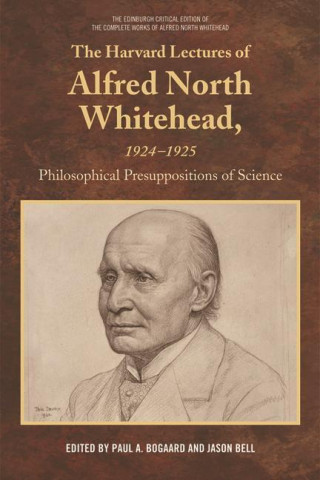
This volume finally recreates the first philosophy lectures given by Alfred North Whitehead by transcribing notes and sketches by W. P. Bell, W. E. Hocking and Louise Heath taken at the time.
"This 1925 comedy of manners that's funny yet also unorthodox and unsettling... a celebration of abnormality and at the same time a disquieting study of both the pleasures and the pains of not being able to restrain oneself." - Evening StandardWhen four guests, all invited by different members of the Bliss family, arrive for a weekend at their country house near Maidenhead, they're expecting a idyllic retreat. But this peaceful promise is quickly trounced when the self-absorbed eccentricities of the Blisses are trained on the guests, who leave the country mansion humiliated and embarrassed.First produced in 1925, Hay Fever is a technical masterpiece, seamlessly combining high farce with a comedy of manners, and delivering Coward his first major commercial success.This new edition is published in Methuen Drama's iconic Modern Classics series to coincide with the 125th anniversary of Coward's birth and features a new introduction by Michael Billington. <br><br> Autorid: Noël Coward, Michael Billington <br>
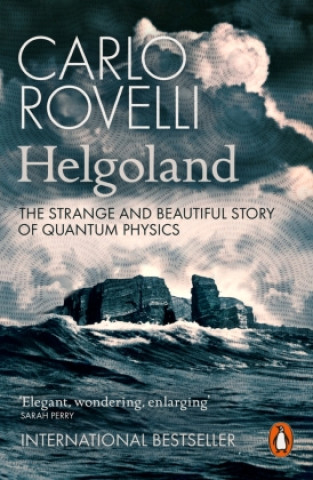
The instant Sunday Times bestseller -- a beautiful story of rebellion and scienceChosen as a Book of the Year by The Times, Financial Times, Sunday Times, Guardian and Prospect'Popular science has rarely been so good' ProspectIn June 1925, twenty-three-year-old Werner Heisenberg, suffering from hay fever, had retreated to the treeless, wind-battered island of Helgoland in the North Sea in order to think. Walking all night, by dawn he had wrestled with an idea that would transform the whole of science and our very conception of the world.In Helgoland Carlo Rovelli tells the story of the birth of quantum physics and its bright young founders who were to become some of the most famous Nobel winners in science. It is a celebration of youthful rebellion and intellectual revolution. An invitation to a magical place.Here Rovelli illuminates competing interpretations of this science and offers his own original view, describing the world we touch as a fabric woven by relations. Where we, as every other thing around us, exist in our interactions with one another, in a never-ending game of mirrors.A dazzling work from a celebrated scientist and master storyteller, Helgoland transports us to dizzying heights, reminding us of the many pleasures of the life of the mind.Translated by Erica Segre and Simon Carnell
Heidegger's lecture course at the University of Marburg in the summer of 1925, an early version of Being and Time (1927), offers a unique glimpse into the motivations that prompted the writing of this great philosopher's master work and the presuppositions that gave shape to it. The book embarks upon a provisional description of what Heidegger calls "Dasein," the field in which both being and time become manifest. Heidegger analyzes Dasein in its everydayness in a deepening sequence of terms: being-in-the-world, worldhood, and care as the being of Dasein. The course ends by sketching the themes of death and conscience and their relevance to an ontology that makes the phenomenon of time central. Theodore Kisiel's outstanding translation premits English-speaking readers to appreciate the central importance of this text in the development of Heidegger's thought. Heidegger's lecture course at the University of Marburg in the summer of 1925, an early version of Being and Time (1927), offers a unique glimpse into the motivations that prompted the writing of this great philosopher's master work and the presuppositions that gave shape to it. The book embarks upon a provisional description of what Heidegger calls "Dasein," the field in which both being and time become manifest. Heidegger analyzes Dasein in its everydayness in a deepening sequence of terms: being-in-the-world, worldhood, and care as the being of Dasein. The course ends by sketching the themes of death and conscience and their relevance to an ontology that makes the phenomenon of time central. Theodore Kisiel's outstanding translation premits English-speaking readers to appreciate the central importance of this text in the development of Heidegger's thought. <br><br> Autorid: Martin Heidegger <br>
This book is a manual for the attainment of knowledge of higher, more spiritual worlds. It opens new perspectives on the essential tasks of life. Not everyone can immediately achieve spiritual vision, but the discoveries of those who have it can be health-giving life nourishment for everyone. This process is facilitated by this manual. From 1899 until his death in 1925, Steiner articulated an ongoing stream of experiences that he claimed were of the spiritual world - experiences he said had touched him from an early age on. Steiner aimed to apply his training in mathematics, science, and philosophy to produce rigorous, verifiable presentations of those experiences. Steiner believed that through freely chosen ethical disciplines and meditative training, anyone could develop the ability to experience the spiritual world, including the higher nature of oneself and others. Steiner believed that such discipline and training would help a person to become a more moral, creative and free individual - free in the sense of being capable of actions motivated solely by love.
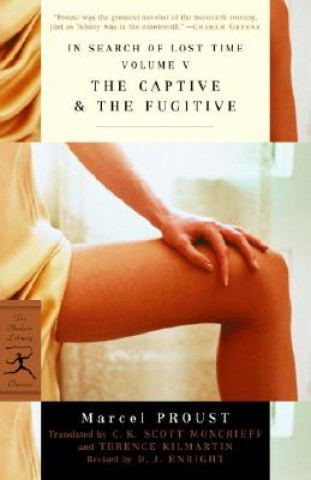
The Modern Library's fifth volume of "In Search of Lost Time" contains both "The Captive" (1923) and "The Fugitive "(1925). In "The Captive," Proust's narrator describes living in his mother's Paris apartment with his lover, Albertine, and subsequently falling out of love with her. In "The Fugitive," the narrator loses Albertine forever. Rich with irony, The Captive and The Fugitive inspire meditations on desire, sexual love, music, and the art of introspection. For this authoritative English-language edition, D. J. Enright has revised the late Terence Kilmartin's acclaimed reworking of C. K. Scott Moncrieff's translation to take into account the new definitive French editions of "A la recherche du temps perdu" (the final volume of these new editions was published by the Bibliotheque de la Pleiade in 1989).
2013 Reprint of 1941 Revised and Enlarged Edition. Exact facsimile of the original edition, not reproduced with Optical Recognition Software. Tarski is considered one of the five greatest logicians of all time, alongside Aristotle (384-322 BCE), Boole (1815-1864), Frege (1848-1925) and Gödel. This book, together with Aristotle's "Prior Analytics" and Boole's "Laws of Thought," should form the core of any logic library. This classic undergraduate treatment examines the deductive method in its first part and explores applications of logic and methodology in constructing mathematical theories in its second part. A thought-provoking introduction to the fundamentals and the perfect adjunct to courses in logic and the foundations of mathematics. Exercises appear throughout.
GTIN: 9781604731941Individual artists, art monographs
This book tells the fascinating story of the life and times of the man who created the look of Scooby-Doo and Muttley from Wacky Races. Iwao Takamoto (1925-2007) spent a lifetime in the animation industry and played a pivotal role in the creation of some of the medium's best-loved and most recognizable characters, including Scooby-Doo, Penelope Pitstop and Muttley from Wacky Races, and the Great Gazoo from "The Flintstones". "Iwao Takamoto: My Life with a Thousand Characters" is an intimate and revealing portrait of the life of a legendary animator, as told in his own words, from his experiences of growing up in the heart of Los Angeles, and his wartime ordeal in an internment camp for Japanese-Americans, to his years working at Walt Disney Studios, where he worked with the famous 'Nine Old Men,' and later for Hanna-Barbera where he was a key artistic force. Packed with stories and anecdotes of working for two of Hollywood's most notable animation studios, and filled with photos and artwork, this is an essential volume for all fans of animation and popular culture.
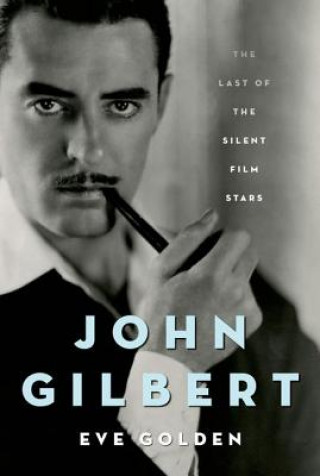
Charming and classically handsome, John Gilbert (1897-1936) was among the world's most recognizable actors during the silent era. He was a wild, swashbuckling figure on screen and off, and accounts of his life have focused on his high-profile romances with Greta Garbo and Marlene Dietrich, his legendary conflicts with Louis B. Mayer, his four tumultuous marriages, and his swift decline after the introduction of talkies. A dramatic and interesting personality, Gilbert served as one of the primary inspirations for the character of George Valentin in the Academy Award-winning movie The Artist (2011). Many myths have developed around the larger-than-life star in the eighty years since his untimely death, but this definitive biography sets the record straight.Eve Golden separates fact from fiction in John Gilbert: The Last of the Silent Film Stars, tracing the actor's life from his youth spent traveling with his mother in acting troupes to the peak of fame at MGM, where he starred opposite Mae Murray, Norma Shearer, Joan Crawford, Greta Garbo, and other actresses in popular films such as The Merry Widow (1925), The Big Parade (1925), Flesh and the Devil (1926), and Love (1927). Golden debunks some of the most pernicious rumors about the actor, including the oft-repeated myth that he had a high-pitched, squeaky voice that ruined his career. Meticulous, comprehensive, and generously illustrated, this book provides a behind-the-scenes look at one of the silent era's greatest stars and the glamorous yet brutal world in which he lived.
Three high-flying men who suffer from boredom concoct a plan to cure it. They inform 3 Scottish estates that they will poach from each two stags and a salmon. They sign collectively as 'John McNab' and await the responses. Part of the "Leithen Stories" series, this novel discusses the hunting, shooting and fishing lifestyle in Highland Scotland. In 1925, John Buchan published his second most famous novel, John Macnab; three high-flying men a barrister, a cabinet minister and a banker are suffering from boredom. They concoct a plan to cure it. They inform three Scottish estates that they will poach from each two stags and a salmon in a given time. They sign collectively as John Macnab and await the responses. This novel is a light interlude within the Leithen Stories series an evocative look at the hunting, shooting and fishing lifestyle in Highland Scotland.With an introduction by Andrew Greig.This edition is authorised by the John Buchan Society. In 1925, John Buchan published his second most famous novel, John Macnab; three high-flying mena barrister, a cabinet minister and a bankerare suffering from boredom. They concoct a plan to cure it. They inform three Scottish estates that they will poach from each two stags and a salmon in a given time. They sign collectively as 'John McNab' and await the responses. This novel is a light interlude within the Leithen Stories seriesan evocative look at the hunting, shooting and fishing lifestyle in Highland Scotland. <br><br> Autorid: John Buchan <br>
Nearly 100 watercolors by John Singer Sargent from two major museum collectionsJohn Singer Sargent’s approach to watercolor was unconventional. Going beyond turn-of-the-century standards for carefully delineated and composed landscapes filled with transparent washes, his confidently bold, dense strokes and loosely defined forms startled critics and fellow practitioners alike. One reviewer of an exhibition in London proclaimed him "an eagle in a dove-cote”; another called his work "swagger” watercolors. For Sargent, however, the watercolors were not so much about swagger as about a renewed and liberated approach to painting. In watercolor, his vision became more personal and his works more interconnected, as he considered the way one image--often of a friend or favorite place--enhanced another. Sargent held only two major watercolor exhibitions in the United States during his lifetime. The contents of the first, in 1909, were purchased in their entirety by the Brooklyn Museum of Art. The paintings exhibited in the other, in 1912, were scooped up by the Museum of Fine Arts, Boston. John Singer Sargent Watercolors reunites nearly 100 works from these collections for the first time, arranging them by themes and subjects: sunlight on stone, figures reclining on grass, patterns of light and shadow. Enhanced by biographical and technical essays, and lavishly illustrated with 175 color reproductions, this publication introduces readers to the full sweep of Sargent’s accomplishments in this medium, in works that delight the eye as well as challenge our understanding of this prodigiously gifted artist.The international art star of the Gilded Age, John Singer Sargent (1856–1925) was born in Italy to American parents, trained in Paris and worked on both sides of the Atlantic. Sargent is best known for his dramatic and stylish portraits, but he was equally active as a landscapist, muralist, and watercolor painter. His dynamic and boldly conceived watercolors, created during travels to Tuscan gardens, Alpine retreats, Venetian canals and Bedouin encampments, record unusual motifs that caught his incisive eye.