Müüja | Saadavus | ||||
|---|---|---|---|---|---|
| Krisostomus | In the Frog Bog: Band 03/Yellow GTIN: 9780008251543 Raamatud Collins Big Cat Phonics for Letters and Sounds features exciting fiction and non-fiction decodable readers to enthuse and inspire children. They are fully aligned to Letters and Sounds Phases 1-6 and contain notes in the back. The Handbooks provide support in demonstration and modelling, monitoring comprehension and expanding vocabulary. Collins Big Cat Phonics for Letters and Sounds features exciting fiction and non-fiction decodable readers to enthuse and inspire children. They are fully aligned to Letters and Sounds Phases 16 and contain notes in the back. The Handbooks provide support in demonstration and modelling, monitoring comprehension and expanding vocabulary.Down in the farmyard the frogs sing cheep, but Little frog can only bark gruff and the other frogs dont like it. Will he find any frogs who will accept him? This sweet, patterned story is beautifully illustrated and written by Margaret Ryan.Yellow/Band 3 books offer varied sentence structure and natural languagePages 14 and 15 contain a fun I Spy Letters and Sounds activity, which uses visual support to help children embed phonic knowledge.Reading notes within the book provide practical support for reading Big Cat Phonics for Letters and Sounds with children, including a list of all the sounds and words that the book will cover. <br><br> Autorid: Margaret Ryan, Benedetta Capriotti, Collins Big Cat <br> |  | Tellimisel (tarne 10-14 tp) | 8,34 € | Poodi |
| Krisostomus | Incredible Pop-up Frog: And other Wetland Creatures GTIN: 9781800788718 Raamatud Wetlands are among the richest habitats on our planet and a crucial home to some of the world's most endangered species. Bursting with frogs and other amphibians, as well as a whole host of other wildlife, they are dazzling havens of activity waiting to be explored. Packed with multi-layered pop-ups and flaps to lift, this incredible feat of paper-engineering allows young readers to look inside three wetland habitats, revealing wonder after wonder, page after page. From the surface of the water, where bugs skate, spiders hunt and flowers spread their petals, to the murky depths, where myriad creatures fight for survival, this book will take you on a tour of the wetlands like no other. Written by award-winning wildlife journalist and nature nerd Ben Hoare and illustrated in in striking colour and texture by rising star Jasmine Floyd, this fact-packed pop-up shows the true beauty of frogs, amphibians and the wildlife they live alongside. Perfect for readers from 7 to 100. <br><br> Autorid: Ben Hoare, Jasmine Floyd <br> |  | Tellimisel (tarne 10-14 tp) | 36,75 € | Poodi |
| Krisostomus | Indoor Rowing: Your Complete Guide to Training, Programming, and Workouts GTIN: 9781718226593 Raamatud If youre looking for a full-body exercise that improves cardio health, offers strength-building benefits, is low impact, and has low risk of injury, then Indoor Rowing is for you. Commonly viewed as the ultimate full-body workout, rowing can be incorporated into any training program to achieve fitness and athletic goals efficiently and effectively. Increasing in popularity since the early 2000s, rowing machines (also called ergs) can be found at most gyms or fitness facilities, and they are also accessible equipment for at-home gyms. The erg engages the majority of the muscles in your bodyfar more than other common cardio machines. With Indoor Rowing, you get a comprehensive guide to mastering this versatile piece of equipment and reaping the benefits of improved strength and cardiorespiratory health. Youll learn proper rowing technique, and youll get expert advice on building the most effective workouts to get the most out of your time on the rower: Drills to correct common rowing errors for improved technique Warm-up exercises, drills, and sequences to prepare the body for the full workout Cool-down stretches and movements to help the body recover after the workout Three sample workouts for endurance and four sample workouts for interval training Off-the-rower strength exercises to improve performance on the rower A sample six-week training program with two or three workouts per week Excellent for both muscular and cardiorespiratory conditioning, the rower has proven to be versatile and adaptable for any training goal. Athletes and fitness enthusiasts alikeas well as the coaches and fitness professionals who work with themwill find Indoor Rowing to be a valuable guide for full-body conditioning.Earn continuing education credits/units! A continuing education exam that uses this book is also available. It may be purchased separately or as part of a package that includes both the book and exam. Indoor Rowing will ensure you get the most out of every erg workout. This practical guide includes drills to improve technique, warm-up and cool-down sequences, endurance and interval workouts, a sample six-week program, and more. <br><br> Autorid: Caley Crawford, Michelle Parolini <br> |  | Tellimisel (tarne 10-14 tp) | 34,04 € | Poodi |
| Libristo | Instructor's Manual t/a Structure and Interpretation of Computer Programs GTIN: 9780262692205 Computing & Information Technology This instructor's manual and reader's guide accompanies the second edition of Structure and Interpretation of Computer Programs, by Harold Abelson and Gerald Jay Sussman with Julie Sussman. It contains discussions of exercises and other material in the text as well as supplementary material, additional examples and exercises, and teaching suggestions. An appendix summarizes the Scheme programming language as used in the text, showing at what point in the text each element of Scheme is introduced. | 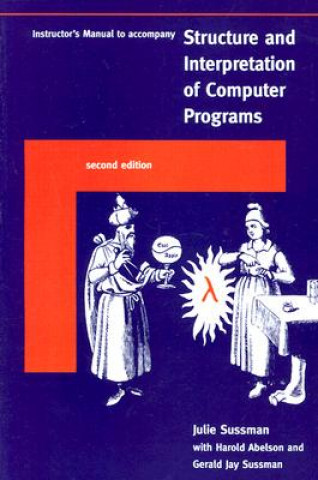 | 14 | 46,19 € | Poodi |
| Krisostomus | Interactive Object-Oriented Programming in Java: Learn and Test Your Programming Skills Second Edition GTIN: 9781484254035 Raamatud Gain the fundamental concepts of object-oriented programming with examples in Java. This second edition comes with detailed coverage and enhanced discussion on fundamental topics such as inheritance, polymorphism, abstract classes, interfaces, and packages. This edition also includes discussions on multithread programming, generic programming, database programming, and exception handling mechanisms in Java. Finally, you will get a quick overview of design patterns including the full implementation of some important patterns. Interactive Object-Oriented Programming in Java begins with the fundamental concepts of object-oriented programming alongside Q&A sessions to further explore the topic. The book concludes with FAQs from all chapters. It also contains a section to test your skills in the language basics with examples to understand Java fundamentals including loops, arrays, and strings. Youll use the Eclipse IDE to demonstrate the code examples in the book. After reading the book, you will have enhanced your skills in object-oriented programming in Java and you will be able to extend them in interesting ways.What You Will LearnDiscover object-oriented programming with Java Test your programming skills Crack Java-based interviews with confidence Use the Eclipse IDE to write code and generate outputWho This Book Is ForNovice to intermediate programmers, software developers, and software testers. <br><br> Autorid: Vaskaran Sarcar <br> |  | Tellimisel (tarne 10-14 tp) | 62,76 € | Poodi |
| Libristo | Intermediate Vulkan Programming- Building 3D Graphics GTIN: 9798224701971 Computer programming / software engineering Dive deep into the world of 3D graphics with "Intermediate Vulkan Programming: Building 3D Graphics, 2nd Edition." This comprehensive guide is perfect for developers who have a basic understanding of Vulkan and are looking to enhance their skills. This edition provides an updated and thorough exploration of Vulkan's powerful capabilities, helping you create stunning 3D graphics with precision and efficiency.The book covers advanced techniques and best practices for leveraging the Vulkan API, including memory management, synchronization, and multi-threading. Detailed explanations and practical examples will guide you through the process of building a fully functional 3D engine. You will learn how to handle complex rendering tasks, optimize performance, and create immersive graphical experiences.Key features of the second edition include:Updated content reflecting the latest Vulkan standards and practices.In-depth coverage of advanced Vulkan features.Step-by-step tutorials for building a 3D engine from scratch.Techniques for optimizing graphics performance.Comprehensive explanations of synchronization and multi-threading in Vulkan.Practical examples and code snippets to solidify your understanding.Whether you're a game developer, graphics programmer, or software engineer, this book will elevate your Vulkan programming skills to the next level. Gain the expertise needed to build high-performance 3D applications and push the boundaries of what is possible with Vulkan.Unlock the full potential of the Vulkan API and create breathtaking 3D graphics with "Intermediate Vulkan Programming: Building 3D Graphics, 2nd Edition." Perfect for those ready to take their knowledge to the next level, this book is your gateway to mastering the art of 3D graphics programming. |  | 14 | 20,19 € | Poodi |
| Krisostomus | Interrogating Networks: Investigating Networks of Knowledge in Antiquity GTIN: 9781789256277 Raamatud This volume interrogates the interpretative potential of network concepts for understanding the movement of ideas over time and space through a range of archaeological case studies. Over the past decade network theory and methodologies have become central to exploring and explaining social, economic and political relationships and connections in past societies. However, as van Oyen (2017) has pointed out the use of networks has often been more descriptive than analytical, and methodologies have often depended upon underlying assumptions which inevitably simplify complex relationships of many kinds, and which may or may not be solidly supported by our generally fragmentary and heterogenous data and evidence. In ancient societies, we must infer the movement of knowledge of &;how to make things&; largely from the objects themselves because we usually lack direct evidence of the human relationships which might have connected people to objects and their makers.The chapters in this volume aim to interrogate the interpretative potential of network concepts for understanding the movement over time and space of ideas about how to make things through a range of archaeological case studies which reveal both functional and dysfunctional relationships. The purpose is to consider how more broadly contextualized and multi-faceted studies can both enhance, and be enhanced by, network and related approaches.While there is much work on the use of formal, less formal and informal network theory, methodologies, including agent-based modelling, with the exception of Astrid van Oyen&;s work, far less thought has been devoted to the complexity of understanding the wider contexts and the full range of diverse factors which shaped the relationships which constitute networks. The volume will make a significant contribution to understanding the movement and transmission of knowledge (or in some cases their absence), and to debates about how best to expand the utility of network concepts and approaches.This volume originated from an interdisciplinary Leverhulme Research Programme, &;Tracing Networks: craft traditions in the ancient Mediterranean and beyond&;. This volume consists of a coherent selection of the archaeological papers which focus specifically on the interrogation of network concepts for understanding and interpreting the ancient past. Interrogates the interpretative potential of network concepts for understanding the movement of ideas over time and space. <br><br> Autorid: Lin Foxhall <br> |  | Tellimisel (tarne 10-14 tp) | 25,88 € | Poodi |
| Krisostomus | Introducing Ethereum and Solidity: Foundations of Cryptocurrency and Blockchain Programming for Beginners 1st ed. GTIN: 9781484225349 Raamatud Teaches you how to use Solidity and the Ethereum project second only to Bitcoin in market capitalization. Blockchain protocols are taking the world by storm, and the Ethereum project, with its Turing-complete scripting language Solidity, has rapidly become a front-runner. Technologists from all fields and skill levels are converging to learn blockchain development and the potential of powerful censor-proof dapps is drawing new non-programmers to the space.Unlike Bitcoin, Ethereum has its own scripting language called Solidity, and Solidity gets its syntax from JavaScript. This book presents the blockchain phenomenon in context; then it situates Ethereum in a world pioneered by Bitcoin. It explains why developers and non-developers alike should consider developing their skills in smart contract patterns and distributed application development. Finally, it reviews the fundamentals of JavaScript programming alongside its introduction to Solidity programming, so that people who are unfamiliar with JavaScript, or people with rusty skills, can follow along and get coding. Finally, you will deploy a dapp with a regular HTML interface that can be accessed on the Web.Every Solidity tutorial out there today has the same flaw: they are written for advanced JavaScript developers who want to transfer their skills to a blockchain environment that will feel familiar. This book is accessible to non-JavaScript developers as much as it is to JavaScript developers. It is a powerful gateway for creative technologists of all types, from concept to deployment.What Youll LearnUnderstand how Ethereum (and other cryptocurrencies) workLearn how distributed apps (dapps) are different than web appsWrite Ethereum smart contracts in Solidity languageConnect Ethereum smart contracts to your HTML/CSS/JavaScript web applicationsDeploy your own dapp, coin, and blockchainTry out some basic and intermediate smart contractsWho This Book Is For Anyone who is curious about Ethereum will derive huge benefit from this book. Its accessible to anyone who has some familiarity with computer science, including product managers, CTOs, computer science, self-taught hackers, and anyone else who wants to get up and running with Ethereum quickly -- but lacks a strong JavaScript or web app development background.Experienced JavaScript programmers can also skip the first few sections and get a powerful introduction to smart contract authorship, dapp development, and dapp deployment. By the end of this book they will have a deep understanding of how blockchains work, and will be able to deploy real censor-proof dapps in the wild.Experts will find the advanced sample projects in this book rewarding, too, simply because of the power of Solidity. This book contains exciting sample code that can move real world assets, which will appeal to academic and corporate programmers. By the end of the book, users will be able to build functioning financial services applications and roll their own blockchain or cryptocurrency. <br><br> Autorid: Chris Dannen <br> |  | Tellimisel (tarne 10-14 tp) | 62,76 € | Poodi |
| Krisostomus | Introduction to C & GUI Programming 2e 2nd edition GTIN: 9781912047451 Raamatud The popular C programming language is used for a huge range of applications, from the tiny microcontrollers used in toasters and watches up to complete operating systems. The first half of this book is an introduction to C, and covers the basics of writing simple command-line programs. The second half of the book shows how to use the GTK user interface toolkit with C to create feature-rich GUI applications which can be run on the desktop. No previous experience of C or GTK is required - even if you are an absolute beginner, this book will teach you all you need to know.In this book, you'll learn how to:Create simple command-line C programs.Control flow with conditions and loops.Handle variables, strings, and files.Design graphical user interface applications in C.Handle user input with buttons and menus.Use advanced UI features such as data stores and dialogs.Updated for GTK3, this book will teach you all you need to know to write simple programs in C and start creating GUIs. Although the examples in this book were developed on a Raspberry Pi running, Raspberry Pi OS, you can follow along on other operating systems, including Linux, macOS, and Windows with the Windows Subsystem for Linux. <br><br> Autorid: Simon Long <br> |  | Tellimisel (tarne 10-14 tp) | 16,50 € | Poodi |
| Krisostomus | Introduction to Game Programming using Processing: For Designers, Artists, Players, Non-Tech People and Everybody Else GTIN: 9781032386133 Raamatud This is an introductory textbook focusing on games (specifically interaction and graphics) as a pathway into programming. It empowers its readers to do basic programming, prototyping, creating games and other highly interactive applications, all from scratch and without any prior programming knowledge. Using the popular programming language Processing, it describes, explains, and demonstrates the basic and general programming principles and mechanisms used in typical game algorithms and concrete game projects. Chapters cover basic graphics, text output, loops, data types and variables, movement, time, audio and sound, debugging, classes and objects, event-based programming, real-time input controls, computer speed compensation, animation, tiling, scrolling, collision detection, basic AI and much more. Additional support materials such as code examples and demo programs are available to download from the books webpage. This book is a great resource for students and aspiring professionals looking for an approachable entry into game programming. This is an introductory textbook focusing on games (specifically interaction and graphics) as a pathway into programming. It empowers its readers to do basic programming, prototyping, creating games and other highly interactive applications, all from scratch and without any prior programming knowledge. <br><br> Autorid: Daniel Cermak-Sassenrath <br> |  | Tellimisel (tarne 10-14 tp) | 71,84 € | Poodi |
| Libristo | Introduction to Hydrogen Technology 2nd Edition GTIN: 9781119265542 Industrial chemistry & chemical engineering Introduces the field of hydrogen technology and explains the basic chemistry underlying promising and innovative new technologiesThis new and completely updated edition of Introduction to Hydrogen Technology explains, at an introductory level, the scientific and technical aspects of hydrogen technology. It incorporates information on the latest developments and the current research in the field, including: new techniques for isolating and storing hydrogen, usage as a fuel for automobiles, residential power systems, mobile power systems, and space applications.Introduction to Hydrogen Technology, Second Edition features classroom-tested exercises and sample problems. It details new economical methods for isolating the pure hydrogen molecule. These less expensive methods help make hydrogen fuel a very viable alternative to petroleum-based energy. The book also adds a new chapter on hydrogen production and batteries. It also provides in-depth coverage of the many technical hurdles in hydrogen storage. The developments in fuel cells since the last edition has been updated.Offers new chapters on hydrogen production, storage, and batteriesFeatures new sections on advanced hydrogen systems, new membranes, greenhouse gas sensors and updated technologies involving solar and wind energiesIncludes problems at the end of the Chapters, as well as solutions for adoptersThis book is an introduction to hydrogen technology for students who have taken at least one course in general chemistry and calculus; it will also be a resource book for scientists and researchers working in hydrogen-based technologies, as well as anyone interested in sustainable energy. |  | 14 | 172,59 € | Poodi |
| Krisostomus | Introduction to Modern Scientific Programming and Numerical Methods GTIN: 9780367671914 Raamatud "The ability to use computers to solve mathematical relationships is a fundamental skill for anyone planning for a career in science or engineering. For this reason, numerical analysis is part of the core curriculum for just about every undergraduate physics and engineering department. But for most physics and engineering students, practical programming is a self-taught process. This book introduces the reader not only to the mathematical foundation but also to the programming paradigms encountered in modern hybrid software-hardware scientific computing. After completing the text, the reader will be well-versed in the use of different numerical techniques, programming languages, and hardware architectures, and will be able to select the appropriate software and hardware tool for their analysis. It can serve as a textbook for undergraduate courses on numerical analysis and scientific computing courses within engineering and physical sciences departments. It will also be a valuable guidebook for researchers with experimental backgrounds interested in working with numerical simulations, or to any new personnel working in scientific computing or data analysis"-- This book introduces the reader not only to the mathematical foundation but also to the programming paradigms encountered in modern hybrid software-hardware scientific computing. The ability to use computers to solve mathematical relationships is a fundamental skill for anyone planning a career in science or engineering. For this reason, numerical analysis is part of the core curriculum for just about every undergraduate physics and engineering department. But for most physics and engineering students, practical programming is a self-taught process.This book introduces the reader not only to the mathematical foundation but also to the programming paradigms encountered in modern hybrid software-hardware scientific computing. After completing the text, the reader will be well-versed in the use of different numerical techniques, programming languages, and hardware architectures, and will be able to select the appropriate software and hardware tool for their analysis.It can serve as a textbook for undergraduate courses on numerical analysis and scientific computing courses within engineering and physical sciences departments. It will also be a valuable guidebook for researchers with experimental backgrounds interested in working with numerical simulations, or for any new personnel working in scientific computing or data analysis.Key Features: Includes examples of solving numerical problems in multiple programming languages, including MATLAB, Python, Fortran, C++, Arduino, Javascript, and Verilog. Provides an introduction to modern high-performance computing technologies including multithreading, distributed computing, GPUs, microcontrollers, FPGAs, and web "cloud computing". Contains an overview of numerical techniques not found in other introductory texts including particle methods, finite volume and finite element methods, Vlasov solvers, and molecular dynamics.Companions websites for this book can be accessed at https://plasmasimulationsbyexample.com/ and https://www.scientificprogrammingbook.com/.Lubos Brieda holds a Ph.D. in Aerospace and Mechanical Aerospace Engineering from the George Washington University in Washington, D.C., USA and an M.Sc. in Aerospace and Ocean Engineering from Virginia Tech in Blacksburg, VA, USA. He is the president of Particle in Cell Consulting, LLC, Westlake Village, CA, USA, while also serving as a part-time lecturer in the Department of Astronautical Engineering at University of Southern California, Los Angeles, CA. Dr. Brieda is the author of numerous simulation codes utilized by the aerospace and plasma modeling communities. Additionally, he maintains an online blog found at particleincell.com/blog focusing on scientific computing and since 2014 he has been teaching online courses on plasma simulations through his website.Joseph Wang is a Professor of Astronautics and Aerospace and Mechanical Engineering at the University of Southern California. Prof. Wang received his Ph.D in Aeronautics and Astronautics from Massachusetts Institute of Technology in 1991. Prof. Wang conducts research in computational physics, space technology, and space and planetary science. He and his students have developed many computer simulation models utilizing particle-in-cell, Vlasov, and molecular dynamics simulation for large-scale first-principle-based simulations in these areas. He has more than 300 publications.Robert Martin received his B.S. in Aerospace Engineering from Iowa State University and his M.S. and Ph.D in Computational Science, Mathematics, and Engineering focused on modeling non-equilibrium gas and plasma at the University of California, San Diego. He joined the Air Force Research Laboratory (AFRL) In-Space Propulsion branch in 2011 leading the development of a new multiscale/multiphysics modeling framework for spacecraft plasma. He joined the Army Research Office to run the Modeling of Complex Systems Program in 2021. <br><br> Autorid: Lubos Brieda, Joseph Wang, Robert Martin <br> |  | Tellimisel (tarne 10-14 tp) | 109,64 € | Poodi |
| Krisostomus | Introduction to Parallel Programming 2nd edition GTIN: 9780128046050 Raamatud An Introduction to Parallel Programming, Second Edition presents a tried-and-true tutorial approach that shows students how to develop effective parallel programs with MPI, Pthreads and OpenMP. As the first undergraduate text to directly address compiling and running parallel programs on multi-core and cluster architecture, this second edition carries forward its clear explanations for designing, debugging and evaluating the performance of distributed and shared-memory programs while adding coverage of accelerators via new content on GPU programming and heterogeneous programming. New and improved user-friendly exercises teach students how to compile, run and modify example programs.Takes a tutorial approach, starting with small programming examples and building progressively to more challenging examplesExplains how to develop parallel programs using MPI, Pthreads and OpenMP programming modelsA robust package of online ancillaries for instructors and students includes lecture slides, solutions manual, downloadable source code, and an image bank New to this edition: New chapters on GPU programming and heterogeneous programmingNew examples and exercises related to parallel algorithms <br><br> Autorid: Peter Pacheco, Matthew Malensek <br> |  | Tellimisel (tarne 10-14 tp) | 88,04 € | Poodi |
| Krisostomus | It's Raining Bats & Frogs GTIN: 9781250331663 Raamatud When a rainstorm threatens the annual Witch Parade, little witch Della is determined to save the day and changes the rain to cats and dogs, then hats and clogs, but when those dont work, she tries bats and frogs, wreaking magical mayhem! Illustrations. What's a witch to do when a rainstorm threatens the Halloween parade? Make it fun, that's what!--in Rebecca Colby and Steven Henry's It's Raining Bats & Frogs, now in board book format.A little witch named Delia has been looking forward all year to flying in the annual Witch Parade. When the rumors of rain come true and the other witches start complaining, Delia takes action. Using her best magic, Delia changes the rain to cats and dogs. At first this goes over quite well, but she quickly realizes the animals cause a few issues. She must change the rain again! This time to hats and clogs. And finally, she tries bats and frogs. But each new type of rain brings its own set of problems. How will Delia save the day? <br><br> Autorid: Rebecca Colby, Steven Henry <br> |  | Tellimisel (tarne 10-14 tp) | 13,29 € | Poodi |
| Krisostomus | Java for Programmers: with Generative AI 5th edition GTIN: 9780137574735 Raamatud The professional programmer's Deitel® guide to Java with integrated generative AI Written for programmers with a background in another high-level language, in Java for Programmers: with Generative AI, Fifth Edition, you'll learn modern Java development hands on using the latest Java idioms and features and genAIs. In the context of 200+ real-world code examples, you'll quickly master Java fundamentals then move on to arrays, strings, regular expressions, JSON/CSV processing with the Jackson library, private- and public-key cryptography, classes, inheritance, polymorphism, interfaces, dependency injection, exceptions, generic collections, custom generics, functional programming with lambdas and streams, JavaFX GUI, graphics and multimedia, platform threads, virtual threads, structured concurrency, scoped values, building API-based Java genAI apps, database with JDBC and SQLite, the Java Platform Module System and JShell for Python-like interactivity. Features: GenAI Prompt Engineering, API Calls, 600 GenAI Exercises ChatGPT, Gemini, Claude, Perplexity Multimodal: Text, Code, Images, Audio, Speech-to-Text, Text-to-Speech, Video Generics: Collections, Classes, Methods Functional Programming: Lambdas & Streams JavaFX: GUI, Graphics, Multimedia Concurrency: Parallel Streams, Virtual Threads, Structured Concurrency, Scoped Values, Concurrent Collections, Multi-Core Database: JDBC, SQL, SQLite Java Platform Module System (JPMS) Objects Natural: Java API, String, BigInteger, BigDecimal, Date/Time, Cryptography, ArrayList, Regex, JSON, CSV, Web Services JShell for Python-Like Interactivity Want to stay in touch with the Deitels? Contact the authors at deitel@deitel.com Join the Deitel social media communitiesdeitel.com/linkedinfacebook.com/DeitelFaninstagram.com/DeitelFanx.com/deitelyoutube.com/DeitelTVmastodon.social/@deitel For source code and updates, visit: deitel.com/javafp5 Reviewer Comments"The future of Java programming is here, and this new edition of Deitel is leading the charge! By embracing genAI head-on, the authors are potentially revolutionizing programming education. Through its integrative approach to the use and study of genAI, this book is positioned to be the leading book in modern Java and its applications. Indeed, I expect that it should be widely adopted by instructors who want to ingrain in their students an appreciation for the critical role that Java will play in data science, machine learning, artificial intelligence, and cybersecurity. "The book's innovative and forward-thinking use of genAI facilitates reader engagement and inspires readers to think critically about the benefits and limitations of AI as a programming aid. Chapter 19 could become everyone's favorite new Java book chapter--the generative AI API-based code examples are interesting and fun. "All audiences of this book should read the Preface--there's so much to get excited about! It demonstrates, with refreshing transparency and honesty, how much love and care went into the reinvention of an already outstanding Java book by bringing it into a new frontier of what it means to be a programmer in today's world. Bravo! Your Preface statement: 'GenAI has created an ultra-high-level programming capability that will leverage your Java learning experience and ability to produce robust, top-quality Java software quickly, conveniently and economically.' is a great conclusion to the Preface intro--really helps justify the use of genAI!"--Brian Canada, Professor of Computational Science, University of South Carolina Beaufort "After reading your whole book, it was fun to read the Preface that wraps everything up at a high level. You have done some amazing work here, and I'm glad to have been a small part of it as a reviewer! I especially appreciate how difficult it must have been to make sure everything was as up to date as possible with the speed at which things change in this field, and the deftness with which you incorporated all the focus on GenAI and data science that's in this book." --Emily Navarro, Ph.D., Continuing Lecturer, Department of Informatics, University of California, Irvine "The generative AI exercises are awesome and reflect the way modern developers work! They are fun and let the reader explore and learn about AI by using AI--how meta. This allows readers to expand their knowledge and get a feel for the AIs' code-related capabilities." --Jeanne Boyarsky, CodeRanch, Java Champion Register your book for convenient access to downloads, updates, and/or corrections as they become available. See inside book for details. (Note: eBooks are 4-color and print books are black and white.) <br><br> Autorid: Paul Deitel, Harvey Deitel <br> |  | Tellimisel (tarne 10-14 tp) | 63,74 € | Poodi |
| Krisostomus | Java How to Program, Late Objects, Global Edition 11th edition GTIN: 9781292273730 Raamatud The Deitels' groundbreaking How to Program series offers unparalleled breadth and depth of programming fundamentals, object-oriented programming concepts and intermediate-level topics for further study. Java How to Program, Late Objects, 11th Edition, presents leading-edge computing technologies using the Deitel signature live-code approach, which demonstrates concepts in hundreds of complete working programs. The 11th Edition presents updated coverage of Java SE 8 and new Java SE 9 capabilities, including JShell, the Java Module System, and other key Java 9 topics. <br><br> Autorid: Paul Deitel, Harvey Deitel <br> |  | Tellimisel (tarne 10-14 tp) | 97,49 € | Poodi |
| Libristo | Java Network Programming 4ed GTIN: 9781449357672 Object-oriented programming (OOP) This practical guide provides a complete introduction to developing network programs with Java. You'll learn how to use Java's network class library to quickly and easily accomplish common networking tasks such as writing multithreaded servers, encrypting communications, broadcasting to the local network, and posting data to server-side programs. Author Elliotte Rusty Harold provides complete working programs to illustrate the methods and classes he describes. This thoroughly revised fourth edition covers REST, SPDY, asynchronous I/O, and many other recent technologies. Explore protocols that underlie the Internet, such as TCP/IP and UDP/IP Learn how Java's core I/O API handles network input and output Discover how the InetAddress class helps Java programs interact with DNS Locate, identify, and download network resources with Java's URI and URL classes Dive deep into the HTTP protocol, including REST, HTTP headers, and cookies Write servers and network clients, using Java's low-level socket classes Manage many connections at the same time with the nonblocking I/O |  | 90 | 39,79 € | Poodi |
| Krisostomus | Java Programming 10th edition GTIN: 9780357673423 Raamatud Discover the power of Java for developing applications today with the engaging, hands-on approach in Farrell's JAVA PROGRAMMING, 10th edition. Even if you're a first-time programmer, JAVA PROGRAMMING can show you step-by-step how to quickly start developing useful programs, all while mastering the basic principles of structured and object-oriented programming. Up-to-date, reader-friendly explanations and meaningful programming and collaboration exercises emphasize business applications, while useful debugging exercises and contemporary case problems further expand your understanding. Offering anywhere, anytime learning, MindTap equips you with an additional online learning platform, interactive learning tools and auto-graded coding labs for practicing and expanding your skills. <br><br> Autorid: Joyce Farrell <br> |  | Tellimisel (tarne 10-14 tp) | 81,23 € | Poodi |
| Krisostomus | Java Programming 9th edition GTIN: 9781337397070 Raamatud Discover the power of Java for developing applications today when you trust the engaging, hands-on approach in Farrell's JAVA PROGRAMMING, 9E. Even if you're a first-time programmer, JAVA PROGRAMMING can show you how to quickly start developing useful programs, all while still mastering the basic principles of structured and object-oriented programming. Unique, reader-friendly explanations and meaningful programming exercises emphasize business applications and game creation while useful debugging exercises and contemporary case problems further expand your understanding. Additional digital learning resources within MindTap provide interactive learning tools as well as coding IDE (Integrated Development Environment) labs for practicing and expanding your skills. <br><br> Autorid: Joyce Farrell <br> |  | Tellimisel (tarne 10-14 tp) | 81,23 € | Poodi |
| Krisostomus | Jeff the Frog. The Lost Hop GTIN: 9798890630667 Raamatud A fun story whose message may stick if depression strikes. - BooklistIncluded in CBC's 2025 May Hot Off the Press reading list!This is Jeff. He used to be a happy frog. He loved hopping from lily pad to lily pad with his three friends, Dominic, Fred, and Alice. But when his best friend, Dominic, suddenly moves away, Jeff feels so sad that he loses his hop. Can his friends find a way to help Jeff hop again?This heartwarming story, crafted by author and child psychologist Adam Ciccio, addresses the challenges of depression and the pain of saying goodbye. It serves as a powerful resource for promoting mental well-being and self-acceptance.ith its simple narrative and charming pastel illustrations, this book makes complex emotions accessible to young readers, opening up conversations about sadness and the support of caring friends.A heartwarming story about conquering depression with the support of caring friends. For frogs and friends ages 5 years and up. <br><br> Autorid: Adam Ciccio, Natallia Bushuyeva <br> |  | Tellimisel (tarne 10-14 tp) | 23,24 € | Poodi |
| Krisostomus | Joe Celko's SQL for Smarties: Advanced SQL Programming 5th edition GTIN: 9780128007617 Raamatud SQL for Smarties was hailed as the first book devoted explicitly to the advanced techniques needed to transform an experienced SQL programmer into an expert. Now, 20 years later and in its fifth edition, this classic reference still reigns supreme as the only book written by a SQL master that teaches programmers and practitioners to become SQL masters themselves! These are not just tips and techniques; also offered are the best solutions to old and new challenges. Joe Celko conveys the way you need to think in order to get the most out of SQL programming efforts for both correctness and performance. New to the fifth edition, Joe features new examples to reflect the ANSI/ISO Standards so anyone can use it. He also updates data element names to meet new ISO-11179 rules with the same experience-based teaching style that made the previous editions the classics they are today. You will learn new ways to write common queries, such as finding coverings, partitions, runs in data, auctions and inventory, relational divisions and so forth. SQL for Smarties explains some of the principles of SQL programming as well as the code. A new chapter discusses design flaws in DDL, such as attribute splitting, non-normal forum redundancies and tibbling. There is a look at the traditional acid versus base transaction models, now popular in NoSQL products. Youll learn about computed columns and the DEFERRABLE options in constraints. An overview of the bi-temporal model is new to this edition and there is a longer discussion about descriptive statistic aggregate functions. The book finishes with an overview of SQL/PSM that is applicable to proprietary 4GL vendor extensions.New to the 5th Edition: Downloadable data sets, code samples, and vendor-specific implementations!Overview of the bitemporal modelExtended coverage of descriptive statistic aggregate functionsNew chapter covers flaws in DDLExamination of traditional acid versus base transaction modelsReorganized to help you navigate related topics with easeExpert advice from a noted SQL authority and award-winning columnist Joe Celko, who served on the ANSI SQL standards committee for over a decadeTeaches scores of advanced techniques that can be used with any product, in any SQL environment, whether it is SQL 92 or SQL 2011 Offers tips for working around deficiencies and gives insight into real-world challenges <br><br> Autorid: Joe Celko <br> |  | Tellimisel (tarne 10-14 tp) | 71,84 € | Poodi |
| Krisostomus | Jolley-Rogers and the Cave of Doom GTIN: 9781848772410 Raamatud While the Jolley-Rogers are enjoying a day at the beach, little sister Nugget toddles into a cave. When she doesn't come out again, Mum goes in to find her. And, when Mum doesn't return, Dad follows. Jim Lad is suspicious and sends Bones the dog to Dull-on-Sea to find Matilda before he too ventures in to the cave. Jim Lad soon discovers a magical haul of treasure inside the cave has bewitched his family. Will the cave's spooky inhabitant, a sinister sea witch, keep them prisoner forever, or can Matilda and Bones come to the Jolley-Rogers' rescue? <br><br> Autorid: Jonny Duddle, Jonny Duddle <br> |  | Tellimisel (tarne 10-14 tp) | 12,44 € | Poodi |
| Krisostomus | Jolley-Rogers and the Monster's Gold GTIN: 9781783704453 Raamatud When Matilda discovers a treasure map inside an old bottle, she shows it to the Jolley-Rogers and they all set sail to find the mysterious island. Only to end up in the belly of the dastardly Pirate Cruncher! Can Matilda and the rest of the Jolly-Rogers rescue themselves before it is too late? Or will they end up trapped there forever? Expect adventure, laughs and perhaps an almighty sneeze.. <br><br> Autorid: Jonny Duddle <br> |  | Tellimisel (tarne 10-14 tp) | 13,79 € | Poodi |
| Libristo | Jolley-Rogers and the Monster's Gold GTIN: 9781783704453 Children’s / Teenage fiction: Action & adventure stories When Jim Lad and his Dad discover a treasure map inside an old bottle, they set sail to find the mysterious island. Only to end up in the belly of the dastardly Pirate Cruncher! Can Matilda, Grandpa and the rest of the Jolly-Rogers rescue them before it is too late? Or will they end up trapped there forever? Expect adventure, laughs and perhaps an almighty sneeze... |  | 7 | 8,69 € | Poodi |
| Libristo | Journals of Robert Rogers of the Rangers GTIN: 9781846770029 United States of America, USA 'The thrilling true account of a famous woodsman, scout & guerilla leader during the formative years of the American Nation' In the evocative pages of Rogers own journal we are taken through a landscape of dark untrodden forest where danger from hostile Indians and the French Army threaten every step. Famous exploits of guerilla warfare are graphically told, including battles and ambushes on America's lakes, the devastating 'Fight on Snowshoes' and the raid against the Abanakee's village at St, Francis, recounted across time by Rogers himself. |  | 14 | 16,89 € | Poodi |
| Kaup24 | Juustunugade komplekt S.Rogers, 3-osaline Tootekood: 56161 GTIN: 4008033561617 Noad ja tarvikud Juustunugade komplekt S.Rogers, 3-osaline |  | Tellitav | 16,99 € | Poodi |
| Libristo | Karl Gerstner: Designing Programmes GTIN: 9783037785782 Graphic design Karl Gerstners Arbeiten gehören zu den bedeutendsten Werken in der Geschichte des Grafikdesigns. In "Designing Programmes" beschreibt der Gestalter in vier Essays sein Designkonzept, das nicht nur in der Anfangszeit der Computer-Ära eine Grundlage für das Entwerfen bot, sondern auch im Zeitalter digitaler Technologien zentraler denn je ist. Das Buch ist Gerstners bekannteste Publikation und, angesichts der aktuellen Entwicklungen, ein Meilenstein im Bereich der programmierten Gestaltung.Die zahlreichen Beispiele aus den Bereichen Grafik, Industriedesign, Musik, Architektur und Kunst inspirieren die LeserInnen zur spielerischen Auseinandersetzung mit Gerstners Methodik, die sich einfach implementieren und weiterentwickeln lässt."Designing Programmes" wurde erstmals 1964 veröffentlicht. 2007 erschien bei Lars Müller Publishers eine neugestaltete Version des Buches. Die aktuelle Ausgabe der Publikation entspricht dem originalen Design Karl Gerstners. | 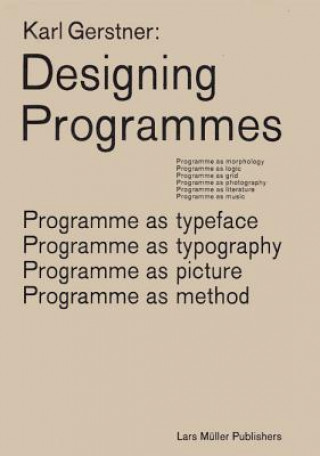 | 7 | 36,49 € | Poodi |
| Libristo | Karst Hydrogeology, Geomorphology and Caves GTIN: 9781119605348 Earth sciences A Comprehensive Resource Covering All Aspects of Karst Hydrogeology, Geomorphology, and CavesThis essential book covers all physical, chemical, and geological aspects of karst science. It reviews current knowledge on hydrogeology, geomorphology and caves in karst, based on the vast existing literature and investigations carried out by the authors worldwide. The different topics are profusely illustrated with color figures and images from all continents and climates, showing the scientific and aesthetic appeal of karst environments. The book covers in a systematic way the significant features of karst rocks, the chemistry and kinetics of their dissolution, the rate and distribution of karst denudation, the unique hydrogeology of karst terrains, the landforms endemic to karst, the morphology of caves and their diverse sedimentary records, and the multiple processes that lead to the formation of underground voids. Overall, the work reflects the increasing recognition of karst as a fundamental part of the Earth?s dynamic systems, and helps readers understand this multidisciplinary field from a holistic and nuts-and-bolts perspective. Some of the ideas discussed within the book include:* How karst is gaining importance for human development, because of its valuable resources (groundwater) and associated environmental problems (impacts and hazards)* The enormous technological developments achieved in recent years* Recent major breakthroughs in the field and their influence on other scientific disciplines* The central role played by karst science for understanding and mitigating global environmental issues (global warming, depletion of resources, human-induced hazards)For all scientists working in karst, and for students and lecturers of karst-related programs, this book serves as a valuable all-in-one source. It is also a valuable resource for professional hydrogeologists, the petroleum industry, environmental geologists, and of course speleologists, the last true geographic explorers in the world. |  | 14 | 153,49 € | Poodi |
| Kaup24 | Käsimikser 250 W Progress, 5 kiirust Tootekood: 14831244 GTIN: 5054061506235 Elektrilised veekeetjad Käsimikser 250 W Progress, 5 kiirust |  | Tellitav | 35,49 € | Poodi |
| Kaup24 | Kõõmavastane šampoon Reistill Balance Sos Program, 250 ml Tootekood: RI00005 GTIN: 8032568305046 Šampoonid Kõõmavastane šampoon Reistill Balance Sos Program, 250 ml |  | 11,99 € | Poodi | |
| Krisostomus | Kotlin from Scratch: A Project-Based Introduction for the Intrepid Programmer GTIN: 9781718503526 Raamatud Introduces readers to Kotlin through 37 hands-on projects, covering the fundamentals of the language while developing problem-solving skills with advanced topics like fractals and dynamic systems, while emphasizing practical applications, including simulations, cryptography, and algorithmic challenges. Original. "Covers Kotlin basics and the JavaFX library. Features over 30 math, science, and algorithmic projects, such as how to model the motion of a pendulum, simulate the orbits of a binary star system, render the Mandelbrot set, and implement nature-inspired algorithms. Also covers randomness, recursion, sorting and searching, and optimization"-- Learn Kotlin Through 37 ProjectsKotlin isnt just for building Android apps. As youll learn in Kotlin from Scratch, its also a general programming language for crafting both elegant and efficient code.With the aid of 37 hands-on projects, youll move quickly through the language basics while building your problem-solving skills, even tackling advanced concepts like fractals, dynamic systems, and nature-inspired algorithms. Youll explore the way Kotlin handles variables, control structures, functions, classes, and data structures, and youll learn to create visualizations using Kotlin and the JavaFX graphics library. Then youll build increasingly sophisticated apps to practice what youve learned while tackling challenges from math and science to algorithms and optimization.As you progress through the book, you will:Simulate physical systems, like the intricate dance of binary starsImplement the classic Hill cipher for encryption and decryption Generate beautiful fractals with recursive algorithms Program classic computer science algorithms for sorting and searchingSolve the infamous Berlin52 traveling salesman problem Expand your language repertoire and improve your computational thinking with Kotlin from Scratch. <br><br> Autorid: Faisal Islam <br> |  | Tellimisel (tarne 10-14 tp) | 65,79 € | Poodi |
| Krisostomus | KS3 Maths Progress Student Book Pi 3 GTIN: 9781447962366 Raamatud Highly motivating differentiated Student Books develop confidence, fluency and problem-solving, supporting progression: *Full ability range: Pi (Tier 1), Theta (Tier 2) and Delta (Tier 3)* Unit structure based on mastery lessons, formative test, consolidation and extension lessons and a summative unit test* Reflection (metacognition) is explicitly encouraged to build perseverance and confidence* STEM and Finance lessons highlight these important links to using maths in real life* Reasoning and Problem-solving are nurtured in preparation for progressing to GCSE If you're an institution you can get the answers for this book as a free download. If you are a parent or tutor please contact customer services at customersolutions@pearson.com who will send you the download directly. <br><br> Autorid: Katherine Pate, Naomi Norman <br> |  | Tellimisel (tarne 10-14 tp) | 34,05 € | Poodi |
| Libristo | KUBARK Counterintelligence Interrogation GTIN: 9788027382071 Espionage & secret services This is one of the first declassified manuals released by the CIA, entitled the 'KUBARK Counterintelligence Interrogation". KUBARK was a U.S. Central Intelligence Agency cryptonym for the CIA itself. The cryptonym KUBARK appears in the title of a 1963 CIA document KUBARK Counterintelligence Interrogation which describes interrogation techniques, including, among other things, "coercive counterintelligence interrogation of resistant sources". This is the oldest manual, and describes the use of abusive techniques, as exemplified by two references to the use of electric shock, in addition to use of threats and fear, sensory deprivation, and isolation. |  | 7 | 9,39 € | Poodi |
| Libristo | Kubark: Counterintelligence Interrogation GTIN: 9781329282223 History The CIA's one-and-only official interrogation manual was published in 1963 and has recently been made available online; this softcover edition marks the Agency's redactions and includes the extensive descriptive bibliography of the original. This is not a |  | 14 | 14,69 € | Poodi |
| Krisostomus | LabVIEW Graphical Programming, Fifth Edition 5th edition GTIN: 9781260135268 Raamatud Publisher's Note: Products purchased from Third Party sellers are not guaranteed by the publisher for quality, authenticity, or access to any online entitlements included with the product.LabVIEW programming techniques, tips, and practicesLearn to build effective LabVIEW programs using the detailed information contained in this thoroughly revised resource. This edition updates all content to align with the latest version and adds new chapters that clearly explain object-oriented programming methods, and programming in teams using the cloud. LabVIEW Graphical Programming, Fifth Edition begins with basics for beginners and quickly progresses to intermediate and advanced programming techniques. Written by a pair of LabVIEW experts, this hands-on guide shows how to work with data types, start building your own applications, handle I/O, and use the DAQmix library. You will also find out how to build applications that communicate with enterprise message brokers and with Amazon Web Services Internet of Things (IoT) message broker. Coverage includes:The origin and evolution of LabVIEWLabVIEW programming fundamentalsData acquisitionObject-oriented programming in LabVIEWFrameworks, including the Delacor Queued Message Handler (DQMH®) and Actor FrameworkUnit testingEnterprise and IoT messagingProgramming in teams using the cloud <br><br> Autorid: Richard Jennings, Fabiola De la Cueva <br> |  | Tellimisel (tarne 10-14 tp) | 109,64 € | Poodi |
| Kaup24 | Laserprinteri kassett RoGer HP 17A, Must Tootekood: ROGER-CF217A GTIN: 4752168051566 Laserprinteri toonerid Laserprinteri kassett RoGer HP 17A, Must |  | 8,12 € | Poodi | |
| Kaup24 | Laserprinteri kassett RoGer HP CE278A / Canon CRG-726 / CRG-728 Tootekood: ROGER-CE278A GTIN: 4752168051658 Laserprinteri toonerid Laserprinteri kassett RoGer HP CE278A / Canon CRG-726 / CRG-728 |  | 9,79 € | Poodi | |
| Alfashop | LCD Monitor|ASUS|ROG Strix OLED XG27ACDNG|26.5"|Gaming|Panel QD-OLED|2560x1440|16:9|360 Hz|0.03 ms|Swivel|Pivot|Height adjust GTIN: 4711387675243 Monitorid <p><b>ROG Strix OLED XG27ACDNG gaming monitor ― 27-inch (26.5-inch viewable) 1440p QD-OLED panel, 360 Hz, 0.03 ms, custom heatsink, OLED Anti-flicker, ASUS OLED Care+, uniform brightness, G-SYNC® compatible, 99% DCI-P3, and DisplayWidget Center</b><br /><br /><b>360Hz QD-OLED GAMING MONITOR<br />ROG STRIX OLED XG27ACDNG</b><br />The 27-inch ROG Strix OLED XG27ACDNG gaming monitor boasts an exclusive 1440p QD-OLED panel with a 360 Hz refresh rate, OLED Anti-flicker technology and 0.03 ms gray-to-gray (GTG) response time for immersive, fast-paced gaming. Custom heatsink provides exceptional cooling performance, while ASUS OLED Care+ functions reduce the risk of burn-in to ensure longevity of the OLED panel.<br /><br /><b>DOMINATE AT 360 HZ</b><br />ROG OLED technology gives you the upper hand over the competition ― thanks to crisp 1440p visuals and supersmooth gameplay at an astounding 360 Hz.<br /><br /><b>OLED ANTI-FLICKER</b><br />ROG-exclusive OLED Anti-Flicker technology offers three refresh rate ranges ― High, Mid, Off ― to reduce flicker during frame rate fluctuations and maintain an immersive gaming experience.<br /><br /><b>NEXT-GEN QD-OLED TECHNOLOGY</b><br /><br /><b>Advantages of OLED technology</b><br />The extremely high contrast ratio offered by OLED technology ensures the deepest black hues and vivid colors. Plus, an astounding 0.03 ms gray-to-gray (GTG) response time ensures supersmooth, low-latency gameplay. These features not only make the XG27ACDNG perfect for gaming, but also for professional video- and photo-editing.<br /><br /><b>BUILT TO LAST<br />ADVANCED CUSTOM HEATSINK</b><br />The custom passive heatsink found in the XG27ACDNG prioritizes heat dissipation. In addition, the monitor’s back cover features top vents that further improve cooling to significantly reduce the risk of burn-in.<br /><br /><b>SCREEN PROTECTION<br />ASUS OLED Care+</b><br />New ASUS OLED Care+ software provides a full set of customizable monitor settings to protect the OLED panel and ensure longevity of the screen. All the settings can be easily managed through the DisplayWidget Center.<br /><br /><b>ASPECT RATIO</b><br />For gamers who typically use smaller monitors, the XG27ACDNG is able to display a 24.5-inch image, a 4:3 aspect ratio image, or a full-screen 4:3 aspect with deep black OLED borders around the image. For FPS players, playing on a full-screen 4:3 aspect ratio makes in-game targets or character models look slightly larger, making them easier to hit.<br /><br /><b>Uniform brightness</b><br />When activated, the ROG-exclusive Uniform Brightness setting within the OSD menu decreases peak brightness to keep levels consistent for better viewing ― even when changing the size of bright white windows. It also makes marathon gaming sessions much more comfortable on the eyes.<br /><br /><b>DisplayWidget Center</b><br />Take your monitor to the next level with DisplayWidget Center, a powerful monitor management software designed to help you optimize, personalize, and fully utilize your display via your mouse — so there’s no need to access the OSD menu.<br /><br /><b>Futuristic, cyberpunk-inspired aesthetic</b><br />The clean and elegant aesthetic of the XG27ACDNG underlines its premium status. There’s even a built-in tripod socket on top of the monitor to accommodate a camera for streaming setups.<br /><br /><b>Compact stand design</b><br />The base has a small footprint to free up space for the keyboard and mouse. It also includes a mobile device groove to prop up phones.<br /><br /><b>Superslim frameless design</b><br />The frameless panel facilitates immersive viewing.<br /><br /><b>SMOOTH AND RESPONSIVE</b><br />The XG27ACDNG features NVIDIA® G-SYNC™ compatible and AMD FreeSync™ Premium Pro technology, ensuring super-smooth, tear-free visuals with low latency.<br /><br /><b>_In-game enhancements</b><br /><br /><b>DYNAMIC SHADOW BOOST</b><br />ASUS Dynamic Shadow Boost uses ROG Gaming AI technology to automatically enhance dark areas of the screen without affecting the rest of the screen, making it easier to spot enemies hiding in dim areas of the map.<br /><br /><b>GAMEPLUS</b><br />The ASUS-exclusive, integrated GamePlus hotkey offers in-game enhancements. Co-developed with input from pro gamers, GamePlus functionality enables you to practice and improve gaming skills with the ROG Gaming AI technology-enhanced Dynamic Crosshair.<br /><br /><b>GAMEVISUAL</b><br />ASUS GameVisual technology has seven pre-set display modes to optimize visuals for different types of content. This unique feature can be easily accessed through a hotkey or the OSD settings menu.<br /><br /><b>FLICKER-FREE TECHNOLOGY</b><br />TÜV Rheinland-certified ASUS Flicker Free technology eliminates flicker, ensuring comfortable viewing experiences. This technology helps minimize eyestrain and other ailments typically associated with extended hours of viewing.<br /><br /><b>LOW BLUE LIGHT TECHNOLOGY</b><br />The new hardware-based ASUS Low Blue Light technology reduces potentially harmful high-energy blue-light emissions while offering color performance that’s better than monitors with software-based filtering solutions.<br /><br /><b>EXTENSIVE CONNECTIVITY</b><br />A multitude of connectivity options ― including one DisplayPort™ 1.4, two HDMI® 2.1 ports, USB-C with 90 W Power Delivery and a USB hub ― provide support for a wide array of multimedia devices.<br /><br /><b>Ergonomic stand</b><br />The specially designed stand offers tilt, swivel, pivot, and height adjustments for the ideal viewing position. The display is also VESA wall-mount-compatible.<br /><br /><b>Sustaining an Incredible Future</b><br /><br /><b>Eco-friendly Packaging</b><br />ASUS is committed to a sustainable future and strives to positive contributions to society and the environment. The latest ROG monitors are shipped in packaging made from 100% recycled cardboard to reduce waste.</p><p></p><ul><li>26.5-inch QHD (2560 x 1440) QD-OLED gaming monitor with 360 Hz refresh rate and 0.03 ms response time for immersive gaming</li><li>Highly efficient custom heatsink, advanced airflow design, and ASUS OLED Care+ functions to reduce the risk of burn-in</li><li>ROG-exclusive OLED Anti-flicker technology helps reduce the flicker during refresh-rate fluctuations</li><li>VESA DisplayHDR™ 400 True Black compliance, 99% DCI-P3 gamut, true 10-bit, and Delta E < 2 color difference for astonishing HDR performance</li><li>DisplayWidget Center software allows users to easily access OLED Care functions and adjust monitor settings using a mouse</li><li>Extensive connectivity options include DisplayPort™ 1.4 (DSC), HDMI® 2.1, and USB-C® with 90 W Power Delivery</li></ul><p>The terms HDMI, HDMI High-Definition Multimedia Interface, HDMI Trade dress and the HDMI Logos are trademarks or registered trademarks of HDMI Licensing Administrator, Inc.<br />Please avoid hanging headphones or attaching any items that don't belong to the monitor itself to prevent reducing the monitor’s lifespan.<br />Products certified by the Federal Communications Commission and Industry Canada will be distributed in the United States and Canada. Please visit the ASUS USA and ASUS Canada websites for information about locally available products.<br />All specifications are subject to change without notice. Please check with your supplier for exact offers. Products may not be available in all markets.<br />Specifications and features vary by model, and all images are illustrative. Please refer to specification pages for full details.<br />PCB color and bundled software versions are subject to change without notice.<br />Brand and product names mentioned are trademarks of their respective companies.<br />Unless otherwise stated, all performance claims are based on theoretical performance. Actual figures may vary in real-world situations.<br />The actual transfer speed of USB 3.0, 3.1, 3.2, and/or Type-C will vary depending on many factors including the processing speed of the host device, file attributes and other factors related to system configuration and your operating environment.</p> |  | 709,75 € +0,01 € | Poodi | |
| Krisostomus | Leading Culturally Responsive Gifted Programs: A Roadmap for Change GTIN: 9781032274690 Raamatud Written by experienced leaders in gifted education, this book is a foundational guide for supervisors, administrators, and districts seeking to create culturally responsive and equity-focused gifted policies and programs.Engaging chapters supported by real-world vignettes and interactive contemplation corners outline key elements of culturally responsive leadership and the administrative actions necessary for disrupting systems of oppression within gifted programs. Topics covered include culturally responsive gifted education, multitiered systems of support, authentic family engagement, the use of data to inform systemic change, and more.Featuring authentic applications of culturally responsive gifted leadership practices and an innovative tool to evaluate gifted program inclusivity, this book is essential reading for all current and future leaders in gifted education. Written by experienced leaders in gifted education, this book is a foundational guide for supervisors, administrators, and districts seeking to create culturally responsive and equity-focused gifted policies and programs. <br><br> Autorid: Robin M. Greene, Michelle Pacheco DuBois <br> |  | Tellimisel (tarne 10-14 tp) | 44,84 € | Poodi |
| Krisostomus | Leading Enterprise AI Programs: Optimize AI Teams for Value Creation GTIN: 9781398623194 Raamatud Companies everywhere are investing significant resources into building AI products and services that they hope will transform their business. To deliver real results, AI and data leaders need to build a strong business-oriented enterprise AI program. Leading Enterprise AI Programs is an essential guide to establishing and directing an agile, ethical and business-focussed AI strategy and program for the whole enterprise. It provides leaders with guidance on operating a portfolio of use cases delivering effective and lasting business value. You will learn how to set up the best operating model for an organization's goals and targets, find and prioritize the right use cases for the business, and build a community of citizen data scientists. This book explains how AI can drive business success through focusing on users and interfaces, with clarity on the challenges to be solved as the primary drivers of value. This book provides practical frameworks and actionable advice to help leaders set up a program and project portfolio, assess costs and benefits and embed AI into an organization's value generation ecosystem. With real-world examples, Leading Enterprise AI Programs helps leaders steer an enterprise AI team to lasting success. Develop AI solutions that create real business value with this guide to leading a successful enterprise AI program. <br><br> Autorid: Patrick Bangert <br> |  | Tellimisel (tarne 10-14 tp) | 47,54 € | Poodi |
| Krisostomus | Leading Innovation and Creativity in University Teaching: Implementing Change at the Programme Level GTIN: 9781032041483 Raamatud Focusing on creating learning environments, this book explores what it means to be an innovative leader of learning and teaching in higher education. Providing practical tips and guidance to support those designing or redesigning higher education curricula, this book highlights approaches and solutions to leading change in learning and teaching. Covering all areas from an overview of external pressures, through to developing a vision and strategy for a programme, to classroom practice and sustainability, leading thinkers in the field of university learning and teaching share their experiences of driving and sustaining change in departmental practice. It also introduces creative approaches into the role to support the innovation, enhancement, and development of agile programme teams. With insights and case studies from international contributors, this book highlights key approaches and solutions to leading change in learning and teaching that are implementable. It will be key reading for all those teaching in higher education, but particularly for academics who are interested in programme leadership roles. <br><br> Autorid: Sam Nolan, Steve Hutchinson <br> |  | Tellimisel (tarne 10-14 tp) | 48,89 € | Poodi |
| Krisostomus | Leaping Frogs! GTIN: 9781797234878 Raamatud Hop, flip, and jump your way to victory in Leaping Frogs! from Petit Collage.In this ribbiting twist on the classic game of tiddlywinks, use the springboard to flip your froggy friend into the pond to earn points. Where you land determines your score, but you should always aim for the best spot in the pond: the golden lily pad! The player with the most points after five rounds wins. Perfect for 24 players, ages 4+, this game furthers communication skills, encourages cognitive development, and deepens a childs understanding of cause and effect. Inside the box, youll find four wooden frog characters, two sheets of point tokens, a wooden lily pad, wooden springboard, wooden die, gameboard, and English, Dutch, French, German, Italian, and Spanish instructions. The game is plastic-free with everything made using FSC paper and wood, and the packaging is printed using 75% recycled materials, FSC paper, and vegetable inks. AIM OF THE GAME: Flip your froggy friend into the pond to earn the most points!HOW TO PLAY: Position the springboard and golden lily pad at opposite ends of the pond gameboard. Balance your frog on the springboard, then press down quickly and firmly to catapult your character onto the pond! The closer you land to the lily pad, the more points you scoreunless you overshoot and reach the bank. Take the same number of tokens as points scored, reset the board, and play again. The player with the most point tokens after five rounds wins.WHO IT'S FOR: Perfect for 24 players, ages 4 and up.WHAT'S INSIDE: 4 wooden frog characters, 36 point tokens, a wooden lily pad, wooden springboard, wooden die, gameboard, and English, Dutch, French, German, Italian, and Spanish instructions. HOP, FLIP, AND JUMP! Leaping Frogs! from Petit Collage is a ribbiting twist on the classic game of tiddlywinks. Flip your froggy friend into the pond to earn points. Where you land determines your score, but you should always aim for the golden lily pad! LEAP TO VICTORY Use the springboard to propel your frog onto the pond! The closer you land to the golden lily pad, the more points you score, unless you overshoot and reach the bank, of course. The player with the most points after five rounds wins. PLAY & DEVELOPMENT Made for 24 players, ages 4+, the game furthers communication skills, cognitive development, and understanding of cause and effect. Playing games helps kids to learn the values of patience, focus, and winning and losing with grace. THOUGHTFULLY DESIGNED Includes 4 wooden frogs, 36 point tokens, wooden lily pad, wooden springboard, wooden die, gameboard, and instructions. Plastic-free game made using FSC paper and wood. Packaging printed using 75% recycled materials. PETIT COLLAGE Combining great design with environmentally conscious manufacturing to create toys, puzzles, and games that encourage learning through play. From on-the-go fun to nursery show pieces, our products are playful, creative, and educational. <br><br> Autorid: Petit Collage <br> |  | Tellimisel (tarne 10-14 tp) | 16,50 € | Poodi |
| Krisostomus | Learn AI-Assisted Python Programming, Second Edition 2nd edition GTIN: 9781633435995 Raamatud See how an AI assistant can bring your ideas to life immediately!Once, to be a programmer you had to write every line of code yourself. Now tools like GitHub Copilot can instantly generate working programs based on your description in plain English. An instant bestseller, Learn AI-Assisted Python Programming has taught thousands of aspiring programmers how to write Python the easy waywith the help of AI. Its perfect for beginners, or anyone whos struggled with the steep learning curve of traditional programming. In Learn AI-Assisted Python Programming, Second Edition youll learn how to: Write fun and useful Python applicationsno programming experience required! Use the GitHub Copilot AI coding assistant to create Python programs Write prompts that tell Copilot exactly what to do Read Python code and understand what it does Test your programs to make sure they work the way you want them to Fix code with prompt engineering or human tweaks Apply Python creatively to help out on the job AI moves fast, and so the new edition of Learn AI-Assisted Python Programming, Second Edition is fully updated to take advantage of the latest models and AI coding tools. Written by two esteemed computer science university professors, it teaches you everything you need to start programming Python in an AI-first world. Youll learn skills you can use to create working apps for data analysis, automating tedious tasks, and even video games. Plus, in this new edition, youll find groundbreaking techniques for breaking down big software projects into smaller tasks AI can easily achieve. Purchase of the print book includes a free eBook in PDF and ePub formats from Manning Publications. About the technology AI has changed the way we write computer programs forever. You describe in plain English what you want your program to do, and AI coding assistants like Github Copilot can generate the code for you instantly! If you can use a web browser and move files around on your computer, you can create useful software. This book shows you how. About the book Learn AI-Assisted Python Programming, Second Edition teaches you how to create your own games, tools, and other simple applications using Copilot and the user-friendly Python language. Youll be amazed how quickly you can go from an idea to a working program! Authors Leo Porter and Dan Zingaro guide you step by step as you go from creating simple functions, like a small program that tells you if a password is strong enough, to writing games and tools that help you automate tedious tasks. As you go, youll learn just enough Python to understand and improve what Copilot creates. About the reader No experience required! About the author Dr. Leo Porter is a Teaching Professor at UC San Diego. Dr. Daniel Zingaro is an Associate Teaching Professor at the University of Toronto. The technical editor on this book was Peter Morgan. <br><br> Autorid: Leo Porter, Daniel Zingaro <br> |  | Tellimisel (tarne 10-14 tp) | 55,64 € | Poodi |
| Krisostomus | Learn Functional Programming with Elixir GTIN: 9781680502459 Raamatud Elixir's straightforward syntax and this guided tour give you a clean, simple path to learn modern functional programming techniques. No previous functional programming experience required! This book walks you through the right concepts at the right pace, as you explore immutable values and explicit data transformation, functions, modules, recursive functions, pattern matching, high-order functions, polymorphism, and failure handling, all while avoiding side effects. Don't board the Elixir train with an imperative mindset! To get the most out of functional languages, you need to think functionally. This book will get you there.Functional programming offers useful techniques for building maintainable and scalable software that solves today's difficult problems. The demand for software written in this way is increasing - you don't want to miss out. In this book, you'll not only learn Elixir and its features, you'll also learn the mindset required to program functionally. Elixir's clean syntax is excellent for exploring the critical skills of using functions and concurrency.Start with the basic techniques of the functional way: working with immutable data, transforming data in discrete steps, and avoiding side effects. Next, take a deep look at values, expressions, functions, and modules. Then extend your programming with pattern matching and flow control with case, if, cond, and functions. Use recursive functions to create iterations. Work with data types such as lists, tuples, and maps. Improve code reusability and readability with Elixir's most common high-order functions. Explore how to use lazy computation with streams, design your data, and take advantage of polymorphism with protocols. Combine functions and handle failures in a maintainable way using Elixir features and libraries.Learn techniques that matter to make code that lives harmoniously with the language.What You Need:You'll need a computer and Elixir 1.4 or newer version installed. No previous functional programming or Elixir experience is required. Some experience with any programming language is recommended. <br><br> Autorid: Ulisses Almeida <br> |  | Tellimisel (tarne 10-14 tp) | 49,58 € | Poodi |
| Krisostomus | Learn Like a Lobster: Grow as you go, fuel your own progress, accelerate your career GTIN: 9780241718957 Raamatud We used to go to work to learn to do the job. Now learning IS the job. Whatever your career, staying relevant and adaptable is essential to your success. And your unexpected role model for learning at work? A lobster. In Learn Like a Lobster, Sunday Times bestselling authors Helen Tupper and Sarah Ellis explore the unexpected parallels between lobsters and lifelong learning: Lobsters never stop growing - and neither should you Lobsters grow through hard moments - use your challenges to uncover new learning Lobsters fuel their own growth - don't wait to be taught, create your own opportunities to learn Learn Like a Lobster shows how to make learning an easy and energising part of every working day. Its a must-read for anyone who wants to develop in their career in a way that feels meaningful and motivating. Whether you are someone who is ambitious to grow or youre not sure about where to start, Learn Like a Lobster offers the practical skills, tools and motivation you need for career progression and fulfilment. Because when we learn, we grow. <br><br> Autorid: Helen Tupper, Sarah Ellis <br> |  | Tellimisel (tarne 10-14 tp) | 24,00 € | Poodi |
| Krisostomus | Learn Physics with Functional Programming: A Hands-on Guide to Exploring Physics with Haskell GTIN: 9781718501669 Raamatud "This book shows how to solve physics problems using Haskell, a functional programming language. Source code, equations, and diagrams throughout demonstrate how physics enthusiasts and functional programmers can use Haskell and its mathematical structures to solve problems from Newtonian mechanics and electromagnetics"-- Deepen your understanding of physics by learning to use the Haskell functional programming language.This book teaches you to solve physics problems using the functional programming paradigm. Ideal for first-time programmers and science aficionados alike, it introduces the Haskell programming language and encourages the writing of beautiful code to match the elegant ideas of theoretical physics. Haskells powerful system of types is capable of encoding important mathematical structures like vectors, derivatives, integrals, scalar fields, and differential equations. In addition, youll explore Newtonian mechanics and electromagnetics, analyze source code, and discover why Haskells high-order functions and referential transparency serve physics so well. <br><br> Autorid: Scott Walck <br> |  | Tellimisel (tarne 10-14 tp) | 67,79 € | Poodi |
| Krisostomus | Learn to Code by Solving Problems: A Python Programming Primer GTIN: 9781718501324 Raamatud "Teaches readers how to use Python to solve short, situational competitive programming problems. Each chapter requires the reader to learn a new feature or function of Python in order to solve a problem, while emphasizing basic programming concepts, problem-solving strategies, and critical thinking skills"-- Learn to Program by Solving Problems is a practical introduction to programming using Python, one of the world's most popular programming languages. The book emphasizes problem-solving strategies that teach readers not only the mechanics of coding, but how to think like savvy programmers. &; Teaches readers how to use Python to solve short, situational problems (for example, how to predict when a gambler will run out of money while playing slot machines; how to create a program to track cell phone data usage; how to set up a system of identifying the popularity of berths in a parking lot) &; Each chapter requires the reader to learn a new feature or function of Python in order to solve a problem &; Emphasizes basic programming concepts, problem-solving strategies, and critical thinking skills that lay the groundwork for readers to think like good programmers <br><br> Autorid: Daniel Zingaro <br> |  | Tellimisel (tarne 10-14 tp) | 39,54 € | Poodi |
| Krisostomus | Learn to Program 3rd edition GTIN: 9781680508178 Raamatud It's easier to learn how to program a computer than it has ever been before. Now everyone can learn to write programs for themselves - no previous experience is necessary. Chris Pine takes a thorough, but lighthearted approach that teaches you the fundamentals of computer programming, with a minimum of fuss or bother. Whether you are interested in a new hobby or a new career, this book is your doorway into the world of programming. Computers are everywhere, and being able to program them is more important than it has ever been. But since most books on programming are written for other programmers, it can be hard to break in. At least it used to be. Chris Pine will teach you how to program. You'll learn to use your computer better, to get it to do what you want it to do. Starting with small, simple one-line programs to calculate your age in seconds, you'll see how to write interactive programs, to use APIs to fetch live data from the internet, to rename your photos from your digital camera, and more. You'll learn the same technology used to drive modern dynamic websites and large, professional applications. Whether you are looking for a fun new hobby or are interested in entering the tech world as a professional, this book gives you a solid foundation in programming. Chris teaches the basics, but also shows you how to think like a programmer. You'll learn through tons of examples, and through programming challenges throughout the book. When you finish, you'll know how and where to learn more - you'll be on your way. What You Need: All you need to learn how to program is a computer (Windows, macOS, or Linux) and an internet connection. Chris Pine will lead you through setting set up with the software you will need to start writing programs of your own. <br><br> Autorid: Chris Pine <br> |  | Tellimisel (tarne 10-14 tp) | 52,94 € | Poodi |
| Libristo | Learn to Program with Assembly GTIN: 9781484274361 Computing & Information Technology Many programmers have limited effectiveness because they don't have a deep understanding of how their computer actually works under the hood. In Learn to Program with Assembly, you will learn to program in assembly language - the language of the computer itself. Assembly language is often thought of as a difficult and arcane subject. However, author Jonathan Bartlett presents the material in a way that works just as well for first-time programmers as for long-time professionals. Whether this is your first programming book ever or you are a professional wanting to deepen your understanding of the computer you are working with, this book is for you. The book teaches 64-bit x86 assembly language running on the Linux operating system. However, even if you are not running Linux, a provided Docker image will allow you to use a Mac or Windows computer as well.The book starts with extremely simple programs to help you get your grounding, going steadily deeper with each chapter. At the end of the first section, you will be familiar with most of the basic instructions available on the processor that you will need for any task. The second part deals with interactions with the operating system. It shows how to make calls to the standard library, how to make direct system calls to the kernel, how to write your own library code, and how to work with memory. The third part shows how modern programming language features such as exception handling, object-oriented programming, and garbage collection work at the assembly language level. Additionally, the book comes with several appendices covering various topics such as running the debugger, vector processing, optimization principles, a list of common instructions, and other important subjects.This book is the 64-bit successor to Jonathan Bartlett's previous book, Programming from the Ground Up, which has been a programming classic for more than 15 years. This book covers similar ground but with modern 64-bit processors, and also includes a lot more information about how high level programming language features are implemented in assembly language. What You Will Learn How the processor operates How computers represent data internally How programs interact with the operating system How to write and use dynamic code libraries How high-level programming languages implement their features Who This Book Is ForAnyone who wants to know how their computer really works under the hood, including first time programmers, students, and professionals. |  | 90 | 46,99 € | Poodi |
| Krisostomus | Learn to Program with Assembly: Foundational Learning for New Programmers 1st ed. GTIN: 9781484274361 Raamatud Many programmers have limited effectiveness because they don't have a deep understanding of how their computer actually works under the hood. In Learn to Program with Assembly, you will learn to program in assembly language - the language of the computer itself. Assembly language is often thought of as a difficult and arcane subject. However, author Jonathan Bartlett presents the material in a way that works just as well for first-time programmers as for long-time professionals. Whether this is your first programming book ever or you are a professional wanting to deepen your understanding of the computer you are working with, this book is for you. The book teaches 64-bit x86 assembly language running on the Linux operating system. However, even if you are not running Linux, a provided Docker image will allow you to use a Mac or Windows computer as well.The book starts with extremely simple programs to help you get your grounding, going steadily deeper with each chapter. At the end of the first section, you will be familiar with most of the basic instructions available on the processor that you will need for any task. The second part deals with interactions with the operating system. It shows how to make calls to the standard library, how to make direct system calls to the kernel, how to write your own library code, and how to work with memory. The third part shows how modern programming language features such as exception handling, object-oriented programming, and garbage collection work at the assembly language level. Additionally, the book comes with several appendices covering various topics such as running the debugger, vector processing, optimization principles, a list of common instructions, and other important subjects.This book is the 64-bit successor to Jonathan Bartlett's previous book, Programming from the Ground Up, which has been a programming classic for more than 15 years. This book covers similar ground but with modern 64-bit processors, and also includes a lot more information about how high level programming language features are implemented in assembly language.What You Will LearnHow the processor operates How computers represent data internally How programs interact with the operating systemHow to write and use dynamic code librariesHow high-level programming languages implement their features Who This Book Is ForAnyone who wants to know how their computer really works under the hood, including first time programmers, students, and professionals. <br><br> Autorid: Jonathan Bartlett <br> |  | Tellimisel (tarne 10-14 tp) | 58,13 € | Poodi |

Kõik hinnakirjad
Tooted 401
– 450
/ 890
50