Lõõgastuge aias või terrassil mugavas puidust lamamistoolis! Saate oma õuealal veeta lõõgastava pärastlõuna. See sobib hästi basseini äärde, rõdule, aeda jms. Aia lamamistool on valmistatud halli viimistlusega toekast akaatsiapuidust, muutes selle vastupidavaks ja stabiilseks. Seljatugi ja jalatoed on reguleeritavad ning saate lukustada lamamistooli soovitud asendisse. Aia lamamistooli saab hõlpsasti liigutada 2 varustatud rattaga. Päevitustoolil on kaks ratast hõlpsa liigutamise jaoks. Padi lisab mugavust.p>• Turvalised maksemeetodid: Paypal, pangaülekanne, deebet- ja krediitkaardid, Trustly • Uhiuus toode. 2-aastane garantii sularahas kohaletoimetamise.Tasuta tarne
Language: English, Binding: Paperback, Number of pages: 324, Publishers: Hassell Street Press, Author: Falls B. Hershey,Carl H. (Carl Hubert) Calman, ISBN-13: 9781014960405, Date of issue: 2021
In "The Stuff of Thought", Pinker marries two of the subjects he knows best: language and human nature. The result is a fascinating look at how our words explain our nature. What does swearing reveal about our emotions? Why does innuendo disclose something about relationships? Pinker reveals how our use of prepositions and tenses taps into peculiarly human concepts of space and time, and how our nouns and verbs speak to our notions of matter. Even the names we give our babies have important things to say about our relations to our children and to society.§§With his signature wit and style, Pinker takes on scientific questions like whether language affects thought, as well as forays into everyday life - why is bulk e-mail called spam and how do romantic comedies get such mileage out of the ambiguities of dating? The Stuff of Thought is a brilliantly crafted and highly readable work that will appeal to fans of readers of everything from The Selfish Gene and Blink to Eats, Shoots & Leaves.
Herman Melville (1819-91) brought as much genius to the smaller-scale literary forms as he did to the full-blown novel: his poems and the short stories and novellas collected in this volume reveal a deftness and a delicacy of touch that is in some ways even more impressive than the massive, tectonic passions of Moby-Dick. In a story like "Bartleby, the Scrivener" -- one of the very few perfect representatives of the form in the English language -- he displayed an unflinching precision and insight and empathy in his depiction of the drastically alienated inner life of the title character. In "Benito Cereno," he addressed the great racial dilemmas of the nineteenth century with a profound, almost surreal imaginative clarity. And in Billy, Budd, Sailor, the masterpiece of his last years, he fused the knowledge and craft gained from a lifetime's magnificent work into a pure, stark, flawlessly composed tale of innocence betrayed and destroyed. Melville is justly honored for the epic sweep of his mind, but his lyricism, his skill in rendering the minute, the particular, the local, was equally sublime.
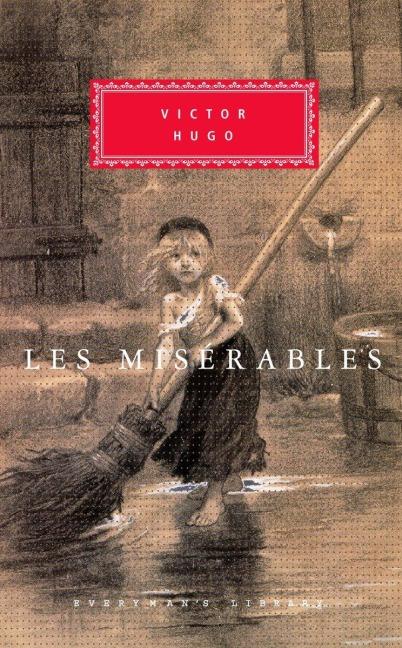
It has been said that Victor Hugo has a street named after him in virtually every town in France. A major reason for the singular celebrity of this most popular and versatile of the great French writers is Les Misérables (1862). In this story of the trials of the peasant Jean Valjean-a man unjustly imprisoned, baffled by destiny, and hounded by his nemesis, the magnificently realized, ambiguously malevolent police detective Javert-Hugo achieves the sort of rare imaginative resonance that allows a work of art to transcend its genre. Les Misérables is at once a tense thriller that contains one of the most compelling chase scenes in all literature, an epic portrayal of the nineteenth-century French citizenry, and a vital drama-highly particularized and poetic in its rendition but universal in its implications-of the redemption of one human being.