
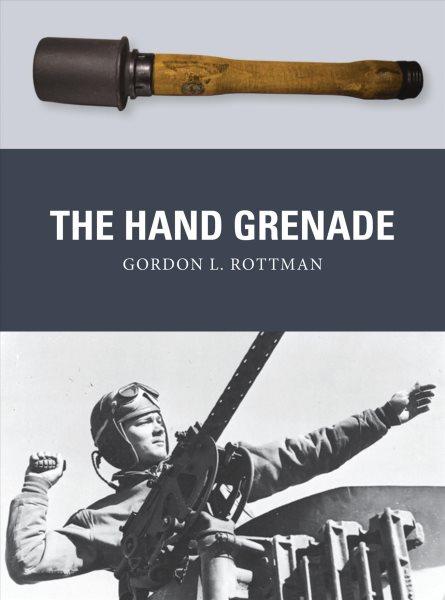
 Bloomsbury Publishing PLC Hand Grenade GTIN: 9781472807342 Raamatud The Hand Grenade is the dramatic story, covering its origins, development, use - in the World Wars and into the present day - and lasting influence on close-quarter combat and infantry tactics.Allowing the user to inflict damage on his opponent within throwing range without leaving cover, the portable, lethally efficient hand grenade is a ubiquitous weapon of modern warfare, and has now found its way into law-enforcement arsenals too. In this engaging study the origins, development, combat use and lasting legacy of the military hand grenade are explored and assessed, accompanied by specially commissioned full-color artwork and an array of revealing photographs of grenades in use and in close-up. Autorid: Gordon L. Rottman, Johnny Shumate, Alan Gilliland | 0 | Vaata | |||
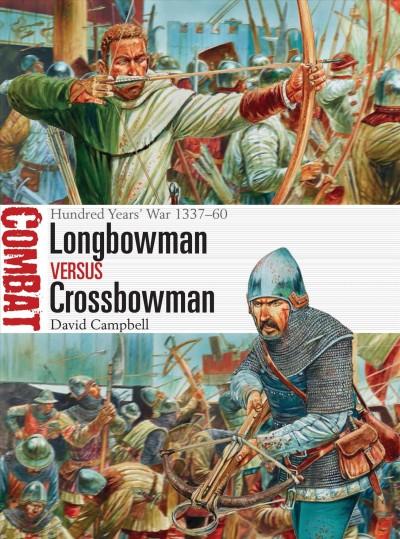 Bloomsbury Publishing PLC Longbowman vs Crossbowman: Hundred Years War 133760 GTIN: 9781472817617 Raamatud For centuries, the crossbow had played a key role on the battlefields of continental Europe, with mercenaries from Genoa and Brabant in particular filling the ranks of the French army. Yet on the outbreak of the Hundred Years War they came up against a more powerful foe. To master the English longbow was a labour of years, requiring far greater skill to use than the crossbow, but it was much more flexible and formidable, striking fear into the French and their allies. This study examines three battles Sluys (1340), Crécy (1346) and Poitiers (1356) and shows how the use of the longbow allowed Englands armies to inflict crushing defeats on numerically superior forces. The longbow changed the shape of war, becoming the defining weapon of the age and wreaking havoc upon the French armies that would face it. Featuring full-colour artwork, this is the engrossing story of the first clashes between the English longbowmen and the crossbowmen of the French king on the bloody battlefields of the Hundred Years War. Autorid: David Campbell, Peter Dennis | 0 | Vaata | |||
 Bloomsbury Publishing Su-25 'Frogfoot' Units In Combat GTIN: 9781472805676 Raamatud This volume details the technical features and operational performance of the Soviet Su-25 'Frogfoot', which proved itself as a durable and versatile attack aircraft in a variety of theatres such as Afghanistan, Georgia and Ossetia. Today it is widely accepted as the true successor to the types of specialised ground - attack aircraft that emerged during World War II. This book illuminates the service history of the 'Frogfoot' in over 30 years of combat using first-hand accounts and revealing archive photographs. The awkward-looking Su-25 has often been underrated, but the faithful 'Frogfoot' is now slated to remain in service with most of its current operators across the globe until at least 2020. This study explores the successes of the 'Frogfoot' in full, demonstrating its strengths as a formidably armed, armoured and very agile attack aircraft. | 0 | Vaata | |||
 John Wiley & Sons Inc Advanced Project Management - Best Practices on Implementation 2e GTIN: 9780471472841 Raamatud Authoritative strategies for implementing project management Senior managers at world-class corporations open their office doors to discuss case studies that demonstrate their thought processes and actual strategies that helped them lead their companies to excellence in project management in less than six years! Following the Project Management Institute's Body of Knowledge (PMBOK(r)), industry leaders address: Project risk management Project portfolio management The Project Office Project management multinational cultures Integrated project teams and virtual project teams | 0 | Vaata | |||
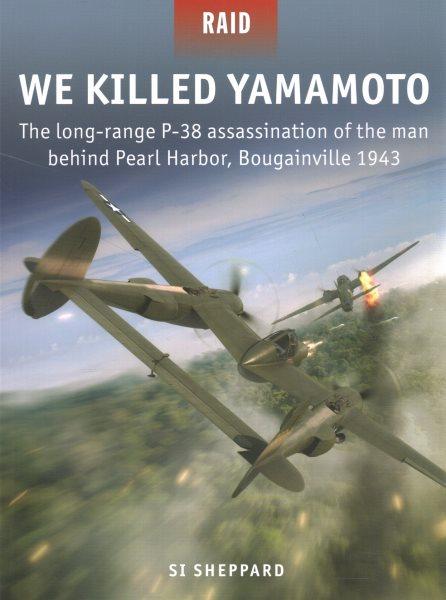 Bloomsbury Publishing PLC We Killed Yamamoto: The long-range P-38 assassination of the man behind Pearl Harbor, Bougainville 1943 GTIN: 9781472837868 Raamatud This study explores, in fascinating detail, the story of how the skill of codebreakers and fighter pilots terminated the career of Admiral Yamamoto--and the subsequent controversy over who fired the fatal shots. This study explores, in fascinating detail, the story of how the skill of codebreakers and fighter pilots terminated the career of Admiral Yamamoto--and the subsequent controversy over who fired the fatal shots. He masterminded the most devastating surprise attack against the United States in its history. He was a marked man in the war that followed. A key intelligence breakthrough enabled the military to pinpoint his location. An elite team was assembled and charged not with his capture and subsequent trial but with his execution. Osama bin Laden? No--this was Admiral Isoroku Yamamoto, the Commander-in-Chief of the Japanese Combined Fleet during World War II. This new title analyses the origins, implementation, and outcomes of Operation Vengeance, the long-range fighter interception of Admiral Yamamoto's transport aircraft that sent him to his death on April 18, 1943. Author Si Sheppard examines every angle of the operation in detail, including the role of intelligence work in pinpointing the time and location of Yamamoto's flight, the chain of command at the highest level of the US political and military establishment who ordered the attack, and the technical limitations that had to be overcome in planning and conducting the raid. It also provides a close study of the aerial combat involved in completing the mission, offering a holistic exploration of the operation which avenged Pearl Harbor. Autorid: Si Sheppard, Edouard A. Groult, Adam Tooby | 0 | Vaata | |||
 Bloomsbury Publishing PLC SAS Pocket Manual: 1941-1945 GTIN: 9781472841421 Raamatud The SAS Pocket Manual is an incredible insight into the origins, training and earliest operations of the special service volunteer soldiers who formed the original units of the world's most famous military force. The Special Air Service was the brainchild of Scots Guards' officer Lieutenant David Stirling, serving with No 8 Commando. He advocated a specially organised, specially equipped and specially trained unit dedicated to the 'unrelenting pursuit of excellence' that could act covertly and operate behind enemy lines to gain intelligence, destroy enemy aircraft and attack their supply and reinforcement routes.The 1st SAS Regiment was officially designated after successful raids against enemy airfields in the Middle East in 1941-1942. In May 1943 a 2nd SAS Regiment was raised in Algeria and would also serve in Sicily and Italy. SAS troopers were at the forefront of the action on D-Day, serving behind the enemy lines, assisting the French Resistance in diversionary attacks and in support of Allied armies. The SAS served with great distinction through 42 significant actions in Belgium, the Netherlands and Germany until the end of the war in Europe.This new addition to the bestselling Conway pocket-book series is compiled from wartime and post-war memorandums, manuals and documents. They include unit after-action reports and lecture notes from the centres used to train special services soldiers, gathered from the Liddell Hart Military Archive, National Archives, wartime periodicals and post-war memoirs. The book covers: - training methods - weapons handling - fieldcraft - sabotage training - operations in North Africa and the Middle East (19411942), Sicily and Italy (1943) and France (19441945) Autorid: Christopher Westhorp | 0 | Vaata | |||
 Bloomsbury Publishing Composite Bow GTIN: 9781472805911 Raamatud The composite bow is one of the most influential weapons of all time, having a profound impact on human history. An ancient design, emerging from Central Asia in the second millennium BCE, the composite bow came to be adopted by a staggering variety of cultures, from nomadic tribal peoples such as the Huns, Turks and Mongols, to mighty empires such as Romans, Byzantines, Persians, Muslims and Chinese. Offering a lethal combination of high power and small size, the portability of the composite bow made it an ideal cavalry weapon, though it was also used by infantry in open battle and as an offensive and defensive siege weapon. In this important study, an expert on Eastern military technology tells the story of this extraordinary piece of military hardware; how it was made and how various cultures developed differing tactics for using it. He explains why the composite bow achieved such stunning successes across Asia, Europe and parts of Africa and how it endured as a weapon of choice for thousands of years. | 0 | Vaata | |||
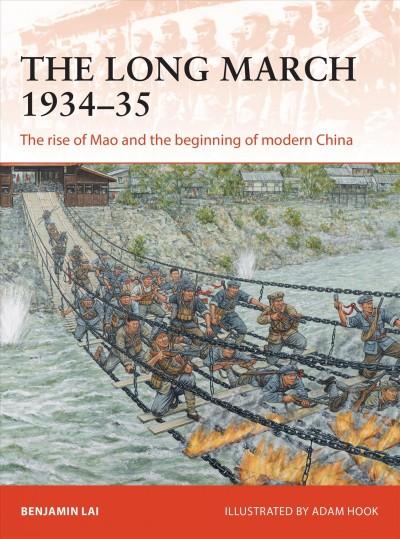 Bloomsbury Publishing PLC Long March 193435: The rise of Mao and the beginning of modern China GTIN: 9781472834010 Raamatud This study tells the epic story of how a routed group of Chinese Communists marched tens of thousands of miles with Mao on a journey that would lead to their eventual triumph and rule of the whole of China. This study tells the epic story of how a routed group of Chinese Communists marched tens of thousands of miles with Mao on a journey that would lead to their eventual triumph and rule of the whole of China. Every nation has its founding myth, and for modern China it is the Long March. In the autumn of 1934, the Chinese Nationalists under Chiang Kai-shek routed the Chinese Communists and some 80,000 men, women, and children left their homes to walk with Mao Zedong into the unknown. Maos force had to endure starvation, harsh climates, and challenging terrain whilst under constant aerial bombardment and threatened by daily skirmishes. The Long March survivors had to cross 24 rivers and 18 mountain ranges, through freezing snow and disease-ridden wilderness to reach their safe-haven of Yan'an. In military terms, the Long March was the longest continuous march in the history of warfare and it came as a terrible cost--after one year, 6,000 miles, and countless battles, fewer than 4,000 of the original marchers were left. Illustrated with stunning full-color artwork, this enthralling book tells the full story this epic display of resilience, and shows how, from the desert plateau of Yan'an, these survivors would grow the army that conquered China 14 years on, changing history forever. Autorid: Benjamin Lai, Adam Hook | 0 | Vaata | |||
 Bloomsbury Publishing US Standard-type Battleships 1941-45 (2) GTIN: 9781472806994 Raamatud This book completes an authoritative two-part study on the Standard-type US battleships of World War II - ships that were designed to fight a different type of war than the one that unfolded. It gives precise technical details of the design history and features of the Tennessee, Colorado and the unfinished South Dakota and Lexington classes, whilst providing an operational history of the former two. Much like the earlier classes, these ships' design adhered to consistent levels of performance to simplify battle-line operations, but they still incorporated evolutions of technology to match the latest Japanese types for the predicted decisive fleet engagements. In the end it was clear that war at sea would no longer see dreadnoughts slugging it out in open water, and these battleships were mostly utilized for fire support in US amphibious landings in the Pacific. Written by a leading expert on the US Navy in World War II and augmented by contemporary photographs and specially commissioned illustrations, this is the other half of the story of the US Standard-type battleships - from the terrible damage they sustained at Pearl Harbor, to their support of the war-winning landings of the US Marine Corps and US Army. | 0 | Vaata | |||
 Bloomsbury Publishing PLC Railway Guns of World War I GTIN: 9781472816399 Raamatud World War I was the Golden Age of the railway gun. More railway artillery pieces were used during this war than in any other conflict, even though at the start of the war none of the armies had railway guns and the very idea of railway artillery was comparatively new. The impetus to build and field railway-mounted guns came from the stalemate of trench warfare. The first railway guns--fielded by the French army in early 1915--were simple, improvised designs made by mounting surplus coastal defense, fortress, and naval guns onto existing commercial railway carriages. These first guns were fielded to primarily provide heavy artillery support to the frontline infantry. The British and German Armies followed suit and soon railway guns were employed all along the Western Front. The use of railway artillery expanded to other fronts too, with Russia fielding several guns in 1915 and Italy in 1916.Even the United States--which developed its artillery in close cooperation with the French--employed several models of railway guns in the final year of the war. All told, hundreds of railway artillery pieces were fielded during the war and, at war's end, several models of super-heavy railway guns were in design for use in 1919. This book details the design and development of railway guns during World War I from the very first basic designs to massive purpose-built "monster" railway guns. Accompanying the text are many rare, never before published photographs. Color illustrations depict the most important aspects of the railway guns. An accessible, authoritative illustrated history of the huge railway guns that bombarded the Western Front in World War I. Autorid: Marc Romanych, Steve Noon, Greg Heuer | 0 | Vaata |