
0 | Vaata | ||||
 Taschen GmbH Jean Nouvel by Jean Nouvel. 19812022 Bilingual edition GTIN: 9783836549028 Raamatud Jean Nouvel, winner of the 2008 Pritzker Prize, is widely regarded as Frances most original and important contemporary architect. From 1967 to 1970, he assisted the influential architects Claude Parent and Paul Virilio before creating his own practice in Paris. His first largely acclaimed project was the Arab World Institute in Paris (198187). Since then, he has completed such grand projects as the Fondation Cartier in Paris, the Reina Sofía Museum in Madrid, the Philharmonie de Paris, and the Louvre Abu Dhabi. His recent work includes the 82-story 53W53 Tower in New York, the Duo Towers in Paris, and the Shanghai Pudong Art Museum. Based on the massive XXL monograph from 2008, this widely updated edition brings the architects definitive career overview to one volume. The result is a nearly 800-page tome with more than 25 recent projects and new photos commensurate with Jean Nouvels inimitable talent, which highlights milestone projects, among them his Serpentine Gallery Pavilion in London, as well as works in progress such as the spectacular Sharaan Desert Resort, a hotel carved into sandstone rock in the Al-'Ula desert in Saudi Arabia. The collections graphic design and images were conceived and selected by the architect himself, making this publication a genuine Nouvel by Nouvel, inside and out. Autorid: Jean Nouvel, Philip Jodidio | 0 | Vaata | |||
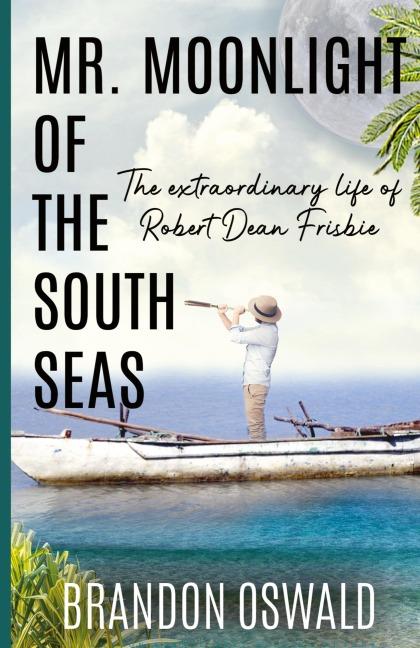 Publish Authority Mr. Moonlight of the South Seas Mr. Moonlight of the South Seas examines the life of American author Robert Dean Frisbie who, at the age of twenty-four, left the United States for the unknown adventurous ports of the Pacific Islands in the early 1920's. He first landed in Papeete, Tahiti, which at the time was a bustling town and the start-off point for many visitors to the region. He would stay a few years learning the Tahitian language, culture, and way of life. He enjoyed sharing his experiences in numerous articles for U.S. publications such as the Atlantic Monthly. Frisbie was fascinated with the number of characters that lived or frequently visited the island. These included Tahitians, sea captains, beachcombers and writers. He would often refer to these characters in his stories. His most notable friend was James Norman Hall, who would eventually co-author the Bounty Trilogy. For the remainder of his life, Hall remained one of the few people in whom Frisbie would confide his inner-most thoughts. On their first meeting in Papeete, Frisbie was mesmerized by the setting and the different boats in port. He told Hall, "All these ships.... I suppose you can go almost anywhere from here?" After four years on Tahiti, Frisbie began to take his writing career more seriously and craved finding an isolated island where he could dedicate most of his time to writing his great novel, which he called his "Moby Dick. " He settled on the lonely atoll known as Pukapuka in the Cook Islands. He got to know the islanders and their language, customs, and lifestyles. He eventually immortalized the island and some of the characters he knew in many sketches, articles and essays. Several of the pieces were collected and made into his most famous book titled The Book of Puka-Puka. Although writing occupied much of his time, Frisbie lived the life of an islander without, however, turning what he termed, "native." He believed it was very important to respect the culture of the islanders around him by continuing to acknowledge his separate upbringing. That said, he did enjoy participating in island activities such as fishing, canoeing, and house building. Eventually, Frisbie would marry a Pukapukan girl named Ngatokorua, and together the couple would have five children. His family changed his life and created additional challenges and adventures. The years of living on this lonely atoll would take its toll on Frisbie's health and mind. He could easily go months without talking to another European man, and sometimes a year would pass between ships visiting the island. Frisbie was forced to sail away from Pukapuka due to family tragedies, poor health and a yearning to see other islands. He took his family to Tahiti, Fiji, Samoa, and Rarotonga. During his South Seas travels, he and his children barely survived a monster cyclone on the island of Suwarrow. Despite his wandering, Frisbie returned to Pukapuka on several occasions in hope of reviving some stability with his family. Frisbie was also constantly trying to justify his choice of lifestyle - simple, yet unpredictable, at a time when not many people had the courage to do so. He never lost faith in writing his "Moby Dick"; and he continued to write articles for American magazines. Before his death, Frisbie would publish six very fascinating books that memorialized the people and cultures of this very unique part of the world. | 0 | Vaata |