Heinz Bonfadelli und Thomas N. Friemel behandeln grundlegende Konzepte, theoretische Ansätze und empirische Befunde der Medienwirkungsforschung. Die gleichzeitige Berücksichtigung der psychologisch und soziologisch orientierten Forschung erlaubt es, nicht nur die Nutzungsmuster und Wirkungen auf der Ebene einzelner Individuen zu verstehen (z. B. Informationssuche, Gewohnheiten, Sucht), sondern auch die Auswirkungen auf soziale Netzwerke (z. B. Meinungsführer, Gewalt) sowie die Gesellschaft als Ganzes (z. B. Kommunikationskampagnen, Wissenskluft, Agenda-Setting, Framing). Die überarbeitete Neuauflage wird durch zusätzliche Materialien im Internet ergänzt.
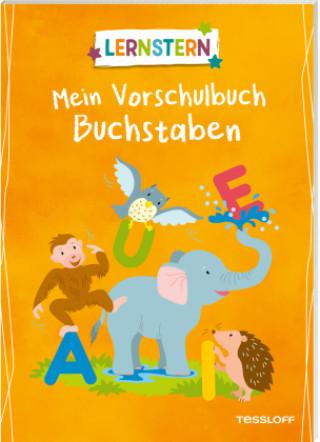
Was reimt sich auf Schnee? Wo ist ein a zu hören? Welche Wörter beginnen mit einem E? Spielerische Übungen geben Vorschulkindern ein erstes Gespür für Laute, Buchstaben und Wörter. Die bunt illustrierten Aufgaben bereiten kindgerecht und unterhaltsam auf das Lesen- und Schreibenlernen vor. Auf der letzten Seite des Heftes ist eine Anlauttabelle zu finden. Zu jedem Buchstaben gibt es dort ein passendes Anlautbild. Für Kinder ab 5 Jahren.
Der Wortschatz-Bestseller - grundlegend überarbeitet!In dieser umfassenden Neuausgabe kommen zu den bewährten Stärken des Lernwortschatzes einige neue Features hinzu: Neben der farblichen Unterscheidung der Kapitel gibt es nun auch die Aktionsseiten Mi página, mis ideas mit Aktivitäten, Vokabeltrainer mit Audios und vielen weiteren analogen und digitalen Inhalten.DAS IST NEU:7 farbcodierte Themenfelder mit AuftaktseitenDidaktische landeskundliche BilderTexte auf Oberstufenniveau neu verfasst - einfach zu verstehen, mit unterschiedlichen TextsortenMi página, mis ideas - Trainingsseiten mit Aktivitäten zum Festigen und Anwenden des WortschatzesOnline-Vokabeltrainer mit AudiosUmfangreiche Online-Übungen mit AudiosErklärvideos für das selbstorganisierte LernenDAS HAT SICH BEWÄHRT UND BLEIBT:Wörter und Strukturen in sinnvollen Kontexten lernenAktueller Wortschatz zu relevanten Themen Umfangreiche landeskundliche Informationen Wortschatzerweiterung durch Hinweise auf Kollokationen, Wortfamilien, Falsche Freunde usw.
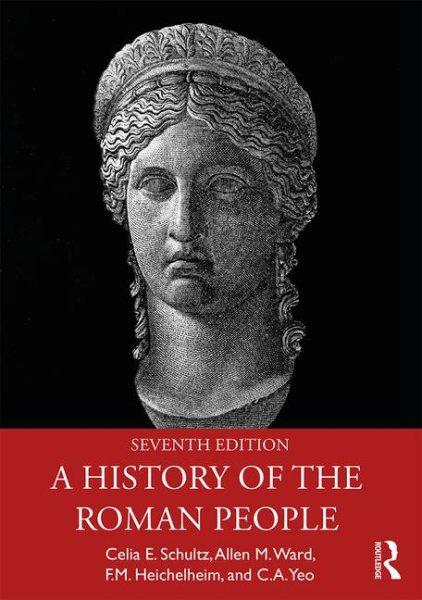
A History of the Roman People offers students a comprehensive, up-to-date, readable introduction to the whole span of Roman history. Richly illustrated, this fully updated volume takes readers through the mists of Roman prehistory and a survey of the peoples of pre-Roman Italy to a balanced, thoughtful account of the complexities of the Roman Republic, its evolution into a full-fledged empire, and its ultimate decline. This latest edition enhances the political narrative with explorations of elements of daily life in the Roman world. New features in this edition include: Addition of boxes that expand on interesting elements of Roman culture mentioned only in passing in the main text. The visual arrangement of the text helps students bear in mind what is supplemental to the central narrative Increased emphasis on the contributions of women to Roman society and in religious matters Incorporation of recent archaeological finds and current debates A History of the Roman People is an excellent introduction for those with no background in Roman history. Its clear, accessible language makes it perfect for undergraduate readers in courses on Roman history and Roman culture. More experienced students wanting to expand their knowledge will also find it a rich resource for the full sweep of Roman antiquity.
OS Explorer is the Ordnance Survey's most detailed map and is recommended for anyone enjoying outdoor activities like walking, horse riding and off-road cycling. The OS Explorer range now includes a digital version of the paper map, accessed through the OS smartphone app, OS Maps. Providing complete GB coverage the series details essential information such as youth hostels, pubs and visitor information as well as rights of way, permissive paths and bridleways. Autorid: Ordnance Survey
"The creator of the viral hit "Empathy Cards" teams up with a compassion expert to produce a visually stunning and groundbreaking illustrated guide to help you increase your emotional intelligence and learn how to offer comfort and support when someone you know is in pain. When someone you know is hurting, you want to let her know that you care. But many people don't know what words to use--or are afraid of saying or doing the wrong thing. This thoughtful, instructive guide, from empathy expert Dr. Kelsey Crowe and greeting card maverick Emily McDowell, blends well-researched, actionable advice with the no-nonsense humor and the signature illustration style of McDowell's immensely popular Empathy Cards, to help you feel confident in connecting with anyone experiencing grief, loss, illness, or any other difficult situation. Written in a how-to, relatable, we've-all-been-that-deer-in-the-headlights kind of way, There Is No Good Card for This isn't a spiritual treatise on how to make you a better person or a scientific argument about why compassion matters. It is a helpful illustrated guide to effective compassion that takes you, step by step by step, past the paralysis of thinking about someone in a difficult time to actually doing something (or nothing) with good judgment instead of fear. There Is No Good Card for This features workbook exercises, sample dialogs, and real-life examples from Dr. Crowe's research, including her popular "Empathy Bootcamps" that give people tools for building relationships when it really counts. Whether it's a coworker whose mother has died, a neighbor whose husband has been in a car accident, or a friend who is seriously ill, There Is No Good Card for This teaches you how to be the best friend you can be to someone in need"-- The stationery creator behind the viral Empathy Cards teams up with a compassion expert in a humorous, illustrated guide to help readers confidently reach out to anyone who is experiencing grief, loss, illness or any other difficult situation. 50,000 first printing. Presents a guide to confidently reaching out to anyone who is experiencing grief, loss, illness, or any other difficult situation. The creator of the viral hit "Empathy Cards" teams up with a compassion expert to produce a visually stunning and groundbreaking illustrated guide to help you increase your emotional intelligence and learn how to offer comfort and support when someone you know is in pain.When someone you know is hurting, you want to let her know that you care. But many people dont know what words to useor are afraid of saying or doing the wrong thing. This thoughtful, instructive guide, from empathy expert Dr. Kelsey Crowe and greeting card maverick Emily McDowell, blends well-researched, actionable advice with the no-nonsense humor and the signature illustration style of McDowell's immensely popular Empathy Cards, to help you feel confident in connecting with anyone experiencing grief, loss, illness, or any other difficult situation.Written in a how-to, relatable, weve-all-been-that-deer-in-the-headlights kind of way, There Is No Good Card for This isnt a spiritual treatise on how to make you a better person or a scientific argument about why compassion matters. It is a helpful illustrated guide to effective compassion that takes you, step by step by step, past the paralysis of thinking about someone in a difficult time to actually doing something (or nothing) with good judgment instead of fear.There Is No Good Card for This features workbook exercises, sample dialogs, and real-life examples from Dr. Crowes research, including her popular "Empathy Bootcamps" that give people tools for building relationships when it really counts. Whether its a coworker whose mother has died, a neighbor whose husband has been in a car accident, or a friend who is seriously ill, There Is No Good Card for This teaches you how to be the best friend you can be to someone in need.
This comprehensive practitioner guide supports coaches in developing their understanding of digital technologies and how to work in ever-changing digital environments, and shows coaches how to craft their own practices to take advantage of working online.The practice of coaching is undergoing significant change, with technology widely embedded and used in professional coaching services today. Coaching practitioners worldwide are adapting to digital environments, and a host of new technological tools have come into play, from the developments in virtual reality to AI-informed coaching, and from coaching bots to workplace apps. Edited by Jonathan Passmore, Sandra J. Diller, Sam Isaacson and Maximilian Brantl, this third book in the acclaimed Coaches Handbook Series brings together internationally respected coaching experts and practitioners to share the most up-to-date know-how. The book takes you through key technical developments, the critical factors in making digital coaching successful, and how to build a coaching business using these technologies. The book also considers the impacts on the wider industry and concludes with a number of case studies of global coaching organisations and their experiences of using digital techniques, including CoachHub, BetterUp and EZRA.Aimed at coach practitioners, their supervisors, trainers, and student coaches on accreditation programmes or undertaking training for a certificate in coaching, this book showcases best practice, new ideas and the science behind the digital revolution within coaching practice and the coaching industry. This comprehensive practitioner guide supports coaches in developing their understanding of digital technologies and how to craft their own practices for working in digital environments. The book brings together internationally respected coaching experts and practitioners and includes case studies from global coaching organisations. Autorid: Jonathan Passmore, Sandra J. Diller, Sam Isaacson, Maximilian Brantl
Chemistry: A Molecular Approach presents chemistry visually through macroscopic, molecular, and symbolic multi-level images to help you see the connections between chemistry and the world around you. Author Nivaldo Tro uses a consistent problem-solving approach (Sort, Strategize, Solve, and Check) throughout the text to show how to analyze a problem and devise a solution strategy. His consistent problem-solving approach and active learning resources are designed to engage you in becoming an expert problem solver and critical thinker. The 6th Edition presents interactive digital features to guide you through key concepts and the problem-solving process. Updates reflect current research on the COVID-19 vaccine and an extensive diversity, equity and inclusion review. Autorid: Nivaldo Tro
Harold Lowe, Fifth Officer of RMS Titanic, was described by another survivor as the real hero of the Titanic. After taking an active role in the evacuation, Lowe took command of a raft of lifeboats, distributing passengers among them so he could return to the wreckage and look for survivors the only officer to do so. He succeeded in raising a sail, rescued the drenched inhabitants of a sinking lifeboat and towed another boat to safety. Lowe had a long and fascinating life at sea. The tragic sinking of the Titanic was only the most notorious incident in a career that took him as a fifteen-year-old runaway to the coast of West Africa and into action in Siberia during the Russian Revolution. Titanic historian Inger Sheil has worked closely with Lowes family to compile a gripping biography of this heroic Welshman. Autorid: Inger Sheil
Everyone creates their own coping strategies or rules for living. But what happens when an extended family gathers in the kitchen for a traditional Christmas and they each follow those rules, rigidly? As long-held mechanisms for survival are laid bare, even Mum, who's been preparing this lunch since last January, becomes embroiled. Time-honoured rivalries and resentments will out. Accusations fly, relationships deconstruct, the rules take over. In Sam Holcroft's theatrically playful, dark comedy the instructions are there for all to see, audience included - so there's really no place to hide. Rules for Living premiered at the National Theatre, London, in March 2015. Autorid: Sam Holcroft
Paxton (emeritus, social sciences, Columbia U.) provides a new introduction and updated bibliography to his classic study, first published in 1972. It shows that the collaborationist government of Marshal PTtain, in the wake of the Nazi invasion, pursued its own double agenda: internally, an authoritarian and racist "national revolution," and externally, an attempt to persuade Hitler to accept the new France as a partner. Paxton sees the case of the Vichy government as more than a historic accounting; in his introduction he writes, "An American who looks honestly at collaborationist France must judge not only with sorrow and pity, but with fear at what his own countrymen might do under equivalent stress." Annotation c. Book News, Inc., Portland, OR (booknews.com) Autorid: Robert Paxton
"The focus of this book is on shorter presentations, three-minute talks, poster presentations, elevator pitches and advocacy speeches. It begin with best practices for three-minute presentations, then applies the same principles to slightly longer (posters) and shorter (elevator pitches and advocacy speeches) presentations"-- Imagine you are a scientist faced with presenting your research clearly and concisely. Where would you go for help? This book provides the answer. It shows how to use story structure to craft clear, credible presentations. In it you will find exercises to help you give both short and long presentations. Elevator pitches, lightning talks, Three Minute Thesis (3MT®), and conference presentations are all covered as are suggestions for longer presentations. Separate chapters address good poster design, how to tailor your talk to an audience, and presentation skills.Throughout the book the focus is on creating surprising, memorable stories. Scientific presentations are true stories about new discoveries. They are surprising because every new discovery changes our understanding of the world. Stories are memorable because they move audiences. This book teaches you to tell moving, memorable stories about your research.The book also covers:Randy Olson's And-But-Therefore (ABT) narrative formMike Morrison's Better Poster designsEye-tracking analyses of posters by EyeQuantNumerous case studies and examples from different scientific fieldsExercises for the readerLinks to videos of exemplary presentationsWith light-hearted illustrations by Jon Wagner this book will appeal to researchers and graduate students in all areas of science, and other disciplines too. Autorid: Bruce Kirchoff, Jon Wagner
The elusive narrator of this beautifully written, complex, and powerfully disconcerting novel is the scion of a decayed aristocratic family from the farther reaches of the defunct Austro-Hungarian Empire. In five psychologically fraught episodes, he revisits his past, from adolescence to middle age, a period that coincides with the twentieth-century’s ugliest years. Central to each episode is what might be called the narrator’s Jewish Question. He is no Nazi. To the contrary, he is apolitical, accommodating, cosmopolitan. He has Jewish friends and Jewish lovers, and their Jewishness is a matter of abiding fascination to him. His deepest and most defining relationship may even be the strange dance of attraction and repulsion that throughout his life he has conducted with this forbidden, desired, inescapable, imaginary Jewish other. And yet it is just his relationship that has blinded him to–and makes him complicit in–the terrible realities his era. Lyrical, witty, satirical, and unblinking, Gregor von Rezzori’s most controversial work is an intimate foray into the emotional underworld of modern European history. Autorid: Gregor Von Rezzori
A supplementary text for chemistry students in undergraduate chemistry courses, and in high school subjects specialising in chemistry but aimed especially at first year undergraduate students - SI Chemical Data 7th edition presents the properties of key chemicals used for experiments in easy-to-use tables. The chemicals included in this edition are chosen specifically to cover those studied in university chemistry courses. Students and teachers alike will find this book invaluable for solving tutorial problems and for laboratory work. Autorid: Allan Blackman, Lawrie Gahan
German heavy metal heroes Accept have been headbanging their way around the world since 1979, creating along the way three of the finest metal albums of all time in Restless and Wild, Balls to the Wall and Metal Heart, with 1981s Breaker even serving as a cult favourite of those in the know. Fronted by diminutive shrieker Udo Dirkschneider, the band crafted an intelligent and professional sound somewhere along the axis from AC/DC to Judas Priest, which found Accept going gold on the strength of their superlative Balls to the Wall record of 1983. Acrimony between Udo and the guys caused the shocking ouster of their lead singer for 1989s Eat the Heat, and a reunion in the 90s didnt last, causing renewed tensions before getting back with Mark Tornillo belting it out, and beyond. Accept have created a trio of rock-solid records that finds the band back in charge and cranking out anthems new and old on stages the world over. Come celebrate the career of heavy metals beloved Teutonic terrors, in this updated version of the first book ever on the band in any language. Its guaranteed that Popoffs celebrated song-by-song analysis will have you scurrying back to the catalogue screaming for another love-bite, faster than a shark out of the dark and headbanging over the course of many long neon nights. Autorid: Martin Popoff
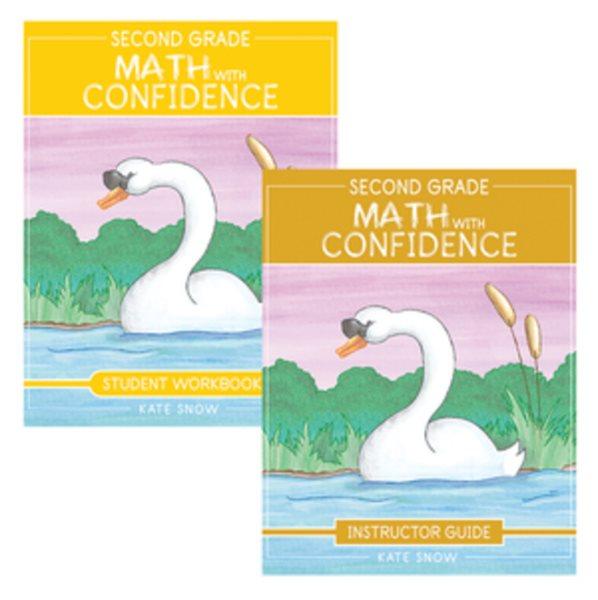
Math educator Kate Snow gives parents the tools they need to teach Math with Confidence. This scripted, open-and-go program leads parents step-by-step through teaching all the concepts second-graders need to master: reading, writing, and comparing numbers to 1000 adding and subtracting two- and three-digit numbers solving addition and subtraction word problems telling time, counting money, measuring length reading graphs, identifying shapes, and understanding simple fractions Short, lively lessons will hold a childs attention by incorporating hands-on activities, games, and real-life situations. Straightforward, colorful worksheets give students practice with new concepts and review previously-learned material. Snow makes math fun by including optional enrichment lessons, with suggestions for wonderful math picture books to enjoy together and application activities to make math come alive. Beyond just telling parents what to do, Second Grade Math with Confidence also helps them understand why the lessons are designed the way they are, giving them the knowledge and confidence to help their children learn. Using Second Grade Math with Confidence will allow parents to build a strong math foundation for their children. Age Range: 7 to 8 Grade: Second Grade Autorid: Kate Snow, Itamar Katz, Shane Klink
Only 10% of day traders succeed. But if you take day trading seriously and put the work in, you could be one of them - and make great returns while limiting the risks you run.Many people are tempted by the idea of day trading their way to wealth. The majority of them crash and burn, because they're not adequately prepared. But there's nothing stopping you joining the greats of trading history, like George Soros who made billions trading against the Bank of England, or James Simons, a maths professor who designed his own quantitative trading system and ended up a billionaire.Look at broker eToro's top trader list and you'll see people like you who have traded their way to success. Traders like;• Jepp Kirk Bonde, who started in 2013 and makes a 31% return,• Heloise Greffe, now a full-time trader who uses machine learning to refine her trades,• Or you might look at Steve Cohen who day traded his way to $17 billion net worth, making $10 million a year.This book will make sure you don't make those mistakes. Here is just a fraction of the detailed advice you can expect in this book;• Why "good traders make good losses" - Page 216• The one simple shortcut you need to use to speed up your trades - Learn more on page 81• How long does a day trader hold an asset? - Page 147• One of the biggest reason why 90% of traders fail at trading - Page 26• The "two" most important emotions you need to manage when trading - Page 27• Why I would make availability of trailing stops a criterion in my choice of broker and trading system - Page 165• How Matthew Jay lost $127,000 trading before he managed to regain control - Find out more on page 13• 13 million Coca-Cola shares are traded every day, but is it a liquid asset? - Page 36• This fantastic strategy works really well on stocks in the $10-20 price range - Page 227• You can buy IBM for $187 but if you want to sell, you'll only get $186 - Read more on page 38• What is exactly meant by risking "one dollar to get two" - Page 61...and much, much more.Every single piece of financial terminology is clearly defined inside in the Glossary section at the end.Plus on Page 8, you'll also get our free bonus video masterclass; Charting Simplified Masterclass.Kickstart your moneymaking career today, scroll up and click "add to cart"!
Introduction to Hospitality is a lively, comprehensive survey of hospitality, the world's largest industry, designed for tomorrow's leaders. You'll explore the vibrant inner workings of each hospitality segment, including lodging, restaurants, tourism, recreation, attractions, clubs and managerial areas. A core goal of this text is to help you advance your hospitality career. In that spirit, Author John Walker offers you lively material and interesting features to facilitate the learning process. The 9th Edition maintains its five-part organization and features an all-new chapter on cruising. All chapters are updated to include COVID-19 implications, as well as What do you think? critical-thinking discussion questions. Autorid: John Walker
This is an essential companion to your coaching training. It guides you through the foundational knowledge and skills, looks at ethics and practice issues, answers key questions about the training process, and includes top tips from students. Written by an expert team of authors, this handbook is an essential companion for all trainee coaches. It guides the reader through the practical skills and knowledge they'll need to successfully complete their training - from the coaching relationship and case formulation, through to supervision and research, to professional issues such as setting up in private practice and working digitally. It includes top tips for getting the most of a coach training and addresses the ‘what to do if’ questions most frequently asked by trainees. Autorid: Mary Watts, Robert Bor, Ian Florance
Geschichte über eine megastarke Freundschaft Eine Geschichte zum Selberlesen für Kinder ab 8 Jahren, durchgehend farbig illustriert und in kurze Kapitel unterteilt. Warmherzig und humorvoll werden die Themen Integration und Freundschaft für kleine Leser verständlich vermittelt.