 Princeton University Press Pentagons and Pentagrams: An Illustrated History GTIN: 9780691201122 Raamatud "This book tells the story of the pentagon and its cousin, the pentagram, delving into the shapes' history, mathematical features, cultural significance, and their role in nature, science, and art. While the pentagon may seem to be a quotidian shape, it has a fascinating history. It was a favorite symbol of the Pythagoreans, a cult who reportedly used the shape to identify themselves to other members. Over the years, it became a source of fascination for mathematicians, and efforts to study this shape ultimately led to the discovery of the golden ratio. In the late 1900s, a materials scientist discovered a material whose crystal structure displayed fivefold symmetry-breaking a core tenet of chemical symmetry. Despite its rich history, the pentagon has not yet received a book-length treatment. This book provides the first such treatment, offering a sweeping view of the five-sided polygon and its role in mathematics, history, nature, and art. The book discusses Fibonnacci numbers, stained-glass design, andpentagonal medieval fortifications, among other topics. Striking illustrations by artist Eugen Jost provide a visual representation of this object's history"-- A fascinating exploration of the pentagon and its role in various culturesThe pentagon and its close cousin, the pentagram, have inspired individuals for the last two and half millennia, from mathematicians and philosophers to artists and naturalists. Despite the pentagons wide-ranging history, no single book has explored the important role of this shape in various cultures, until now. Richly illustrated, Pentagons and Pentagrams offers a sweeping view of the five-sided polygon, revealing its intriguing geometric properties and its essential influence on a variety of fields.Traversing time, Eli Maor narrates vivid stories, both celebrated and unknown, about the pentagon and pentagram. He discusses the early Pythagoreans, who ascribed to the pentagon mythical attributes, adopted it as their emblem, and figured out its construction with a straightedge and compass. Maor looks at how a San Diego housewife uncovered four previously unknown types of pentagonal tilings, and how in 1982 a scientists discovery of fivefold symmetries in certain alloys caused an uproar in crystallography and led to a Nobel Prize. Maor also discusses the pentagons impact on many buildings, from medieval fortresses to the Pentagon in Washington, D.C. Eugen Josts superb illustrations provide sumptuous visual context, and the books puzzles and mazes offer fun challenges for readers, with solutions given in an appendix. Autorid: Eli Maor, Eugen Jost | 0 | Vaata | |||
Princeton University Press Not Working: Where Have All the Good Jobs Gone? GTIN: 9780691205496 Raamatud A candid explanation of how the labor market really works and is central to everythingand why it is not as healthy as we thinkRelying on unemployment numbers is a dangerous way to gauge how the labor market is doing. Because of a false sense of optimism prior to the COVID-19 shock, the working world was more vulnerable than it should have been. Not Working is about how people want full-time work at a decent wage and how the plight of the underemployed contributes to widespread despair, a worsening drug epidemic, and the unchecked rise of right-wing populism. David Blanchflower explains why the economy since the Great Recession is vastly different from what came before, and calls out our leaders for their continued failure to address one of the most unacknowledged social catastrophes of our time. This revelatory and outspoken book is his candid report on how the young and the less skilled are among the worst casualties of underemployment, how immigrants are taking the blame, and how the epidemic of unhappiness and self-destruction will continue to spread unless we deal with it. Especially urgent now, Not Working is an essential guide to strengthening the labor market for all when we need it most. Autorid: David G. Blanchflower | 0 | Vaata | |||
 Princeton University Press Perils of Interpreting: The Extraordinary Lives of Two Translators between Qing China and the British Empire GTIN: 9780691225456 Raamatud A fascinating history of Chinas relations with the Westtold through the lives of two eighteenth-century translatorsThe 1793 British embassy to China, which led to Lord George Macartneys fraught encounter with the Qianlong emperor, has often been viewed as a clash of cultures fueled by the Easts lack of interest in the West. In The Perils of Interpreting, Henrietta Harrison presents a more nuanced picture, ingeniously shifting the historical lens to focus on Macartneys two interpreters at that meetingLi Zibiao and George Thomas Staunton. Who were these two men? How did they intervene in the exchanges that they mediated? And what did these exchanges mean for them? From Galway to Chengde, and from political intrigues to personal encounters, Harrison reassesses a pivotal moment in relations between China and Britain. She shows that there were Chinese who were familiar with the West, but growing tensions endangered those who embraced both cultures and would eventually culminate in the Opium Wars.Harrison demonstrates that the Qing courts ignorance about the British did not simply happen, but was manufactured through the repression of cultural go-betweens like Li and Staunton. She traces Lis influence as Macartneys interpreter, the pressures Li faced in China as a result, and his later years in hiding. Staunton interpreted successfully for the British East India Company in Canton, but as Chinese anger grew against British imperial expansion in South Asia, he was compelled to flee to England. Harrison contends that in silencing expert voices, the Qing court missed an opportunity to gain insights that might have prevented a losing conflict with Britain.Uncovering the lives of two overlooked figures, The Perils of Interpreting offers an empathic argument for cross-cultural understanding in a connected world. Autorid: Henrietta Harrison | 0 | Vaata | |||
 Princeton University Press Social Science Concepts and Measurement: New and Completely Revised Edition GTIN: 9780691205489 Raamatud A fully revised edition of the classic reference on concepts and their role in social science researchSocial Science Concepts and Measurement offers an updated look at the theory and methodology of concepts for the social sciences. Emphasizing that most concepts are multilevel and multidimensional, this revised edition continues to bring the qualitative and quantitative closer together, with new chapters devoted to scaling, aggregation, and the methodological links between the semantics of concepts and numeric measures. In addition, it stresses that concepts are used for description and causal inference, and contain normative judgments.Initial chapters focus on conceptualization, followed by chapters on issues of measurement. The textbook examines concepts in the international arena (such as the global performance indicators used by international organizations like the UN and the World Bank), as well as classic paired concepts such as poverty and wealth, democracy and authoritarianism, and war and peace. Additionally, it explores such topics as typologies, hybrid concepts, and how complex concepts constitute complex theories. The volume serves as a guide to the methodology of concepts in the classroom and is accompanied by more than two hundred exercises. Social Science Concepts and Measurement is an indispensable resource for graduate students and scholars. Autorid: Gary Goertz | 0 | Vaata | |||
 Princeton University Press Campus Color Line: College Presidents and the Struggle for Black Freedom GTIN: 9780691206769 Raamatud "A stunning and ambitious origins story."Ibram X. Kendi, National Book Awardwinning and #1 New York Timesbestselling authorThe remarkable history of how college presidents shaped the struggle for racial equalitySome of Americas most pressing civil rights issuesdesegregation, equal educational and employment opportunities, housing discrimination, and free speechhave been closely intertwined with higher education institutions. Although it is commonly known that college students and other activists, as well as politicians, actively participated in the fight for and against civil rights in the middle decades of the twentieth century, historical accounts have not adequately focused on the roles that the nations college presidents played in the debates concerning racism. Based on archival research conducted at a range of colleges and universities across the United States, The Campus Color Line sheds light on the important place of college presidents in the struggle for racial parity.Focusing on the period between 1948 and 1968, Eddie Cole shows how college presidents, during a time of violence and unrest, strategically, yet often silently, initiated and shaped racial policies and practices inside and outside of the educational sphere. With courage and hope, as well as malice and cruelty, college presidents positioned themselvessometimes precariouslyamid conflicting interests and demands. Black college presidents challenged racist policies as their students demonstrated in the streets against segregation, while presidents of major universities lobbied for urban renewal programs that displaced Black communities near campus. Some presidents amended campus speech practices to accommodate white supremacist speakers, even as other academic leaders developed the nations first affirmative action programs in higher education.The Campus Color Line illuminates how the legacy of academic leaders actions continues to influence the unfinished struggle for Black freedom and racial equity in education and beyond. Autorid: Eddie R. Cole | 0 | Vaata | |||
 Princeton University Press World Philosophy Made: From Plato to the Digital Age GTIN: 9780691229188 Raamatud How philosophy transformed human knowledge and the world we live inPhilosophical investigation is the root of all human knowledge. Developing new concepts, reinterpreting old truths, and reconceptualizing fundamental questions, philosophy has progressedand driven human progressfor more than two millennia. In short, we live in a world philosophy made. In this concise history of philosophy's world-shaping impact, Scott Soames demonstrates that the modern worldincluding its science, technology, and politicssimply would not be possible without the accomplishments of philosophy.Firmly rebutting the misconception of philosophy as ivory-tower thinking, Soames traces its essential contributions to fields as diverse as law and logic, psychology and economics, relativity and rational decision theory. Beginning with the giants of ancient Greek philosophy, The World Philosophy Made chronicles the achievements of the great thinkers, from the medieval and early modern eras to the present. It explores how philosophy has shaped our language, science, mathematics, religion, culture, morality, education, and politics, as well as our understanding of ourselves.Philosophy's idea of rational inquiry as the key to theoretical knowledge and practical wisdom has transformed the world in which we live. From the laws that govern society to the digital technology that permeates modern life, philosophy has opened up new possibilities and set us on more productive paths. The World Philosophy Made explains and illuminates as never before the inexhaustible richness of philosophy and its influence on our individual and collective lives. Autorid: Scott Soames | 0 | Vaata | |||
Princeton University Press War for Gaul: A New Translation GTIN: 9780691216690 Raamatud A translation that captures the power of one of the greatest war stories ever toldJulius Caesars account of his brutal campaign to conquer GaulImagine a book about an unnecessary war written by the ruthless general of an occupying armya vivid and dramatic propaganda piece that forces the reader to identify with the conquerors and that is designed, like the war itself, to fuel the limitless political ambitions of the author. Could such a campaign autobiography ever be a great work of literatureperhaps even one of the greatest? It would be easy to think not, but such a book existsand it helped make Julius Caesar a legend. This remarkable translation of Caesars War for Gaul captures, like never before in English, the powerfully concise style of the future emperors dispatches from the front lines in what are today France, Belgium, Germany, and Switzerland. Autorid: Julius Caesar, James O'Donnell | 0 | Vaata | |||
 Princeton University Press Why Religion Is Good for American Democracy GTIN: 9780691222639 Raamatud How the actions and advocacy of diverse religious communities in the United States have supported democracys development during the past centuryDoes religion benefit democracy? Robert Wuthnow says yes. In Why Religion Is Good for American Democracy, Wuthnow makes his case by moving beyond the focus on unifying values or narratives about culture wars and elections. Rather, he demonstrates that the beneficial contributions of religion are best understood through the lens of religious diversity. The religious composition of the United States comprises many groups, organizations, and individuals that vigorously, and sometimes aggressively, contend for what they believe to be good and true. Unwelcome as this contention can be, it is rarely extremist, violent, or autocratic. Instead, it brings alternative and innovative perspectives to the table, forcing debates about what it means to be a democracy.Wuthnow shows how American religious diversity works by closely investigating religious advocacy spanning the past century: during the Great Depression, World War II, the civil rights movement, the debates about welfare reform, the recent struggles for immigrant rights and economic equality, and responses to the coronavirus pandemic. The engagement of religious groups in advocacy and counteradvocacy has sharpened arguments about authoritarianism, liberty of conscience, freedom of assembly, human dignity, citizens rights, equality, and public health. Wuthnow hones in on key principles of democratic governance and provides a hopeful yet realistic appraisal of what religion can and cannot achieve.At a time when many observers believe American democracy to be in dire need of revitalization, Why Religion Is Good for American Democracy illustrates how religious groups have contributed to this end and how they might continue to do so despite the many challenges faced by the nation. Autorid: Robert Wuthnow | 0 | Vaata | |||
 | |||||
 Princeton University Press Revolution of Things: The Islamism and Post-Islamism of Objects in Tehran GTIN: 9780691246345 Raamatud An exploration of the ways that shifting relations between materiality and language bring about different forms of politics in TehranIn Revolution of Things, Kusha Sefat traces a dynamism between materiality and language that sheds light on how the merger of the two permeates politics. To show how shifting relations between things and terms form the grounds for different modes of action, Sefat reconstructs the political history of postrevolutionary Iran at the intersection of everyday objects and words. Just as Islamism fashioned its own objects in Tehran during the 1980s, he explains, tyrannical objects generated a distinct form of Islamism by means of their material properties; everyday things from walls to shoes to foods were active political players that helped consolidate the Islamic Republic. Moreover, President Rafsanjanis liberalization in the 1990s was based not merely on state policies and post-Islamist ideologies but also on the unlikely thingsincluding consumer products from the Westthat engendered and sustained liberalism in Tehran.Sefat shows how provincial vocabularies transformed into Islamist and post-Islamist discourses through the circulation of international objects. The globalization of objects, he argues, was constitutive of the different forms that politics took in Tehran, with each constellation affording and foreclosing distinct modes of agency. Sefats intention is not to alter historical facts about the Islamic Republic but to show how we can rethink the matter of those facts. By bringing the recent material turn into conversation with the canons of structural analysis, poststructuralist theory, sociolinguistics, and Middle East Studies, Sefat offers a unique perspective on Irans revolution and its aftermath. Autorid: Kusha Sefat | 0 | Vaata | |||
 Princeton University Press Party and the People: Chinese Politics in the 21st Century GTIN: 9780691216973 Raamatud How the Chinese Communist Party maintains its power by both repressing and responding to its peopleSince 1949, the Chinese Communist Party (CCP) has maintained unrivaled control over the country, persisting even in the face of economic calamity, widespread social upheaval, and violence against its own people. Yet the party does not sustain dominance through repressive tactics aloneit pairs this with surprising responsiveness to the public. The Party and the People explores how this paradox has helped the CCP endure for decades, and how this balance has shifted increasingly toward repression under the rule of President Xi Jinping.Delving into the tenuous binary of repression and responsivity, Bruce Dickson illuminates numerous questions surrounding the CCPs rule: How does it choose leaders and create policies? When does it allow protests? Will China become democratic? Dickson shows that the partys dual approach lies at the core of its practicesrepression when dealing with existential, political threats or challenges to its authority, and responsiveness when confronting localized economic or social unrest. The state answers favorably to the demands of protesters on certain issues, such as local environmental hazards and healthcare, but deals harshly with others, such as protests in Tibet, Xinjiang, or Hong Kong. With the CCPs greater reliance on suppression since Xi Jinpings rise to power in 2012, Dickson considers the ways that this tipping of the scales will influence Chinas future.Bringing together a vast body of sources, The Party and the People sheds new light on how the relationship between the Chinese state and its citizens shapes governance. Autorid: Bruce J. Dickson | 0 | Vaata | |||
Princeton University Press Dean of Shandong: Confessions of a Minor Bureaucrat at a Chinese University GTIN: 9780691247120 Raamatud A Financial Times Best Book of the Year An inside view of Chinese academia and what it reveals about Chinas political system On January 1, 2017, Daniel Bell was appointed dean of the School of Political Science and Public Administration at Shandong Universitythe first foreign dean of a political science faculty in mainland Chinas history. In The Dean of Shandong, Bell chronicles his experiences as what he calls a minor bureaucrat, offering an inside account of the workings of Chinese academia and what they reveal about Chinas political system. It wasnt all smooth sailingBell wryly recounts sporadic bungles and misunderstandingsbut Bells post as dean provides a unique vantage point on China today. Bell, neither a Chinese citizen nor a member of the Chinese Communist Party, was appointed as dean because of his scholarly work on Confucianismbut soon found himself coping with a variety of issues having little to do with scholarship or Confucius. These include the importance of hair color and the prevalence of hair-dyeing among university administrators, both male and female; Shandongs drinking culture, with endless toasts at every shared meal; and some unintended consequences of an intensely competitive academic meritocracy. As dean, he also confronts weightier matters: the role at the university of the Party secretary, the national anticorruption campaign and its effect on academia (Bell asks provocatively, Whats wrong with corruption?), and formal and informal modes of censorship. Considering both the revival of Confucianism in China over the last three decades and what he calls the Communist comeback since 2008, Bell predicts that Chinas political future is likely to be determined by both Confucianism and Communism. Autorid: Daniel A. Bell | 0 | Vaata | |||
Princeton University Press Nicolas Poussin GTIN: 9780691253503 Raamatud A landmark account of the work, thought, and life of the seventeenth-century French painter In this book, Anthony Blunt presents a rich account of the paintings, life, and development of the great seventeenth-century French classicist Nicolas Poussin (15941665), addressing the artists entire oeuvre alongside his theory of art. Blunt shows why Poussin holds a central place in the great French humanist line that produced Racine, Molière, Voltaire, the Parnassians, and Mallarmé. At the same time, he examines how Poussin looks back to Raphael and ancient Rome, while pointing forward to Ingres, Cézanne, the Cubists, and Picasso. Autorid: Anthony Blunt | 0 | Vaata | |||
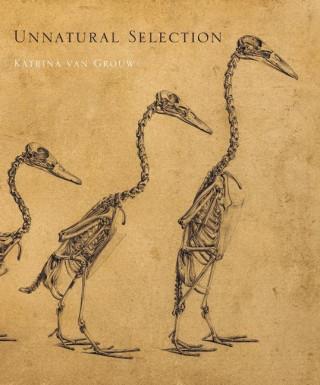 Princeton University Press Unnatural Selection GTIN: 9780691254050 Raamatud A lavishly illustrated look at how evolution plays out in selective breedingUnnatural Selection is a stunningly illustrated book about selective breedingthe ongoing transformation of animals at the hand of man. More important, it's a book about selective breeding on a far, far grander scalea scale that encompasses all life on Earth. We'd call it evolution.A unique fusion of art, science, and history, this book is intended as a tribute to what Charles Darwin might have achieved had he possessed that elusive missing piece to the evolutionary puzzlethe knowledge of how individual traits are passed from one generation to the next. With the benefit of a century and a half of hindsight, Katrina van Grouw explains evolution by building on the analogy that Darwin himself usedcomparing the selective breeding process with natural selection in the wild, and, like Darwin, featuring a multitude of fascinating examples.This is more than just a book about pets and livestock, however. The revelation of Unnatural Selection is that identical traits can occur in all animals, wild and domesticated, and both are governed by the same evolutionary principles. As van Grouw shows, animals are plastic things, constantly changing. In wild animals, the changes are usually too slow to seespecies appear to stay the same. When it comes to domesticated animals, however, change happens fast, making them the perfect model of evolution in action.Featuring more than four hundred breathtaking illustrations of living animals, skeletons, and historical specimens, Unnatural Selection will be enjoyed by anyone with an interest in natural history and the history of evolutionary thinking. Autorid: Katrina van Grouw | 0 | Vaata | |||
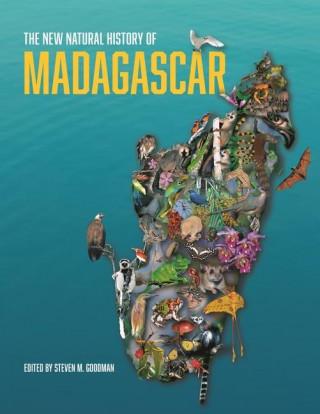 Princeton University Press New Natural History of Madagascar 2-Book Set GTIN: 9780691222622 Raamatud A marvelously illustrated reference to the natural wonders of one of the most spectacular places on earthSeparated from Africas mainland for tens of millions of years, Madagascar has evolved a breathtaking wealth of biodiversity, becoming home to thousands of species found nowhere else on the planet. The New Natural History of Madagascar provides the most comprehensive, up-to-date synthesis available of this island nations priceless biological treasures. Now fully revised and expanded, this beautifully illustrated compendium features contributions by more than 600 globally renowned experts who cover the history of scientific exploration in Madagascar, as well as the islands geology and soils, climate, forest ecology, human ecology, marine and coastal ecosystems, plants, invertebrates, fishes, amphibians, reptiles, birds, and mammals. This invaluable two-volume reference also includes detailed discussions of conservation efforts in Madagascar that showcase several successful protected area programs that can serve as models for threatened ecosystems throughout the world.Provides the most comprehensive overview of Madagascars rich natural historyCoedited by 18 different specialistsFeatures hundreds of new contributions by world-class expertsIncludes hundreds of new illustrationsCovers a broad array of topics, from geology and climate to animals, plants, and marine lifeSheds light on newly discovered species and draws on the latest scienceAn essential resource for anyone interested in Madagascar or tropical ecosystems in general, from biologists and conservationists to ecotourists and armchair naturalists Autorid: Steven M. Goodman | 0 | Vaata | |||
Princeton University Press Thinking like an Economist: How Efficiency Replaced Equality in U.S. Public Policy GTIN: 9780691248882 Raamatud The story of how economic reasoning came to dominate Washington between the 1960s and 1980sand why it continues to constrain progressive ambitions todayFor decades, Democratic politicians have frustrated progressives by tinkering around the margins of policy while shying away from truly ambitious change. What happened to bold political vision on the left, and what shrunk the very horizons of possibility? In Thinking like an Economist, Elizabeth Popp Berman tells the story of how a distinctive way of thinkingan economic style of reasoningbecame dominant in Washington between the 1960s and the 1980s and how it continues to dramatically narrow debates over public policy today.Introduced by liberal technocrats who hoped to improve government, this way of thinking was grounded in economics but also transformed law and policy. At its core was an economic understanding of efficiency, and its advocates often found themselves allied with Republicans and in conflict with liberal Democrats who argued for rights, equality, and limits on corporate power. By the Carter administration, economic reasoning had spread throughout government policy and laws affecting poverty, healthcare, antitrust, transportation, and the environment. Fearing waste and overspending, liberals reined in their ambitions for decades to come, even as Reagan and his Republican successors argued for economic efficiency only when it helped their own goals.A compelling account that illuminates what brought American politics to its current state, Thinking like an Economist also offers critical lessons for the future. With the political left resurgent today, Democrats seem poised to break with the pastbut doing so will require abandoning the shibboleth of economic efficiency and successfully advocating new ways of thinking about policy. Autorid: Elizabeth Popp Berman | 0 | Vaata | |||
Princeton University Press Aporophobia: Why We Reject the Poor Instead of Helping Them GTIN: 9780691205526 Raamatud "In a world built on the political, economic and social contract, the poor seem to break the rules of give and take. As a result, there is a growing tendency to exclude them. The problem is not one of xenophobia, since the enthusiastic reception of foreign tourists contrasts with the rejection of refugees and immigrants. We're talking about aporophobia, rejection of the poor. The poor person is a nuisance, even within one's own family. Aporophobia is a daily attack on the dignity and well-being of peopleand democracy. It also has a universal reach: all human beings are aporophobes, and this has its cerebral and social roots that can and should be modified if we are to take seriously the key ethical issues of a democratic society that aims to be fair. Inthis book Adela Cortina exposes one of the most deep-rooted and overlooked moral conflicts of our time, not only to give it a name but also to force us to recognise it and to provide us with the tools to face a reality very much our own"-- Why aporophobiarejection of the pooris one of the most serious problems facing the world today, and how we can fight itIn this revelatory book, acclaimed political philosopher Adela Cortina makes an unprecedented assertion: the biggest problem facing the world today is the rejection of poor people. Because we cant recognize something we cant name, she proposes the term aporophobia for the pervasive exclusion, stigmatization, and humiliation of the poor, which cuts across xenophobia, racism, antisemitism, and other prejudices. Passionate and powerful, Aporophobia examines where this nearly invisible daily attack on poor people comes from, why it is so harmful, and how we can fight it.Aporophobia traces this universal prejudices neurological and social origins and its wide-ranging, pernicious consequences, from unnoticed hate crimes to aporophobias threat to democracy. It sheds new light on todays rampant anti-immigrant feeling, which Cortina argues is better understood as aporophobia than xenophobia. We reject migrants not because of their origin, race, or ethnicity but because they seem to bring problems while offering nothing of value. And this is unforgivable in societies that enshrine economic exchange as the supreme value while forgetting that we cant create communities worth living in without dignity, generosity, and compassion for all. Yet there is hope, and Cortina explains how we can overcome the moral, social, and political disaster of aporophobia through education and democratic institutions, and how poverty itself can be eradicated if we choose.In a world of migrant crises and economic inequality, Aporophobia is essential for understanding and confronting one of the most serious problems of the twenty-first century. Autorid: Adela Cortina | 0 | Vaata | |||
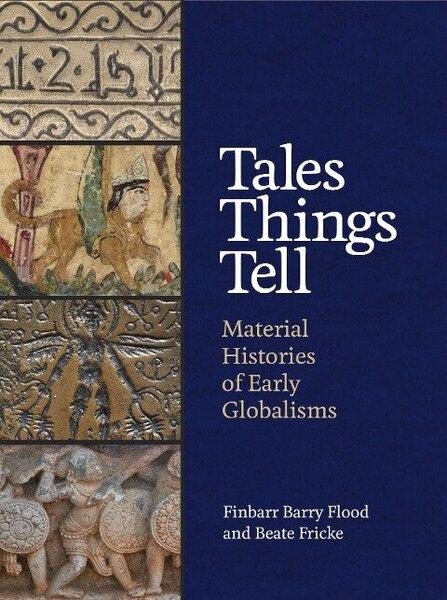 Princeton University Press Tales Things Tell: Material Histories of Early Globalisms GTIN: 9780691215150 Raamatud New perspectives on early globalisms from objects and imagesTales Things Tell offers new perspectives on histories of connectivity between Africa, Asia, and Europe in the period before the Mongol conquests of the thirteenth century. Reflected in objects and materials whose circulation and reception defined aesthetic, economic, and technological networks that existed outside established political and sectarian boundaries, many of these histories are not documented in the written sources on which historians usually rely. Tales Things Tell charts bold new directions in art history, making a compelling case for the archival value of mobile artifacts and images in reconstructing the past.In this beautifully illustrated book, Finbarr Barry Flood and Beate Fricke present six illuminating case studies from the sixth to the thirteenth centuries to show how portable objects mediated the mobility of concepts, iconographies, and techniques. The case studies range from metalwork to stone reliefs, manuscript paintings, and objects using natural materials such as coconut and rock crystal. Whether as booty, commodities, gifts, or souvenirs, many of the objects discussed in Tales Things Tell functioned as sources of aesthetic, iconographic, or technical knowledge in the lands in which they came to rest. Remapping the histories of exchange between medieval Islam and Christendom, from Europe to the Indian Ocean, Tales Things Tell ventures beyond standard narratives drawn from written archival records to demonstrate the value of objects and images as documents of early globalisms. Autorid: Finbarr Barry Flood, Beate Fricke | 0 | Vaata | |||
Princeton University Press Modeling Social Behavior: Mathematical and Agent-Based Models of Social Dynamics and Cultural Evolution GTIN: 9780691224145 Raamatud A comprehensive introduction to mathematical and agent-based modeling of social behaviorThis book provides a unified, theory-driven introduction to key mathematical and agent-based models of social dynamics and cultural evolution, teaching readers how to build their own models, analyze them, and integrate them with empirical research programs. It covers a variety of modeling topics, each exemplified by one or more archetypal models, and helps readers to develop strong theoretical foundations for understanding social behavior. Modeling Social Behavior equips social, behavioral, and cognitive scientists with an essential tool kit for thinking about and studying complex social systems using mathematical and computational models.Combines both mathematical and agent-based modeling of social behaviorIntegrates cognitive science, social science, and cultural evolutionCovers topics such as the philosophy of modeling, collective movement, segregation, contagion, polarization, the evolution of cooperation, the emergence of norms, networks, and the scientific processDiscusses more advanced topics, including how to use models to build a more robust empirical research programAn ideal introductory textbook for graduate students or advanced undergraduatesAn invaluable resource for practitioners Autorid: Paul E. Smaldino | 0 | Vaata | |||
Princeton University Press Forest: A Fable of America in the 1830s GTIN: 9780691264523 Raamatud A vivid historical imagining of life in the early United StatesOne of the richest books ever to come my way.Annie Proulx, Pulitzer Prizewinning author of The Shipping NewsThis is a wonderful book. . . . An extraordinary achievement.Edmund de Waal, New York Times bestselling author of The Hare with Amber EyesSet amid the glimmering lakes and disappearing forests of the early United States, The Forest imagines how a wide variety of Americans experienced their lives. Part truth, part fiction, and featuring both real and invented characters, the book follows painters, poets, enslaved people, farmers, and artisans living and working in a world still made largely of wood. Some of the historical characterssuch as Thomas Cole, Margaret Fuller, Nathaniel Hawthorne, Fanny Kemble, Edgar Allan Poe, and Nat Turnerare well known, while others are not. But all are creators of private and grand designs.The Forest unfolds in brief stories. Each episode reveals an intricate lost world. Characters cross paths or go their own ways, each striving for something different but together forming a pattern of life. For Alexander Nemerov, the forest is a description of American society, the dense and discontinuous woods of nation, the foliating thoughts of different people, each with their separate shade and sun. Through vivid descriptions of the people, sights, smells, and sounds of Jacksonian America, illustrated with paintings, prints, and photographs, The Forest brings American history to life on a human scale.Published in association with the Center for Advanced Study in the Visual Arts, National Gallery of Art, Washington, DC Autorid: Alexander Nemerov | 0 | Vaata | |||
 Princeton University Press Information: A Short History GTIN: 9780691261553 Raamatud "An essential guide to the ways information has shaped and been shaped by societies. Thanks to recent advances, we now enjoy seemingly unlimited access to information. How did information become so central to our everyday lives? This book traces the global emergence of information practices and technologies across pivotal epochs and regions, providing invaluable historical perspectives on the ways information has shaped and been shaped by societies. Featuring the core articles from the ultimate referencebook Information: A Historical Companion, this short history will appeal to anyone seeking to understand our modern mania for an informed existence. The book: Tells the story of information's rise from the premodern era to today, exploring how diverse cultures have created, managed, and shared facts and knowledge; Takes readers from the medieval Islamic world to late imperial East Asia, and from early modern and modern Europe to contemporary North America; Covers a broad range of topics, such as networks, bureaucracy, publicity, propaganda, censorship, privacy, intellectual property, digitization, telecommunications, storage and search, and much moreIncludes a new introduction, suggested further readings, and a glossary of key terms"-- "A paperback spinoff from Information: A Historical Companion that presents an accessible introductory history of information from premodern practices to twenty-first-century information culture"-- An essential guide to the ways information has shaped and been shaped by societiesThanks to recent advances, we now enjoy seemingly unlimited access to information. How did information become so central to our everyday lives? This book traces the global emergence of information practices and technologies across pivotal epochs and regions, providing invaluable historical perspectives on the ways information has shaped and been shaped by societies. Featuring the core articles from the ultimate reference book Information: A Historical Companion, this short history will appeal to anyone seeking to understand our modern mania for an informed existence. The book:Tells the story of informations rise from the premodern era to today, exploring how diverse cultures have created, managed, and shared facts and knowledgeTakes readers from the medieval Islamic world to late imperial East Asia, and from early modern and modern Europe to contemporary North AmericaCovers a broad range of topics, such as networks, bureaucracy, publicity, propaganda, censorship, privacy, intellectual property, digitization, telecommunications, storage and search, and much moreIncludes a new introduction, suggested further readings, and a glossary of key termsBrings together an international team of experts, including Jeremy Adelman, Devin Fitzgerald, John-Paul Ghobrial, Lisa Gitelman, Randolph C. Head, Richard R. John, Elias Muhanna, Thomas S. Mullaney, Carla Nappi, Craig Robertson, Daniel Rosenberg, Will Slauter, and Heidi Tworek Autorid: Ann Blair, Paul Duguid, Anja-Silvia Goeing, Anthony Grafton | 0 | Vaata | |||
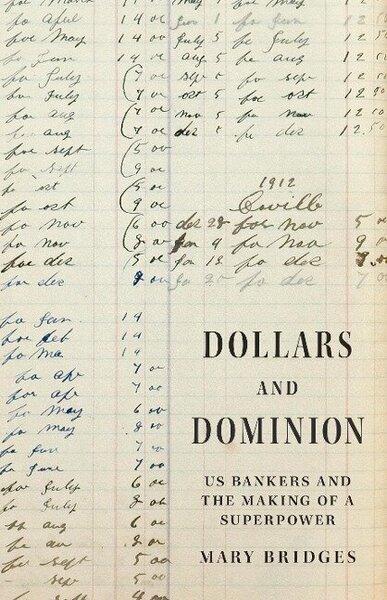 Princeton University Press Dollars and Dominion: US Bankers and the Making of a Superpower GTIN: 9780691248134 Raamatud "How the creation of a new banking infrastructure in the early twentieth century established the United States as a global financial powerThe dominance of US multinational businesses today can seem at first like an inevitable byproduct of the nation's superpower status. In Dollars and Dominion, Mary Bridges tells a different origin story. She explores the ramshackle beginnings of US financial power overseas, showing that US bankers in the early twentieth century depended on the US government, European know-how, and last-minute improvisation to sustain their work abroad. Bridges focuses on an underappreciated piece of the nation's financial infrastructure-the overseas branch bank-as brick-and-mortar foundations for expanding US commercial influence.Bridges explores how bankers sorted their new communities into "us"-potential clients-and "them"-local populations, who often existed on the periphery of the banking world. She argues that US bankers mapped their new communities by creating foreign credit information-and by using a financial asset newly enabled by the Federal Reserve System, the bankers' acceptance, in the process. Doing so, they constructed a new architecture of US trade finance that relied on longstanding inequalities and hierarchies of privilege. Thus racialized, class-based, and gendered ideas became baked into the financial infrastructure.Contrary to conventional wisdom, there was nothing inevitable or natural about the rise of US finance capitalism. Bridges shows that US foreign banking was a bootstrapped project that began as a side hustle of Gilded Age tycoons that sustained itself by relying on the power of the US state, copying the example of British foreign bankers, and building alliances with local elites. In this way, US bankers constructed a flexible and durable new infrastructure to support the nation's growing global power"-- "A history of the globalization of US banking in the early twentieth century"-- How the creation of a new banking infrastructure in the early twentieth century established the United States as a global financial powerThe dominance of US multinational businesses today can seem at first like an inevitable byproduct of the nations superpower status. In Dollars and Dominion, Mary Bridges tells a different origin story. She explores the ramshackle beginnings of US financial power overseas, showing that US bankers in the early twentieth century depended on the US government, European know-how, and last-minute improvisation to sustain their work abroad. Bridges focuses on an underappreciated piece of the nations financial infrastructurethe overseas branch bankas a brick-and-mortar foundation for expanding US commercial influence.Bridges explores how bankers sorted their new communities into uspotential clientsand themlocal populations, who often existed on the periphery of the banking world. She argues that US bankers mapped their new communities by creating foreign credit informationand by using a financial asset newly enabled by the Federal Reserve System, the bankers acceptance, in the process. In doing so, they constructed a new architecture of US trade finance that relied on longstanding inequalities and hierarchies of privilege. Thus, racialized, class-based, and gendered ideas became baked into the financial infrastructure.Contrary to conventional wisdom, there was nothing inevitable or natural about the rise of US finance capitalism. Bridges shows that US foreign banking was a bootstrapped project that began as a side hustle of Gilded Age tycoons and sustained itself by relying on the power of the US state, copying the example of British foreign bankers, and building alliances with local elites. In this way, US bankers constructed a flexible and durable new infrastructure to support the nations growing global power. Autorid: Mary Bridges | 0 | Vaata | |||
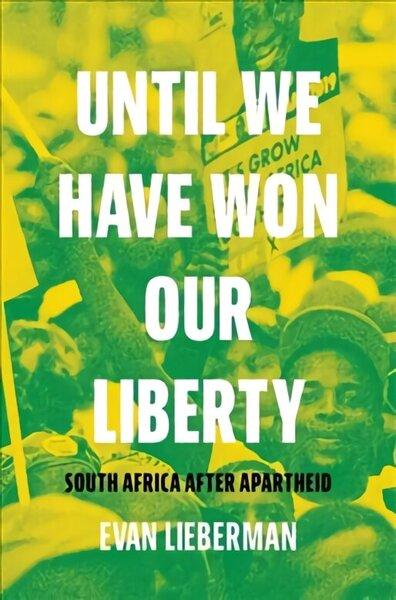 Princeton University Press Until We Have Won Our Liberty: South Africa after Apartheid GTIN: 9780691203218 Raamatud A compelling account of South Africas post-Apartheid democracyAt a time when many democracies are under strain around the world, Until We Have Won Our Liberty shines new light on the signal achievements of one of the contemporary eras most closely watched transitions away from minority rule. South Africas democratic development has been messy, fiercely contested, and sometimes violent. But as Evan Lieberman argues, it has also offered a voice to the voiceless, unprecedented levels of government accountability, and tangible improvements in quality of life.Lieberman opens with a first-hand account of the hard-fought 2019 national election, and how it played out in Mogale City, a post-Apartheid municipality created from Black African townships and White Afrikaner suburbs. From this launching point, he examines the complexities of South Africas multiracial society and the unprecedented democratic experiment that began with the election of Nelson Mandela in 1994. While acknowledging the enormous challenges many South Africans continue to faceincluding unemployment, inequality, and discriminationLieberman draws on the countrys history and the experience of comparable countries to demonstrate that elected Black-led governments have, without resorting to political extremism, improved the lives of millions. In the context of open and competitive politics, citizens have gained access to housing, basic services, and dignified treatment to a greater extent than during any prior period.Countering much of the conventional wisdom about contemporary South Africa, Until We Have Won Our Liberty offers hope for the enduring impact of democratic ideals. Autorid: Evan Lieberman | 0 | Vaata | |||
Princeton University Press Chapter: A Segmented History from Antiquity to the Twenty-First Century GTIN: 9780691271026 Raamatud Finalist for the National Book Critics Circle Award in Criticism Shortlisted for the Christian Gauss Award, Phi Beta Kappa Society A history of the chapter from its origins in antiquity to today Why do books have chapters? With this seemingly simple question, Nicholas Dames embarks on a literary journey spanning two millennia, revealing how an ancient editorial technique became a universally recognized component of narrative art and a means to register the sensation of time. Dames begins with the textual compilations of the Roman world, where chapters evolved as a tool to organize information. He goes on to discuss the earliest divisional systems of the Gospels and the segmentation of medieval romances, describing how the chapter took on new purpose when applied to narrative texts and how narrative segmentation gave rise to a host of aesthetic techniques. Dames shares engaging and in-depth readings of influential figures, from Sterne, Goethe, Tolstoy, and Dickens to George Eliot, Machado de Assis, B. S. Johnson, Agnès Varda, Uwe Johnson, Jennifer Egan, and Laszlo Krasznahorkai. He illuminates the sometimes tacit, sometimes dramatic ways in which the chapter became a kind of reckoning with time and a quiet but persistent feature of modernity. Ranging from ancient tablets and scrolls to contemporary fiction and film, The Chapter provides a compelling, elegantly written history of a familiar compositional mode that readers often take for granted and offers a new theory of how this versatile means of dividing narrative sculpts our experience of time. Autorid: Nicholas Dames | 0 | Vaata | |||
Princeton University Press On Dreams and the East: Notes of the 1933 Berlin Seminar GTIN: 9780691250557 Raamatud Jungs landmark seminar on the symbolism of yoga and its applications to dream analysisIn the summer of 1933, C. G. Jung conducted a seminar in Berlin attended by a large audience of some 150 people, including several Jewish Jungians who would soon leave Germany. Hitler had begun consolidating his position as dictator and these students were distressed at Jungs recent decision to accept the presidency of a German professional psychotherapy society that was rapidly becoming Nazified and purged of Jews. On Dreams and the East makes these seminar sessions widely available for the first time, offering tantalizing insights into Jungs evolving understanding of yoga and the realization of the self.The seminar commences with a presentation on the psychology of yoga by noted Indologist and linguist Heinrich Zimmer, whose collaboration in these talks reflects Jungs growing engagement with the Hindu tradition, particularly Tantric yoga. Jung analyzes a series of dreams of a middle-aged male patient, focusing on mandalas and the centering process. He reflects on related motifs in alchemical symbolism, Navaho healing drawings, Mithraism, baptism symbolism, the foundation of Rome, ecclesiastic dances, and labyrinths, drawing connections with the symbolism of yoga and Tantra.Featuring a richly documented introduction by Giovanni Sorge, On Dreams and the East opens a window on Jungs deepening exploration of Eastern thought and the comparative study of the individuation process at a critical juncture in his life and work. Autorid: C. G. Jung, Heinrich Zimmer, Giovanni V. R. Sorge | 0 | Vaata | |||
Princeton University Press Conqueror's Gift: Roman Ethnography and the End of Antiquity GTIN: 9780691259024 Raamatud "An account of the central role that ethnography played in the Roman empire and its transformation in Late Antiquity. Ethnography, broadly understood, is a key element in the toolkit of every empire, as important as armies, tax-collectors, or ambassadors. It helps rulers articulate cultural differences with outsiders and sometimes bridge them, and it lets the inhabitants of an empire, especially those who guide its course, understand themselves and their place in the midst of the enemies, allies, and friends who surround them. Whenever provinces are drawn, peace treaties and alliances framed, diplomats sent on mission, decisions taken to go to war, or simply life lived in the midst of unfamiliar voices, some kind of ethnographic vision must come into play. This ethnographic infrastructure, as ancient historian Michael Maas calls it, supports the empire's view of itself regarding the nations of the world, and it shapes and reflects actual interactions with them. Ethnography is not simply a reflection of changes. It also enables change by providing terms and concepts that give voice to the articulation of new circumstances. In this book, Maas argues that, to understand how the Roman Empire transformed in the crucial period of Late Antiquity, the empire's ethnographic underpinnings, especially as they were affected by Christianity, must be examined. As Maas demonstrates, Romans knew they lived in a world of great cultural diversity, movement, and instability. They believed that their empire imposed order upon it. Images of barbarians filled public spaces throughout the empire as reminders of Roman control. Writers likewise filled their pages with descriptions of foreigners in a wide variety of genres. These ethnographies, according to Maas, served three general functions. First, they described foreign peoples, placing them in established and accessible systems of knowledge. Second, they judged them on a register of distance from Roman norms, with "most like us" the best possible evaluation. Third, ethnography indicated explicitly or implicitly what the possibilities of participation within the imperial community might be. In other words, the gift of ethnography possessed for the conquerors a mechanism of imperial transformation"-- The essential role of ethnographic thought in the Roman empire and how it evolved in Late AntiquityEthnography is indispensable for every empire, as important as armies, tax collectors, or ambassadors. It helps rulers articulate cultural differences, and it lets the inhabitants of the empire, especially those who guide its course, understand themselves in the midst of enemies, allies, and friends. In The Conquerors Gift, Michael Maas examines the ethnographic infrastructure of the Roman Empire and the transformation of Romes ethnographic vision during Late Antiquity. Drawing on a wide range of texts, Maas shows how the Romans ethnographic thought evolved as they attended to the business of ruling an empire on three continents.Ethnography, the conquerors gift, gave Romans structured ways of finding a place for foreigners in the imperial worldview and helped justify imperial action affecting them. In Late Antiquity, Christianity revolutionized the imperial ethnographic infrastructure by altering old concepts and introducing credal models of community. The Bible became a source for organizing the Roman world. At the same time, many previously unseen collective identities emerged across Western Eurasia in reaction to the diminution of Roman power. These changes deeply affected the Empires ethnographic infrastructure and vision of the world. Maas argues that a major consequence of these developments was the beginning of a sectarian age, as individuals and political communities came to identify themselves primarily in terms of religion as well as ethnicity. As they adjusted to changing ethnographic realities, Romans understood their place among the peoples of the world in new ways. Willingly or not, we continue to be recipients of the conquerors gift today. Autorid: Michael Maas | 0 | Vaata | |||
Princeton University Press How Rabbis Became Experts: Social Circles and Donor Networks in Jewish Late Antiquity GTIN: 9780691266763 Raamatud "This book tells the story of how a small group of Jewish scholars became religious experts within the Jewish communities of Roman Palestine from the second through fifth centuries C.E. -- thereby becoming the first rabbis"-- "How rabbinic expertise was socially constructed, performed, and defended in Roman Palestine at the turn of the common era. The Jewish communities of Roman Palestine saw the organization of a small group of literate Jewish men who devoted their lives tothe interpretation and teaching of their sacred ancestral texts. In this groundbreaking study, Krista Dalton shows that these early rabbis were not an insular specialist group but embedded in a landscape of Jewish piety. Drawing on the writings of rabbisin Roman Palestine from from the second through fifth centuries CE, Dalton illuminates the significance of social relationships in the production of rabbinic expertise. She traces the social interactions-everyday instances of mutual exchange, from dinnerparties to tithes and patronages-that fostered the perception of rabbis as experts.Dalton shows how the knowledge derived from the rabbis' technical skills was validated and recognized by others. Rabbis socialized and noshed with neighbors and offered advice and legal favors to friends. In exchange for their expert judgments, they received invitations, donations, appointments, and recognition. She argues that their status as Torah experts did not arise by virtue of being scholars but from their ability to persuade others that their mobilization of Jewish cultural resources was beneficial. Dalton describes the relational processes that made rabbinic expertise possible as well as the accompanying tensions; social interactions shaped the rabbis' domain of knowledge while also imposing expectations of reciprocity that had to be managed. Dalton's authoritative analysis demonstrates that a focus on friendship and exchange provides a fuller understanding of how rabbis claimed and defended their distinct expertise"-- How rabbinic expertise was socially constructed, performed, and defended in Roman PalestineAt the turn of the common era, the Jewish communities of Roman Palestine saw the organization of a small group of literate Jewish men who devoted their lives to the interpretation and teaching of their sacred ancestral texts. In this groundbreaking study, Krista Dalton shows that these early rabbis were not an insular specialist group but embedded in a landscape of Jewish piety. Drawing on the writings of rabbis in Roman Palestine from the second through fifth centuries CE, Dalton illuminates the significance of social relationships in the production of rabbinic expertise. She traces the social interactionseveryday instances of mutual exchange, from dinner parties to tithes and patronagesthat fostered the perception of rabbis as experts.Dalton shows how the knowledge derived from the rabbis technical skills was validated and recognized by others. Rabbis socialized and noshed with neighbors and offered advice and legal favors to friends. In exchange for their expert judgments, they received invitations, donations, appointments, and recognition. She argues that their status as Torah experts did not arise by virtue of being scholars but from their ability to persuade others that their mobilization of Jewish cultural resources was beneficial. Dalton describes the relational processes that made rabbinic expertise possible as well as the accompanying tensions; social interactions shaped the rabbis domain of knowledge while also imposing expectations of reciprocity that had to be managed. Daltons authoritative analysis demonstrates that a focus on friendship and exchange provides a fuller understanding of how rabbis claimed and defended their distinct expertise. Autorid: Krista N. Dalton | 0 | Vaata | |||
Princeton University Press On Psychological and Visionary Art: Notes from C. G. Jungs Lecture on Gérard de Nerval's Aurélia GTIN: 9780691270975 Raamatud The first English translation of Jungs landmark lecture on Nervals hallucinatory memoir In 1945, at the end of the Second World War and after a long illness, C. G. Jung delivered a lecture in Zürich on the French Romantic poet Gérard de Nerval. The lecture focused on Nerval's visionary memoir, Aurélia, which the poet wrote in an ambivalent attempt to emerge from madness. Published here for the first time, Jungs lecture is both a cautionary psychological tale and a validation of Nervals visionary experience as a genuine encounter. Nerval explored the irrational with lucidity and exquisite craft. He privileged the subjective imagination as a way of fathoming the divine to reconnect with what the Romantics called the life principle. During the years of his greatest creativity, he suffered from madness and was institutionalized eight times. Contrasting an orthodox psychoanalytic interpretation with his own synthetic approach to the unconscious, Jung explains why Nerval was unable to make use of his visionary experiences in his own life. At the same time, Jung emphasizes the validity of Nervals visions, differentiating the psychology of a work of art from the psychology of the artist. The lecture suggests how Jungs own experiments with active imagination influenced his reading of Nervals Aurélia as a parallel text to his own Red Book. With Craig Stephensons authoritative introduction, Richard Sieburths award-winning translation of Aurélia, and Alfred Kubins haunting illustrations to the text, and featuring Jungs reading marginalia, preliminary notes, and revisions to a 1942 lecture, On Psychological and Visionary Art documents the stages of Jungs creative process as he responds to an essential Romantic text. Autorid: C. G. Jung, Craig E. Stephenson | 0 | Vaata | |||
Princeton University Press Bayesian Models: A Statistical Primer for Ecologists, 2nd Edition GTIN: 9780691250120 Raamatud "A fully updated and expanded edition of the essential primer on Bayesian modeling for ecologistsUniquely suited to deal with complexity in a statistically coherent way, Bayesian modeling has become an indispensable tool for ecological research. This book teaches the basic principles of mathematics and statistics needed to apply Bayesian models to the analysis of ecological data, using language non-statisticians can understand. Deemphasizing computer coding in favor of a clear treatment of model building, it starts with a definition of probability and proceeds step-by-step through distribution theory, likelihood, simple Bayesian models, and hierarchical Bayesian models. Now revised and expanded, Bayesian Models enables students and practitioners to gain new insights from ecological models and data properly tempered by uncertainty.Covers the basic rules of probability needed to model diverse types of ecological data in the Bayesian frameworkShows how to write proper mathematical expressions for posterior distributions using directed acyclic graphs as templatesExplains how to use the powerful Markov chain Monte Carlo algorithm to find posterior distributions of model parameters, latent states, and missing dataTeaches how to check models to assure they meetthe assumptions of model-based inferenceDemonstrates how to make inferences from single and multiple Bayesian modelsProvides worked problems for practicing and strengthening modeling skillsFeatures new chapters on spatial models and modeling missing data"-- A fully updated and expanded edition of the essential primer on Bayesian modeling for ecologistsUniquely suited to deal with complexity in a statistically coherent way, Bayesian modeling has become an indispensable tool for ecological research. This book teaches the basic principles of mathematics and statistics needed to apply Bayesian models to the analysis of ecological data, using language non-statisticians can understand. Deemphasizing computer coding in favor of a clear treatment of model building, it starts with a definition of probability and proceeds step-by-step through distribution theory, likelihood, simple Bayesian models, and hierarchical Bayesian models. Now revised and expanded, Bayesian Models enables students and practitioners to gain new insights from ecological models and data properly tempered by uncertainty.Covers the basic rules of probability needed to model diverse types of ecological data in the Bayesian frameworkShows how to write proper mathematical expressions for posterior distributions using directed acyclic graphs as templatesExplains how to use the powerful Markov chain Monte Carlo algorithm to find posterior distributions of model parameters, latent states, and missing dataTeaches how to check models to assure they meet the assumptions of model-based inferenceDemonstrates how to make inferences from single and multiple Bayesian modelsProvides worked problems for practicing and strengthening modeling skillsFeatures new chapters on spatial models and modeling missing data Autorid: N. Thompson Hobbs, Mevin B. Hooten | 0 | Vaata | |||
Princeton University Press Unlawful Advances: How Feminists Transformed Title IX GTIN: 9780691206349 Raamatud The remarkable story of the women who defined sexual harassment as unlawful sex discrimination under Title IXWhen the US Congress enacted Title IX of the Education Amendments of 1972, no one expected it to become a prominent tool for confronting sexual harassment in schools. Title IX is the civil rights law that prohibits education programs from discriminating on the basis of sex. At the time, however, the term sexual harassment was not yet in use; this kind of misconduct was simply accepted as part of life for girls and women at schools and universities. In Unlawful Advances, Celene Reynolds shows how the women claiming protection under Title IX made sexual harassment into a form of sex discrimination barred by the law. Working together, feminist students and lawyers fundamentally changed the right to equal opportunity in education and schools obligations to ensure it.Drawing on meticulously documented case studies, Reynolds explains how Title IX was applied to sexual harassment, linking the actions of feminists at Cornell, Yale, and Berkeley. Through analyses of key lawsuits and an original dataset of federal Title IX complaints, she traces the evolution of sexual harassment policy in educationfrom the early applications at elite universities to the growing sexual harassment bureaucracies on campuses todayand how the work of these feminists has forever shaped the law, university governance, and gender relations on campus. Reynolds argues that our political and interpretive struggle over this application of Title IX is far from finished. Her account illuminates this ongoing effort, as well as the more general process by which citizens can transform not only the laws that govern us, but also the very meaning of equality under American law. Autorid: Celene Reynolds | 0 | Vaata | |||
Princeton University Press Retrospective Columns: Ionic Capitals and Perceptions of the Past in Greek Architecture GTIN: 9780691262550 Raamatud "A look at how and why builders of 6th-century Greek temples incorporated archaic and contemporary Ionic elements into their "bilingual" designs"-- An innovative study of how and why ancient Greek builders sometimes combined older and contemporary carving styles when making capitalsThe Ionic order of ancient Greek architecture gradually evolved over the course of the sixth century BCE. In Retrospective Columns, Samuel Holzman examines an overlooked group of nine Ionic monuments that are varied in design but have capitals that combine the pillowy, convex volutes of sixth-century Ionia on one side and the crisp concave volutes of more contemporary styles on the other. Such hybrid capitals had a surprising longevity and range, spanning Greece, Italy, and Turkey between 550 and 250 BCE.Why did ancient Greek builders sometimes revert to older carving styles and combine them with newer ones? One old theory is that outdated styles were a labor-saving shortcuta notion Holzman puts to rest with a marble carving experiment that recreated the volutes of one capital. Rather, he argues that hybrid capitals represented an important parallel to other trends in Greek art, notably bilingual Attic vases, which combined older and newer painting techniques for sheer visual delight. By studying the chiaroscuro carving effects and painted polychrome decoration of Ionic architecture, Holzman shows that ancient viewers were primed to look for differences in such details, which the book illustrates with many original drawings and diagrams.Exploring works of Ionic architecture from different periods in Ionia, the Cyclades, Athens, and the Northern Aegean, Retrospective Columns demonstrates that their builders ultimately returned to outmoded elements to establish continuity with the past, reinforcing community identities and architectural tradition. Autorid: Samuel Holzman | 0 | Vaata | |||
Princeton University Press Disrupting D.C.: The Rise of Uber and the Fall of the City GTIN: 9780691249766 Raamatud A panoramic account of the urban politics and deep social divisions that gave rise to UberThe first city to fight back against Uber, Washington, D.C., was also the first city where such resistance was defeated. It was here that the company created a playbook for how to deal with intransigent regulators and to win in the realm of local politics. The city already serves as the nations capital. Now, D.C. is also the blueprint for how Uber conquered cities around the worldand explains why so many embraced the company with open arms.Drawing on interviews with gig workers, policymakers, Uber lobbyists, and community organizers, Disrupting D.C. demonstrates that many share the blame for lowering the nations hopes and dreams for what its cities could be. In a sea of broken transit, underemployment, and racial polarization, Uber offered a lifeline. But at what cost?This is not the story of one company and one city. Instead, Disrupting D.C. offers a 360-degree view of an urban America in crisis. Uber arrived promising a new future for workers, residents, policymakers, and others. Ultimately, Ubers success and growth was never a sign of urban strength or innovation but a sign of urban weakness and low expectations about what city politics can achieve. Understanding why Uber rose reveals just how far the rest of us have fallen. Autorid: Katie J. Wells, Kafui Attoh, Declan Cullen | 0 | Vaata | |||
Princeton University Press Embedded Generations: Family Life and Social Change in Contemporary China GTIN: 9780691258409 Raamatud An interconnected, nuanced, and nonlinear view of Chinese family life since 1949With Embedded Generations, Liu Jieyu offers a comprehensive examination of Chinese family life since the Chinese Communist Revolution of 1949. Grounding her account in the analysis of 260 life history narratives and rich ethnographic data, Liu traces the changing ways families have navigated such experiential milestones as childhood, courtship and marriage, sex and intimacy, and aging over the past seven decades. Using generation, the urban-rural divide, and gender as her analytical lenses, she provides an alternative narrative of Chinese family life, countering the dominant Eurocentric accounts of modernization and family change.Liu proposes the concept of embedded generations to capture the ongoing relational and socioeconomic shaping of family life, taking account of variation within and across generations, and of both intergenerational transmission and individual adaptations to changing conditions of everyday life. Resisting the notion that social and family changes are linear historical progressions, Liu reveals a family portrait of complex change, continuity, and diversity. Rather than a straightforward transition from the traditional to the modern and postmodern, she argues, changes in Chinese family life have entailed the adaptation and re-serving of traditional ideas and practices to produce a bricolage of modern and traditional elements. Autorid: Liu Jieyu | 0 | Vaata | |||
Princeton University Press Intellectual Property: Learned Slaves and Educated Freedmen in Republican Rome GTIN: 9780691266169 Raamatud The first in-depth account of the lives and careers of educated slaves and freedmen in ancient RomeSlaves and freedmen played an important yet understudied role in the literary culture of the Roman Republic. Though their work went largely uncredited, they fulfilled vital roles as editors, researchers, and collaborators in the service of Romes literary and political elite. Intellectual Property tells the stories of these gifted and highly educated young men, from Licinius the flute-player, who shaped the rhetorical style of the orator Gaius Gracchus, to the grammarian and teacher Tyrannio of Amisus, who was brought to Rome as a war captive.Highlighting the unique social prestige of literary production and intellectual performance in a society pervaded by slave labor, Harriet Flower shows how the exorbitant prices paid for the highly educated encouraged a complex system of training young boys for the marketplace or acquiring educated captives as booty, and how they were treated as valuable assets to be deployed as prizes, gifts, or investments that could bestow financial and cultural capital. She demonstrates how enslaved and manumitted intellectuals, far from being menial workers, shared close relationships with leading Romans of the day. They came from a variety of backgrounds and were relied on as coauthors and collaborators in a range of genres, with some gaining fame as authors themselves.With lively case studies and insightful new interpretations of the ancient sources, Intellectual Property paints a more nuanced picture of enslaved labor in ancient Rome, revealing how the contributions of enslaved intellectuals were closely linked to the ambitious development of Latin literary culture and the dissemination of knowledge. Autorid: Harriet I. Flower | 0 | Vaata | |||
Princeton University Press Cash Ceiling: Why Only the Rich Run for Office--and What We Can Do about It GTIN: 9780691203737 Raamatud Why working-class Americans almost never become politicians, what that means for democracy, and what reformers can do about itWhy are Americans governed by the rich? Millionaires make up only three percent of the public but control all three branches of the federal government. How did this happen? What stops lower-income and working-class Americans from becoming politicians? The first book to answer these urgent questions, The Cash Ceiling provides a compelling and comprehensive account of why so few people who aren't rich hold officeand what reformers can do about it. Autorid: Nicholas Carnes | 0 | Vaata | |||
Princeton University Press Making of Barbarians: Chinese Literature and Multilingual Asia GTIN: 9780691231976 Raamatud A groundbreaking account of translation and identity in the Chinese literary tradition before 1850with important ramifications for todayDebates on the canon, multiculturalism, and world literature often take Eurocentrism as the target of their critique. But literature is a universe with many centers, and one of them is China. The Making of Barbarians offers an account of world literature in which China, as center, produces its own margins. Here Sinologist and comparatist Haun Saussy investigates the meanings of literary translation, adaptation, and appropriation on the boundaries of China long before it came into sustained contact with the West.When scholars talk about comparative literature in Asia, they tend to focus on translation between European languages and Chinese, Korean, and Japanese, as practiced since about 1900. In contrast, Saussy focuses on the period before 1850, when the translation of foreign works into Chinese was rare because Chinese literary tradition overshadowed those around it.The Making of Barbarians looks closely at literary works that were translated into Chinese from foreign languages or resulted from contact with alien peoples. The book explores why translation was such an undervalued practice in premodern China, and how this vast and prestigious culture dealt with those outside it before a new group of foreignersEuropeansappeared on the horizon. Autorid: Haun Saussy | 0 | Vaata | |||
 Princeton University Press Renewal: From Crisis to Transformation in Our Lives, Work, and Politics GTIN: 9780691210568 Raamatud "From the acclaimed author of Unfinished Business, a story of crisis and change that can help us find renewed honesty and purpose in our personal and political livesAmerica and much of the world are deeply divided over identity, equality, and history. Renewal is Anne-Marie Slaughter's candid and deeply personal account of how her own odyssey opened the door to an important new understanding of how we as individuals, organizations, and nations can move backward and forward at the same time, facing the past and embracing a new future.Weaving together personal stories and reflections with insights from the latest research in the social sciences, Slaughter recounts a difficult time of self-examination and growth in the wake of a crisis that changed the way she lives, leads, and learns. She connects her experience to our national crisis of identity and values as the country looks into a four-hundred-year-old mirror and tries to confront and accept its full reflection. The promise of the Declaration of Independence has been hollow for so many for so long. That reckoning is the necessary first step toward renewal. The lessons here are not just for America. Slaughter shows how renewal is possible for any individual or institution that is willing to see themselves with new eyes and embrace radical honesty, risk, resilience, interdependence, grace, and vision.Part personal journey, part manifesto, Renewal offers hope tempered by honesty and is essential reading for citizens, leaders, and change makers of tomorrow"-- "From the acclaimed author of Unfinished Business, a story of crisis and change that can help us find renewed honesty and purpose in our personal and political lives"-- From the acclaimed author of "Unfinished Business," a story of crisis and change that can help us find renewed honesty and purpose in our personal and political lives. From the acclaimed author of Unfinished Business, a story of crisis and change that can help us find renewed honesty and purpose in our personal and political livesLike much of the world, America is deeply divided over identity, equality, and history. Renewal is Anne-Marie Slaughters candid and deeply personal account of how her own odyssey opened the door to an important new understanding of how we as individuals, organizations, and nations can move backward and forward at the same time, facing the past and embracing a new future.Weaving together personal stories and reflections with insights from the latest research in the social sciences, Slaughter recounts a difficult time of self-examination and growth in the wake of a crisis that changed the way she lives, leads, and learns. She connects her experience to our national crisis of identity and values as the country looks into a four-hundred-year-old mirror and tries to confront and accept its full reflection. The promise of the Declaration of Independence has been hollow for so many for so long. That reckoning is the necessary first step toward renewal. The lessons here are not just for America. Slaughter shows how renewal is possible for anyone who is willing to see themselves with new eyes and embrace radical honesty, risk, resilience, interdependence, grace, and vision.Part personal journey, part manifesto, Renewal offers hope tempered by honesty and is essential reading for citizens, leaders, and the change makers of tomorrow. Autorid: Anne-Marie Slaughter | 0 | Vaata | |||
 Princeton University Press Text as Data: A New Framework for Machine Learning and the Social Sciences GTIN: 9780691207551 Raamatud A guide for using computational text analysis to learn about the social world From social media posts and text messages to digital government documents and archives, researchers are bombarded with a deluge of text reflecting the social world. This textual data gives unprecedented insights into fundamental questions in the social sciences, humanities, and industry. Meanwhile new machine learning tools are rapidly transforming the way science and business are conducted. Text as Data shows how to combine new sources of data, machine learning tools, and social science research design to develop and evaluate new insights.Text as Data is organized around the core tasks in research projects using textrepresentation, discovery, measurement, prediction, and causal inference. The authors offer a sequential, iterative, and inductive approach to research design. Each research task is presented complete with real-world applications, example methods, and a distinct style of task-focused research.Bridging many dividescomputer science and social science, the qualitative and the quantitative, and industry and academiaText as Data is an ideal resource for anyone wanting to analyze large collections of text in an era when data is abundant and computation is cheap, but the enduring challenges of social science remain.Overview of how to use text as dataResearch design for a world of data delugeExamples from across the social sciences and industry Autorid: Justin Grimmer, Margaret E. Roberts, Brandon M. Stewart | 0 | Vaata | |||
Princeton University Press Church of Saint Thomas Paine: A Religious History of American Secularism GTIN: 9780691217253 Raamatud "The forgotten story of the nineteenth-century freethinkers and twentieth-century humanists who tried to build their own secular religionIn The Church of Saint Thomas Paine, Leigh Eric Schmidt tells the surprising story of how freethinking liberals in nineteenth-century America promoted a secular religion of humanity centered on the deistic revolutionary Thomas Paine (1737-1809) and how their descendants eventually became embroiled in the culture wars of the late twentieth century.After Paine's remains were stolen from his grave in New Rochelle, New York, and shipped to England in 1819, the reverence of his American disciples took a material turn in a long search for his relics. Paine's birthday was always a red-letter day for these believers in democratic cosmopolitanism and philanthropic benevolence, but they expanded their program to include a broader array of rites and ceremonies, particularly funerals free of Christian supervision. They also worked to establish their own churches and congregations in which to practice their religion of secularism.All of these activities raised serious questions about the very definition of religion and whether it included nontheistic fellowships and humanistic associations-a dispute that erupted again in the second half of the twentieth century. As right-wing Christians came to see secular humanism as the most dangerous religion imaginable, small communities of religious humanists, the heirs of Paine's followers, were swept up in new battles about religion's public contours and secularism's moral perils.An engrossing account of an important but little-known chapter in American history, The Church of Saint Thomas Paine reveals why the lines between religion and secularism are often much blurrier than we imagine"-- The forgotten story of the nineteenth-century freethinkers and twentieth-century humanists who tried to build their own secular religionIn The Church of Saint Thomas Paine, Leigh Eric Schmidt tells the surprising story of how freethinking liberals in nineteenth-century America promoted a secular religion of humanity centered on the deistic revolutionary Thomas Paine (17371809) and how their descendants eventually became embroiled in the culture wars of the late twentieth century.After Paines remains were stolen from his grave in New Rochelle, New York, and shipped to England in 1819, the reverence of his American disciples took a material turn in a long search for his relics. Paines birthday was always a red-letter day for these believers in democratic cosmopolitanism and philanthropic benevolence, but they expanded their program to include a broader array of rites and ceremonies, particularly funerals free of Christian supervision. They also worked to establish their own churches and congregations in which to practice their religion of secularism.All of these activities raised serious questions about the very definition of religion and whether it included nontheistic fellowships and humanistic associationsa dispute that erupted again in the second half of the twentieth century. As right-wing Christians came to see secular humanism as the most dangerous religion imaginable, small communities of religious humanists, the heirs of Paines followers, were swept up in new battles about religions public contours and secularisms moral perils.An engrossing account of an important but little-known chapter in American history, The Church of Saint Thomas Paine reveals why the lines between religion and secularism are often much blurrier than we imagine. Autorid: Leigh Eric Schmidt | 0 | Vaata | |||
Princeton University Press This Land Is Our Land: The Struggle for a New Commonwealth GTIN: 9780691216799 Raamatud From one of our finest writers and leading environmental thinkers, a powerful book about how the land we share divides usand how it could unite usToday, we are at a turning point as we face ecological and political crises that are rooted in conflicts over the land itself. But these problems can be solved if we draw on elements of our tradition that move us toward a new commonwealtha community founded on the well-being of all people and the natural world. In this brief, powerful, timely, and hopeful book, Jedediah Purdy explores how we might begin to heal our fractured and contentious relationship with the land and with each other. Autorid: Jedediah Purdy | 0 | Vaata | |||
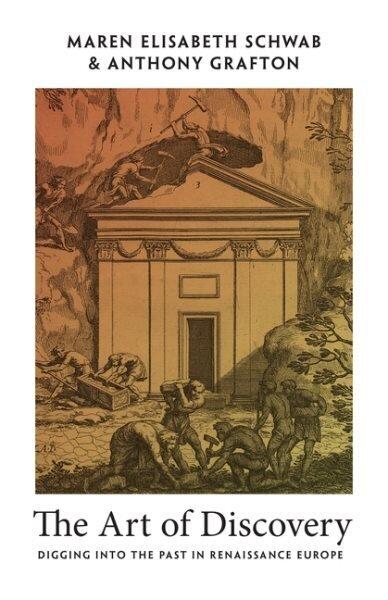 Princeton University Press Art of Discovery: Digging into the Past in Renaissance Europe GTIN: 9780691237145 Raamatud A panoramic history of the antiquarians whose discoveries transformed Renaissance culture and gave rise to new forms of art and knowledgeIn the early fifteenth century, a casket containing the remains of the Roman historian Livy was unearthed at a Benedictine abbey in Padua. The find was greeted with the same enthusiasm as the bones of a Christian saint, and established a pattern that antiquarians would follow for centuries to come. The Art of Discovery tells the stories of the Renaissance antiquarians who turned material remains of the ancient world into sources for scholars and artists, inspirations for palaces and churches, and objects of pilgrimage and devotion.Maren Elisabeth Schwab and Anthony Grafton bring to life some of the most spectacular finds of the age, such as Neros Golden House and the wooden placard that was supposedly nailed to the True Cross. They take readers into basements, caves, and cisterns, explaining how digs were undertaken and shedding light on the methods antiquariansand the alchemists and craftspeople they consultedused to interpret them. What emerges is not an origin story for modern archaeology or art history but rather an account of how early modern artisanal skills and technical expertise were used to create new knowledge about the past and inspire new forms of art, scholarship, and devotion in the present.The Art of Discovery challenges the notion that Renaissance antiquarianism was strictly a secular enterprise, revealing how the rediscovery of Christian relics and the bones of martyrs helped give rise to highly interdisciplinary ways of examining and authenticating objects of all kinds. Autorid: Maren Elisabeth Schwab, Anthony T. Grafton | 0 | Vaata | |||
Princeton University Press Gull Next Door: A Portrait of a Misunderstood Bird GTIN: 9780691208961 Raamatud A uniquely personal meditation on Britain's gulls by one of today's leading wildlife writersFrom a distance, gulls are beautiful symbols of freedom over the oceanic wilderness. Up close, however, they can be loud, aggressive and even violent. Yet gulls fascinate birdwatchers, and seafarers regard them with respect and affection. The Gull Next Door explores the natural history of gulls and their complicated relationship with humans.Marianne Taylor grew up in an English seaside town where gulls are ever present. Today, she is a passionate advocate for these underappreciated birds. In this book, Taylor looks at the different gull species and sheds light on all aspects of the lives of gullshow they find food, raise families, socialize and migrate across sea, coastland and countryside. She discusses the herring gull, Britain's best-known and most persecuted gull species, whose numbers are declining at an alarming rate. She looks at gulls in legend, fiction and popular culture, and explains what we can do to protect gull populations around the world.The Gull Next Door reveals deeper truths about these remarkable birds. They are thinkers and innovators, devoted partners and parents. They lead long lives and often indulge their powerful drive to explore and travel. But for all these natural gifts, many gull species are struggling to survive in the wild places they naturally inhabit, which is why they are now exploiting the opportunities of human habitats. This book shows how we might live more harmoniously with these majestic yet misunderstood birds. Autorid: Marianne Taylor, David Lindo | 0 | Vaata | |||
 Princeton University Press Brutal Aesthetics: Dubuffet, Bataille, Jorn, Paolozzi, Oldenburg GTIN: 9780691202600 Raamatud How artists created an aesthetic of positive barbarism in a world devastated by World War II, the Holocaust, and the atomic bomb In Brutal Aesthetics, leading art historian Hal Foster explores how postwar artists and writers searched for a new foundation of culture after the massive devastation of World War II, the Holocaust, and the atomic bomb. Inspired by the notion that modernist art can teach us how to survive a civilization become barbaric, Foster examines the various ways that key figures from the early 1940s to the early 1960s sought to develop a brutal aesthetics adequate to the destruction around them. With a focus on the philosopher Georges Bataille, the painters Jean Dubuffet and Asger Jorn, and the sculptors Eduardo Paolozzi and Claes Oldenburg, Foster investigates a manifold move to strip art down, or to reveal it as already bare, in order to begin again. What does Bataille seek in the prehistoric cave paintings of Lascaux? How does Dubuffet imagine an art brut, an art unscathed by culture? Why does Jorn populate his paintings with human animals? What does Paolozzi see in his monstrous figures assembled from industrial debris? And why does Oldenburg remake everyday products from urban scrap? A study of artistic practices made desperate by a world in crisis, Brutal Aesthetics is an intriguing account of a difficult era in twentieth-century culture, one that has important implications for our own. Published in association with the Center for Advanced Study in the Visual Arts, National Gallery of Art, Washington, DC Autorid: Hal Foster | 0 | Vaata | |||
Princeton University Press China and the WTO: Why Multilateralism Still Matters GTIN: 9780691206592 Raamatud An examination of Chinas participation in the World Trade Organization, the conflicts it has caused, and how WTO reforms could ease them Chinas accession to the World Trade Organization (WTO) in 2001 was rightly hailed as a huge step forward in international cooperation. However, Chinas participation in the WTO has been anything but smooth, with China alienating some of its trading partners, particularly the United States. The mismatch between the WTO framework and Chinas economic model has undermined the WTOs ability to mitigate tensions arising from Chinas size and rapid growth. What has to change? China and the WTO demonstrates that unilateral pressure, by the United States and others, is not the answer. Instead, Petros Mavroidis and André Sapir show that if the WTO enacts judicious reforms, it could induce Chinas cooperation, leading to a renewed confidence in the WTO system. The WTO and its predecessor, the General Agreement on Tariffs and Trade, are predicated on liberal domestic policies. They managed the previous accessions of socialist countries and big trading nations, but none were as large or powerful as China. Mavroidis and Sapir contend that for the WTO to function smoothly and accommodate Chinas unique geopolitical position, it needs to translate some of its implicit principles into explicit treaty language. To make their point, they focus on two core complaintsthat Chinese state-owned enterprises (SOEs) benefit from unfair trade advantages, and that domestic companies, private as well as SOEs, impose forced technology transfer on foreign companies as a condition for accessing the Chinese marketand they lay out specific proposals for WTO reforms. In an age of global trade disputes, China and the WTO offers a timely exploration of unprecedented challenges to the current multilateral system and fresh ideas for lasting solutions. Autorid: Petros C. Mavroidis, Andre Sapir | 0 | Vaata | |||
 Princeton University Press Brief Homage to Pluto and Other Poems GTIN: 9780691245096 Raamatud Award-winning new translations of a major contemporary Italian poetBrief Homage to Pluto and Other Poems collects forty-five poems by Fabio Pusterla, one of the most distinguished Italian-language poets writing today. Born in Switzerland and resident in Italy, Pusterla engages the pressing moral concerns of his age and excavates the hidden realities of our concrete world. These are poems of disquieting Alpine landscapes and rift zones, filled with curious fauna, lanced with troubling memories, built from the bottom, from the margins, from outside the mainstream.Pusterla is the author of eight critically acclaimed books of poetry and has received several major literary prizes. Selected and translated by Will Schutt, himself an award-winning poet, this volume draws from Pusterlas six most recent collections to capture a wide range of the poets work. With English translations and Italian originals on facing pages, Brief Homage to Pluto and Other Poems deftly introduces one of Europes most ambitious, imaginative, and humane poets to English-speaking readers. Autorid: Fabio Pusterla, Will Schutt, Will Schutt | 0 | Vaata | |||
 Princeton University Press Words for the Heart: A Treasury of Emotions from Classical India GTIN: 9780691222912 Raamatud A richly diverse collection of classical Indian terms for expressing the many moods and subtleties of emotional experienceWords for the Heart is a captivating treasury of emotion terms drawn from some of Indias earliest classical languages. Inspired by the traditional Indian genre of a treasurya wordbook or anthology of short texts or poemsthis collection features 177 jewel-like entries evoking the kinds of phenomena English speakers have variously referred to as emotions, passions, sentiments, moods, affects, and dispositions. These entries serve as beautiful literary and philosophical vignettes that convey the delightful texture of Indian thought and the sheer multiplicity of conversations about emotions in Indian texts. An indispensable reference, Words for the Heart reveals how Indian ways of interpreting human experience can challenge our assumptions about emotions and enrich our lives.Brings to light a rich lexicon of emotion terms from ancient IndiaUses the Indian genre of a treasury, or wordbook, to explore the contours of classical Indian thought in three of the subcontinents earliest languagesSanskrit, Pali, and PrakritFeatures 177 alphabetical entries, from abhaya (fearlessness) to yoga (the discipline of calm)Draws on a wealth of literary, religious, and philosophical writings from classical IndiaIncludes synonyms, antonyms, related words, and suggestions for further readingInvites readers to engage in the cross-cultural study of emotionsReveals the many different ways of naming and interpreting human experience Autorid: Maria Heim | 0 | Vaata | |||
Princeton University Press On Czeslaw Milosz: Visions from the Other Europe GTIN: 9780691212692 Raamatud A compelling personal introduction to the life and work of Nobel Prizewinning writer Czeslaw Milosz from his fellow Polish exile and acclaimed writer Eva HoffmanCzeslaw Milosz (19112004) was a giant of twentieth-century literature, not least because he lived through and wrote about many of the most extreme events of that extreme century, from the world wars and the Holocaust to the Cold War. Over a seven-decade career, he produced an important body of poetry, fiction, and nonfiction, including classics such as The Captive Mind, a reflection on the hypnotic power of ideology, and Native Realm, a memoir. In this book, Eva Hoffman, like Milosz a Polish-born writer who immigrated to the West, presents an eloquent personal portrait of the life and work of her illustrious fellow exile.Milosz experienced the horrors of World War II in Warsawthe very epicenter of the infernoand witnessed the unfolding of the Holocaust from up close. After the war, he lived as a permanent exilefrom Poland, communism, and mainstream American culture. Hoffman explores how exile, historical disasters, and Miloszs origins in Eastern Europe shaped his vision, and she occasionally compares her own postwar trajectory with Miloszs to show how the question of the Other Europe is still with us today. She also examines his later turn to the poetry of memory and loss, driven by the need to remember and honor his many friends and others killed in the Holocaust.Combining incisive personal and critical insights, On Czeslaw Milosz captures the essence of the life and work of a great poet and writer. Autorid: Eva Hoffman | 0 | Vaata | |||
Princeton University Press Heart of Darkness: Unraveling the Mysteries of the Invisible Universe GTIN: 9780691258935 Raamatud Humanity's ongoing quest to unlock the secrets of dark matter and dark energyHeart of Darkness describes the incredible saga of humankind's quest to unravel the deepest secrets of the universe. Over the past forty years, scientists have learned that two little-understood componentsdark matter and dark energycomprise most of the known cosmos, explain the growth of all cosmic structure, and hold the key to the universe's fate. The story of how evidence for the so-called "Lambda-Cold Dark Matter" model of cosmology has been gathered by generations of scientists throughout the world is told here by one of the pioneers of the field, Jeremiah Ostriker, and his coauthor Simon Mitton.From humankind's early attempts to comprehend Earth's place in the solar system, to astronomers' exploration of the Milky Way galaxy and the realm of the nebulae beyond, to the detection of the primordial fluctuations of energy from which all subsequent structure developed, this book explains the physics and the history of how the current model of our universe arose and has passed every test hurled at it by the skeptics. Throughout this rich story, an essential theme is emphasized: how three aspects of rational inquirythe application of direct measurement and observation, the introduction of mathematical modeling, and the requirement that hypotheses should be testable and verifiableguide scientific progress and underpin our modern cosmological paradigm.This monumental puzzle is far from complete, however, as scientists confront the mysteries of the ultimate causes of cosmic structure formation and the real nature and origin of dark matter and dark energy. Autorid: Jeremiah P. Ostriker, Simon Mitton | 0 | Vaata | |||
Princeton University Press Up from the Depths: Herman Melville, Lewis Mumford, and Rediscovery in Dark Times GTIN: 9780691236957 Raamatud Finalist for the National Book Critics Circle Award in BiographyA double portrait of two of Americas most influential writers that reveals the surprising connections between themand their uncanny relevance to our age of crisisUp from the Depths tells the interconnected stories of two of the most important writers in American historythe novelist and poet Herman Melville (18191891) and one of his earliest biographers, the literary critic and historian Lewis Mumford (18951990). Deftly cutting back and forth between the writers, Aaron Sachs reveals the surprising resonances between their lives, work, and troubled timesand their uncanny relevance in our own age of crisis.The author of Moby-Dick was largely forgotten for several decades after his death, but Mumford helped spearhead Melvilles revival in the aftermath of World War I and the 19181919 flu pandemic, when American culture needed a forebear with a suitably dark vision. As Mumfords career took off and he wrote books responding to the machine age, urban decay, world war, and environmental degradation, it was looking back to Melvilles confrontation with crises such as industrialization, slavery, and the Civil War that helped Mumford to see his own era clearly. Mumford remained obsessed with Melville, ultimately helping to canonize him as Americas greatest tragedian. But largely forgotten today is one of Mumfords key insightsthat Melvilles darkness was balanced by an inspiring determination to endure.Amid todays foreboding over global warming, racism, technology, pandemics, and other crises, Melville and Mumford remind us that weve been in this struggle for a long time. To rediscover these writers today is to rediscover how history can offer hope in dark times. Autorid: Aaron Sachs | 0 | Vaata | |||
Princeton University Press Stem: Poems GTIN: 9780691264042 Raamatud A wide-ranging collection from a rising poet that showcases her sharp, contemporary voiceIn Stem, Stella Wong intersperses lyric poems on a variety of subjects with dramatic monologues that imagine the perspectives of specific female composers, musicians, and visual artists, including Johanna Beyer, Mira Calix, Clara Rockmore, Maryanne Amacher, and Delia Derbyshire. In such lines as let me tell you how I make myself appear / more likeable, as I grow older I like looking at chaos, and I want to propose a hike / and also propose mostly, Wongs style is confident and idiomatic, and by turns contemplative and carefree. Whether writing about family, intimate relationships, language, or womens experience, Wong creates a world alive with observation and provocation, capturing the essence and the problems of life with others. Autorid: Stella Wong | 0 | Vaata | |||
 Princeton University Press Quotable Jung GTIN: 9780691270951 Raamatud The definitive one-volume collection of Jung quotationsC. G. Jung (18751961) was a preeminent thinker of the modern era. In seeking to establish an interdisciplinary science of analytical psychology, he studied psychiatry, religion, mysticism, literature, physics, biology, education, and criminology. He introduced the concepts of extraversion and introversion, and terms such as complex, archetype, individuation, and the collective unconscious. He stressed the primacy of finding meaning in our lives.The Quotable Jung is the single most comprehensive collection of Jung quotations ever assembled. It is the essential introduction for anyone new to Jung and the Jungian tradition. It will also inspire those familiar with Jung to view him in an entirely new way. The Quotable Jung presents hundreds of the most representative selections from the vast array of Jung's books, essays, correspondence, lectures, seminars, and interviews, as well as the celebrated Red Book, in which Jung describes his own fearsome confrontation with the unconscious. Organized thematically, this collection covers such topics as the psyche, the symbolic life, dreams, the analytic process, good and evil, creativity, alchemical transformation, death and rebirth, the problem of the opposites, and more. The quotations are arranged so that the reader can follow the thread of Jungs thought on these topics while gaining an invaluable perspective on his writings as a whole.Succinct and accessible, The Quotable Jung also features a preface by Judith Harris and a detailed chronology of Jungs life and work.The single most comprehensive collection of Jung quotations ever assembledFeatures hundreds of quotesCovers such topics as the psyche, dreams, good and evil, death and rebirth, and moreIncludes a detailed chronology of Jungs life and workServes as the ideal introduction to Jung and the Jungian tradition Autorid: C. G. Jung, Tony Woolfson, Judith Harris | 0 | Vaata | |||

Otsing: 6912 (arhiveeritud tooted)
345 toodet
Princeton University Press Pentagons and Pentagrams: An Illustrated History GTIN: 9780691201122 Raamatud | 0 | Vaata | |||
Princeton University Press Not Working: Where Have All the Good Jobs Gone? GTIN: 9780691205496 Raamatud | 0 | Vaata | |||
0 | Vaata | ||||
0 | Vaata | ||||
0 | Vaata | ||||
0 | Vaata | ||||
0 | Vaata | ||||
| 0 | Vaata | |||
| |||||
0 | Vaata | ||||
0 | Vaata | ||||
0 | Vaata | ||||
0 | Vaata | ||||
| 0 | Vaata | |||
Princeton University Press New Natural History of Madagascar 2-Book Set GTIN: 9780691222622 Raamatud | 0 | Vaata | |||
0 | Vaata | ||||
0 | Vaata | ||||
0 | Vaata | ||||
0 | Vaata | ||||
0 | Vaata | ||||
| 0 | Vaata | |||
0 | Vaata | ||||
0 | Vaata | ||||
0 | Vaata | ||||
0 | Vaata | ||||
0 | Vaata | ||||
0 | Vaata | ||||
0 | Vaata | ||||
0 | Vaata | ||||
0 | Vaata | ||||
0 | Vaata | ||||
0 | Vaata | ||||
0 | Vaata | ||||
0 | Vaata | ||||
0 | Vaata | ||||
0 | Vaata | ||||
0 | Vaata | ||||
0 | Vaata | ||||
0 | Vaata | ||||
0 | Vaata | ||||
0 | Vaata | ||||
0 | Vaata | ||||
0 | Vaata | ||||
0 | Vaata | ||||
| 0 | Vaata | |||
0 | Vaata | ||||
Princeton University Press On Czeslaw Milosz: Visions from the Other Europe GTIN: 9780691212692 Raamatud | 0 | Vaata | |||
0 | Vaata | ||||
0 | Vaata | ||||
0 | Vaata | ||||
| 0 | Vaata | |||