An all-encompassing guide to mastering teaching maths in secondary schools, Succeeding as a Maths Teacher is a unique manual that gives advice and guidance for maths teachers at all stages of their career. This handbook not only offers foundational advice on how to deliver the most effective maths lessons, but also delves deeper into key ideas for more experienced teachers, such as how the science of learning applies to mathematics and nuances in instructional design. Written by lead practitioners in maths at Ormiston Academies Trust, with a combined teaching experience of over 60 years, Succeeding as a Maths Teacher takes you from your first days in the classroom through to leading a department. Along the way, the authors explore the purpose of a maths education, topics such as modelling and questioning, how to develop a high-quality maths curriculum and the importance of planning learning over lessons, adapting your teaching in light of feedback, reasoning and solving problems, and enriching pupils experiences of learning maths. The Succeeding As series offers practical, no-nonsense guidance to help you excel in a specific role in a secondary school. Including everything you need to be successful in your teaching career, the books are ideal for those just starting out as well as more experienced practitioners looking to develop their skill sets.
This is an introduction to the structure of sentences in human languages. It assumes no prior knowledge of linguistic theory and little of elementary grammar. It will suit students coming to syntactic theory for the first time either as graduates or undergraduates. It will also be useful for those in fields such as computational science, artificial intelligence, or cognitive psychology who need a sound knowledge of current syntactic theory. Sentences in human languages are not just collections of random sounds with associated meanings. They involve a host of intriguing phenomena including constraints on possible word orders and the establishment of relationships between words and phrases which affect both phonological form and meaning. David Adger leads the reader in easy stages through the development of an approach which explains how these phenomena work. This approach is based on ideas from Noam Chomsky's Minimalist Programme - notably the derivational nature of the linguistic system, the interpretability of syntactic features, and the reduction of syntactic operations to Merge and Move. These ideas are explained in clear, simple terms, backed up with examples and diagrams. The book emphasizes the importance of cross-linguistic evidence in the development of syntactic arguments. Above all it demonstrates the value of building a consistent theoretical system via repeated processes of hypothesis testing and evaluation. Exercises are provided at key points through the book. The book may be used as part of a course or for self-tuition. It offers a sound basis for advanced work in linguistics and related fields.
This book provides a full, contextual study of St Irenaeus of Lyons, the first great theologian of the Christian tradition. John Behr sets Irenaeus both within his own context of the second century, a fundamental period for the formation of Christian identity, elaborating the distinction between orthodoxy and heresy and expounding a comprehensive theological vision, and also within our own contemporary context, in which these issues are very much alive again. Against the commonly-held position that 'orthodoxy' was established by excluding others, the 'heretics', Behr argues that it was the self-chosen separation of the heretics that provided the occasion for those who remained together to clarify the lineaments of their faith in a church that was catholic by virtue of embracing different voices in a symphony of many voices and whose chief architect was Irenaeus, who, as befits his name, urged peace and toleration. The first chapter explores Irenaeus' background in Asia Minor, as a disciple of Polycarp of Smyrna, his activity in Gaul, and his involvement with the Christian communities in Rome. The theological and institutional significance of his interventions is made clear by tracing the coalescence of the initially fractionated communities in Rome into a united body over the first two centuries. The second chapter provides a full examination of Irenaeus' surviving writings, concentrating especially on the literary and rhetorical structure of his five books Against the Heresies, his 'refutation and overthrowal' of his opponents in the first two books, and his establishing a framework for articulating orthodoxy. The final chapter explores the theological vision of Irenaeus itself, on its own terms rather than the categories of later dogmatic theology, grounded in an apostolic reading of Scripture and presenting a vibrant and vigorous account of the diachronic and synchronic economy or plan of God, seen through the work of Christ which reveals how the Hands of God have been at work from the beginning, fashioning the creature, made from mud and animated with a breath of life, into his own image and likeness, vivified by the Holy Spirit, to become a 'living human being, the glory of God'.
A new edition of a classic of commercial law: depth of coverage with exceptional clarity. Authors Beheshti, Saintier, and Thomas maintain the brilliance of late Professor Bradgate's comprehensive text and provide students with an equally erudite guide, presenting the complexity of modern commercial law with clarity and fresh contextual links to practice. Key features: - Provides comprehensive coverage of the principles of commercial law alongside critical discussion - Offers rigorous in-depth analysis in an accessible way, giving students a thorough understanding - A modern, contextual approach draws links to the practice of commercial law - Also available as an e-book with functionality, navigation features, and links that offer extra learning support New to this Edition: BLAll chapters have been substantially revised to incorporate new developments and all major judgments in the area BLDetailed coverage of impact of digitalisation throughout the book BLIncludes a new chapter on the future trajectory of the subject Digital formats and resources: The 4th edition is available for students and institutions to purchase in a variety of formats: the e-book and Law Trove offer a mobile experience and convenient access along with functionality tools, navigations features and links that offer extra learning support. For more information about e-books, please visit www.oxfordtextbooks.co.uk/ebooks
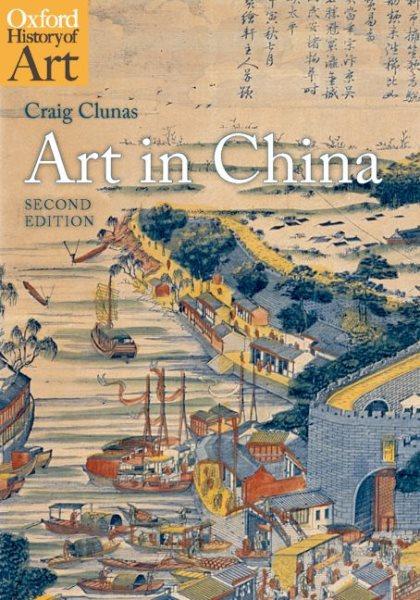
China boasts a history of art lasting over 5,000 years and embracing a huge diversity of forms - objects of jade, lacquer and porcelain, painted scrolls and fans, sculptures in stone, bronze and wood, and murals. But this rich tradition has not, until now been fully appreciated in the West where scholars have focused attention on the European high arts of painting and sculpture, downplaying arts more highly prized by the Chinese themselves, such as calligraphy. Art in China marks a breakthrough in the study of the subject. Drawing on recent innovative scholarship - and newly-accessible studies in China itself - Craig Clunas surveys the full spectrum of the visual arts in China. He ranges from the Neolithic period to the art scene of the early 21st century, examining Chinese art in a variety of contexts - as it has been designed for tombs, commissioned by rulers, displayed in temples, created by the men and women of the educated elite, and bought and sold in the marketplace. This updated edition contains expanded coverage of modern and contemporary art, from the fall of the empire in 1911 to the growing international interest in the art of an increasingly confident and booming China. Autorid: Craig Clunas
A Historical Greek Reader provides an introduction to the history of the ancient Greek language by means of a series of texts with linguistic commentary, cross-referenced to each other and to a reference grammar at the front. It offers a selection of epigraphic and literary texts from the Mycenaean period (roughly the fourteenth century BC) to the koine (the latest text dates to the second century AD), and includes a wide range of Greek dialect texts. The epigraphic section balances a number of well-known inscriptions with recent discoveries that may not be easily available elsewhere; a selection of literary texts traces major developments in the language of Greek poetry and literary prose. The book finishes with an account of the linguistic and sociolinguistic background of koine Greek. The commentary assumes no prior knowledge of Greek historical linguistics, but provides a basic amount of up-to-date bibliography so that advanced students and others can pursue linguistic issues at greater depth where necessary.
An Essay on Metaphysics is one of the finest works of the great Oxford philosopher, historian, and archaeologist R. G. Collingwood (1889-1943). First published in 1940, it is a broad-ranging work in which Collingwood considers the nature of philosophy, especially of metaphysics. He puts forward his well-known doctrine of absolute presuppositions, expounds a logic of question and answer, and gives an original and influential account of causation. The book has been widely read and much discussed ever since. In this new edition the complete original text is accompanied by three previously unpublished essays by Collingwood which will be essential reading for any serious student of his thought: 'The Nature of Metaphysical Study' (1934), 'Function of Metaphysics in Civilization' (1938), and 'Notes for an Essay on Logic' (1939). These fascinating writings illuminate and amplify the ideas of the Essay, to which they are closely related.The distinguished philosopher and Collingwood scholar Rex Martin has established authoritative versions of these new texts, added a short set of notes on the Essay, and contributed a substantial introduction explaining the story of the composition of all these works, discussing their major themes, and setting them in the context of Collingwood's philosophy as a whole.
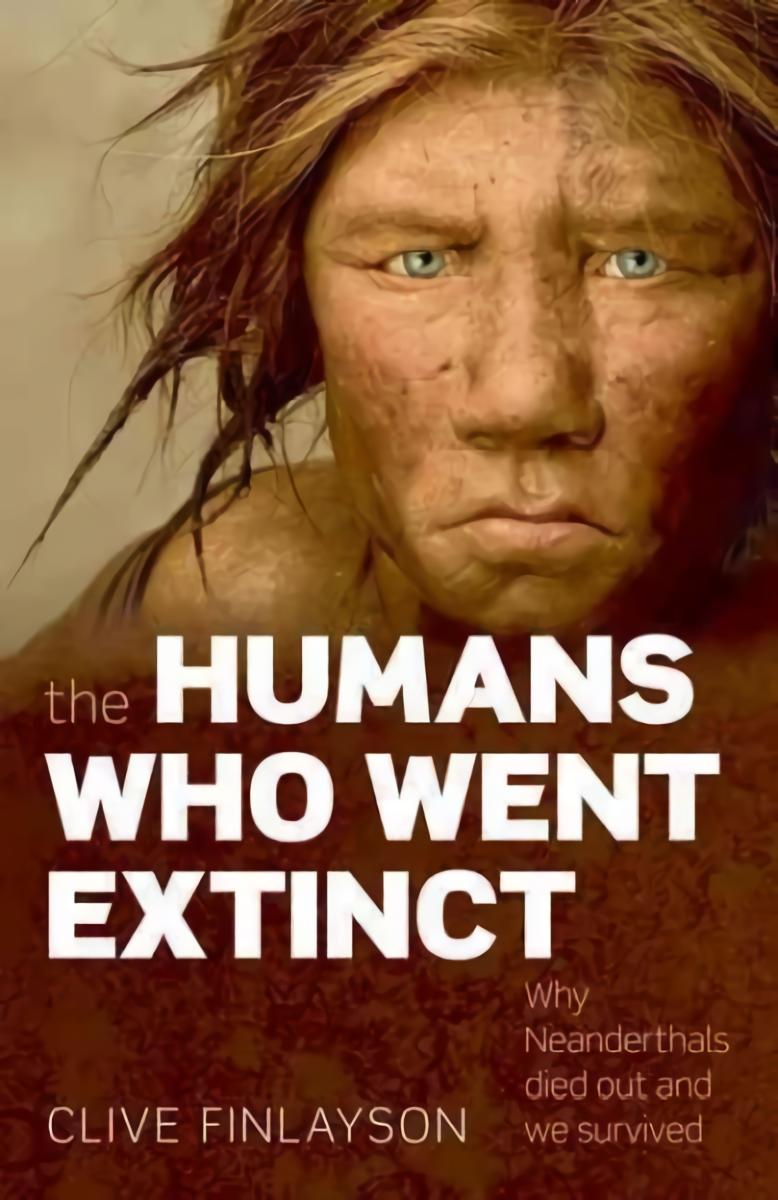
Just 28,000 years ago, the blink of an eye in geological time, the last of Neanderthals died out in their last outpost, in caves near Gibraltar. Thanks to cartoons and folk accounts we have a distorted view of these other humans - for that is what they were. We think of them as crude and clumsy and not very bright, easily driven to extinction by the lithe, smart modern humans that came out of Africa some 100,000 years ago. But was it really as simple as that? Clive Finlayson reminds us that the Neanderthals were another kind of human, and their culture was not so very different from that of our own ancestors. In this book, he presents a wider view of the events that led to the migration of the moderns into Europe, what might have happened during the contact of the two populations, and what finally drove the Neanderthals to extinction. It is a view that considers climate, ecology, and migrations of populations, as well as culture and interaction. His conclusion is that the destiny of the Neanderthals and the Moderns was sealed by ecological factors and contingencies. It was a matter of luck that we survived and spread while the Neanderthals dwindled and perished. Had the climate not changed in our favour some 50 million years ago, things would have been very different. There is much current research interest in Neanderthals, much of it driven by attempts to map some of their DNA. But it's not just a question of studying the DNA. The rise and fall of populations is profoundly moulded by the larger scale forces of climate and ecology. And it is only by taking this wider view that we can fully understand the course of events that led to our survival and their demise. The fact that Neanderthals survived until virtually yesterday makes our relationship with them and their tragedy even more poignant. They almost made it, after all. Autorid: Clive Finlayson
An understanding of phonetics - of the mechanisms of speech, of how the sounds of language are produced, and of how they can be analysed and classified - is an essential acquirement for all those who have to deal with language and languages either theoretically or practically. This book is an introduction to general phonetics which explores the entire range of human sounds, systematically covering all types of modification of speech (breath, voice, whisper, creak, etc.), articulation (the ways in which the air stream is finally modulated to generate specific types of sound), and prosodic features (stress, syllable, tone, intonation, etc.). In addition, there is a chapter on sound systems - the ways in which particular languages utilize and systematize the universal sound-producing potential of man. The entire range of phonetic categories is introduced in 124 'experiments', to be carried out in the readrer's own vocal tract. In this way, the reader acquires a personal awareness of the principles of phonetic analysis and classification rather than a merely intellectual knowledge of them. This highly practical approach is informed throughout by recent research, particularly in the aerodynamics and acoustics of speech. NEW TO THE SECOND EDITION: New format and text design Updated usage of phonetic symobls in line with the most recent International Phonetic Alphabet Chart (1996) Revisions to 9 figures Text updated and clarified for ease of reading Revised further reading section with recent publications and more attention to aerodynamics, acoustics, and prosodies New references to the most important new publications Autorid: J. C. Catford
A brand new edition of Charging About from the Science Works series, featuring lively storytelling and fun, engaging illustrations to aid children in their learning. Press a button, flick a switch, turn a knob and zap . . . something amazing happens. You have music, light, heat, hairdryers all because of electricity. In this revised edition from Jacqui Bailey, we follow the story of how electrical energy is generated in a power station, how it travels through pylons, power cables and wires until it reaches towns and homes. We learn how electrical current is created and how it is made safe. This book also contains an experiment, more great facts to know, useful websites and an index. Book band: Brown Ideal for KS2. Autorid: Jacqui Bailey, Matthew Lilly
"The Introduction to philosophy" written by Porphyry at the end of the second century AD is the most successful work of its kind ever to have been published. It was translated into most respectable languages, and for a millennium and a half every student of philosophy read it as his first text in the subject. Porphyry's aim was modest: he intended to explain the meaning of five terms, 'genus', 'species', 'difference', 'property', and 'accident' - terms which he took to be important to Aristotelian logic and metaphysics, and hence to philosophy in general. Thus in principle the Introduction is simple and elementary. In fact, there are sometimes difficulties and doubts on the surface of the text - and beneath the surface there are frequent depths or profundities. The work raises, directly or indirectly, a number of perennial philosophical questions. In addition, the Introduction became, in Boethius's Latin translation, the point of reference for one of the longest-lasting of philosophical disputes - the dispute over the status of 'universals'.This book contains a new English translation of the Introduction, preceded by a study of the life and works of Porphyry, the purpose and nature of the Introduction, and the history of the text. It is accompanied by a discursive commentary the primary aim of which is to analyse and assess the philosophical theses and arguments which the Introduction puts forward. (But there are also numerous notes of a more philological or historical turn.) The twentieth century turned away from Aristotelian logic, and the Introduction lost its position on the syllabus. Barnes does not argue that it should be put back in its old place; but his commentary - the first to be published in English, and the fullest to be published for a century - suggests that there is blood in the old man yet. "Clarendon Later Ancient Philosophers" - General Editors: Jonathan Barnes and A. A. Long, this series, which is modelled on the familiar Clarendon Aristotle and Clarendon Plato series, is designed to encourage philosophers and students of philosophy to explore the fertile terrain of later ancient philosophy.The texts range in date from the first century BC to the fifth century AD, and will cover all the parts and all the schools of philosophy. Each volume contains a substantial introduction, an English translation, and a critical commentary on the philosophical claims and arguments of the text. The translations aim primarily at accuracy and fidelity; but they are also readable and accompanied by notes on textual problems that affect the philosophical interpretation. No knowledge of Greek or Latin is assumed.
This book investigates the nature of generalization in language and examines how language is known by adults and acquired by children. It looks at how and why constructions are learned, the relation between their forms and functions, and how cross-linguistic and language-internal generalizations about them can be explained. Constructions at Work is divided into three parts: in the first Professor Goldberg provides an overview of constructionist approaches, including the constructionist approach to argument structure, and argues for a usage-based model of grammar. In Part II she addresses issues concerning how generalizations are constrained and constructional generalizations are learned. In Part III the author shows that a combination of function and processing accounts for a wide range of language-internal and cross-linguistic generalizations. She then considers the degree to which the function of constructions explains their distribution and examines cross-linguistic tendencies in argument realization. She demonstrates that pragmatic and cognitive processes account for the data without appeal to stipulations that are language-specific.This book is an important contribution to the study of how language operates in the mind and in the world and how these operations relate.It is of central interest for scholars and graduate-level students in all branches of theoretical linguistics and psycholinguistics. It will also appeal to cognitive scientists and philosophers concerned with language and its acquisition.
The third edition of An Introduction to the Philosophy of Religion provides a critical examination of some fundamental questions posed by religious belief: What does belief in God amount to? Can God's existence be proved? Is there life after death?Brian Davies considers these questions and many others, sometimes offering provocative answers of his own, but more often giving readers room to each independent conclusions. He explains how a range of thinkers have approached the subject -- including Anselm, Aquinas, Descartes, Leibniz, Hume, and Kant -- and also discusses how contemporary author now engage with the issues involved. Completely revised to cover the latest developments in the field, the new edition of this established textbook will prove the ideal introduction for all students of the philosophy of religion. Autorid: Brian Davies
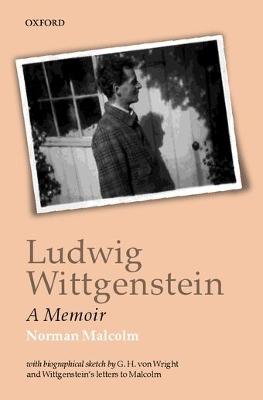
Ludwig Wittgenstein, who died in Cambridge in 1951, is one of the most powerful influences on contemporary philosophy, yet he shunned publicity and was essentially a private man. His friend Norman Malcolm (himself an eminent philosopher) wrote this remarkably vivid personal memoir of Wittgenstein, which was published in 1958 and was immediately recognized as a moving and truthful portrait of this gifted, difficult man. This edition includes also the complete text of the fifty-seven letters which Wittgenstein wrote to Malcolm over a period of eleven years. Apart from the quotations in the Memoir these letters are previously unpublished. They reveal how much friendships mattered to Wittgenstein, and how concerned he was for the health and well-being of his friends. His human qualities become evident; he advises, warns, jokes. and is grateful and affectionate. The volume also features a concise biographical sketch by another leading philosopher who was a friend of Wittgenstein, Georg Henrik von Wright. Much has been published about Wittgenstein since his death, but nothing brings us closer to the man himself than this modest classic of philosophical biography. Autorid: Norman Malcolm
Filling a gap in the textbook market, Feminism: Issues & Arguments provides an accessible and stimulating introduction to feminist philosophy that assumes no background in the subject. Drawing on both philosophical thought and up-to-date empirical research, Jennifer Mather Saul provides lucid arguments for a variety of feminist positions but avoids advocating any particular position so that students will be motivated to think critically. The chapters are organized around key topics including pornography, abortion, sexual harassment, and the politics of work and family. By focusing on real-world applications of feminist philosophy, this text brings the subject to life for students because it deals with issues that they care about. Feminism: Issues & Arguments is ideal for courses in feminism, feminist philosophy/philosophy of women, and sociology of women. Autorid: Jennifer Mather Saul