Discoverer Winter Discoverer Winter™ on usaldusväärne maasturirehv parema haarduvuse, roolitavuse ja pidurdamise jaoks talvistes oludes David Coulthard, Cooper Tire Safety & Performance Ambassador Keskmised lumesooned Hambulised ääred lumi-lumel haarduvuse tõhustamiseks Tugev kesksoon Parem käsitlemine & roolitavus 3D micro-Gauge™ sälgud Hambulised ääred, et parandada pidurdustõhusust
See mitmekülge tööriistakomplekt sobib paljudele erinevatele mootoritele. Nende tööriistadega saab pihustite vahetamisel pihustipesasid puhastada ja süsinikuvabaks muuta. Kõik tööriistad on valmistatud kvaliteetsetest materjalidest ja sobivad igapäevaseks kasutamiseks. Komplekti kuulun 17 osa, mis sobivad peaaegu kõikidele levinumatele mootoritele. Kogu komplekt on paigutatud plastikust hoiukohvrisse, seda on mugav transportida ja hoiustada.• Tarne 5–7 päeva kõikjale Eestis • Turvalised maksemeetodid: Paypal, pangaülekanne, deebet- ja krediitkaardid, Trustly • Uhiuus toode. 2-aastane garantii • Tasuta tagastamine 30 päeva jooksul
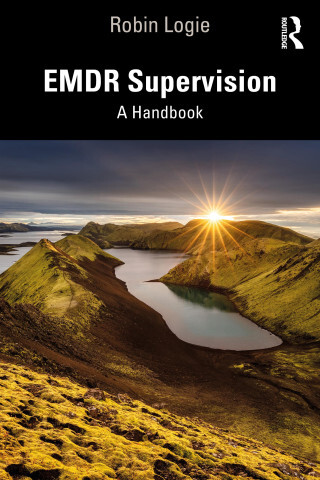
This unique handbook provides a guide for supervisors of therapists who use Eye Movement Desensitisation and Reprocessing (EMDR) therapy, and those undergoing training in EMDR supervision.
This book explains the key feature to develop a complex and stable network that helps to gather the data to optimize the asset performance and maximize the production in the Industries leveraging on the cloud infrastructure and services. By the end, you can design the Industrial IoT network and the architecture for processing its data in the cloud.
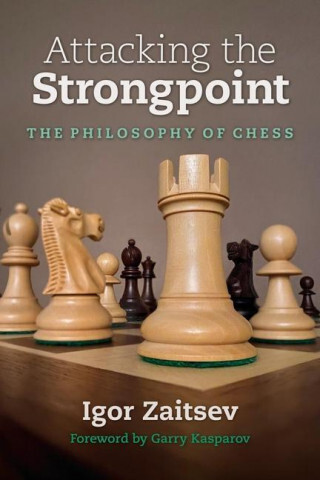
Language: English, Binding: Paperback, Number of pages: 240, Publishers: RUSSELL ENTERPRISES INC, Author: Garry Kasparov, ISBN-13: 9781949859133, Date of issue: 2020
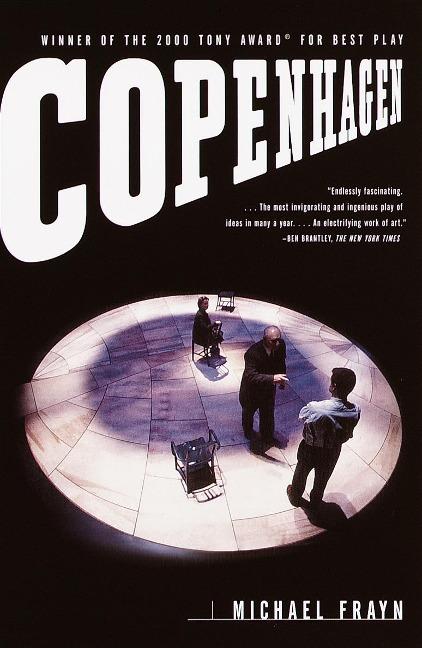
The Tony Award--winning play that soars at the intersection of science and art, Copenhagen" is an explosive re-imagining of the mysterious wartime meeting between two Nobel laureates to discuss the atomic bomb. In 1941 the German physicist Werner Heisenberg made a clandestine trip to Copenhagen to see his Danish counterpart and friend Niels Bohr. Their work together on quantum mechanics and the uncertainty principle had revolutionized atomic physics. But now the world had changed and the two men were on opposite sides in a world war. Why Heisenberg went to Copenhagen and what he wanted to say to Bohr are questions that have vexed historians ever since. In Michael Frayn's ambitious, fiercely intelligent, and daring new play Heisenberg and Bohr meet once again to discuss the intricacies of physics and to ponder the metaphysical--the very essence of human motivation.
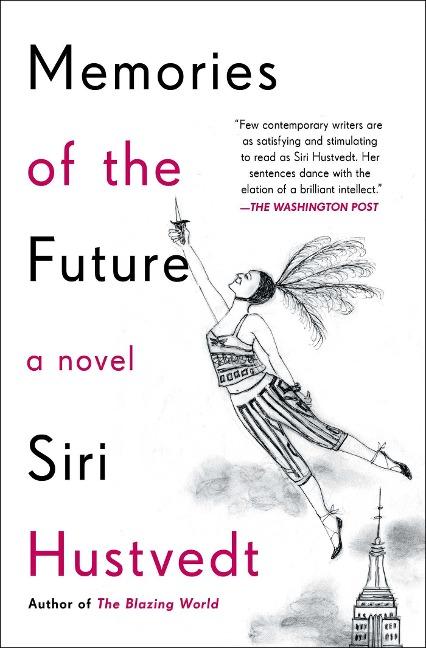
"From international bestseller and Booker Prize-nominee Siri Hustvedt comes a provocative novel about time, desire, memory and the imagination, Then tells the indelible story of a young Midwestern woman's fixation with her mysterious neighbor over the course of a threadbare year in 1970s New York" --
On the night of 13 November 2015, Paris was convulsed by a series of coordinated attacks. Sze Tsung Nicolás Leong, not far from the strikes, did not consider taking photographs, weighed on not only by the difficulty of depicting a city already so exhaustively pictured, but more so by the impossibility of representing such tragedy. The next day Leong, wandering the city in the aftermath of the events, turned his camera downward to the ground, focusing on an aspect of the city we repeatedly look at yet largely do not notice. The resulting photos render a seemingly known city strange and unfamiliar. At first appearing to be abstractions or even aerials or views of the cosmos, they reveal specific details we would otherwise miss and which contain gravity in their apparent banality-from cigarettes left on the asphalt by mourners, to the footprints and broken glass of the night before, and the sawdust scattered on the sidewalks soaking up blood. Paris, Novembre is a portrait of a city at a traumatic moment in its history and an exploration of how that history leaves its marks on the city's ground. Leong's series is a gesture of mourning and contemplation, seemingly of nothing and the reluctance to look, yet at the same time of looking closely and intently.
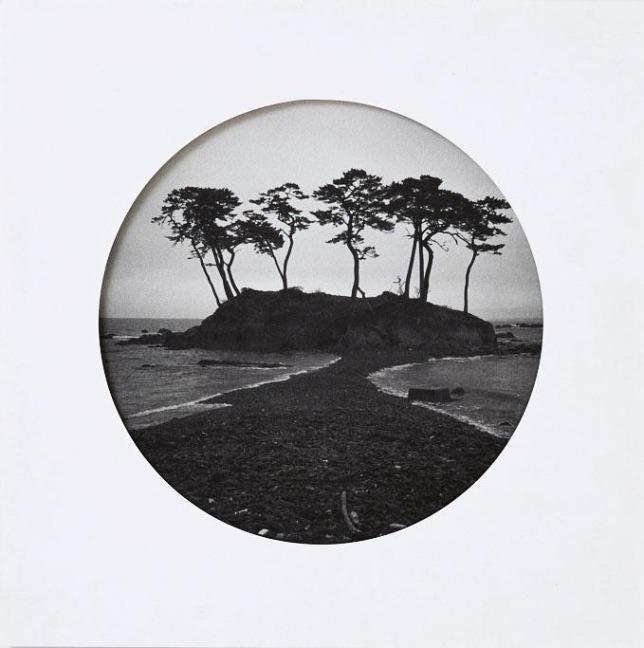
Since the Great East Japan earthquake of 2011, Toru Komatsu has taken photos of trees in places that suffered damage from the earthquake and subsequent tsunami. Fifty of these images comprise A Distant Shore, which documents the eerily beautiful aftermath of the disaster. On his travels throughout Japan Komatsu was particularly fascinated by monumental rocky crags that seem like islands floating on the land. Mostly scattered with pine trees, the crags are landlocked but were once surrounded by the sea. Typically cordoned off by ceremonial ropes, they are today treated as holy areas embedded with the memory of their past-in Komatsu's words, "I imagine that an island floating on the land still hasn't forgotten the ocean that once surrounded it, even if the sea is now many miles away." Circular cutouts placed before each square photo allow the images in the book to be experienced both as cropped circles and the full square layouts, creating a sense of peering through a peephole or a telescope from the wrong end, and transforming the photos into a setting for a dramatic play while commenting on the limits of our fields of vision.
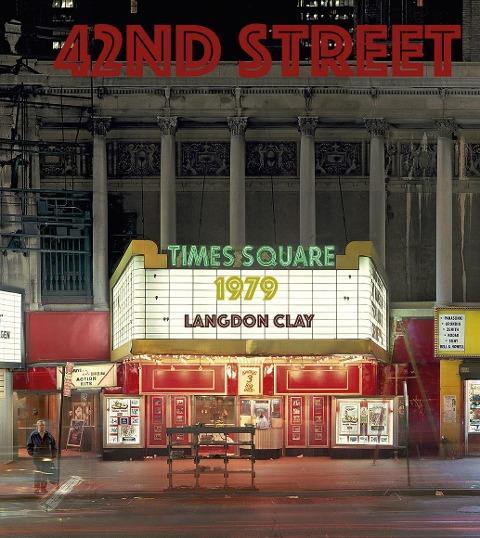
42nd Street, 1979 contains Langdon Clay's 1979 photos of a quintessential strip of 42nd Street near New York's Times Square, showing its gritty neon charm before it became the more Disney/Las Vegas hub for theater concoctions that we know today. Clay recalls the drab and dusty mood in New York City at the end of the 1970s: the once-exciting political sea change wrought by the Vietnam War and the Haight Ashbury drug experiment had given way to a sense of apathy, intensified by the aftermath of an oil crisis and the lingering Cold War. The particular stretch of 42nd Street between 7th and 8th Avenues had now shifted from the glorious home of gilded movie palaces of the 1940s to the shadowy site of porn theaters which many saw as the area's ruin. Yet here real-estate moguls saw potential to transform this heart of Manhattan into a mecca of tourism, framed by skyscrapers and shaped by commerce and fast pleasures. "It was with this coming change written on every wall that I sought to record for posterity that famous block between 7th and 8th Avenues," says Clay, "My only regret is that I didn't do the south side of the street."
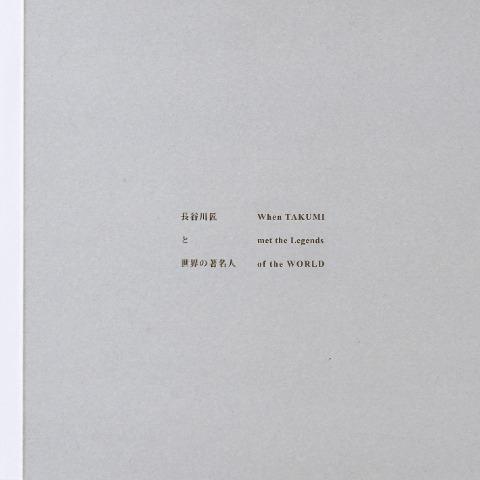
Selfies are today an inescapable part of our visual landscape and our self-expression, and the ultimate dream of many selfie-takers is to snap oneself with a celebrity. Takumi Hasegawa fulfills this dream in this book, which presents him posing with his personal legends of the international rich and famous. From the worlds of fashion (Anna Wintour, Grace Coddington, Riccardo Tisci) and architecture (Rem Koolhaas, Zaha Hadid, Frank Gehry), to the arts (Jeff Koons, Yayoi Kusama, Thom Yorke) and luxury moguls Bernard Arnault and Pierre Bergé, Hasegawa's subjects speak for themselves. Yet the resonance of his project is more complex: in When Takumi Met the Legends of the World, designed as an intimate scrapbook or album of memories, Hasegawa's joy in each shot is palpable, but so is a sense of the seductive, false promise of fame.