Liitu LEGO® City telesarja tegelaste kloun Citruse, Nate’i ja Incogn!troga, et korraldada muljetavaldavad trikietendused! Aktiveeri hoorattaga mootorratas ja tõuse rambilt õhku, et sihtida kümnesse ja kukutada kloun Citrus veetünni. Tee suurejoonelisi hüppeid ja maandumisi. Kas lendad üle veoki? Sina otsustad! Selle trikietenduse veokiga käib kaasas kogu varustus, mida on vaja erakordsete trikietenduste lavastamiseks. Selles tippkvaliteediga LEGO® City trikietenduse veoki (60294) mängukomplektis on hulgaliselt funktsioone seikluslike mängude korraldamiseks (sh hoorattaga trikimootorratas suurejooneliste hüpete tegemiseks). Lapsed saavad aktiveerida mootorratta ja saata selle rambilt lendu, et tabada märki ning kukutada kloun mänguveetünni. Ja kui lisada siia veel neli minifiguuri, sh kolm telesarja „LEGO City Adventures“ tegelaskuju, on lastel olemas kõik, mida võiks lõbusate lugude loomiseks vaja minna. Vahva ehitus- ja mängukomplekt alates 4-aastastele lastele Mängukomplektiga on kaasas trükitud ehitusjuhend ja Instructions PLUS, mis on kättesaadav tasuta rakenduses LEGO® Building Instructions ja millel on ehitusprotsessi ellutoomiseks suumimis-, pööramis- ja visualiseerimistööriistad. LEGO City inspireeriv maailm LEGO City Stuntzi komplektid viivad lapsed otse seikluste südamesse, kust leiab kihutavad hoorattad, lahedad sõidukid, realistlikud ehitised ja lõbusad tegelased, kes innustavad mängima päriselu sündmustel põhinevaid rollimänge. Kombineeri seda mudelit teiste LEGO City Stuntzi universumisse kuuluvate mängukomplektidega, et närvikõdi oleks veelgi rohkem! Loo põnevate seikluste korraldamiseks tegevuspaik selle ülimalt kvaliteetse LEGO® City trikietenduse veoki (60294) mängukomplektiga, kust leiad hoorattaga trikimootorratta ja lõbusad elemendid muljetavaldavate trikkide tegemiseks. Mis on karbis? Kõik, mida lastel on vaja, et ehitada hiiglaslik veok, millel on koht õhkutõusu- ja maandumisrampide jaoks, toimiv veetünn, hoorattaga trikimootorratas, neli tarvikutega minifiguuri ja palju muud. Sellel vahval mänguveokil on olemas kõik vajalik põnevate trikietenduste lavastamiseks. Lapsed saavad teele saata trikimootorratta, et panna tööle veetünni funktsioon ning teha võimsaid hüppeid ja maandumisi. Muljetavaldav sünnipäeva- või mis tahes muu tähtpäeva kingitus vähemalt 6-aastastele lastele. Kombineeri seda komplekti teiste LEGO® City Stuntzi komplektidega, et trikitamine oleks veel võimsam. Kokkupanduna on trikietenduse veok 16 cm kõrge, 48 cm pikk ja 7 cm lai. Patareisid pole vaja. Selle trikiveoki mängukomplekti paneb tööle hoorattatehnoloogia ja seiklustele annab energiat laste kujutlusvõime! Komplektis on trükitud ehitusjuhend ja Instructions PLUS, mis on osa nutiseadmetele mõeldud tasuta rakendusest LEGO® Building Instructions. Tänu sellele üksikasjalikule ja interaktiivsele juhendile on LEGO klotsidega ehitamine lapsemäng. LEGO® City Stuntzi komplektid viivad lapsed otse seikluste südamesse, kust leiab kihutavad hoorattaga trikimootorrattad, realistlikud ehitised ja lõbusad tegelaskujud, kes kutsuvad mängima reaalsetel sündmustel põhinevaid loomingulisi rollimänge. Kõik LEGO® City detailid vastavad tööstusharu rangetele nõuetele, et tagada nende kokkusobivus ning klotside lihtne ühendamine ja eraldamine igal korral. LEGO® City klotse ja osi on maha visatud, kuumutatud, muljutud, väänatud ja analüüsitud, et tagada nende vastavus rangeimatele globaalsetele ohutusnõuetele.
Language: English, Binding: Hardback, Number of pages: 160, Publishers: Princeton University Press, Author: Andrei Sourakov,Alexandra Sourakov, ISBN-13: 9780691251745, Date of issue: 2024
Klassikaline puidust aiapink sobib suurepäraselt kasutamiseks väljas ja on mõeldud teie aia, terrassi või siseõue keskpunktiks. Männipuit: aiaiste on valmistatud toekast männipuidust. Toekas männipuit on kaunis looduslik materjal. Männipuidu sirged kiud ja oksakohad annavad materjalile maalähedase ilme.Liistudega disain: liistudega kujundatud pargipink näeb lihtne ja ajatu välja.Lai kasutus: terrassipingi saab paigutada rõdule, verandale, aeda, terrassile jne. Hea teada:Selleks, et kokkupanek oleks võimalikult lihtne, on iga tootega kaasas kasutusjuhend.Märkus.Selleks, et õuemööbel püsiks ilus, soovitame seda kaitsta veekindla kattega.p>• Turvalised maksemeetodid: Paypal, pangaülekanne, deebet- ja krediitkaardid, Trustly • Uhiuus toode. 2-aastane garantii sularahas kohaletoimetamise.Tasuta tarne
Language: English, Binding: Hardback, Number of pages: 560, Publishers: Princeton University Press, Author: Egidio Viola, ISBN-13: 9780691250212, Date of issue: 2026
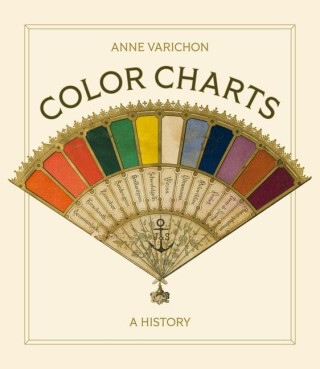
Language: English, Binding: Hardback, Number of pages: 284, Publishers: Princeton University Press, Author: Anne Varichon,Philippa Benson, ISBN-13: 9780691255170, Date of issue: 2024
An account that challenges the conventional views of African merchants under colonialism, examining the emergence and changing fortunes of indigenous entrepreneurs in Lagos, NigeriaIn Capitalism in the Colonies, A. G. Hopkins provides the first substantial assessment of the fortunes of African entrepreneurs under colonial rule. Examining the lives and careers of 100 merchants in Lagos, Nigeria, between 1850 and 1931, Hopkins challenges conventional views of the contribution made by indigenous entrepreneurs to the long-run economic development of Nigeria. He argues that African merchants in Lagos not only survived, but were also responsible for key innovations in trade, construction, farming and finance that are essential for understanding the development of Nigerias economy.The book is based on a large, representative sample and covers a time span that traces mercantile fortunes over two and three generations. Drawing on a wide range of sources, Hopkins shows that indigenous entrepreneurs were far more adventurous than expatriate firms. African merchants in Lagos pioneered motor vehicles, sewing machines, publishing, tanneries and new types of internal trade. They founded the construction industry that built Lagos into a major port city, moved inland to start the cocoa-farming industry and developed the finance sector that is still vital to Nigerias economy. They also took the lead in changing single-owned businesses into limited liability companies, creating freehold property rights and promoting wage labour. In short, Hopkins argues, they were the capitalists who introduced the institutions of capitalism into Nigeria. The story of African merchants in Nigeria reminds us, he writes, that economic structures have no life of their own until they are animated by the actions of creative individuals. Autorid: A. G. Hopkins
A landmark account of the work, thought, and life of the seventeenth-century French painter In this book, Anthony Blunt presents a rich account of the paintings, life, and development of the great seventeenth-century French classicist Nicolas Poussin (15941665), addressing the artists entire oeuvre alongside his theory of art. Blunt shows why Poussin holds a central place in the great French humanist line that produced Racine, Molière, Voltaire, the Parnassians, and Mallarmé. At the same time, he examines how Poussin looks back to Raphael and ancient Rome, while pointing forward to Ingres, Cézanne, the Cubists, and Picasso. Autorid: Anthony Blunt
An interconnected, nuanced, and nonlinear view of Chinese family life since 1949With Embedded Generations, Liu Jieyu offers a comprehensive examination of Chinese family life since the Chinese Communist Revolution of 1949. Grounding her account in the analysis of 260 life history narratives and rich ethnographic data, Liu traces the changing ways families have navigated such experiential milestones as childhood, courtship and marriage, sex and intimacy, and aging over the past seven decades. Using generation, the urban-rural divide, and gender as her analytical lenses, she provides an alternative narrative of Chinese family life, countering the dominant Eurocentric accounts of modernization and family change.Liu proposes the concept of embedded generations to capture the ongoing relational and socioeconomic shaping of family life, taking account of variation within and across generations, and of both intergenerational transmission and individual adaptations to changing conditions of everyday life. Resisting the notion that social and family changes are linear historical progressions, Liu reveals a family portrait of complex change, continuity, and diversity. Rather than a straightforward transition from the traditional to the modern and postmodern, she argues, changes in Chinese family life have entailed the adaptation and re-serving of traditional ideas and practices to produce a bricolage of modern and traditional elements. Autorid: Liu Jieyu
Language: English, Binding: Paperback, Number of pages: 384, Publishers: Princeton University Press, Author: Kwame Anthony Appiah, ISBN-13: 9780691254074, Date of issue: 2023
Language: English, Binding: Paperback, Number of pages: 448, Publishers: Princeton University Press, Author: E02, ISBN-13: 9780691253237, Date of issue: 2025
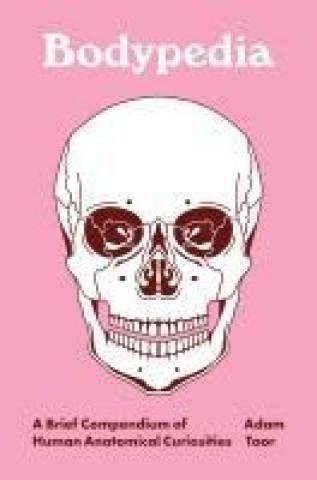
Language: English, Binding: Hardback, Number of pages: 240, Publishers: Princeton University Press, Author: TAOR ADAM, ISBN-13: 9780691256788, Date of issue: 2025
"An account of the central role that ethnography played in the Roman empire and its transformation in Late Antiquity. Ethnography, broadly understood, is a key element in the toolkit of every empire, as important as armies, tax-collectors, or ambassadors. It helps rulers articulate cultural differences with outsiders and sometimes bridge them, and it lets the inhabitants of an empire, especially those who guide its course, understand themselves and their place in the midst of the enemies, allies, and friends who surround them. Whenever provinces are drawn, peace treaties and alliances framed, diplomats sent on mission, decisions taken to go to war, or simply life lived in the midst of unfamiliar voices, some kind of ethnographic vision must come into play. This ethnographic infrastructure, as ancient historian Michael Maas calls it, supports the empire's view of itself regarding the nations of the world, and it shapes and reflects actual interactions with them. Ethnography is not simply a reflection of changes. It also enables change by providing terms and concepts that give voice to the articulation of new circumstances. In this book, Maas argues that, to understand how the Roman Empire transformed in the crucial period of Late Antiquity, the empire's ethnographic underpinnings, especially as they were affected by Christianity, must be examined. As Maas demonstrates, Romans knew they lived in a world of great cultural diversity, movement, and instability. They believed that their empire imposed order upon it. Images of barbarians filled public spaces throughout the empire as reminders of Roman control. Writers likewise filled their pages with descriptions of foreigners in a wide variety of genres. These ethnographies, according to Maas, served three general functions. First, they described foreign peoples, placing them in established and accessible systems of knowledge. Second, they judged them on a register of distance from Roman norms, with "most like us" the best possible evaluation. Third, ethnography indicated explicitly or implicitly what the possibilities of participation within the imperial community might be. In other words, the gift of ethnography possessed for the conquerors a mechanism of imperial transformation"-- The essential role of ethnographic thought in the Roman empire and how it evolved in Late AntiquityEthnography is indispensable for every empire, as important as armies, tax collectors, or ambassadors. It helps rulers articulate cultural differences, and it lets the inhabitants of the empire, especially those who guide its course, understand themselves in the midst of enemies, allies, and friends. In The Conquerors Gift, Michael Maas examines the ethnographic infrastructure of the Roman Empire and the transformation of Romes ethnographic vision during Late Antiquity. Drawing on a wide range of texts, Maas shows how the Romans ethnographic thought evolved as they attended to the business of ruling an empire on three continents.Ethnography, the conquerors gift, gave Romans structured ways of finding a place for foreigners in the imperial worldview and helped justify imperial action affecting them. In Late Antiquity, Christianity revolutionized the imperial ethnographic infrastructure by altering old concepts and introducing credal models of community. The Bible became a source for organizing the Roman world. At the same time, many previously unseen collective identities emerged across Western Eurasia in reaction to the diminution of Roman power. These changes deeply affected the Empires ethnographic infrastructure and vision of the world. Maas argues that a major consequence of these developments was the beginning of a sectarian age, as individuals and political communities came to identify themselves primarily in terms of religion as well as ethnicity. As they adjusted to changing ethnographic realities, Romans understood their place among the peoples of the world in new ways. Willingly or not, we continue to be recipients of the conquerors gift today. Autorid: Michael Maas
Humanity's ongoing quest to unlock the secrets of dark matter and dark energyHeart of Darkness describes the incredible saga of humankind's quest to unravel the deepest secrets of the universe. Over the past forty years, scientists have learned that two little-understood componentsdark matter and dark energycomprise most of the known cosmos, explain the growth of all cosmic structure, and hold the key to the universe's fate. The story of how evidence for the so-called "Lambda-Cold Dark Matter" model of cosmology has been gathered by generations of scientists throughout the world is told here by one of the pioneers of the field, Jeremiah Ostriker, and his coauthor Simon Mitton.From humankind's early attempts to comprehend Earth's place in the solar system, to astronomers' exploration of the Milky Way galaxy and the realm of the nebulae beyond, to the detection of the primordial fluctuations of energy from which all subsequent structure developed, this book explains the physics and the history of how the current model of our universe arose and has passed every test hurled at it by the skeptics. Throughout this rich story, an essential theme is emphasized: how three aspects of rational inquirythe application of direct measurement and observation, the introduction of mathematical modeling, and the requirement that hypotheses should be testable and verifiableguide scientific progress and underpin our modern cosmological paradigm.This monumental puzzle is far from complete, however, as scientists confront the mysteries of the ultimate causes of cosmic structure formation and the real nature and origin of dark matter and dark energy. Autorid: Jeremiah P. Ostriker, Simon Mitton
Language: English, Binding: Hardback, Number of pages: 320, Publishers: Princeton University Press, Author: Marco Venniro, ISBN-13: 9780691253534, Date of issue: 2026
From the bestselling author of The Book Proposal Book, a practical, step-by-step approach to mastering the four pillars of scholarly writing for authors, editors, and publishing professionalsDevelopmental editing holds the power to make a manuscript connect with publishers and readers, yet few scholarly writers have the training to do it well. Make Your Manuscript Work offers a practical method for assessing and refining the features of their texts that matter mostargument, evidence, structure, and style. This guide shows scholarly writers how to identify whats been holding their writing back and fix it so they can accomplish their publication goals.Laura Portwood-Stacer, a writer, editor, and consultant for academic authors, explains how manuscripts move through the publication process and identifies the key stages for authors to improve their texts. She helps writers better understand who they are writing for and why, enabling them to determine what their drafts need most to move forward. Drawing on a decade of experience as a developmental editor of scholarly manuscripts, Portwood-Stacer details the most common opportunities for development shes encountered and shares practical tips for implementing needed edits. The book also includes a checklist of assessment questions, examples from real scholarly manuscripts, tips on seeking additional help, and advice on offering developmental editing assistance to other writers.Written with candor, empathy, and a deep awareness of the challenges faced by academic writers who want to publish, Make Your Manuscript Work is an indispensable how-to guide for scholars at all career stages. Autorid: Laura Portwood-Stacer
"A collection of quotes from pioneering feminist artist Judy Chicago"-- A collection of inspiring and provocative quotations from pioneering artist, feminist, and activist Judy ChicagoA fierce activist for womens rights and against climate change, Judy Chicago defines herself best: Im Judy Chicago, and Im an artist and a troublemaker. A leader of the Womens Art Movement of the 1970s, Chicago also founded the first feminist art program in the United States. She is renowned for her monumental installation The Dinner Party (19741979), an iconic work that celebrates female luminaries from history and mythology, including Georgia OKeefe, Emily Dickinson, Sojourner Truth, and Hatshepsut. Gathered from interviews and other sources, Judy Chicago-isms is an inspiring collection of the memorable and powerful words of a trailblazing artist.You dont have to be a man to support a patriarchal worldview, and you dont have to be a woman to support feminist values.You have to choose hope. Hope comes from feeling that youre on the side of right and fighting for it. If youre a passive observer to whats going on, its easy to give in to despair.Feminist art is all the stages of a woman giving birth to herself.(Women] should get fifty percent of the space in all institutions. That is what our mandate has to be. Autorid: Judy Chicago, Larry Warsh
A major reassessment of the methods and meaning of impressionism At pivotal moments in his career, Claude Monet would go out with a fellow artist, plant his easel beside his friends, and paint the same scene. Painting with Monet closely examines pairs of such works, showing how attention to this practice raises tantalizing new questions about Monets art and about impressionism as a movement. Is impressionist painting an objective attempt to capture reality as it really is? Or is it a subjective expression of the artists unique way of perceiving things? How can artists create a movement without conformity extinguishing individuality? Harmon Siegel reveals how Monet explored problems like these in concrete, practical ways while painting alongside his teachers, Eugène Boudin and Johan Barthold Jongkind; his friends, Frédéric Bazille and Pierre-Auguste Renoir; and his hero, Édouard Manet. At a time of major cultural upheavals, these artists asked how we can know reality beyond our personal perception. Siegel provides new insights into the aesthetic, philosophical, and ethical stakes for these painters as they responded to a rapidly changing society. Beautifully illustrated, Painting with Monet sheds critical light on how Monet and his fellow impressionists, painting side by side, professed their capacity to know the world and affirmed their belief in what Siegel calls the reality of others. Autorid: Harmon Siegel
Language: English, Binding: Paperback, Number of pages: 72, Publishers: Panzerwrecks Limited, Author: Thomas Jentz,Hilary Doyle, ISBN-13: 9781915969125, Date of issue: 2004
The untold story of the role of humanitarian NGOs in building the neoliberal order after empireAfter India gained independence in 1947, Britain reinvented its role in the global economy through nongovernmental aid organizations. Utilizing existing imperial networks and colonial bureaucracy, the nonprofit sector sought an ethical capitalism, one that would equalize relationships between British consumers and Third World producers as the age of empire was ending. The Solidarity Economy examines the role of nonstate actors in the major transformations of the world economy in the postwar era, showing how British NGOs charted a path to neoliberalism in their pursuit of ethical markets.Between the 1950s and 1990s, nonprofits sought to establish an alternative to Keynesianism through their welfare and development programs. Encouraging the fair trade of commodities and goods through microfinance, consumer boycotts, and corporate social responsibility, these programs emphasized decentralization, privatization, and entrepreneurship. Tehila Sasson tells the stories of the activists, economists, politicians, and businessmen who reimagined the marketplace as a workshop for global reform. She reveals how their ideas, though commonly associated with conservative neoliberal policies, were part of a nonprofit-driven endeavor by the liberal left to envision markets as autonomous and humanizing spaces, facilitating ethical relationships beyond the impersonal realm of the state.Drawing on dozens of newly available repositories from nongovernmental, international, national, and business archives, The Solidarity Economy reconstructs the political economy of these marketsfrom handicrafts and sugar to tea and coffeeshedding critical light on the postimperial origins of neoliberalism. Autorid: Tehila Sasson
Uncovering the vibrant spiritual life of Late AntiquityIn Late Antiquity (ca. 200600 CE), the world was alive with unseen forcesdivine agents who influenced every aspect of daily life. For most ordinary people, religion was not found in temples, synagogues, and churches, but in lived experience as they interacted with the supernatural in a world of uncertainty and danger. In An Enchanted World, Michael Satlow uncovers a shared spiritual landscape that stretched beyond the confines of Judaism, Christianity, and the pantheon of Greek and Roman deities. From healing rituals to protective amulets, spiritual practices were a matter of necessity, transcending religious labels. To get by in the world required being on good terms with the right supernatural beings and being able to ward off the bad ones.Rejecting traditional narratives that focus on institutional religion and theological divisions, Satlow presents a compelling case for viewing the period through the lens of lived religion. This was not a religion of abstractions formulated by rabbis and priests, but an enchanted world populated by divine beings who had as muchif not moreagency as any person. Drawing on archaeological evidence, historical documents, and a rich trove of magical texts, Satlow vividly reconstructs how ordinary people lived in a world that crackled with the energy of the supernatural. His account reimagines the spiritual history of Late Antiquity, centering shared human fears and aspirations and challenging preconceived notions about religious boundaries. With An Enchanted World, Satlow offers a fresh perspective on a transformative periodone that has much to teach us even today about the role that spirituality can play in the secular world. Autorid: Michael L. Satlow
The President of Ireland since 2011, when he was elected by a final tally of almost 57% of the votes, Michael D. Higgins has used his time in office to setout a vision of what he calls 'an ethical Republic'. In a series of remarkable and urgent speeches, which are anything but the bland commentaries of a ceremonial head of state, Michael D. Higgins has urged his fellow citizens to consider what makes the good life. He has asked how human rights, an active and empowered citizenry, women's equality and the right to health and a life free of corrosive anxiety might be achieved. He has highlighted the plight of refugees. And he has criticised the ways in which work is becoming dehumanised. Autorid: Michael D. Higgins