0 | Vaata | ||||
 Bohrcraft Raskemetalli frees BC52100301000; 10x20 mm HSS frees silindrikujuline C-kujuline Bohrcraft (Ø 10 mm) | 0 | Vaata | |||
 | 0 | Vaata | |||
 MOTHERCARE rasedusjärgne bandaaz NA542 S GTIN: 5021469126297 Beebitooted | 0 | Vaata | |||
 LEGO 42127 Technic BATMAN – BATMOBIIL™ Superkangelaste fännid saavad osa võtta põnevast väljakutsest ja ehitada kuulsa BATMOBIILI™ auto LEGO® Technicu vormis. See ülidetailne mänguauto on inspireeritud 2022. a filmist „BATMAN“ pärit uusimast BATMOBIILI versioonist, sisaldades elutruud kujundust ja hulgaliselt ägedaid detaile. Lisa ööle valgustMudeliga on kaasas kaks valgusklotsi – üks punane ja üks kollane. Punane tuli annab tagaosas asuvale läbipaistavale mängumootorile ägeda sära, kollane klots valgustab aga esivõret. Muude lahedate detailide hulka kuuluvad pööratavad esirattad, tagarataste diferentsiaal, pöörlev leek, lisaks avatavad uksed ja kapott. Lapsed saavad mudelit põhjalikult uurida ja panna selle vaatamiseks välja oma lemmiku superkangelase auks.Suurepärane sissejuhatus insenerimaailmaLEGO Technicu ehituskomplektidel on realistlikud käigumehhanismid, mis võimaldavad igas vanuses ehitajatel tutvuda insenerimaailmaga arusaadaval ja realistlikul viisil.Ehita BATMOBIIL™ – taasloo selle lastele ja täiskasvanutele mõeldud ägeda LEGO® Technicu mängukomplekti BATMAN – BATMOBIIL (42127) abil kuulsa superkangelase auto kõik detailidNagu nähtud filmis „BATMAN“ – see autentne mudel on elutruu LEGO® Technicu koopia 2022. a filmis nähtud BATMOBIIL™-istVaata, kuidas auto särama lööb – komplektis on kaks valgusklotsi, mis äratavad BATMOBIIL™-i ellu. Punane tuli lisab sära läbipaistvale mootorile, kollane valgusklots valgustab aga esivõretPalju funktsioone – lahedate detailide seas on esiroolisüsteem, tagarataste diferentsiaal, liikuvad kolvid, pöörlev leek, lisaks avatavad uksed ja kapottSobib vähemalt 10-aastastele – lapsed ja täiskasvanud, kellele meeldivad superkangelaste sõidukid, saavad ehitada selle austusavalduse oma lemmikule superkangelase autole. Sobib täiuslikult kingituseks Batmani fännideleVäljapanekuks loodud – uuri selle ägeda mänguasja kõiki funktsioone ja pane see vaatamiseks välja, et imetleda selle autentset välimustTäiuslikud mõõtmed – 11 cm kõrge (koos rooli ja ülemise leegiga), 45 cm pikk (koos tagumise leegiga) ja 17 cm laiNauditav ehitamine – LEGO® Technicu maailmas on hulgaliselt keerukaid ehitusmudeleid LEGO fännidele, kes on valmis oma järgmiseks ehitusväljakutseksKvaliteet ennekõike – LEGO® Technicu detailid vastavad tööstusharu rangetele nõuetele, et tagada nende stabiilne kvaliteet, ühtesobivus ja kindel ühendatavus alatiOhutus on tagatud – LEGO® Technicu detaile on maha visatud, kuumutatud, muljutud, väänatud ja analüüsitud, et tagada nende vastavus rangetele globaalsetele ohutusnõuetele | 0 | Vaata | |||
 Mar-Pol Plastosade remondikomplekt M57457 Professionaalne tööriist kaitseraudade ja plastdetailide jootmiseks | 0 | Vaata | |||
0 | Vaata | ||||
0 | Vaata | ||||
 | |||||
0 | Vaata | ||||
0 | Vaata | ||||
BUDWEG CALIPER Juhthülsikomplekt, pidurisadul 169126 GTIN: 5705444485981 Varuosad | 0 | Vaata | |||
EGT Hoiatuskontakt, piduriklotsi kulumine 691262EGT Tootekood: 691262EGT Varuosad | 0 | Vaata | |||
0 | Vaata | ||||
0 | Vaata | ||||
0 | Vaata | ||||
 Võrguseade No Name Crimping tool for large cable terminations 60el. E6080 kaabli lõpetamise klamber 60el. | 0 | Vaata | |||
 Princeton University Press Technology and the Rise of Great Powers – How Diffusion Shapes Economic Competition Language: English, Binding: Paperback, Number of pages: 280, Publishers: Princeton University Press, Author: Jeffrey Ding, ISBN-13: 9780691260341, Date of issue: 2024 | 0 | Vaata | |||
 Princeton University Press Pink Language: English, Binding: Hardback, Number of pages: 192, Publishers: Princeton University Press, Author: Jody Gladding, ISBN-13: 9780691266268, Date of issue: 2025 | 0 | Vaata | |||
 vidaXL Keeratud Traadi Aed koos 13 Postiga Roheline 0.5x50 m Teras 3351749 GTIN: 8721158269126 Aia ehitus See vidaXL keeratud traadi aiakomplekt on ideaalne valik, et parandada oma vara turvalisust ja välimust. Kõige ägedam tume roheline matt viimistlus sulandub erinevatesse aia disainidesse ja on piisavalt tugev, et taluda kõike välistingimustes. Karm Konstruktsioon: Valmistatud tugevast metallist, see keeratud traadi aed kaitseb sind elementide eest. Mitmekülgne Kasutamine: Sobib igal pool – kodus või töös, alates aiast kuni lemmikloomade turvamiseks. Lihtne Paigaldus: Vaja läheb paar lihtsat tööriista, paigaldamine käib kiiresti ja sujuvalt - ideaalne DIY entusiastidele. Täielik Komplekt: Sisaldab 13 posti ja kõiki vajalikke vahendeid, et kõik saaks õigesti kokku pandud. Modernne Stiil: Matte viimistlus annab aiale kaasaegse ilme, sobitub ideaalselt igasse väljas olemasolevasse disaini.p>• Turvalised maksemeetodid: Paypal, pangaülekanne, deebet- ja krediitkaardid, Trustly • Uhiuus toode. 2-aastane garantii sularahas kohaletoimetamise.Tasuta tarne | 0 | Vaata | |||
 Taschen GmbH Hiroshige & Eisen. The Sixty-Nine Stations along the Kisokaido Gebirge im Mondschein, friedlich plätschernde Flüsse, entlegene Poststationen und geschäftige Ortschaften: Mit ihrer legendären, 1843 vollendeten Serie "Die 69 Stationen des Kiso-Wegs" schufen Keisai Eisen und Utagawa Hiroshige ein Meisterwerk der japanischen Holzschnittkunst. Ein TASCHEN-Reprint im XL-Format und von bestechender Qualität."Wer es sich erlauben konnte, diese Straße zu bereisen, wurde von allen beneidet. Es galt als einzigartige Erfahrung, ein Weg, auf dem atemberaubende Landschaften, regionale Leckerbissen, Thermalquellen und andere, frivolere Sinnenfreuden warteten."-The New York Times, Wendell Jamieson, 7. Juni 2016 | 0 | Vaata | |||
 Princeton University Press Snakes of Australia Language: English, Binding: Hardback, Number of pages: 364, Publishers: Princeton University Press, Author: Scott Eipper, ISBN-13: 9780691269931, Date of issue: 2025 | 0 | Vaata | |||
 Phobya Y-cable 3Pin Molex to 3x 3Pin Molex - Black 60cm For connection of three 3-Pin fans (radiator fans, case fans etc.) to one Mainboard connector (3-Pin). Please note that rpm monitoring is possible for only of the connected fans. Sleeving: This cable is not only practical, it is also optically appealing, The surrounding mesh, also called mesh, which is surrounding the cable itself offers the advantages that every Pro-modder is looking for: A completely unique look, even of the cables in the system! Special attention was paid to the combination of cable connectors, sleeve and heatshrink which were used to ensure great design and a unique as well as elegant look. The idea behind these cables: Phobya's goal is to make the work of professional and hobby modders a bit easier with these cables. Sleeving is a lot of work and requires much time. But with these cables by Phobya the whole system can be redesigned any way you like by simply adding these cables. A white sticker on one of the cables shows which fan can be monitored. Technical specifications: Connectors: 3-Pin to 3x 3-Pin Y-cable Colour: Black sleeve, black connectors, black heatshrink Dimensions: 60cm each Conforms with RoHS Extent of delivery: 1x Phobya Y-cable 3Pin Molex to 3x 3Pin Molex 60cm - black Please note: When using this adaptor cable please always consider the limitations of the socket from which it draws power. To high currents and loads caused by the connected fans may damage the connected devices! This product has been reviewed for you: Aquainfos Tech-Review | 0 | Vaata | |||
0 | Vaata | ||||
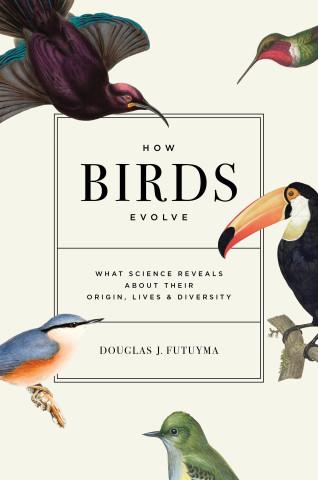 Princeton University Press How Birds Evolve – What Science Reveals about Their Origin, Lives, and Diversity Language: English, Binding: Paperback, Number of pages: 320, Publishers: Princeton University Press, Author: Douglas J. Futuyma, ISBN-13: 9780691264639, Date of issue: 2024 | 0 | Vaata | |||
0 | Vaata | ||||
 Mobiili lisaseade Mercury Semi-Silicone MagSafe ümbris Samsung Galaxy A17 jaoks, must Mercury Semi-Silicone MagSafe ümbris Samsung Galaxy A17 jaoks, must | 0 | Vaata | |||
0 | Vaata | ||||
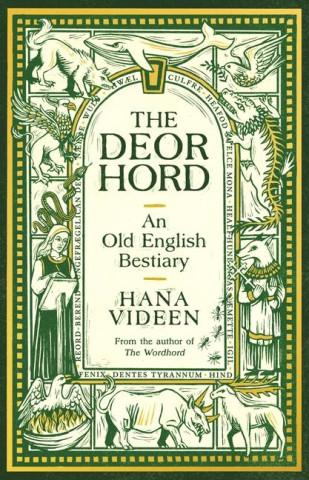 Princeton University Press The Deorhord – An Old English Bestiary GTIN: 9780691260006 Raamatud Language: English, Binding: Hardback, Number of pages: 352, Publishers: Princeton University Press, Author: Hana Videen, ISBN-13: 9780691260006, Date of issue: 2024 | 0 | Vaata | |||
Princeton University Press Designing the American Century: The Public Landscapes of Clarke and Rapuano, 19151965 GTIN: 9780691266428 Raamatud "Gilmore D. Clarke and Michael Rapuano were the foremost spatial designers of the American century. Their vast portfolio of public landscapes propelled the legacy of Frederick Law Olmsted and Calvert Vaux into the motor age, touching the lives of millions and changing the face of the nation. Designing the American Century recovers the forgotten legacy of Clarke and Rapuano, whose parks and parkways, highways and housing estates helped modernize--for better or worse--the American metropolis. With the patronage of public-works titan Robert Moses, Clarke and Rapuano transformed New York over a span of fifty years, revitalizing the city's immense park system but also planning expressways, public housing, and urban renewal projects that laid waste to entire sections of the city. In this groundbreaking work, Thomas J. Campanella describes how Clarke and Rapuano helped create some of the metropolitan region's most iconic landscapes, from the Central Park Zoo and Conservatory Garden to the Henry Hudson Parkway and Riverside Park, Jones Beach, the Palisades and Taconic State Parkways, and the Brooklyn Heights Promenade. He shows how they left their mark far beyond Gotham as well, with projects as diverse as Yellowstone's Mammoth Hot Springs, the Mount Vernon Memorial Highway, site plans for the Pentagon and CIA headquarters, and Montreal's Olympic Park. Richly illustrated with a wealth of previously unpublished drawings, plans, and photographs, Designing the American Century fills one of the last major gaps in the history of American urbanism"-- A richly illustrated look at the lives and collaborations of two unsung giants of American landscape and urban designGilmore D. Clarke and Michael Rapuano were the foremost spatial designers of the American century. Their vast portfolio of public landscapes propelled the legacy of Frederick Law Olmsted and Calvert Vaux into the motor age, touching the lives of millions and changing the face of the nation. Designing the American Century recovers the forgotten legacy of Clarke and Rapuano, whose parks and parkways, highways and housing estates helped modernizefor better or worsethe American metropolis.With the patronage of public-works titan Robert Moses, Clarke and Rapuano transformed New York over a span of fifty years, revitalizing the citys immense park system but also planning expressways, public housing, and urban renewal projects that laid waste to entire sections of the city. In this groundbreaking work, Thomas J. Campanella describes how Clarke and Rapuano helped create some of the metropolitan regions most iconic landscapes, from the Central Park Zoo and Conservatory Garden to the Henry Hudson Parkway and Riverside Park, Jones Beach, the Palisades and Taconic State Parkways, and the Brooklyn Heights Promenade. He shows how they left their mark far beyond Gotham as well, with projects as diverse as Yellowstones Mammoth Hot Springs, the Mount Vernon Memorial Highway, site plans for the Pentagon and CIA headquarters, and Montreals Olympic Park.Richly illustrated with a wealth of previously unpublished drawings, plans, and photographs, Designing the American Century fills one of the last major gaps in the history of American urbanism. Autorid: Thomas J. Campanella | 0 | Vaata | |||
Princeton University Press Forest: A Fable of America in the 1830s GTIN: 9780691264523 Raamatud A vivid historical imagining of life in the early United StatesOne of the richest books ever to come my way.Annie Proulx, Pulitzer Prizewinning author of The Shipping NewsThis is a wonderful book. . . . An extraordinary achievement.Edmund de Waal, New York Times bestselling author of The Hare with Amber EyesSet amid the glimmering lakes and disappearing forests of the early United States, The Forest imagines how a wide variety of Americans experienced their lives. Part truth, part fiction, and featuring both real and invented characters, the book follows painters, poets, enslaved people, farmers, and artisans living and working in a world still made largely of wood. Some of the historical characterssuch as Thomas Cole, Margaret Fuller, Nathaniel Hawthorne, Fanny Kemble, Edgar Allan Poe, and Nat Turnerare well known, while others are not. But all are creators of private and grand designs.The Forest unfolds in brief stories. Each episode reveals an intricate lost world. Characters cross paths or go their own ways, each striving for something different but together forming a pattern of life. For Alexander Nemerov, the forest is a description of American society, the dense and discontinuous woods of nation, the foliating thoughts of different people, each with their separate shade and sun. Through vivid descriptions of the people, sights, smells, and sounds of Jacksonian America, illustrated with paintings, prints, and photographs, The Forest brings American history to life on a human scale.Published in association with the Center for Advanced Study in the Visual Arts, National Gallery of Art, Washington, DC Autorid: Alexander Nemerov | 0 | Vaata | |||
 Princeton University Press Information: A Short History GTIN: 9780691261553 Raamatud "An essential guide to the ways information has shaped and been shaped by societies. Thanks to recent advances, we now enjoy seemingly unlimited access to information. How did information become so central to our everyday lives? This book traces the global emergence of information practices and technologies across pivotal epochs and regions, providing invaluable historical perspectives on the ways information has shaped and been shaped by societies. Featuring the core articles from the ultimate referencebook Information: A Historical Companion, this short history will appeal to anyone seeking to understand our modern mania for an informed existence. The book: Tells the story of information's rise from the premodern era to today, exploring how diverse cultures have created, managed, and shared facts and knowledge; Takes readers from the medieval Islamic world to late imperial East Asia, and from early modern and modern Europe to contemporary North America; Covers a broad range of topics, such as networks, bureaucracy, publicity, propaganda, censorship, privacy, intellectual property, digitization, telecommunications, storage and search, and much moreIncludes a new introduction, suggested further readings, and a glossary of key terms"-- "A paperback spinoff from Information: A Historical Companion that presents an accessible introductory history of information from premodern practices to twenty-first-century information culture"-- An essential guide to the ways information has shaped and been shaped by societiesThanks to recent advances, we now enjoy seemingly unlimited access to information. How did information become so central to our everyday lives? This book traces the global emergence of information practices and technologies across pivotal epochs and regions, providing invaluable historical perspectives on the ways information has shaped and been shaped by societies. Featuring the core articles from the ultimate reference book Information: A Historical Companion, this short history will appeal to anyone seeking to understand our modern mania for an informed existence. The book:Tells the story of informations rise from the premodern era to today, exploring how diverse cultures have created, managed, and shared facts and knowledgeTakes readers from the medieval Islamic world to late imperial East Asia, and from early modern and modern Europe to contemporary North AmericaCovers a broad range of topics, such as networks, bureaucracy, publicity, propaganda, censorship, privacy, intellectual property, digitization, telecommunications, storage and search, and much moreIncludes a new introduction, suggested further readings, and a glossary of key termsBrings together an international team of experts, including Jeremy Adelman, Devin Fitzgerald, John-Paul Ghobrial, Lisa Gitelman, Randolph C. Head, Richard R. John, Elias Muhanna, Thomas S. Mullaney, Carla Nappi, Craig Robertson, Daniel Rosenberg, Will Slauter, and Heidi Tworek Autorid: Ann Blair, Paul Duguid, Anja-Silvia Goeing, Anthony Grafton | 0 | Vaata | |||
Princeton University Press Intellectual Property: Learned Slaves and Educated Freedmen in Republican Rome GTIN: 9780691266169 Raamatud The first in-depth account of the lives and careers of educated slaves and freedmen in ancient RomeSlaves and freedmen played an important yet understudied role in the literary culture of the Roman Republic. Though their work went largely uncredited, they fulfilled vital roles as editors, researchers, and collaborators in the service of Romes literary and political elite. Intellectual Property tells the stories of these gifted and highly educated young men, from Licinius the flute-player, who shaped the rhetorical style of the orator Gaius Gracchus, to the grammarian and teacher Tyrannio of Amisus, who was brought to Rome as a war captive.Highlighting the unique social prestige of literary production and intellectual performance in a society pervaded by slave labor, Harriet Flower shows how the exorbitant prices paid for the highly educated encouraged a complex system of training young boys for the marketplace or acquiring educated captives as booty, and how they were treated as valuable assets to be deployed as prizes, gifts, or investments that could bestow financial and cultural capital. She demonstrates how enslaved and manumitted intellectuals, far from being menial workers, shared close relationships with leading Romans of the day. They came from a variety of backgrounds and were relied on as coauthors and collaborators in a range of genres, with some gaining fame as authors themselves.With lively case studies and insightful new interpretations of the ancient sources, Intellectual Property paints a more nuanced picture of enslaved labor in ancient Rome, revealing how the contributions of enslaved intellectuals were closely linked to the ambitious development of Latin literary culture and the dissemination of knowledge. Autorid: Harriet I. Flower | 0 | Vaata | |||
Princeton University Press How Rabbis Became Experts: Social Circles and Donor Networks in Jewish Late Antiquity GTIN: 9780691266763 Raamatud "This book tells the story of how a small group of Jewish scholars became religious experts within the Jewish communities of Roman Palestine from the second through fifth centuries C.E. -- thereby becoming the first rabbis"-- "How rabbinic expertise was socially constructed, performed, and defended in Roman Palestine at the turn of the common era. The Jewish communities of Roman Palestine saw the organization of a small group of literate Jewish men who devoted their lives tothe interpretation and teaching of their sacred ancestral texts. In this groundbreaking study, Krista Dalton shows that these early rabbis were not an insular specialist group but embedded in a landscape of Jewish piety. Drawing on the writings of rabbisin Roman Palestine from from the second through fifth centuries CE, Dalton illuminates the significance of social relationships in the production of rabbinic expertise. She traces the social interactions-everyday instances of mutual exchange, from dinnerparties to tithes and patronages-that fostered the perception of rabbis as experts.Dalton shows how the knowledge derived from the rabbis' technical skills was validated and recognized by others. Rabbis socialized and noshed with neighbors and offered advice and legal favors to friends. In exchange for their expert judgments, they received invitations, donations, appointments, and recognition. She argues that their status as Torah experts did not arise by virtue of being scholars but from their ability to persuade others that their mobilization of Jewish cultural resources was beneficial. Dalton describes the relational processes that made rabbinic expertise possible as well as the accompanying tensions; social interactions shaped the rabbis' domain of knowledge while also imposing expectations of reciprocity that had to be managed. Dalton's authoritative analysis demonstrates that a focus on friendship and exchange provides a fuller understanding of how rabbis claimed and defended their distinct expertise"-- How rabbinic expertise was socially constructed, performed, and defended in Roman PalestineAt the turn of the common era, the Jewish communities of Roman Palestine saw the organization of a small group of literate Jewish men who devoted their lives to the interpretation and teaching of their sacred ancestral texts. In this groundbreaking study, Krista Dalton shows that these early rabbis were not an insular specialist group but embedded in a landscape of Jewish piety. Drawing on the writings of rabbis in Roman Palestine from the second through fifth centuries CE, Dalton illuminates the significance of social relationships in the production of rabbinic expertise. She traces the social interactionseveryday instances of mutual exchange, from dinner parties to tithes and patronagesthat fostered the perception of rabbis as experts.Dalton shows how the knowledge derived from the rabbis technical skills was validated and recognized by others. Rabbis socialized and noshed with neighbors and offered advice and legal favors to friends. In exchange for their expert judgments, they received invitations, donations, appointments, and recognition. She argues that their status as Torah experts did not arise by virtue of being scholars but from their ability to persuade others that their mobilization of Jewish cultural resources was beneficial. Dalton describes the relational processes that made rabbinic expertise possible as well as the accompanying tensions; social interactions shaped the rabbis domain of knowledge while also imposing expectations of reciprocity that had to be managed. Daltons authoritative analysis demonstrates that a focus on friendship and exchange provides a fuller understanding of how rabbis claimed and defended their distinct expertise. Autorid: Krista N. Dalton | 0 | Vaata | |||
Princeton University Press Stem: Poems GTIN: 9780691264042 Raamatud A wide-ranging collection from a rising poet that showcases her sharp, contemporary voiceIn Stem, Stella Wong intersperses lyric poems on a variety of subjects with dramatic monologues that imagine the perspectives of specific female composers, musicians, and visual artists, including Johanna Beyer, Mira Calix, Clara Rockmore, Maryanne Amacher, and Delia Derbyshire. In such lines as let me tell you how I make myself appear / more likeable, as I grow older I like looking at chaos, and I want to propose a hike / and also propose mostly, Wongs style is confident and idiomatic, and by turns contemplative and carefree. Whether writing about family, intimate relationships, language, or womens experience, Wong creates a world alive with observation and provocation, capturing the essence and the problems of life with others. Autorid: Stella Wong | 0 | Vaata | |||
Princeton University Press Queer Moderns: Max Ewing's Jazz Age New York GTIN: 9780691267340 Raamatud "A richly illustrated history of the glittering world of queer artistic life in the 1920s and '30sIn Queer Modernism, Alice Friedman tells the fascinating story of the queer avant-garde of the 1920s and '30s in New York, Paris, and Venice, as seen through the eyes of Max Ewing (1903-1934), a young musician, photographer, and man-about-town who, although virtually unknown today, moved in extraordinary circles. In his photographs and letters, we meet the rising stars of modern art, music, dance, and literature and enter a world of interracial friendship, "queer space," and experimentation that shone brightly before being swept away by the Depression. It is a remarkable story that reveals that the history of modernism is more queer and more Black than previously recognized.In the 1920s, Ewing became part of an international coterie of artists led by Carl Van Vechten and Muriel Draper. In Europe, he was entertained by Gertrude Stein, met Stravinsky, and took a road trip with Romaine Brooks and Natalie Barney. In 1928, in a closet in his apartment, Ewing created the Gallery of Extraordinary Portraits, an installation of photos of his favorite celebrities-Black and white, clothed and nude. For his Carnival of Venice, he took portraits of more than a hundred friends-including Paul Robeson, Berenice Abbott, Isamu Noguchi, Agnes de Mille, and E. E. Cummings-posed in front of a backdrop of Saint Mark's Square.Like a character from a story by F. Scott Fitzgerald, Ewing joined the party and then died tragically, unable to accept the end of his era or the lost dream of a new way of living. His story sheds new light on modernism and an artistic milieu that was ahead of its time"-- A richly illustrated history of the glittering world of queer artistic life in the 1920s and 30sIn Queer Moderns, Alice Friedman tells the fascinating story of the queer avant-garde of the 1920s and 30s in New York, Paris, and Venice, as seen through the eyes of Max Ewing (19031934), a young musician, photographer, and man-about-town who, although virtually unknown today, moved in extraordinary circles. In his photographs and letters, we meet the rising stars of modern art, music, dance, and literature and enter a world of interracial friendship, queer space, and experimentation that shone brightly before being swept away by the Depression. It is a remarkable story that reveals that the history of modernism is more queer and more Black than previously recognized.In the 1920s, Ewing became part of an international coterie of artists led by Carl Van Vechten and Muriel Draper. In Europe, he was entertained by Gertrude Stein, met Stravinsky, and took a road trip with Romaine Brooks and Natalie Barney. In 1928, in a closet in his apartment, Ewing created the Gallery of Extraordinary Portraits, an installation of photos of his favorite celebritiesBlack and white, clothed and nude. For his Carnival of Venice, he took portraits of more than a hundred friendsincluding Paul Robeson, Berenice Abbott, Isamu Noguchi, Agnes de Mille, and E. E. Cummingsposed in front of a backdrop of Saint Marks Square.Like a character from a story by F. Scott Fitzgerald, Ewing joined the party and then died tragically, unable to accept the end of his era or the lost dream of a new way of living. His story sheds new light on modernism and an artistic milieu that was ahead of its time. Autorid: Alice T. Friedman | 0 | Vaata | |||
 Princeton University Press Erased: A History of International Thought Without Men GTIN: 9780691266442 Raamatud How a field built on the intellectual labor and expertise of women erased them The academic field of international relations presents its own history as largely a project of elite white men. And yet women played a prominent role in the creation of this new cross-disciplinary field. In Erased, Patricia Owens shows that, since its beginnings in the early twentieth century, international relations relied on the intellectual labour of women and their expertise on such subjects as empire and colonial administration, anticolonial organising, non-Western powers, and international organisations. Indeed, women were among the leading international thinkers of the era, shaping the development of the field as scholars, journalists, and public intellectualsand as heterosexual spouses and intimate same-sex partners.Drawing on a wide range of archival sources, and weaving together personal, institutional, and intellectual narratives, Owens documents key moments and locations in the effort to forge international relations as a separate academic discipline in Britain. She finds that womens ideas and influence were first marginalised and later devalued, ignored, and erased. Examining the roles played by some of the most important women thinkers in the field, including Margery Perham, Merze Tate, Eileen Power, Margaret Cleeve, Coral Bell, and Susan Strange, Owens traces the intellectual and institutional legacies of misogyny and racism. She argues that the creation of international relations was a highly gendered and racialised project that failed to understand plurality on a worldwide scale. Acknowledging this intellectual failure, and recovering the history of women in the field, points to possible sources for its renewal. Autorid: Patricia Owens | 0 | Vaata | |||
Princeton University Press We See Things Theyll Never See: Love, Hope, and Neurodiversity GTIN: 9780691262710 Raamatud "How neurotypical hegemony reproduces a culture of exclusion-and how to overcome this with love, hope, and solidarity. Ableism is embedded in our daily lives. Social life, education, work, and, especially, mental health have been organized around rigid ideas of the "ideal" and the "normal" citizen-ideas that always exclude neurodiversity. In this pathbreaking book, Chantelle Jessica Lewis and Jason Arday argue that the neurodiversity movement offers ways to mobilize against not only ableism but also other "isms" including racism and capitalism. By focusing on the prevalence of neurotypical dominance and power-or "neurotypical hegemony"-Lewis and Arday show the ways that neurotypical dominance has often been used to justify and normalize some of our more harmful cultures around productivity and value.Throughout the book, Lewis and Arday use theories of Blackness, feminism, class, and neurodivergence to offer a vision of solidarities across differences. They show that race, class, ethnicity, gender, and nation are just some of the social structures for which the politics of neurodiversity can produce an emancipatory analysis. This is a book about applying social theory in practice, taking seriously how academic research and theory can be used outside of academic spaces. With We See Things They'll Never See, Lewis and Arday issue a call to action-and a call for understanding, acceptance, and humility"-- Provided by publisher. "This book explores how the varying positions and experiences of the global Black neurodivergent populous can offer creative, imaginative and innovative routes into social justice for all"-- Provided by publisher. How neurotypical hegemony reproduces a culture of exclusionand how to overcome this with love, hope, and solidarityAbleism is embedded in our daily lives. Social life, education, work, and, especially, mental health have been organized around rigid ideas of the ideal and the normal citizenideas that always exclude neurodiversity. In this pathbreaking book, Chantelle Jessica Lewis and Jason Arday argue that the neurodiversity movement offers ways to mobilize against not only ableism but also other isms including racism and capitalism. By focusing on the prevalence of neurotypical dominance and poweror neurotypical hegemonyLewis and Arday show the ways that neurotypical dominance has often been used to justify and normalize some of our more harmful cultures around productivity and value.Throughout the book, Lewis and Arday use theories of Blackness, feminism, class, and neurodivergence to offer a vision of solidarities across differences. They show that race, class, ethnicity, gender, and nation are just some of the social structures for which the politics of neurodiversity can produce an emancipatory analysis. This is a book about applying social theory in practice, taking seriously how academic research and theory can be used outside of academic spaces. With We See Things Theyll Never See, Lewis and Arday issue a call to actionand a call for understanding, acceptance, and humility. Autorid: Chantelle Jessica Lewis, Jason Arday | 0 | Vaata | |||
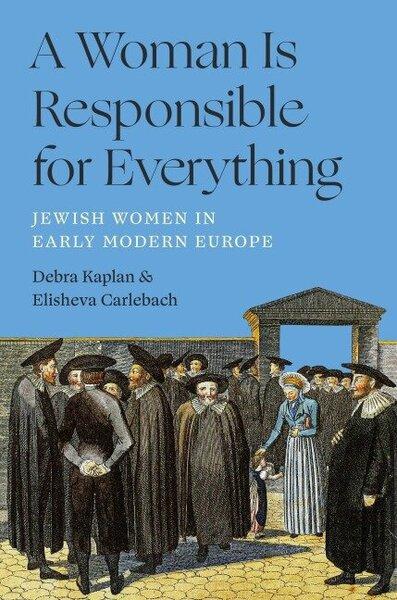 Princeton University Press Woman Is Responsible for Everything: Jewish Women in Early Modern Europe GTIN: 9780691268613 Raamatud A groundbreaking look at the integral role of women in early modern Jewish communal lifeIn small villages, bustling cities, and crowded ghettos across early modern Europe, Jewish women were increasingly active participants in the daily life of their communities, managing homes and professions, leading institutions and sororities, and crafting objects and texts of exquisite beauty. A Woman Is Responsible for Everything marshals a dazzling array of previously untapped archival sources to tell the stories of these woman for the first time.Debra Kaplan and Elisheva Carlebach focus their lens on the kehillah, a lively and thriving form of communal life that sustained European Jews for three centuries. They paint vibrant portraits of Jewish women of all walks of life, from those who wielded their wealth and influence in and out of their communities to the poorest maidservants and vagrants, from single and married women to the widowed and divorced. We follow them into their homes and learn about the possessions they valued and used, the books they read, and the writings they composed. Speaking to us in their own voices, these women reveal tremendous economic initiative in the rural marketplace and the princely court, and they express their profound spirituality in the home as well as the synagogue.Beautifully illustrated, A Woman Is Responsible for Everything lifts the veil of silence that has obscured the lives of these women for too long, contributing a new chapter to the history of Jewish women and a new understanding of the Jewish past. Autorid: Debra Kaplan, Elisheva Carlebach | 0 | Vaata | |||
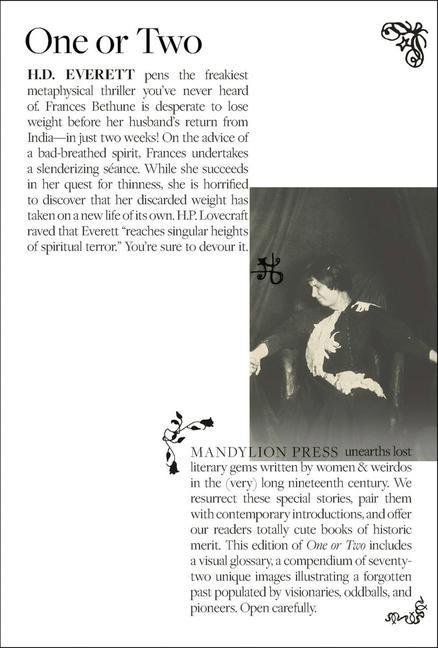 Mandylion Press One or Two For fans of body horror, Everett pens the freakiest metaphysical thriller you've never heard ofFrances Bethune is desperate to lose weight before her husband's return from India--in just two weeks. On the advice of a bad-breathed spirit, Frances undertakes a slenderizing séance. While she succeeds in her quest for thinness, she is horrified to discover that her discarded weight has taken on a new life of its own. Of this chilling, revolting tale, H.P. Lovecraft raved that Everett "reaches singular heights of spiritual terror."This new edition from Mandylion Press restores Everett's 1907 masterpiece. It features an original introduction written by Mandylion cofounder Madeline Porsella, as well as a glossary that provides visual, material and affective image footnotes.Henrietta Dorothy Everett (1851-1923) was born in Kent, England. Between 1896 and 1920, she published 22 books under the pen name Theo Douglas. She was an influential figure in the early days of science fiction and fantasy writing, and was cited in H.P. Lovecraft's extended 1927 essay "Supernatural Horror in Literature." | 0 | Vaata | |||
 Birkhäuser Verlag GmbH NERD III - New Experimental Research in Design: Positions and Perspectives Design has long established itself as an independent research competence. The New Experimental Research in Design (NERD) series seeks to provide a public platform to reflect upon and discuss the specifically experimental dimension of the field. The contributions from researchers from around the world exhibit a diverse and insightful range of approaches, giving rise to further debate and action in the rapidly evolving field. In times of multiple crises - the authors in this volume strive to find tactics of response. They introduce experiments into more-than-human design, co-species production, critical algorithmic immersion, feminist engagements with new materialism and more. From autoethnographic explorations to socially engaged methods, they challenge not just the role of design in these times, but the self-positioning of the designer. | 0 | Vaata | |||
 Princeton University Press Computing in the Age of Decolonization: Indias Lost Technological Revolution GTIN: 9780691268217 Raamatud How Cold War geopolitics and domestic capitalism changed the trajectory of Indias computing industryIndia today is widely recognized for producing world-class tech talent and Silicon Valley leaders, yet captures only a fraction of the global tech industrys profits, primarily providing skilled but inexpensive labor for Western corporations. Computing in the Age of Decolonization uncovers the overlooked history behind this paradox, tracing India's ambitious but ultimately thwarted drive to build a self-reliant computing industry from the 1950s to the 1980s.After independence in 1947, Indian scientists and policymakers at institutions such as the Tata Institute of Fundamental Research saw computing as central to national sovereignty, economic growth, and scientific advancement. Through projects such as the groundbreaking TIFRAC computer and the decisive expulsion of IBM, they aimed for technological independence. But almost immediately, these initiatives faced powerful political and economic headwinds. Indian computer scientists grappled with Cold War politics, international trade imbalances, US corporate monopolies, and strategic decisions by India's technocratic elite, who favored profitable technical services over costly investments in research and manufacturing.In narrating this lost future, Computing in the Age of Decolonization shows that genuine technological independence requires more than technical expertiseit demands addressing enduring political and social structures rooted in colonial legacies. As global struggles over technology intensify, this book reveals how historical pathways continue to shape contemporary battles for technological and economic sovereignty. Autorid: Dwaipayan Banerjee | 0 | Vaata | |||

Otsing: 69126 (arhiveeritud tooted)
41 toodet
0 | Vaata | ||||
0 | Vaata | ||||
| 0 | Vaata | |||
MOTHERCARE rasedusjärgne bandaaz NA542 S GTIN: 5021469126297 Beebitooted | 0 | Vaata | |||
| 0 | Vaata | |||
0 | Vaata | ||||
0 | Vaata | ||||
0 | Vaata | ||||
| |||||
0 | Vaata | ||||
0 | Vaata | ||||
BUDWEG CALIPER Juhthülsikomplekt, pidurisadul 169126 GTIN: 5705444485981 Varuosad | 0 | Vaata | |||
EGT Hoiatuskontakt, piduriklotsi kulumine 691262EGT Tootekood: 691262EGT Varuosad | 0 | Vaata | |||
0 | Vaata | ||||
0 | Vaata | ||||
0 | Vaata | ||||
0 | Vaata | ||||
0 | Vaata | ||||
| 0 | Vaata | |||
vidaXL Keeratud Traadi Aed koos 13 Postiga Roheline 0.5x50 m Teras 3351749 GTIN: 8721158269126 Aia ehitus | 0 | Vaata | |||
0 | Vaata | ||||
| 0 | Vaata | |||
0 | Vaata | ||||
0 | Vaata | ||||
0 | Vaata | ||||
0 | Vaata | ||||
0 | Vaata | ||||
0 | Vaata | ||||
| 0 | Vaata | |||
0 | Vaata | ||||
0 | Vaata | ||||
| 0 | Vaata | |||
0 | Vaata | ||||
0 | Vaata | ||||
0 | Vaata | ||||
Princeton University Press Queer Moderns: Max Ewing's Jazz Age New York GTIN: 9780691267340 Raamatud | 0 | Vaata | |||
0 | Vaata | ||||
0 | Vaata | ||||
0 | Vaata | ||||
| 0 | Vaata | |||
0 | Vaata | ||||
0 | Vaata | ||||







Tulemused 1
– 41 / 41
- Eelmine
- Järgmine
50