See väli sektsiooni diivan komplekt toob moodsat hõngu. Klassi beež polü rattan raam ja hallid padjad teevad sellest mugava kohapealse chillimise. See sobib hästi sinu välistingimustes ala põhjalikuks kaunistamiseks. Ilmastikukindel: Valitud materjalid peavad vastu igasugustele ilmadele, et see kestaks aastaringselt välistingimustes. Suurepärane istumispind: See avar lahendus mahutab mugavalt kuni 11 inimest, ideaalne pidude ja kokku tulekute jaoks. Mitmekülgne seade: Modulaarne disain võimaldab paigutada neid vastavalt soovile, sobib nii rõdudele kui aedadele. Integreeritud salvestus: Nutikas salvestus diivani sees aitab hoida padjad korralikult. Mugavad padjad: Kaasas pehmed polüestrist padjad, et pakkuda mugavat istumist, ideaalne pikemate välistingimustes viibimiste jaoks.p>• Turvalised maksemeetodid: Paypal, pangaülekanne, deebet- ja krediitkaardid, Trustly • Uhiuus toode. 2-aastane garantii sularahas kohaletoimetamise.Tasuta tarne
Of all the French epigrammatic writers, La Rochefoucauld (1613-1680) is at once the most widely known and the most distinguished. Voltaire said: "One of the works that most largely contributed to form the taste of the [French] nation, and to diffuse a spirit of justice and precision, is the collection of maxims by François, duc de La Rochefoucauld; though there is scarcely more than one truth running through the book-that 'self-love is the motive of everything'-yet, this thought is presented under so many varied aspects that it is nearly always striking." And Lord Chesterfield, in his letters to his son: "Till you come to know mankind by your own experience, I know no thing nor no man that can in the meantime bring you so well acquainted with them as La Rochefoucauld: his little book of Maxims, which I would advise you to look into, for some moments at least, every day of your life, is, I fear, too like and too exact a picture of human nature. I own it seems to degrade it, but yet my experience does not convince me that it degrades it unjustly."The Maxims were first published in 1665, under the title "Reflections or sentences and moral maxims"; and the edition of 1678, the fifth, from which the text has been used for the present translation, was the last revised by the author and published in his lifetime (with maxims numbered 1 to 504). Maxims which appeared in previous editions and were suppressed by La Rochefoucauld can be found in the second part, entitled "Maxims withdrawn by the author", here numbered 505 to 583.The French original of this bilingual edition was reviewed by Philippe Renaud. The English translation, originally by John William Willis-Bund and James Hain Friswell, has been thoroughly revised by Rebecca Hazell and Philippe Renaud.
An acclaimed illustrated guide to the world's carnivores--now in an expanded and thoroughly updated new editionThis is an expanded and fully revised new edition of a highly acclaimed guide to the world's carnivores--some of the most specta
Lucy and Tom know a lot of words: they have Books read to them at Bedtime. They know that D is for Dog, like the dogs that live on their street, F is for Friends, and P is for Park and for Playing. Join Lucy and Tom on a journey through their life, in this satisfying alphabet tale from master storyteller, Shirley Hughes.
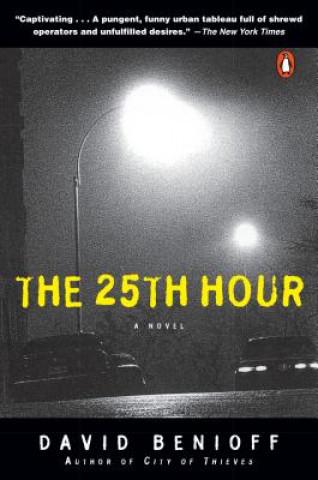
All Monty Brogan ever wanted was to be a fireman. Now he's just got 24 hours before he will start a seven-year stretch in the federal penitentiary for drug dealing. As the minutes count down, Monty seizes one last chance to stack the odds in his favor.
Now in paperback, Sandra Laugier's reconsideration of analytic philosophy and ordinary language. Sandra Laugier has long been a key liaison between American and European philosophical thought, responsible for bringing American philosophers such as Ralph Waldo Emerson, Henry David Thoreau, and Stanley Cavell to French readersbut until now her books have never been published in English. Why We Need Ordinary Language Philosophy rights that wrong with a topic perfect for English-language readers: the idea of analytic philosophy. Focused on clarity and logical argument, analytic philosophy has dominated the discipline in the United States, Australia, and Britain over the past one hundred years, and it is often seen as a unified, coherent, and inevitable advancement. Laugier questions this assumption, rethinking the very grounds that drove analytic philosophy to develop and uncovering its inherent tensions and confusions. Drawing on J. L. Austin and the later works of Ludwig Wittgenstein, she argues for the solution provided by ordinary language philosophya philosophy that trusts and utilizes the everyday use of language and the clarity of meaning it providesand in doing so offers a major contribution to the philosophy of language and twentieth- and twenty-first-century philosophy as a whole. Autorid: Sandra Laugier, Daniela Ginsburg
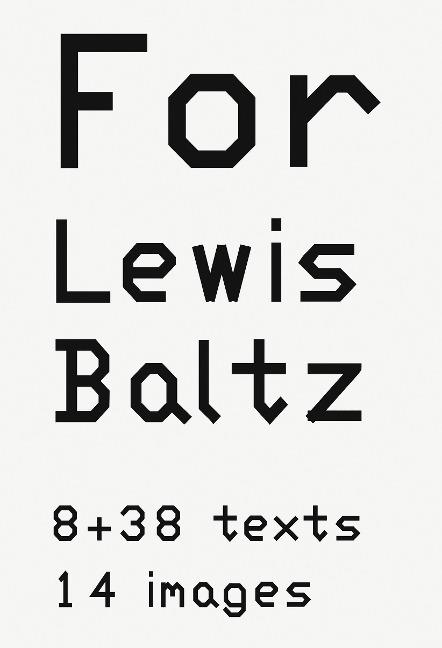
Conceived and edited by artist Slavica Perkovic, this book for Lewis Baltz presents letters she asked Baltz's friends to write to him without seeing the images he had secretly made while teaching in Venice. (Baltz had told all he had stopped photographing; he had in fact continued to do so, walking the empty Lido beach to the Grand Hotel des Bains, then closed for renovation.) The first book of new material by Baltz since his passing in 2014, For Lewis Baltz. 8 + 38 texts. 14 images is shaped by the continuing resonance of his oeuvre, his absence and the complex notion of self.
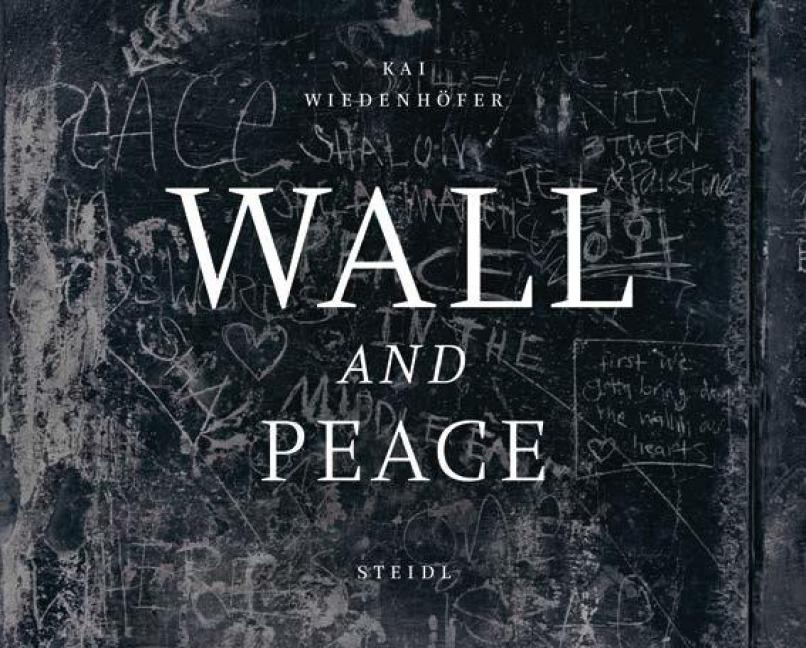
"Good fences make good neighbors"-so goes the proverb. But what makes a good fence? Certainly not one that prevents neighbors from being seen in the first place. Indeed, such divisive barriers create enemies. Peace starts where walls fall, not where they are erected. The Berlin Wall is the best proof of that, says Kai Wiedenhöfer, who witnessed its fall first hand. Wiedenhöfer has photographed separation barriers throughout the world, from Berlin in 1989, to Belfast, Mexico, Ceuta and Melilla, Baghdad-and frequently in Israel, to document the walls with which the country has so comprehensively surrounded itself: at the borders to the West Bank, the Gaza Strip, Egypt and Lebanon. Between 2003 and 2018 he made ten journeys to Israel and the Occupied Palestinian Territories to photograph the fences, walls and checkpoints which the Israeli government is still building. Wiedenhöfer has documented the Israeli-Palestinian conflict over three decades now. His new photos show that the hope of lasting peace in the region is becoming ever more unrealistic in our time. For a wall is a paradox: it intensifies the very violence it seeks to keep in check, and thereby makes further surveillance and fortifications necessary.
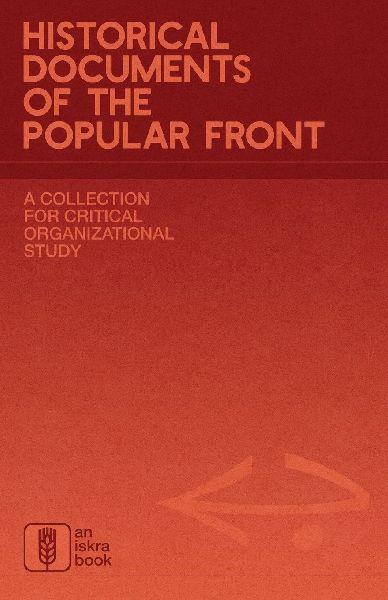
The Palestinian Resistance: Historical Documents of the Popular Front brings together key writings from the Marxist-Leninist Popular Front for the Liberation of Palestine (PFLP), one of the most significant and demonized revolutionary organizations of the modern era. This comprehensive collection traces the organizational and theoretical development of the PFLP from its 1967 founding statement through its most recent political program in 2022.Edited and contextualized for accessibility, these documents reveal the Front's evolving strategies of armed struggle, united front tactics, and political vision in the long fight against Zionism and imperialism. More than a historical archive, this volume is offered as a resource for scholars, organizers, and students of critical organizational studies-demonstrating how revolutionary movements build collective capacity, sustain unity, and adapt across decades of resistance.
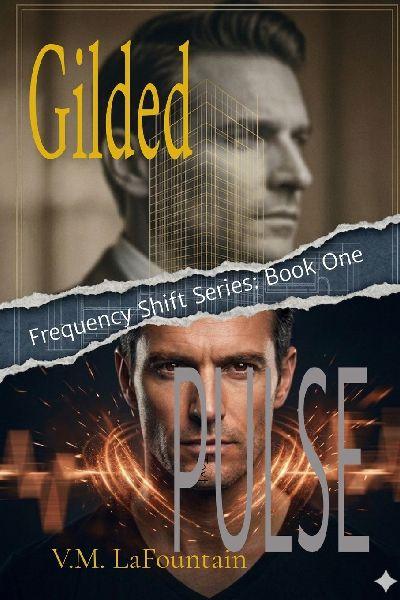
The empire is built on a lie. The foundation is starting to crack.Aidan Langford is a man of precision. As the Harvard-educated heir to the Langford architectural dynasty, he lives by the laws of structural integrity. When a high-stakes merger threatens his family's legacy, Aidan makes the most calculated move of his life: he proposes to Alisha Woods, the glittering, ambitious face of his rival firm. He needs a lioness to help him rule; Alisha, a "viper in silk," is more than happy to take the throne.But while Alisha chases the optics of power, it is her "illegitimate" sister, Alice, who keeps the buildings from falling down.Quiet, brilliant, and systematically erased by her own family, Alice Woods is the true genius behind the firm's most iconic designs. She lives in the shadows, correcting Alisha's lethal architectural blunders in secret-until Aidan Langford starts to look past the polish and see the soul beneath the blueprints.As the merger nears completion, Aidan finds himself pulled between the woman he chose for his image and the woman he can't stop protecting. But in a world where betrayal is the ultimate currency, a "perfect" marriage might just be a death sentence. Aidan is about to learn that the most dangerous cracks aren't in the marble-they're in the people he trusts the most.In the high-octane world of elite architecture, the most beautiful facades hide the darkest rot. And when the pulse of the city shifts, only the strongest foundations will survive.