Suur aedik pakub teie väikestele loomadele piisavalt ruumi õues mängimiseks, söömiseks või magamiseks. Männipuit: männipuit on ilus looduslik materjal. Männipuidul on sirged kiud ja oksakohad annavad materjalile maalähedase ilme.Traatvõrk: aediku traatvõrk aitab ennetada tüütuid olukordi ja ootamatuid õnnetusi. Samuti võimaldab see teil igapäevaselt loomade tegevust jälgida ning tagab teie loomadele laia vaatevälja ja piisavalt värsket õhku.Lihtne puhastada: õueaediku hingedega katus ja külguksed avanevad sujuvalt, muutes puhastamise hõlpsaks.• Tarne 5–7 päeva kõikjale Eestis • Turvalised maksemeetodid: Paypal, pangaülekanne, deebet- ja krediitkaardid, Trustly • Uhiuus toode. 2-aastane garantii sularahas kohaletoimetamise.Tasuta tarne
Donald Trump and Robert Kiyosaki wrote Why We Want You To Be Rich because they saw how the turbulent economic climate would impact the middle class. They predict the middle class in America will continue to shrink--pushing most middle-class Americans into the ranks of the poor. This book inspires middle-class Americans who believe that the American Dream is alive and well to take control of their lives...and take charge of the one thing they have total control over: themselves.
See aia diivanigrupp on ajatult mugav ja stiilne, suunates tähelepanu iga välistingimustes oleva ruumi poolest. Kerge heleduses polürotangi välimus ja mugavad padjad muudavad rõdud või terrassid hubasteks kohtadeks chillimiseks ja vestlemiseks. Ruumikas istumine: Disain mahutab mugavalt kuus inimest, nii et sina ja su sõbrad saate koos chillida ja õues lõõgastuda. On palju ruumi liikuda ja mugavalt istuda. Ilmastikukindel: Valmistatud sünteetilisest polürotangist, see diivanigrupp on loodud taluma ilmastikuolusid, püsides silmapaistva fookusena teie väli alal. Mugavad padjad: Mugavad ja eemaldatavad padjad ideaalne lõõgastumiseks. Lihtne hooldada, katte materjal on vastupidav. Modernne esteetika: Trendikas disain ja puhtad jooned täiustavad iga välimaja, pakkudes samas praktilisi mööbli lahendusi. Mitmekülgne funktsionaalsus: Olgu see suve grill või vaikne õhtu tähtede all, see diivanigrupp sobib igaks sündmuseks, olles suurepärane lisand sinu koju ja elustiili.p>• Turvalised maksemeetodid: Paypal, pangaülekanne, deebet- ja krediitkaardid, Trustly • Uhiuus toode. 2-aastane garantii sularahas kohaletoimetamise.Tasuta tarne
Põhjamaade paigutus, suurus 75%; Juhtmega, traadita ja Bluetooth; RGB-valgustus; Keychron Super lülitid, käigult vahetatavad; Mitmekihiline akustiline sumbuvus
Fulton J. Sheen was an extraordinary priest, author of some sixty books, pastor of a radio and television congregation numbering thirty million, and surely the most loved and celebrated Catholic prelate of the twentieth century. Here, in Sheen's own words, are reflections from his childhood, his years in seminary, his academic career, his extensive travels, his media stardom, and more. A wealth of anecdotes enriches this wide-ranging memoir--stories from his experiences as an orator and preacher, from his many papal audiences, from Vatican Council II. With text enhanced by a wonderful assortment of photographs that capture the flavor and spirit of Sheen's illustrious life, fans young and old will cherish this autobiography for years to come. For it is, without doubt, a lasting testament to a life that was worth living.
What if there was a key that made every prayer more effective--something that would bring all prayers into agreement with the heart of God every single time? This type of praying does exist, says bestselling author and prophetic leader James W. Goll, and it's called prophetic intercession. It is the humble act of holding the needs of people before God while leaning into God's heart for them. There is nothing mystical or elite about this kind of praying, and it's for the new Christian and the most seasoned prayer warrior. All you need is to learn to lean into your heavenly Father and pray what you see and hear in alignment with his heart, empowered by the Holy Spirit. God wants you to align your heart with his. He wants you to pray more effectively in these turbulent times, and he wants you to help usher in the fullness of his purposes on the earth. Are you ready? Autorid: James W. Goll, Cindy Jacobs
If you want to learn to read and know about old handwriting, this is the only book you will need. This is the very first 'teach yourself' book on palaeography, covering all the skills that the genealogist needs to read any document that might be found at any date in English archives. Taking the form of a series of graded exercises in transcription, it works backwards in time from the modern handwriting of the nineteenth century in easy stages to the 'court hands' of the medieval period, focusing on records that are of particular interest to family and local historians. It also provides a unique, self-contained reference guide to palaeography, and to all the different letter forms, symbols and abbreviations that have ever been used in English records. Autorid: Claire Jarvis
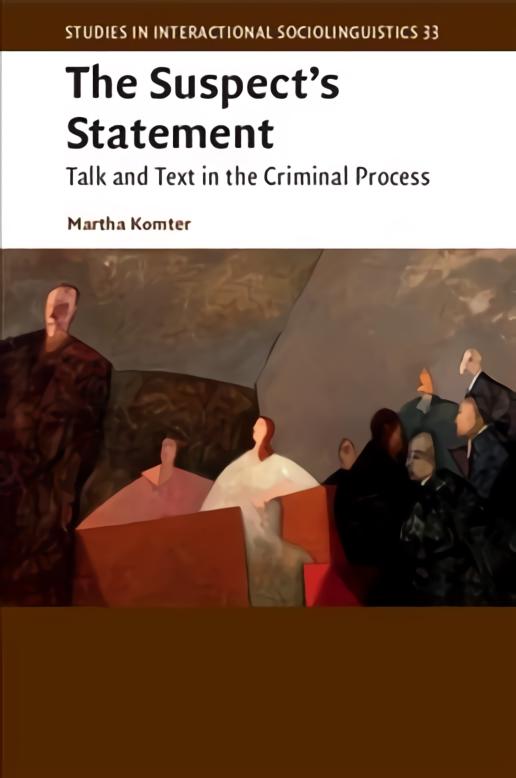
Aimed at linguists and sociologists working on discourse and conversation analysis, as well as scholars of law, this book examines how a suspect's statement is elicited and written down, how it systematically differs from how the statement was spoken, and how it is quoted in court. What suspects tell the police may become a crucial piece of evidence when the case comes to court. But what happens to 'the suspect's statement' when it is written down by the police? Based on a unique set of data from over fifteen years' worth of research, Martha Komter examines the trajectory of the suspect's statement from the police interrogation through to the trial. She shows how the suspect's statement is elicited and written down in the police report, how this police report both represents and differs from the original talk in the interrogation, and how it is quoted and referred to in court. The analyses cover interactions in multiple settings, with documents that link one interaction to the next, providing insights into the interactional and documentary foundations of the criminal process and, more generally, into the construction, character and uses of documents in institutional settings. Autorid: Martha Komter
No study of the Jewish Question is complete without a detailed look at the document known as the Protocols of the Elders of Zion. As mysterious as it is notorious, it has been called the most influential piece of anti-Semitic literature in history-perhaps comparable in importance only to Hitler's Mein Kampf. Nothing like it has ever been produced, before or since. Here we find an express desire for Jewish world domination, along with a plan to attain it. In the Protocols' world-to-come, there will be a Jewish Patriarch, a King of the World, who will guide all humanity on behalf of Jewish interests. Serving at his behest will be the masses of the non-Jews, the detested Goyim, who will gratefully submit to their ruler "of Zionist blood." Written in the form of lecture notes or meeting minutes, this document purports to be a transcription of a talk by an unnamed influential Jew, speaking sometime around the year 1900. It first appeared in draft form in Russia in 1902, and then in its final version as part of a book by Russian writer Sergei Nilus. But little beyond this is certain. It was denounced as a "forgery" in 1922-but is it? And what does that even mean in this context? The Protocols are as compelling and troubling today as ever. This new, highly-readable English translation far surpasses anything in print or the Internet. The volume includes valuable and hard-to-find commentary, from Henry Ford, Alfred Rosenberg, Julius Evola, and others. Read and judge for yourself.