Language: English, Binding: Hardback, Number of pages: 304, Publishers: Princeton University Press, Author: Pete Dunne,Kevin T. Karlson, ISBN-13: 9780691220956, Date of issue: 2024
Imeline MAX Premium Snacks mini-snäkikollektsioon, mille iga kapsel sisaldab kuni 200 elementi, mille abil saad ehitada ja eksponeerida oma lemmiksuupisteid. Kogumiseks on 6 erinevat suupistet. Alates burgeritest kuni jäätise ja sushini!
What a rare mushroom can teach us about sustaining life on a fragile planetMatsutake is the most valuable mushroom in the world―and a weed that grows in human-disturbed forests across the northern hemisphere. Through its ability to nurture trees, matsutake helps forests to grow in daunting places. It is also an edible delicacy in Japan, where it sometimes commands astronomical prices. In all its contradictions, matsutake offers insights into areas far beyond just mushrooms and addresses a crucial question: what manages to live in the ruins we have made?A tale of diversity within our damaged landscapes, The Mushroom at the End of the World follows one of the strangest commodity chains of our times to explore the unexpected corners of capitalism. Here, we witness the varied and peculiar worlds of matsutake commerce: the worlds of Japanese gourmets, capitalist traders, Hmong jungle fighters, industrial forests, Yi Chinese goat herders, Finnish nature guides, and more. These companions also lead us into fungal ecologies and forest histories to better understand the promise of cohabitation in a time of massive human destruction.By investigating one of the world's most sought-after fungi, The Mushroom at the End of the World presents an original examination into the relation between capitalist destruction and collaborative survival within multispecies landscapes, the prerequisite for continuing life on earth.
A multifaceted history of Ho Chi Minhs climactic victory over French colonial might that foreshadowed Americas experience in VietnamOn May 7, 1954, when the bullets stopped and the air stilled in Dien Bien Phu, there was no doubt that Vietnam could fight a mighty colonial power and win. After nearly a decade of struggle, a nation forged in the crucible of war had achieved a victory undreamed of by any other national liberation movement. The Road to Dien Bien Phu tells the story of how Ho Chi Minh turned a ragtag guerrilla army into a modern fighting force capable of bringing down the formidable French army.Taking readers from the outbreak of fighting in 1945 to the epic battle at Dien Bien Phu, Christopher Goscha shows how Ho transformed Vietnam from a decentralized guerrilla state based in the countryside to a single-party communist state shaped by a specific form of War Communism. Goscha discusses how the Vietnamese operated both states through economics, trade, policing, information gathering, and communications technology. He challenges the wisdom of counterinsurgency methods developed by the French and still used by the Americans today, and explains why the First Indochina War was arguably the most brutal war of decolonization in the twentieth century, killing a million Vietnamese, most of them civilians.Panoramic in scope, The Road to Dien Bien Phu transforms our understanding of this conflict and the one the United States would later enter, and sheds new light on communist warfare and statecraft in East Asia today. Autorid: Christopher Goscha
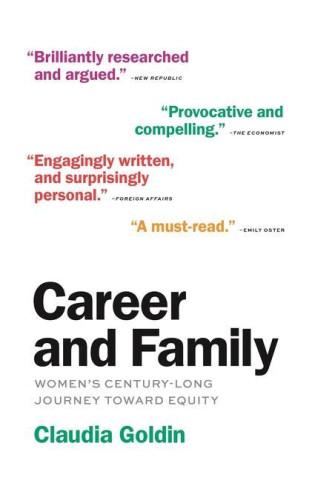
Language: English, Binding: Paperback, Number of pages: 344, Publishers: Princeton University Press, Author: Claudia Goldin, ISBN-13: 9780691228662, Date of issue: 2023
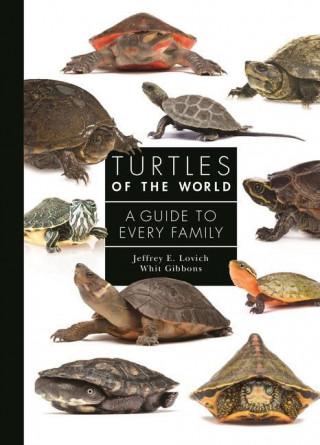
Language: English, Binding: Hardback, Number of pages: 240, Publishers: Princeton University Press, Author: Jeffrey E. Lovich,J. Whitfield Gibbons, ISBN-13: 9780691223223, Date of issue: 2021
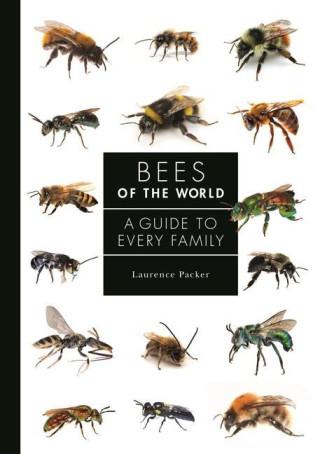
Language: English, Binding: Hardback, Number of pages: 240, Publishers: Princeton University Press, Author: Laurence Packer, ISBN-13: 9780691226620, Date of issue: 2023
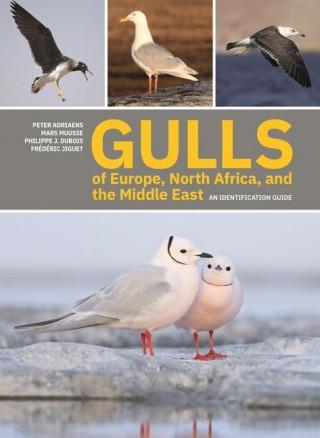
A comprehensive photographic guide to the gull species of the Western PalearcticGulls occupy a particularly important place in the world of birds. But because they are notoriously difficult to identify, they have been relatively neglected in the ornithological literature. Gulls of Europe, North Africa, and the Middle East offers the most up-to-date guide for gull identification in Europe and beyond. With a direct and visual approach, and an abundance of beautiful color photographs, this book provides thorough accounts of all species and subspecies of gulls found in the Western Palearctic. The guide compares similar taxa and addresses the complexities of identifying hybrids. Gulls of Europe, North Africa, and the Middle East will be the standard work for identifying these birds for some time to come.Richly illustrated with nearly 1,400 color photographsThorough accounts of all species and subspecies of gulls found in the Western PalearcticUp-to-date information for easy and accurate identification of 45 species
Language: English, Binding: Paperback, Number of pages: 248, Publishers: Princeton University Press, Author: Manon Garcia, ISBN-13: 9780691223209, Date of issue: 2023
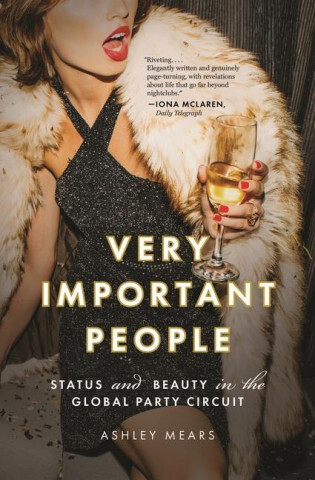
Language: English, Binding: Paperback, Number of pages: 328, Publishers: Princeton University Press, Author: Ashley Mears, ISBN-13: 9780691227054, Date of issue: 2021
"At the age of 33, Tullia Ciceronis died from complications due to childbirth. Her father, the consul Marcus Tullius Cicero, was utterly distraught, as his contemporary letters and passages in the Tusculan Disputations make clear. And in an effort to grieve, Cicero did something new in world history: for the first time, he wrote a consolation speech-not for others, as had always been done, but for himself. This was his coping strategy, and it prefigures the Meditations of Marcus Aurelius and so many other thinkers throughout history who write letters to themselves. Cicero's Consolation was lost in antiquity. In the Renaissance, a philologist named Charles (Carlo) Sigoni recreated the speech. He gathered all the extant quotations and, on the analogy of restoring missing pieces of sculpture or lost paintings, he drew on everything he could find in Cicero to write a new speech that effectively recreated the lost one. And for a while, it worked. For centuries many great scholars believed Sigoni really had discovered the speech, rather than recreated it. Alas, subsequent scholarship has proven the opposite. Signoni very probably did write it. But the authorship question is less important than the contents. The speech shows that Sigoni knew all the conventionsof the Consolation genre, and the historical events of Tullia's life, at least as well as any scholar then or now. It is a masterpiece: a fascinating read in Classical Latin, and it deserves a wide audience"-- An engaging new translation of a timeless masterpiece about coping with the death of a loved oneIn 45 BCE, the Roman statesman Cicero fell to pieces when his beloved daughter, Tullia, died from complications of childbirth. But from the depths of despair, Cicero fought his way back. In an effort to cope with his loss, he wrote a consolation speechnot for others, as had always been done, but for himself. And it worked. Ciceros Consolation was something new in literature, equal parts philosophy and motivational speech. Drawing on the full range of Greek philosophy and Roman history, Cicero convinced himself that death and loss are part of life, and that if others have survived them, we can, too; resilience, endurance, and fortitude are the way forward.Lost in antiquity, Ciceros Consolation was recreated in the Renaissance from hints in Ciceros other writings and the Greek and Latin consolatory tradition. The resulting masterpiecetranslated here for the first time in 250 yearsis infused throughout with Ciceros thought and spirit.Complete with the original Latin on facing pages and an inviting introduction, Michael Fontaines engaging translation makes this searching exploration of grief available to readers once again. Autorid: Marcus Tullius Cicero, Michael Fontaine
How to sustain an international system of cooperation in the midst of geopolitical struggleCan the international economic and legal system survive todays fractured geopolitics? Democracies are facing a drawn-out contest with authoritarian states that is entangling much of public policy with global security issues. In Global Discord, Paul Tucker lays out principles for a sustainable system of international cooperation, showing how democracies can deal with China and other illiberal states without sacrificing their deepest political values. Drawing on three decades as a central banker and regulator, Tucker applies these principles to the international monetary order, including the role of the U.S. dollar, trade and investment regimes, and the financial system.Combining history, economics, and political and legal philosophy, Tucker offers a new account of international relations. Rejecting intellectual traditions that go back to Hobbes, Kant, and Grotius, and deploying instead ideas from David Hume, Bernard Williams, and modern mechanism-design economists, Tucker describes a new kind of political realism that emphasizes power and interests without sidelining morality. Incentives must be aligned with values if institutions are to endure. The connecting tissue for a system of international cooperation, he writes, should be legitimacy, creating a world of concentric circles in which we cooperate more with those with whom we share the most and whom we fear the least. Autorid: Paul Tucker
Why you dont have a selfand why thats a good thingIn Losing Ourselves, Jay Garfield, a leading expert on Buddhist philosophy, offers a brief and radically clear account of an idea that at first might seem frightening but that promises to liberate us and improve our lives, our relationships, and the world. Drawing on Indian and East Asian Buddhism, Daoism, Western philosophy, and cognitive neuroscience, Garfield shows why it is perfectly natural to think you have a selfand why it actually makes no sense at all and is even dangerous. Most importantly, he explains why shedding the illusion that you have a self can make you a better person.Examining a wide range of arguments for and against the existence of the self, Losing Ourselves makes the case that there are not only good philosophical and scientific reasons to deny the reality of the self, but that we can lead healthier social and moral lives if we understand that we are selfless persons. The book describes why the Buddhist idea of no-self is so powerful and why it has immense practical benefits, helping us to abandon egoism, act more morally and ethically, be more spontaneous, perform more expertly, and navigate ordinary life more skillfully. Getting over the self-illusion also means escaping the isolation of self-identity and becoming a person who participates with others in the shared enterprise of life.The result is a transformative book about why we have nothing to loseand everything to gainby losing our selves. Autorid: Jay L. Garfield
A radical new approach to economic policy that addresses the symptoms and causes of inequality in Western society todayFueled by populism and the frustrations of the disenfranchised, the past few years have witnessed the widespread rejection of the economic and political order that Western countries built up after 1945. Political debates have turned into violent clashes between those who want to take their country back and those viewed as defending an elitist, broken, and unpatriotic social contract. There seems to be an increasing polarization of values. The Economics of Belonging argues that we should step back and take a fresh look at the root causes of our current challenges. In this original, engaging book, Martin Sandbu argues that economics remains at the heart of our widening inequality and it is only by focusing on the right policies that we can address it. He proposes a detailed, radical plan for creating a just economy where everyone can belong.Sandbu demonstrates that the rising numbers of the left behind are not due to globalization gone too far. Rather, technological change and flawed but avoidable domestic policies have eroded the foundations of an economy in which everyone can participateand would have done so even with a much less globalized economy. Sandbu contends that we have to double down on economic openness while pursuing dramatic reforms involving productivity, regional development, support for small- and medium-sized businesses, and increased worker representation. He discusses how a more active macroeconomic policy, education for all, universal basic income, and better taxation of capital could work together for societys benefit.Offering real answers, not invective, for facing our most serious political issues, The Economics of Belonging shows how a better economic system can work for all. Autorid: Martin Sandbu
"One of the most important books on political regimes written in a generation."Steven Levitsky, New York Timesbestselling author of How Democracies DieA new understanding of how and why early democracy took hold, how modern democracy evolved, and what this teaches us about the futureHistorical accounts of democracys rise tend to focus on ancient Greece and pre-Renaissance Europe. The Decline and Rise of Democracy draws from global evidence to show that the story is much richerdemocratic practices were present in many places, at many other times, from the Americas before European conquest, to ancient Mesopotamia, to precolonial Africa. Delving into the prevalence of early democracy throughout the world, David Stasavage makes the case that understanding how and where these democracies flourishedand when and why they declinedcan provide crucial information not just about the history of governance, but also about the ways modern democracies work and where they could manifest in the future.Drawing from examples spanning several millennia, Stasavage first considers why states developed either democratic or autocratic styles of governance and argues that early democracy tended to develop in small places with a weak state and, counterintuitively, simple technologies. When central state institutions (such as a tax bureaucracy) were absentas in medieval Europerulers needed consent from their populace to govern. When central institutions were strongas in China or the Middle Eastconsent was less necessary and autocracy more likely. He then explores the transition from early to modern democracy, which first took shape in England and then the United States, illustrating that modern democracy arose as an effort to combine popular control with a strong state over a large territory. Democracy has been an experiment that has unfolded over time and across the worldand its transformation is ongoing.Amidst rising democratic anxieties, The Decline and Rise of Democracy widens the historical lens on the growth of political institutions and offers surprising lessons for all who care about governance. Autorid: David Stasavage
"How international relations theory can be applied to a zombie invasionWhat would happen to international politics if the dead rose from the grave and started to eat the living? Daniel Drezner's groundbreaking book answers the question that other international relations scholars have been too scared to ask. Addressing timely issues with analytical bite, Drezner looks at how well-known theories from international relations might be applied to a war with zombies. Exploring the plots of popular zombie films, songs, and books, Theories of International Politics and Zombies predicts realistic scenarios for the political stage in the face of a zombie threat and considers how valid-or how rotten-such scenarios might be.With worldwide calamity feeling ever closer, this new apocalyptic edition includes updates throughout as well as a new chapter on postcolonial perspectives"-- "A post-COVID update to this student-friendly book of IR theory"-- How international relations theory can be applied to a zombie invasionWhat would happen to international politics if the dead rose from the grave and started to eat the living? Daniel Drezners groundbreaking book answers the question that other international relations scholars have been too scared to ask. Addressing timely issues with analytical bite, Drezner looks at how well-known theories from international relations might be applied to a war with zombies. Exploring the plots of popular zombie films, songs, and books, Theories of International Politics and Zombies predicts realistic scenarios for the political stage in the face of a zombie threat and considers how validor how rottensuch scenarios might be.With worldwide calamity feeling ever closer, this new apocalyptic edition includes updates throughout as well as a new chapter on postcolonial perspectives. Autorid: Daniel W. Drezner
A provocative book that demystifies Chinas great democratic leap backward under Xi Jinping, revealing why the countrys embrace of capitalism has given rise to hard authoritarianism, mass surveillance, and one-man rule instead of democracy as many in the West had hopedWhen China embarked on its transformative journey of modernization in 1979, many believed the countrys turn toward capitalism would put its totalitarian past to rest and mark the birth of a democratic, open society. Instead, China reverted to a neo-totalitarian state, one backed by one of the fastest-growing, most formidable economies on earth. The Broken China Dream pulls back the curtain on the regime of strongman Xi Jinping, revealing why the reforms of the post-Mao era have been reversed on nearly every frontand why the world failed to see it coming.Exposing the truth behind Chinas economic ascendency after the Cultural Revolution, Minxin Pei shows how, following Maos death in 1976, Deng Xiaoping strategically deployed the tools of capitalism to preserve the Chinese Communist Party. Deng kept intact the institutional foundations of totalitarianism even as he unleashed private entrepreneurship and courted foreign investment, giving Chinas one-party state control of a vast repressive apparatus and the most critical sectors of the economy. Only a fragile balance of power among dueling factions prevented the rise of a totalitarian leader in the two decades after the Tiananmen crackdown in 1989but this temporary equilibrium collapsed.Essential to understanding todays China, this meticulously researched book is a sobering account of why the countrys reformers and institutions could not stop a shrewd and ruthless politician like Xi from resurrecting dormant totalitarian practices that, for the foreseeable future, have spelled the end of Chinas dream of a free and prosperous society. Autorid: Minxin Pei
Deaf people are usually regarded by the hearing world as having a lack, as missing a sense. Yet a definition of deaf people based on hearing loss obscures a wealth of ways in which societies have benefited from the significant contributions of deaf people. In this bold intervention into ongoing debates about disability and what it means to be human, experts from a variety of disciplines-neuroscience, linguistics, bioethics, history, cultural studies, education, public policy, art, and architecture-advance the concept of Deaf Gain and challenge assumptions about what is normal. Through their in-depth articulation of Deaf Gain, the editors and authors of this pathbreaking volume approach deafness as a distinct way of being in the world, one which opens up perceptions, perspectives, and insights that are less common to the majority of hearing persons. For example, deaf individuals tend to have unique capabilities in spatial and facial recognition, peripheral processing, and the detection of images. And users of sign language, which neuroscientists have shown to be biologically equivalent to speech, contribute toward a robust range of creative expression and understanding. By framing deafness in terms of its intellectual, creative, and cultural benefits, Deaf Gain recognizes physical and cognitive difference as a vital aspect of human diversity. Contributors: David Armstrong; Benjamin Bahan, Gallaudet U; Hansel Bauman, Gallaudet U; John D. Bonvillian, U of Virginia; Alison Bryan; Teresa Blankmeyer Burke, Gallaudet U; Cindee Calton; Debra Cole; Matthew Dye, U of Illinois at UrbanaChampaign; Steve Emery; Ofelia GarcÍa, CUNY; Peter C. Hauser, Rochester Institute of Technology; Geo Kartheiser; Caroline Kobek Pezzarossi; Christopher Krentz, U of Virginia; Annelies Kusters; Irene W. Leigh, Gallaudet U; Elizabeth M. Lockwood, U of Arizona; Summer Loeffler; Mara LÚcia Massuti, Instituto Federal de Santa Catarina, Brazil; Donna A. Morere, Gallaudet U; Kati Morton; Ronice MÜller de Quadros, U Federal de Santa Catarina, Brazil; Donna Jo Napoli, Swarthmore College; Jennifer Nelson, Gallaudet U; Laura-Ann Petitto, Gallaudet U; Suvi PylvÄnen, Kymenlaakso U of Applied Sciences; Antti Raike, Aalto U; PÄivi RainÒ, U of Applied Sciences Humak; Katherine D. Rogers; Clara Sherley-Appel; Kristin Snoddon, U of Alberta; Karin Strobel, U Federal de Santa Catarina, Brazil; Hilary Sutherland; Rachel Sutton-Spence, U of Bristol, England; James Tabery, U of Utah; Jennifer Grinder Witteborg; Mark Zaurov. Autorid: H-Dirksen L. Bauman, Joseph J. Murray
The complex and multifaceted relationship between economic factors and conflictIn this book, Stephen Brooks provides a systematic empirical and theoretical examination of how economic factors influence security affairs. Empirically, he analyzes how economic variables of all kinds affect interstate war, terrorism, and civil war; in total, sixteen pathways are examined. Brooks shows that the relationship between economic factors and conflict is complex and multifaceted; discrete economic factorssuch as international trade, economic development, and globalized manufacturing, to name a feware sometimes helpful for promoting peace and stability, but at other times are detrimental. Brooks also develops a stronger theoretical foundation for guiding future research on the economics-security interaction. Drawing on Adam Smith, he provides a more complete range of answers to the three key conceptual questions analysts must consider: how economic goals relate to security goals; what economic factors to focus on; and how economic actors influence security policies.Combining an innovative theoretical understanding with empirical rigor, Brookss account will reshape our understanding of the political economy of security. Autorid: Stephen G. Brooks
A major new biography that reveals how politics profoundly shaped Joyces life, thought and writingsThe young James Joyce (18821941) was forged in the smithy of Irish political controversies, and he took into his European exile a depth of political insight unrivalled among his fellow modernists. In this biography of Joyce in his youth and early exile, acclaimed Irish historian and biographer Frank Callanan reveals a Joyce who is markedly more politically conscious, informed and complex than the Joyce of Richard Ellmanns classic account. Written in a sparkling style and rich with historical insights, Callanans deeply researched biography is the first sustained account of how Joyces Irish and European political and cultural context shaped his life, thought, and writings.Joyce was eight years old in 1890 when the OShea divorce scandal tore Irish nationalism apart, leading to the split in the Irish Parliamentary Party, the death of nationalist leader Charles Stewart Parnell, and a long, bitter period dominated by the anti-Parnellites. This was the Ireland that Joyce grew up in and rebelled against, and which determined his literary direction. Callanan uncovers a Joyce who was a highly original and dissenting Irish nationalist, who refused to avow or vaunt his nationalism and whose understanding was refined by the experience of living in multicultural Trieste with its fraught ethnic politics and differing models of statehood. Callanans Joyce is as heroic as Ellmanns defiantly modernistic artist but in a more interesting waya writer who didnt lack political conviction but whose views didnt yield to the expectations of his time.Energizing, witty, profound, and elegant, James Joyce: A Political Life is a magisterial biography that will transform how readers look at Joyce and his politics. Autorid: Frank Callanan, Robert Spoo