This stunningly illustrated book takes readers on a journey through the history of Italian automotive design, showcasing some of the most iconic and beloved models from the 1920s to the early 2000s. Delving deep into the craftsmanship and artistry o
To great writers, Walter Benjamin once wrote, "finished works weigh lighter than those fragments on which they labour their entire lives." Conceived in Paris in 1927 and still in progress when Benjamin fled the Occupation in 1940, "The Arcades Project" (in German, Das Passagen-Werk) is a monumental ruin, meticulously constructed over the course of 13 years - "the theatre," as the author called it, "of all my struggles and all my ideas." Focusing on the arcades of 19th century Paris - glass-roofed rows of shops that were early centres of consumerism - Benjamin presents a montage of quotations from, and reflections on, hundreds of published sources, arranging them in 36 categories with descriptive rubrics such as "fashion," "boredom," "dream city," "photography," "catacombs," "advertising," "prostitution," "baudelaire," "theory of progress." His central preoccupation is what he calls the commodification of things -a process in which he locates the decisive shift to the modern age. This book is Benjamin's effort to represent and to critique the bourgeois experience of 19th century history, and, in so doing, to liberate the suppressed "true history" that underlay the ideological mask.In the bustling, cluttered arcades, street and interior merge and historical time is broken up into kaleidoscopic distractions and displays of ephemera. Here, at a distance from what is normally meant by "progress," Benjamin finds the lost time(s) embedded in the spaces of things.
William Klein (born 1928) is a photographer who has always moved against the current. A painter, filmmaker, graphic designer and fashion photographer, Klein grew up in New York but has been based in Paris since 1948. His shots are often intense and immediate, disrupting the established order of things and capturing fragmented snatches of distortion and movement. Although best known for his images of New York in the 1950s, he has also worked in other urban environments, including Tokyo and Moscow, as well as producing a striking series of painted contact sheets. Throughout his varied body of work, his insatiable desire to confront the chaos of the world shines through.
Over the last 35 years, Steven C. Hayes and his colleagues have developed Acceptance and Commitment Therapy (ACT) with many hundreds of studies supporting the impact of his approach on everything from chronic pain to weight loss to prejudice and bigotry. A Liberated Mind is the summary of Steven's life's work which will teach readers how to live better, happier and more fulfilled lives by applying the six key processes of ACT.Put together these processes teach us to pivot: to "defuse" rather than fuse with our thoughts; to see life from a new perspective; and to discover our chosen values, those qualities of being that fuel meaning. Steve shares fascinating research results like how ACT techniques decreased typing errors on a clerical test or showed that positive affirmations actually increase negative emotion. And he weaves them with stories of clients and colleagues as well as his own riveting story of healing himself of a severe panic disorder, which is how the idea of psychological flexibility was born.A Liberated Mind is a powerful and important book about a new form of psychology, destined to become a modern classic of narrative psychology on par with Daring Greatly and Rising Strong by Brene Brown, or Carol Dweck's Mindset.
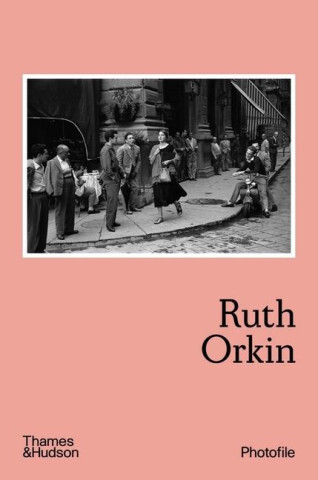
The perfect primer on American photographer, photojournalist and filmmaker Ruth Orkin. Ruth Orkin (1921–85) always dreamed of becoming a filmmaker, and although that ambition was thwarted until later in her career, she quickly found other ways of engaging with the world of images. She was given her first camera at the age of ten and by the age of seventeen, she was cycling across America from Los Angeles to New York, documenting her trip in albums of annotated photographs.In the early 1940s she settled in New York, joining the Photo League and making her name with photo stories for major magazines such as Life, Look and This Week. In images that range from celebrity portraits to bird’s-eye views from her apartment window, from children at play to the experiences of a lone American tourist in Italy, Orkin’s photography always retains a cinematic sense of the passage of time and allows the humanity and charisma of her subjects to shine through.
Accompanying catalogue for the Marina Abramović exhibition at the Royal Academy from 23 September – 1 January 2024. Over the past half century, Marina Abramović has earned worldwide acclaim as a pioneer of performance art. This handsome new book rec
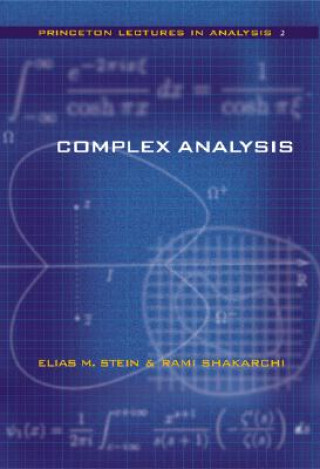
With this second volume, we enter the intriguing world of complex analysis. From the first theorems on, the elegance and sweep of the results is evident. The starting point is the simple idea of extending a function initially given for real values of the argument to one that is defined when the argument is complex. From there, one proceeds to the main properties of holomorphic functions, whose proofs are generally short and quite illuminating: the Cauchy theorems, residues, analytic continuation, the argument principle. With this background, the reader is ready to learn a wealth of additional material connecting the subject with other areas of mathematics: the Fourier transform treated by contour integration, the zeta function and the prime number theorem, and an introduction to elliptic functions culminating in their application to combinatorics and number theory. Thoroughly developing a subject with many ramifications, while striking a careful balance between conceptual insights and the technical underpinnings of rigorous analysis, "Complex Analysis" will be welcomed by students of mathematics, physics, engineering and other sciences."The Princeton Lectures in Analysis" represents a sustained effort to introduce the core areas of mathematical analysis while also illustrating the organic unity between them. Numerous examples and applications throughout its four planned volumes, of which "Complex Analysis" is the second, highlight the far-reaching consequences of certain ideas in analysis to other fields of mathematics and a variety of sciences. Stein and Shakarchi move from an introduction addressing "Fourier" series and integrals to in-depth considerations of complex analysis; measure and integration theory, and Hilbert spaces; and, finally, further topics such as functional analysis, distributions and elements of probability theory.
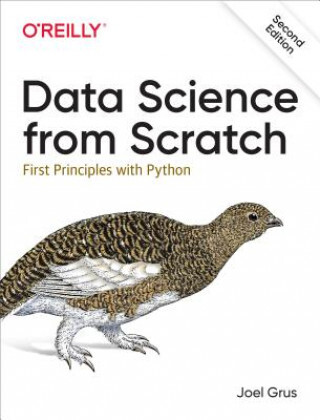
With this updated second edition, you'll learn how many of the most fundamental data science tools and algorithms work by implementing them from scratch.