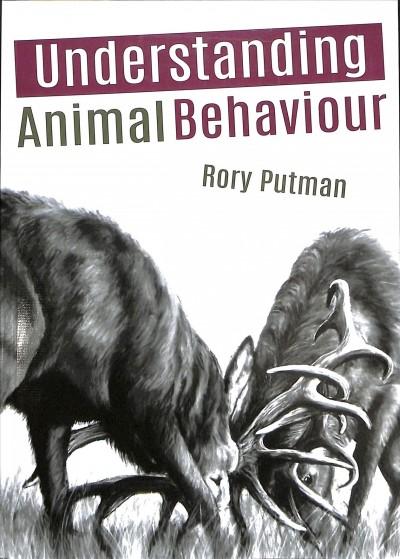
 Porto Press Ltd Understanding Animal Behaviour GTIN: 9781849953306 Raamatud This accessible introduction to animal behaviour provides an authoritative yet reader-friendly guide for the interested naturalist. It presents current knowledge about the way animals behave and will enable the reader to derive more pleasure from their observations of animals by gaining a deeper understanding of their behaviour. The concepts are presented in an easily appreciated way with which everyone can associate.In the first part of the book, the author explores how animals behave by considering the physical processes involved in the way animals perceive their environment and what determines how they respond to it. This is followed by the 'why' of animal behaviour in which the author examines many topics under the overall issue of expressing behaviour, and the evolutionary forces that have shaped - and continue to shape - the detailed form of more complex behaviours. Therefore questions such as why animals forage in the way they do and how that foraging pattern may be refined to optimal efficiency; why animals adopt a particular reproductive strategy and breeding behaviour and why some animals live as solitary individuals, while others live in groups and so on. The book is copiously illustrated throughout in support and interpretation of the text. While the pictures enhance understanding of the written text, the text also showcases the exquisite illustrations of wildlife artist Catherine Putman. Autorid: Rory Putman | 1 | 28,64 € | Vaata | ||
 Porto Press Ltd Archie's Lights: The Life and Times of a Scottish Lightkeeper GTIN: 9781849953993 Raamatud Born at a clifftop lighthouse in 1910, Archies life was spent in the world of Scottish lighthouses he was one of the third generation of his family in the service of the Northern Lighthouse Board. Archies stories have gripped listeners of all ages and have now been compiled by Anne MacEachern. Written in Archies words, this account portrays the man and reveals a past way of life. From peacetime through war, dealing with goats, shipwrecked sailors or German spies, the story brings vividly to life the challenges of living and working at a lighthouse, including raising a young family at such an isolated and potentially dangerous place. Many characters appear at various lights, each with their own personality and often annoying habits. Short-term transfers took place in and just after World War 2 when communications and transport were particularly difficult. There were hardships and rewards, and a mystery to solve: the well-known disappearance of three keepers at the Flannan Isles in 1900. The men had to be and were remarkably resourceful and courageous, although not all could stand the isolation and dangers at offshore pillar rock lights, especially in wartime. The sea ruled their lives creating idyllic periods on sunny, calm days but being uncontrollably destructive for much of the time. Like his colleagues, Archie upheld to the best of his ability the ideal of their Service, For the Safety of All, but in his younger days he was not afraid to speak up and press, with others, for better conditions. His service as a full-time keeper continued in part-time capacities, extended over a period of 67 years. Through this mans keen eye, the reader will meet people, birds, animals and situations from a lifetime of service; a revealing glimpse into this close-knit world. There is also humour, often that dry Highland humour, which adds spice to the telling; in Archies case a fondness for wild places and dried figs helped. Autorid: Archie MacEachern, Anne MacEachern | 1 | 28,64 € | Vaata | ||
 Porto Press Ltd Inn Search of Birds: Pubs, People and Places GTIN: 9781849955065 Raamatud Most birders keep lists of the species birds they have seen, but do any keep a list of pub birds, that is birds on pub signs and in pub names? This book is about these pub birds, their natural histories, folk-histories and those of the pubs that bear their names, some of the people involved in the story, and the memories that pub birds have evoked over a birding lifetime. This may appear to be a niche aspect of birding but before the advent of modern technology, pubs in good birding spots were often the best place to find out from other birders Whats about?, preferably over a pint. On the eastern edge of the Yorkshire Dales at the entrance to Wensleydale, are four pubs all named after Black Swans within a five-mile radius. Intriguing, but why there? They sparked John Lawtons interest in pub birds and the list that began then spans eleven years, based on a sample of 711 pubs named after birds or things that are bird-related. There are 117 identifiable species of birds, 17 non-specific birds (for example duck), and four mythical species, plus 35 pubs named after bird-related things. Technical stuff aside, pub birds are fun. Whilst being as accurate and informative as possible, this book is not meant to be too serious. Whilst plain vanilla swans get boring, the Swan and Cemetery (in Bury), the Swan and Railway (in Wigan) and three pubs called The Swan with Two Necks (in Bristol, Clitheroe and Wakefield) cry out for an explanation. As do two Welsh pubs both called The Goose and Cuckoo in Llanover (Monmouthshire) and Llangadog (Carmarthenshire). The resulting aviary of 117 species doesnt quite range from A to Z, but the list does run from The Blackbird on Earls Court Road in London to a Yellow Wagtail in Yeovil. The book covers the commonest pub birds, why they are so named, their geography and history, and also pub birds in art, literature and music. There is even a short chapter on nests, babies, feathers and bird paraphernalia. Throughout, the author has woven some of his fondest memories of pub birds into the story and from time-to-time he may even have gone into the pub for a pint. Autorid: John Lawton | 1 | 28,64 € | Vaata | ||
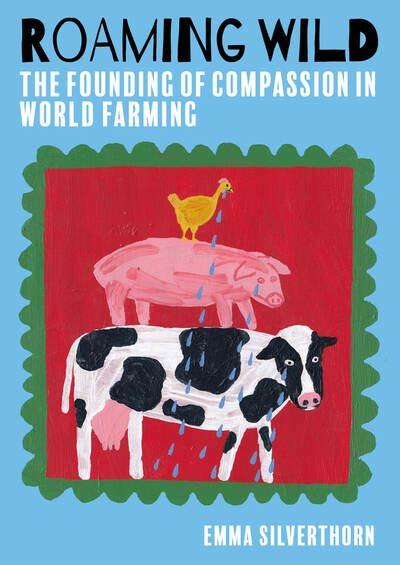 Porto Press Ltd Roaming Wild: The Founding of Compassion in World Farming GTIN: 9781849955430 Raamatud Roaming Wild details the unconventional and pioneering lives of Anna and Peter Roberts, a British couple who were instrumental in making the animal welfare movement a respectable, highly-impactful and worldwide organisation. This book explores the paths that led Anna and Peter to found and steward what is now the world's largest and most successful animal welfare charity from a backroom of their own home, with few funds, and at a time when caring for animals and our planet was seen as 'crankish' and 'sentimental'. This is the story of their family, their era, influence, their rebellion and prophetic ideas and the development of Compassion in World Farming. It spans the period from the early 1920s when they were born, throughout the decades of their childhoods and World War II, to their highly romantic meeting and marriage in the 1950s, and then the next years of their lives as dairy and chicken farmers in rural Hampshire. This 'ordinary' part of their story preceded their move to change everything by making the 'extraordinary' decision during the tumultuous 1960s, of risking their livelihood, going vegetarian (as animal farmers), and losing the approval of their peers, to found their compassion-driven campaign. This personal transformation was at a time when the British countryside was also transforming, irrevocably and for the worse, when intensive, polluting farms were just taking root, the cruel battery and broiler system had recently been developed, and the countryside's biodiversity was being destroyed with the implementation of monoculture and the profligate spraying of lethal biocides, such as DDT. The Roberts were at first rejected by the popular animal charities of the day; believing that the public cared only about companion animals or those in circuses, rather than those animals who suffer the most at human hands those in the food chain and so the Roberts family went out alone and set up CIWF in the face of much public derision. Then followed the highs and lows of campaign life, a court battle with an order of veal-farming Catholic monks, famine campaigns in Ethiopia, work alongside comedian Spike Milligan, model Celia Hammond and philosopher Peter Singer, challenging EU legislation, and battles with agricultural and chemical giant Monsanto. Corporate giants like McDonald's were influenced to go free-range, even the British Royal family was challenged to go free-range, and animals were put on the agenda of every major political party in the 1970s and much more. The story interweaves the personal with the political and documents the highs and lows of family life, the judgement faced when they chose to raise their three daughters as vegetarians in the 1960s, their myriad spiritual quests, including the couple's time spent in the Indian ashram of Sathya Sai Baba, their rewilding of the land near their family home, and the story of their fifty-year love. This is a tale of an 'ordinary couple with an extraordinary vision'. Autorid: Emma Silverthorn | 1 | 28,64 € | Vaata | ||
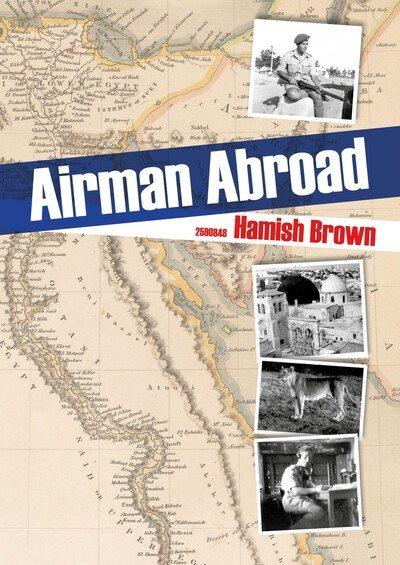 Porto Press Ltd Airman Abroad GTIN: 9781849955409 Raamatud A revealing picture of a time when Britain was losing its empire. It draws on letters written at the period by an airman, his vivid memories and experiences from the Canal Zone, Kenya during Mau Mau times, Cyprus and Jerusalem. His time encompassed conducting church services, being shipwrecked, numerous wildlife encounters and the formation of many lifelong friendships. The Canal Zone was no easy life and 50 years later a medal was awarded when the government was forced to admit it was deserved and to confess its own political chicanery in the events. Hamish paints a picture of the highs and lows of RAF life, a station being run down in Egypt, working in oppressive heat and now and then being shot at! He saw the Windrush a week before it exploded and sank in the Mediterranean; both the Windrush story and that of building the Suez Canal are detailed in an appendix. There is much to find in this story including background histories to events and the politics of the time. As a whole it provides a fascinating account of the era. Autorid: Hamish Brown | 1 | 28,64 € | Vaata | ||
 Porto Press Ltd Wonder of Africas Natural History GTIN: 9781849955348 Raamatud This book opens up a wonderland of natural history for all ages to enjoy, and will spark interest in the intricate web of Africas natural history, one that is bursting with exuberance, a great variety of life. It covers a vast range of topics that are often neglected, and reveals untold mysteries hidden in this remarkable continent. It is written in a readable and clear style that allows the reader to gain an appreciation of its continent-wide approach, which is based upon half a century or more of knowledge. Delving into the intricate fossil history found in Africa, The Wonder of Africas Natural History describes some of the largest dinosaurs that walked this earth and extraordinary giant mammals of the Pleistocene, to the largest mammal that still survives to this day. It also encompasses the tiny mites that reside inside animals ears and the remarkable maggot that finds a home in the sole of the elephants foot. This book discusses creatures great and small. The remarkable variety of animals described explores their colours, behaviours, displays of weapons and the meanings behind the differences. The book explains the animals everyday lives, co-habitations, and how the large carnivores live alongside their prey. The reader is transported into their world from birth, through growing up to their social interactions. Fantastic migrations showing the exuberance of life are described from butterflies to wildebeest and elephants and the once huge increases in number of the springbok in South Africa. The Wonder of Africas Natural History unfolds a great diversity of life from swamp to forest, rivers and lakes, each with their particular creatures. It shows how an antelope or the bizarre naked mole rat can survive in arid environments. It transports us across the vast panorama of the beautiful plains of Africa, revealing how they are exploited and how the real battles in Nature are fought among the small species, the myriad of insect forms. The co-evolution of the whole community is an astonishingly amazing tangled web of life, having its origin over 300 million years ago. This book is a natural history to be enjoyed by all. Autorid: Clive Spinage | 1 | 27,29 € | Vaata | ||
 Porto Press Ltd Structural Safety: Theory & Practice GTIN: 9781849951524 Raamatud We all depend on infrastructure for civilised living with the scale and sophistication of what we build ever increasing. Manifestly we all have a vested interest in construction being safe, and yet failures occur. Not infrequently these failures are catastrophic and accompanied by huge cost and occasional loss of life. Avoiding such tragedies is every engineer's desire but how to do it is not straightforward. Nor is it straightforward to respond the question of: is this project safe? Nonetheless, progress can be made by laying down guidelines of what makes structures safe and by studying the pattern of past failures as a basis for predicting what might go wrong. This assists by drawing on the author's considerable career experiences of observation, study and practice. The opening chapter describes the general challenges of making structures safe taking account of uncertainty and the consequence of failure, and it also describes the evolution of safety thinking which nowadays includes issues of worker safety and health. Subsequent chapters discuss what is meant by both failure and safety and describe various safety attributes that ought to be targeted. Even over the last 50 years, structural methodologies for analysis and design have evolved to reflect the way we collectively think is the best to assure safe structures. Many of the notions used are rather abstract and so can best be appreciated by learning from what has gone wrong in the past. Unfortunately there is no shortage of precedents. Hence all subsequent chapters covering human error, material failures, construction failures and fire follow a general pattern of describing the problem, accompanied by examples illustrating how failures have arisen in practice. It will be apparent that common themes recur. Engineered structures protect societies, so some of the biggest challenges we face are of designing against the possibility of man-made or environmental catastrophe. Most readers will be familiar with the occurrence of natural events such as storm, flood and earthquake and so two chapters are devoted to man-made and natural hazards. Occupational health and safety, plus designers' legal obligations to assure these, are described in another chapter. The final chapter concerns Avoiding Failure and deals with concepts such as hazards and risk and the procedures that can be followed to minimise the probability of serious failure occurring. Autorid: Allan Mann | 1 | 131,25 € | Vaata | ||
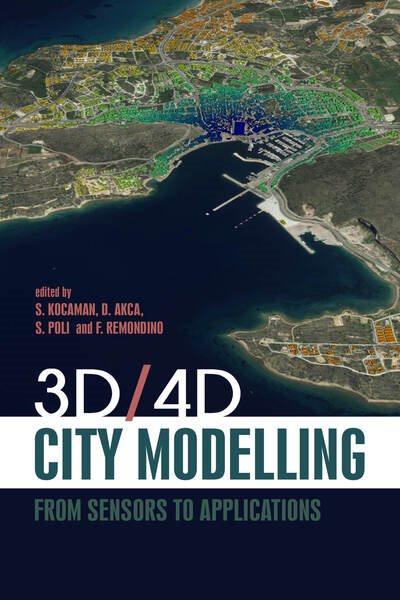 Porto Press Ltd 3D/4D City Modelling: From Sensors to Applications GTIN: 9781849954754 Raamatud This book provides theoretical and practical insights into city modelling from a geomatics perspective. It offers a critical discussion of state-of-the-art solutions for the geometric and semantic generation of 3D city models, their management and maintenance in GIS environments, and also their representation and visualization. In addition it also provides examples of real-world applications with two successful applications of city model databases used at national level. 3D and 4D (space and time) city modelling emanates from advances in the creation and use of 2D maps and through technical developments using database management systems to the point where a city model actually becomes the main geometrical unit of a 3D geographical information system (GIS) environment. 3D spatial queries open up new horizons for many application areas, such as ecosystem modelling and simulations, integration of indoor data with the help of building information models (BIM), etc. Furthermore, semantic information associated with the 3D data enables spatiotemporal querying and analysis. 3D city models and GIS empower the smart city concepts and are inevitably crucial for smart management of cities in which the majority of humans live. This increasing trend to implement 3D city models and monitor/store their changes in time in a 3D GIS environment has brought the need for more studies of every stage in their production, management and presentation. These stages range from data collection and processing to 3D object reconstruction and model generation, spatial and non-spatial data management, and representation. With chapters contributed by internationally recognized experts 3D/4D City Modelling provides a broad overview of the different aspects of the subject and brings together the theoretical information and best practices that comprise the major components of the city modelling process. It synthesises the technological and methodological advancements in geospatial information science and geoinformatics with special focus on 3D city models. Autorid: Sultan Kocaman, Devrim Akca, Daniela Poli, Fabio Remondino | 1 | 77,25 € | Vaata | ||
 | |||||
 Porto Press Ltd Wild Places, Wild Encounters: Exploring Edinburghs Living Landscape GTIN: 9781849955713 Raamatud This is a book about Edinburgh and what you may find if you really look hard enough. It is also a book book about reconnecting to nature wherever we find ourselves living and the personal benefits that can ensue. It explores how we can appreciate the natural world on our doorstep in line with the latest research from a range of disciplines, including ecology, outdoor and environmental education, learning for sustainability and mindfulness studies. It does so by means of a blend of encounter-based photography, connection with nature and reading the landscape. There has been a tendency for people to lose contact with nature. The industrial growth society generated a catalogue of ecological disasters including acid rain, the hole in the ozone layer, the sixth mass extinction and climate collapse. Slowly, we are waking up to the fact that this society is fundamentally extractive and exploitative and the burden of costs has shifted onto the environment and future generations. In appreciating and understanding the enormity of this crisis, we risk compounding it with the mental health crisis that is sweeping the globe. Healing that relationship requires us to slow down and to seek reconnection with nature which can help revitalise and sustain us. Life passes by all too fast when we are oblivious to natures presence and are unable to be fully involved in nature. Wild Places, Wild Encounters provides the means to break this cycle. The books essence is essentially about reconnecting with and learning to relate to nature as explored in these wanderings through the green heart of Scotlands capital city and the wild nature reserves of the Lothians. Nature is still there, all around us. Autorid: Glen Cousquer | 1 | 28,64 € | Vaata | ||
 Porto Press Ltd Men who Invented Britain: An Illustrated Introduction to Great British Engineers GTIN: 9781849955683 Raamatud The book is a collection of inter-linked essays, each dealing with a significant figure in the emergence of Britain as an industrial powerhouse in the 18th, 19th and early 20th centuries. It is illustrated with drawings, patents, early historic images and John Hannavy's acclaimed original contemporary photography of the machines and buildings which were key components in that history. The engineers are explored chronologically with links backwards and forwards to show who and what influenced them, and their influences on those who followed them. Many of them worked towards the same outcomes either together, in parallel, or sequentially and all left their marks on today's Britain.Walking in the footsteps of Samuel Smiles, this profusely illustrated book covers around 250 years, from James Brindley's early canal-building through John Smeaton's Eddystone Lighthouse, James Watt's steam engines, James Nasmyth's steam hammer, Isambard Kingdom Brunel's iron ships and Henry Bessemer's steel-making to William Arrol's bridges taking in William Fairbairn, William Murdoch, Thomas Telford, William Jessop, John Rennie, John Scott Russell, The Lighthouse Stevensons, the Railway Stephensons, William Armstrong and others along the way. This highly illustrated book provides an accessible account of many of the key players in this most fascinating era in Britain's industrial development. Author hometown: Wiltshire An engaging and liberally illustrated read featuring the amazing inventions of a number of British engineers during the 18th, 19th and early 20th centuries. Autorid: John Hannavy | 1 | 28,64 € | Vaata | ||
 Porto Press Ltd Other Landscape New edition GTIN: 9781849955850 Raamatud Neil M Gunn, one of Scotlands most distinguished 20th century authors, wrote over a period of 30 years, starting in 1926 and ending in 1956 with his so-called spiritual autobiography The Atom of Delight. Two years before this he wrote his last novel, The Other Landscape, the setting being the east coast of Scotlands most northerly mainland county. This provides the perfect backdrop a fishing hotel and its English residents, the local ghillies who served them, and a solitary white house near the cliffs in which the occupant, a man from the South, lives alone. Add to this the Major, a retired military officer-cum-diplomat, who quickly shows himself to be an insensitive and overbearing man, disdainful of his fellows and aggressive towards those who challenge his views or show any form of disrespect towards him. His paternalistic behaviour towards the local community masks a contempt for it. Life in the hotel is lightened on a more mundane level by two incidents, both directly relating to the Major a false alarm over a drowning incident and a fire in his bedroom, both of which end happily, but with a damaging loss of face for the Major and much amusement for the guests and staff at the hotel. Juxtaposed with the sporting life at the hotel, and in a subtle way connected to it, is the fate of the solitary and bereaved occupant of the white house. The shadow of death, both present and past, hangs over the house and blends with the palette of second sight and the strong phenomenon of recurrence, when patterns of events inexplicably repeat themselves. The reader is thus invited to consider the realities of life and death and the inherent tragedies that are contained within them, but in the end is presented with a glimpse of hope and renewal. Autorid: Neil M. Gunn, Dairmid Gunn | 1 | 16,49 € | Vaata | ||
 Porto Press Ltd Half-Light: and Other Short Stories GTIN: 9781849950459 Raamatud Neil M. Gunn is celebrated as one of Scotland's foremost novelists of the 20th century. Less well known is that he was also a perceptive and meditative essayist and accomplished writer of short stories. Most of his short stories were written in the 1920s and 1930s in parallel with his early novels, which they influence and inform. This collection draws some of its short stories from two previous collections but others are published for the first time. Although most are set against a Highland background, they are not in any way parochial; they touch on universal themes, which invite the serious reader to ponder and enjoy. Topics explored are: childhood and a sense of wonder; love in its deepest and most subtle sense; death as part of the cycle of existence and the place of land and sea in the development of those in search of greater self-understanding. The stories are attractive in their own right and have a freshness and immediacy that give a clarity and accessibility to the rich subject matter. They are also a gateway to a greater understanding of Gunn's essential thinking on life and living. Autorid: Neil Gunn | 1 | 25,94 € | Vaata | ||
 Porto Press Ltd Girl Who Killed A Nation: When Worlds Collide Caithness GTIN: 9781849955966 Raamatud A shocking but true African story that will change readers perceptions. Travel with the author to the South African bush in search of the teenage girl who caused the death of 40,000 of her own people in 1856. The Girl who Killed a Nation is a fast-paced tale that is deeply reflective, readable and down to earth, and will draw in lovers of travel, history, and personal memoir. It is a true African story that will change readers perceptions. How did a teenage girl cause the death of 40,000 of her own people in 1856 and why do some compare her to an African Joan of Arc or Greta Thunberg? Was she a black liberation leader, a malicious liar or the disruptor of a conservative patriarchal society? Join Treive Nicholas on a moving physical and spiritual journey from the Wild Coast of South Africa to a highly symbolic grave in Cambridgeshire, England as he searches for the infamous teenage prophetess Nongqawuse leader of the popular mass movement known as the Great Cattle Killing (185657). Fate is his constant companion, gently leading him to the rivers, woods and pastures where mercurial spirits, kings, prophets, witch doctors and colonial leaders played out this visceral African story in the cauldron of nine wars, settler invasion and cruel natural disasters. The ripples of this almost unbelievable tragedy are still felt today. On the grassy hills of the Eastern Cape, Treive concludes the South African leg of his pilgrimage, holding an open-air court at the grave of the revered amaXhosa ruler, King Hintsa. The verdict on his death? Bloody regicide, at the hands of Sir Harry Smith, the Hero of Aliwal and darling of Victorian society. After recovering from four tropical diseases, and much to Treives great surprise, the journey does not end there. Instead, it all comes uncomfortably closer to home. Much closer. Autorid: Treive Nicholas | 1 | 28,64 € | Vaata | ||
 Porto Press Ltd They Once Were Shipbuilders, 1 GTIN: 9781849954433 Raamatud Leith-Built Ships is a testimony to the skill of the men who built the ships and to the many men and women who may have sailed or served on them. This history is brought together in vol. I of a three-volume series about the almost-forgotten part that Leith played in our great maritime heritage and is the culmination of the authors lifetime experience of shipbuilding. Most people may well be aware of the part played by the great shipbuilding centres in the UKs history but many may be unaware of the part played by the shipbuilders of Leith. This port was once Scotlands main port with many firsts to its name. Leith had begun building ships some 400 years before the great shipyards of the Clyde and these vessels reached all corners of the globe, touching many peoples lives. Some had sad histories while others took part in some of the great conflicts of the times; many were just ordinary working vessels that carried their crew safely through long working lives. With a pedigree of shipbuilding second to none going back over 660 years of recorded history, the ships built at Leith deserve their place in history and this book begins the story. Autorid: R. O. Neish | 1 | 25,94 € | Vaata | ||
 Porto Press Ltd World of Geology: Travels to Rock Places GTIN: 9781849954372 Raamatud A core component of the natural world is the geology, in the rocks and the landforms that have been created by their erosion. The plants that cover so much of the world's land areas, ant the myriad animals that inhabit each environment, form the wonderful world of nature, but the backdrops to all of them are the landscapes that are the world of geology. So many of the world's great natural attractions - the sites, the sights, the national parks, the wow places that folk travel to see - are features of their geology, with landforms that range from awe-inspiring to simply beautiful. And then there are so many more terrains and landscapes that have great stories to tell. Travelling the world, always armed with a camera, led to the author compiling a substantial collection of photographs, many of which reflected his own interests in their geological theme. This has grown into a worldwide overview of just a fraction of the magnificent sights, both natural and influenced by mankind, that make the geological world so totally fascinating and frequently so beautiful. Within these pages, the photographs and their short, accompanying texts offer just a taste of the visual delights within the world of geology. They constitute a grand tour across the surface of our planet, taking in as many as possible of our most spectacular and most fascinating sites. The whole book is perhaps best viewed as a glorious journey of discovery. Autorid: Tony Waltham | 1 | 28,64 € | Vaata | ||
 Porto Press Ltd Grey Wolves of Eriboll 2nd edition GTIN: 9781849951654 Raamatud The surrender of the German U-boat fleet at the end of World War II was perhaps the principal event in the war's endgame which signified to the British people that peace really had arrived. It is little known that the majority of the surrenders of U-boats on active west-European sea patrols in May 1945 were supervised in Loch Eriboll, an isolated sea loch on Scotland's far north-westernmost coast. The U-boats were part of Hitler's plan to starve the British Isles of food, raw materials and equipment vital for the prosecution of the war - a plan that failed. With an estimated 160 U-boats on active patrol at the end of the war, it was imperative that these boats were made aware of the capitulation of German armed forces, that they accepted the surrender arrangements and then proceeded, surfaced, to designated British ports. Loch Eriboll's attraction as the reception port was its isolation and its safe, deep-water anchorage - ideal for the arrival of armed U-boats that might still be intent on one last show of defiance. News of the momentous event was heavily censored - nothing appeared in the local press. Thirty-three U-boats, their officers and men surrendered between 10th and 22nd May 1945. The boats were arrested, boarded and disarmed; in some cases this vital exercise was completed by the simple expedient of lobbing ammunition, explosives and torpedo pistols overboard! Each U-boat has been positively identified and detailed information provided including contemporary photographs, boat or flotilla emblem, together with the coordinates of where each boat was eventually destroyed in the north Atlantic. However, not all were destroyed by the Allies, some were retained by the British, American, Russian or French navies as spoils of war but the vast majority were lost accidentally or scrapped with the passage of time. The Grey Wolves of Eriboll includes a wealth of historical insights including the German Surrender Document; detailed descriptions of the construction, service careers and circumstances of each surrendered U-boat; details of the frigates that supervised the surrenders; Operation Deadlight (a hasty plan to ensure the U-boats could not again be used aggressively) and contemporary newspaper reports. The pivotal role played by Loch Eriboll in ending the U-boat menace is little-known and lesser celebrated - this book rights that wrong. Autorid: David M. Hird | 1 | 28,64 € | Vaata | ||
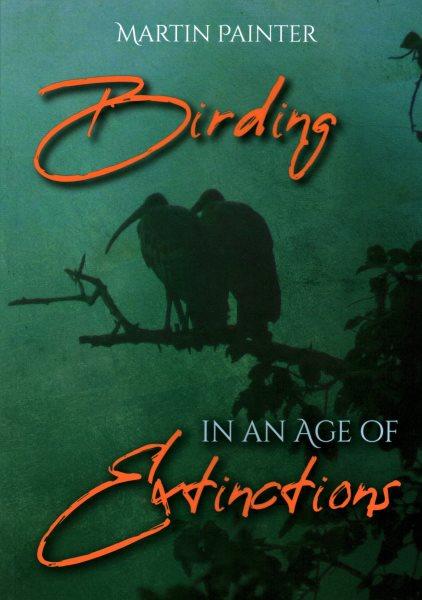 Porto Press Ltd Birding in an Age of Extinctions GTIN: 9781849954877 Raamatud This is a book about what its like being a birder in an age of natural decline. It is part autobiographical tales of spell-binding birding encounters that left indelible memories and it is part reflective. The travellers tales of birding adventures are about places and events that were variously entertaining, amusing, captivating, inspiring, exciting and awesome, literally. They also feature the amazing, eccentric, dedicated, inspiring people in the birding community. Travels to Madagascar, Cambodia, India and many other places are recalled. There is birding in the Himalayas, in the Australian outback, on the Southern Oceans and in hotel gardens and city parks and there are tales of the big listers, big-lensers, professional guides, and local conservation workers who try to keep their habitats safe for us. There are lots of images to accompany these stories. Martins experiences in becoming a birder late in life revealed some strange behaviour which he soon learnt to take for granted as a member of the birding community. Why tear off chasing the next tick when we were having such a good time in the forest we were already exploring? Why was seeing a rare parrot in a cage less significant than seeing a wild one that was being hand-fed in a nature reserve? Why was he visiting all those rubbish tips and sewerage farms in search of birds when birding excursions to a forest or a natural wetland were so much more pleasing? There are chapters about all of these puzzles and oddities, and more their origins and, in some cases, how they shape our behaviour in somewhat perverse ways on authentic birding, the origins and importance of the life list, on rarities and trophy birds, and why the idea of a species is elusive yet so important. All these tales and reflections are shaped by birding during an extinction crisis and the growing biodiversity crisis. As he observed trashed habitats and vanishing bird populations during his travels, Martins growing dismay and alarm about these issues coloured everything. So he came to ponder what birders are doing in response, whether it is for good or harm. There is the paradox of extinction birding it is not difficult today to see some vanishingly rare birds, because they are hanging on in reserved, fenced spaces, kept alive by artifices such as captive breeding. Because our visits to these places provide funds, we are also among these species last hopes for survival. Is this the best we can do? More self-reflection among all birders is necessary. Faced with the growing crisis, we can all do better. Autorid: Martin Painter | 1 | 28,64 € | Vaata | ||
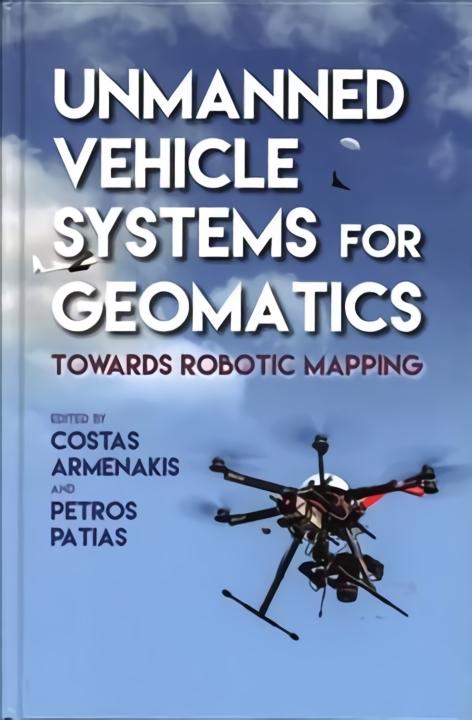 Porto Press Ltd Unmanned Vehicle Systems for Geomatics: Towards Robotic Mapping GTIN: 9781849951272 Raamatud This book contributes to the transformative and revolutionary use of small, unmanned vehicle systems for three-dimensional geospatial data acquisition and mapping, which is considered to be a paradigm shift in the science and technology of geomatics.The book presents a systematic and comprehensive approach for the use of small mobile unmanned systems for robotic geomatics research and applications. Emphasis is placed on aerial unmanned mapping systems as aerial data collection provides better perspective and coverage of an area, and offers the ability for targeted coverage.After considering background information on current systems and technologies, the book presents photogrammetric fundamentals and advanced methodologies, addresses both platform and control segments, discusses sensors, communication, and payload aspects, emphasises automatic aspects of sensor localization and exploration and mapping of the environment It offers several application cases, from monitoring changes in arctic regions to precision agriculture and archaeology, presents challenges and emerging technologies and discusses the market trends and the roadmap ahead. Autorid: Costas Armenakis, Petros Patias | 1 | 117,75 € | Vaata | ||
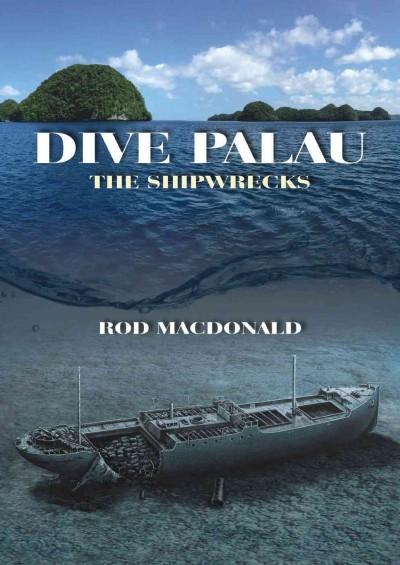 Porto Press Ltd Dive Palau: The Shipwrecks GTIN: 9781849951708 Raamatud Recounted with his usual level of meticulous historical research, Rod weaves an easily readable account of the build-up to and implementation of Operation Desecrate 1 - the raid undertaken to destroy Japanese ships and aircraft in the lagoons of Palau. He uses his intimate knowledge of shipwrecks to reveal in glorious detail each of the 20 major Japanese WWII shipwrecks lying at the bottom of the Palauan lagoons today. On 30th March, 1944 Grumman F6F Hellcat fighters made an Initial fighter sweep of the lagoon to destroy Japanese air cover. Simultaneously Grumman Avenger torpedo-bombers dropped their mines in the channels around the lagoon to block Japanese ships attempting to escape the following onslaught. With the Japanese naval fortress quickly becoming a prison and with Japanese air cover quickly destroyed, successive group strikes of torpedo bombers and dive-bombers swept over the lagoon, sinking the shipping and destroying the airfields. Palau was neutralised as a Japanese naval and air base in a repeat of the same Task Force 58 raid, Operation Hailstone, on Truk Lagoon 1,000 miles to the east just six weeks earlier. Today, 20 major Japanese WWII shipwrecks lie in the beautiful clear waters of the tropical paradise of Palau surrounded by reefs and coral wall drop-offs. A number of long-lost wrecks have recently been relocated including a Japanese freighter filled with depth charges and Army helmets. This was found in 1989 but remained unidentified until now - after painstaking research Rod reveals her identify for the first time in the book. Each wreck is covered in detail and is supported by underwater photography and by fabulous illustrations by renowned artist Rob Ward. The shipwrecks of Palau are now revealed. Autorid: Rod Macdonald | 1 | 43,50 € | Vaata | ||
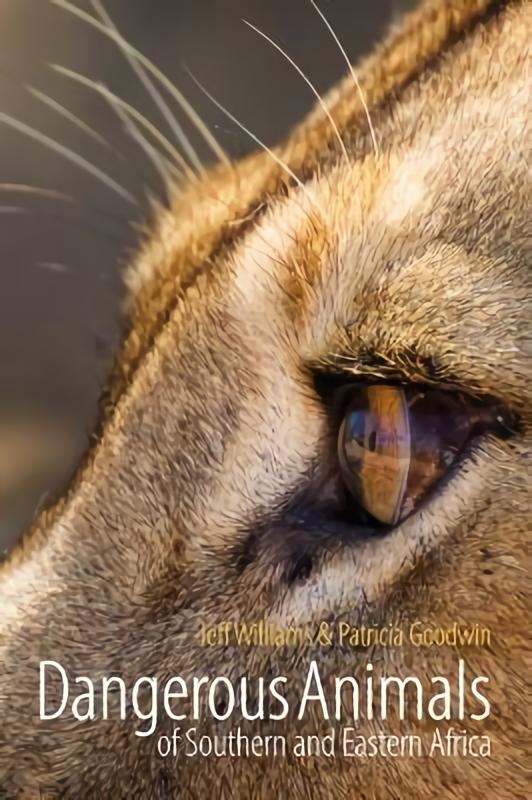 Porto Press Ltd Dangerous Animals of Southern and Eastern Africa GTIN: 9781849955799 Raamatud This book provides a comprehensive, detailed, evidence-based review of the seven animals officially described as 'dangerous' by the professional association of Field Guides in South Africa. To this number the authors have added crocodiles. The text embraces the anatomical, physiological and behavioural aspects of the animals and aims to provide such up-to-date and evidence-based information as is available at the time of writing. It was developed in part for apprentice guides studying so-called dangerous game who might need a concise yet thorough, evidence-based learning tool to supplement their lectures. The decision to limit the book to 'dangerous game' was mainly due to the fact that most visitors to the bush, when asked by their guide what they most wished to see, give the name of one of these animals. This is notwithstanding the enthusiasm of all guides to interest their guests in every aspect of the bush and not limit their exposure to the large and/or dangerous species. Describing and discussing the key features of each animal within one volume makes this valuable to all users, whether used in the bush, for study or general interest. It should be borne in mind that, with some rare exceptions of ill-luck, almost everything you meet in the bush need not actually be dangerous for those who are sensible, prepared and educated. But it is vital to remember that we, the visitors, professionals and guests, are the interlopers. We are on their turf. The authors are two qualified Field Guides who have travelled through the African Bush both in vehicles and on foot for over 25 years. As well as qualifying to lead parties on foot in dangerous game areas they have spent a considerable period of time teaching apprentice guides at a well-known guiding school in South Africa. Autorid: Jeff Williams, Patricia Goodwin | 1 | 43,43 € | Vaata | ||
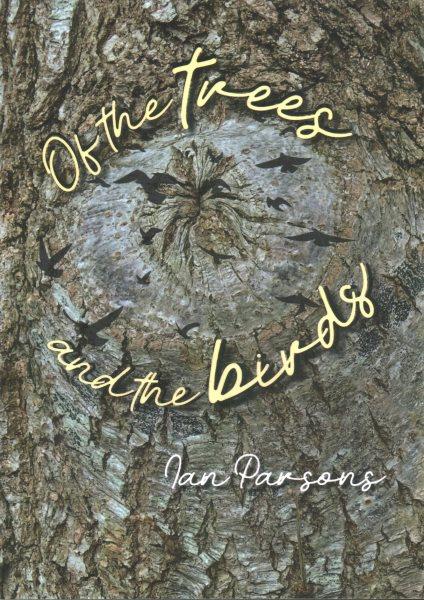 Porto Press Ltd Of the Trees and the Birds GTIN: 9781849955744 Raamatud Trees and birds go together, and they have done for millions of years, evolving long before we did. Over their long and shared history, they have formed numerous relationships, some of which are basic and obvious to us, like a bird using a tree to perch in whilst searching for food. Others are more intricate, but still noticeable to us, with the classic example being that many tree species use birds to propagate their next generation by providing their seed wrapped in nutritious food parcels that we call berries. But even this relationship can be more involved than it at first seems, with some trees using lethal methods to ensure that they get the seed courier method they want, whilst other trees use ultraviolet signals to inform the birds that the berries are ready and even change the shade of the berry to indicate whether it is best eaten in the evening or the morning. And then there are those relationships that we are only just beginning to discover that lead to a whole host of fascinating questions: can birds identify individual tree species? Can trees talk to birds, can they ask them for help? The intimate links between trees and birds are extremely intricate, they can be invisible to us, they can be incomprehensible to us, but they are always amazing. Of the Trees and the Birds considers how these may have started and where we are today in our understanding of them. Sometimes we misunderstand those relationships and sometimes our actions result in their breakdown which can be catastrophic for entire ecosystems. We need to be aware of these relationships marvel at and celebrate them after all the history of Britain would be very different without them. Nature is amazing in all aspects! Autorid: Ian Parsons | 1 | 28,64 € | Vaata | ||
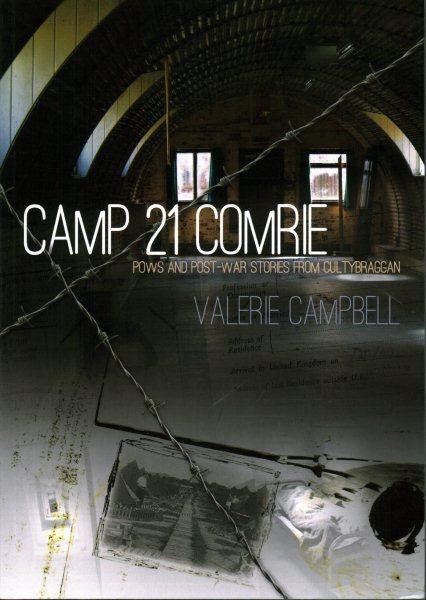 Porto Press Ltd Camp 21 Comrie: Pows and Post-War Stories from Cultybraggan GTIN: 9781849952279 Raamatud Camp 21 Comrie, also known as Cultybraggan Camp, is the UK's best preserved prisoner of war camp. Lying in the heart of rural Perthshire in Scotland, the camp's history is a fascinating one. Built two miles south of the village of Comrie as a camp for detainees, its first prisoner was a British soldier but in the following years it housed thousands of prisoners of war captured in North Africa and Europe. Conditions at the camp were primitive but there was a re-education programme which is explored in depth. Lectures were followed by occasional hot debates and the book takes a fresh look at the infamous murder of Feldwebel Wolfgang Rosterg, who may not have been the only man subjected to a fanatical show trial within the bounds of the camp. In addition, life stories of some of the prisoners are included, from submariners to ordinary soldiers as well as reminiscences from the British.The history of Camp 21 would be incomplete without mentioning Rudolf Hess, Adolf Hitler's deputy. He was allegedly held at the camp but was he really there or was this just a myth? And do the ghosts of the past still haunt the site as reported by some who've witnessed strange goings on? The book also features the camp's history during the Cold War, its ROC post and Cold War bunker and as late as the 1960s and '70s it was used by the Combined Cadet Forces for training purposes, as well as regiments that served in areas of conflict overseas. Following its closure it is now owned by the Comrie Development Trust. Autorid: Valerie Campbell | 1 | 25,94 € | Vaata | ||
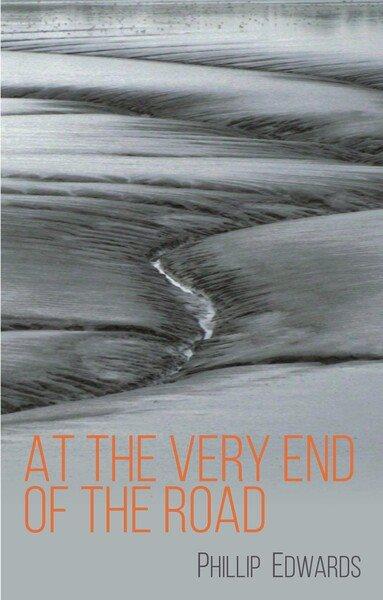 Porto Press Ltd At the Very End of the Road GTIN: 9781849954976 Raamatud At the very end of the road is a six-bar metal gate. It is chained and padlocked and marks the exact line where the tarmac stops. Beyond that is a track, twelve pasture and hay fields, and an area of saltmarsh, bounded on one side by a river and on the other by vast tidal mudflats. Deep in the west of England, this is a place sculpted by the wind and painted by the tides. It is a place full of wildlife. This immersive and carefully crafted book of place explores the impact of season and tides and weather upon this land at the edge through a series of literary pictures crafted through lyrical imaginative language. The author attempts what few, if any, have tried to do, namely to render meticulous observations of the intimate details of wildlife and landscape to depict a place as faithfully and transparently as possible. This is a bold book, one that tries to capture the elusive soul of a place; a daring examination of both what makes a place and how it is remade daily through the interactions between landscape and observer. It is also radical for its approach challenges the current orthodoxy of nature writing that in order to supply a connection between author, subject, and reader, some sort of narrative framework of human emotion is required to provide it with a rationale. So, although the prose is subjective, the book is framed in such a way as to remove the author's presence almost completely. There is no story save that of the eternal change of the seasons, no narrative connection, no focus on a single species, no discussion or allusion to the environmental issues of our age, no characters. Although it rarely tries to explain or educate, it simply places observations at centre stage. Yet in trying to unearth what it is precisely that constructs our relationship with place, the author has, paradoxically, produced one of the most deeply personal and unusual nature books. A deep and carefully crafted book of place that explores the impact of season and tides and weather upon the wildlife of a tiny area of mudflats and saltmarsh, and the land immediately adjacent to them in the west of England. Includes eight vignettes and a poem in each of 12 calendrical chapters to deliver an evolving understanding of the area, how it interacts and how it changes across scales of time. Autorid: Phillip Edwards | 1 | 25,94 € | Vaata | ||
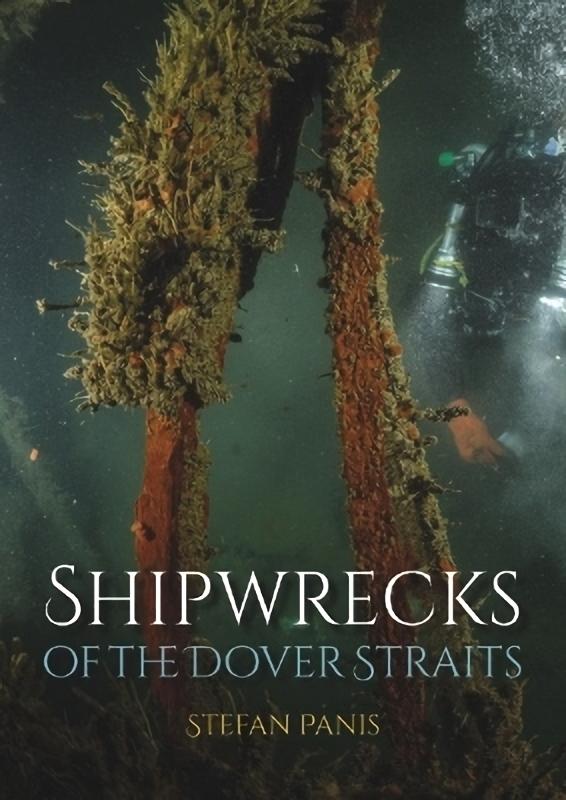 Porto Press Ltd Shipwrecks of the Dover Straits GTIN: 9781849954969 Raamatud A fascinating read for all divers which contributes to a rich and continually revealing maritime history. The Dover Straits is the resting place for many wrecks and this book reveals the stories behind a selection of these unfortunate vessels. This highly pictorial account shows the wrecks and the numerous artefacts found. The gallery of photographs for each wreck is accompanied by a brief summary of the history of the vessel and the actual dive, providing an insight into diving in these challenging waters and also the excitement of discovering age-old artefacts.The book unearths some amazing stories and shows the objects in situ or recovered for purposes of identification all declared to the receiver of wrecks many in remarkable condition. There are many hundreds of wrecks in these waters that form a perfect site for wreck divers and this book describes just a fraction of what may be found.This new book will be a valuable and enticing introduction for all divers wishing to explore the huge number of wrecks to be found in the Dover Straits as well as a useful point of reference. Autorid: Stefan Panis | 1 | 28,64 € | Vaata | ||
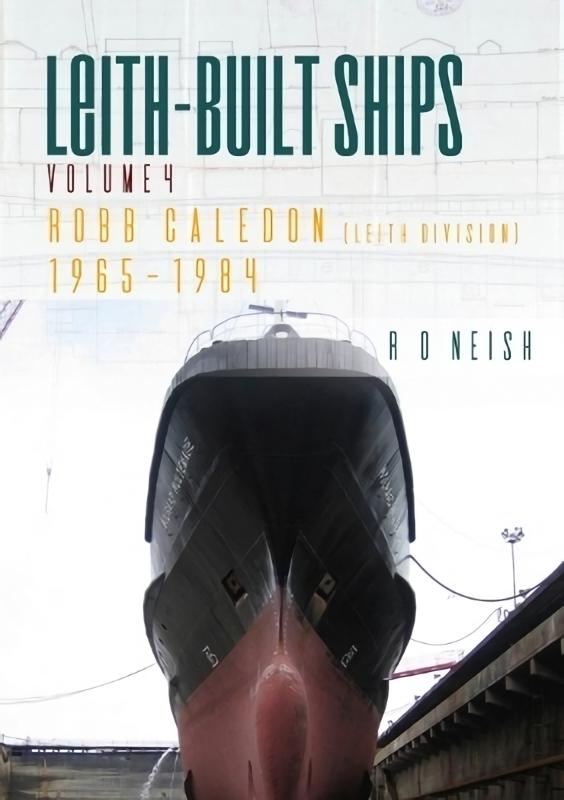 Porto Press Ltd Robb Caledon 19651984: Leith-Built Ships Volume 4, 4 GTIN: 9781849955782 Raamatud Volume 4 of the acclaimed Leith-built Ships series follows Ship Nos 495 to 535 built from 1965 until the eventual closure of the shipyard in 1984 by a government that was hell-bent on destroying British industry and breaking the powerful unions. Great ships such as Lloydsman Ship no 509 and SA Wolraad Woltemade, Ship no 516, the two most powerful ocean-going salvage tugs, were built by Robb Caledon and Leith-built ships also played their part in the Falklands War. A great many working ships took their crews safely around the globe, and although tragedy befell some, most survived. The author features them all, from the huge tug Lloydsman, fighting in the Icelandic cod wars with her crew using tomato sauce bottles for ammunition, to hospital ship HMS Herald which took part in the Falklands War along with another four ships built at Leith. There were also ferries that captured the imagination of the Scottish Islanders who relied on them for transport, one of which was converted to carry out much-needed rescue work in West Africa. Robb-built ships were anything but slab-sided vessels, with most being one-off specialised ships that were complex to build, requiring much skill which the Leith shipbuilders had in abundance. This volume concludes the series on commercial ships built at the yard and is complemented with many first-hand accounts from the men and women who sailed or served on the ships. Autorid: R. O. Neish | 1 | 28,64 € | Vaata | ||
 Porto Press Ltd Lost Chart New edition GTIN: 9781849955843 Raamatud Unlike most of Gunns novels, The Lost Chart is set in a city the city of Glasgow and its sea approaches. The untypical choice of background for the story is not the only departure from Gunns usual approach to his novels. The book is also a thriller. The story unfolds in a social ambience of fear and speculation within which certain sinister political forces are at work. Nuclear war is a possibility, if not a certainty. Shipping executive Dermot Cameron gets involved in a street brawl, loses the chart of the approaches to a remote Hebridean island and finds himself in a tussle between the British Secret Service and a locally-based communist fifth-column. The plot turns almost exclusively on the date of a looming crisis, and the imminence of that date pervades the thoughts and feelings of those in conflict with a locally-based sinister and elusive enemy. This timeless work, from one of the most important writers of the twentieth century, has a remarkable relevance to the events of today. When it was written in 1949 there was an uneasiness in the West regarding changes to the old order of society and the decline in certain moral standards and spiritual beliefs. Today the problems facing humanity have not changed. The threatening political situations in the Far East, Middle East and Eastern Europe and the concomitant danger of nuclear warfare are all too evident. Against such a background, the way of life on the remote Hebridean island depicted by the author has an almost irresistible appeal. Autorid: Neil M. Gunn, Dairmid Gunn | 1 | 16,49 € | Vaata | ||
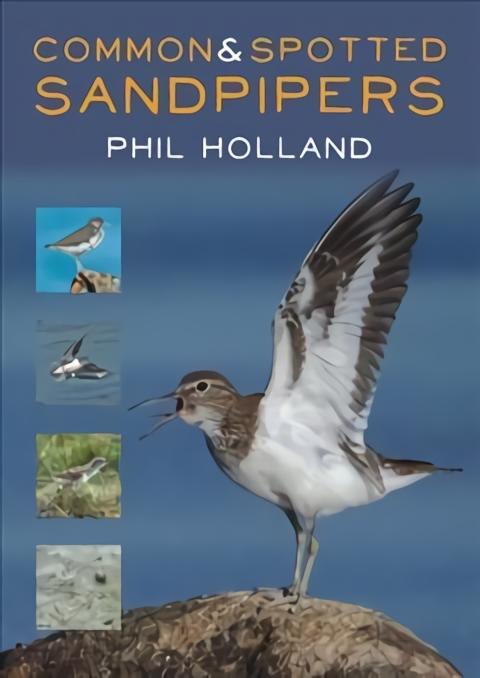 Porto Press Ltd Common and Spotted Sandpipers GTIN: 9781849953610 Raamatud This wonderful book describes the fascinating lives of the two most ubiquitous shorebirds in the world. Between them the Common Sandpiper (Actitis hypoleucos) and Spotted Sandpiper (Actitis macularia) make use of a large part of the worlds terrestrial habitat and they exhibit many of the exciting features of shorebirds. As the birds arrive on the breeding ground, their displays are spectacular and their sounds are an exciting announcement of springtime. Unusually, the Spotted Sandpiper appears to be the only bird where the female is the territory holder, laying successive clutches of eggs for different males to care for, while the male of the Common Sandpiper holds the territory, has one mate, and shares most duties. They stay on the breeding grounds only as long as is essential to reproduce before making a migration southwards to a broad range of non-breeding homes in Central and South America, Africa, India, and eastwards to Australia with vagrants reaching as far as Tristan da Cunha and New Zealand. The Common Sandpiper has also been recorded breeding in East Africa and wintering in Scotland so their flexibility is amazing. The author has spent over 40 years studying the lives of these fantastic birds and provides a wealth of information including their breeding behaviour, migrations, distribution, food sources, habitats and their history from the present back to 36 million years ago. This beautiful book will hopefully stimulate others to watch these worldwide birds more appreciatively and add to our knowledge. Autorid: Phil Holland | 1 | 28,64 € | Vaata | ||
 Porto Press Ltd New Ways: The Founding of Modernism GTIN: 9781849951500 Raamatud New Ways: The Founding of Modernism features the rise during the interwar period of a group of engineers, architects, sculptors, ceramicists, artists, furniture-makers, craftsmen and patrons to the forefront of British art and design. Important to the Founding of Modernism was the cooperation between a group of émigré architects and engineers, and their home-grown counterparts who, between them, found ways to bring into being the strict geometric and modernistic forms that were demanded by the Movement. In the 1920s, the technology of concrete casting was developing very rapidly as was that of steel reinforcement and new developments gave rise to greater possibilities for structures. Initially, expertise, and then the promotion of this new technology to architects and their clients, fell to a number of specialist overseas contracting companies. The early decades of the twentieth century in the UK saw, in place of an architect to contractor relationship, a rise of the new profession of consultant structural engineer. Up to this point, architects had fulfilled the role of both building designer and engineer. The British Modern Movement was profoundly influenced by this group of European émigré architects and engineers, some of whom remained in the UK thus ensuring that the Modern Movement re-emerged and continued in the UK once peace returned to Europe after WWII. Through an expert combination of words and illustrations, the author weaves an illuminating tapestry of people and structures in all sectors of life from residential to worship, media to entertainment, commerce and more thus creating a forceful appreciation of the movement. This fertile period of art, architecture and design was typified by a great commonality of purpose between designers, their clients and patrons. Buildings and artefacts were produced such that their designers might appreciate and wish them for their own use, especially in housebuilding and home-making. Friendships and associations by Modernists in allied professions presented a unified approach to design and patronage. Autorid: Nigel Dale | 1 | 36,75 € | Vaata | ||
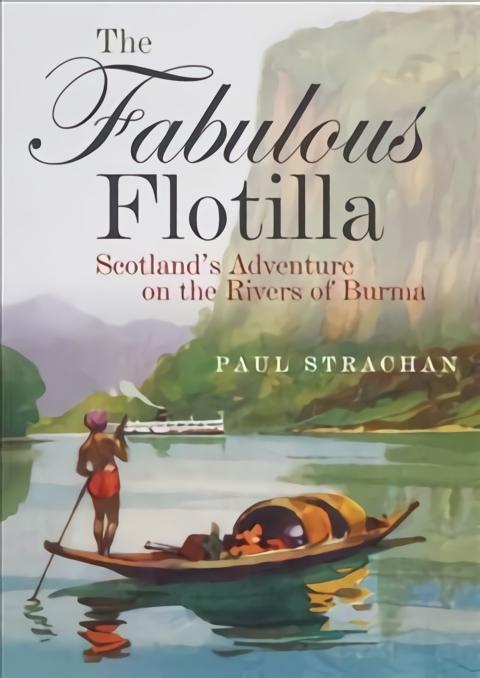 Porto Press Ltd Fabulous Flotilla: Scotlands Adventure on the Rivers of Burma GTIN: 9781849955324 Raamatud The Irrawaddy Flotilla Company, known in colonial Burma as the Fabulous Flotilla, was the largest privately-owned fleet of ships in the world. It was an entirely Scottish enterprise with nearly all its investors, management and ships officers drawn from Scotland. Over 1,200 ships were ordered mainly from Clyde yards and each year carried the majority of the population of Burma on its river network without loss of life. The paddle steamers were amongst the largest in the world, innovative in design and technology, and very beautiful. The flotilla began as a naval task force in the 1820s, was commandeered in five wars, and was to end its life with the British evacuation of Burma in 1942, the greatest evacuation in British military history. Fascinating personalities emerge from Strachans descriptions of Irrawaddy commanders and the flotillas key players. The ships evolved over a hundred years into riverine versions of ocean liners with plush cabins, restaurants, shops and even post offices on board. The largest class of ships carried 5,000 passengers including royalty, celebrities of the day and famous writers like Somerset Maugham along with early tourists and big game hunters. In the second part of the book, the author who himself has spent much of his life running ships on the rivers of Burma, takes us on a journey 1,000 miles upriver to explore the different regions of the country often highlighting Scottish connections. The river is the thread through which Burmas often tragic history, yet rich and glorious Buddhist culture, flows and only on a river journey can the country be understood. Renamed Myanmar in 1997, Burma is Scotlands lost colony and the Scottish connection is little remembered today due to Burmas half a century of post-war isolation. In its 1920s heyday Burma had the highest concentration of Scots anywhere in the world, outside of Scotland, with the exception of Canada. Scots were everywhere in Burma, running everything, and even their Burmese servants spoke in broad Scots. With the opening up of Burma in the early 21st century the Irrawaddy watershed, where about 50 million people live in a primitive rural economy, is under threat. Deforestation on a vast scale has resulted in the silting up of once navigable channels. China, with its belt and road system that is a euphemism to a recolonisation of the country, plans to build one of the worlds largest dams in the rivers headwaters that would devastate the countrys agriculture and fisheries. The Fabulous Flotilla provides a revealing record of this remarkable era in Burmas history and past Scottish endeavour a jewel of a story that may soon be lost. Autorid: Paul Strachan | 1 | 28,64 € | Vaata | ||
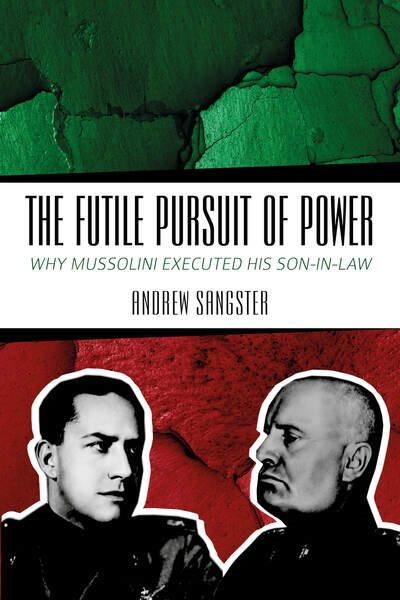 Porto Press Ltd Futile Pursuit of Power: Why Mussolini Executed his Son-in-Law GTIN: 9781849955331 Raamatud Italian history is not widely read but the period under Mussolinis shadow is both interesting and relevant to understanding the wheeling and dealings of the 1930s and into WWII. Through sheer nepotism Galeazzo Ciano married Mussolinis daughter and became Italys Foreign Secretary, the youngest in Europe and at first scorned at home and abroad. There are many salacious stories of their open marriage and promiscuity, but the focus is Cianos political life as a man regarded as second only to Mussolini. Through his diary and diplomatic papers, access is gained to the European diplomatic squabbles of the 1930s. The study of Ciano provides insights into Hitler and his leading henchmen, especially Ribbentrop and Göring, as well as the Spanish dictator Franco. Most importantly the figure of Mussolini is exposed in both his professional and somewhat dubious private life. The book explores the question of the Italian Fascist attitudes towards the Jewish population, the Vatican, and the monarchy. The Nazis at first courted him but soon realised he saw them for what they were, and he proved incapable of containing either his criticisms or the growing threat against him. Ciano finally turned against Mussolini only to find after his masters downfall that he had left himself encircled by personal enemies. His flight to Germany initiated his descent into personal chaos, leading to his trial and execution in Italy seemingly supported by his father-in-law. Perhaps the strangest twist in the personal story is the way his wife Edda turned to support him after years of an open and promiscuous marriage. There was considerable German and international interest in his diaries and diplomatic papers because of their revealing insights. He has been described as egotistical and arrogant, clever, perceptive, corrupt and a man with potential. Many despised him, but historically he was an interesting personality who above all left historians with some incisive observations of the critical years of 1935 to 1942. Autorid: Andrew Sangster, Pier-Paolo Battistelli | 1 | 28,64 € | Vaata | ||
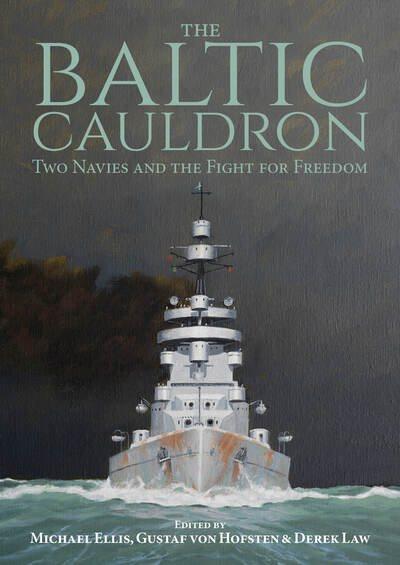 Porto Press Ltd Baltic Cauldron: Two Navies and the Fight for Freedom GTIN: 9781849955492 Raamatud This is a history of navies in the Baltic Sea and its approaches, from the Skaggerak to the Gulfs of Bothnia and Finland. Throughout history, navies have inherently supported civil society and the prosperity that international trade brings. Two navies in particular have played a significant role in the Baltic and this book portrays the relationship between the Swedish and British Navies over the centuries. In the 1700s Britain was a global naval power and developed doctrine, ships and culture which were copied by others, but the relationship with Sweden became special. While Britain and its navy depended upon Baltic Sea trade for timber, tar, iron and grain, the foundation was laid for the Swedish Navy, its self-image, tactics, materials and traditions. Many of these interactions have centred around thrilling, colourful, strong individuals, and many are the stories of how their good sense and good judgement created friendship and trust, rather than discord and conflict. These collected accounts demonstrate how British naval officers have had an influence on the development, not only of the Swedish Navy, but also of Sweden itself. Only once during the centuries have the two countries been officially at war with each other, but not a shot was fired. Autorid: Michael Ellis, Gustaf von Hofsten, Derek Law | 1 | 43,50 € | Vaata | ||
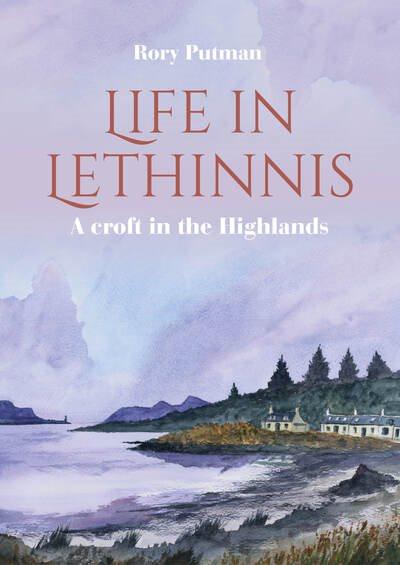 Porto Press Ltd Life in Lethinnis: A croft in the Highlands GTIN: 9781849955522 Raamatud After 20 years working as a professional biologist, the author decided to retire to the Highlands, moving with his wife to a croft at the edge of a small and somewhat inaccessible village on the west coast. This was no romantic and idealistic aspiration for the Good Life, nor really an attempt to get away from it all; rather a growing disaffection with living in the overpopulated south of England and a desire to return to his Scottish roots. Moving was like stepping back 50 years in time: most of the other residents of this tiny hamlet had been born and bred there, the majority were Gaelic-speaking and, with few of the conventional services, there was a strong sense of community that had been missed. This engaging story gives a collection of cameos from those first few years as they moved into and settled in their remote smallholding. It is developed as a series of short 'anecdotes' about life in this isolated west-coast Scottish community. Actual anecdotes are interwoven with snippets of natural history observation related to various topical wildlife issues. In the tradition of Lillian Beckwiths The Hills is Lonely, the stories revolve around the strong characters who made up this isolated community and became part of their everyday life. All the people and events described in this book are real, although places and names may have been changed. Enough clues remain that professional biologists or those with a keen interest in natural history will readily identify the peninsula. It is a joy to read and reveals Highland life with all its humour and character. Autorid: Rory Putman | 1 | 25,94 € | Vaata | ||
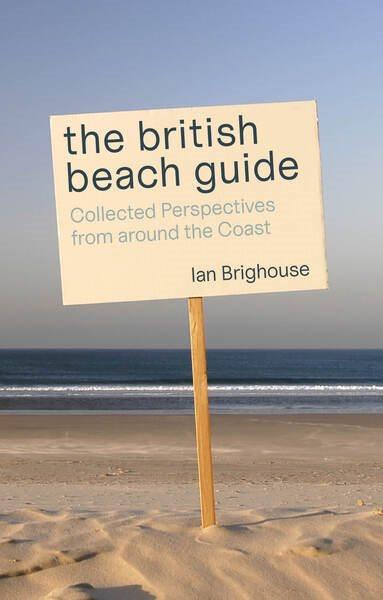 Porto Press Ltd British Beach Guide: Collected Perspectives from around the Coast GTIN: 9781849955553 Raamatud From all around the coast, from the remote wildness of Cullykhan in Aberdeenshire to the bustling working harbour at St Ives in Cornwall, from the vast empty sands of North Norfolk to Anthony Gormleys iron men at Crosby beach on Merseyside, the author has asked individuals what the beach means to them. He noticed that people are generally happier on the beach and wanted to find out why. Thus began an engrossing venture. Collecting responses, he was surprised on two counts. Firstly, that people were very open and forthcoming; they had never met and none of the interviews were pre-arranged, yet the answers came thick and fast. Secondly, the range of answers was as diverse as the moods of the sea. He discovered that the beach inspires creativity and connections with nature and can be a place of reflection, work or activities and, above all else, the beach has an uplifting effect. These reflections and opinions are the basis of this guide which features 130 of Britains beaches, a cross-section of a larger journey. For each beach, there is a summary, including the authors own impressions, and the answers from people encountered on that beach with photos. As well as being a showcase for the fine words of those who have so generously shared their answers, this is a celebration of us as an island people and an acclamation of the beach itself, this unique place where the land, sky and sea meet. The beach interviews showcase its profound effect on people, whether enhancing creativity, decision- making and energy levels, being restorative and settling, as part of a routine or a reference point through generations, perhaps representing freedom, an escape or just fun. Autorid: Ian Brighouse | 1 | 28,64 € | Vaata | ||
 Porto Press Ltd Motorbiking Mountain and Steppe, Forever Eastward GTIN: 9781849955867 Raamatud Across Europe to Azerbaijan, Afghanistan and onward to Siberia, Japan and Australia, this is a work that is rich in many dimensions. In essence its a travel story about an eight-month, long and gruelling motorbike ride, but it contains so much more. The author paints a picture with evocative and detailed descriptions of cities and landscapes, accounts of people in different economic and political systems, whose lives were often harrowing, and the unending challenge of riding the machine across diverse terrains in changing conditions. But it has the added perspective of a spiritual journey as the author grapples with the reality of the world about him and his inner demons, bringing an open mind to bear on the people and places confronting him a journey into the writers own soul as well as a cultural education. But most of all its a page-turning adventure story touched with humour and wit, a book that can be opened anywhere with the reader certain to find something interesting, surprising or amusing. Malcolm Dunkeld began his trek in his mid-sixties in sober England and finished it in the Australian desert after a thundering crash. This book has it all! Autorid: Malcolm Dunkeld | 1 | 28,64 € | Vaata | ||
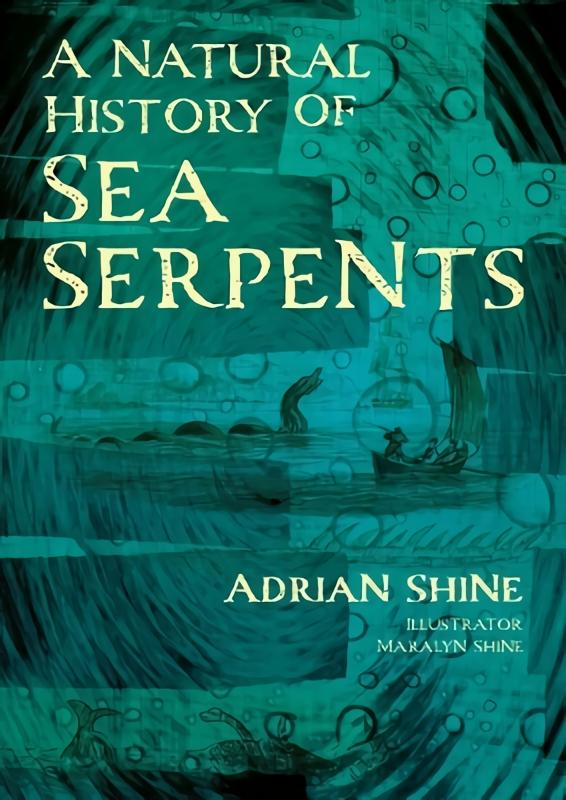 Porto Press Ltd Natural History of Sea Serpents GTIN: 9781849955881 Raamatud A Natural History of Sea Serpents, re-examines the cold-case enigma of sea serpents and monsters described by impeccable witnesses over three centuries. These reports have sometimes intrigued and puzzled the most eminent scientists of their times, yet often became the butt of popular derision. Naturalist Adrian Shine, best known for his fifty years examining Loch Ness as a 'sympathetic sceptic', reveals how the loch actually held the key to the greater mystery. He exonerates the integrity of most witnesses, often remarks upon the accuracy of their observations yet offers bold and radical interpretations of what they have seen. The book digs deep into the roots of the legend and shows how expectations 'evolved' from those 'serpents' to prehistoric 'monsters' during the nineteenth century. The book cites over a hundred reports and contains as many illustrations as evidence for its conclusions. His findings, stemming from knowledge of ships, the sea and the true monsters living there, cover the entire spectrum of reports, giving new insight, for example, into the famous HMS Daedalus episode of 1848, the description of a very unusual creature seen by two zoologists in 1904 and the serpent seen by hundreds off the coast of New England in 1817. Nothing daunted, he investigates reports of huge serpents seen battling whales and creatures which defy our understanding of vertebrate anatomy by bending both sideways and up and down, whilst under fire by the French Navy. This book will certainly generate debate within the cryptozoology movement, yet also challenges the theories of the preeminent sceptical writer on the subject, Dr. Robert France, who has proposed whales and other creatures entangled in pre-plastic era fishing gear as the cause of most sea serpent encounters. Nevertheless, the author shares this ethnobiological perspective and ends with a strong conservation message. Autorid: Adrian Shine | 1 | 22,59 € | Vaata | ||
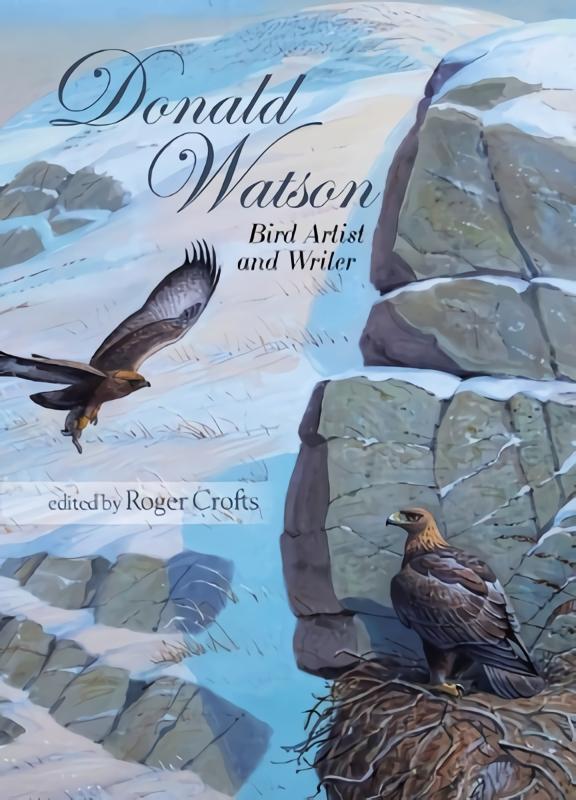 Porto Press Ltd Donald Watson, Bird Artist and Writer: Bird Artist and Writer Paperback original GTIN: 9781849955928 Raamatud Donald Watson was a seminal figure in the wildlife art and ornithological world from the late 1950s onwards. Since his death in 2005, his work has lived on through active public demand for his outstanding paintings of birds and the continued reading of his books. This is the first time his status and standing in the world of bird art and ornithology has been assessed. This definitive book is a series of biographical essays written by those who knew him and his outstanding contributions. There are so many perceptive insights about him and his work, and many previously untold stories that enliven the text. Reading the stories will bring back memories for all who knew him and hopefully inspire those who didnt but who follow in his footsteps. Readers will find detailed accounts of his life, his character, his work ethic, his link with his ornithologist son Jeff, his high standing in the world of raptor workers written by his daughter Louise, his daughter-in-law Vanessa and by his close friend and neighbour Chris Rollie. His high standing in raptor protection and especially his outstanding Hen Harrier work is updated by Des Thompson and Colin Galbraith. The author reviews his writing skills and describes how his conservation campaigns are still relevant today. They will also learn so much about his art from the perceptive in-depth account by John Threlfall, himself a very successful wildlife artist. Beautifully illustrated with his outstanding paintings, examples of his exquisite scraper board sketches and family photographs, readers will want this book for its images alone. Autorid: Roger Crofts, John Threlfall, Louise Watson, Vanessa Watson, Chris Rollie, Des Thompson, Colin Galbraith, Mark Avery | 1 | 27,29 € | Vaata | ||
 Porto Press Ltd Daughters of the North: Jean Gordon and Mary, Queen of Scots Caithness GTIN: 9781849956017 Raamatud A new softback edition of the acclaimed historical biography. Read about Jean Gordons involvement in many of the well-known adventures of Mary, Queen of Scots, and how she survived the intrigue of the Queen's court This is the first biography of Jean Gordon, who is best known as the first wife of the notorious Earl of Bothwell. Bothwell divorced Jean in order to marry Mary, Queen of Scots, and Jean and her family were closely involved in all of the major events of Marys short and turbulent reign in Scotland. Jean was the youngest daughter of the powerful Earl of Huntly, the King in the North, and Daughters of the North reframes the history of Scotland during the reign of Mary, Queen of Scots by viewing events from Jeans point of view and from the standpoint of the north of Scotland. The book reveals the intrigue at the royal court, and relates that Jeans life was much more rich and complex than supposed. Jean married three times, and her second marriage was to the Earl of Sutherland, making her the Countess of Sutherland the most powerful woman in the north of Scotland, negotiating between the Earls and the clans and exercising a huge influence over the area. She started a coal mine and salt pan in Brora in the 16th century, an astonishing example of early industrialisation and female agency at a time when the north of Scotland was considered to be wild and lawless; the preserve of violent clansmen. Jeans daughter married the Chief of Mackay, and Jean became involved in the complicated life of the clans of the north of Scotland, particularly the Mackays, but also the Clan Gunn. Her Sutherland Gordon family had an ongoing feud with the Sinclair Earls of Caithness, while her wider Huntly Gordon family was involved in the famous Gordon-Moray feud all events remembered in the songs, stories and sayings of the north and north-east. Meanwhile, Jean followed her heart and was reunited in old age with the love of her life. This painstakingly researched and detailed story gives the reader an eminently readable insight into Jeans life. Autorid: Jennifer Morag Henderson | 1 | 25,94 € | Vaata | ||
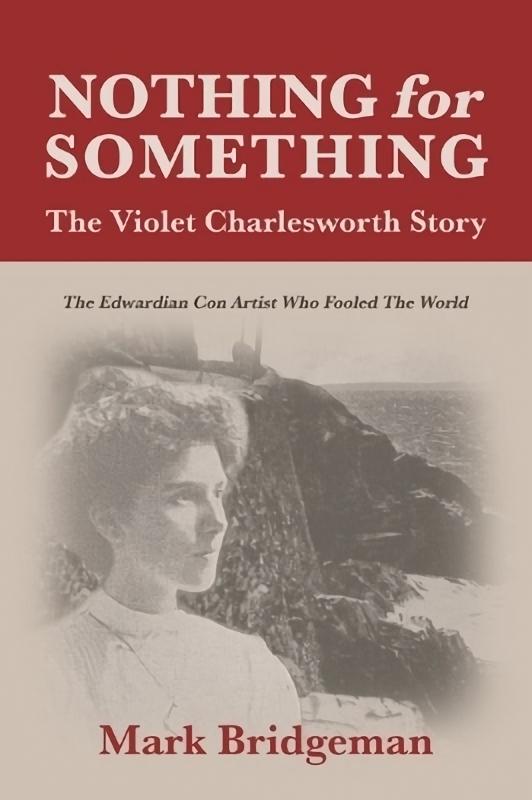 Porto Press Ltd Nothing for Something: The Violet Charlesworth Story GTIN: 9781849955973 Raamatud One of the best untold stories in the true crime/con artist genre. It features glamour, crime, intrigue, plot twists and a fascinating insight into life in Edwardian Britain. Violets story has unique parallels with many other modern fraud cases yet trumps them all with the added drama of her staged car crash, disappearance and resulting mysteries. Recounted for the first time and in detail, this is the unbelievable true story of the Edwardian confidence trickster who fooled the world three times. Violet Charlesworth, the beautiful young heiress to a fortune was briefly the most famous woman in the world, hunted across the globe, pursued by the press, and living the life of royalty. With country estates, fast cars, furs, fabulous jewels, and expensive tastes, she lived life in the fast lane until her lifestyle and her creditors finally caught up with her on a lonely, clifftop road in North Wales. Clever, resourceful, cunning, ruthless and beautiful, Violet Charlesworth had it all, until her luxurious motorcar smashed through a low wall on a dangerous bend in a moonlit clifftop road, hurling her into the waves below. As the search for her body continued, the shocking truth about her life finally emerged. In the era of the Suffragettes, Violet found another way to beat male-dominated society at its own game. Setting the bar for all female con artists to follow, she changed womens fashion, her exploits entered the lexicon of the English language, and she rapidly became more famous than the King and the Prime Minister. She even had a racehorse named after her. She ruined lives and reputations, broke promises and shattered dreams but, like all great con artists, left us guessing until the end. And she did it all with style and panache. One of the best untold stories in the true crime/con artist genre. It features glamour, crime, intrigue, plot twists and a fascinating insight into life in Edwardian Britain. Violets story has unique parallels with many other modern fraud cases Autorid: Mark Bridgeman | 1 | 28,64 € | Vaata | ||
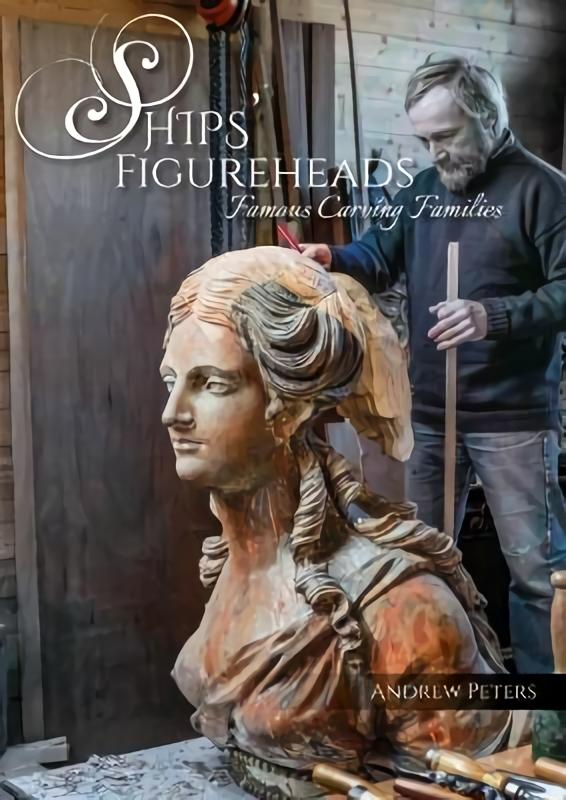 Porto Press Ltd Ships Figureheads: Famous Carving Families GTIN: 9781849955836 Raamatud This book reveals the skills and stories behind the art of figurehead carving and two of the primary families involved - the Hellyers and the Dickersons. Over centuries past, powerful nations and empires have expressed their might and control in part through the strength of their navies and their industrial and commercial prowess through fleets of vessels whether powered by sail or later steam. The desire to add ornamentation to even the most utilitarian of objects is evident throughout history, and ships were no exception. The task to create decorative forms that became part of a functional object was for the shipping industry the job of the ship's carver; a profession that demanded artistic ability together with a knowledge of the functional requirements of the vessel. When decoration was applied to a military vessel, it was for the purpose of presenting an overwhelming sense of indomitable strength. Imagery taken from biblical texts or ancient myths and legends provided heroic figures that not only emphasised power, but also established the political and theological ideology that each nation wished to uphold or impose. Written by a professional ship's carver who has restored many figureheads, this book reveals the skills and stories behind the profession and some of the primary families - the Hellyers and the Dickersons - back to the 18th century. Originally from Hampshire, the Hellyer family carved figureheads for the Royal Naval yard at Portsmouth, whilst the Dickerson family carved for the Royal Naval yard at Plymouth. Following generations set up carving workshops at many of the London yards, and as ship building moved north, they also set up in Tyneside and Scotland. In all they carved over 350 figureheads for the Royal Navy plus many for merchant yards. The smaller Dickerson family remained in Plymouth carving over 220 figures. Ships' Figureheads reveals information about these and other carving families, providing a socio-historic account of the times and in so doing an insight into the world they inhabited, with an in-depth practical knowledge of their work. Through exhaustive research the author has discovered many of the trials and tribulations experienced by each family, thus giving a sense of who they were, where they lived and how their work was viewed by society. It includes many heart-rending episodes that each family endured helping to bring to life the period in which they lived Autorid: Andrew Peters | 1 | 28,64 € | Vaata | ||
 Porto Press Ltd Losing Sight of the Shore: Scotland's Medical Explorers 18151915 GTIN: 9781849955942 Raamatud For one hundred years Scottish medical explorers were at the forefront of exploration within the British Empire, as exemplified by these five individuals. This dominant role was facilitated by the convergence of four events: the unification of Scotland and England, the Scottish Enlightenment, Scotlands unique method of preparing doctors, and the need for a new type of explorer. These events provided the men of Scotland with a trajectory that was quite different from their English counterparts. Throughout the century of exploration, Britain concentrated on expanding its already extensive global empire, and leading this movement were the men of Scotland. Over half of the British explorers from this era were Scottish and often doctors who had received their training at Scottish universities. Those graduating from the University of Edinburgh outnumbered those from other Scottish universities by a ratio of almost 9 to 1. Why were there so many Scottish doctors exploring a dangerous and unknown world and why were these medical explorers uniquely more qualified to lead this effort? A key factor was that the British Imperial Century required a new type of explorer. Prior exploration had focused on finding new lands, establishing trade routes, and creating colonies. Although trade and profit were still significant considerations, new focuses like economic botany and voyages exclusively for the sake of science took precedence. Losing Sight of the Shore shines a light on this most productive and adventurous era while providing detail and context about the people and the times in which they lived. Although Losing Sight of the Shore profiles five medical explorers in detail, this is not a biography but a history which aims to understand and explain the ideology and philosophy of a group of Scottish-trained physicians and surgeons; and how their interaction within the political, cultural, intellectual, and social context of the time helped define the British Imperial Century. Autorid: Wendell R. McConnaha | 1 | 28,64 € | Vaata | ||
 Porto Press Ltd Leaving Lethinnis GTIN: 9781849955997 Raamatud As a sequel to the earlier Life in Lethinnis, this book provides a further series of stories about life on a remote West Highland croft. It captures the atmosphere of living and working in this tight-knit community and is beautifully illustrated with charming sketches by wildlife artist Catherine Putman As a sequel to the earlier Life in Lethinnis, this book provides a further series of stories about life on a remote West Highland croft. It captures the atmosphere of living and working in this tight-knit community and is beautifully illustrated with charming sketches by wildlife artist Catherine Putman. This is the continuing story of Lethinnis and its characters, both animal and human. In this sequel, Rory offers a further collection of pen-portraits from those early years in the place he has called Lochuisge. In the tradition of Lillian Beckwiths The Hills is Lonely, or Sybil Armstrongs A Croft in Clachan, the anecdotes inevitably revolve around the strong characters that made up this isolated community and became part of everyday life. With the author continuing to earn a living as a professional biologist, the characters featured are both human and animal as the various tales capture the atmosphere of living and working in this tight-knit community into which he and his wife were so immediately welcomed. After 20 years leading a research group in wildlife biology at the University of Southampton, Rory Putman decided to retire to the Highlands of Scotland, moving with his wife to a croft at the edge of a small and somewhat inaccessible village on the west coast. In the same vein as the well-received Life in Lethinnis, he offers a further collection of cameos from those first few years as they moved into and settled in their remote smallholding. The authors intimate writing style draws the reader with him into the heart of that same community. But in this sequel there is perhaps a greater darkness as Putman registers that life on the Peninsula is changing and that he is in effect chronicling the end of an era. Autorid: Rory Putman | 1 | 25,94 € | Vaata | ||
 Porto Press Ltd Dummy Drome: Stories from a WW2 decoy aerodrome in the north of Scotland GTIN: 9781849956000 Raamatud The Dummy Drome is a well-researched story about an aerodrome that wasnt really there this was RAF Wicks decoy airfield near Sarclet, by Thrumster in Caithness. The featureless landscape was grazed by sheep finding what sustenance they could and there were no people or structures in sight. Even the solid ground was only an illusion: a wide expanse of heather covered a great depth of peat bog that couldnt be ploughed for fear machinery and animals would sink. This deception was exactly what was needed an illusion dreamed up by military strategists and cinema-set designers in faraway offices. For a brief period it was busy, active and vital, full of people and buildings with three broad and very obvious tracks with lights and noise. It was very much on the map, specifically designed to draw attention to itself. The Air Ministry cartographers who made it look larger than it really was transposed the design of a real aerodrome onto a blank area on the map of northern Scotland. The planners added standard building designs in the right places. Huge quantities of raw materials were brought to the site and construction workers created runways that a plane could not land on. Artists and craftsmen made planes that couldnt fly and even painted them onto canvas. Men and women from all over the country came here to work at a place that was not a working airfield, although their very presence as they moved about was an essential part of its apparent function. The Dummy Drome tells the story of how it became a part of the lives of the people who built it, worked there or lived nearby. These hitherto untold stories reveal the experiences and recollections of the ordinary people who knew it and who were sworn to secrecy. This was only one of over 200 similar decoy sites, and it is possible to piece together whats left of it on the ground some 80 years later, since it is clearly visible from the air. The Dummy Drome is a well-researched story about an aerodrome that wasnt really there this was RAF Wicks decoy airfield near Sarclet, by Thrumster in Caithness. The featureless landscape was grazed by sheep finding what sustenance they could and there were no people or structures in sight. Even the solid ground was only an illusion: a wide expanse of heather covered a great depth of peat bog that couldnt be ploughed for fear machinery and animals would sink. This deception was exactly what was needed an illusion dreamed up by military strategists and cinema-set designers in faraway offices. For a brief period it was busy, active and vital, full of people and buildings with three broad and very obvious tracks with lights and noise. It was very much on the map, specifically designed to draw attention to itself. The Air Ministry cartographers who made it look larger than it really was transposed the design of a real aerodrome onto a blank area on the map of northern Scotland. The planners added standard building designs in the right places. Huge quantities of raw materials were brought to the site and construction workers created runways that a plane could not land on. Artists and craftsmen made planes that couldnt fly and even painted them onto canvas. Men and women from all over the country came here to work at a place that was not a working airfield, although their very presence as they moved about was an essential part of its apparent function. The Dummy Drome tells the story of how it became a part of the lives of the people who built it, worked there or lived nearby. These hitherto untold stories reveal the experiences and recollections of the ordinary people who knew it and who were sworn to secrecy. This was only one of over 200 similar decoy sites, and it is possible to piece together whats left of it on the ground some 80 years later, since it is clearly visible from the air. Autorid: Rob More | 1 | 20,54 € | Vaata | ||
 Porto Press Ltd Atomics: The Story of Dounreays People GTIN: 9781849956062 Raamatud In 1954 the decision to locate the countrys fast reactor R&D nuclear programme at Dounreays disused military airfield in Caithness, eight miles west of the town of Thurso, changed the fishing and farming county forever. Thursos population trebled in just eight years, with the incomers being labelled the 'Atomics'. The recreational, economic, social and welfare upheaval was immense, but due to good foresight and planning by the UKAEA in conjunction with local councils and officials, social integration was viewed as successful. Throughout its lifespan Dounreay was mired in controversy and this book doesn't shy away from the bad press, incidents, health scares and court fines that became the backdrop of its existence. Not to mention the continual standoff between the Government and anti-nuclear campaigners over the activities on site. By the late 80s fast reactor technology was no longer required and the last reactor was shut down in 1994. But that wasn't the end of the story as the challenging work programme of clean-up, decommissioning and demolition will extend to the 2070s. Only then can Caithness and North Sutherland look forward to life after Dounreay. Autorid: Iain Grant, James B. Gunn | 1 | 27,29 € | Vaata | ||
 Porto Press Ltd Highland Cow & the Horse of the Woods: How Highland cattle can help save the capercaillie Hertfordshire GTIN: 9781849956086 Raamatud This is a beautifully illustrated book, written by one of our foremost conservationists. It explains why the Highland cow, the closest ancestor of the extinct aurochs, holds the key to restoring the capercaillie and biodiversity, while demonstrating the way to restore our natural world. Appalled by the catastrophic decline of the capercaillie once a common and widespread bird in Scotland Roy Dennis has come up with solutions. The numbers of capers in Scotlands pine forests have tumbled from 20,000 in the 1960s to about 400 today. The bird is facing extinction and without major conservation recovery could die out again, as it did in the late 18th century. Roy Dennis has known the caper since 1960 and writes about how to save this beautiful great turkey-like bird. The story illustrated throughout by magnificent colour photographs concerns its old pine forest habitat and how the capercaillies living space has become dysfunctional. The key to recovery is to mimic the original ancient ox, the great aurochs, which had a profound beneficial impact on the ecology of the woodlands. It was eliminated by humans millennia ago, but its place was taken by Neolithic cattle arriving here after a long migration from the Middle East, where they had been domesticated from local aurochs 10,000 years ago. It was a major step in human evolution. Those early cattle morphed into the Highland cow, which is the closest relative of its ancient ancestor. These cattle, herded by the people living in Scotland, were part of the woodland scene right through until the middle of the last century. Roy explains why they are the key to recovery the cattle would restore the ecosystem, creating path networks, increasing biodiversity and invertebrate populations to the benefit of capercaillies but also for the whole of wild nature. The life of the capercaillie is dealt with in detail, as is the history and present situation of Highland cattle the most recognisable cow in the world and a favourite with everyone. The contrast with commercial cattle is explained, as is how to get the maximum benefit for the capercaillie, including greatly increasing the Scots pine woodlands. This is a book by an expert, written for everyone. Autorid: Roy Dennis | 1 | 30,00 € | Vaata | ||
 Porto Press Ltd Dido Papers: The Letters of a Victorian Midshipman GTIN: 9781849956031 Raamatud After two years at the Britannia Naval College at Dartmouth, Bryan Godfrey Faussett joined his first ship, HMS Dido in June 1879. From the day he joined her he wrote long letters home to his family and friends. The Dido went to West Africa, South and East Africa and the letters recount his experiences as a young man of 15 from when he first joined. Remarkably, he made copies of all the letters that he wrote home and these copies provide a very rare glimpse of the life of a young midshipman in the Royal Navy of the mid-Victorian era. The letters cover the period from June 1879 until April 1881. He experiences not only the life of a young midshipman, learning the ways of a naval warship, but also visiting many places in West Africa which very few, if any, of his contemporaries at home would have any knowledge of whatsoever. His letters are fluent and well-written and it is easy to forget that they are written by a 15-year-old boy. His descriptions of West Africa, his visits ashore and the remarkable experiences that occur, including the death of the Didos captain and his funeral only a few hours later in a west African graveyard, and a meeting of local kings and chieftains in a conference on board Dido in order to resolve disputes, are but two of the remarkable experiences that he undergoes and records. Dido also spends time on the East coast of Africa, anchored off Durban at the time of the first Boer war and his descriptions of that conflict, in which some of the crew of the Dido were sent to fight, are fascinating. In his Foreword, Rear Admiral John Lang says Even a casual glance at this collection of letters is a joy. It is an extraordinary record of a cadet and midshipman in the Victorian Navy and opens a window of life in an era when the passage of time is marked by the receipt and dispatch of periodic letters to and from home. Autorid: John Johnson-Allen | 1 | 28,64 € | Vaata | ||
 Porto Press Ltd Irish Lightkeepers Legacy: Life at the Edge GTIN: 9781849956055 Raamatud In June of 1837, as a teenaged Queen Victoria assumed the throne, an Irish Catholic peasant laboured from dawn to dusk farming land owned by the Marquess of Ely, a powerful peer of the Queens realm. Alexander, Alec, Power, a lowly estate worker, would live and die working these fields for his master, while trapped in a feudal system from which there was no exit. But Alec did escape. Through strength of character, tenacity, and an unlikely connection to a prominent Irish Protestant official, Alec gained admittance into the increasingly selective Irish Lightkeeping Service, becoming part of Britains national security posture, protecting maritime access for the nation over which the young Queen Victoria ruled. Alec and his wife, Maggie, were hardworking people who spent their lives in dangerous places on the coasts of Ireland, contending with nature at its wildest, raising their family while protecting mariners. Enduring incredibly rugged, dangerous conditions, surviving the Great Famine, this was truly life on the edge. Their lives were difficult, but their children grew to adulthood free of the discrimination that oppressed much of the Irish population in the era. After Alec died, his son, Thomas, assumed the role of head of family. Trained to be a lightkeeper, he was inexorably drawn to the most advanced technology and the most dynamic business of his times, the railway. Under tremendous pressure to find a means of support for his dependents, he spent years achieving success. He became part of the new Irish middle class, emerging just as the Irish people intensified their struggle to seek freedom and nationhood. The turmoil of this struggle threatened the stability that Thomas had achieved. This is the story of courageous people with strong family values who persisted, against all odds, in the years prior to the birth of the Irish nation. It is based on extensive genealogical and historical research. Autorid: Martha Power Baxter | 1 | 28,64 € | Vaata | ||
 Porto Press Ltd Scottish Monuments and Memorials GTIN: 9781849955959 Raamatud Explores the extraordinary range of monuments and memorials to be found in Scotland. It covers over 500 monuments and memorials which range from follies to fountains and from delicate sundials to colossal statues of long-dead aristocracy. Explores the extraordinary range of monuments and memorials to be found in Scotland. It covers over 500 monuments and memorials which range from follies to fountains and from delicate sundials to colossal statues of long-dead aristocracy, providing the reader with an almost endless choice of sites to visit. This is an extraordinary book, with its origin in the authors long-standing interest in monuments and memorials, arising from many years of wandering Scotlands hills and glens. The Covid-19 lockdown provided an opportunity to look into this more seriously, and the idea of a book was born. It reflects and encapsulates a huge variety of monuments in every style imaginable pillars, towers, obelisks, mausoleums, cairns and many more curious shapes. Everything from much-loved dogs and horses to seemingly obscure members of the aristocracy (the biggest monuments of all) have been commemorated and sculptors, artists and designers have let their imagination run free resulting in a glorious collection of places to visit. Some apparent memorials known as follies were designed solely to provide a focus for the eye and we are blessed with a substantial number of these eccentricities. Grouped into 20 categories, the book includes writers, royalty and inventors and objects such as mausoleums, follies, the military and political figures and events. Battles (famous and less well-known), mountains, animals (even a pigeon) and the millennium all feature but throughout the book, the monuments and memorials are placed in proper context, which is important in understanding their timing and location. There is a section devoted to mishaps at sea and this includes some of the most beautiful and poignant memorials of all. For a small country we have an astonishing number of very fine fountains. Some of these were erected to mark Queen Victorias Golden and Diamond Jubilees, and we find in Victoria a notable supporter of monuments. With the aid of this book readers will be able to anticipate the joy of discovering a monument and unearthing the reason for its creation. Autorid: Roger Smith | 1 | 28,64 € | Vaata | ||
 Porto Press Ltd Commercializing Fusion Energy: How Small Businesses are Transforming Big Science 2nd edition GTIN: 9781849956048 Raamatud Fusion energy has now emerged as one of the most disruptive technology opportunities, attracting the attention of risk-tolerant investors and large amounts of private capital. This book examines the emergence of nuclear fusion technology as a commercial proposition, grounded in both technological opportunities and high-technology business development. The book introduces a broad range of possible commercial fusion technologies and various pathways to commercialization are described. While the prospect of grid-scale fusion electricity is a major motivator, it is not the only, nor the easiest, path to first commercialization. Reflecting the background of the editorial team, the book has a particular focus on developments in Japan and the UK two leading fusion nations. A such, it gives weight to developments in these two countries at the forefront of fusion innovation but the book has a global outlook and developments elsewhere, especially in the United States, are also considered. The scientific and technical basis of fusion is introduced sufficient to appreciate the range of innovation in the sector and to illustrate why fusion is attracting billions of dollars of private sector investment. The relationship of private sector firms to state-funded research laboratories is discussed as both help drive the technology forward to deployment. Various business models for fusion technology are explored, from the monetization of fast fusion neutrons through to the generation of baseload grid-scale electricity. The book helps the reader appreciate the diversity of fusion innovation and hence separate the hype from the reality. Autorid: William J Nuttall, Satoshi Konishi, Shutaro Takeda, David Webbe-Wood | 1 | 43,49 € | Vaata | ||
 Porto Press Ltd Ring Ouzel: A View from the North York Moors GTIN: 9781849954587 Raamatud Using vivid extracts from field notebooks and profusely illustrated with photographs as well as paintings and sketches by wildlife artist Jonathan Pomroy, the reader is transported to the beautiful North York Moors National Park. We can share in the excitement as the first Ring Ouzels of the year return from their winter quarters in North Africa, witness their courtship displays, the establishment of territories and the female ouzel painstakingly building her nest and laying eggs. This is followed by the monitoring of the hatching and fledging of chicks and the levels of predation noted in order better to understand the productivity and sustainability of this vulnerable and isolated population. To hear the song of the Ring Ouzel carrying for a surprising distance across the high moorland in the early morning is one of the many delights of upland Britain. The authors have recorded and analysed both simple and complex songs in their study area and, following comparison with recordings from Scotland, Derbyshire and the Yorkshire Dales, have confirmed the suspected presence of local dialects. Crucially this book is much more than a remarkable record of twenty years fieldwork as it builds on earlier research elsewhere and relates local findings to the results of other current studies in England, Wales and Scotland. The contraction in distribution and number of Ring Ouzels breeding in Britain, the work of the Ring Ouzel Study Group, the introduction of conservation measures and the potential impact of climate change are all described. Attention is drawn to the first indications of Ring Ouzel decline in Switzerland. As a migrant, the Ring Ouzel faces additional pressures and problems on passage and conditions in their wintering areas in the Atlas Mountains of Morocco are described. The importance of Britain as a stop-over and refuelling area for Fennoscandian birds on passage in Spring and Autumn is stressed. There is still much to learn and the early attempts to track Ring Ouzels on migration from Scotland to North Africa and back are described. This milestone publication brings the Ring Ouzel into sharp focus for the first time. Autorid: Vic Fairbrother, Ken Hutchinson | 1 | 32,63 € | Vaata | ||
 Porto Press Ltd Bustler Class Rescue Tugs: In War & Peace GTIN: 9781849955041 Raamatud This book reveals the part played by the eight Bustler Class Rescue Tugs built at the Henry Robb Shipyard during the Second World War and will shed more light on the almost-forgotten part played by this countrys mariners. The men and women who were rescued under the most trying of times and dreadful weather conditions would no doubt have felt immense gratitude to the brave souls who formed part of the huge maritime effort, both in war and peacetime. This is the story of the small force of much-needed rescue tugs that were built during the dark forbidding days of the Second World War, when Great Britain had only the ships and men to bring in the raw materials that were required to fight against the might of Nazi Germany and its Allies. This compelling story shines a spotlight on the small, but very significant work done over many years by His and Her Majestys Rescue Tugs in defence of the realm, and which benefited seafarers all over the world. The authors very detailed account of the contribution made by HMRT in general, and the Bustler Class in particular, is an excellent read, and has brought to life the immense impact that these rescue tugs have had over many years, usually in dire circumstances, and especially during the Second World War. Many of these ships also served with the Royal Fleet Auxiliary (RFA) and this story recognises the part played by these heroic rescue tugs in accounts of many convoys that crossed the seas and were attacked by hostile forces. This fine volume will help to raise the profile of these magnificent small and immensely powerful vessels, and of course their highly-skilled crews without whom these heroic achievements would not have been possible. Autorid: R. O. Neish | 1 | 27,29 € | Vaata | ||

Otsing: 84995
626 toodet
| 1 | 28,64 € | Vaata | ||
1 | 28,64 € | Vaata | |||
| 1 | 28,64 € | Vaata | ||
Porto Press Ltd Roaming Wild: The Founding of Compassion in World Farming GTIN: 9781849955430 Raamatud | 1 | 28,64 € | Vaata | ||
| 1 | 28,64 € | Vaata | ||
| 1 | 27,29 € | Vaata | ||
| 1 | 131,25 € | Vaata | ||
| 1 | 77,25 € | Vaata | ||
| |||||
1 | 28,64 € | Vaata | |||
1 | 28,64 € | Vaata | |||
| 1 | 16,49 € | Vaata | ||
| 1 | 25,94 € | Vaata | ||
Porto Press Ltd Girl Who Killed A Nation: When Worlds Collide Caithness GTIN: 9781849955966 Raamatud | 1 | 28,64 € | Vaata | ||
| 1 | 25,94 € | Vaata | ||
| 1 | 28,64 € | Vaata | ||
| 1 | 28,64 € | Vaata | ||
| 1 | 28,64 € | Vaata | ||
1 | 117,75 € | Vaata | |||
| 1 | 43,50 € | Vaata | ||
| 1 | 43,43 € | Vaata | ||
| 1 | 28,64 € | Vaata | ||
Porto Press Ltd Camp 21 Comrie: Pows and Post-War Stories from Cultybraggan GTIN: 9781849952279 Raamatud | 1 | 25,94 € | Vaata | ||
| 1 | 25,94 € | Vaata | ||
| 1 | 28,64 € | Vaata | ||
| 1 | 28,64 € | Vaata | ||
| 1 | 16,49 € | Vaata | ||
| 1 | 28,64 € | Vaata | ||
| 1 | 36,75 € | Vaata | ||
1 | 28,64 € | Vaata | |||
1 | 28,64 € | Vaata | |||
| 1 | 43,50 € | Vaata | ||
| 1 | 25,94 € | Vaata | ||
1 | 28,64 € | Vaata | |||
| 1 | 28,64 € | Vaata | ||
| 1 | 22,59 € | Vaata | ||
1 | 27,29 € | Vaata | |||
1 | 25,94 € | Vaata | |||
| 1 | 28,64 € | Vaata | ||
| 1 | 28,64 € | Vaata | ||
1 | 28,64 € | Vaata | |||
| 1 | 25,94 € | Vaata | ||
1 | 20,54 € | Vaata | |||
| 1 | 27,29 € | Vaata | ||
1 | 30,00 € | Vaata | |||
| 1 | 28,64 € | Vaata | ||
| 1 | 28,64 € | Vaata | ||
| 1 | 28,64 € | Vaata | ||
1 | 43,49 € | Vaata | |||
| 1 | 32,63 € | Vaata | ||
| 1 | 27,29 € | Vaata | ||