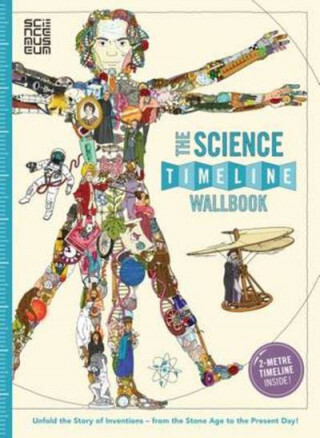
The extraordinary story of how humans have shaped and reshaped the world through ingenuity and invention from the Stone Ages to today on a glorious 2m-long timeline of more than 1,000 pictures and captions.
Dr. Natasha Campbell-McBride created the term GAPS (Gut and Psychology Syndrome or Gut and Physiology Syndrome) in 2004 to describe the plethora of health problems that stem from an unhealthy gut. Since developing the GAPS nutritional protocol, Dr. McBr
Smart Magnet ümbris on metallilise tekstuuriga ja päevavalguses läikiv. Sisemuses pehme, seemisnahka meenutav viimistlus kaitseb ekraani kriimustuste ja väikeste kahjustuste eest.
Although the term 'jouissance' is common currency in psychoanalysis today, how much does it really tell us? While often taken to designate a fusion of sexuality, suffering and satisfaction, the term has fallen into a purely descriptive use that closes down more questions than it opens up. Although assumed to explain the coalescence of pleasure and pain, it tends to cover a range of quite different issues that should be distinguished rather than conflated.By returning to some of the sources of the concept in Freud, and their elaborations in Lacan, this book hopes to stimulate a debate around the relations of pleasure to pain, autoerotism, the links of satisfaction to arousal, the effects of repression, and the place of the body in psychoanalytic theory. Leader aims to provide context for Lacan's work and encourage dialogue with other analytic traditions.
This two-part textbook is aimed at professional jazz pianists and advanced hobby musicians who wish to broaden their jazz skills and acquire practical skills to master typical harmonic progression.Part 1: The "Drop-Two" Harmonic Technique clearly explains how jazz harmonies through vocal guidance, dissonance treatment and counterpoint can logically broaden the syntax of jazz harmonics. With carefully developed harmony exercises that uniquely respond to and complement the content of each chapter.Instrumentation:piano
Offers a collection of recipes, hints, and Plain wisdom for everyone who loves the idea of preserving fresh, wholesome foods. This book helps readers find: a short history of canning; lists of all the tools and supplies needed to get started; basic instructions for safe canning; recipes for canning fruit, vegetables, meat, soups, sauces, and more.
Warm, entertaining, and above all thought-provoking, Daemon Voices provides a remarkable insight into the mind of one of our greatest writers. He explains which storytellers have meant the most to him, including William Blake and John Milton, why their work has resonated with him, and how it has inspired his own thinking. In over 30 essays, written over 20 years, Philip Pullman reveals the narratives that have shaped his vision, his experience of writing, and the keys to mastering the art of storytelling.
Language: English, Binding: Hardback, Number of pages: 288, Publishers: Simon & Schuster, Author: Manuel Sumberac, ISBN-13: 9781398540552, Date of issue: 2025
Language: English, Binding: Hardback, Number of pages: 160, Publishers: New York Review of Books, Author: R Kikuo Johnson,Dash Shaw, ISBN-13: 9781681379548, Date of issue: 2025
As brutal as the undead he hunted, Zacarias De La Cruz was a master executioner. Now his stark and savage journey is over. After a thousand years in a grey world, he has accomplished everything he set out to do - his brothers are safeguarded, and each has found a woman who completes Zacarias has walked the edge of madness. But without a hunt to define him, Zacarias wonders, for the first time in his life, who he really is. The answer awaits him back home in Peru, in the betrayal of a woman who is readying her trap, in the vengeance of an old enemy, in the inevitable consequences of a bloody family legacy, and in the deliverance of a lifemate he never could have imagined.
T. S. Eliot is regarded as the most important poet-critic of modern times, the twentieth century's 'Man of Letters' whose reputation was forged not only on the strength of his verse, but on the enduring influence of his critical writings. The Collected Prose presents those works that Eliot allowed to reach print in the order of their final revision or printing. Publishing across four volumes, the series aims to provide an authoritative and clean-text record of Eliot's approved texts and their revisions, beginning with his formative observations, written while he was at high school, and concluding in his final major opus, To Criticize the Critic, published in the months after his death. This first volume covers the years 1905-1928, a time of dramatic development for Eliot as both a poet and critic that saw the publication of Prufrock and Other Observations, The Waste Land and Journey of the Magi, and a gathering his seminal early essays under the title The Sacred Wood (1920). In his penetrating surveys of poetic form and the literary milieu of the day, he assesses the era's ageing giants, Yeats, Swinburne, Henry James, and hails the arrival of its new generation, Ezra Pound, James Joyce, Wyndham Lewis. The volume also traces Eliot's deepening search for a meaningful response to the trauma of the Great War, and an exploration of religion that led to his confirmation in the Church of England in 1927.
Floorboard George Gastin is part of an insurance scam to wreck a pure white, mint condition '59 Cadillac originally intended for The Big Bopper as a token of an admirer's love. But Floorboard George has other ideas and when he disappears with the car, gangsters and cops are soon in hot pursuit. On the road, the crazy characters, hitch-hikers and demented preachers he meets provide the high-octane entertainment as George covers many miles - and states of mind - in his quest to find the true spirit of rock 'n' roll. Autorid: Jim Dodge, Kevin Sampson
Eugene Peterson's Spiritual Theology series provides a completely fresh evaluation of Christian Spirituality, past, present and future. The best-selling author of THE MESSAGE Bible, draws on the very latest scholarship and understanding of biblical revelation, and will represent the most thorough and significant work on contemporary Christian Spirituality by an evangelical author. Most writings in the field of spiritual theology represent mere dabblings. The more significant endeavours are impenetrably academic. Petrson's masterwork, which has been years in the making, is designed for those who are comfortable with being stretched, as well as pastors, academics and lay leaders. CHRIST PLAYS IN TEN THOUSAND PLACES is Book One in a five-part series, and concentrates on 'clearing the playing field', evaluating spirituality as it is understood today. Also available in the Spiritual Theology series: Eat This Book, The Jesus Way, The Word Made Flesh and Practise Resurrection. Autorid: Eugene Peterson
At the heart of how history sees the French Revolution lies the enigma of the Terror. How did this archetypal revolution, founded on the principles of liberty and equality and the promotion of human rights, arrive at circumstances where it carried out the violent and terrible repression of its opponents? The guillotine, initially designed to be a ‘humane’ form of capital punishment, became a formidable instrument of political repression and left a deep imprint, not only on how we see the Revolution, but also on how France’s image has been depicted in the world. This book reconstructs the Terror in all its complexity. It shows that the popular view of a so-called ‘system of terror’ was retrospectively invented by the group of revolutionaries who overthrew Robespierre, as a way of trying to exonerate themselves from culpability. What we think of as ‘the Terror’ is best understood as an improvised and sometimes chaotic response to events, based on the urgent needs of a revolutionary government confronted by a succession of political and military crises. It was a government of ‘exception’ – a crisis government. Terror brings together a wealth of factual elements, along with recent thinking on the ideological, emotional and tactical dimensions of revolutionary politics, to throw new light on how the phenomenon of terror came to demonise the image and memory of the French Revolution. It will be essential reading for students and scholars of the French Revolution and for anyone concerned with the ways in which political conflict can descend into violence. Autorid: Michel Biard, Marisa Linton, Timothy Tackett
"In the countries of the global North, workplace democracy may be thought of as a thing of the past. Increasingly, working relations are regulated primarily by contract; workforces are fissured and fragmented. What are the consequences of this? How should we respond? Ruth Dukes and Wolfgang Streeck argue that the time is ripe to restate the principles of industrial democracy and citizenship for the post-industrial era. Considering developments within political economy, employment relations and labour lawsince the postwar decades, they trace the rise of globalization and the 'dualization' of labour markets--the emergence of a core and periphery of workers--and the progressive insulation of working relations from democratic governance. What these developments amount to, they argue, is an urgent need for political intervention to tame the new world of 'gigging' and other forms of highly precarious work. This, according to the authors, will require far-reaching institution-building designed to fill legal concepts such as 'employment' with political substance."-- In the countries of the global North, workplace democracy may be thought of as a thing of the past. Increasingly, working relations are regulated primarily by contract; workforces are fissured and fragmented. What are the consequences of this? How should we respond? Ruth Dukes and Wolfgang Streeck argue that the time is ripe to restate the principles of industrial democracy and citizenship for the post-industrial era. Considering developments within political economy, employment relations and labour law since the postwar decades, they trace the rise of globalization and the dualization of labour markets the emergence of a core and periphery of workers and the progressive insulation of working relations from democratic governance. What these developments amount to, they argue, is an urgent need for political intervention to tame the new world of gigging and other forms of highly precarious work. This, according to the authors, will require far-reaching institution-building designed to fill legal concepts such as employment with political substance. This eloquent call for a reimagining and renewal of the institutional and material conditions of freedom of association and the reinvention of industrial democracy will be crucial reading for anyone interested in work in the twenty-first century. Autorid: Ruth Dukes, Wolfgang Streeck
What happens when we can no longer believe what we see? Show the AI technologies that create deepfakes enough images of Donald Trump, Scarlett Johansson or yourself, and they can generate a convincing video in which that person appears to say and do things they have never actually said or done. The result is a media environment in which anyone's face and image can be remixed and manipulated. Graham Meikle explains how deepfakes are made and how they are used. From celebrity porn, political satire, and reanimating dead artists to movie mashups, alternative histories and disinformation campaigns, this book explores themes of trust and consent as face-swapping software becomes more common. Meikle argues that deepfake videos allow for a new perspective on the taken-for-granted nature of contemporary media, in which our capacity to remix and share increasingly conflicts with our capacity to trust. The book analyses how such videos deepen the social media environment in which the public and the personal converge, and in which all human experience becomes content to be shared. Timely, clear, and accessibly written, this is essential reading for students and scholars of Media, Communication, Cultural Studies and Sociology, and will be of interest to anyone who wants to better understand contemporary digital media. Autorid: Graham Meikle
Political issues people care about such as racism, climate change, and democracy take on new urgency and meaning in the light of technological developments such as AI. How can we talk about the politics of AI while moving beyond mere warnings and easy accusations? This is the first accessible introduction to the political challenges related to AI. Using political philosophy as a unique lens through which to explore key debates in the area, the book shows how various political issues are already impacted by emerging AI technologies: from justice and discrimination to democracy and surveillance. Revealing the inherently political nature of technology, it offers a rich conceptual toolbox that can guide efforts to deal with the challenges raised by what turns out to be not only artificial intelligence but also artificial power. This timely and original book will appeal to students and scholars in philosophy of technology and political philosophy, as well as tech developers, innovation leaders, policy makers, and anyone interested in the impact of technology on society. Autorid: Mark Coeckelbergh
Look at the Birdie evokes a world in which squabbling couples, high school geniuses, misfit office workers, and small-town Lotharios struggle to adapt to changing technology, moral ambiguity, and unprecedented affluence. In "Confido," a family learns the downside of confiding their deepest secrets into a magical invention. In "Ed Luby's Key Club," a man finds himself in a Kafkaesque world of trouble after he runs afoul of the shady underworld boss who calls the shots in an upstate New York town. In "Look at the Birdie," a quack psychiatrist turned "murder counsellor" concocts a novel new outlet for his paranoid patients. The stories are cautionary they also brim with his trademark humour. Wry, ironic, satirical and poignant Look at the Birdie reflects the anxieties of the postwar era in which they were written and provides an insight into the development of Vonnegut's early style Autorid: Kurt Vonnegut
Building work in an expanding Reykjavik uncovers a shallow grave. Years before, this part of the city was all open hills, and Erlendur and his team hope this is a typical Icelandic missing person scenario; perhaps someone once lost in the snow, who has lain peacefully buried for decades. Things are never that simple. Downtrodden Detective Erlendur and his team must once again investigate Reykjavik’s hidden past to unravel a case of human nastiness.Construction work in an expanding Reykjavik uncovers a shallow grave. Years before, this part of the city was all open hills, and Erlendur and his team hope this is a typical Icelandic missing person scenario; perhaps someone once lost in the snow, who has lain peacefully buried for decades. But things are never that simple. While Erlendur struggles to hold together the crumbling fragments of his own family, his case unearths many other tales of family pain. The hills have more than one tragic story to tell: tales of failed relationships and heartbreak; of anger, domestic violence and fear; of family loyalty and family shame. Few people are still alive who can tell the story, but even secrets taken to the grave cannot remain hidden forever.Alive with tension and atmosphere, and disturbingly real, this is an outstanding continuation of the Reykjavik Murder Mysteries.From the Paperback edition. Autorid: Arnaldur Indridason, Bernard Scudder
In the popular imagination, Islam is often associated with words like oppression, totalitarianism, intolerance, cruelty, misogyny, and homophobia, while its presumed antonyms are Christianity, the West, liberalism, individualism, freedom, citizenship, and democracy. In the most alarmist views, the Wests most cherished valuesfreedom, equality, and toleranceare said to be endangered by Islam worldwide. Joseph Massads Islam in Liberalism explores what Islam has become in todays world, with full attention to the multiplication of its meanings and interpretations. He seeks to understand how anxieties about tyranny, intolerance, misogyny, and homophobia, seen in the politics of the Middle East, are projected onto Islam itself. Massad shows that through this projection, Europe emerges as democratic and tolerant, feminist, and pro-LGBT rightsor, in short, Islam-free. Massad documents the Christian and liberal idea that we should missionize democracy, womens rights, sexual rights, tolerance, equality, and even therapies to cure Muslims of their un-European, un-Christian, and illiberal ways. Along the way he sheds light on a variety of controversial topics, including the meanings of democracyand the ideological assumption that Islam is not compatible with it while Christianity iswomen in Islam, sexuality and sexual freedom, and the idea of Abrahamic religions valorizing an interfaith agenda. Islam in Liberalism is an unflinching critique of Western assumptions and of the liberalism that Europe and Euro-America blindly present as a type of salvation to an assumingly unenlightened Islam. Joseph Massads Desiring Arabs (UCP, 2007) was an intellectual/literary history that sought out links between Orientalism and representations of sex and desire, rebutting in the meantime Western efforts to impose categories of heterosexual/homosexual where (in Islam) no such subjectivities exist. His new book broadens the purview to show us what Islam has become in todays world, attending fully to the multiplication of meanings of Islam. Islam in Liberalism is an intellectual/political history, enabling us to understand that history in terms of how Islam operated as a category within western liberalism; another way to phrase this is to say that Massad underscores how the anxieties about what Europe constituteddespotism, intolerance, misogyny, homophobiahave gotten projected onto Islam. It is, he avers, only through this projection that Europe could emerge as democratic, tolerant, gynophilic, and hemophilicin short, Islam-free. But in fact Islam has been there since the birth of Europe. Liberalism has been the weapon of choice since the late 18th century against the internal and external others of Europe. Massads brilliant critique of anti-Muslim sexual politics in Desiring Arabs is now broadened provocatively to include NGOs, international organizations, and therapeutic programs. He moves from consideration of the meanings of democracy (and the ideological assumption that Islam is not compatible with democracy) through chapters on women in Islam, sexuality and/in Islam, psychoanalytic interpretations of Islamic themes, and the more recent development of the idea of Abrahamic religions among those valorizing an inter-faith agenda. Overall, Massad sets this book up as a biting critique of the sort of liberalism Euro-American propagated and brought as good news to an unenlightened Islam. Autorid: Joseph A. Massad
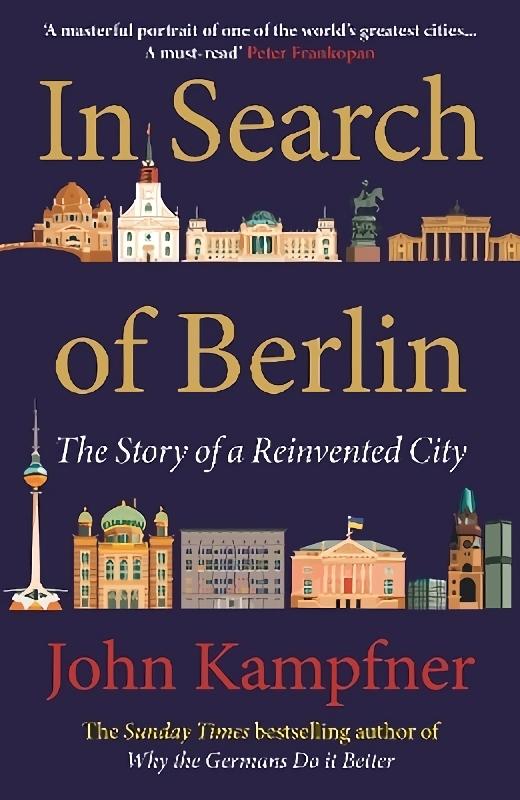
A WATERSTONES BEST HISTORY BOOK OF 2023 LONGLISTED FOR THE 2024 ONDAATJE PRIZE 'A masterful portrait of one of the world's greatest cities... A must-read' PETER FRANKOPAN 'Such a delightful read' KATJA HOYER, The Times 'Berlin may well be Europe's most enigmatic city and John Kampfner is the ideal guide.' JONATHAN FREEDLAND, Sunday Times bestselling author of The Escape Artist 'Gripping' Financial Times No other city has had so many lives, survived so many disasters and has reinvented itself so many times. No other city is like Berlin. Ever since John Kampfner was a young journalist in Communist East Berlin, he hasn't been able to get the city out of his mind. It is a place tortured by its past, obsessed with memories, a place where traumas are unleashed and the traumatised have gathered. Over the past four years Kampfner has walked the length and breadth of Berlin, delving into the archives, and talking to historians and writers, architects and archaeologists. He clambers onto a fallen statue of Lenin; he rummages in boxes of early Medieval bones; he learns about the cabaret star so outrageous she was thrown out of the city. Berlin has been a military barracks, industrial powerhouse, centre of learning, hotbed of decadence - and the laboratory for the worst experiment in horror known to man. Now a city of refuge, it is home to 180 nationalities, and more than a quarter of the population has a migrant background. Berlin never stands still. It is never satisfied. But it is now the irresistible capital to which the world is gravitating. In Search of Berlin is an 800-year story, a dialogue between past and present; it is a new way of looking at this turbulent and beguiling city on its never-ending journey of reinvention. Autorid: John Kampfner
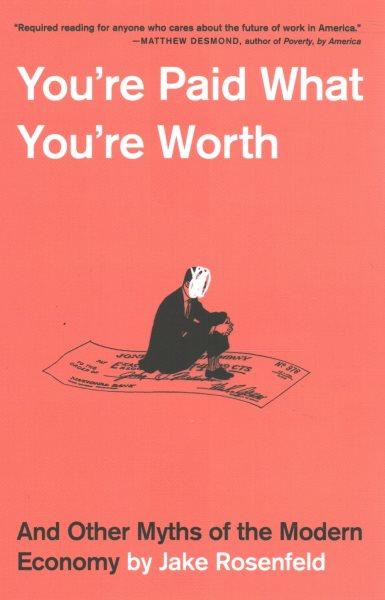
Setting wages isnt an exact science, but we like to think that our workplace performance provides an objective basis for pay. Youre Paid What Youre Worth offers a bold theory to the contrary, arguing that pay is decided in contests over interests and idealsthat social conflicts, not economic metrics, determine who gets how much. This is the book to throw at your human resources directornot literally, of coursewhen any attempt is being made to bamboozle you about how decisions on pay have been made It is a closely argued, thoroughly researched treatise on how we got here and how pay could be both fairer and more effective as a reward.Stefan Stern, Financial WorldA flat-out revelation of a book by one of the nations top scholars of the labor market required reading for anyone who cares about the future of work in America.Matthew Desmond, author of Poverty, by AmericaJake Rosenfeld pulls back the curtain on the multifaceted cultural, institutional, and market forces at play in wage-setting. This timely book illuminates the power dynamics and often arbitrary forces that have contributed to the egregious inequality in the U.S. labor marketand then lays out a clear blueprint for progressive change.Thea Lee, President of the Economic Policy InstituteJob performance and where you work play a role in determining pay, but judgments of productivity and value are highly subjective. What makes a lawyer more valuable than a teacher? How do you measure the output of a police officer, a professor, or a reporter? Why, in the past few decades, did CEOs suddenly become hundreds of times more valuable than their employees? The answers lie not in objective criteria but in battles over interests and ideals. Four dynamics are paramount: power, inertia, mimicry, and demands for equity. Power struggles legitimize pay for particular jobs, and organizational inertia makes that pay seem natural. Mimicry encourages employers to do what their peers are doing. And workers are on the lookout for practices that seem unfair. Jake Rosenfeld shows us how these dynamics play out in real-world settings, drawing on cutting-edge economics and original survey data, with an eye for compelling stories and revealing details.Youre Paid What Youre Worth gets to the heart of that most basic of social questions: Who gets what and why? Autorid: Jake Rosenfeld
The House of Ideas is proud to celebrate the 60th anniversary of Daredevil with an Omnibus collecting every Marvel comic released during the month of his debut! DAREDEVIL presented a rougher, grittier take on the super hero concept, with young Matt Murdock growing up on the wrong side of the tracks with a father on the hook with the mob. Stan Lee and Bill Everett crafted a brilliant blend of crime, action and heroics that built the foundation for one of Marvel's greatest characters. But what else was happening that historic month? Marvel boasted a wonderfully engaging mix of romance, teen humor, Westerns and, of course, a growing stable of increasingly interconnected super heroes! Take a trip back to the spinner rack and relive them all! Collecting DAREDEVIL (1964) #1, AMAZING SPIDER-MAN (1963) #12, FANTASTIC FOUR (1961) #26, JOURNEY INTO MYSTERY (1952) #103, KID COLT OUTLAW #116, MILLIE THE MODEL #120, MODELING WITH MILLIE #30, PATSY WALKER #114, STRANGE TALES (1951) #120, TALES OF SUSPENSE (1959) #53, TALES TO ASTONISH (1959) #55, TWO-GUN KID #69, AVENGERS (1963) #5, PATSY AND HEDY #94, RAWHIDE KID (1955) #40, SGT. FURY #7 and X-MEN (1963) #5. Autorid: Stan Lee, Marvel Various, Jack Kirby
A young woman from Stockholm relocates to her boyfriends home town, a small village in the far north of Sweden. The relationship has ended by the time she arrives. Inlands is a story about loss and change and examines the tangible mechanics of everyday life, the mentality of a small community and the relationship between freedom and loneliness. Autorid: Elin Willows, Duncan J. Lewis
A hunter uses traps to catch his prey but what happens when the prey is also using snares and his are more sophisticated? LA Detective Oskar Salo investigates a series of gruesome murders all of which point to the work of a serial killer. Salo soon discovers that things are far more complicated than they first appear, and when his investigations threaten to uncover events concerning a case from two decades earlier, in the pre-Rodney King era when things were done a little differently in the LAPD, he risks having everything that he cares about taken away from him. Dark Reaper is a subtle and intelligent exploration of the genre dealing with the psychology, politics and science of police work in a complex society. Autorid: Howard Chilvers
The first in the Camille Delaney Mystery series, The Complication is a fast-paced legal and medical mystery filled with greed, murder, and intrigue.After her friend Dallas Jackson suffers a fatal complication during routine surgery, Seattle attorney Camille Delaney is determined to find out why. Dallas was like a father to Camille, and she feels she owes it to him and his family to get answers. Knowing she could lose her partnership at her high-profile law firm for undertaking such an investigation, Camille takes a huge risk and starts her own firm, determined to bring Dallass killer to justice. She turns for help to her friend Trish Seaholm, a quick-witted chameleonlike private investigator with an uncanny knack for blending into any situation.As the two dive headfirst into a dangerous investigation, they discover disturbing evidence that Dallass case is not an isolated incident. A shocking number of patients are dying during run-of-the-mill surgeries at small-town hospitalsat the hands of the same two surgeons. Can Camille uncover the reason for these unexplained deaths before more patients fall victim? Or will her search for answers land her in the crosshairs of a killer? What starts as a simple investigation into a friends surgery gone wrong unravels something much darkera trail of unexplained deaths at the hands of two unscrupulous surgeons. Autorid: Amanda DuBois
With Edward VII on the throne and the dawn of a new century, Britain embraced the technology of the future. Motor transport began to replace the horse, and by the end of the Edwardian era, the possibilities of the aeroplane could be seen. While the telephone was for business communication, the popular craze was to send picture postcards, especially from the seaside. In the home, vacuum cleaners were the latest innovation, while in the streets women protested for their rights. Ping Pong was the fashionable parlour game for adults, whilst the teddy bear quickly became the cuddly companion for children. Like the other vibrant titles in the series, 'The Edwardian Scrapbook' offers a glimpse at what used to be drawing upon Robert Opie's unrivalled collection of ephemera and packaging. It adds to our knowledge of the recent past and is packed full of information and nostalgia; an evocative, vivid and vibrant look at British history. AUTHOR Since the 1970s, Robert Opie has amassed an unrivalled collection of packaging. 1000 colour illustrations Autorid: Robert Opie
The gaudy years of the Restoration are long gone and Robert Merivel, physician and courtier to King Charles II, sets off for the French court in search of a fresh start. But royal life at the Palace of Versailles - all glitter in front and squalor behind - leaves him in despair, until a chance encounter with the seductive Madame de Flamanville. The major new historical novel from Orange prize-winning Rose Tremain, set in Restoration England and starring the world's favourite courtier, Robert Merivel. The gaudy years of the Restoration are long gone. Robert Merivel, physician and courtier to Charles II, loved for his gift to turn sorrow into laughter, now faces the agitations and anxieties of middle age. Questions crowd his mind: has he been a good father? Is he a fair master? Is he the King's friend or the King's slave? In search of answers, Merivel sets off for the French court. But Versailles -- all glitter in front and squalor behind -- leaves Merivel in despair, until a chance encounter with Madame de Flamanville, a seductive Swiss botanist, allows him to dream of an honourable future. But will that future ever be his? Back home at Bidnold Manor, his loyalty and medical skill are tested to their limits, while the captive bear he has brought back from France begins to cause unlooked-for havoc in his heart and on his estate. With a cascade of lace at his neck and a laugh that can burst out of him in the midst of torment, Merivel is a uniquely brilliant creation, soulful, funny, outrageous and achingly sad. He is Everyman. His unmistakable, self-mocking voice speaks directly to us down the centuries. Autorid: Rose Tremain