Taking the legends surrounding King Arthur and weaving in new psychological elements of personal desire and courtly manner, Chretien de Troyes fashioned a new form of medieval Romance. The Knight of the Cart is the first telling of the adulterous relationship between Lancelot and Arthur's Queen Guinevere, and in The Knight with the Lion Yvain neglects his bride in his quest for greater glory. Erec and Enide explores a knight's conflict between love and honour, Cliges exalts the possibility of pure love outside marriage, while the haunting The Story of the Grail chronicles the legendary quest. Rich in symbolism, these evocative tales combine closely observed detail with fantastic adventure to create a compelling world that profoundly influenced Malory, and are the basis of the Arthurian legends we know today.
This is an all new version of the popular "Parallel Texts" series, containing eight pieces of contemporary fiction in the original Spanish and in English translation. Including stories by Fuentes, Molinas, Marquez and Cortazar, this volume gives a fascinating insight into Spanish and Latin American culture and literature as well as providing an invaluable educational tool.
As private secretary to the Emperor Hadrian, the scholar Suetonius had access to the imperial archives and used them (along with eyewitness accounts) to produce one of the most colourful biographical works in history. "The Twelve Caesars" chronicles the public careers and private lives of the men who wielded absolute power over Rome, from the foundation of the empire under Julius Caesar and Augustus, to the decline into depravity and civil war under Nero and the recovery that came with his successors. A masterpiece of observation, anecdote and detailed physical description, "The Twelve Caesars" presents us with a gallery of vividly drawn - and all too human - individuals.
In "The Book of the Courtier" (1528), Baldesar Castiglione, a diplomat and Papal Nuncio to Rome, sets out to define the essential virtues for those at Court. In a lively series of imaginary conversations between the real-life courtiers to the Duke of Urbino, his speakers discuss qualities of noble behaviour - chiefly discretion, decorum, nonchalance and gracefulness - as well as wider questions such as the duties of a good government and the true nature of love. Castiglione's narrative power and psychological perception make this guide both an entertaining comedy of manners and a revealing window onto the ideals and preoccupations of the Italian Renaissance at the moment of its greatest splendour.
Samuel Richardson's "Pamela" is a captivating story of one young woman's rebellion against the social order, edited by Peter Sabor with an introduction by Margaret Ann Doody in "Penguin Classics". Fifteen-year-old Pamela Andrews, alone in the world, is pursued by her dead mistress' son. Although she is attracted to Mr B, she holds out against his demands and threats of abduction and rape, determined to protect her virginity and abide by her moral standards. Psychologically acute in its explorations of sex, freedom and power, Richardson's first novel caused a sensation when it was published, with its depiction of a servant heroine who dares to assert herself. Richly comic and full of lively scenes and descriptions, "Pamela" contains a diverse cast of characters ranging from the vulgar and malevolent Mrs Jewkes to the aggressive but awkward country squire who serves this unusual love story as both its villain and hero. In her introduction, Margaret Ann Doody discusses the epistolary genre of novels and examines the role of women and class differences.This edition, based on the 1801 text and incorporating corrections made in 1810, makes Richardson's final version of the two-volume generally available for the first time. Samuel Richardson (1689-1761) was born in Derbyshire, the son of a joiner. He received little formal education, but in 1706 was apprenticed to a London printer, going on to become a leading figure of the trade in the capital. "Pamela" originated as a volume of model letters for unskilled letter-writers, but as Richardson became more fascinated by the characters in his letters than the letters themselves, the germ of a novel began to emerge. Upon its publication in 1740 "Pamela; or, Virtue Rewarded" became a national sensation. If you enjoyed "Pamela", you might like Daniel Defoe's "Moll Flanders", also available in "Penguin Classics".
Eusebius' account is the only surviving historical record of the Church during its crucial first 300 years. Bishop Eusebius, a learned scholar who lived most of his life in Caesarea in Palestine, broke new ground in writing the History and provided a model for all later ecclesiastical historians. In tracing the history of the Church from the time of Christ to the Great Persecution at the beginning of the fourth century, and ending with the conversion of the Emperor Constantine, his aim was to show the purity and continuity of the doctrinal tradition of Christianity and its struggle against persecutors and heretics.
Collecting the most incisive and influential writings of one of Rome's finest orators, Cicero's "Selected Works" is translated with an introduction by Michael Grant in "Penguin Classics". Lawyer, philosopher, statesman and defender of Rome's Republic, Cicero was a master of eloquence, and his pure literary and oratorical style and strict sense of morality have been a powerful influence on European literature and thought for over two thousand years in matters of politics, philosophy, and faith. This selection demonstrates the diversity of his writings, and includes letters to friends and statesmen on Roman life and politics; the vitriolic Second Philippic Against Antony; and his two most famous philosophical treatises, "On Duties" and "On Old Age" - a celebration of his own declining years. Written at a time of brutal political and social change, Cicero's lucid ethical writings formed the foundation of the Western liberal tradition in political and moral thought that continues to this day. This translation by Michael Grant conveys the elegance of Cicero's writings.His introduction describes their social and political background, while maps, genealogical charts, timelines and a glossary place the works in context. Marcus Tullius Cicero (106-43 BC), Roman orator and statesman, was born at Arpinium to a wealthy local family. Having been educated in Rome, by 70 BC he had established himself as a leading barrister and was beginning a successful political career. Cicero received honours usually reserved only for the Roman aristocracy and was one of the greatest Roman orators. If you enjoyed "Selected Works", you might like Suetonius' "The Twelve Caesars", also available in "Penguin Classics".
This title features an extraordinary collection of thematically linked essays, including "The Uncanny", "Screen Memories" and "Family Romances". Leonardo da Vinci fascinated Freud primarily because he was keen to know why his personality was so incomprehensible to his contemporaries. In this probing biographical essay he deconstructs both da Vinci's character and the nature of his genius. As ever, many of his exploratory avenues lead to the subject's sexuality - why did da Vinci depict the naked human body the way he did? What of his tendency to surround himself with handsome young boys that he took on as his pupils? Intriguing, thought-provoking and often contentious, this volume contains some of Freud's best writing.
The Desert Fathers were the first Christian monks, living in solitude in the deserts of Egypt, Palestine, and Syria. In contrast to the formalised and official theology of the "founding fathers" of the church, the Desert Fathers were ordinary Christians who chose to renounce the world and live lives of celibacy, fasting, vigil, prayer and poverty in direct and simple response to the gospel. Their sayings were first recorded in the 4th century and consist of spiritual advice, anecdotes and parables. The Desert Fathers' teachings and lives have inspired poetry, opera and art, as well as providing spiritual nourishment and a template for monastic life.
English crime novelist Charles Latimer is travelling in Istanbul when he makes the acquaintance of Turkish police inspector Colonel Haki. It is from him that he first hears of the mysterious Dimitrios - an infamous master criminal, long wanted by the law, whose body has just been fished out of the Bosphorus. Fascinated by the story, Latimer decides to retrace Dimitrios' steps across Europe to gather material for a new book. But, as he gradually discovers more about his subject's shadowy history, fascination tips over into obsession. And, in entering Dimitrios' criminal underworld, Latimer realizes that his own life may be on the line.
The Psychedelic Experience, created by the prophetic shaman-professors Timothy Leary, Ralph Metzer and Richard Alpert, is a foundational text that serves as a model and a guide for all subsequent mind-expanding inquiries. In this wholly unique book, the authors provide an interpretation of an ancient sacred manuscript, the Tibetan Book of the Dead, from a psychedelic perspective.The Psychedelic Experience describes their discoveries in broadening spiritual consciousness through a combination of Tibetan mediation techniques and psychotropic substances.
Misha Glenny's acclaimed account of the war in former Yugoslavia contains substantial new material that discusses the end of the five-year conflict and looks ahead to an uneasy future in this turbulent region. Writing in the "Evening Standard", Fitzroy Maclean said 'Misha Glenny's deeply disturbing book is, to my mind, essential reading for anyone trying to understand, or even just follow, events in what was once Yugoslavia'.
Turning to philosophers, historians, politicians and artists, De Botton examines where our anxieties about success and status originate. The hardback edition has spent two and a half months in the }Sunday Times{ top five bestseller list, selling over 50,000 copies. This paperback edition will have huge publicity, including nationwide events and features. "De Botton has taken philosophy back to its simplest and most important purpose: helping us live our lives" }Independent{
This title enchants stories about the evolution of the universe, with characters that are fashioned from mathematical formulae and cellular structures. They disport themselves among galaxies, experience the solidification of planets, move from aquatic to terrestrial existence, play games with hydrogen atoms - and have time for a love life. 'Naturally, we were all there, - old Qfwfq said, - where else could we have been? Nobody knew then that there could be space. Or time either: what use did we have for time, packed in there like sardines?'
Herzog is alone, now that Madeleine has left him for his best friend. Solitary, in a crumbling house which he shares with rats, he is buffeted by a whirlwind of mental activity. People rumoured that his mind had collapsed. But was it true? Locked for days in the custody of his rambling memories, Herzog scrawls frantic letters which he never mails. His mind buzzes with conundrums and polemics, writing in a spectacular intellectual labyrinth. Is he crazy, or is he a genius?..
A pioneering work of modernist fiction, using her unique stream-of-consciousness technique to explore the inner lives of her characters, Virginia Woolf's "To the Lighthouse" is widely regarded as one of the greatest artistic achievements of the twentieth century. This "Penguin Classics" edition is edited by Stella McNichol, with an introduction and notes by Hermione Lee. "To the Lighthouse" is at once a vivid impressionistic depiction of a family holiday, and a meditation on marriage, on parenthood and childhood, on grief, tyranny and bitterness. For years now the Ramsays have spent every summer in their holiday home in Scotland, and they expect these summers will go on forever; but as the First World War looms, the integrity of family and society will be fatally challenged. With a psychologically introspective mode, the use of memory, reminiscence and shifting perspectives gives the novel an intimate, poetic essence, and at the time of publication in 1927 it represented an utter rejection of Victorian and Edwardian literary values.Virginia Woolf (1882-1941) is regarded as a major 20th century author and essayist, a key figure in literary history as a feminist and modernist, and the centre of 'The Bloomsbury Group', an informal collective of artists and writers that exerted a powerful influence over early twentieth-century British culture. Between 1925 and 1931 Virginia Woolf produced what are now regarded as her finest masterpieces, from "Mrs Dalloway" (1925) to the poetic and highly experimental novel "The Waves" (1931). She also maintained an astonishing output of literary criticism, short fiction, journalism and biography, including the playfully subversive "Orlando" (1928) and "A Room of One's Own" (1929) a passionate feminist essay. If you enjoyed "To the Lighthouse", you might like James Joyce's "A Portrait of the Artist as a Young Man", also available in "Penguin Classics". "Bears endless re-reading ...the sea encircles the story in a brilliant ebb and flow". (Rachel Billington).
Sie brachte Gertrude Stein im Alter von fast sechzig Jahren zwar endlich den ersehnten Erfolg als Autorin, trug ihr aber zugleich die Feindschaft vieler ihrer früheren Freunde ein: die Autobiographie von Alice B. Toklas. Das amüsanteste »Who is who« der Pariser Boheme.
Gives readers a taste of the Classics' huge range and diversity, with works from around the world and across the centuries - including fables, decadence, heartbreak, tall tales, satire, ghosts, battles and elephants.
Alice ist 29 und liebt Schlafen, Schokolade, ihr marodes Haus - und ihren Ehemann Nick. Obendrein freut sie sich auf "Sultana" - ihr erstes Baby. Doch nachdem sie sich beim Step-Aerobic den Kopf angeschlagen hat, erzählen ihr alle, sie habe die letzten 10 Jahre vergessen. Alice, eigentlich 39, findet ihr Leben vollkommen verändert vor: Sie hat drei Kinder und einen Ehemann, der sie allenfalls als ärgste Feindin betrachtet. Und wer ist eigentlich "Gina", die jeder versucht nicht zu erwähnen?
SHORTLISTED FOR THE BBC SAMUEL JOHNSON PRIZE 2010 They were masters of the financial universe, flying in private jets and raking in billions. They thought they were too big to fail. Yet they would bring the world to its knees. Andrew Ross Sorkin, the news-breaking New York Times journalist, delivers the first true in-the-room account of the most powerful men and women at the eye of the financial storm - from reviled Lehman Brothers CEO Dick
Dambisa Moyo's "Dead Aid" reveals why millions are actually poorer because of aid, unable to escape corruption and reduced, in the West's eyes, to a childlike state of beggary. We all want to help. Over the past fifty years $1 trillion of development aid has flowed from Western governments to Africa, with rock stars and actors campaigning for more. But this has not helped Africa. It has ruined it. "Dead Aid" shows us another way. Using hard evidence to illustrate her case, Moyo shows how, with access to capital and with the right policies, even the poorest nations can turn themselves around. First we must destroy the myth that aid works - and make charity history. "Articulate, self-confident and angry ...this book marks a turning point". ("Spectator"). "A damning assessment of the failures of sixty years of western development". ("Financial Times"). "Kicks over the traditional piety that Western aid benefits the third world". ("Sunday Herald Books of the Year"). "Dambisa Moyo makes a compelling case for a new approach". (Kofi Annan). "This reader was left wanting a lot more Moyo, a lot less Bono". (Niall Ferguson).Dambisa Moyo worked at Goldman Sachs for eight years, having previously worked for the World Bank as a consultant. Moyo completed a PhD in Economics at Oxford University, and holds a Masters from Harvard University Kennedy School of Government. Her other books include "Winner Take All" and "How the West was Lost". She was born and raised in Lusaka, Zambia.
Originally published anonymously, "Nature" was the first modern essay to recommend the appreciation of the outdoors as an all-encompassing positive force. Emerson's writings were recognized as uniquely American in style and content, and launched the idea of going for a walk as a new way of looking at the world. Throughout history, some books have changed the world. They have transformed the way we see ourselves - and each other. They have inspired debate, dissent, war and revolution. They have enlightened, outraged, provoked and comforted. They have enriched lives - and destroyed them. Now Penguin brings you the works of the great thinkers, pioneers, radicals and visionaries whose ideas shook civilization and helped make us who we are.
The writings in this volume cast a glimmer of light upon the emerging traditions and organization of the infant church, during an otherwise little-known period of its development. A selection of letters and small-scale theological treatises from a group known as the Apostolic Fathers, several of whom were probably disciples of the Apostles, they provide a first-hand account of the early Church and outline a form of early Christianity still drawing on the theology and traditions of its parent religion, Judaism. Included here are the first "Epistle of Bishop Clement of Rome", an impassioned plea for harmony; "The Epistle of Polycarp"; "The Epistle of Barnabas"; "The Didache"; and, the Seven Epistles written by Ignatius of Antioch - among them his moving appeal to the Romans that they grant him a martyr's death.
The first book in his award-winning "Rabbit" series, John Updike's "Rabbit, Run" contains an afterword by the author in "Penguin Modern Classics". It's 1959 and Harry 'Rabbit' Angstrom, one time high school sports superstar, is going nowhere. At twenty-six he is trapped in a second-rate existence - stuck with a fragile, alcoholic wife, a house full of overflowing ashtrays and discarded glasses, a young son and a futile job. With no way to fix things, he resolves to flee from his family and his home in Pennsylvania, beginning a thousand-mile journey that he hopes will free him from his mediocre life. Because, as he knows only too well, 'after you've been first-rate at something, no matter what, it kind of takes the kick out of being second-rate'. John Updike (1932-2009) was born in Shillington, Pennsylvania. He graduated from Harvard College in 1954, and spent a year at Oxford, England, at the Ruskin School of Drawing and Fine Art. From 1955 to 1957 he was a member of staff at "The New Yorker". Updike was the author of twenty-one novels as well as numerous collections of short stories, poems and criticism, and is one of only three authors to win more than one Pulitzer Prize.His most famous works are the Harry 'Rabbit' Angstrom series, all of which are published in "Penguin Modern Classics": "Rabbit, Run" (1960), "Rabbit Redux" (1971), "Rabbit is Rich" (1981) and "Rabbit at Rest" (1990). If you enjoyed "Rabbit, Run", you might like Don DeLillo's "Americana", also available in "Penguin Modern Classics". "It is sexy, in bad taste, violent and basically cynical. And good luck to it". (Angus Wilson, "Observer"). "That special polish, that brilliance; Updike is among the best". (Malcolm Bradbury). "Brilliant and poignant...By his compassion, clarity of insight, and crystal-bright rose, [Updike] makes Rabbit's sorrow his and our own". ("Washington Post").
'A landmark, bringing together a lifetime's work on Lewis Carroll by writer and mathematician Martin Gardner. He dazzles on Carroll's puzzles and games of logic and entertains on everything from Alice's influence on the Beat poet Jack Kerouac to how mercury in hat linings turned hatters mad...it is unsurpassed' - Jackie Wullschlager, "Financial Times". 'The indispensable guide to a classic of English literature...no one who has ever wondered about the meaning of 'Jabberwocky' should fail to include on their Christmas list' - Robert McCrum, "Observer".
The Upanishads, the earliest of which were composed in Sanskrit between 800 and 400 bce by sages and poets, form part of the Vedas - the sacred and ancient scriptures that are the basis of the Hindu religion. Each Upanishad, or lesson, takes up a theme ranging from the attainment of spiritual bliss to karma and rebirth, and collectively they are meditations on life, death and immortality. The essence of their teachings is that truth can by reached by faith rather than by thought, and that the spirit of God is within each of us - we need not fear death as we carry within us the promise of eternal life.
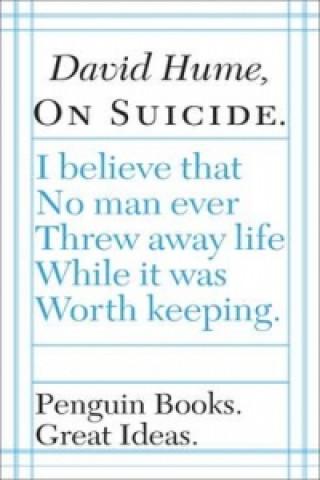
Throughout history, some books have changed the world. They have transformed the way we see ourselves and each other. They have inspired debate, dissent, war and revolution. They have enlightened, outraged, provoked and comforted. They have enriched lives and destroyed them. Now Penguin brings you the works of the great thinkers, pioneers, radicals and visionaries whose ideas shook civilization and helped make us who we are. One of the most important thinkers ever to write in English, the Empiricist David Hume liberated philosophy from the superstitious constraints of religion; here, he argues that all are free to choose between life and death, considers the nature of personal taste and succinctly criticises common philosophies of the time.
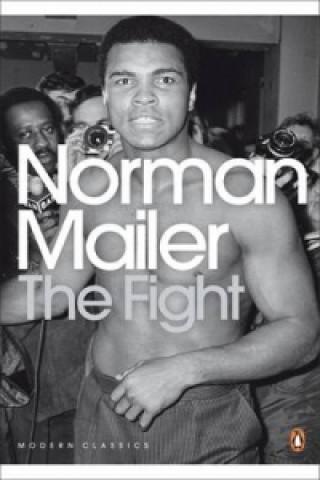
Norman Mailer's, "The Fight" focuses on the 1975 World Heavyweight Boxing Championship in Kinshasa, Zaire. Muhammad Ali met George Foreman in the ring. Foreman's genius employed silence, serenity and cunning. He had never been defeated. His hands were his instrument, and 'he kept them in his pockets the way a hunter lays his rifle back into its velvet case'. Together the two men made boxing history in an explosive meeting of two great minds, two iron wills and monumental egos.
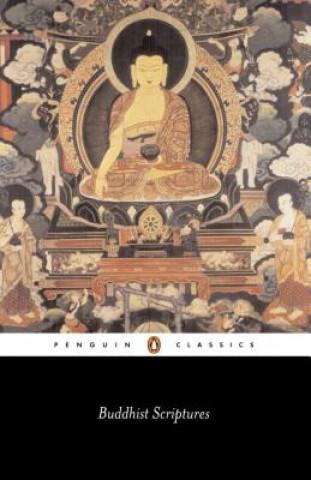
While Buddhism has no central text such as the Bible or the Koran, there is a powerful body of scripture from across Asia that encompasses the dharma, or the teachings of Buddha. This rich anthology brings together works from a broad historical and geographical range, and from languages such as Pali, Sanskrit, Tibetan, Chinese and Japanese. There are tales of the Buddha's past lives, a discussion of the qualities and qualifications of a monk, and an exploration of the many meanings of Enlightenment. Together they provide a vivid picture of the Buddha and of the vast nature of the Buddhist tradition.
Plutarch's vivid and engaging portraits of the Spartans and their customs are a major source of our knowledge about the rise and fall of this remarkable Greek city-state between the sixth and third centuries BC. Through his Lives of Sparta's leaders and his recording of memorable Spartan Sayings he depicts a people who lived frugally and mastered their emotions in all aspects of life, who also disposed of unhealthy babies in a deep chasm, introduced a gruelling regime of military training for boys, and treated their serfs brutally. Rich in anecdote and detail, Plutarch's writing brings to life the personalities and achievements of Sparta with unparalleled flair and humanity.
Midoriya inherits the superpower of the world's greatest hero, but greatness won't come easy. What would the world be like if 80 percent of the population manifested superpowers called "Quirks"? Heroes and villains would be battling it out everywhere! Being a hero would mean learning to use your power, but where would you go to study? The Hero Academy of course! But what would you do if you were one of the 20 percent who were born Quirkless?Summer vacation is over, and it's back to school for the students of U.A. High! But before classes can get started, Midoriya and Bakugo need to settle a beef between them that's been festering for a long time. Even if they can get past this bump in the road on the way to becoming superheroes, the hurdles just keep getting higher and higher-the hero work studies in the upcoming year will bring them even closer to their goal...or their destruction! Fun, action-packed story that takes inspiration from American superhero comics.
Fictional account of the spiritual odyssey of an American woman in Australia. Summoned by a remote tribe of nomadic aboriginals to accompany them on a walkabout through the outback, she takes a four month journey with them and learns how they live and thrive in natural harmony with the flora and fauna of their desert region.
A new blend of fantasy and horror for readers 11+, set in a wonderfully inventive world of lycanthropes, with appeal to boys. A big marketing campaign is expected, tapping into online fantasy communities and existing fans of adventure, fantasy and sci-fi.
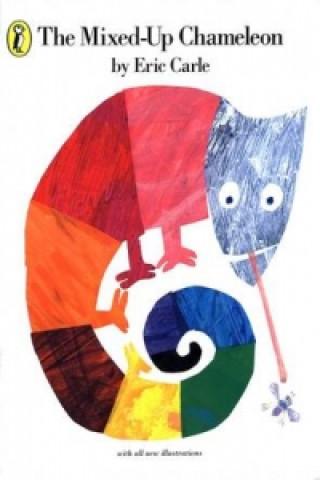
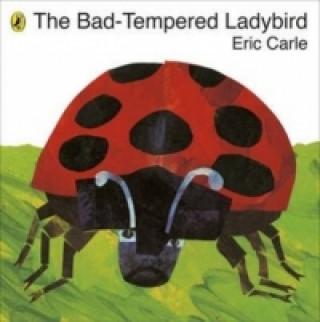
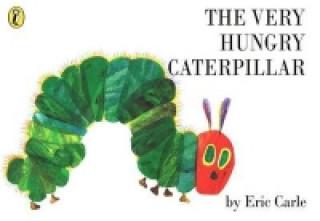
"The Mixed-Up Chameleon" is a captivating picture book from Eric Carle, author-illustrator of "The Very Hungry Caterpillar", that teaches young children the key differences between animals and the importance of being yourself. A chameleon's antics with colour, shape and size show what makes each animal different and why it's important to be yourself. Eric Carle is an award-winning and bestselling author-illustrator of books for very young children. His books include the much-loved classic "The Very Hungry Caterpillar", "Rooster's Off to See the World", "Today is Monday", "Draw Me a Star", "The Very Busy Spider" and "The Bad-Tempered Ladybird". His most famous book "The Very Hungry Caterpillar" has sold over 33 million copies worldwide and has been translated into over 50 different languages; several enhanced editions of "The Very Hungry Caterpillar" are available from Puffin.
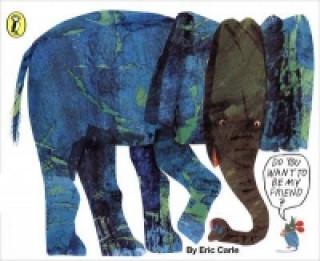
"Do you want to be my friend?" asks a little mouse of a horse, a peacock, an alligator and others in this classic and charming story. Only when he meets another little mouse, is the answer unequivocally, "Yes!" 'Each page of this ingenious, all but wordless picture book affords surprise, suspense, and repeated pleasure for the viewer' - "Booklist".
Der kleine Käfer Immerfrech ist ein ziemliches Großmaul, denn er fordert alle Tiere, denen er begegnet, zum Kampf heraus - bis ein riesiger Wal ihm eine Lektion erteilt, die er nicht so schnell vergessen wird.§Ein lustiges und durchaus lehrreiches Bilderbuch, mit dem jedes Kind auch ganz leicht die Uhrzeit lesen lernt.
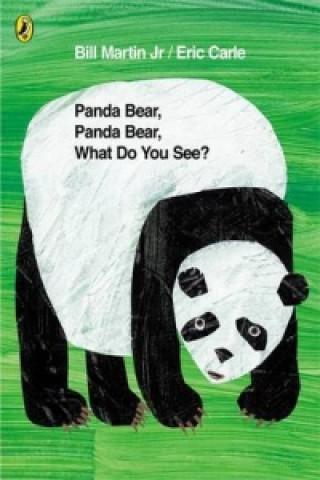
The creators of the children's classic "Brown Bear, Brown, What Do You See?" team up again in this special book about a very important topic - endangered animals. A bald eagle soars, a spider monkey swings, a macaroni penguin struts and a red wolf sneaks through Bill Martin Jr's rhythmic text and Eric Carle's vibrant images, and all are watched over by our best hope for the future - a dreaming child.
Eine gespenstische Gesellschaft "grauer Herren" ist am Werk und veranlasst immer mehr Menschen, Zeit zu sparen. Aber in Wirklichkeit betrügen sie die Menschen um diese ersparte Zeit. Als die Not am größten ist und die Welt ihnen schon endgültig zu gehören scheint, entschließt sich Meister Hora, der geheimnisvolle "Verwalter der Zeit", zum Eingreifen. Doch dazu braucht er die Hilfe eines Menschenkindes. Die Welt steht still und Momo, die struppige kleine Heldin der Geschichte, kämpft ganz allein, mit nichts als einer Blume in der Hand und einer Schildkröte unter dem Arm, gegen das riesige Heer der "grauen Herren" - und siegt auf wunderbare Weise.
Harry Morgan was a hard, classic Hemingway hero. He had to be hard, rum-running, gun-running and man-running from Cuba to the Florida Keys in the Depression. He ran risks too, from stray coastguard bullets and sudden double-crosses.
Charles Mason (1728 -1786) and Jeremiah Dixon (1733-1779) were the British Surveyors best remembered for running the boundary between Pennsylvania and Maryland that we know today as the Mason-Dixon Line. Here is their story as re-imagined by Thomas Pynchon, in an updated eighteenth-century novel featuring Native Americans and frontier folk, ripped bodices, naval warfare, conspiracies erotic and political and major caffeine abuse. We follow the mismatch'd pair - one rollicking, the other depressive; one Gothic, the other pre-Romantic - from their first journey together to the Cape of Good Hope, to pre-Revoluntionary America and back, through the stange yet redemptive turns of fortune in their later lives, on a grand tour of the Enlightenment's dark hemisphere, as they observe and participate in the many opportunities for insanity presented them by the Age of Reason.