To order a full box, please select the following quantity: 80 pcs.LSZH (Low Smoke Zero Halogen)CAT6a tested up to 500 MHzwith snaglesswith gold-plated pinslow cable diameter: 3,6mmvery flexible, very easy to move to save space behind baseboardsSupport PoE++ CAT6a slim cables is an updated version of CAT6 slim cables. These are perfect for installations where you need to save space in IT Racks and Cabinets. They cables are thinner and very flexible which provides the installer a better accessibility and quick and easy switching. Furthermore it improves the Air-Flow, and thereby reducing the risk of down-time. All the cables are tested tested up to 500Mhz / 1000 Mbps (CAT6a standard) and are backwards compatible with CAT6, CAT5e and CAT5 cables. Each cable are manufactured with a snaggles with prevents the connector do be damaged when you install the cable through an installation with very less space. Warranty (Month(s)): 300Net Weight (Product,kg): 0,078Gross Weight (Package,kg): 0,088Height (Package,cm): 2,6Width (Package,cm): 25,0Depth (Package,cm): 17,5AWG wire size: 28Cable length (m): 5,0Cable shielding: U/UTP (UTP)Cable standard: Cat6aConductor material: CopperConductor type: StrandedConnector 1: RJ45Connector 1 gender: MaleConnector 2: RJ45Connector 2 gender: MaleConnector contacts plating: GoldData transfer rate (Mbit/s): 10000,0Doesn't contain: HalogenFrequency (MHz): 500,0Halogen-free: YesJacket material: Low smoke zero halogen (LSZH)Outer diameter (mm): 3,6Product colour: RedProduct series: Slim CableQuantity per pack (pc(s)): 1,0RoHS compliance: YesSnagless cable boot: YesSustainability certificates: RoHSTechnical features: Boot with kink protection, strain relief and latch protectionUNSPSC Code: 26121609
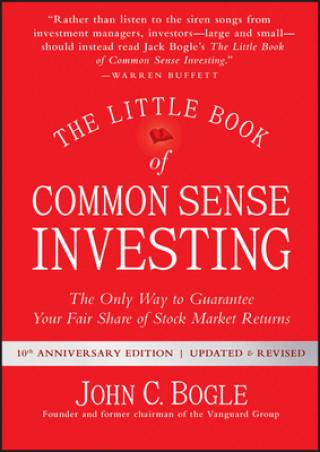
The best-selling investing "bible" offers new information, new insights, and new perspectives The Little Book of Common Sense Investing is the classic guide to getting smart about the market. Legendary mutual fund pioneer John C. Bogle reveals his key to getting more out of investing: low-cost index funds. Bogle describes the simplest and most effective investment strategy for building wealth over the long term: buy and hold, at very low cost, a mutual fund that tracks a broad stock market Index such as the S&P 500. While the stock market has tumbled and then soared since the first edition of Little Book of Common Sense was published in April 2007, Bogle's investment principles have endured and served investors well. This tenth anniversary edition includes updated data and new information but maintains the same long-term perspective as in its predecessor. Bogle has also added two new chapters designed to provide further guidance to investors: one on asset allocation, the other on retirement investing. A portfolio focused on index funds is the only investment that effectively guarantees your fair share of stock market returns.This strategy is favored by Warren Buffett, who said this about Bogle: "If a statue is ever erected to honor the person who has done the most for American investors, the hands-down choice should be Jack Bogle. For decades, Jack has urged investors to invest in ultra-low-cost index funds. . . . Today, however, he has the satisfaction of knowing that he helped millions of investors realize far better returns on their savings than they otherwise would have earned. He is a hero to them and to me."Bogle shows you how to make index investing work for you and help you achieve your financial goals, and finds support from some of the world's best financial minds: not only Warren Buffett, but Benjamin Graham, Paul Samuelson, Burton Malkiel, Yale's David Swensen, Cliff Asness of AQR, and many others. This new edition of The Little Book of Common Sense Investing offers you the same solid strategy as its predecessor for building your financial future. Build a broadly diversified, low-cost portfolio without the risks of individual stocks, manager selection, or sector rotation.Forget the fads and marketing hype, and focus on what works in the real world. Understand that stock returns are generated by three sources (dividend yield, earnings growth, and change in market valuation) in order to establish rational expectations for stock returns over the coming decade. Recognize that in the long run, business reality trumps market expectations. Learn how to harness the magic of compounding returns while avoiding the tyranny of compounding costs. While index investing allows you to sit back and let the market do the work for you, too many investors trade frantically, turning a winner's game into a loser's game.The Little Book of Common Sense Investing is a solid guidebook to your financial future.
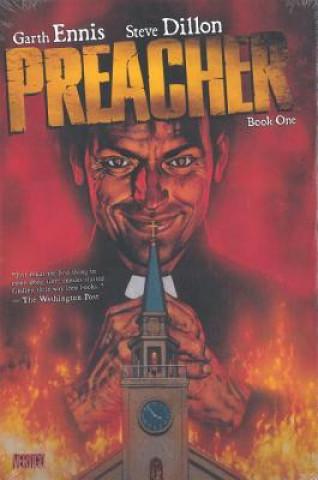
Merging with a bizarre spiritual force called Genesis, Texan Preacher Jesse Custer becomes completely disillusioned with the beliefs that he had dedicated his entire life to. Now possessing the power of "the word," an ability to make people do whatever he utters, Custer begins a violent and riotous journey across the country.
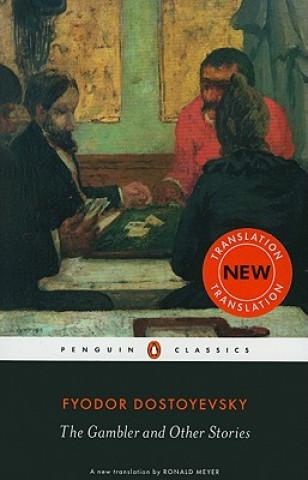
"The Gambler and Other Stories" is Fyodor Dostoyevsky's collection of one novella and six short stories reflecting his own life - indeed, "The Gambler", a story of a young tutor in the employment of a formerly wealthy Russian General, was written under a strict deadline so he could pay off his roulette debts. This volume includes "Bobok", the tale of a frustrated writer visiting a cemetery and enjoying the gossip of the dead; "The Dream of a Ridiculous Man", the story of one man's plan to commit suicide and the troubling dream that follows, as well as "A Christmas Party and a Wedding", "A Nasty Story" and "The Meek One".
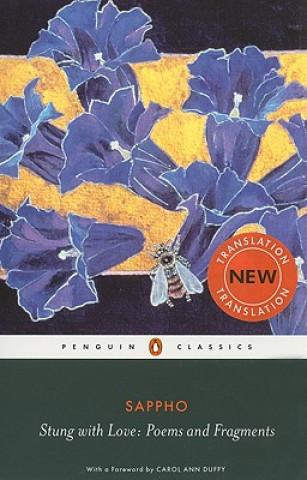
More or less 150 years after Homer's Iliad, Sappho lived on the island of Lesbos, west off the coast of what is present Turkey. Little remains today of her writings, which are said to have filled nine papyrus rolls in the great library at Alexandria some 500 years after her death. The surviving texts consist of a lamentably small and fragmented body of lyric poetry - among them poems of invocation, desire, spite, celebration, resignation and remembrance - that nevertheless enables us to hear the living voice of the poet Plato called the tenth Muse. This is a new translation of her surviving poetry.
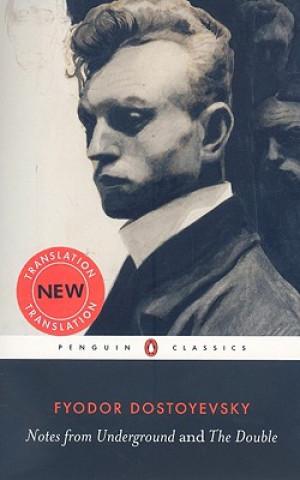
Collected here in Penguin Classics are two of Fyodor Dostoyevsky's shorter works, Notes from Underground and The Double, translated by Ronald Wilks with an introduction by Robert Louis Jackson. Alienated from society and paralysed by a sense of his own insignificance, the anonymous narrator of Dostoyevsky's groundbreaking Notes from Underground tells the story of his tortured life. With bitter irony, he describes his refusal to become a worker in the 'anthill' of society and his gradual withdrawal to an existence 'underground'. The seemingly ordinary world of St Petersburg takes on a nightmarish quality in The Double when a government clerk encounters a man who looks exactly like him - his double, perhaps, or possibly the darker side of his own personality. Like Notes from Underground, this is a masterly tragicomic study of human consciousness. Ronald Wilks's extraordinary new translation is accompanied here by an introduction by Robert Louis Jackson discussing these pivotal works in the context of Dostoyevsky's life and times. This edition also contains a chronology, bibliography, table of ranks and notes on each work. Fyodor Mikhailovich Dostoyevsky (1821-1881) was born in Moscow. From 1849-54 he lived in a convict prison, and in later years his passion for gambling led him deeply into debt. His other works available in Penguin Classics include Crime and Punishment, The Brothers Karamazov, The Idiot and Demons. If you enjoyed Notes from Underground and The Double, you might like Dostoyevsky's Demons, also available in Penguin Classics. 'Notes from Underground, with its mood of intellectual irony and alienation, can be seen as the first modern novel ... That sense of meaninglessness of existence that runs through much of twentieth-century writing - from Conrad and Kafka, to Beckett and beyond - starts in Dostoyevsky's work' Malcolm Bradbury
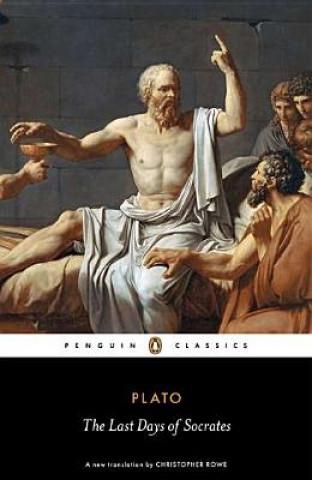
'Consider just this, and give your minds to this alone: whether or not what I say is just'. Plato's account of Socrates' trial and death (399 BC) is a significant moment in Classical literature and the life of Classical Athens. In these four dialogues, Plato develops the Socratic belief in responsibility for one's self and shows Socrates living and dying under his philosophy. In "Euthyphro", Socrates debates goodness outside the courthouse; "Apology" sees him in court, rebutting all charges of impiety; in "Crito", he refuses an entreaty to escape from prison; and in "Phaedo", Socrates faces his impending death with calmness and skillful discussion of immortality. Christopher Rowe's introduction to his powerful new translation examines the book's themes of identity and confrontation, and explores how its content is less historical fact than a promotion of Plato's Socratic philosophy.
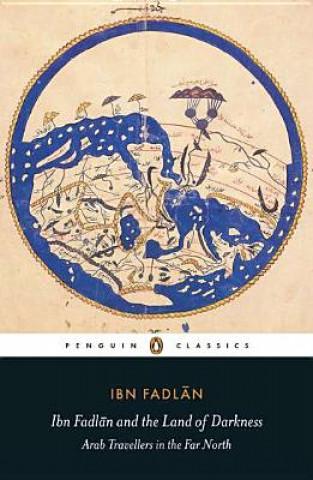
In 922 AD, an Arab envoy from Baghdad named Ibn Fadlan encountered a party of Viking traders on the upper reaches of the Volga River. In his subsequent report on his mission he gave a meticulous and astonishingly objective description of Viking customs, dress, table manners, religion and sexual practices, as well as the only eyewitness account ever written of a Viking ship cremation. Between the ninth and fourteenth centuries, Arab travellers such as Ibn Fadlan journeyed widely and frequently into the far north, crossing territories that now include Russia, Uzbekistan and Kazakhstan. Their fascinating accounts describe how the numerous tribes and people they encountered traded furs, paid tribute and waged wars. This accessible new translation offers an illuminating insight into the world of the Arab geographers, and the medieval lands of the far north.
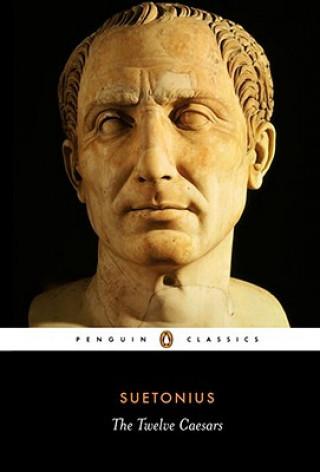
As private secretary to the Emperor Hadrian, the scholar Suetonius had access to the imperial archives and used them (along with eyewitness accounts) to produce one of the most colourful biographical works in history. "The Twelve Caesars" chronicles the public careers and private lives of the men who wielded absolute power over Rome, from the foundation of the empire under Julius Caesar and Augustus, to the decline into depravity and civil war under Nero and the recovery that came with his successors. A masterpiece of observation, anecdote and detailed physical description, "The Twelve Caesars" presents us with a gallery of vividly drawn - and all too human - individuals.
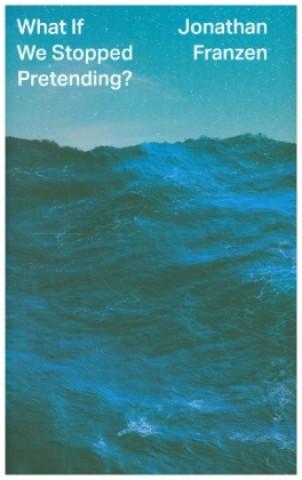
The climate crisis is here. Our chance to stop it has come and gone, but this doesn't have to mean the world is ending. 'If you care about the planet, and about the people and animals who live on it, there are two ways to think about this.You can keep on hoping that catastrophe is preventable, and feel ever more frustrated or enraged by the world's inaction. Or you can accept that disaster is coming, and begin to rethink what it means to have hope.' The honesty and realism of Jonathan Franzen's writings on climate have been widely denounced and just as widely celebrated. Here, in his definitive statement on the subject, Franzen confronts the world's failure to avert destabilising climate change and takes up the question: Now what?