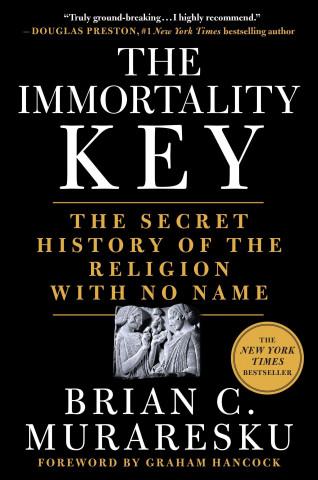
The most influential religious historian of the twentieth century, Huston Smith, once referred to it as the "best-kept secret" in history. Did the Ancient Greeks use drugs to find God? And did the earliest Christians inherit the same, secret tradition? A profound knowledge of visionary plants, herbs and fungi passed from one generation to the next, ever since the Stone Age? There is zero archaeological evidence for the original Eucharist – the sacred wine said to guarantee life after death for those who drink the blood of Jesus. The Holy Grail and its miraculous contents have never been found. In the absence of any hard data, whatever happened at the Last Supper remains an article of faith for today’s 2.5 billion Christians. In an unprecedented search for real answers, The Immortality Key examines the archaic roots of the ritual that is performed every Sunday for nearly one third of the planet. Religion and science converge to paint a radical picture of Christianity’s founding event...and, after centuries of debate, to solve history’s greatest puzzle once and for all. Before the birth of Jesus, the Ancient Greeks found salvation in their own sacraments. Sacred beverages were routinely consumed as part of the so-called Ancient Mysteries – elaborate rites that led initiates to the brink of death. The best and brightest from Athens and Rome flocked to the spiritual capital of Eleusis, where a holy beer unleashed heavenly visions for two thousand years. Others drank the holy wine of Dionysus to become one with the god. In the 1970s, renegade scholars claimed this beer and wine – the original sacraments of Western civilization – were spiked with mind-altering drugs. In recent years, vindication for the disgraced theory has been quietly mounting in the laboratory. The constantly advancing fields of archaeobotany and archaeochemistry have hinted at the enduring use of hallucinogenic drinks in antiquity. And with a single dose of psilocybin, the psychopharmacologists at Johns Hopkins and NYU are now turning self-proclaimed atheists into instant believers. But the smoking gun remains elusive. If these sacraments survived for thousands of years in our remote prehistory, from the Stone Age to the Ancient Greeks, did they also survive into the age of Jesus? Was the Eucharist of the earliest Christians, in fact, a psychedelic Eucharist? With an unquenchable thirst for evidence, Brian C. Muraresku takes the reader on his twelve-year global hunt for proof. He tours the ruins of Greece with its government archaeologists. He gains access to the hidden collections of the Louvre Museum to show the continuity from pagan to Christian wine. He unravels the Ancient Greek of the New Testament with a Catholic priest. He spelunks into the catacombs under the streets of Rome to decipher the lost symbols of Christianity’s oldest monuments. He breaches the secret archives of the Vatican to unearth manuscripts never before translated into English. And with leads from the archaeological chemists at the University of Pennsylvania and the Massachusetts Institute of Technology, he unveils the first scientific data for the ritual use of psychedelic drugs in classical antiquity. The Immortality Key reconstructs the suppressed history of women consecrating a forbidden, drugged Eucharist that was later banned by the Church Fathers. Women who were then targeted as witches during the Inquisition, when Europe’s sacred pharmacology largely disappeared. Have the scientists of today resurrected this lost technology? Is Christianity capable of returning to its roots? Featuring a Foreword by Graham Hancock, the New York Times bestselling author of America Before: The Key to Earth's Lost Civilization.
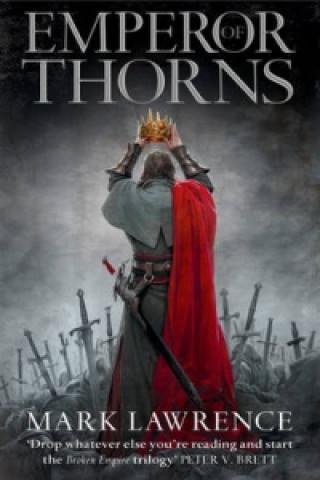
Lawrence brings the Broken Empire series to its devastating conclusion The path to the throne is broken - only the broken can walk it The world is cracked and time has run through, leaving us clutching at the end days. These are the days that have waited for us all our lives. These are my days. I will stand before the Hundred and they will listen. I will take the throne no matter who stands against me, living or dead, and if I must be the last emperor then I will make of it such an ending. This is where the wise man turns away. This is where the holy kneel and call on God. These are the last miles, my brothers. Don't look to me to save you. Run if you have the wit. Pray if you have the soul. Stand your ground if courage is yours. But don't follow me.Follow me, and I will break your heart.
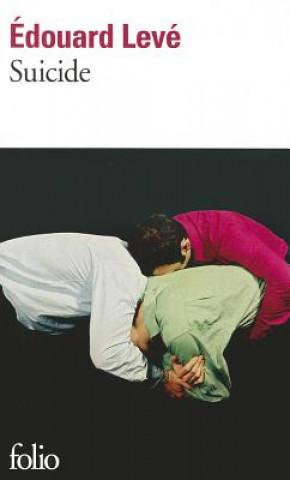
Es gibt Bücher, die sind von den Umständen ihrer Entstehung so sehr geprägt, dass man sie, sobald man diese Umstände kennt, mit anderen Augen betrachtet und nie mehr unbefangen lesen kann. Das Manuskript von Selbstmord hat Édouard Levé im Oktober 2007 an seinen Verleger geschickt, der ihn kurz darauf zurückrief, seine Begeisterung mitteilte, und ein Treffen mit ihm ausmachte, um über den Text zu sprechen. Zu diesem Treffen kam es nie: Édouard Levé, zu diesem Zeitpunkt 42 Jahre alt, erhängte sich nur wenige Tage nach dem Telefonat und noch vor dem verabredeten Treffen in seiner Pariser Wohnung. Selbstmord ist sein Vermächtnis, es ist eine Ansprache an ein Gegenüber, das Selbstmord verübt hat, es ist die Rekonstruktion, das Wiederaufrufen einer scheiternden Biografie. Derjenige, der sich selbst tötet, hinterlässt den Hinterbliebenen offene, unbeantwortbare Fragen. Er lässt sie mit diesen alleine. Vor dem Hintergrund der Geschichte des Autors gewinnt dieser zarte, kluge, suchende Text eine schockierende Dringlichkeit, die aufwühlt und bewegt, bestürzt und berührt.
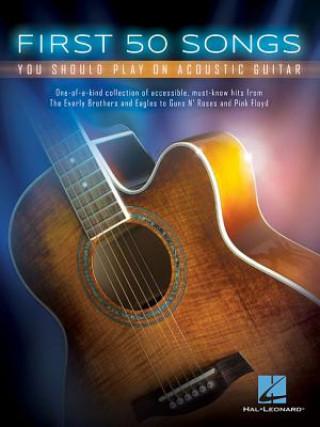
(Guitar Collection). If you're new to the guitar, you are probably eager to learn some songs. This book provides a combo of tab, chords, and lyrics for the most popular songs beginning guitarists want to play on the acoustic guitar. Includes: Against the W
(Easy Piano Songbook). A great collection of must-know classics for all pianists. Each arrangement is simple and streamlined, yet still captures the essence of the music. Contents: Arabesque (Burgmuller) * Arioso (Bach) * Ave Maria (Schubert) * Can Can (Of
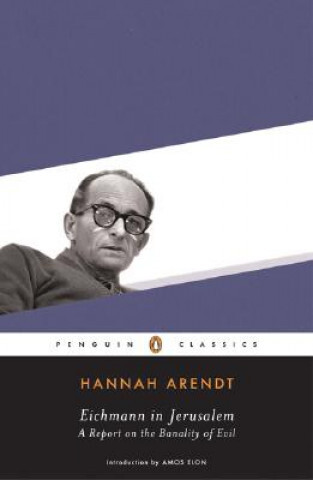
Hannah Arendt's portrayal of the terrible consequences of blind obedience, "Eichmann in Jerusalem: A Report on the Banality of Evil" contains an introduction by Amos Elon in "Penguin Classics". Sparking a flurry of heated debate, Hannah Arendt's authoritative and stunning report on the trial of German Nazi SS leader Adolf Eichmann first appeared as a series of articles in "The New Yorker" in 1963. This revised edition includes material that came to light after the trial, as well as Arendt's postscript commenting on the controversy that arose over her book. A major journalistic triumph by an intellectual of singular influence, "Eichmann in Jerusalem" is as shocking as it is informative - a meticulous and unflinching look at one of the most unsettling (and unsettled) issues of the twentieth century. Hannah Arendt (1906-1975) was for many years University Professor of Political Philosophy in the Graduate Faculty of the New School for Social Research and a Visiting Fellow of the Committee on Social Thought at the University of Chicago. She is also the author of "Eichmann in Jerusalem", "On Revolution", and "Between Past and Future".If you enjoyed "Eichmann in Jerusalem", you might like Elie Wiesel's "Night", available in "Penguin Modern Classics". "Deals with the greatest problem of our time ...the problem of the human being within a modern totalitarian system". (Bruno Bettelheim, "The New Republic"). "A profound and documented analysis...Bound to stir our minds and trouble our consciences". ("Chicago Tribune").
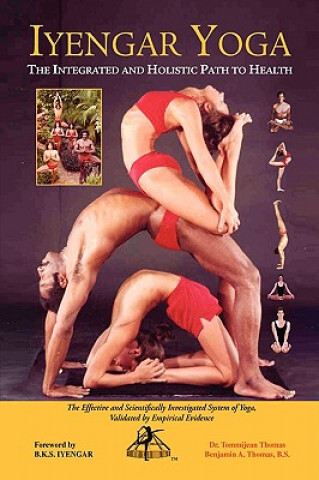
Language: English, Binding: Paperback, Number of pages: 564, Publishers: Xlibris, Author: Dr. Tommijean Thomas, ISBN-13: 9781425747862, Date of issue: 2008