This brutal, shattering glimpse of the fate of millions of Russians under Stalin shook Russia and shocked the world when it first appeared. Discover the importance of a piece of bread or an extra bowl of soup, the incredible luxury of a book, the ingenious possibilities of a nail, a piece of string or a single match in a world where survival is all. Here safety, warmth and food are the first objectives. Reading it, you enter a world of incarceration, brutality, hard manual labour and freezing cold - and participate in the struggle of men to survive both the terrible rigours of nature and the inhumanity of the system that defines their conditions of life.
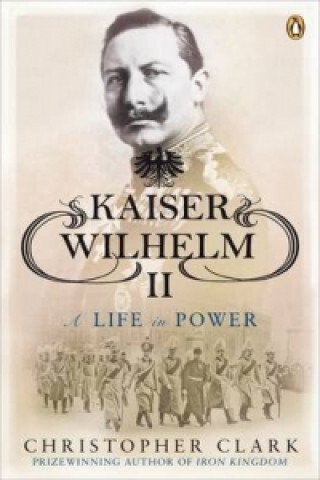
Christopher Clark's "Kaiser Wilhelm II: A Life in Power" is a short, fascinating and accessible biography of one of the 20th century's most important figures. King of Prussia, German Emperor, war leader and defeated exile, Kaiser Wilhelm II was one of the most important - and most controversial - figures in the history of twentieth-century Europe. But how much power did he really have? Christopher Clark, winner of the Wolfson prize for his history of Prussia, Iron Kingdom, follows Kaiser Wilhelm's political career from his youth at the Hohenzollern court through the turbulent decades of the Wilhelmine era into global war and the collapse of Germany in 1918, to his last days. He asks: what was his true role in the events that led to the outbreak of the First World War? What was the nature and extent of his control? What were his political goals and his success in achieving them? How did he project authority and exercise influence? And how did his people really view him? Through original research, Clark presents a fresh new interpretation of this contentious figure, focusing on how his thirty-year reign from 1888 to 1918 affected Germany, and the rest of Europe, for years to come."Clark's fresh and enlightening history brings the Kaiser's life into critical and illuminating review". (German History). Christopher Clark is a lecturer in Modern European History at St Catharine's College, University of Cambridge. His book "Iron Kingdom: The Rise and Downfall of Prussia 1600 to 1947" was the winner of the Wolfson Prize for History.
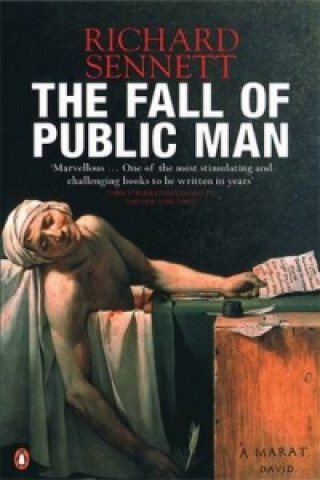
Richard Sennett's "The Fall of Public Man" examines the growing imbalance between private and public experience, and asks what can bring us to reconnect with our communities. Are we now so self-absorbed that we take little interest in the world beyond our own lives? Or has public life left no place for individuals to participate? Tracing the changing nature of urban society from the eighteenth century to the world we now live in, and the decline of involvement in political life in recent decades, Richard Sennett discusses the causes of our social withdrawal. His landmark study of the imbalance of modern civilization provides a fascinating perspective on the relationship between public life and the cult of the individual. "Brilliant...One admires the breadth of Professor Sennett's erudition, the reach of his historical imagination, the doggedness of his analysis...Buy this book and read it. Ironically, it may provide a key to happiness". (Christopher Lehmann-Haupt, "The New York Times"). "A powerful argument for a more formal public culture and a swipe against the rise of a self-indulgent counter-culture". (Melissa Benn, "Guardian"). "A provocative book...Sennett brings us to an undeniably recognizable place, the contemporary urban scene".(Richard Todd, "Atlantic Monthly"). Richard Sennett's previous books include "The Fall of Public Man", "The Corrosion of Character", "Flesh and Stone" and "Respect". He was founder director of the New York Institute for the Humanities, and is now University Professor at New York University and Academic Governor and Professor of Sociology at the London School of Economics.
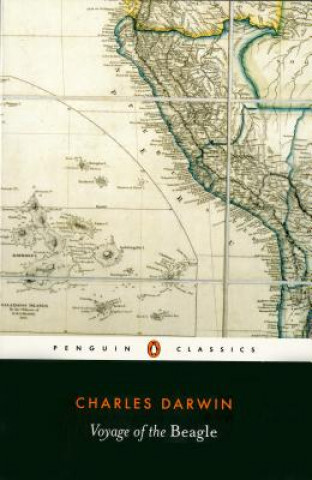
"The Voyage of the Beagle" is Charles Darwin's account of the momentous voyage which set in motion the current of intellectual events leading to "The Origin of Species". This "Penguin Classics" edition is edited with an introduction and notes by Janet Brown and Michael Neve. When HMS Beagle sailed out of Devonport on 27 December 1831, Charles Darwin was twenty-two and setting off on the voyage of a lifetime. His journal, here reprinted in a shortened form, shows a naturalist making patient observations concerning geology, natural history, people, places and events. Volcanoes in the Galapagos, the Gossamer spider of Patagonia and the Australasian coral reefs - all are to be found in these extraordinary writings. The insights made here were to set in motion the intellectual currents that led to the theory of evolution, and the most controversial book of the "Victorian age: The Origin of Species". This volume reprints Charles Darwin's journal in a shortened form.In their introduction Janet Brown and Michael Neve provide a background to Darwin's thought and work, and this edition also includes notes, maps, appendices and an essay on scientific geology and the Bible by Robert FitzRoy, Darwin's friend and Captain of the Beagle. Charles Darwin (1809-82), a Victorian scientist and naturalist, has become one of the most famous figures of science to date. The advent of "On the Origin of Species" by means of natural selection in 1859 challenged and contradicted all contemporary biological and religious beliefs. If you enjoyed "The Voyage of the Beagle", you might enjoy Darwin's "On the Origin of Species", also available in "Penguin Classics".
In this one-of-a-kind volume, indispensable for students of art, architecture and film, Alex Danchev presents "100 Artists' Manifestos", each reproduced with an introduction on the author and the associated movement, in "Penguin Modern Classics". This remarkable collection of 100 manifestos from the last 100 years is cacophony of voices from such diverse movements as Futurism, Dadaism, Surrealism, Feminism, Communism, Destructivism, Vorticism, Stridentism, Cannibalism and Stuckism, taking in along the way film, architecture, fashion, and cookery. Artists' manifestos are nothing if not revolutionary. They are outlandish, outrageous, and frequently offensive. They combine wit, wisdom, and world-shaking demands. This collection gathers together an international array of artists of every stripe, including Kandinsky, Mayakovsky, Rodchenko, Le Corbusier, Picabia, Dali, Oldenburg, Vertov, Baselitz, Kitaj, Murakami, Gilbert and George, together with their allies and collaborators - such figures as Marinetti, Apollinaire, Breton, Trotsky, Guy Debord and Rem Koolhaas.Editor Alex Danchev is the author of an acclaimed biography of artist Georges Braque and is Professor of International Relations at the University of Nottingham. His other works include "Alanbrooke War Diaries: Field Marshall Lord Alanbrooke", "The Iraq War and Democratic Politics" and "On Art and War and Terror". If you enjoyed "100 Artists' Manifestos", you might like John Berger's "Ways of Seeing", also available in "Penguin Modern Classics". "The Manifesto is remarkable for its imaginative power...it is the first great modernist work of art." ("Marshall Berman").
The Subterraneans haunt the bars and clubs of San Francisco, living on a diet of booze and benedrine, Proust and Verlaine. Amongst them is Leo, an aspiring writer, and Mardou, half-Indian, half-Negro, beautiful but neurotic. This is the story of their bitter-sweet and ill-starred love affair.
Years in insurance and marriage to the joyless Hilda have been no more than death in life to George Bowling. This and fear of another war take his mind back to the peace of his childhood in a small country town. But his return journey to Lower Binfield brings complete disillusionment.
A landmark novel of the environment in crisis, which was the winner of the Hugo Award for best science fiction novel in 1962. This edition has a new introduction by Neil Gaiman.
From Nobel Prize-winning economist Amartya Sen, "The Idea of Justice" is a refreshing alternative approach to mainstream theories of justice. Is justice an ideal, for ever beyond our grasp, or something that may actually guide our practical decisions and enhance our lives? At the heart of Sen's argument is his insistence on the role of public reason in establishing what can make societies less unjust. But there are always choices to be made between alternative assessments of what is reasonable, and competing positions can each be well defended. Rather than rejecting these pluralities, we should use them to construct a theory of justice that can accommodate divergent points of view. Sen also inspiringly shows how the principles of justice in the modern world must avoid parochialism and address vital questions of global injustice. The breadth of vision, intellectual acuity and striking humanity of one of the world's leading public intellectuals have never been more clearly shown than in this remarkable book. "A major advance in contemporary thinking". (John Gray, "Literary Review"). "The most important contribution to the subject since John Rawls' "A Theory of Justice"".(Hilary Putnam, Harvard University). "Sen writes with dry wit, a feel for history and a relaxed cosmopolitanism ...a conviction that economists and philosophers are in business to improve the world burns on almost every page". ("Economist"). 'Sen's magisterial critique of the dominant mode of liberal political philosophy confirms him as the English-speaking world's pre-eminent public intellectual". ("New Statesman" Books of the Decade). Amartya Sen is Lamont University Professor at Harvard. He won the Nobel Prize in Economics in 1998 and was Master of Trinity College, Cambridge 1998-2004. His most recent books are "The Argumentative Indian", "Identity and Violence" and "Development as Freedom". His books have been translated into thirty languages.
Eddie Carbone is a longshoreman and a straightforward man, with a strong sense of decency and of honour. For Eddie, it's a privilege to take in his wife's cousins, straight off the boat from Italy. But, as his niece begins to fall for one of them, it's clear that it's not just, as Eddie claims, that he's too strange, too sissy, too careless for her, but that something bigger, deeper is wrong, and wrong inside Eddie, in a way he can't face. Something which threatens the happiness of their whole family.
Complete, fully annotated new edition - the most correct edition ever published as it is the first to have returned to the manuscript and fully collated the early printed versions.
"Shooting an Elephant" is Orwell's searing and painfully honest account of his experience as a police officer in imperial Burma; killing an escaped elephant in front of a crowd 'solely to avoid looking a fool'. The other masterly essays in this collection include classics such as "My Country Right or Left", "How the Poor Die" and "Such, Such were the Joys", his memoir of the horrors of public school, as well as discussions of Shakespeare, sleeping rough, boys' weeklies and a spirited defence of English cooking. Opinionated, uncompromising, provocative and hugely entertaining, all show Orwell's unique ability to get to the heart of any subject.
The year is 1348 and the first plague victim has reached English shores. Panic erupts around the country and a small band of travellers comes together to outrun the deadly disease, unaware that something far more deadly is - in fact - travelling with them. The ill-assorted company - a scarred trader in holy relics, a conjurer, two musicians, a healer and a deformed storyteller - are all concealing secrets and lies. And at their heart is the strange, cold child - Narigorm - who reads the runes. But as law and order breaks down across the country and the battle for survival becomes ever more fierce, Narigorm mercilessly compels each of her fellow travellers to reveal the truth, and each in turn is driven to a cruel and unnatural death.
Paperback edition of this extremely well received debut crime novel. Losing her job in a crummy lingerie store, Stephanie Plum finds a job as an apprehension agent, and soon finds herself in fast-paced, funny and increasingly dangerous chase across New Jersey. "I loved it. A raunchy, funny book." Liza Cody. }Two For The Dough{, by the same author, is out in Hamish Hamilton hardcover this month, and a joint promotion will be undertaken.
A haunting study of guilt and lost love in "Penguin Classics", Thomas Hardy's "The Mayor of Casterbridge" is edited with an introduction and notes by Keith Wilson. In a fit of drunken anger, Michael Henchard sells his wife and baby daughter for five guineas at a country fair. Over the course of the following years, he manages to establish himself as a respected and prosperous pillar of the community of Casterbridge, but behind his success there always lurk the shameful secret of his past and a personality prone to self-destructive pride and temper. Subtitled "A Story of a Man of Character", Hardy's powerful and sympathetic study of the heroic but deeply flawed Henchard is also an intensely dramatic work, tragically played out against the vivid backdrop of a close-knit Dorsetshire town. This edition includes an introduction, chronology of Hardy's life and works, the illustrations for the original serial issue, place names, maps, glossary, full explanatory notes as well as Hardy's prefaces to the 1895 and 1912 editions. Thomas Hardy (1840-1928), born Higher Brockhampton, near Dorchester, originally trained as an architect before earning his living as a writer. Though he saw himself primarily as a poet, Hardy was the author of some of the late eighteenth century's major novels: "The Mayor of Casterbridge" (1886), "Tess of the D'Urbervilles" (1891), "Far from the Madding Crowd" (1874), and "Jude the Obscure" (1895). Amidst the controversy caused by "Jude the Obscure", he turned to the poetry he had been writing all his life. In the next thirty years he published over nine hundred poems and his epic drama in verse, "The Dynasts". If you enjoyed "The Mayor of Casterbridge", you might like George Eliot's "Silas Marner", also available in "Penguin Classics". "The greatest tragic writer among the English novelists". (Virginia Woolf). "Visceral, passionate, anti-hypocrisy, anti-repression...Hardy reaches into our wildest recesses". ("Evening Standard").
"Bound for Glory" is the autobiography of Woody Guthrie, the founder of modern American folk music. It is a funny, cynical, earthy and tragic account of his life in an Oklahoma oil-boom town, of the Depression that followed, and of his subsequent travels in, on, and under trains, in stolen cars and on his feet, round an America going rotten from the top downwards.
"As I Crossed a Bridge of Dreams" is a unique autobiography in which the anonymous writer known as Lady Sarashina intersperses personal reflections, anecdotes and lyrical poems with accounts of her travels and evocative descriptions of the Japanese countryside. Born in AD 1008, Lady Sarashina felt an acute sense of melancholy that led her to withdraw into the more congenial realm of the imagination - this deeply introspective work presents her vision of the world. While barely alluding to certain aspects of her life such as marriage, she illuminates her pilgrimages to temples and mystical dreams in exquisite prose, describing a profound emotional journey that can be read as a metaphor for life itself.
The story of Dick and Nicole Divers, rich Americans holding court in their villa on the French Riviera during the 1920s. Into their circle comes Rosemary Hoyt, a film star, who is instantly attracted to them, but understands little of the dark secrets and hidden corruption that bind them.
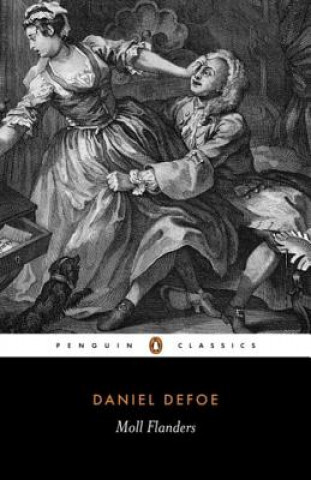
Daniel Defoe's bawdy tale of a woman's struggle for independence and redemption, "Moll Flanders" is edited with an introduction and notes by David Blewett in "Penguin Classics". Born in Newgate prison and abandoned six months later, Moll Flanders' drive to find and hold on to a secure place in society propels her through incest, adultery, bigamy, prostitution and a resourceful career as a thief ('the greatest Artist of my time') before her crimes catch up with her, and she is transported to the colony of Virginia in the New World. If Moll Flanders is on one level a Puritan's tale of sin and repentance, through self-made, self-reliant Moll, Daniel Defoe's rich subtext conveys all the paradoxes and amoralities of the struggle for property and power in the newly individualistic society of Eighteenth-century England. Based on the first edition of 1722, this volume includes a chronology, suggestions for further reading, notes on currency and maps of London and Virginia in the late seventeenth century. Daniel Defoe (1660-1731) had a variety of careers including merchant, soldier, spy, and political pamphleteer.Over the course of his life Daniel Defoe wrote over two hundred and fifty books on economics, history, biography and crime, but is best remembered for the fiction he produced in late life, which includes "Robinson Crusoe" (1719), "Moll Flanders" (1722) and "Roxana" (1724). Defoe had a great influence on the development of the English novel and many consider him to be the first true novelist. If you enjoyed "Moll Flanders", you might like Samuel Richardson's "Pamela", also available in "Penguin Classics".
For the centennial of the birth of "Silent Spring" author Rachel Carson, a new edition of her groundbreaking paean to the sea Celebrating the mystery and beauty of birds and sea creatures in their natural habitat, "Under the Sea-Wind"-Rachel Carson's first book and her personal favorite-is the early masterwork of one of America's greatest nature writers. Evoking the special mystery and beauty of the shore and the open sea-its limitless vistas and twilight depths-Carson's astonishingly intimate, unforgettable portrait captures the delicate negotiations of an ingeniously calibrated ecology.
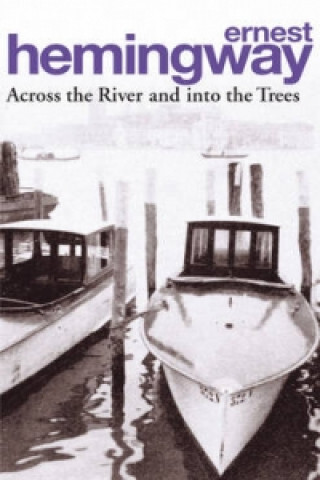
The War is just over. In Venice, a city elaborately and affectionately described, the American Colonel, Richard Cantrell, falls passionately in love with Renata, a young Italian countess who has 'a profile that could break your or anyone else's heart'. Cantrell is embittered, war-scarred and old enough to be Renata's father, but he is overwhelmed by the selflessness and freshness of the love she is offering. But this is no fairy tale. The fighting may be ended, but the wounds of war have not yet healed. And for some, the longed-for peace has come too late. A lesser known classic by one of the great American writers of the twentieth century, Across the River And Into The Trees is still vintage Hemingway.
Pay attention please to the life of Walter F. Starbuck. Nineteen-hundred and Thirteen gave him the gift of life. Nineteenth-hundred and Thirty-one sent him to Harvard. Nineteen-hundred and Thirty-eight got him a job in the federal government. Nineteen-hundred and Seventy gave him a job in the Nixon White House. Nineteen-hundred and Seventy-five sent him to prison for his part in the American political scandals known collectively as 'Watergate'. Now Walter F. Starbuck is coming out of jail, into the brave new world of 1980s Manhattan, and this is the story of his first twenty-four hours of freedom.
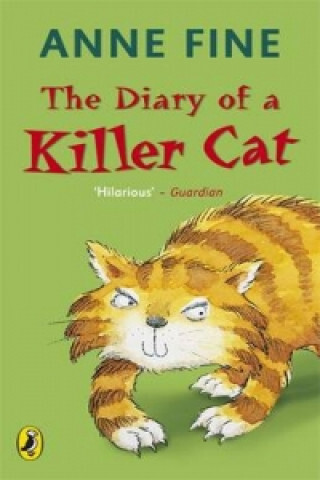
Unusual twist to the popular diary format - this one is narrated by a cat. When the neighbours pets start to die, Tuffy gets the blame, which he feels is rather unfair! Readership level: 6 - 9 years.
"Not since Darwin has an author so lifted the science of ecology with insight and delightful imagery" - Richard Dawkins. In this book a master scientist tells the great story of how life on earth evolved. E.O. Wilson eloquently describes how the species of the world became diverse, and why the threat to this diversity today is beyond the scope of anything we have known before. In an extensive new foreword for this edition, Professor Wilson addresses the explosion of the field of conservation biology and takes a clear-eyed look at the work still to be done.
This pocket edition offers a convenient format for this ageless guide and companion to the student on the Yogic path. Includes the full text of this classic Yoga work, along with brief commentary from a revered master of Raja Yoga.
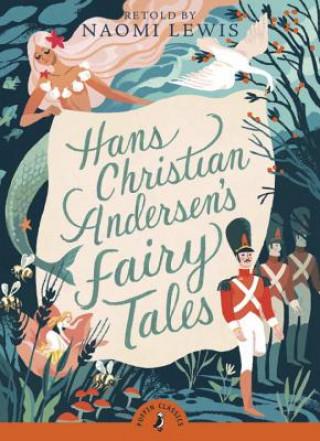
This enchanting collection, retold by writer and critic Naomi Lewis, contains twelve of Hans Christian Andersen's magnificent stories. It includes Thumbelina, a little girl no more than a thumb-joint high, "The Emperor's New Clothes", the tale of a man who cares only for his appearance and The Little Mermaid, who longs to one day marry a human prince. It includes a wonderful cover illustration and new introduction by award-winning picture-book creator Jan Pienkowski.
iPad Pro Wi-Fi + Cellular koos M5 kiibiga annab sulle vabaduse töötada, luua ja suhelda kõikjal. See ühendab erakordse kiiruse, täiustatud tehisintellekti ja järgmise põlvkonna ühenduvuse, hoides sind produktiivse ja inspireerituna – olgu stuudios, teel või täielikult võrgust väljas. • 5G-andmeside ülikiire ühenduse ja tõelise juhtmevaba vabaduse jaoks • M5 kiip 3 nm arhitektuuril, kuni 6,7× kiirem jõudlus • Apple Intelligence koos täiustatud AI ja Siri integratsiooniga • Ultra Retina XDR ekraan tandem OLED-tehnoloogiaga, HDR-heledus kuni 1600 niti • Pro-taseme kaamerad, neli kõlarit ja stuudiokvaliteediga mikrofonid
An immaculately-observed social comedy that explores the boundaries between personal freedom and the demands of love, the "Penguin Classics" edition of Virginia Woolf's "Night and Day" is edited with an introduction and notes by Julia Briggs. Katharine Hilbery is beautiful and privileged, but uncertain of her future. She must choose between becoming engaged to the oddly prosaic poet William Rodney, and her dangerous attraction to the passionate Ralph Denham. As she struggles to decide, the lives of two other women - women's rights activist Mary Datchet and Katharine's mother, Margaret, struggling to weave together the documents, events and memories of her own father's life into a biography - impinge on hers with unexpected and intriguing consequences. Virginia Woolf's delicate second novel is both a love story and a social comedy, yet it also subtly undermines these traditions, questioning a woman's role and the very nature of experience. This edition of "Night and Day" includes a detailed introduction by Julia Briggs, which considers the key themes of the novel and its place in the tradition of social comedy, a map of central London of the period and notes.Virginia Woolf (1882-1941) is regarded as a major 20th century author, a great novelist and essayist, and a key figure in literary history as a feminist and modernist. and became the centre of 'The Bloomsbury Group'. This informal collective of artists and writers which included Lytton Strachey and Roger Fry, exerted a powerful influence over early twentieth-century British culture. Between 1925 and 1931 Virginia Woolf produced what are now regarded as her finest masterpieces, from Mrs Dalloway (1925) to the poetic and highly experimental novel "The Waves" (1931). She also maintained an astonishing output of literary criticism, short fiction, journalism and biography, including the playfully subversive "Orlando" (1928) and "A Room of One's Own" (1929) a passionate feminist essay.
The Greeks were extraordinary not least because they evolved 'a totally new conception of what human life was for'. Elaborating on that claim, the author explores the life, culture and history of classical Greece.
An affordable introduction to the period, previously published in the }Oxford History Of The Classical World{ series. 8pp colour section and b/w illus.