Language: English, Binding: Paperback, Number of pages: 464, Publishers: Taylor & Francis Ltd, Author: Mike Senior, ISBN-13: 9781032840451, Date of issue: 2025
If you enjoyed A Minecraft Movie, youll love this book! Emmy and Birch go on an adventure to explore a woodland mansion in this Young Reader book and the only official levelled reader series based on Minecraft, the world's best-selling video game! Minecraft is the best-selling video game of all time! And now learning to read has never been more fun for fans ages 4 to 7. This time Emmy and Birch and their tame wolf Byte set out on an epic adventure to explore a dark Minecraft mansion! Look for these other great Minecraft titles: Mobs in the Overworld! (Minecraft) 9780755500444 Survival Mode! (Minecraft) 9780755500451 Escape From the Nether (Minecraft) 9780755500468 The Skys the Limit! (Minecraft) 9780008495978
The New York Times' #1 Thriller of 2024 'Highsmithian highly readable, twisty and shrewd' HANYA YANAGIHARA (on Instagram), author of A Little Life 'Atmospheric, diabolical fun' LUCY FOLEY, author of The Midnight Feast 'Disturbingly enjoyable' EMMA HEALEY, author of Elizabeth is Missing 'A taut, wicked masterpiece' MONA AWAD, author of Bunny Eighty-one-year-old Maggie Burkhardt has left it all behind and spent the last five years ping-ponging between the worlds luxury hotels. Now she has finally come to rest somewhere she can imagine staying forever: the Royal Karnak Hotel in Luxor, Egypt. Maggie is no sweet old lady. She has a nasty, nosy little habit: she spies on her fellow guests and manipulates situations to 'liberate' them from what she sees as unhappy relationships. When an eight-year-old boy, Otto, and his well-meaning mother arrive at the hotel, Maggie sees two easy targets. But she is more wrong than she could possibly know, and is soon locked in a death-spiral with Otto has she finally met her match in a child one-tenth her age? Crackling with the perceptive acid wit of The White Lotus and haloed by Shirley Jacksons cruel, dark magic, Christopher Bollens new novel is a decadent and ghastly delight. Early readers are saying 'Absolutely brilliant and insane. I went in knowing very little about the book and Im glad because it made it even more of a wild ride' 'I loved this book from the first page The conflict between the old and the young in this cat and mouse tussle is brilliant. Its a hard to put down novel and has a great twist at the end' 'I had an absolute blast reading this. Otto and Maggie are wild characters and their behavior is shocking!'
Mr. Adventure takes a job as a mailman to finance his next vacation, but he finds delivering letters boring, so he tries to put his own adventurous spin on the task. Mr. Adventure is jumping, diving, and catapulting his way into the classic Mr. Men series. Catch him if you can!When Mr. Adventure goes on vacation, he doesn't want to relax. He's looking for the greatest thrills that money can buy! Unfortunately, his money doesn't last forever. Can Mr. Adventure find the excitement he craves at a regular old job? He's certainly going to try! Autorid: Adam Hargreaves
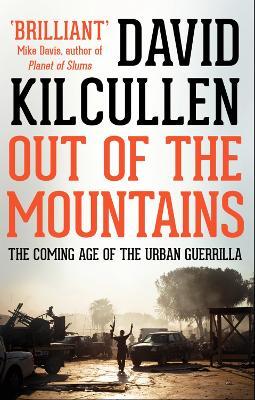
In his third book, David Kilcullen takes us out of the mountains: away from the remote, rural guerrilla warfare of Afghanistan, and into the marginalised slums and complex security threats of the world's coastal cities, where almost 75 per cent of us will be living by mid-century. Scrutinising major environmental trends - population growth, coastal urbanisation - and increasing digital connectivity he projects a future of feral cities, urban systems under stress, and increasing overlaps between crime and war, internal and external threats, and the real and virtual worlds. Informed by Kilcullen's own fieldwork in the Caribbean, Somalia, the Middle East and Afghanistan, and that of his field research teams in cities in Central America and Africa, Out of the Mountains presents detailed, on-the-ground accounts of the new faces of modern conflict - - from the 2008 Mumbai terrorist attacks, to transnational drug networks, local street gangs, and the uprisings of the Arab Spring. Autorid: David Kilcullen
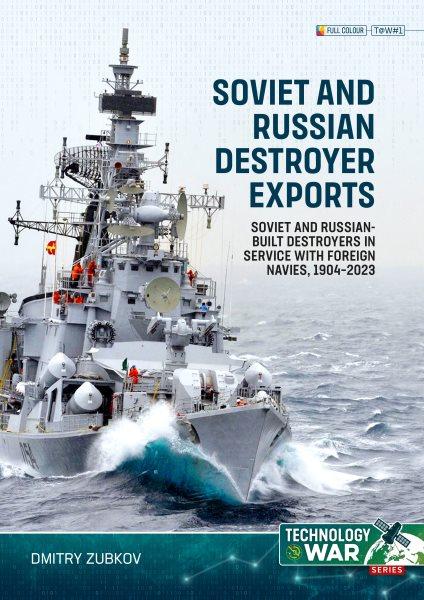
Though generally underestimated in the West, the Soviet export of destroyers played a vital role in buildup of the navies of Moscows allies and satellites. Soviet and Russian-built Destroyers in service with foreign Navies 1904-2023, Volume 1 examines Russian and Soviet military ship exports between 1904 and the 1930s, including Japan, Finland, Indochina, Germany, Estonia and Peru and their little-known participation in a number of military confrontations.The export of Soviet warships has gained modest attention compared with aircraft, tanks or SAMs, with coverage usually limited to the description of submarines and fast-attack boats exports. Soviet and Russian-built Destroyers in service with foreign Navies, 1904-2023 provides a detailed description of Soviet-made destroyers service in foreign navies, including the purchase negotiations and transfers, their participation in a number of confrontations, and subsequent modernisation of the vessels, and the careers of many of their commanding officers. This work also looks at the building of ships to Soviet and Russian designs in the shipyards of China and India.Included in Soviet and Russian-built Destroyers in service with foreign Navies, 1904-2023 is the deeper background to the history of Russian shipbuilding, stretching back over two centuries to the early post-Napoleonic period, with Volume 1 focussing on exports and service between 1904 and the 1930s. This work is illustrated by many extremely rare photographs along with specially commissioned color artworks. Autorid: Dmitry Zubkov
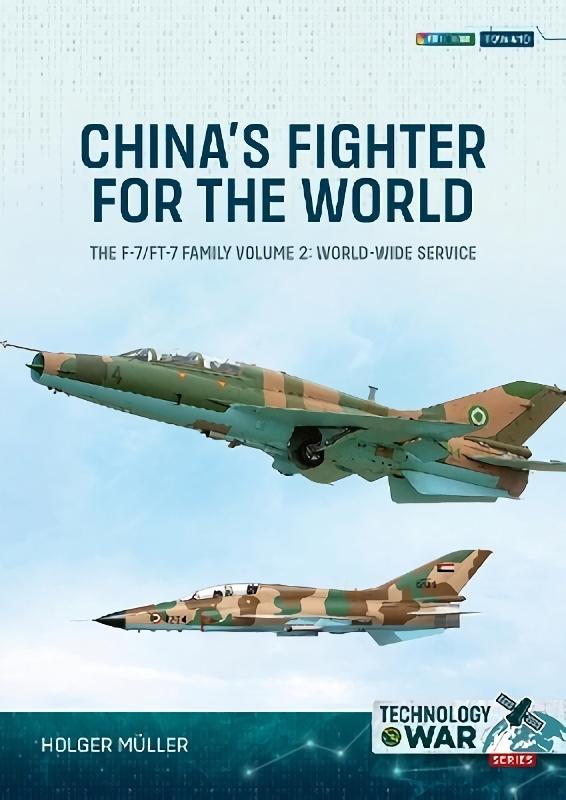
Charts the F-7s evolution from MiG-21 derivative to global export success across multiple air forces.When founded in 1949, the People's Republic of China was a backward agricultural state with no industrial base to speak of and no armaments industry of its own. From the very beginning, Mao Zedong, the founder of the state, endeavoured to develop his own modern defence industry. One of the most successful export products of this modernisation was the F-7, a Chinese derivative of the Soviet MiG-21.Initially working from component knock-down kits supplied by the USSR, the Chinese aircraft industry progressed from simple assembly, to copies of the MiG-21, through to domestic versions (the J-7) and export versions (the F-7 and two-seater FT-7). Constantly striving to introduce improvements and refinements, the F-7 would become a great export success for the Peoples Republic, with modernised and upgraded variants still in service across the world to this day.Volume 2 of Chinas Fighter for the World tells the story of F-7's commercial success over the decades. It covers the service of the F/FT-7 aircraft family with air forces on four continents. Each chapter, by user country, presents the available information, consisting of a brief history, the process and scope of procurement, deployment history, a list of losses and an outlook. Appendices provide an overview of the history of the aircraft factories involved in the production of the F/FT-7 and list known construction numbers and the underlying allocation scheme. This volume includes over 120 full-colour photographs and 21 specially commissioned full colour profile artworks. Starting with licensed production of the early MiG-21, the Peoples Republic of China has developed the derivatives in form of J-7s (for domestic use) and F-7s (for export) into an aircraft family in its own right, thanks in no small part to substantial technology transfer from the West. By exporting these aircraft, the People's Republic is support Autorid: Holger Müller
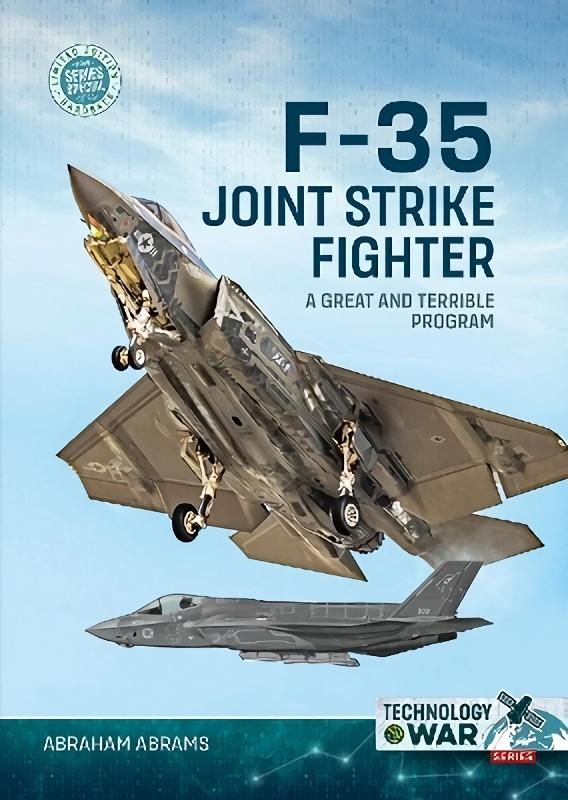
A detailed and comprehensive assessment of the F-35 Joint Strike Fighter program, from its origins in the early 1990s, to its current operational status, modernisation, and likely future development. ( I can make this longer. What is it for). The F-35 Joint Strike Fighter, widely produced and advanced, significantly influences global military power and strategy.Developed under the largest weapons program in history, F-35 Joint Strike Fighter is today in production on a larger scale than any other manned combat jet in the world, with its capabilities having greater implications for the global balance of power than those of any other military asset. The extent to which the U.S. Armed Forces and American strategic partners rely on the fighter remains wholly unprecedented, with the large majority of U.S. Air Force fighter procurements, all those by the Marine Corps, and from 2027 all those by the Navy, being F-35s. As the only fighter of its generation in production in the Western world, evaluations made across multiple tenders have consistently concluded that the F-35 operates in an entirely different league to other Western combat jets, with this superiority giving the program a particular significance in an era of high geopolitical tensions.This book details the primary combat aviation and broader technological trends that have influenced the F-35s development, the aircrafts design features and ever evolving capabilities, how it has been tested, manufactured, procured, and employed, and the expanding set of roles it has been relied on to fulfil. Interviews are widely drawn on to provide insight into multiple aspects of the program, from its production to its frontline operations. The management of the program ranging from efforts to reduce procurement and sustainment costs, to decision making regarding the integration of new technologies, is explored in detail. The global nature of the F-35 program, the facilitators of its major export successes, and the aircrafts ability to meet challenges from a range of adversary capabilities, are also detailed, as are the likely future trajectories the program will take moving into the sixth generation era. The book highlights both the tremendous achievements of the F-35 program, many of which have been wholly unprecedented and unparalleled, as well as its many often severe shortcomings which have made the aircraft less of a game changer than was otherwise set to be the case. Autorid: Abraham Abrams
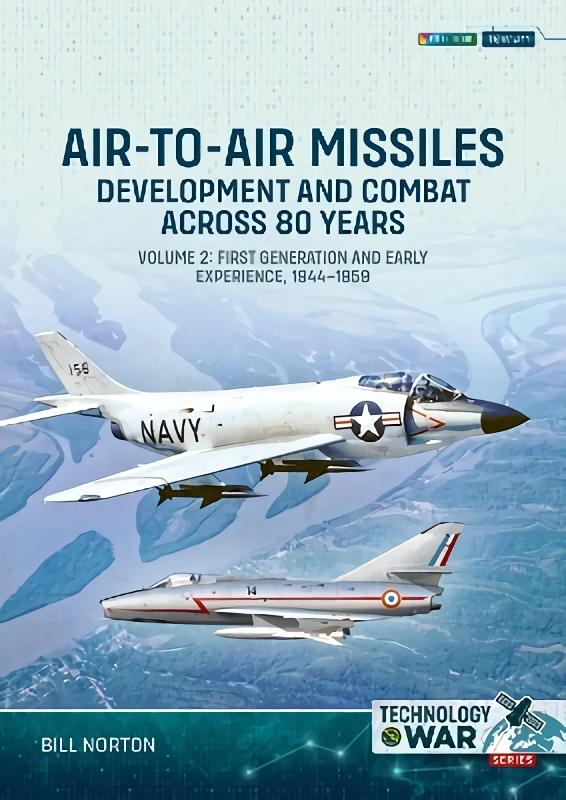
This is the second of six volumes detailing the 80-year history of air-to-air missiles (AAM) as combat aircraft weapons. It is the only comprehensive book on this subject. The first volume provides the technical description of AAM, describes how they are developed and fielded, the tactics for employing them, and an appreciation for why so many AAM shots miss their target. That content lays the foundation for understanding the subsequent volumes, but each also stands alone. Volume 2 describes the development and fielding of AAM during the Second World War and the early post-war period by all countries participating. Each new missile type and model of the period are described with motivation to undertake the program, details of development including flight test, a general description, advantages and disadvantages, production and fielding where applicable, and service experience. A table of characteristics, technical diagrams, and photographs of the weapons and installation on fighter aircraft are provided. Each missile is also illustrated with a profile line drawing with scale. The combat record with these earliest missiles is then reviewed with background on the conflict, the aircraft in combat with the AAM, and then tables of kills. Period photographs of the combat aircraft with AAM is included. All this lends an appreciation of the evolution of AAM, technologically and via combat experience, as supported by this first generation of missiles. It naturally leads to the next volume and subsequent generation of AAM. This is the second of six volumes detailing the history of air-to-air missiles (AAM). It describes the development and fielding of AAM during the Second World War and the early post-war period by all countries participating. The combat record with these earliest missiles is then reviewed with tables of kills. Autorid: Bill Norton
Biopon universaalsed väetusepulgad, milles iga pulk sisaldab laialdaselt olulisi toitaineid. Hoolikalt määratud lämmastiku, fosfori ja kaaliumi sisaldus aitab kaasa taimede arengule ja tagab rikkaliku õitsemise. Pulgad lahustuvad järk-järgult, väetades taime regulaarselt pikema aja jooksul. Uute väetisepulkade välja võtmine pakendist on mugav. Pakis on 30 tk.Koostis: lämmastik 10%, fosfor 6%, kaalium 6%, mikroelemendid.
Biopon väetisepulgad, mis on mõeldud õitsvatele taimedele. Iga väetisepulk sisaldab hoolikalt määratud koguses fosforit ja kaaliumit. See soodustab õiepungade moodustumist ja intensiivset õitsemist. Pulgad lahustuvad järk-järgult, väetades taime regulaarselt pikema aja jooksul. Väetisepulkade välja võtmine pakendist on mugav. Pakis on 30 tk.Koostis: lämmastik 8%, fosfor 10%, kaalium 14%, mikroelemendid.
Biopon lehttaimedele mõeldud väetisepulgad. Pulk tuleb asetada potti, et aktiveerida rohelistele taimedele kasvuks ja arenemiseks vajalike toitainete vabastamine. Hoolikalt tasakaalustatud makro- ja mikroelementide valik tagab terve ja särava väljanägemisega lehed. Uute väetisepulkade välja võtmine pakendist on mugav. Pakendis on 30 tk.Koostis: lämmastik 12%, fosfor 6%, kaalium 9%, mikroelemendid.
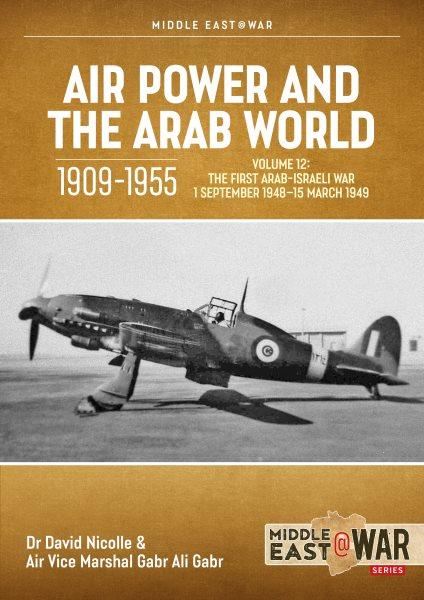
Volume 12 of the Air Power and the Arab World, 1909-1955 mini-series continues the story of the men and machines of the first half century of military aviation in the Arab world. It focuses upon combat operations during the period of the Palestine War from 1 September to 10 March 1949.By that time, in Egypt, Iraq, Transjordan and newly-independent Syria and Lebanon, major efforts had already been made to strengthen these countries armed forces. Egypt, Iraq, and Syria launched all-out efforts to bolster their air forces, and threw these into combat. While most subsequent commentators and historians stress they had failed to perform, if appearing at all, closer investigation and the removal many of layers of propaganda that have obscured the realities of this first Arab-Israeli War, show that the Arab air forces performed much better than previously thought.Arguably, available aircraft, armament, spares, and personnel had their limitations and weaknesses, and these had also become apparent as the fighting intensified and losses began to mouth. However, information from both official and unofficial Arab sources - published and unpublished - leaves no doubt about the commitment and courageous efforts of almost everybody involved.Volume 12 of Air Power and the Arab World focusses on day-to-day events in the First Arab-Israeli War, in the air, at sea, and on the ground. It does so in remarkable detail thanks to access to previously unpublished official military documentation, supplemented by translations from publications in Arabic, containing both official and personal accounts by those involved. The most remarkable of these is the Operational Diary of the REAFs Tactical Air Force based at el-Arish, in north-eastern Sinai.Air Power and the Arab World Volume 12 is illustrated by a rich collection of original period photographs - many of these never published before - and specially commissioned color illustrations. Autorid: David Nicolle, Gabr Ali Gabr
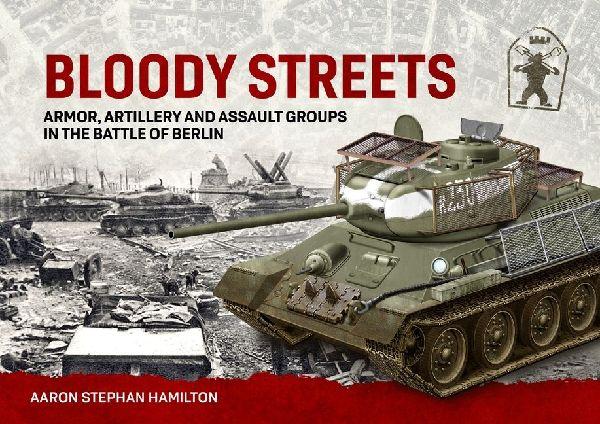
Bloody Streets: Armor, Artillery and Assault Groups in the Battle of Berlin is a comprehensive reference work on armoured warfare during the battle. The Red Army launched their final offensive in Europe with the highest concentration of tanks and self-propelled artillery ever assembled up to that time. Yet, they lost more armour in each day of fighting than during any other battle the Allies fought during World War II. Most of the armour losses inside Berlin were caused by a new German weapon known as the Panzerfaust. The hand-held rocket was employed for the first time in large numbers and revolutionized anti-tank warfare. The new weapon allowed anyone with rudimentary training, no matter their age, to easily destroy the largest armoured vehicle on the battlefield. To ensure the survivability of their tanks and self-propelled artillery, the Red Army evolved the Assault Group concept. The Soviets fundamentally altered the structure of their tank armies and related offensive doctrine in the aftermath of the Battle of Berlin. Many of the lessons learned documented by the Red Army at that time are still relevant to armoured tactics in urban terrain today.This book presents for the first time in English over a hundred pages of Soviet lessons learned on the employment of tanks, self-propelled artillery, artillery pieces, and the evolution of Assault Groups in the Battle of Berlin. German anti-tank tactics are detailed through the observations of the Red Army combat units that fought in the battle. Hundreds of large format wartime black and white photographs of Soviet and German armour and artillery illustrate this book. Each photograph includes a comprehensive description with technical details and historical context. The photographs are supplemented by over a hundred colour profiles, 3D images, and colour photos of surviving examples of the armour that fought in Berlin from both sides. Of particular interest are the graphics that depict the different Assault Group formations that formed across the First Belorussian and First Ukrainian Fronts in order to protect armoured units and overcome determined German resistance. Researchers, armour enthusiasts, and modelers will find rich new material about the Battle of Berlin from the unique perspective of armoured warfare. This is the first of several new volumes about various aspects of the Battle of Berlin, which build upon decades of research for the original Bloody Streets.