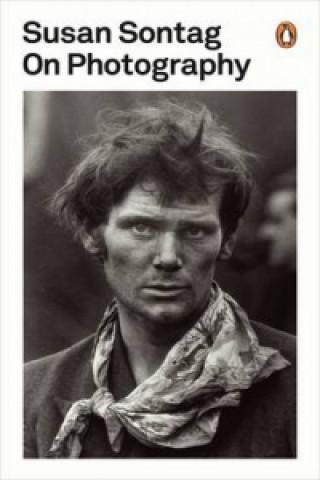
Susan Sontag's On Photography is a seminal and groundbreaking work on the subject.Susan Sontag's groundbreaking critique of photography asks forceful questions about the moral and aesthetic issues surrounding this art form. Photographs are everywhere, and the 'insatiability of the photographing eye' has profoundly altered our relationship with the world. Photographs have the power to shock, idealize or seduce, they create a sense of nostalgia and act as a memorial, and they can be used as evidence against us or to identify us. In these six incisive essays, Sontag examines the ways in which we use these omnipresent images to manufacture a sense of reality and authority in our lives.'Sontag offers enough food for thought to satisfy the most intellectual of appetites' The Times'A brilliant analysis of the profound changes photographic images have made in our way of looking at the world, and at ourselves' Washington Post'The most original and illuminating study of the subject' New YorkerOne of America's best-known and most admired writers, Susan Sontag was also a leading commentator on contemporary culture until her death in December 2004. Her books include four novels and numerous works of non-fiction, among them Regarding the Pain of Others, On Photography, Illness as Metaphor, At the Same Time, Against Interpretation and Other Essays and Reborn: Early Diaries 1947-1963, all of which are published by Penguin. A further eight books, including the collections of essays Under the Sign of Saturn and Where the Stress Falls, and the novels The Volcano Lover and The Benefactor, are available from Penguin Modern Classics.
Nach seinen Bestsellern »Jetzt!« und »Leben im Jetzt« geht Eckhart Tolle mit seinem lange erwarteten neuen Buch einen Schritt weiter. »Eine neue Erde« beschäftigt sich mit dem geistig-seelischen Zustand der Menschheit. Tolle geht davon aus, dass der krankhafte Zustand des menschlichen Geistes zu einer kollektiven Fehlentwicklung geführt hat und wir vor einer gefährlichen Weggabelung stehen. Unsere bisherige Sicht der Welt funktioniert nicht mehr. Wenn wir sie nicht ändern, bewegen wir uns auf zunehmend gefährlichem Terrain mit dem Potenzial zur Selbstzerstörung. Für Tolle existiert jedoch eine Alternative zu diesem düsteren Zukunftsszenario: ein innerer Quantensprung, verbunden mit einem fundamentalen Wandel von unserem alten zu einem gänzlich neuen Bewusstsein. Eckhart Tolle ist davon überzeugt, dass wir am Anfang dieser Bewusstseins-Transformation stehen.
In Underland, Robert Macfarlane takes us on a journey into the worlds beneath our feet. From the ice-blue depths of Greenland's glaciers, to the underground networks by which trees communicate, from Bronze Age burial chambers to the rock art of remot
Explores the way in which the technology that surrounds us and allows us to live our modern lives has actually been developed. Rather than coming from a one-off inventions, almost all the technology used today come from previous incarnations: these technologies are not being created, but are instead evolving.
An introduction to the science of neuroplasticity recounts the case stories of patients with mental limitations or brain damage whose seemingly inalterable conditions were successfully treated or even cured through treatments that involved the thought re-alteration of brain structure.
Dambisa Moyo's "Dead Aid" reveals why millions are actually poorer because of aid, unable to escape corruption and reduced, in the West's eyes, to a childlike state of beggary. We all want to help. Over the past fifty years $1 trillion of development aid has flowed from Western governments to Africa, with rock stars and actors campaigning for more. But this has not helped Africa. It has ruined it. "Dead Aid" shows us another way. Using hard evidence to illustrate her case, Moyo shows how, with access to capital and with the right policies, even the poorest nations can turn themselves around. First we must destroy the myth that aid works - and make charity history. "Articulate, self-confident and angry ...this book marks a turning point". ("Spectator"). "A damning assessment of the failures of sixty years of western development". ("Financial Times"). "Kicks over the traditional piety that Western aid benefits the third world". ("Sunday Herald Books of the Year"). "Dambisa Moyo makes a compelling case for a new approach". (Kofi Annan). "This reader was left wanting a lot more Moyo, a lot less Bono". (Niall Ferguson).Dambisa Moyo worked at Goldman Sachs for eight years, having previously worked for the World Bank as a consultant. Moyo completed a PhD in Economics at Oxford University, and holds a Masters from Harvard University Kennedy School of Government. Her other books include "Winner Take All" and "How the West was Lost". She was born and raised in Lusaka, Zambia.
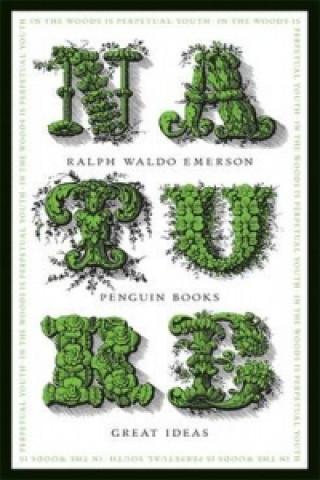
Originally published anonymously, "Nature" was the first modern essay to recommend the appreciation of the outdoors as an all-encompassing positive force. Emerson's writings were recognized as uniquely American in style and content, and launched the idea of going for a walk as a new way of looking at the world. Throughout history, some books have changed the world. They have transformed the way we see ourselves - and each other. They have inspired debate, dissent, war and revolution. They have enlightened, outraged, provoked and comforted. They have enriched lives - and destroyed them. Now Penguin brings you the works of the great thinkers, pioneers, radicals and visionaries whose ideas shook civilization and helped make us who we are.
Housekeeping is the story of Ruth and Lucille, orphans growing up in the small desolate town of Fingerbone in the vast northwest of America. Abandoned by a succession of relatives, the sisters find themselves in the care of Sylvie, the remote and enigmatic sister of their dead mother. Steeped in imagery of the bleak wintry landscape around them, the sisters' struggle towards adulthood is powerfully portrayed in a novel about loss, loneliness and transience.
'One of the most gifted and startling writers to have come out of the American South' - V. S. Pritchett. "Wise Blood", Flannery O' Connor's first novel, is the story of Hazel Motes who, released from the armed services, returns to the evangelical Deep South. There he begins a private battle against the religiosity of the community and in particular against Asa Hawkes, the 'blind' preacher, and his degenerate fifteen-year-old daughter. In desperation Hazel founds his own religion, 'The Church without Christ', and this extraordinary narrative moves towards its savage and macabre resolution. 'A literary talent that has about it the uniqueness of greatness' - "Sunday Telegraph". 'No other major American writer of our century has constructed a fictional world so energetically and forthrightly charged by religious investigation' - "The New Yorker". 'A genius' - "New York Times".
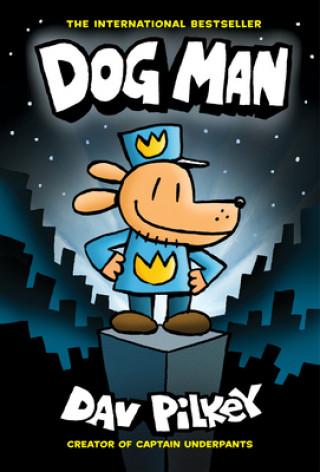
Howl with laughter with the FIRST book in the hilarious full-colour illustrated series, Dog Man, from the creator of Captain Underpants! George and Harold (the co-stars of the enormously popular Captain Underpants series) are in big trouble again! George and Harold have created a new breed of justice -- one that is part dog, part man, and ALL HERO! With the head of a dog and the body of a human, this heroic hound digs into deception, claws after crooks, rolls over robbers, and scampers after squirrels. Will he be able to resist the call of the wild to answer the call of duty? Dav Pilkey's wildly popular Dog Man series appeals to readers of all ages and explores universally positive themes, including empathy, kindness, persistence, and the importance of being true to one's self. This fabulous hardback edition is the perfect gift for a lifetime.Full colour pages throughout. LOOK OUT FOR THE CAT KID COMIC CLUB SERIES Cat Kid Comic Club Cat Kid Comic Club 2: Perspectives Cat Kid Comic Club 3: On Purpose Cat Kid Comic Club 4: Collaborations
For the fortieth anniversary of its publication, in May 2006, Faber are reissuing Seamus Heaney's classic first collection, Death of a Naturalist, which on its appearance in 1966 won the Cholmondeley Award, the E.C. Gregory Award, the Somerset Maugham Award and the Geoffrey Faber Memorial Prize. 'His words give us the soil-reek of Ireland, the colourful violence of his childhood on a farm in Derry. The full-blooded energy of these poems makes Death of a Naturalist the best first book of poems I've read for some time.' - C.B. Cox in the Spectator 'The power and precision of his best poems are a delight, and as a first collection Death of a Naturalist is outstanding [...] His subject is those things which are inherent or inherited. What he praises is to be praised in his own work.' - Christopher Ricks, New Statesman 'Now, to pry into roots, to finger slime, To stare big-eyed Narcissus, into some spring Is beneath all adult dignity. I rhyme To see myself, to set the darkness echoing.'
Originally published in 1960, "The Colossus" was the only volume of Sylvia Plath's poetry published during her lifetime. Showing a scholarly dedication to the craft, the poems in this collection are brimming with originality and the startling imagery that would later confirm her status as one of the most important poets of the twentieth century. 'She steers clear of feminine charm, deliciousness, gentility, supersensitivity and the act of being poetess. She simply writes good poetry. And she does so with a seriousness that demands only that she be judged equally seriously ...There is an admirable no-nonsense air about this; the language is bare but vivid and precise, with a concentration that implies a good deal of disturbance with proportionately little fuss.' A. Alvarez, "The Observer".
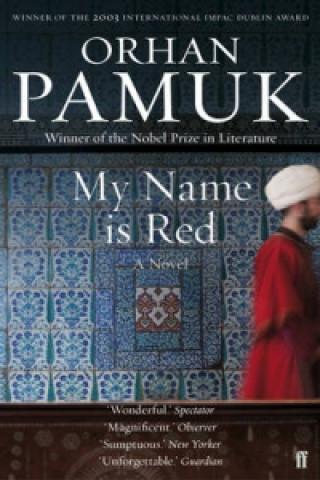
In the late 1590s, the Sultan secretly commissions a great book: a celebration of his life and his empire, to be illuminated by the best artists of the day - in the European manner. At a time of violent fundamentalism, however, this is a dangerous proposition. Even the illustrious circle of artists are not allowed to know for whom they are working. But when one of the miniaturists is murdered, their Master has to seek outside help. Did the dead painter fall victim to professional rivalry, romantic jealousy or religious terror? With the Sultan demanding an answer within three days, perhaps the clue lies somewhere in the half-finished pictures ...Orhan Pamuk is one of the world's leading contemporary novelists and in "My Name is Red", he fashioned an unforgettable tale of suspense, and an artful meditation on love and deception.
The essential resource on military and political strategy and the making of the modern worldThe New Makers of Modern Strategy is the next generation of the definitive work on strategy and the key figures who have shaped the theory and practice of war and statecraft throughout the centuries. Featuring entirely new entries by a who’s who of world-class scholars, this new edition provides global, comparative perspectives on strategic thought from antiquity to today, surveying both classical and current themes of strategy while devoting greater attention to the Cold War and post-9/11 eras. The contributors evaluate the timeless requirements of effective strategy while tracing the revolutionary changes that challenge the makers of strategy in the contemporary world. Amid intensifying global disorder, the study of strategy and its history has never been more relevant. The New Makers of Modern Strategy draws vital lessons from history’s most influential strategists, from Thucydides and Sun Zi to Clausewitz, Napoleon, Churchill, Mao, Ben-Gurion, Andrew Marshall, Xi Jinping, and Qassem Soleimani.With contributions by Dmitry Adamsky, John Bew, Tami Davis Biddle, Hal Brands, Antulio J. Echevarria II, Elizabeth Economy, Charles Edel, Eric S. Edelman, Andrew Ehrhardt, Lawrence Freedman, John Lewis Gaddis, Francis J. Gavin, Christopher J. Griffin, Ahmed S. Hashim, Eric Helleiner, Wayne Wei-siang Hsieh, Seth G. Jones, Robert Kagan, Jonathan Kirshner, Matthew Kroenig, James Lacey, Guy Laron, Michael V. Leggiere, Margaret MacMillan, Tanvi Madan, Thomas G. Mahnken, Carter Malkasian, Daniel Marston, John H. Maurer, Walter Russell Mead, Michael Cotey Morgan, Mark Moyar, Williamson Murray, S.C.M. Paine, Sergey Radchenko, Iskander Rehman, Thomas Rid, Joshua Rovner, Priya Satia, Kori Schake, Matt J. Schumann, Brendan Simms, Jason K. Stearns, Hew Strachan, Sue Mi Terry, and Toshi Yoshihara.
The "Old Ways" is the stunning new book by acclaimed nature writer Robert Macfarlane. Shortlisted for the Samuel Johnson prize 2012. Following the tracks, holloways, drove-roads and sea paths that form part of a vast ancient network of routes criss-crossing the British Isles and beyond, Robert Macfarlane discovers a lost world - a landscape of the feet and the mind, of pilgrimage and ritual, of stories and ghosts; above all of the places and journeys which inspire and inhabit our imaginations. "Really do love it. He has a rare physical intelligence and affords total immersion in place, elements and the passage of time: wonderful". (Antony Gormley). "A marvellous marriage of scholarship, imagination and evocation of place. I always feel exhilarated after reading Macfarlane". (Penelope Lively). "Macfarlane immerses himself in regions we may have thought familiar, resurrecting them newly potent and sometimes beautifully strange. In a moving achievement, he returns our heritage to us". (Colin Thubron). "Every Robert MacFarlane book offers beautiful writing, bold journeys...With its global reach and mysterious Sebaldian structure, this is MacFarlane's most important book yet".(David Rothenberg, author of "Survival of the Beautiful" and "Thousand Mile Song"). "Luminous, possessing a seemingly paradoxical combination of the dream-like and the hyper-vigilant, "The Old Ways" is, as with all of Macfarlane's work, a magnificent read. Each sentence can carry astonishing discovery". (Rick Bass, US novelist and nature writer). ""The Old Ways" confirms Robert Macfarlane's reputation as one of the most eloquent and observant of contemporary writers about nature". ("Scotland on Sunday"). "Sublime writing ...sets the imagination tingling...Macfarlane's way of writing [is] free, exploratory, rambling and haphazard but resourceful, individual, following his own whims, and laying an irresistible trail for readers to follow". ("Sunday Times"). "Macfarlane relishes wild, as well as old, places. He writes about both beautifully...I love to read Macfarlane". (John Sutherland, "Financial Times"). "Read this and it will be impossible to take an unremarkable walk again". ("Metro"). Robert Macfarlane won the Guardian First Book Award, the Somerset Maugham Award, and the Sunday Time Young Writer of the Year Award for his first book, "Mountains of the Mind (2003)".His second, "The Wild Places (2007)", was similarly celebrated, winning three prizes and being shortlisted for six more. Both books were adapted for television by the BBC. He is a Fellow of Emmanuel College, Cambridge.
Welcome to a world turned upside down. One minute, Doris, from England, is playing hide-and-seek with her sisters in the fields behind their cottage. The next, someone puts a bag over her head and she ends up in the hold of a slave-ship sailing to the New World ...In this fantastically imaginative inversion of the transatlantic slave trade - in which 'whytes' are enslaved by black people - Bernardine Evaristo has created a thought-provoking satire that is as accessible and readable as it is intelligent and insightful. "Blonde Roots" brings the shackles and cries of long-ago barbarity uncomfortably close and raises timely questions about the society of today.
Dominic Sandbrook's magnificent account of the late 1970s in Britain - the book behind the major BB2 series "The Seventies". The late 1970s were Britain's years of strife and the good life. They saw inflation, riots, the peak of trade union power - and also the birth of home computers, the rise of the ready meal and the triumph of a Grantham grocer's daughter who would change everything. Dominic Sandbrook recreates this extraordinary period in all its chaos and contradiction, revealing it as a turning point in our recent history, where, in everything from families and schools to punk and Doctor Who, the future of the nation was being decided. Reviews: "Magnificent ...if you lived through the late Seventies - or, for that matter, even if you didn't - don't miss this book". ("Mail on Sunday"). "Sandbrook has created a specific style of narrative history, blending high politics, social change and popular culture ...always readable and assured ...[A] splendid book". (Stephen Robinson, "Sunday Times"). "[Sandbrook] has a remarkable ability to turn a sow's ear into a sulk purse. His subject is depressing, but the book itself is a joy...Sandbrook is, without doubt, superb..."Seasons in the Sun" is a familiar story, yet seldom has it been told with such verve". (Gerard DeGroot, "Seven"). "A brilliant historian...I had never fully appreciated what a truly horrible period it was until reading Sandbrook". (A. N. Wilson, "Spectator"). "Nuanced...Sandbrook has rummaged deep into the cultural life of the era to remind us how rich it was, from Bowie to Dennis Potter, Martin Amis to William Golding". (Damian Whitworth, "The Times"). "Sharply and fluently written ...entertaining...By making you quite nostalgic for the present, Sandbrook has done a public service". ("Evening Standard"). About the author: Born in Shropshire ten days before the October 1974 election, Dominic Sandbrook was educated at Oxford, St Andrews and Cambridge. He is the author of three hugely acclaimed books on post-war Britain: "Never Had It So Good", "White Heat" and "State of Emergency", and two books on modern American history, "Eugene McCarthy" and "Mad as Hell". A prolific reviewer and columnist, he writes regularly for the "Sunday Times", "Daily Mail", "New Statesman" and "BBC History.
'An absolute godsend ... Goodman has done both Jews and non-Jews a great service with this book, encapsulating most of Jewish thought over four millennia into one extraordinarily readable volume' Julia Neuberger, Literary ReviewA panoramic history of Judaism from its origins to the presentJudaism is by some distance the oldest of the three Abrahamic religions. Despite the extraordinarily diverse forms it has taken, the Jewish people have believed themselves bound to God by the same covenant for more than three thousand years. This book explains how Judaism came to be and how it has developed from one age to the next, as well as the ways in which its varieties have related to each other.'A one-volume tour de force. Goodman meets the substantial challenge of charting the twists and turns, tributaries and backwaters of Judaism's many streams over 2,000 years - and succeeds' Harry Freedman, Jewish Chronicle'Learned and illuminating ... this magnificently lucid account will become the standard reference for a generation' Dominic Green, Wall Street Journal
Command and Control interweaves the minute-by-minute story of an accident at a missile silo in rural Arkansas, where a single crew struggled to prevent the explosion of the most powerful nuclear warhead ever built by the United States, with a historical narrative that spans more than fifty years.
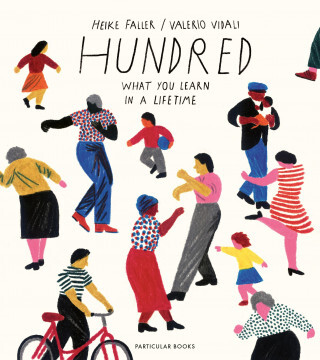
5: You learn that boys and girls fall in love. Incredible!13: When will your parents learn? Not in front of your friends. 36: A dream came true, but it feels different than you thought.45: Do you like yourself as you are?75: You learn to unlearn things. Can you still do a somersault? 86: Everything can be different in every moment. How does our perception of the world change in the course of a lifetime? When Heike Faller's niece was born she began to wonder what we learn in life, and how we can talk about what we have learnt with those we love.And so she began to ask everyone she met, what did you learn in life? Out of the answers of children's writers and refugees, teenagers and artists, mothers and friends, came 99 lessons: that those who have had a difficult time appreciate the good moments more. That those who have had it easy find it harder getting old. That a lot of getting old is about accepting boundaries.And of course, as one 94 year old said to her, 'sometimes I feel like that little girl I once was, and I wonder if I have learned anything at all.'A bestseller in Germany, HUNDRED is a book given by children to grandparents and the other way around, for christenings and Mother's days, significant birthdays and times of celebration. With every age beautifully illustrated by Valerio Vidali, Hundred cannot simply be read because, like life itself, it must be experienced.
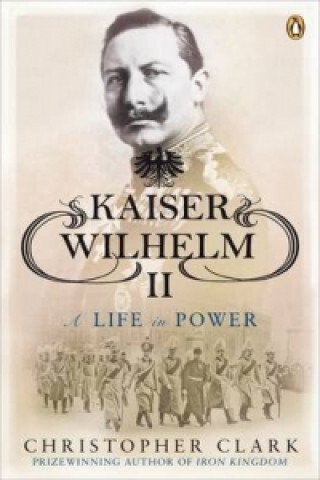
Christopher Clark's "Kaiser Wilhelm II: A Life in Power" is a short, fascinating and accessible biography of one of the 20th century's most important figures. King of Prussia, German Emperor, war leader and defeated exile, Kaiser Wilhelm II was one of the most important - and most controversial - figures in the history of twentieth-century Europe. But how much power did he really have? Christopher Clark, winner of the Wolfson prize for his history of Prussia, Iron Kingdom, follows Kaiser Wilhelm's political career from his youth at the Hohenzollern court through the turbulent decades of the Wilhelmine era into global war and the collapse of Germany in 1918, to his last days. He asks: what was his true role in the events that led to the outbreak of the First World War? What was the nature and extent of his control? What were his political goals and his success in achieving them? How did he project authority and exercise influence? And how did his people really view him? Through original research, Clark presents a fresh new interpretation of this contentious figure, focusing on how his thirty-year reign from 1888 to 1918 affected Germany, and the rest of Europe, for years to come."Clark's fresh and enlightening history brings the Kaiser's life into critical and illuminating review". (German History). Christopher Clark is a lecturer in Modern European History at St Catharine's College, University of Cambridge. His book "Iron Kingdom: The Rise and Downfall of Prussia 1600 to 1947" was the winner of the Wolfson Prize for History.
Missing Out is a meditation on reality and opportunity by Adam Phillips. We all have two lives - the life we live and the life of our fantasies. But it is the life unlived - the person we have failed to be - that can trouble and even haunt us. In Missing Out acclaimed psychoanalyst Adam Phillips delves into the gap between who we are and who we are not, to discover whether not getting what we want may be the unlikely key to the fully lived life. Praise for Adam Phillips: ""Phillipsian" would evoke a vivid, paradoxical style that led you to think that you had picked up an idea by the head, only to find you were holding it by the tail". (Lisa Appignanesi, Guardian). "He's brilliant". (John Carey). "Phillips radiates infectious charm". (Sunday Times). Adam Phillips is a psychoanalyst and the author of several previous books, all widely acclaimed, including On Kissing, Tickling and Being Bored, Going Sane and Side Effects. His most recent book is On Kindness, which was co-written with historian Barbara Taylor.
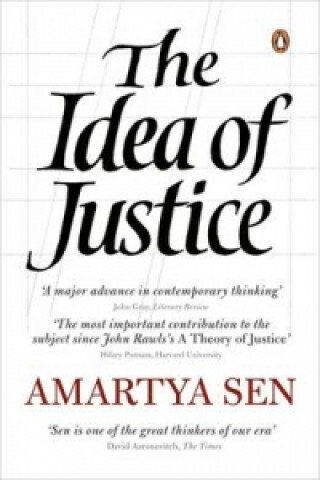
From Nobel Prize-winning economist Amartya Sen, "The Idea of Justice" is a refreshing alternative approach to mainstream theories of justice. Is justice an ideal, for ever beyond our grasp, or something that may actually guide our practical decisions and enhance our lives? At the heart of Sen's argument is his insistence on the role of public reason in establishing what can make societies less unjust. But there are always choices to be made between alternative assessments of what is reasonable, and competing positions can each be well defended. Rather than rejecting these pluralities, we should use them to construct a theory of justice that can accommodate divergent points of view. Sen also inspiringly shows how the principles of justice in the modern world must avoid parochialism and address vital questions of global injustice. The breadth of vision, intellectual acuity and striking humanity of one of the world's leading public intellectuals have never been more clearly shown than in this remarkable book. "A major advance in contemporary thinking". (John Gray, "Literary Review"). "The most important contribution to the subject since John Rawls' "A Theory of Justice"".(Hilary Putnam, Harvard University). "Sen writes with dry wit, a feel for history and a relaxed cosmopolitanism ...a conviction that economists and philosophers are in business to improve the world burns on almost every page". ("Economist"). 'Sen's magisterial critique of the dominant mode of liberal political philosophy confirms him as the English-speaking world's pre-eminent public intellectual". ("New Statesman" Books of the Decade). Amartya Sen is Lamont University Professor at Harvard. He won the Nobel Prize in Economics in 1998 and was Master of Trinity College, Cambridge 1998-2004. His most recent books are "The Argumentative Indian", "Identity and Violence" and "Development as Freedom". His books have been translated into thirty languages.
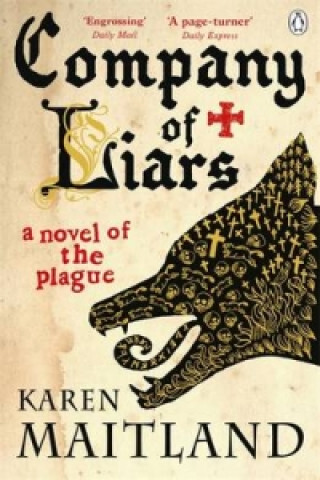
The year is 1348 and the first plague victim has reached English shores. Panic erupts around the country and a small band of travellers comes together to outrun the deadly disease, unaware that something far more deadly is - in fact - travelling with them. The ill-assorted company - a scarred trader in holy relics, a conjurer, two musicians, a healer and a deformed storyteller - are all concealing secrets and lies. And at their heart is the strange, cold child - Narigorm - who reads the runes. But as law and order breaks down across the country and the battle for survival becomes ever more fierce, Narigorm mercilessly compels each of her fellow travellers to reveal the truth, and each in turn is driven to a cruel and unnatural death.
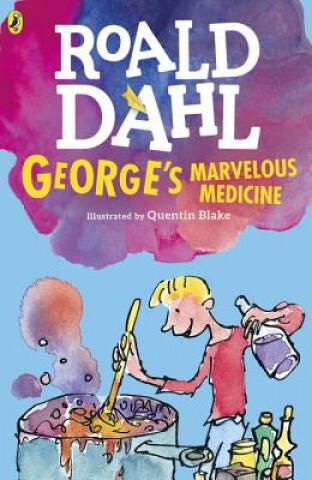
A taste of her own medicine.§§George is alone in the house with Grandma. The most horrid, grizzly old grunion of a grandma ever. She needs something stronger than her usual medicine to cure her grouchiness. A special grandma medicine, a remedy for everything . And George knows just what to put into it. Grandma's in for the surprise of her life - and so is George, when he sees the results of his mixture!
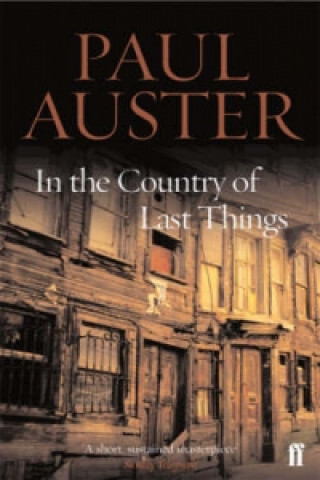
'That is how it works in the City. Every time you think you know the answer to a question, you discover that the question makes no sense ...' This is the story of Anna Blume and her journey to find her lost brother, William, in the unnamed City. Like the City itself, however, it is a journey that is doomed, and so all that is left is Anna's unwritten account of what happened. Paul Auster takes us to an unspecified and devastated world in which the self disappears amidst the horrors that surround us. But this is not just an imaginary, futuristic world - it is one that echoes our own, and in doing so addresses some of our darker legacies.
Following the death of his father, Jim Nashe takes to the open road. But there he picks up Pozzi, a hitchhiking gambler, and is drawn into a dangerous game of high-stakes poker with two eccentric and reclusive millionaires.
Eine Tierfabel über das Hundeleben von Vier- und Zweibeinern: Mr. Bones, ein kleiner Hund, hat sein Herrchen, den alten Penner Willy, verloren. Zusammen durchkämmten sie einst die Straßen und "unterhielten" sich über das Leben. Nun hofft der kleine Mr. Bones, sein Herrchen in "Timbuktu" wiederzutreffen. Timbuktu ist das grenzenlose Paradies, von dem Willy oft genug schwärmte. Mr. Bones macht sich auf die Suche nach diesem Ort. Doch bevor er ihn findet, muss er viele Abenteuer bestehen.