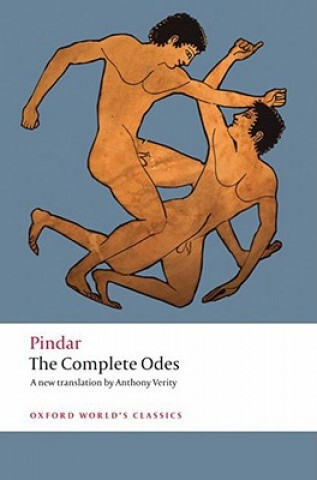
'we can speak of no greater contest than Olympia' The Greek poet Pindar (c. 518-428 BC) composed victory odes for winners in the ancient Games, including the Olympics. He celebrated the victories of athletes competing in foot races, horse races, boxing, wrestling, all-in fighting and the pentathlon, and his Odes are fascinating not only for their poetic qualities, but for what they tell us about the Games. Pindar praises the victor by comparing him to mythical heroes and the gods, but also reminds the athlete of his human limitations. The Odes contain versions of some of the best known Greek myths, such as Jason and the Argonauts, and Perseus and Medusa, and are a valuable source for Greek religion and ethics. Pindar's startling use of language - striking metaphors, bold syntax, enigmatic expressions - makes reading his poetry a uniquely rewarding experience. Anthony Verity's lucid translations are complemented by an introduction and notes that provide insight into competition, myth, and meaning. ABOUT THE SERIES: For over 100 years Oxford World's Classics has made available the widest range of literature from around the globe.Each affordable volume reflects Oxford's commitment to scholarship, providing the most accurate text plus a wealth of other valuable features, including expert introductions by leading authorities, helpful notes to clarify the text, up-to-date bibliographies for further study, and much more.
This authoritative edition was originally published in the acclaimed Oxford Authors series under the general editorship of Frank Kermode. It brings together an extensive collection of Bacon's writing - the major prose in full, together with sixteen other pieces not otherwise available - to give the essence of his work and thinking. Although he had a distinguished career as a lawyer and statesman, Francis Bacon's lifelong goal was to improve and extend human knowledge. In The Advancement of Learning (1605) he made a brilliant critique of the deficiencies of previous systems of thought and proposed improvements to knowledge in every area of human life. He conceived the Essays (1597, much enlarged in 1625) as a study of the formative influences on human behaviour, psychological and social. In The New Atlantis (1626) he outlined his plan for a scientific research institute in the form of a Utopian fable. In addition to these major English works this edition includes 'Of Tribute', an important early work here printed complete for the first time, and a revealing selection of his legal and political writings, together with his poetry.A special feature of the edition is its extensive annotation which identifies Bacon's sources and allusions, and glosses his vocabulary. ABOUT THE SERIES: For over 100 years Oxford World's Classics has made available the widest range of literature from around the globe. Each affordable volume reflects Oxford's commitment to scholarship, providing the most accurate text plus a wealth of other valuable features, including expert introductions by leading authorities, helpful notes to clarify the text, up-to-date bibliographies for further study, and much more.
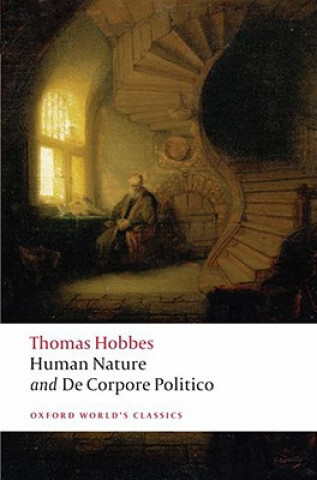
'the state of men without civil society (which state we may properly call the state of nature) is nothing else but a mere war of all against all.' Thomas Hobbes was the first great philosopher to write in English. His account of the human condition, first developed in The Elements of Law (1640), which comprises Human Nature and De Corpore Politico, is a direct product of the intellectural and political strife of the seventeenth century. It is also a remarkably penetrating look at human nature, and a permanently relevant analysis of the fears of self-seeking that result in the war of 'each against every man'. In The Elements of Law Hobbes memorably sets out both the main lines of his general philosophy, later augmented in De Corpore (1655), and the moral and political philosophy later made famous in Leviathan (1651). Copies of Human Nature and De Corpore Politico, until 1889 printed as separate works, are rare antiques or scarcely less rare scholarly texts; this is the first complete popular edition. It is here supplemented by chapters from De Corpore and Three Lives, two from Hobbes's original Latin. These have never before been published together in English.ABOUT THE SERIES: For over 100 years Oxford World's Classics has made available the widest range of literature from around the globe. Each affordable volume reflects Oxford's commitment to scholarship, providing the most accurate text plus a wealth of other valuable features, including expert introductions by leading authorities, helpful notes to clarify the text, up-to-date bibliographies for further study, and much more.
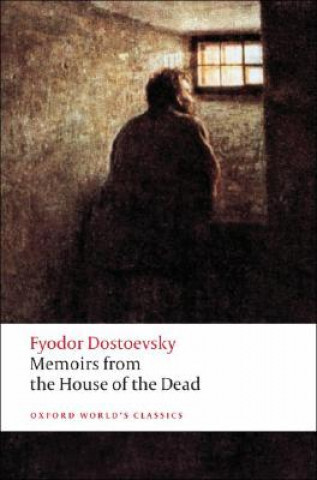
In this almost documentary account of his own experiences of penal servitude in Serbia, Dostoevsky describes the physical and mental suffering of the convicts, the squalor and the degradation, in relentless detail. The inticate procedure whereby the men strip for the bath without removing their ten-pound leg-fetters is an extraordinary tour de force, compared by Turgenev to passages from Dante
Set in the second half of the eighteenth century, Barry Lyndon is the fictional autobiography of an adventurer and rogue whom the reader is led to distrust from the very beginning. Born into the petty Irish gentry, and outmanoeuvred in his first love-affair, a ruined Barry joins the British army. After service in Germany he deserts and, after a brief spell as a spy, pursues the career of a gambler in the dissolute clubs and courts of Europe. In a determined effort to enter fashionable society he marries a titled heiress but finds he has met his match. First published in 1844, Barry Lyndon is Thackeray
'Coward! Sneak! May good men shun him, from henceforth! may his Queen refuse to receive him! You, an earl's daughter! Oh, Isabel! How utterly you have lost yourself!' When the aristocratic Lady Isabel abandons her husband and children for her wicked seducer, more is at stake than moral retribution. Ellen Wood played upon the anxieties of the Victorian middle classes who feared a breakdown of the social order as divorce became more readily available and promiscuity threatened the sanctity of the family. In her novel the simple act of hiring a governess raises the spectres of murder, disguise, and adultery. Her sensation novel was devoured by readers from the Prince of Wales to Joseph Conrad and continued to fascinate theatre-goers and cinema audiences well into the next century. This edition returns for the first time to the racy, slang-ridden narrative of the first edition, rather than the subsequent stylistically 'improved' versions hitherto reproduced by modern editors. ABOUT THE SERIES: For over 100 years Oxford World's Classics has made available the widest range of literature from around the globe.Each affordable volume reflects Oxford's commitment to scholarship, providing the most accurate text plus a wealth of other valuable features, including expert introductions by leading authorities, helpful notes to clarify the text, up-to-date bibliographies for further study, and much more.
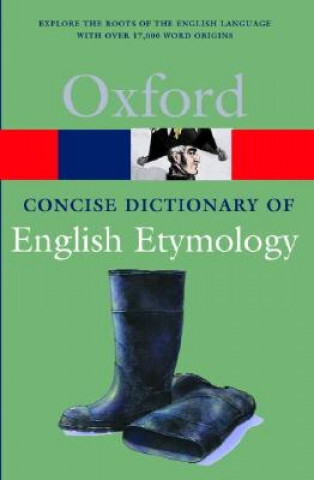
Where did the words bungalow and assassin derive? What did nice mean in the Middle Ages? How were adder, anger, and umpire originally spelt? The answers can be found in this essential companion to any popular dictionary. With over 17,000 entries, this is the most authoritative and comprehensive guide to word origins available in paperback. Based on The Oxford Dictionary of English Etymology, the principal authority on the origin and development of English words, it contains a wealth of information about our language and its history.
In simple language, without mathematics, this book explains the strange and exciting ideas that make the subatomic world so different from the world of the every day. It offers the general reader access to one of the greatest discoveries in the history of physics and one of the oustanding intellectual achievements of the twentieth century.
Now in paperback, this comprehensive and up-to-date dictionary is ideal for study, business or home reference, and gives extensive coverage of the modern standardised language, both spoken and literary.
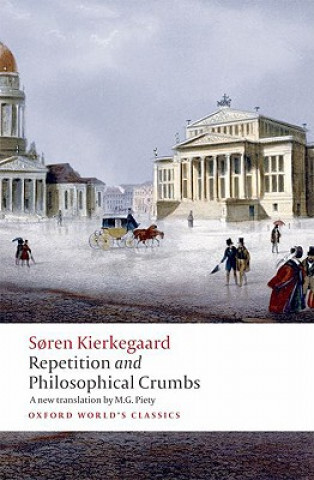
'The love of repetition is in truth the only happy love' So says Constantine Constantius on the first page of Kierkegaard's Repetition. Life itself, according to Kierkegaard's pseudonymous narrator, is a repetition, and in the course of this witty, playful work Constantius explores the nature of love and happiness, the passing of time and the importance of moving forward (and backward). The ironically entitled Philosophical Crumbs pursues the investigation of faith and love and their tense relationship with reason. Written only a year apart, these two works complement each other and give the reader a unique insight into the breadth and substance of Kierkegaard's thought. The first reads like a novel and the second like a Platonic dialogue, but both engage, in different ways, the same challenging issues. These are the first translations to convey the literary quality and philosophical precision of the originals. They were not intended, however, for philosophers, but for anyone who feels drawn to the question of the ultimate truth of human existence and the source of human happiness.ABOUT THE SERIES: For over 100 years Oxford World's Classics has made available the widest range of literature from around the globe. Each affordable volume reflects Oxford's commitment to scholarship, providing the most accurate text plus a wealth of other valuable features, including expert introductions by leading authorities, helpful notes to clarify the text, up-to-date bibliographies for further study, and much more.
The Oxford Handbook of International Relations offers the most authoritative and comprehensive overview to date of the field of international relations. Arguably the most impressive collection of international relations scholars ever brought together within one volume, the Handbook debates the nature of the field itself, critically engages with the major theories, surveys a wide spectrum of methods, addresses the relationship between scholarship and policy making, and examines the field's relation with cognate disciplines. The Handbook takes as its central themes the interaction between empirical and normative inquiry that permeates all theorizing in the field and the way in which contending approaches have shaped one another. In doing so, the Handbook provides an authoritative and critical introduction to the subject and establishes a sense of the field as a dynamic realm of argument and inquiry. The Oxford Handbook of International Relations will be essential reading for all of those interested in the advanced study of global politics and international affairs.
Meno Charmides Laches Lysis 'Do please try to tell us what courage is...' In these four dialogues Plato considers virtue and its definition. Charmides, Laches, and Lysis investigate the specific virtues of self-control, courage, and friendship; the later Meno discusses the concept of virtue as a whole, and whether it is something that can be taught. In the conversations between Socrates and his interlocutors, moral concepts are debated and shown to be more complex than at first appears, until all the participants in the conversations are reduced to bafflement. The artistry as well as the philosophy of these dialogues has always been widely admired. The introduction to this edition explains the course of the four dialogues and examines the importance of Socrates' questions and arguments, and the notes cover major and minor points in more detail. This is an essential volume for understanding the brilliance of the first Western philosopher. ABOUT THE SERIES: For over 100 years Oxford World's Classics has made available the widest range of literature from around the globe.Each affordable volume reflects Oxford's commitment to scholarship, providing the most accurate text plus a wealth of other valuable features, including expert introductions by leading authorities, helpful notes to clarify the text, up-to-date bibliographies for further study, and much more.
For much of his life Pascal (1623-62) worked on a magnum opus which was never published in its intended form. Instead, he left a mass of fragments, some of them meant as notes for the Apologie. These were to become known as the Pensees, and they occupy a crucial place in Western philosophy and religious writing. Pascal's general intention was to confound scepticism about metaphysical questions. Some of the Pensees are fully developed literary reflections on the human condition,, some contradict others, and some remain jottings whose meaning will never be clear. The most important are among the most powerful aphorisms about human experience and behaviour ever written in any language. This translation is the only one based on the Pensees as Pascal left them. It includes the principal dossiers classified by Pascal, as well as the essential portion of the important Writings on Grace. A detailed thematic index gives access to Pascal's areas of concern, while the selection of texts and the introduction help to show why Pascal changed the plan of his projected work before abandoning the book he might have written.ABOUT THE SERIES: For over 100 years Oxford World's Classics has made available the widest range of literature from around the globe. Each affordable volume reflects Oxford's commitment to scholarship, providing the most accurate text plus a wealth of other valuable features, including expert introductions by leading authorities, helpful notes to clarify the text, up-to-date bibliographies for further study, and much more.
This lively and accessible introduction to Plato focuses on the philosophy and argument of his writings, drawing the reader into Plato's way of doing philosophy, and the general themes of his thinking. This is not a book to leave the reader standing in the outer court of introduction and background information, but leads directly into Plato's argument. It looks at Plato as a thinker grappling with philosophical problems in a variety of ways, rather than a philosopher with a fully worked-out system. It includes a brief account of Plato's life and the various interpretations that have been drawn from the sparse remains of information. It stresses the importance of the founding of the Academy and the conception of philosophy as a subject. Julia Annas discusses Plato's style of writing: his use of the dialogue form, his use of what we today call fiction, and his philosophical transformation of myths. She also looks at his discussions of love and philosophy, his attitude to women, and to homosexual love, explores Plato's claim that virtue is sufficient for happiness, and touches on his arguments for the immortality of the soul and his ideas about the nature of the universe.ABOUT THE SERIES: The Very Short Introductions series from Oxford University Press contains hundreds of titles in almost every subject area. These pocket-sized books are the perfect way to get ahead in a new subject quickly. Our expert authors combine facts, analysis, perspective, new ideas, and enthusiasm to make interesting and challenging topics highly readable.
The Logic Manual is the ideal introduction to logic for beginning philosophy students. It offers a concise but complete introductory course, giving a firm grounding in the logic that is needed to study contemporary philosophy. Exercises, examples, and sample examination papers are provided on an accompanying website.
'Lord Orville did me the honour to hand me to the coach, talking all the way of the honour I had done him! O these fashionable people!' Frances Burney's first and most enduringly popular novel is a vivid, satirical, and seductive account of the pleasures and dangers of fashionable life in late eighteenth-century London. As she describes her heroine's entry into society, womanhood and, inevitably, love, Burney exposes the vulnerability of female innocence in an image-conscious and often cruel world where social snobbery and sexual aggression are played out in the public arenas of pleasure-gardens, theatre visits, and balls. But Evelina's innocence also makes her a shrewd commentator on the excesses and absurdities of manners and social ambitions - as well as attracting the attention of the eminently eligible Lord Orville. Evelina, comic and shrewd, is at once a guide to fashionable London, a satirical attack on the new consumerism, an investigation of women's position in the late eighteenth century, and a love story. The new introduction and full notes to this edition help make this richness all the more readily available to a modern reader.ABOUT THE SERIES: For over 100 years Oxford World's Classics has made available the widest range of literature from around the globe. Each affordable volume reflects Oxford's commitment to scholarship, providing the most accurate text plus a wealth of other valuable features, including expert introductions by leading authorities, helpful notes to clarify the text, up-to-date bibliographies for further study, and much more.
Marcus Cato Sulla Aemilius Paullus Pompey The Gracchi Marius Julius Caesar Anthony 'I treat the narrative of the Lives as a kind of mirror...The experience is like nothing so much as spending time in their company and living with them: I receive and welcome each of them in turn as my guest.' In the eight lives of this collection Plutarch introduces the reader to the major figures and periods of classical Rome. He portrays virtues to be emulated and vices to be avoided, but his purpose is also implicitly to educate and warn those in his own day who wielded power. In prose that is rich, elegant and sprinkled with learned references, he explores with an extraordinary degree of insight the interplay of character and political action. While drawing chiefly on historical sources, he brings to biography a natural story-teller's ear for a good anecdote. Throughout the ages Plutarch's Lives have been valued for their historical value and their charm. This new translation will introduce new generations to his urbane erudition. The most comprehensive selection available, it is accompanied by a lucid introduction, explanatory notes, bibliographies, maps and indexes.ABOUT THE SERIES: For over 100 years Oxford World's Classics has made available the widest range of literature from around the globe. Each affordable volume reflects Oxford's commitment to scholarship, providing the most accurate text plus a wealth of other valuable features, including expert introductions by leading authorities, helpful notes to clarify the text, up-to-date bibliographies for further study, and much more.
Captain Scott's own account of his tragic race with Roald Amundsen for the South Pole thrilled the world in 1913. This new edition of his Journals publishes for the first time a complete list of the changes made to Scott's original text before publication.
Considers controversial issues such as what qualifies as a planet, and looks at different types of Solar System objects, such as asteroids, Trans-Neptunian objects and exoplanets.
Oxford School Shakespeare is an acclaimed edition especially designed for students, with accessible on-page notes and explanatory illustrations, clear background information, and rigorous but accessible scholarly credentials. The Tempest is a popular text for study by secondary students the world over. This edition includes illustrations, preliminary notes, reading lists (including websites) and classroom notes.
What Maisie Knew (1897) represents one of James's finest reflections on the rites of passage from wonder to knowledge, and the question of their finality. The child of violently divorced parents, Maisie Farange opens her eyes on a distinctly modern world. Mothers and fathers keep changing their partners and names, while she herself becomes the pretext for all sorts of adult sexual intrigue. In this classic tale of the death of childhood, there is a savage comedy that owes much to Dickens. But for his portrayal of the child's capacity for intelligent 'wonder', James summons all the subtlety he devotes elsewhere to his most celebrated adult protagonists. Neglected and exploited by everyone around her, Maisie inspires James to dwell with extraordinary acuteness on the things that may pass between adult and child. In addition to a new introduction, this edition of the novel offers particularly detailed notes, bibliography, and a list of variant readings. ABOUT THE SERIES: For over 100 years Oxford World's Classics has made available the widest range of literature from around the globe.Each affordable volume reflects Oxford's commitment to scholarship, providing the most accurate text plus a wealth of other valuable features, including expert introductions by leading authorities, helpful notes to clarify the text, up-to-date bibliographies for further study, and much more.
'Anyone who wants to gain a quick idea of how before me everything was topsy-turvy should make a start with this work. That which is called idol on the title-page is quite simply that which was called truth hitherto. Twilight of the Idols - in plain words: the old truth is coming to an end...' Nietzsche intended Twilight of the Idols to serve as a short introduction to his philosophy, and as a result it is the most synoptic of all his books. Continuing in the spirit of its immediate predecessors On The Genealogy of Morals and The Wagner Case, it is a masterpiece of polemic, targeting not only 'eternal idols' like Socratic rationality and Christian morality but also their contemporary counterparts, as Nietzsche the 'untimely man' goes roaming in the gloaming of nineteenth-century European culture. He allies philosophy with psychology and physiology, relentlessly diagnozing the symptoms of decadence, and his stylistic virtuosity is such that the sheer delight he takes in his 'demonic' mischief-making communicates itself on every page. A brilliant new translation, this edition provides detailed commentary on a highly condensed and allusive work.ABOUT THE SERIES: For over 100 years Oxford World's Classics has made available the widest range of literature from around the globe. Each affordable volume reflects Oxford's commitment to scholarship, providing the most accurate text plus a wealth of other valuable features, including expert introductions by leading authorities, helpful notes to clarify the text, up-to-date bibliographies for further study, and much more.
In The Outfit, Parker goes toe-to-toe with the mob - hitting them with heist after heist after heist - and the entire underworld learns an unforgettable lesson: whatever Parker does, he does deadly.
A cult in the US and soon to be released as a movie, }Ghost World( tells of the adventures of two bored, ironic teenage girls. Mass market appeal beyond the traditional graphic novel market.
Nestled in thriving woodlands, overlooking bodies of water, or even exposed to the elements on a mountain's peak, architects are contending to create high-impact spaces on a small scale. Cabin Fever takes a broad look at remote retreats designed to make the most of their natural surroundings and illustrates why the call of the wild is louder than ever. A desire to escape the commotion of the city without sacrificing creature comforts is something felt by many; especially in today's interconnected world. Featuring rustic timber cabins on stilts, mirrored pods in the woods, and otherworldly off-grid getaways, Cabin Fever showcases a new wave of modern hideaways, all remotely positioned and away from the hustle and bustle.
"The first edition of Programming Pearls was one of the most influential books I read early in my career, and many of the insights I first encountered in that book stayed with me long after I read it. Jon has done a wonderful job of updating the material. I am very impressed at how fresh the new examples seem." --Steve McConnell When programmers list their favorite books, Jon Bentley's collection of programming pearls is commonly included among the classics. Just as natural pearls grow from grains of sand that irritate oysters, programming pearls have grown from real problems that have irritated real programmers. With origins beyond solid engineering, in the realm of insight and creativity, Bentley's pearls offer unique and clever solutions to those nagging problems. Illustrated by programs designed as much for fun as for instruction, the book is filled with lucid and witty descriptions of practical programming techniques and fundamental design principles. It is not at all surprising that Programming Pearls has been so highly valued by programmers at every level of experience.In this revision, the first in 14 years, Bentley has substantially updated his essays to reflect current programming methods and environments.In addition, there are three new essays on / testing, debugging, and timing / set representations / string problems All the original programs have been rewritten, and an equal amount of new code has been generated. Implementations of all the programs, in C or C++, are now available on the Web. What remains the same in this new edition is Bentley's focus on the hard core of programming problems and his delivery of workable solutions to those problems. Whether you are new to Bentley's classic or are revisiting his work for some fresh insight, the book is sure to make your own list of favorites. 0201657880B04062001
Aimed at those who have some knowledge of music but not formal training in composition, this concise introduction to composing starts right in with a brief composition exercise, then proceeds step by step through a series of increasingly complex and challenging problems, gradually expanding the student's musical grammar. "This is a wonderful book for anyone who is developing improvising skills or who would like a fun way to explore music."--Jim Stockford, Co-Evolution Quarterly
Jim Corbett is world famous for his classic man-eater stories. However, the three volumes collected here show a very different side to this remarkable man. In My India, he describes the villages of the Kumaon Hills, and the customs and lifestyles of the people he encountered. Jungle Lore is the closest Corbett ever came to writing an autobiography, combining recollections of his earliest days with frank views on the need for conservation which were well ahead of their time. Finally, in Tree Tops, the only book Corbett set outside his beloved India, he captures the savage beauty of Kenya's wildlife as well as telling the story of the royal visit of 1952, during which Princess Elizabeth learned she was Queen.
In the state of Texas American football is a religion. And nowhere is more fanatical about its football than the small town of Odessa. There, every Friday night from September to November, a bunch of seventeen-year-old kids play their hearts out for the honour of their high school. In front of 20,000 people. In 1988 H.G. Bissinger spent a season in Odessa discovering just what makes a town pin its hopes on eleven boys on a football field. He lived with the students, coaches and townspeople who dedicate their lives to their team, sharing their joys and triumphs, their pains, injuries and bitter disappointments. He returned with a compassionate but hard-eyed story of a town riven by money, race and class, where a high school can spend more on medical supplies for its athletic program than on its English department. Friday Night Lights is one of the best books about sport ever written. It is the story of how dreams and reality collide, at once glorious and immensely sad. Because for the 30-odd boys of the Permian Panthers, these days will have been the best of their lives.
"Wald's book is clearly the first textbook on general relativity with a totally modern point of view; and it succeeds very well where others are only partially successful. The book includes full discussions of many problems of current interest which are not treated in any extant book, and all these matters are considered with perception and understanding."--S. Chandrasekhar "A "tour de force" lucid, straightforward, mathematically rigorous, exacting in the analysis of the theory in its physical aspect."--L. P. Hughston, "Times Higher Education Supplement" "Truly excellent. . . . A sophisticated text of manageable size that will probably be read by every student of relativity, astrophysics, and field theory for years to come."--James W. York, "Physics Today"
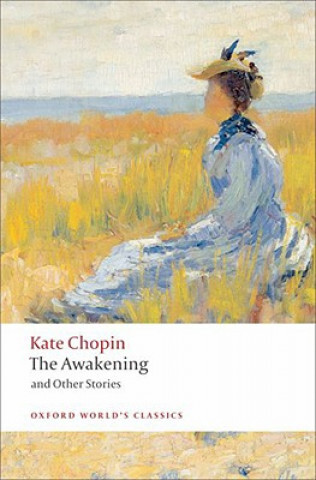
'She wanted to swim far out, where no woman had swum before.' Kate Chopin was one of the most individual and adventurous of nineteenth-century american writers, whose fiction explored new and often startling territory. When her most famous story, The Awakening, was first published in 1899, it stunned readers with its frank portrayal of the inner word of Edna Pontellier, and its daring criticisms of the limits of marriage and motherhood. The subtle beauty of her writing was contrasted with her unwomanly and sordid subject-matter: Edna's rejection of her domestic role, and her passionate quest for spiritual, sexual, and artistic freedom. From her first stories, Chopin was interested in independent characters who challenged convention. This selection, freshly edited form the first printing of each text, enables readers to follow her unfolding career as she experimented with a broad range of writing, from tales for children to decadent fin-de siecle sketches. The Awakening is set alongside thirty-two short stories, illustrating the spectrum of the fiction from her first published stories to her 1898 secret masterpiece, 'The Storm'.ABOUT THE SERIES: For over 100 years Oxford World's Classics has made available the widest range of literature from around the globe. Each affordable volume reflects Oxford's commitment to scholarship, providing the most accurate text plus a wealth of other valuable features, including expert introductions by leading authorities, helpful notes to clarify the text, up-to-date bibliographies for further study, and much more.