Erakordselt lõbus BUM BUMZ pehme mänguasi.Omadused:Bum Bumz mänguasjadel on unikaalne, ebatavaline disain, mida ei leia mujalt.Mänguasi on pehme ja sellel ei ole eraldi ega kõvasid osi, seega on see väikestele lastele ohutu.Suurus: 20 cm
Flamingo Cage Floor. Made from durable and easy-to-clean plastic. The porous surface prevents your pet's paws from slipping. It also serves as a base for bowls or litter boxes. The raised edges protect the floor from spilled liquids and crumbs. The floor is compatible with Ebo, Keo, Mezo, and Nyo cages. Sizes: XS: 28.5 x 42 x 2.5cm (length x width x height) S: 42 x 58 x 2.5cm (length x width x height) M: 46 x 73 x 3cm (length x width x height) L: 56 x 89.5 x 2.5cm (length x width x height) XL: 69 x 105.5 x 3cm (length x width x height) XXL: 73.5 x 120 x 3cm (length x width x height)
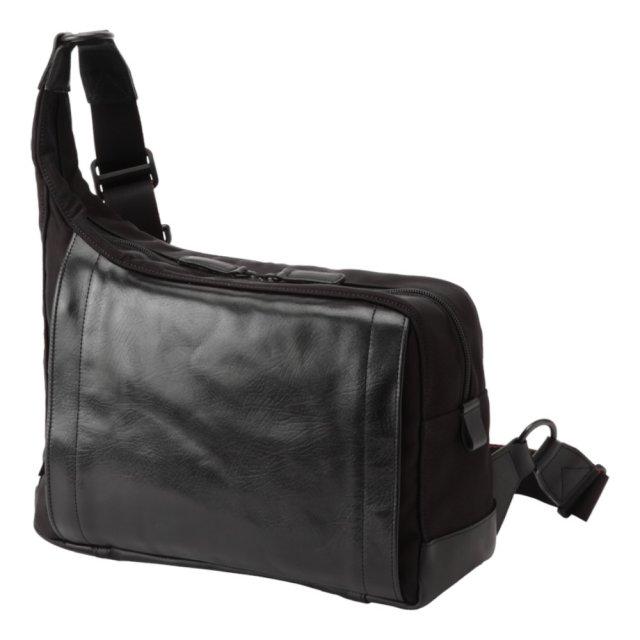
Sling-type camera bag with leather accents on the front, exuding a traditional and elegant atmosphere. The main compartment, which includes cushioned dividers, can hold a single-body camera, such as an M-series Leica or mirrorless camera, and up to two lenses. These dividers are detachable, and the included partitions use hook-and-loop fasteners for easy customization to fit different storage needs. The front flap compartment with a zipper is perfect for storing small items. The bag´s strap features an easy slider system that allows you to quickly adjust its length, to achieve an ideal fit with one hand. Additional Features Easy to use leather handle, even when your hands are occupied Pocket for tablet or PC Mesh fabric on the back for a snug fit against the body CAPACITY Leica or mirrorless camera body 3 lenses iPad Made in Japan Specifications Dimensions: (W x H x D) 300 x 215 x 120mm Inner: (W x H x D) 270 x 170 x 85mm Material: Nylon, Leather Interior Padded storage space Customizable Exterior Strap with easy slider system
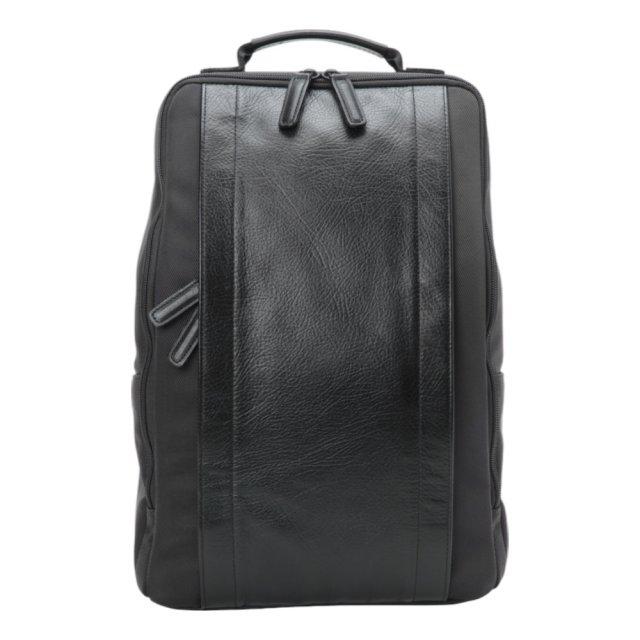
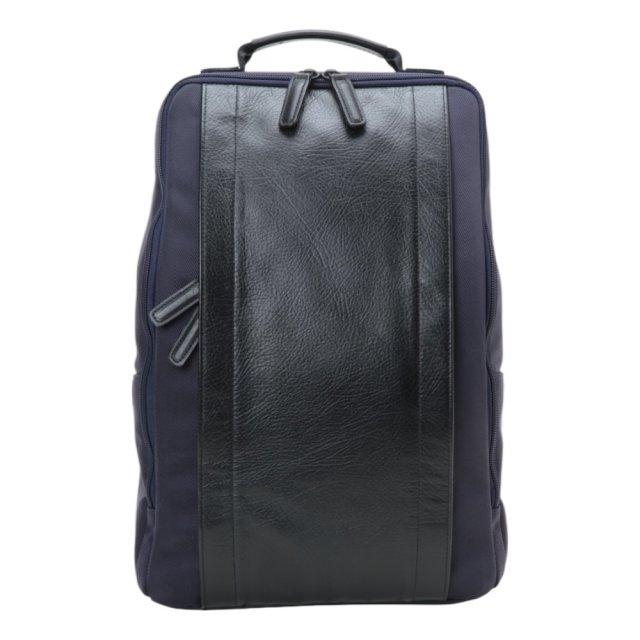
Backpack for cameras with leather accents on the front, creating a traditional and elegant atmosphere. The shape of this backpack is designed to minimize its dead space, achieving a sleek form and practicality. The main compartment can accommodate a mid-sized DSLR camera body, four interchangeable lenses, and a 13-inch laptop. The front flap compartment with a zipper is ideal for storing small items. Furthermore, by storing the handles inside the rear mesh pocket, the backpack can transform into a vertical briefcase-style bag. Additional Features Shoulder straps with excellent fit and weight distribution Sturdy top handle with aluminum reinforcement plate Large opening for easy access to stored items Included guard net parts to prevent items from popping out when the top is open Mesh fabric on the back and behind the shoulder straps for a snug fit against the body CAPACITY Mirrorless camera or DSLR 4 additional lenses 13-inch laptop Made in Japan Specifications Dimensions: (W x H x D) 265 x 390 x 135mm Material: Exterior: Nylon, Cowhide Leather / Interior: Nylon Interior Large padded storage space Mesh pockets Exterior Equipped with zippered front pockets Detachable shoulder straps
Backpack for cameras with leather accents on the front, creating a traditional and elegant atmosphere. The shape of this backpack is designed to minimize its dead space, achieving a sleek form and practicality. The main compartment can accommodate a mid-sized DSLR camera body, four interchangeable lenses, and a 13-inch laptop. The front flap compartment with a zipper is ideal for storing small items. Furthermore, by storing the handles inside the rear mesh pocket, the backpack can transform into a vertical briefcase-style bag. Additional Features Shoulder straps with excellent fit and weight distribution Sturdy top handle with aluminum reinforcement plate Large opening for easy access to stored items Included guard net parts to prevent items from popping out when the top is open Mesh fabric on the back and behind the shoulder straps for a snug fit against the body CAPACITY Mirrorless camera or DSLR 4 additional lenses 13-inch laptop Made in Japan Specifications Dimensions: (W x H x D) 265 x 390 x 135mm Material: Exterior: Nylon, Cowhide Leather / Interior: Nylon Interior Large padded storage space Mesh pockets Exterior Equipped with zippered front pockets Detachable shoulder straps
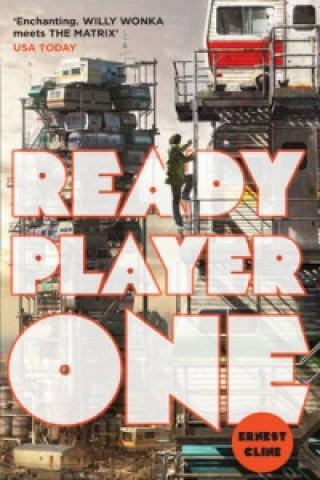
It's the year 2044, and the real world has become an ugly place. We're out of oil. We've wrecked the climate. Famine, poverty, and disease are widespread. Like most of humanity, Wade Watts escapes this depressing reality by spending his waking hours jacked into the OASIS, a sprawling virtual utopia where you can be anything you want to be, where you can live and play and fall in love on any of ten thousand planets. And like most of humanity, Wade is obsessed by the ultimate lottery ticket that lies concealed within this alternate reality: OASIS founder James Halliday, who dies with no heir, has promised that control of the OASIS - and his massive fortune - will go to the person who can solve the riddles he has left scattered throughout his creation.For years, millions have struggled fruitlessly to attain this prize, knowing only that the riddles are based in the culture of the late twentieth century. And then Wade stumbles onto the key to the first puzzle.Suddenly, he finds himself pitted against thousands of competitors in a desperate race to claim the ultimate prize, a chase that soon takes on terrifying real-world dimensions - and that will leave both Wade and his world profoundly changed.
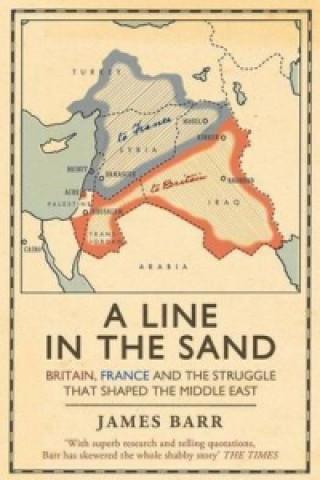
In 1916, in the middle of the First World War, two men secretly agreed to divide the Middle East between them. Sir Mark Sykes was a visionary politician; Francois Georges-Picot a diplomat with a grudge. The deal they struck, which was designed to relieve tensions that threatened to engulf the Entente Cordiale, drew a line in the sand from the Mediterranean to the Persian frontier. Territory north of that stark line would go to France; land south of it, to Britain. Against the odds their pact survived the war to form the basis for the post-war division of the region into five new countries Britain and France would rule. The creation of Britain's 'mandates' of Palestine, Transjordan and Iraq, and France's in Lebanon and Syria, made the two powers uneasy neighbours for the following thirty years. Through a stellar cast of politicians, diplomats, spies and soldiers, including T. E. Lawrence, Winston Churchill and Charles de Gaulle, A Line in the Sand vividly tells the story of the short but crucial era when Britain and France ruled the Middle East.It explains exactly how the old antagonism between these two powers inflamed the more familiar modern rivalry between the Arabs and the Jews, and ultimately led to war between the British and the French in 1941 and between the Arabs and the Jews in 1948. In 1946, after many years of intrigue and espionage, Britain finally succeeded in ousting France from Lebanon and Syria, and hoped that, having done so, it would be able to cling on to Palestine. Using newly declassified papers from the British and French archives, James Barr brings this overlooked clandestine struggle back to life, and reveals, for the first time, the stunning way in which the French finally got their revenge.
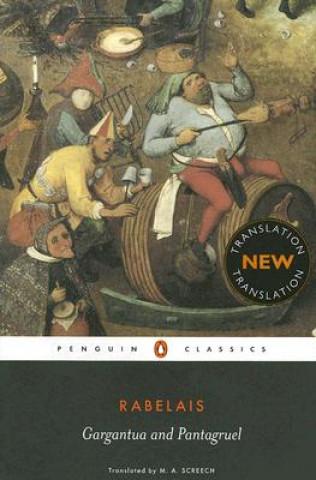
The dazzling and exuberant moral stories of Rabelais (c. 1471-1553) expose human follies with their mischievous and often obscene humour, while intertwining the realistic with carnivalesque fantasy to make us look afresh at the world. "Gargantua" depicts a young giant, reduced to laughable insanity by an education at the hands of paternal ignorance, old crones and syphilitic professors, who is rescued and turned into a cultured Christian knight. And in "Pantagruel" and its three sequels, Rabelais parodied tall tales of chivalry and satirized the law, theology and academia to portray the bookish son of Gargantua who becomes a Renaissance Socrates, divinely guided in his wisdom, and his idiotic, self-loving companion Panurge.
Rejected by her guardians and offered cold charity at an orphanage, Jane Eyre has come to rely on her own intelligence and strength of character to guide her through life. But when she becomes governess at Thornfield Hall, working for the gruff Mr Rochester, she finds a man who may be her equal - and a secret that threatens to destroy them both.
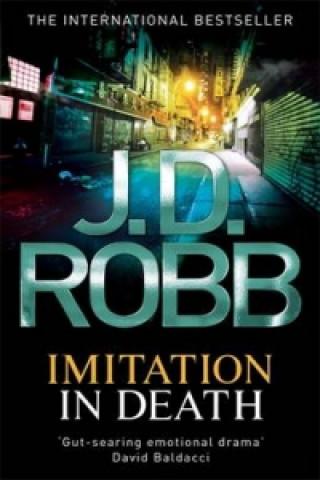
As Lieutenant Eve Dallas stood over what had once been a woman, she wondered when she would see worse than this. Jack the Ripper, the Boston Strangler, Ted Bundy. The worst murderers in history and a new madman's inspiration. In the lost hours of the night a man in a top hat and swirling cloak leaves horror in his wake and a note to Eve Dallas, signed simply: Jack. More murders follow and Eve quickly realises the killer's deadly game of imitation. But facing this calm and menacing presence, with a trail running through London, Paris and LA, Eve struggles to keep her focus. At a time when legend collides with brutal reality, Eve needs all her wits about her ...
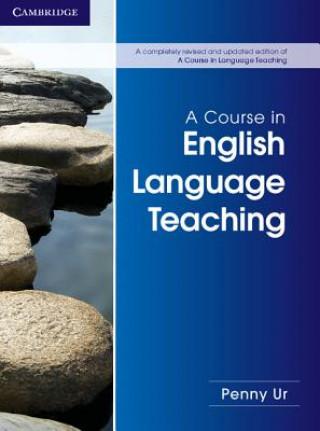
A completely revised and updated edition of A Course in Language Teaching. This book provides a comprehensive introduction to English language teaching, and is suitable for teachers in a variety of educational settings, including compulsory education.It has been completely revised and updated to include essential new topics for the modern English language teacher, including English as an international language, Content and Language Integrated Learning (CLIL) and using digital materials. It is ideal for initial teacher training and as a reference guide for practising teachers.The book combines theory and practice, with each unit containing tasks that encourage reflection and discussion, plus action tasks such as classroom observation and practice.
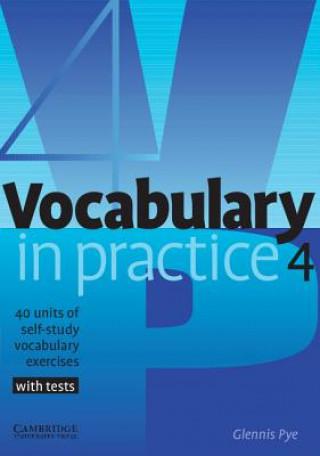
A series of handy vocabulary books aimed at busy learners who want to fit in some extra practice outside the classroom. Offering plenty of practice for vocabulary learners, these small and easy-to-carry books are ideal for busy people to use outside the classroom. All the words have been chosen using the Cambridge International Corpus to ensure that students learn the most widely used vocabulary. Includes regular tests and helpful word lists. This is Level 4/Intermediate.
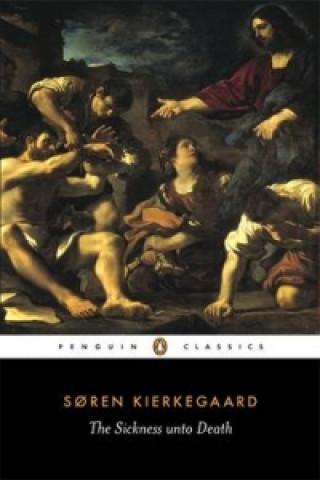
One of the most remarkable philosophical works of the nineteenth century, "The Sickness Unto Death" is also famed for the depth and acuity of its modern psychological insights. Writing under the pseudonym Anti-Climacus, Kierkegaard explores the concept of 'despair', alerting readers to the diversity of ways in which they may be described as living in this state of bleak abandonment - including some that may seem just the opposite - and offering a much-discussed formula for the eradication of despair.With its penetrating account of the self, this late work by Kierkegaard was hugely influential upon twentieth-century philosophers including Karl Jaspers, Jean-Paul Sartre and Albert Camus. "The Sickness unto Death" can be regarded as one of the key works of theistic existentialist thought - a brilliant and revelatory answer to one man's struggle to fill the spiritual void.
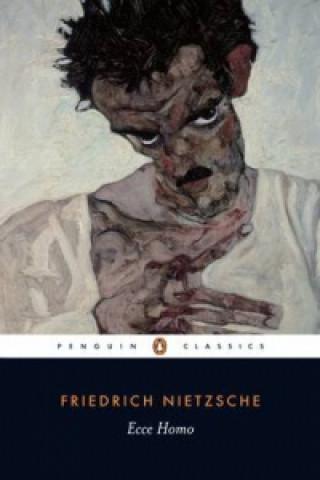
In late 1888, only weeks before his final collapse into madness, Nietzsche (1844 1900) set out to compose his autobiography, and Ecce Homo remains one of the most intriguing yet bizarre examples of the genre ever written. In this extraordinary work Nietzsche traces his life, work and development as a philosopher, examines the heroes he has identified with, struggled against and then overcome Schopenhauer, Wagner, Socrates, Christ and predicts the cataclysmic impact of his forthcoming revelation of all values'. Both self-celebrating and self-mocking, penetrating and strange, Ecce Homo gives the final, definitive expression to Nietzsche's main beliefs and is in every way his last testament.
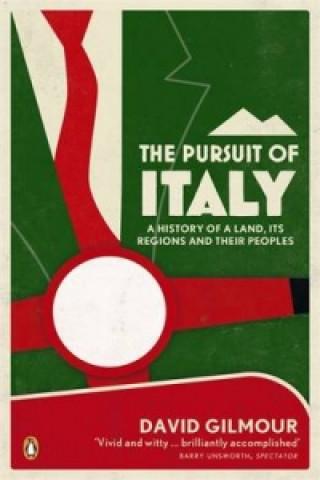
The "Pursuit of Italy" traces the whole history of the Italian peninsula in a wonderfully readable style, full of well-chosen stories and observations from personal experience, and peopled by many of the great figures of the Italian past, from Cicero and Virgil to Dante and the Medici, from Cavour and Verdi to the controversial political figures of the twentieth century. The book gives a clear-eyed view of the Risorgimento, the pivotal event in modern Italian history, debunking the influential myths which have grown up around it. Gilmour shows that the glory of Italy has always lain in its regions, with their distinctive art, civic cultures, identities and cuisine and whose inhabitants identified themselves not as Italians, but as Tuscans and Venetians, Sicilians and Lombards, Neapolitans and Genoese. This is where the strength and culture of Italy still comes from, rather than from misconceived and mishandled concepts of nationalism and unity. This wise and enormously engaging book explains the course of Italian history in a manner and with a coherence which no one with an interest in the country could fail to enjoy.
Die Kernfrage hierbei ist: Warum hörte Deutschland nicht auf zu kämpfen? Warum ergab sich der sichere Verlierer nicht, und wenn auch nur, um die eigenen Haut zu retten?