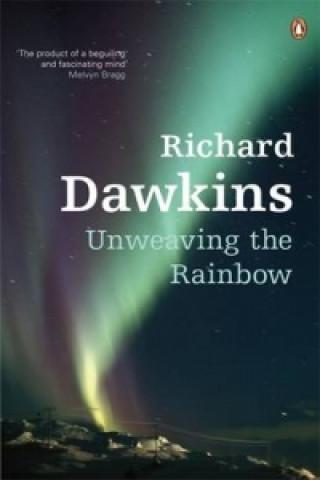
From the bestselling author of "The God Delusion", Richard Dawkins' "Unweaving the Rainbow" explores the most important and compelling topics in modern science, and our appetite for wonder. Keats accused Newton of destroying the poetry of the rainbow by explaining the origin of its colours, thus dispelling its mystery. In this illuminating and provocative book, Richard Dawkins argues that Keats could not have been more mistaken and shows how an understanding of science in fact inspires the human imagination and enhances our wonder of the world. "Beautifully written and full of interesting, original ideas. Essential reading". ("The Times"). "A brilliant assertion of the wonder and excitement of real, tough, grown-up science". (A.S. Byatt). "The way Dawkins writes about science is not just a brain-tonic. It is more like an extended stay on a brain health-farm ...you come out feeling lean, tuned and enormously more intelligent". ("Sunday Times"). "For Dawkins there is more poetry, not less, in the rainbow because of Newton ...warming to his theme, he weaves rainbows of wonder from other provinces of science and then unleashes his fury on those who accuse scientists like him of being unimaginative for not believing in horoscopes, telepathy, ghosts and gods".(Matt Ridley). "Brilliantly entertaining and stimulating". ("Observer"). Richard Dawkins is a Fellow of both the Royal Society and the Royal Society of Literature, and Vice President of the British Humanist Association. He was first catapulted to fame with The Selfish Gene, which he followed with a string of bestselling books: "The Extended Phenotype", "The Blind Watchmaker", "River Out of Eden", "Unweaving the Rainbow", and an impassioned defence of atheism, "The God Delusion".
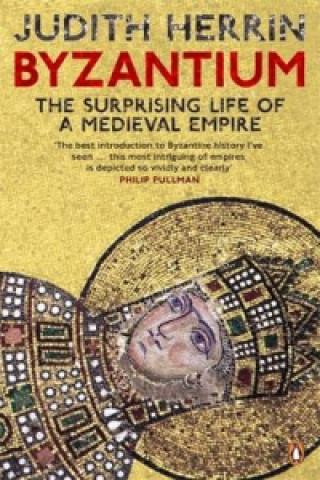
A fascinating and highly original history of the city and culture that was the bulwark of the West for a thousand years. Once a byword for imperial power, gold and international trade, Byzantium combined paganism and classical Greek and Roman learning with orthodox Christianity. Taking a new approach, Herrin focuses each short chapter around a theme such as a building, luxury silks, iconoclasm, and the crusades, or an individual. There will be a huge marketing campaign.
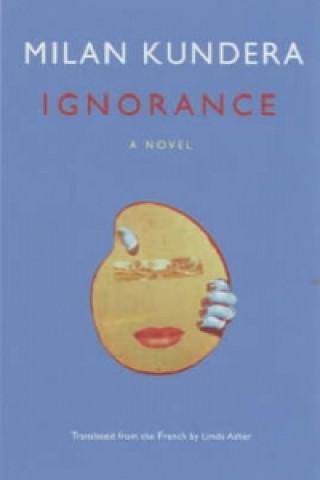
In Ignorance, set in contemporary Prague, one of the most distinguished writers of our time takes up the complex and emotionally charged theme of exile and creates from it a literary masterpiece. A man and a woman meet by chance while returning to their homeland, which they had abandoned twenty years earlier when they chose to become exiles. Will they manage to pick up the thread of their strange love story, interrupted almost as soon as it began and then lost in the tides of history? The truth is that after such a long absence 'their memories no longer match.' We always believe that our memories coincide with those of the person we loved, that we experienced the same thing. But this is just an illusion as the memory records only 'an insignificant, minuscule particle' of the past, 'and no one knows why it's this bit and not any other bit.' We live our lives sunk in a vast forgetting, and we refuse to see it. Only those who return after twenty years, like Ulysses returning to his native Ithaca, can be dazzled and astounded by observing the goddess of ignorance first-hand.Milan Kundera has taken these dizzying concepts of absence, memory, forgetting, and ignorance, and transformed them into material for a novel, masterfully orchestrating them into a polyphonic and moving work.