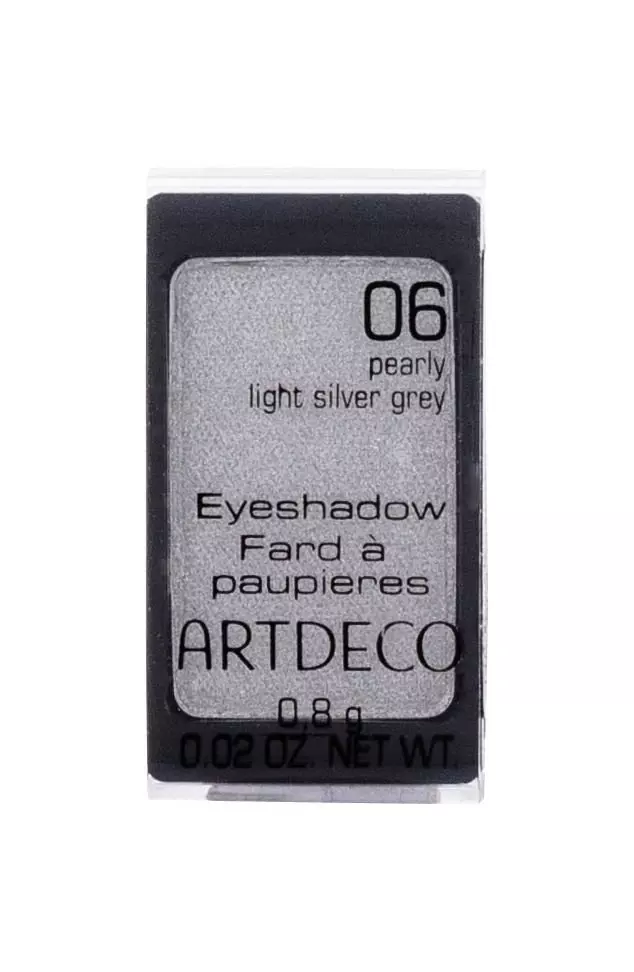
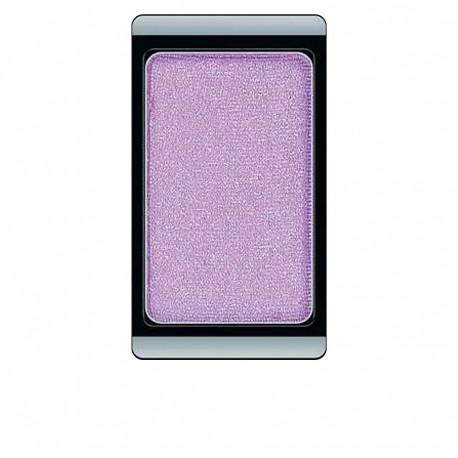
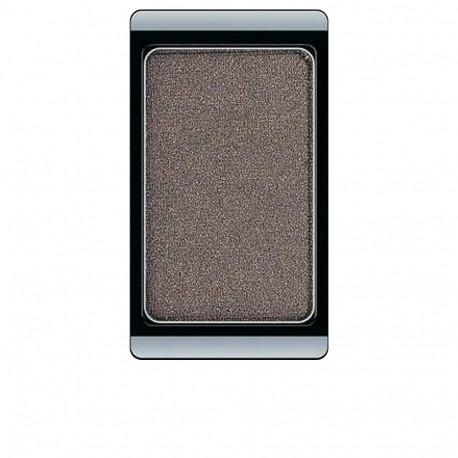
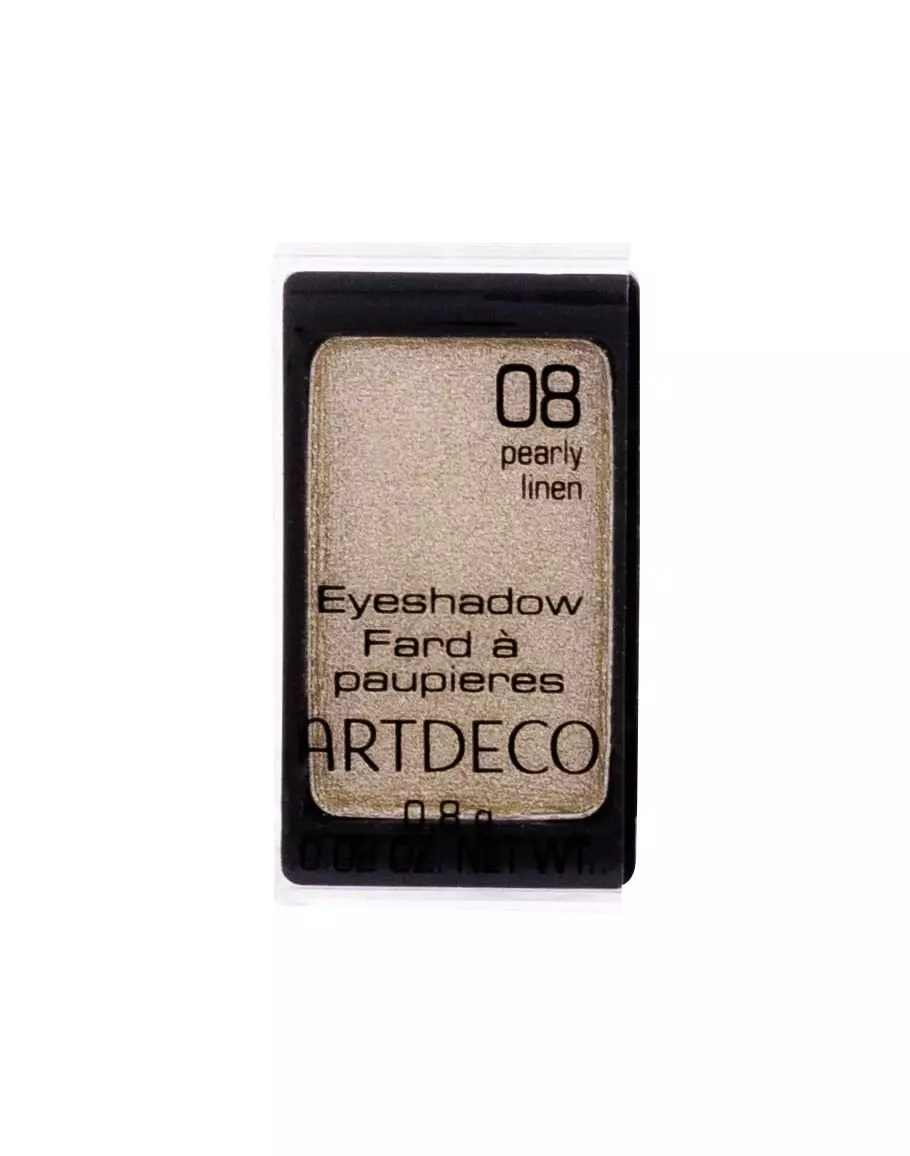
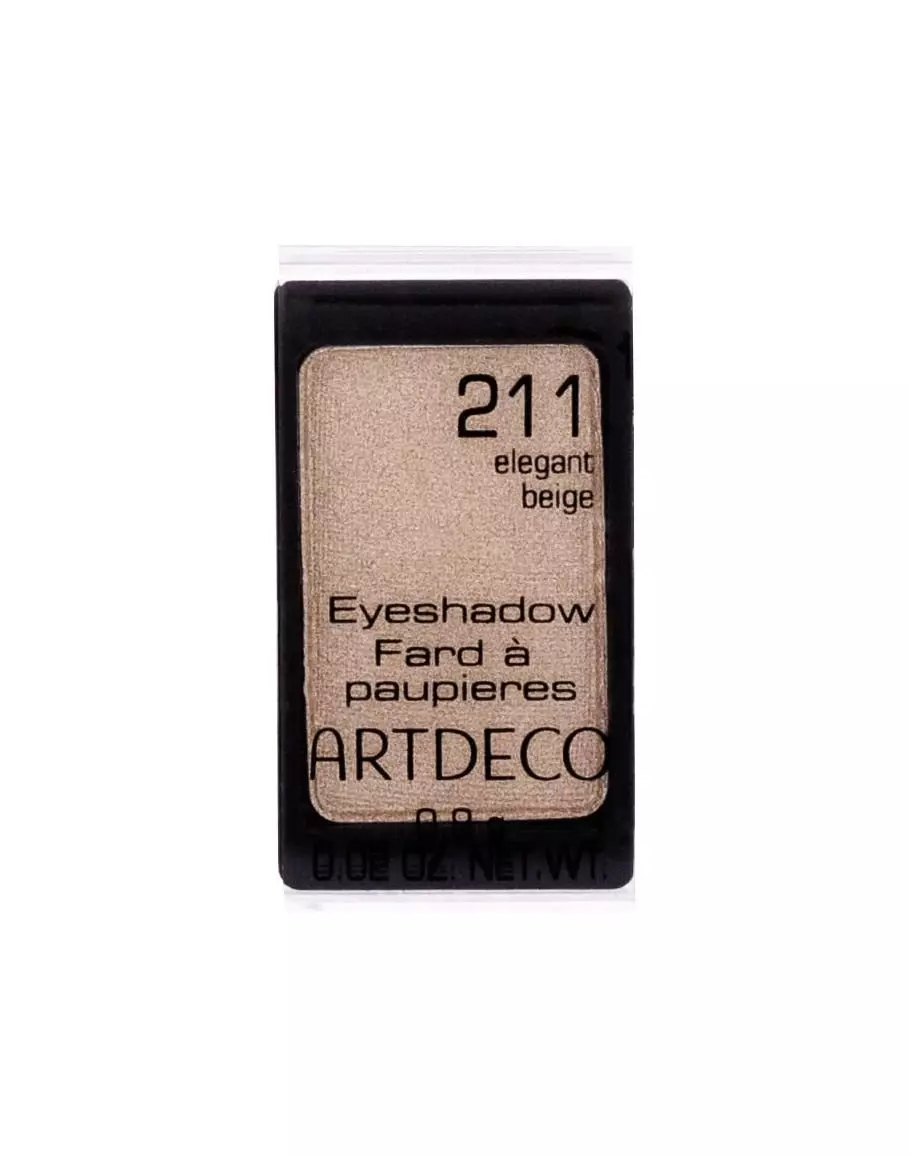
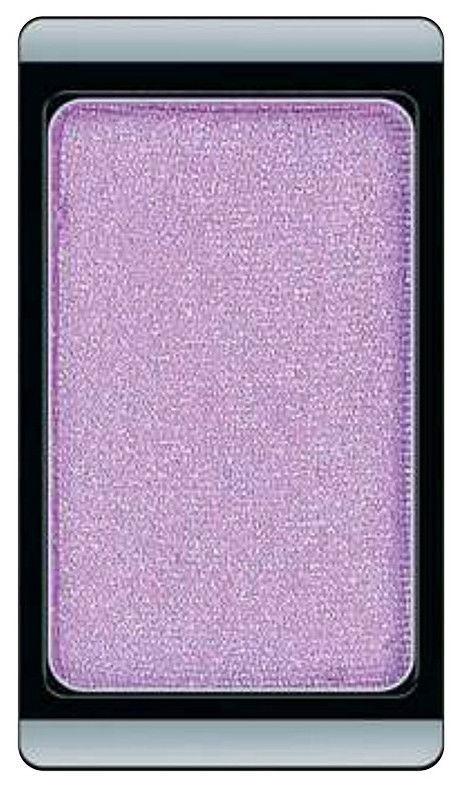
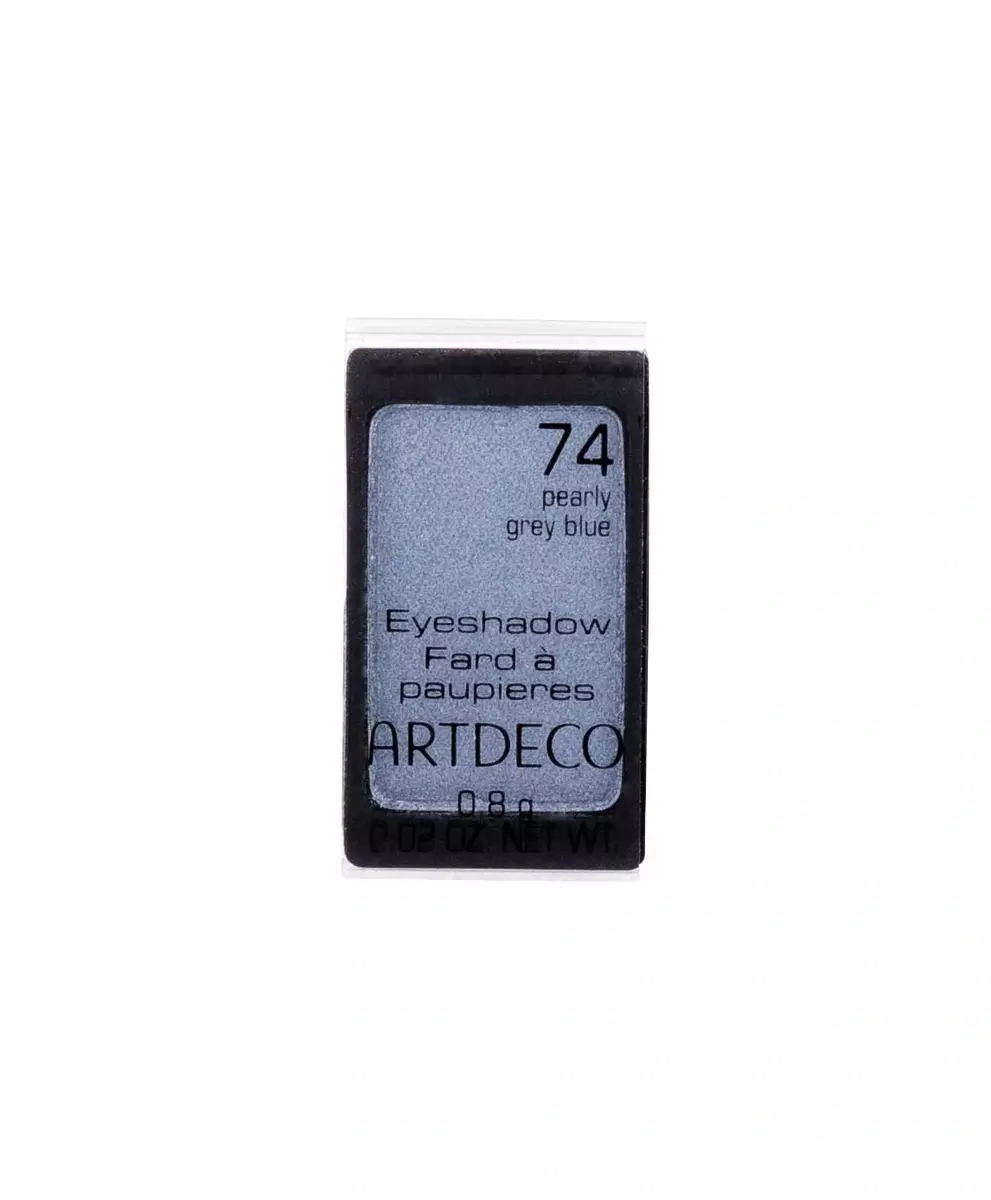
Pearl lauvärve iseloomustavad erksad erksad värvid koos pärlmutterläikega ning samas väga suur hulk toone, mille vahel valida. Peen tekstuur suure protsendi värvipigmentidega on lihtne peale kanda. Vali toonid vastavalt enda soovile ja kombineeri need enda magnetkasti! Ilma parfüümita. Artdeco dekoratiivkosmeetika kõige olulisem osa on nn mosaiiksüsteem, mis võimaldab paletti kokku panna vastavalt enda soovidele ja vajadustele. Lauvärvid, põsepunad ja peitekreemid ostetakse eraldi ja asetatakse spetsiaalsetesse magnetkarpidesse. Kombineerige oma lemmikvärve, vahetage välja vanad aplikaatorid, lisage uusi moekaid toone – seda kõike tänu Artdeco mosaiiksüsteemile!
Duochrom lauvärvid muudavad värvi sõltuvalt vaatenurgast. Peen tekstuur suure protsendi värvipigmentidega on lihtne peale kanda. Vali toonid vastavalt oma soovile ja kombineeri need oma magnetkasti. Artdeco dekoratiivkosmeetika kõige olulisem osa on nn mosaiiksüsteem, mis võimaldab paletti kokku panna vastavalt enda soovidele ja vajadustele. Lauvärvid, põsepunad ja peitekreemid ostetakse eraldi ja asetatakse spetsiaalsetesse magnetkarpidesse. Kombineerige oma lemmikvärve, vahetage välja vanad aplikaatorid, lisage uusi moekaid toone – seda kõike tänu Artdeco mosaiiksüsteemile.
Made from 86% post-consumer recycled plastic2 m drop protectionMagSafe compatibleRaised edges for extra protectionRetail pack - 1 pc per box/sales unit INFINITE - BECAUSE THE ENVIRONMENT MATTERSINFINITE is eSTUFF's product line for products made with an environmental focus.Our INFINITE OSLO covers are made with 86% recycled plastic. These covers provide superior corner protection and feature a built-in magnet for seamless wireless charging. They are are designed to protect your phone from scratches and drops while reducing your carbon footprint.Responsibly producedThe cover contains 65% Global Recycled Standard* certified recycled Post-Consumer Polycarbonate (PC) and 21% Global Recycled Standard* certified Post-Consumer recycled TPU, certified by Control Union 1409828.Packaging: In a recycled plastic bag (CPE).* The Global Recycled Standard verifies recycled material and tracks it from the source to the final product. In addition, facilities from the source to final supplier have met social, environmental, and chemical requirements. Warranty (Month(s)): 24Net Weight (Product,kg): 0,09Gross Weight (Package,kg): 0,1Height (Package,cm): 20,0Width (Package,cm): 12,0Depth (Package,cm): 1,5Anti-yellowing protection: YesCase type: CoverMade with recycled materials: YesMagSafe compatible: YesProduct colour: TransparentProtection features: Bump resistant|Scratch resistant|Drop resistantQuantity per pack (pc(s)): 1,0Recycled material: YesRecycled materials used for making: Polycarbonate (PC)|Thermoplastic polyurethane (TPU)Sustainability certificates: Global Recycled Standard (GRS)Wireless charging: Yes
Pearl lauvärve iseloomustavad erksad erksad värvid koos pärlmutterläikega ning samas väga suur hulk toone, mille vahel valida. Peen tekstuur suure protsendi värvipigmentidega on lihtne peale kanda. Vali toonid vastavalt enda soovile ja kombineeri need enda magnetkasti! Ilma parfüümita. Artdeco dekoratiivkosmeetika kõige olulisem osa on nn mosaiiksüsteem, mis võimaldab paletti kokku panna vastavalt enda soovidele ja vajadustele. Lauvärvid, põsepunad ja peitekreemid ostetakse eraldi ja asetatakse spetsiaalsetesse magnetkarpidesse. Kombineerige oma lemmikvärve, vahetage välja vanad aplikaatorid, lisage uusi moekaid toone – seda kõike tänu Artdeco mosaiiksüsteemile!
Pearl lauvärve iseloomustavad erksad erksad värvid koos pärlmutterläikega ning samas väga suur hulk toone, mille vahel valida. Peen tekstuur suure protsendi värvipigmentidega on lihtne peale kanda. Vali toonid vastavalt enda soovile ja kombineeri need enda magnetkasti! Ilma parfüümita. Artdeco dekoratiivkosmeetika kõige olulisem osa on nn mosaiiksüsteem, mis võimaldab paletti kokku panna vastavalt enda soovidele ja vajadustele. Lauvärvid, põsepunad ja peitekreemid ostetakse eraldi ja asetatakse spetsiaalsetesse magnetkarpidesse. Kombineerige oma lemmikvärve, vahetage välja vanad aplikaatorid, lisage uusi moekaid toone – seda kõike tänu Artdeco mosaiiksüsteemile!
Complete coverage for your Triumph Bonneville covering Bonneville, T100, Speedmaster, America, Thruxton and Scrambler for 2001 to 2012--Routine Maintenance and servicing--Tune-up procedures--Engine, clutch and transmission repair
Language: English, Binding: Hardback, Number of pages: 80, Publishers: Dark Horse Comics, Author: Travis Hymel,Diana Sousa,Jimmy Betancourt,Richard Starkings, ISBN-13: 9781506740331, Date of issue: 2026
An incisive history of American educationits great success in creating prosperity and equality during the twentieth century and its relative decline since the 1970s. As Goldin and Katz have argued, the 20th century was the American century in large part because it was the human-capital century. Educationknowledgecan help people live better by allowing them to learn from past errors and make new discoveries. David Leonhardt, New York Times This book provides a careful historical analysis of the co-evolution of educational attainment and the wage structure in the United States through the twentieth century. The authors propose that the twentieth century was not only the American Century but also the Human Capital Century. That is, the American educational system is what made America the richest nation in the world. Its educational system had always been less elite than that of most European nations. By 1900 the U.S. had begun to educate its masses at the secondary level, not just in the primary schools that had remarkable success in the nineteenth century. The book argues that technological change, education, and inequality have been involved in a kind of race. During the first eight decades of the twentieth century, the increase of educated workers was higher than the demand for them. This had the effect of boosting income for most people and lowering inequality. However, the reverse has been true since about 1980. This educational slowdown was accompanied by rising inequality. The authors discuss the complex reasons for this, and what might be done to ameliorate it. Autorid: Claudia Goldin, Lawrence F. Katz
This last book by the late John Rawls, derived from written lectures and notes for his long-running course on modern political philosophy, offers readers an account of the liberal political tradition from a scholar viewed by many as the greatest contemporary exponent of the philosophy behind that tradition. Rawls's goal in the lectures was, he wrote, "to identify the more central features of liberalism as expressing a political conception of justice when liberalism is viewed from within the tradition of democratic constitutionalism." He does this by looking at several strands that make up the liberal and democratic constitutional traditions, and at the historical figures who best represent these strands--among them the contractarians Hobbes, Locke, and Rousseau; the utilitarians Hume, Sidgwick, and J. S. Mill; and Marx regarded as a critic of liberalism. Rawls's lectures on Bishop Joseph Butler also are included in an appendix. Constantly revised and refined over three decades, Rawls's lectures on these figures reflect his developing and changing views on the history of liberalism and democracy--as well as how he saw his own work in relation to those traditions. With its clear and careful analyses of the doctrine of the social contract, utilitarianism, and socialism--and of their most influential proponents--this volume has a critical place in the traditions it expounds. Marked by Rawls's characteristic patience and curiosity, and scrupulously edited by his student and teaching assistant, Samuel Freeman, these lectures are a fitting final addition to his oeuvre, and to the history of political philosophy as well. Autorid: John Rawls, Samuel Freeman
Feeling Backward weighs the costs of the contemporary move to the mainstream in lesbian and gay culture. While the widening tolerance for same-sex marriage and for gay-themed media brings clear benefits, gay assimilation entails other losses--losses that have been hard to identify or mourn, since many aspects of historical gay culture are so closely associated with the pain and shame of the closet.Feeling Backward makes an effort to value aspects of historical gay experience that now threaten to disappear, branded as embarrassing evidence of the bad old days before Stonewall. It looks at early-twentieth-century queer novels often dismissed as "too depressing" and asks how we might value and reclaim the dark feelings that they represent. Heather Love argues that instead of moving on, we need to look backward and consider how this history continues to affect us in the present.Through elegant readings of Walter Pater, Willa Cather, Radclyffe Hall, and Sylvia Townsend Warner, and through stimulating engagement with a range of critical sources, Feeling Backward argues for a form of politics attentive to social exclusion and its effects. Autorid: Heather Love