LDNIO A2620C USB, USB-C 65W mains charger + USB-C - USB-C cableThe LDNIO A2620C network charger offers 2 input ports: USB-C and USB-A, so you can charge 2 devices at the same time. It uses 65 watts of power and supports PD and QC3.0 fast charging protocols. The lightweight and compact design does not take up much space, and the use of fire-resistant PC ensures safe use. You will also find a USB-C to USB-C cable included. Fast charging of 2 devices simultaneouslyLDNIO A2620C is equipped with USB-C and USB-A ports, allowing you to connect 2 devices simultaneously. It uses 65 watts of power and supports PD and QC3.0 fast charging protocols - no more waiting indefinitely for your device to charge. Thoughtful designThe charger is made of flame-resistant PC, so you can use it safely. It's also unafraid of falls. In addition, it is equipped with a number of safety features, so you don't have to worry about damaging your equipment. LDNIO A2620C is also distinguished by its lightweight and compact design - you can successfully take it on the go. In addition, wide compatibility increases the freedom of use.IncludedchargerUSB-C to USB-C cableManufacturerLDNIOModelA2620CColorwhitePower65 WMaterial PCInput voltage100-240V 1.5A 50-60HzOutput voltageUSB-C: 5V-3A,9V-3A,12V-3A 65W(MAX), USB-A: 5V-2.4A 12W(MAX)Input portsUSB-A, USB-C
The bestselling author of Crusaders and presenter of Netflix's Secrets of Great British Castles offers a vivid account of the events that inspired Game of Thrones and Shakespeare's Henry IV and Richard III Discover
Black is the favourite colour for a wide range of people, from priests to penitents, artists and ascetics, fashion designers and fascists, and has stood for powerfully opposed ideas: authority, humility, sin, holiness, rebellion, conformity, wealth and poverty. But what is the true meaning of black, and how and why does it change through time?
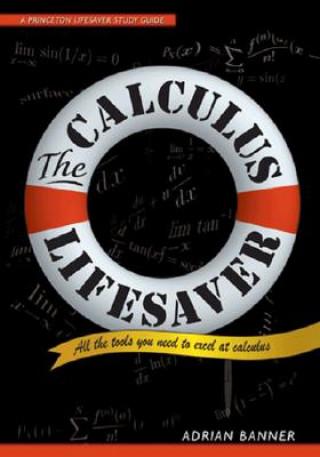
For many students, calculus can be the most mystifying and frustrating course they will ever take. "The Calculus Lifesaver" provides students with the essential tools they need not only to learn calculus, but to excel at it. All of the material in this user-friendly study guide has been proven to get results. The book arose from Adrian Banner's popular calculus review course at Princeton University, which he developed especially for students who are motivated to earn A's but get only average grades on exams. The complete course will be available for free on the Web in a series of videotaped lectures. This study guide works as a supplement to any single-variable calculus course or textbook. Coupled with a selection of exercises, the book can also be used as a textbook in its own right. The style is informal, non-intimidating, and even entertaining, without sacrificing comprehensiveness. The author elaborates standard course material with scores of detailed examples that treat the reader to an 'inner monologue' - the train of thought students should be following in order to solve the problem - providing the necessary reasoning as well as the solution.The book's emphasis is on building problem-solving skills. Examples range from easy to difficult and illustrate the in-depth presentation of theory. "The Calculus Lifesaver" combines ease of use and readability with the depth of content and mathematical rigor of the best calculus textbooks. It is an indispensable volume for any student seeking to master calculus. It serves as a companion to any single-variable calculus textbook. It is informal, entertaining, and not intimidating. Informative videos that follow the book - a full forty-eight hours of Banner's Princeton calculus-review course - is available at Adrian Banner lectures. More than 475 examples (ranging from easy to hard) provide step-by-step reasoning. It has theorems and methods justified and connections made to actual practice. Difficult topics such as improper integrals and infinite series are covered in detail. It is tried and tested by students taking freshman calculus.
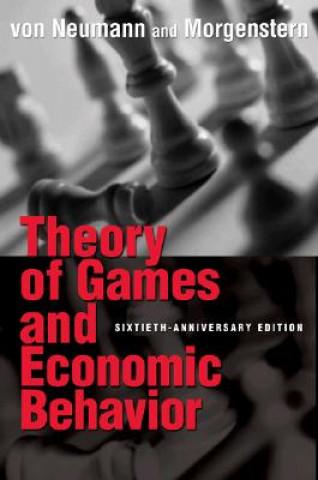
This is the classic work upon which modern-day game theory is based. What began more than sixty years ago as a modest proposal that a mathematician and an economist write a short paper together blossomed, in 1944, when Princeton University Press published "Theory of Games and Economic Behavior". In it, John von Neumann and Oskar Morgenstern conceived a groundbreaking mathematical theory of economic and social organization, based on a theory of games of strategy. Not only would this revolutionize economics, but the entirely new field of scientific inquiry, it yielded - game theory - which has since been widely used to analyze a host of real-world phenomena from arms races to optimal policy choices of presidential candidates, from vaccination policy to major league baseball salary negotiations. And it is today established throughout both the social sciences and a wide range of other sciences.This sixtieth anniversary edition includes not only the original text but also an introduction by Harold Kuhn, an afterword by Ariel Rubinstein, and reviews and articles on the book that appeared at the time of its original publication in the "New York Times", the "American Economic Review", and a variety of other publications. Together, these writings provide readers a matchless opportunity to more fully appreciate a work whose influence will yet resound for generations to come.
Language: English, Binding: Paperback, Number of pages: 176, Publishers: Faber & Faber, Author: Kate Saunders,Neal Layton, ISBN-13: 9780571348985, Date of issue: 2019