Language: English, Binding: Paperback, Number of pages: 480, Publishers: PRINCETON UNIV PR, Author: Jeff Blincow, ISBN-13: 9780691174099, Date of issue: 2024
A full-color illustrated guide to the natural history of the most poisonous plants on earthThis richly illustrated book provides an in-depth natural history of the most poisonous plants on earth, covering everything from the lethal effects of hemlock and deadly nightshade to the uses of such..
This book shows that the secret of our success lies not in our innate intelligence, but in our collective brains - on the ability of human groups to socially interconnect and learn from one another over generations. Tracking clues from our ancient past to the present, The Secret of Our Success explores how the evolution of both our cultural and social natures produce a collective intelligence that explains both our species' immense success and the origins of human uniqueness.
An illustrated guide to one of the most enduring masterworks of world literatureWritten in the eleventh century by the Japanese noblewoman Murasaki Shikibu, The Tale of Genji is a masterpiece of prose and poetry that is widely consi
In April 1956, a refitted oil tanker carried fifty-eight shipping containers from Newark to Houston. From that modest beginning, container shipping developed into a huge industry that made the boom in global trade possible. The Box tells the dramatic story of the container's creation, the decade of struggle before it was widely adopted, and the sweeping economic consequences of the sharp fall in transportation costs that containerization brought about. Drawing on previously neglected sources, economist Marc Levinson shows how the container transformed economic geography, devastating traditional ports such as New York and London and fueling the growth of previously obscure ones, such as Oakland. By making shipping so cheap that industry could locate factories far from its customers, the container paved the way for Asia to become the world's workshop and brought consumers a previously unimaginable variety of low-cost products from around the globe.
Easy escape into nature - 60 achivable walks with mapsLonely Planet's Best Day Hikes California is your passport to 60 easy escapes into nature. Stretch your legs away from the city by picking a hike that works for you, from just a couple of hours to a full day, from easy to hard. Explore Yosemite, marvel at redwoods, and hike the coast. Get to the heart of California and begin your journey now!Inside Lonely Planet's Best Day Hikes CaliforniaTravel Guide:Color maps and images throughoutSpecial features - on California's highlights for hikers, kid-friendly hikes, accessible trails and what to takeBest for... section helps you plan your trip and select hikes that appeal to your interestsRegion profiles cover when to go, where to stay, what's on, cultural insights, and local food and drink recommendations to refuel and refresh. Featured regions include:Northern Coast & Redwoods, Marin County & the Bay Area, California's Central Coast, SoCal Coast, Southern Deserts, Kings Canyon, Sequoia & the Southern Sierras, Yosemite National Park, Lake Tahoe & Gold Country, Northern MountainsEssential infoat your fingertips - hiking itineraries accompanied by illustrative maps are combined with details about hike duration, distance, terrain, start/end locations and difficulty (classified as easy, easy-moderate, moderate, moderate-hard, or hard)Over 60 mapsThe Perfect Choice: Lonely Planet's Best Day Hikes California, our most comprehensive guide to hiking in California, is perfect for those planning to explore California on foot.
Love and relationships are not one-size-fits-all. Good thing we have options Most people assume that healthy or serious relationships which involve romance and sex are supposed to follow this path: from attraction and dating, through exclusivity and livin
Calculus. For some of us, the word conjures up memories of ten-pound textbooks and visions of tedious abstract equations. And yet, in reality, calculus is fun and accessible, and surrounds us everywhere we go. In Everyday Calculus, Oscar Fernandez demonstrates that calculus can be used to explore practically any aspect of our lives, including the most effective number of hours to sleep and the fastest route to get to work. He also shows that calculus can be both useful--determining which seat at the theater leads to the best viewing experience, for instance--and fascinating--exploring topics such as time travel and the age of the universe. Throughout, Fernandez presents straightforward concepts, and no prior mathematical knowledge is required. For advanced math fans, the mathematical derivations are included in the appendixes. The book features a new preface that alerts readers to new interactive online content, including demonstrations linked to specific figures in the book as well as an online supplement. Whether you're new to mathematics or already a curious math enthusiast, Everyday Calculus will convince even die-hard skeptics to view this area of math in a whole new way.
Most attempts to explain market failures seek to pinpoint triggering mechanisms that occur hours, days, or weeks before the collapse. Sornette proposes a radically different view: the underlying cause can be sought months and even years before the abrupt, catastrophic event in the build-up of cooperative speculation, which often translates into an accelerating rise of the market price, otherwise known as a "bubble." Anchoring his sophisticated, step-by-step analysis in leading-edge physical and statistical modeling techniques, he unearths remarkable insights and some predictions--among them, that the "end of the growth era" will occur around 2050. Sornette probes major historical precedents, from the decades-long "tulip mania" in the Netherlands that wilted suddenly in 1637 to the South Sea Bubble that ended with the first huge market crash in England in 1720, to the Great Crash of October 1929 and Black Monday in 1987, to cite just a few. He concludes that most explanations other than cooperative self-organization fail to account for the subtle bubbles by which the markets lay the groundwork for catastrophe.
Language: English, Binding: Paperback, Number of pages: 608, Publishers: Princeton University Press, Author: Wayne L. Winston,Konstantinos Pelechrinis, ISBN-13: 9780691177625, Date of issue: 2022
This beautifully illustrated photographic field guide is the first to focus on the identification of the fascinating, diverse and unique wildlife of Madeira and the Canary Islands--featuring the birds, mammals, reptiles, amphibians, butterflies and dragonflies that are most likely to be seen. Richly illustrated introductory sections cover the key wildlife sites to visit on each of the islands and provide an overview of the islands' geography, climate, habitat types and current conservation efforts. Stunning colour photographs highlight the key identification features of each species, and the accompanying text covers status, habitat preference, behaviour and, where appropriate, calls. The guide also features an up-to-date distribution map for each species
Inside the epic quest to find life on the water-rich moons at the outer reaches of the solar systemWhere is the best place to find life beyond Earth? We often look to Mars as the most promising site in our solar system, but recent scientif
Written by one of the twentieth century's leading textile artists, this splendidly illustrated book is a luminous meditation on the art of weaving, its history, its tools and techniques, and its implications for modern design. First published in 1965, On Weaving bridges the transition between handcraft and the machine-made, highlighting the essential importance of material awareness and the creative leaps that can occur when design problems are tackled by hand. With her focus on materials and handlooms, Anni Albers discusses how technology and mass production place limits on creativity and problem solving, and makes the case for a renewed embrace of human ingenuity that is particularly important today. Now available for a new generation of readers, this expanded edition of On Weaving updates the book's original black-and-white illustrations with full-color photos, and features an afterword by Nicholas Fox Weber and essays by Manuel Cirauqui and T'ai Smith that shed critical light on Albers and her career.
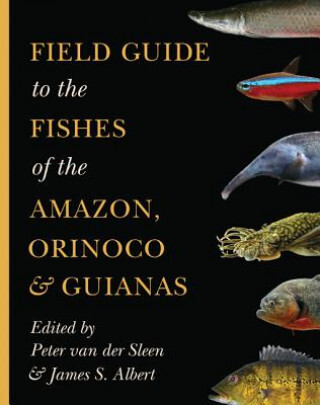
The Amazon and Orinoco basins in northern South America are home to the highest concentration of freshwater fish species on earth, with more than 3,000 species allotted to 564 genera. Amazonian fishes include piranhas, electric eels, freshwater stingrays, a myriad of beautiful small-bodied tetras and catfishes, and the largest scaled freshwater fish in the world, the pirarucu. Field Guide to the Fishes of the Amazon, Orinoco, and Guianas provides descriptions and identification keys for all the known genera of fishes that inhabit Greater Amazonia, a vast and still mostly remote region of tropical rainforests, seasonally flooded savannas, and meandering lowland rivers.
With a new preface by the authorSince its original publication in 1976, Perception and Misperception in International Politics has become a landmark book in its field, hailed by the New York Times as "the seminal statement of principles underlying political psychology." This new edition includes an extensive preface by the author reflecting on the book's lasting impact and legacy, particularly in the application of cognitive psychology to political decision making, and brings that analysis up to date by discussing the relevant psychological research over the past forty years. Jervis describes the process of perception (for example, how decision makers learn from history) and then explores common forms of misperception (such as overestimating one's influence). He then tests his ideas through a number of important events in international relations from nineteenth- and twentieth-century European history. Perception and Misperception in International Politics is essential for understanding international relations today.
How important is luck in economic success? No question more reliably divides conservatives from liberals. As conservatives correctly observe, people who amass great fortunes are almost always talented and hardworking. But liberals are also correct to note that countless others have those same qualities yet never earn much. In recent years, social scientists have discovered that chance plays a much larger role in important life outcomes than most people imagine. In Success and Luck, bestselling author and New York Times economics columnist Robert Frank explores the surprising implications of those findings to show why the rich underestimate the importance of luck in success - and why that hurts everyone, even the wealthy.
Language: English, Binding: Hardback, Number of pages: 480, Publishers: Princeton University Press, Author: Dale C. Copeland, ISBN-13: 9780691172552, Date of issue: 2024
The quality of life for ordinary Roman citizens at the height of the Roman Empire probably was better than that of any other large group of people living before the Industrial Revolution. The Roman Market Economy uses the tools of modern economic
Music is filled with mathematical elements, the works of Bach are often said to possess a math-like logic, and Igor Stravinsky said "musical form is close to mathematics," while Arnold Schoenberg, Iannis Xenakis, and Karlheinz Stockhausen went further, writing music explicitly based on mathematical principles. Yet Eli Maor argues that music has influenced math at least as much as math has influenced music. Starting with Pythagoras, proceeding through the work of Schoenberg, and ending with contemporary string theory, Music by the Numbers tells a fascinating story of composers, scientists, inventors, and eccentrics who played a role in the age-old relationship between music, mathematics, and the sciences, especially physics and astronomy.
What would stoic ethics be like today if stoicism had survived as a systematic approach to ethical theory, if it had coped successfully with the challenges of modern philosophy and experimental science? A New Stoicism proposes an answer to that question, offered from within the stoic tradition but without the metaphysical and psychological assumptions that modern philosophy and science have abandoned. Lawrence Becker argues that a secular version of the stoic ethical project, based on contemporary cosmology and developmental psychology, provides the basis for a sophisticated form of ethical naturalism, in which virtually all the hard doctrines of the ancient Stoics can be clearly restated and defended.
Individual decision making can often be wrong due to misinformation, impulses, or biases. Collective decision making, on the other hand, can be surprisingly accurate. In Democratic Reason, H l ne Landemore demonstrates that the very factors behin
Alda Merini is one of Italy's most important, and most beloved, living poets. She has won many of the major national literary prizes and has twice been nominated for the Nobel Prize--by the French Academy in 1996 and by Italian PEN in 2001. InLove Lessons, the distinguished American poet Susan Stewart brings us the largest and most comprehensive selection of Merini's poetry to appear in English. Complete with the original Italian on facing pages, a critical introduction, and explanatory notes, this collection gathers lyrics, meditations, and aphorisms that span fifty years, from Merini's first books of the 1950s to an unpublished poem from 2001. These accessible and moving poems reflect the experiences of a writer who, after beginning her career at the center of Italian Modernist circles when she was a teenager, went silent in her twenties, spending much of the next two decades in mental hospitals, only to reemerge in the 1970s to a full renewal of her gifts, an outpouring of new work, and great renown.Whether she is working in the briefest, most incisive lyric mode or the complex time schemes of longer meditations, Merini's deep knowledge of classical and Christian myth gives her work a universal, philosophical resonance, revealing what is at heart her tragic sense of life. At the same time, her ironic wit, delight in nature, and affection for her native Milan underlie even her most harrowing poems of suffering. In Stewart's skillful translations readers will discover a true sibyl of the twentieth and twenty-first centuries. Autorid: Alda Merini, Susan Stewart
Histories of German philosophy in the nineteenth century typically focus on its first half--when Hegel, idealism, and Romanticism dominated. By contrast, the remainder of the century, after Hegel's death, has been relatively neglected because it has been seen as a period of stagnation and decline. But Frederick Beiser argues that the second half of the century was in fact one of the most revolutionary periods in modern philosophy because the nature of philosophy itself was up for grabs and the very absence of certainty led to creativity and the start of a new era. In this innovative concise history of German philosophy from 1840 to 1900, Beiser focuses not on themes or individual thinkers but rather on the period's five great debates: the identity crisis of philosophy, the materialism controversy, the methods and limits of history, the pessimism controversy, and the Ignorabimusstreit. Schopenhauer and Wilhelm Dilthey play important roles in these controversies but so do many neglected figures, including Ludwig Buchner, Eugen Duhring, Eduard von Hartmann, Julius Fraunstaedt, Hermann Lotze, Adolf Trendelenburg, and two women, Agnes Taubert and Olga Pluemacher, who have been completely forgotten in histories of philosophy. The result is a wide-ranging, original, and surprising new account of German philosophy in the critical period between Hegel and the twentieth century. Autorid: Frederick C. Beiser
Through personal anecdotes and original research, a thought-provoking book Investigates how economic forces and growing inequality shape how parents raise their children, from medieval times to the present, and in different countries. An international and historical look at how parenting choices change in the face of economic inequalityParents everywhere want their children to be happy and do well. Yet how parents seek to achieve this ambition varies enormously. For instance, American and Chinese parents are increasingly authoritative and authoritarian, whereas Scandinavian parents tend to be more permissive. Why? Love, Money, and Parenting investigates how economic forces and growing inequality shape how parents raise their children. From medieval times to the present, and from the United States, the United Kingdom, Germany, Italy, Spain, and Sweden to China and Japan, Matthias Doepke and Fabrizio Zilibotti look at how economic incentives and constraintssuch as money, knowledge, and timeinfluence parenting practices and what is considered good parenting in different countries.Through personal anecdotes and original research, Doepke and Zilibotti show that in countries with increasing economic inequality, such as the United States, parents push harder to ensure their children have a path to security and success. Economics has transformed the hands-off parenting of the 1960s and 70s into a frantic, overscheduled activity. Growing inequality has also resulted in an increasing parenting gap between richer and poorer families, raising the disturbing prospect of diminished social mobility and fewer opportunities for children from disadvantaged backgrounds. In nations with less economic inequality, such as Sweden, the stakes are less high, and social mobility is not under threat. Doepke and Zilibotti discuss how investments in early childhood development and the design of education systems factor into the parenting equation, and how economics can help shape policies that will contribute to the ideal of equal opportunity for all.Love, Money, and Parenting presents an engrossing look at the economics of the family in the modern world. Autorid: Matthias Doepke, Fabrizio Zilibotti
A dollar is a dollar--or so most of us believe. Indeed, it is part of the ideology of our time that money is a single, impersonal instrument that impoverishes social life by reducing relations to cold, hard cash. After all, it's just money. Or is it? Distinguished social scientist and prize-winning author Viviana Zelizer argues against this conventional wisdom. She shows how people have invented their own forms of currency, earmarking money in ways that baffle market theorists, incorporating funds into webs of friendship and family relations, and otherwise varying the process by which spending and saving takes place. Zelizer concentrates on domestic transactions, bestowals of gifts and charitable donations in order to show how individuals, families, governments, and businesses have all prescribed social meaning to money in ways previously unimagined. Autorid: Viviana A. Zelizer, Nigel Dodd, Viviana A. Zelizer
An ecologist explores how life itself shapes Earth using the elemental constituents we all shareIt is rare for life to change Earth, yet three organisms have profoundly transformed our planet over the long course of its history. Elemental reveals how microbes, plants, and people used the fundamental building blocks of life to alter the climate, and with it, the trajectory of life on Earth in the past, present, and future.Taking readers from the deep geologic past to our current era of human dominance, Stephen Porder focuses on five of lifes essential elementshydrogen, oxygen, carbon, nitrogen, and phosphorus. He describes how single-celled cyanobacteria and plants harnessed them to wildly proliferate across the oceans and the land, only to eventually precipitate environmental catastrophes. He then brings us to the present, and shows how these elements underpin the success of human civilization, and how their mismanagement threatens similarly catastrophic unintended consequences. But, Porder argues, if we can learn from our world-changing predecessors, we can construct a more sustainable future.Blending conversational storytelling with the latest science, Porder takes us deep into the Amazon, across fresh lava flows in Hawaii, and to the cornfields of the American Midwest to illuminate a potential path to sustainability, informed by the constraints imposed by lifes essential elements and the four-billion-year history of life on Earth. Autorid: Stephen Porder
In the mid-eighteenth century, Swiss-born mathematician Leonhard Euler developed a formula so innovative and complex that it continues to inspire research, discussion, and even the occasional limerick. Dr. Euler's Fabulous Formula shares the fascinating story of this groundbreaking formula--long regarded as the gold standard for mathematical beauty--and shows why it still lies at the heart of complex number theory. In some ways a sequel to Nahin's An Imaginary Tale, this book examines the many applications of complex numbers alongside intriguing stories from the history of mathematics. Dr. Euler's Fabulous Formula is accessible to any reader familiar with calculus and differential equations, and promises to inspire mathematicians for years to come. Autorid: Paul J. Nahin
A new framework for the neuroscientific study of emotions in humans and animalsThe Neuroscience of Emotion presents a new framework for the neuroscientific study of emotion across species. Written by Ralph Adolphs and David J. Anderson, two leading authorities on the study of emotion, this accessible and original book recasts the discipline and demonstrates that in order to understand emotion, we need to examine its biological roots in humans and animals. Only through a comparative approach that encompasses work at the molecular, cellular, systems, and cognitive levels will we be able to comprehend what emotions do, how they evolved, how the brain shapes their development, and even how we might engineer them into robots in the future. Showing that emotions are ubiquitous across species and implemented in specific brain circuits, Adolphs and Anderson offer a broad foundation for thinking about emotions as evolved, functionally defined biological states. The authors discuss the techniques and findings from modern neuroscientific investigations of emotion and conclude with a survey of theories and future research directions. Featuring color illustrations throughout, The Neuroscience of Emotion synthesizes the latest in neuroscientific work to provide deeper insights into how emotions function in all of us. Autorid: Ralph Adolphs, David J. Anderson
Why do democracies keep lurching from success to failure? The current financial crisis is just the latest example of how things continue to go wrong, just when it looked like they were going right. In this wide-ranging, original, and compelling book, David Runciman tells the story of modern democracy through the history of moments of crisis, from the First World War to the economic crash of 2008. A global history with a special focus on the United States, The Confidence Trap examines how democracy survived threats ranging from the Great Depression to the Cuban missile crisis, and from Watergate to the collapse of Lehman Brothers. It also looks at the confusion and uncertainty created by unexpected victories, from the defeat of German autocracy in 1918 to the defeat of communism in 1989. Throughout, the book pays close attention to the politicians and thinkers who grappled with these crises: from Woodrow Wilson, Nehru, and Adenauer to Fukuyama and Obama. In The Confidence Trap, David Runciman shows that democracies are good at recovering from emergencies but bad at avoiding them. The lesson democracies tend to learn from their mistakes is that they can survive themand that no crisis is as bad as it seems. Breeding complacency rather than wisdom, crises lead to the dangerous belief that democracies can muddle through anythinga confidence trap that may lead to a crisis that is just too big to escape, if it hasn't already. The most serious challenges confronting democracy today are debt, the war on terror, the rise of China, and climate change. If democracy is to survive them, it must figure out a way to break the confidence trap. Autorid: David Runciman, David Runciman
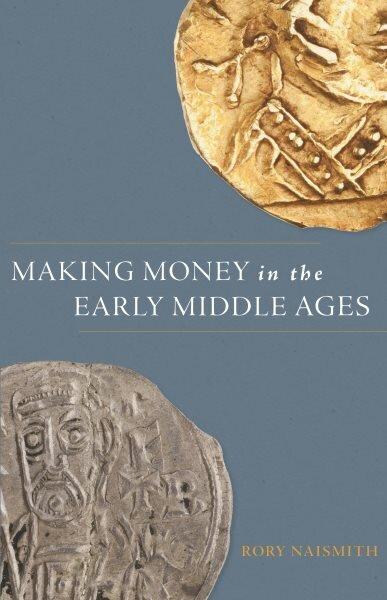
An examination of coined money and its significance to rulers, aristocrats, and peasants in early medieval EuropeBetween the end of the Roman Empire in the fifth century and the economic transformations of the twelfth, coined money in western Europe was scarce and high in value, difficult for the majority of the population to make use of. And yet, as Rory Naismith shows in this illuminating study, coined money was made and used throughout early medieval Europe. It was, he argues, a powerful tool for articulating peoples place in economic and social structures and an important gauge for levels of economic complexity. Working from the premise that using coined money carried special significance when there was less of it around, Naismith uses detailed case studies from the Mediterranean and Northern Europe to propose a new reading of early medieval money as a point of contact between economic, social, and institutional history.Naismith examines structural issues, including the mining and circulation of metal and the use of bullion and other commodities as money, and then offers a chronological account of monetary development, discussing the post-Roman period of gold coinage, the rise of the silver penny in the seventh century, and the reconfiguration of elite power in relation to coinage in the tenth and eleventh centuries. In the process, he counters the conventional view of early medieval currency as the domain only of elite gift-givers and intrepid long-distance traders. Even when there were few coins in circulation, Naismith argues, the ways they were usedto give gifts, to pay rents, to spend at marketshave much to tell us. Autorid: Rory Naismith
Much of the work on nuclear proliferation has focused on why states pursue nuclear weapons. The question of how states pursue nuclear weapons has received little attention. Seeking the Bomb is the first book to analyze this topic by examining which strategies of nuclear proliferation are available to aspirants, why aspirants select one strategy over another, and how this matters to international politics. Looking at a wide range of nations, from India and Japan to the Soviet Union and North Korea to Iraqand Iran, Vipin Narang develops an original typology of proliferation strategies-hedging, sprinting, sheltered pursuit, and hiding. Each strategy of proliferation provides different opportunities for the development of nuclear weapons, while at the same time presenting distinct vulnerabilities that can be exploited to prevent states from doing so. Narang delves into the crucial implications these strategies have for nuclear proliferation and international security. Hiders, for example, are especially disruptive since either they successfully attain nuclear weapons, irrevocably altering the global power structure, or they are discovered, potentially triggering serious crises or war, as external powers try to halt or reverse a previously clandestine nuclear weapons program. As the international community confronts the next generation of potential nuclear proliferators, Seeking the Bomb explores how global conflict and stability are shaped by the ruthlessly pragmatic ways states choose strategies of proliferation. The first systematic look at the different strategies that states employ in their pursuit of nuclear weaponsMuch of the work on nuclear proliferation has focused on why states pursue nuclear weapons. The question of how states pursue nuclear weapons has received little attention. Seeking the Bomb is the first book to analyze this topic by examining which strategies of nuclear proliferation are available to aspirants, why aspirants select one strategy over another, and how this matters to international politics.Looking at a wide range of nations, from India and Japan to the Soviet Union and North Korea to Iraq and Iran, Vipin Narang develops an original typology of proliferation strategieshedging, sprinting, sheltered pursuit, and hiding. Each strategy of proliferation provides different opportunities for the development of nuclear weapons, while at the same time presenting distinct vulnerabilities that can be exploited to prevent states from doing so. Narang delves into the crucial implications these strategies have for nuclear proliferation and international security. Hiders, for example, are especially disruptive since either they successfully attain nuclear weapons, irrevocably altering the global power structure, or they are discovered, potentially triggering serious crises or war, as external powers try to halt or reverse a previously clandestine nuclear weapons program.As the international community confronts the next generation of potential nuclear proliferators, Seeking the Bomb explores how global conflict and stability are shaped by the ruthlessly pragmatic ways states choose strategies of proliferation. Autorid: Vipin Narang
A comprehensive intellectual history of the idea of the WestHow did the West come to be used as a collective self-designation signaling political and cultural commonality? When did Westerners begin to refer to themselves in this way? Was the idea handed down from the ancient Greeks, or coined by nineteenth-century imperialists? Neither, writes Georgios Varouxakis in The West, his ambitious and fascinating genealogy of the idea. The West was not used by Plato, Cicero, Locke, Mill, or other canonized figures of what we today call the Western tradition. It was not first wielded by empire-builders. It gradually emerged as of the 1820s and was then, Varouxakis shows, decisively promoted in the 1840s by the French philosopher Auguste Comte (whose political project, incidentally, was passionately anti-imperialist). The need for the use of the term the West emerged to avoid the confusing or unwanted consequences of the use of Europe. The two overlapped, but were not identical, with the West used to differentiate from certain others within Europe as well as to include the Americas.After examining the origins, Varouxakis traces the many and often astonishingly surprising changes in the ways in which the West has been understood, and the different intentions and consequences related to a series of these contested definitions. While other theories of the West consider only particular aspects of the concept and its history (if only in order to take aim at its reputation), Varouxakiss analysis offers a comprehensive account that reaches to the present day, exploring the multiplicity of current, and not least, prospective future meanings. He concludes with an examination of how, since 2022, definitions and membership of the West have been reworked to consider Ukraine, as the evolution and redefinitions continue. Autorid: Georgios Varouxakis