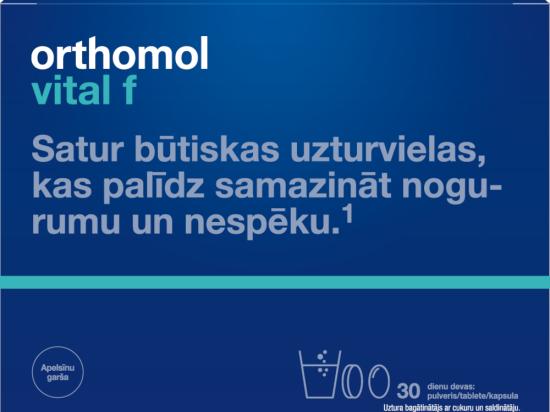
Vajalikud toitained suurenenud koormusega tingimustes Toidulisand stressist tingitud toitainetekao kompenseerimiseks, tasakaalustatud närvisüsteemi, naha ja juuste tervise heaks. Sisaldab energiaainevahetuse ja närvisüsteemi toimimise jaoks vajalikke toitaineid, nagu magneesium ja B2-, B6- ning B12-vitamiinid, mis vähendavad väsimust ja jõuetusetunnet. Sisaldab oomega-3-rasvhappeid ja kaltsiumi. Soovitatav ka läbipõlemise ja kroonilise väsimuse korral. Sisaldab närvisüsteemi ja energiaainevahetuse jaoks hädavajalikke toitaineid: C-vitamiin, B2-vitamiin, B6-vitamiin, B12-vitamiin, foolhape, niatsiin, pantoteenhape ja magneesium aitavad vähendada väsimust ja nõrkust. B1-vitamiin, B2-vitamiin, B6-vitamiin, B12-vitamiin, pantoteenhape, niatsiin, C-vitamiin, biotiin, magneesium, jood, mangaan ja vask aitavad tagada normaalse energiaainevahetuse. B1-vitamiin, B2-vitamiin, B6-vitamiin, B12-vitamiin, C-vitamiin, niatsiin, biotiin, magneesium, vask ja jood soodustavad närvisüsteemi normaalset toimet. C-vitamiin, E-vitamiin, B2-vitamiin, tsink, seleen, vask ja mangaan aitavad kaitsta rakke oksüdatiivse stressi eest. Oomega-3-rasvhapped EPA ja DHA soodustavad normaalset südame tööd. Positiivseid mõjusid täheldatakse 250 mg EPA ja DHA igapäevase manustamise korral. Kaltsium aitab säilitada luude ja hammaste tervist. 30 päeva annused. Päevane annus sisaldab 15 g pulbrit, 1 tabletti ja 1 kapslit (1,1 g). Netokaal: 483 g. Tootja: Orthomol GmbH, Herzogstraβe 30, 40764, Langenfelde, Saksamaa.
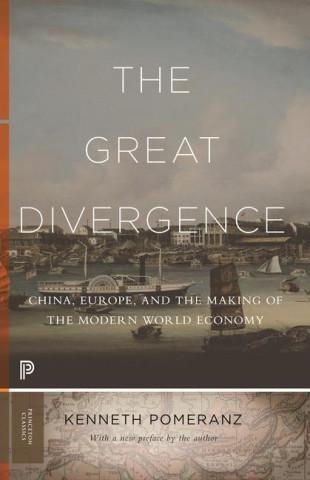
Language: English, Binding: Paperback, Number of pages: 404, Publishers: Princeton University Press, Author: Kenneth Pomeranz, ISBN-13: 9780691217185, Date of issue: 2021
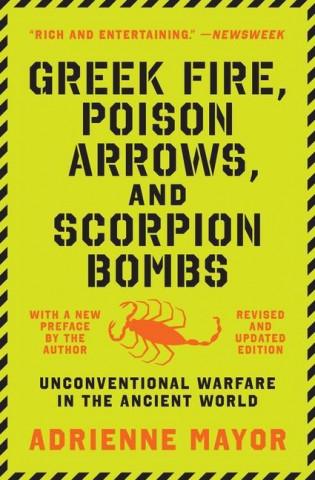
Language: English, Binding: Paperback, Number of pages: 432, Publishers: Princeton University Press, Author: Adrienne Mayor, ISBN-13: 9780691211084, Date of issue: 2022
A collection of essential quotations from the renowned fashion designer, DJ, and stylistAbloh-isms is a collection of essential quotations from American fashion designer, DJ, and stylist Virgil Abloh, who was a major creative figure in the worlds of pop culture and art. Abloh began his career as Kanye West’s creative director before founding the luxury streetwear label Off-White and becoming artistic director for Louis Vuitton, making Abloh the first American of African descent to hold that title at a French fashion house. Defying categorization, Abloh’s work has been the subject of solo exhibitions at museums and galleries, most notably in a major retrospective at the Museum of Contemporary Art Chicago. Gathered from interviews and other sources, this selection of compelling and memorable quotations from the designer reveals his thoughts on a wide range of subjects, including creativity, passion, innovation, race, and what it means to be an artist of his generation. Lively and thought-provoking, these quotes reflect Abloh’s unique perspective as a trailblazer in his fields.Select quotations from the book:"I believe that coincidence is key, but coincidence is energies coming towards each other. You have to be moving to meet it.”"Life is collaboration. Where I think art can be sort of misguided is that it propagates this idea of itself as a solo love affair―one person, one idea, no one else involved.”"Black influence has created a new ecosystem, which can grow and support different types of life that we couldn’t before."
Language: English, Binding: Hardback, Number of pages: 288, Publishers: Princeton University Press, Author: Patrick Baty,Elaine Charwat,Peter Davidson,André Karliczek,Giulia Simonini, ISBN-13: 9780691217048, Date of issue: 2021
Five years in the making, Pentagram: Living by Design is an in-depth survey of the group from its beginnings in 1970s London to its current status as one of the powerhouses of international design. Pentagram: Living by Design (two volumes) is the definitive statement on 50 years of Pentagram. This is an in-depth survey of the group from its beginnings in 1970s London to its current status as one of the powerhouses of international design.Book one, The Biography, offers a comprehensive analysis of the group, its partners, its achievements, its multidisciplinary approach, and its unique business model. This is accompanied by a plethora of images (some never published), a visual essay of Pentagram's work across four main sectors, a selection of partners writings, a Pentagram family tree, and much more. Book two, The Directory, has profiles of 50 partners, past and present, accompanied by extensive coverage of their work.It's a stellar roll call: from the five famous founders to some of the most celebrated names in contemporary design. It also includes a list of everyone who worked in the firm's various offices. Both books are designed by Tony Brook and the Spin design team and use a range of paper stocks and special colours.
Language: English, Binding: Hardback, Number of pages: 224, Publishers: Princeton University Press, Author: Jim Al–khalili, ISBN-13: 9780691211572, Date of issue: 2022
Language: English, Binding: Paperback, Number of pages: 256, Publishers: Princeton University Press, Author: Hans Halvorson, ISBN-13: 9780691211954, Date of issue: 2024
Language: English, Binding: Paperback, Number of pages: 272, Publishers: Princeton University Press, Author: Philip Ording, ISBN-13: 9780691218977, Date of issue: 2021
Language: English, Binding: Paperback, Number of pages: 256, Publishers: Princeton University Press, Author: Eric H. Cline,Glynnis Fawkes, ISBN-13: 9780691213026, Date of issue: 2024
Language: English, Binding: Paperback, Number of pages: 312, Publishers: Princeton University Press, Author: Christopher Clark, ISBN-13: 9780691217321, Date of issue: 2021
Language: English, Binding: Paperback, Number of pages: 272, Publishers: Princeton University Press, Author: Hélène Landemore, ISBN-13: 9780691212395, Date of issue: 2022
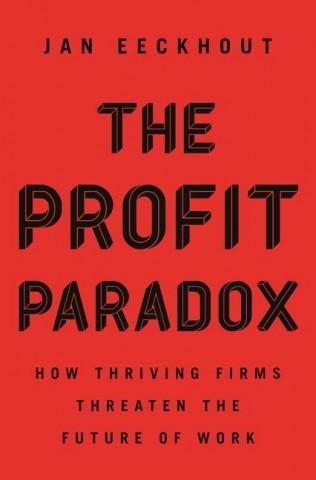
Language: English, Binding: Hardback, Number of pages: 336, Publishers: Princeton University Press, Author: Jan Eeckhout, ISBN-13: 9780691214474, Date of issue: 2021
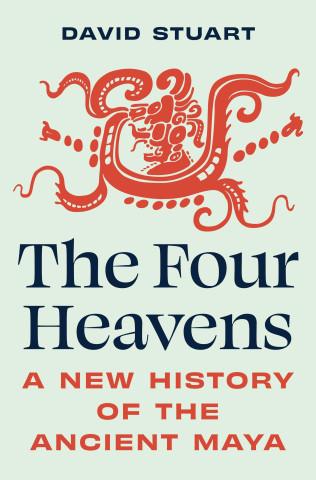
Language: English, Binding: Hardback, Number of pages: 432, Publishers: Princeton University Press, Author: STUART DAVID, ISBN-13: 9780691213842, Date of issue: 2026
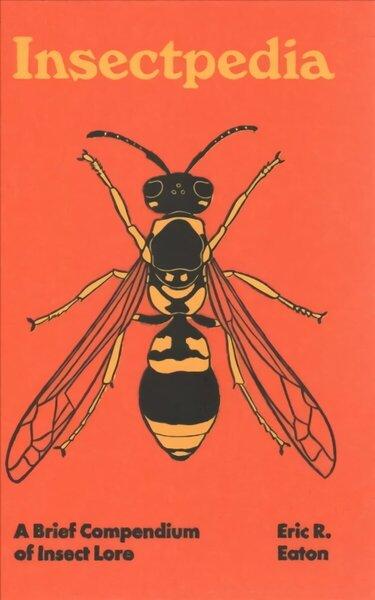
"A fun and fact-filled A-Z treasury for the insect lover in all of usInsectpedia introduces you to the wonders of the insect world while inviting you to make discoveries of your own. Featuring dozens of entries on topics ranging from murder hornets and the "insect apocalypse" to pioneering entomologists such as Margaret James Strickland Collins and Douglas Tallamy, this beautifully illustrated, pocket-friendly encyclopedia dispels many common myths about insects while offering new perspectives on the vital relationships we share with these incredible creatures.This entertaining collection celebrates the long and storied history of entomology, highlights our dependence on insects for food and ecosystem services, and explains the meaning behind various entomological terms. With Eric Eaton as your guide, you will circle the globe in search of African Toktokkies and Australian beer bottle beetles, and witness the peculiar spectacle of cricket fighting in Asia. Profiles of influential figures in entomology provide insights into the curious minds that animate this extraordinarily broad field of scientific inquiry, while the book's portable size makes it the perfect travel companion no matter where your own entomological adventures may lead you.With captivatingillustrations by Amy Jean Porter, Insectpedia is an engaging blend of insect facts and folklore that will inspire anyone who delights in the marvels of nature"-- A fun and fact-filled AZ treasury for the insect lover in all of usInsectpedia introduces you to the wonders of the insect world while inviting you to make discoveries of your own. Featuring dozens of entries on topics ranging from murder hornets and the insect apocalypse to pioneering entomologists such as Margaret James Strickland Collins and Douglas Tallamy, this beautifully illustrated, pocket-friendly encyclopedia dispels many common myths about insects while offering new perspectives on the vital relationships we share with these incredible creatures.This entertaining collection celebrates the long and storied history of entomology, highlights our dependence on insects for food and ecosystem services, and explains the meaning behind various entomological terms. With Eric Eaton as your guide, you will circle the globe in search of African Toktokkies and Australian beer bottle beetles, and witness the peculiar spectacle of cricket fighting in Asia. Profiles of influential figures in entomology provide insights into the curious minds that animate this extraordinarily broad field of scientific inquiry, while the books portable size makes it the perfect travel companion no matter where your own entomological adventures may lead you.With captivating illustrations by Amy Jean Porter, Insectpedia is an engaging blend of insect facts and folklore that will inspire anyone who delights in the marvels of nature.Features a real cloth cover with an elaborate foil-stamped design Autorid: Eric R. Eaton, Amy Jean Porter
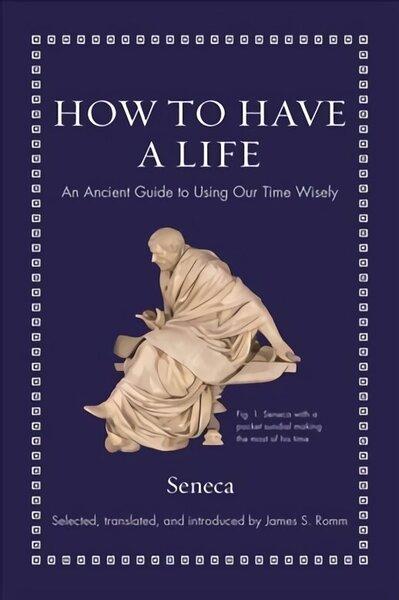
"A vibrant new translation of Seneca's "On the Shortness of Life," a pointed reminder to make the most of a precious asset: our timeWho doesn't worry sometimes that smart phones, the internet, and TV are robbing us of time and preventing us from having alife? How can we make the most of our time on earth? In the first century AD, the Stoic philosopher Seneca the Younger offered one of the most famous answers to that question in his essay, "On the Shortness of Life"-a work that has more to teach us todaythan ever before. In How to Have a Life, James Romm presents a vibrant new translation of Seneca's brilliant essay, plus two Senecan letters on the same theme, complete with the original Latin on facing pages and an inviting introduction.With devastatingsatiric wit, skillfully captured in this translation, Seneca lampoons the ways we squander our time and fail to realize how precious it is. We don't allow people to steal our money, yet we allow them to plunder our time, or else we give it away ourselvesin useless, idle pursuits. Seneca also describes how we can make better use of our brief days and years. In the process, he argues, we can make our lives longer, or even everlasting, because to live a real life is to attain a kind of immortality.A counterweight to the time-sucking distractions of the modern world, How to Have a Life offers priceless wisdom about making our time-and our lives-count"-- "In his moral treatise, De Brevitate Vitae("On the Shortness of Life"), the Stoic philosopher Seneca explored ways to change our experience of time so as to get more enrichment from the present, to diminish regret for the past and anxiety about the future, and to make our lives feel long even though death might cut them short at any moment. As he famously said, "it is not that we have a short time to live, but that we waste a lot of it. ... Life is long if you know how to use it." The problem of how to make the most of our time is a universal one and especially pressing in a society like ours, which puts a high value on the maximizing fulfillment. The fear of missing out, or FOMO as it is known in popular culture, attests to our deep need for the kind ofteaching Seneca offers: A guide to living in the moment and making time count. "Live headlong," "Consider each day a life" - In these ways Seneca expressed something like what we mean by "Be here now." In this volume for our Ancient Wisdom for Modern Readers series, his fourth, James Romm proposes a new translation of Seneca's De Brevitate Vitae along with selections from other moral essays, especially "On the Happy Life" and "On Tranquillity of Mind," that similarly deal with the need to use time well. Several of the "Moral Epistles" will be drawn on as well, including the very first letter in his immense collection, where Seneca tells his addressee, Lucilius, that "all other things are foreign to us; time alone is ours.""-- A vibrant new translation of Senecas On the Shortness of Life, a pointed reminder to make the most of our timeWho doesnt worry sometimes that smart phones, the Internet, and TV are robbing us of time and preventing us from having a life? How can we make the most of our time on earth? In the first century AD, the Stoic philosopher Seneca the Younger offered one of the most famous answers to that question in his essay On the Shortness of Lifea work that has more to teach us today than ever before. In How to Have a Life, James Romm presents a vibrant new translation of Senecas brilliant essay, plus two Senecan letters on the same theme, complete with the original Latin on facing pages and an inviting introduction.With devastating satiric wit, skillfully captured in this translation, Seneca lampoons the ways we squander our time and fail to realize how precious it is. We dont allow people to steal our money, yet we allow them to plunder our time, or else we give it away ourselves in useless, idle pursuits. Seneca also describes how we can make better use of our brief days and years. In the process, he argues, we can make our lives longer, or even everlasting, because to live a real life is to attain a kind of immortality.A counterweight to the time-sucking distractions of the modern world, How to Have a Life offers priceless wisdom about making our timeand our livescount. Autorid: Seneca, James S. Romm
Finalist for the National Book AwardAn intimate reckoning with aquifer depletion in America's heartlandThe Ogallala aquifer has nourished life on the American Great Plains for millennia. But less than a century of unsustainable irrigation farming has taxed much of the aquifer beyond repair. The imminent depletion of the Ogallala and other aquifers around the world is a defining planetary crisis of our times. Running Out offers a uniquely personal account of aquifer depletion and the deeper layers through which it gains meaning and force.Anthropologist Lucas Bessire journeyed back to western Kansas, where five generations of his family lived as irrigation farmers and ranchers, to try to make sense of this vital resource and its loss. His search for water across the drying High Plains brings the reader face to face with the stark realities of industrial agriculture, eroding democratic norms, and surreal interpretations of a looming disaster. Yet the destination is far from predictable, as the book seeks to move beyond the words and genres through which destruction is often known. Instead, this journey into the morass of eradication offers a series of unexpected discoveries about what it means to inherit the troubled legacies of the past and how we can take responsibility for a more inclusive, sustainable future.An urgent and unsettling meditation on environmental change, Running Out is a revelatory account of family, complicity, loss, and what it means to find your way back home. Autorid: Lucas Bessire
"A wide-ranging and dramatic account of the Antonine plague, the mysterious disease that struck the Roman Empire at its pinnacle, offers a comprehensive, wide-ranging account of this pivotal moment in Roman history." A wide-ranging and dramatic account of the Antonine plague, the mysterious disease that struck the Roman Empire at its pinnacleIn the middle of the second century AD, Rome was at its prosperous and powerful apex. The emperor Marcus Aurelius reigned over a vast territory that stretched from Britain to Egypt. The Roman-made peace, or Pax Romana, seemed to be permanent. Then, apparently out of nowhere, a sudden sickness struck the legions and laid waste to cities, including Rome itself. This fast-spreading disease, now known as the Antonine plague, may have been historys first pandemic. Soon after its arrival, the Empire began its downward trajectory toward decline and fall. In Pox Romana, historian Colin Elliott offers a comprehensive, wide-ranging account of this pivotal moment in Roman history.Did a single diseaseits origins and diagnosis still a mysterybring Rome to its knees? Carefully examining all the available evidence, Elliott shows that Romes problems were more insidious. Years before the pandemic, the thin veneer of Roman peace and prosperity had begun to crack: the economy was sluggish, the military found itself bogged down in the Balkans and the Middle East, food insecurity led to riots and mass migration, and persecution of Christians intensified. The pandemic exposed the crumbling foundations of a doomed Empire. Arguing that the disease was both cause and effect of Romes fall, Elliott describes the plagues preexisting conditions (Romes multiple economic, social, and environmental susceptibilities); recounts the history of the outbreak itself through the experiences of physician, victim, and political operator; and explores postpandemic crises. The pandemics most transformative power, Elliott suggests, may have been its lingering presence as a threat both real and perceived. Autorid: Colin Elliott
An authoritative guide to Jewish studies, reflecting the latest research in a diverse and flourishing field Jewish studies is a dynamic, interdisciplinary field that draws on the methods of the modern academyhistorical research, anthropology, literary studies, philosophy, religious studies, sociology, feminism, and the study of the arts and culture, among othersto illuminate the past and present of Jewish life, thought, and expression. This book provides an entry point to Jewish studies for readers who want to learn about the questions it raises and the insights it generates. Although no single volume can capture the full breadth of the field, this Princeton Companion encompasses some of the most important subfields of Jewish studies, presenting new historical research and introductions to the many other disciplines that can be brought to bear on Jewish history and experience.The editors, all distinguished scholars of Jewish studies, have gathered contributions from a range of prominent and up-and-coming figures in the field. These contributors offer original perspectives that reflect new findings and novel contexts. Part I, Rethinking the Past, aims to give an overview of recent research trends in the study of Jewish history, covering the ancient world, the Middle Ages, and modern times. Part II, Ideas and Expression, surveys new research in the study of Jewish language, religion, philosophy, literature, art, music, and other humanities-centered approaches to Jewish life. Part III, "Interactions and Identity," brings the social sciences and anthropology into the picture, along with Israel studies and Mizrahi studies, to introduce the ways scholars today are seeking to shed light on how Jews identify themselves, interact with others, organize themselves, and behave politically and economically. Autorid: Leora Batnitzky, Eve Krakowski, Steven Weitzman
A comprehensive, integrative approach to tectonics and geodynamics for students and researchersOver the past half century, major achievements have been made in the study of Earths surface structure and kinematics and the internal dynamics of the lithosphere and mantle. Many of these advances have relied on the integration of data and models from plate tectonics and geodynamics, yet traditional divisions persist in how these two disciplines are taught and practiced. This textbook bridges the gap, connecting geophysical and geological approaches to understand the physical processes that shape our planets evolution, from mantle convection to orogeny and earthquakes. An innovative approach to the solid Earth system, Tectonic Geodynamics provides a basis to explore the fundamental connections between the planets deep interior dynamics and the surface.The first textbook to integrate tectonics, structural geology, geodynamics, geodesy, and seismology in a single volumeOffers a physics-focused guide for understanding how the solid Earth system operatesUses a no prerequisites approach supported by an extensive appendix that includes a calculus and linear algebra primer and coverage of key topics such as coordinate systems and spectral analysisIncludes a wealth of exercises and end-of-chapter review questionsAn ideal textbook for advanced undergraduates and graduate students in geology, geophysics, and related fields such as physics and engineeringInvaluable for self-study and as a self-contained resource for researchersSupporting materials provided for instructors, including an instruction guide, full-color illustration package, and sample syllabi Autorid: Thorsten Becker, Claudio Faccenna
From the author of Wittgenstein's Poker and Would You Kill the Fat Man?, the story of an extraordinary group of philosophers during a dark chapter in Europe's historyOn June 22, 1936, the philosopher Moritz Schlick was on his way to deliver a lecture at the University of Vienna when Johann Nelböck, a deranged former student of Schlick's, shot him dead on the university steps. Some Austrian newspapers defended the madman, while Nelböck himself argued in court that his onetime teacher had promoted a treacherous Jewish philosophy. David Edmonds traces the rise and fall of the Vienna Circlean influential group of brilliant thinkers led by Schlickand of a philosophical movement that sought to do away with metaphysics and pseudoscience in a city darkened by fascism, anti-Semitism, and unreason.The Vienna Circle's members included Otto Neurath, Rudolf Carnap, and the eccentric logician Kurt Gödel. On its fringes were two other philosophical titans of the twentieth century, Ludwig Wittgenstein and Karl Popper. The Circle championed the philosophy of logical empiricism, which held that only two types of propositions have cognitive meaning, those that can be verified through experience and those that are analytically true. For a time, it was the most fashionable movement in philosophy. Yet by the outbreak of World War II, Schlick's group had disbanded and almost all its members had fled. Edmonds reveals why the Austro-fascists and the Nazis saw their philosophy as such a threat.The Murder of Professor Schlick paints an unforgettable portrait of the Vienna Circle and its members while weaving an enthralling narrative set against the backdrop of economic catastrophe and rising extremism in Hitler's Europe. Autorid: David Edmonds
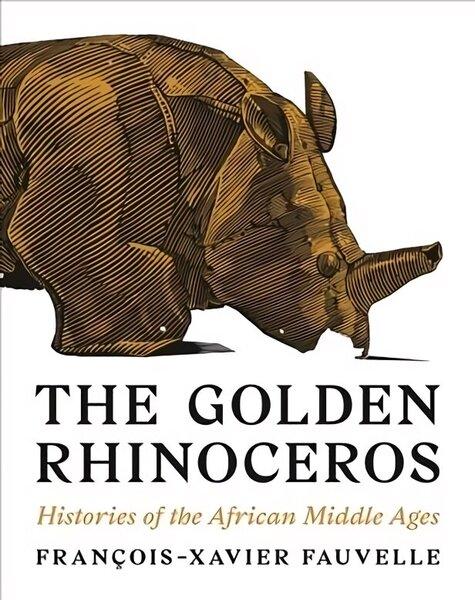
An unforgettable journey into the forgotten history of medieval Africa From the birth of Islam in the seventh century to the voyages of European exploration in the fifteenth, Africa was at the center of a vibrant exchange of goods and ideas. It was an African golden age in which Ghâna, Nubia, and Zimbabwe became the crossroads of civilizations, and where African royals, thinkers, and artists played celebrated roles in an increasingly globalized world. François-Xavier Fauvelle brings this thrilling era marvelously to life. A book that finally recognizes Africa's important role in the Middle Ages, The Golden Rhinoceros carefully pieces together the written and archaeological evidence to tell an unforgettable story that is at once sensitive to Africas rich social diversity and alert to the trajectories that connected Africa with the wider Muslim and Christian worlds. Autorid: François-Xavier Fauvelle, Troy Tice
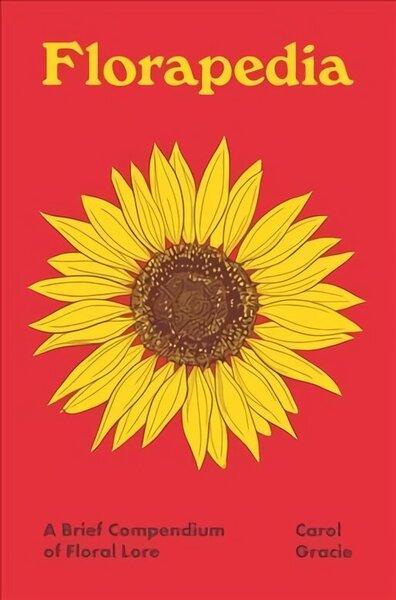
"This book is an engaging and informative compendium of flower facts. Similar in a nature to Lawrence Millman's Fungipedia, the book brings together a wide range of interesting facts and stories-ranging from the historical to the scientific to the whimsical. The book has roughly 100 entries, beginning with achlorophyllous flowers that feed on the roots of a host plant, and ending with zygomorphic flowers, that pose an interesting puzzle for pollinators. In the entries in-between, readers will explore with John and William Bartram, smell the rotting corpse flower, learn about the miniature ecosystems entangled in Spanish moss, and much more. Similar to Fungipedia, the book is intended for a general audience, but thanks to Gracie's depth and breadth of knowledge, and her artful prose, it will also appeal to seasoned flower enthusiasts. The entries are accompanied by approximately 50 line drawings from Amy Jean Porter"-- A delightful illustrated treasury of botanical facts and fancyFlorapedia is an eclectic AZ compendium of botanical lore. With more than 100 enticing entrieson topics ranging from achlorophyllous plants that use a fungus as an intermediary to obtain nutrients from other plants to zygomorphic flowers that admit only the most select pollinatorsthis collection is a captivating journey into the realm of botany.Writing in her incomparably engaging style, Carol Gracie discusses remarkable plants from around the globe, botanical art and artists, early botanical explorers, ethnobotanical uses of plants, botanical classification and terminology, the role of plants in history, and more. She shares illuminating facts about van Gogh's sunflowers and reveals how a hallucinogenic weed left its enduring mark on the early history of the Jamestown colony. Gracie describes the travels of John and William Bartramfather and son botanists and explorers who roamed widely in early America in search of plantsand delves into the miniature ecosystems entangled in Spanish moss. The book's convenient size allows for it to be tucked into a pocket or bag, making it the perfect companion on your own travels.With charming drawings by Amy Jean Porter, Florapedia is the ideal gift book for the plant enthusiast in your life and a rare pleasure for anyone interested in botanical art, history, medicine, or exploration. Autorid: Amy Jean Porter, Carol Gracie
A comprehensive analysis of European craft guilds through eight centuries of economic historyGuilds ruled many crafts and trades from the Middle Ages to the Industrial Revolution, and have always attracted debate and controversy. They were sometimes viewed as efficient institutions that guaranteed quality and skills. But they also excluded competitors, manipulated markets, and blocked innovations. Did the advantages of guilds outweigh their costs? Analyzing thousands of guilds from 1000 to 1880, The European Guilds answers that question with vivid examples and clear economic reasoning. Sheilagh Ogilvie features the voices of honourable guild masters, underpaid journeymen, exploited apprentices, shady officials, and outraged customers, and follows the stories of the vile encroacherswomen, migrants, Jews, gypsies, bastards, and othersdesperate to work but hunted down by the guilds as illicit competitors. The European Guilds analyzes the toxic complicity between guild members and political elites, and shows how privileged institutions and exclusive networks prey on prosperity and stifle growth. Autorid: Sheilagh Ogilvie
"This is a new edition of The Scientists Guide to Writing, published in 2016. As a reminder the book provided practical advice on writing, covering topics including how to generate and maintain writing momentum, tips on structuring a scientific paper, revising a first draft, handling citations, responding to peer reviews, and managing coauthorships, among other topics. For the 2nd edtition, Heard has made several changes, specifically: - expanding the chapter on writing in english for non-native speakers- adding two chapters: one on efficient and effective reading and one on selecting the right journal and how to use preprint sites. - doubled the number of exercises - various other additons to existing chapters, including information on reporting statistical results, handling disagreement among peer reviewers, and managing co-authorships"-- "An updated and expanded edition of the acclaimed writing guide for scientistsThe Scientist's Guide to Writing explains the essential techniques that students, postdocs, and early-career scientists need to write more clearly, efficiently, and easily. Nowfully updated and expanded, this incisive primer offers practical advice on such topics as how to generate and maintain writing momentum, structuring a scientific paper, revising a first draft, handling citations, responding to peer reviews, managing coauthorships, and more. The ability to write clearly is critical to any scientific career. The Scientist's Guide to Writing shows scientists how to become better writers so that their ideas have the greatest possible impact.New chapters discuss effective reading, choosing the right journal for your research, and the advantages and disadvantages of posting preprintsProvides additional advice on reporting statistical results, dealing with conflicting peer reviews, managing coauthorships, English as an additional language, and moreEmphasizes writing as a process, not just a productEncourages habits that improve motivation and productivityOffers detailed guidance on submission, review, revision, and publicationIncludes a wealth of new exercises"-- An updated and expanded edition of the acclaimed writing guide for scientistsThe Scientists Guide to Writing explains the essential techniques that students, postdocs, and early-career scientists need to write more clearly, efficiently, and easily. Now fully updated and expanded, this incisive primer offers practical advice on such topics as generating and maintaining writing momentum, structuring a scientific paper, revising a first draft, handling citations, responding to peer reviews, managing coauthorships, and more. The ability to write clearly is critical to any scientific career. The Scientists Guide to Writing shows scientists how to become better writers so that their ideas have the greatest possible impact.New chapters discuss effective reading, choosing the right journal for your research, and the advantages and disadvantages of posting preprintsProvides additional advice on reporting statistical results, dealing with conflicting peer reviews, managing coauthorships, writing with English as an additional language, and moreEmphasizes writing as a process, not just a productEncourages habits that improve motivation and productivityOffers detailed guidance on submission, review, revision, and publicationIncludes a wealth of new exercises Autorid: Stephen B. Heard
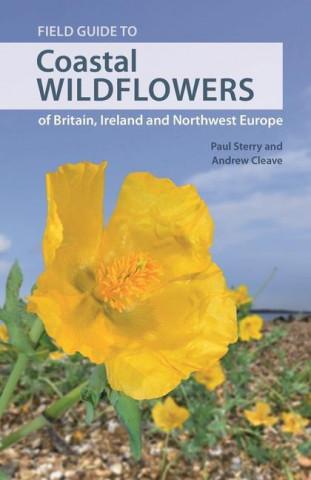
A richly illustrated guide to the wildflowers and other flora of coastal Britain, Ireland and Northwest EuropeThe rugged and beautiful coastal regions of Britain and Ireland are among the crowning glories of these islands. Few visitors can fail to marvel at the stunning sight of Cornwalls clifftops resplendent with flowering Thrift, or be struck by the resilience of plants that thrive on the inhospitable shingle beaches of Dungeness on the coast of Kent. This field guide covers more than 600 species of wildflowers and other coastal flora found in Britain and Ireland, and coastal mainland Northwest Europe. Detailed species accounts describe wildflowers, grasses, sedges and rushes that occur on the coast or in abundance within sight of the sea. Stunningly illustrated throughout, this comprehensive, user-friendly guide also covers trees and shrubs, a range of other groups from mosses and seaweeds, and more broadly, the natural history of coastal habitats.Covers more than 600 species of flowering plantsFeatures over 1,500 spectacular colour photosDescribes other groups such as ferns, mosses, liverworts, lichens, fungi and seaweedsProvides up-to-date colour distribution maps for Britain and Ireland Autorid: Paul Sterry, Andrew Cleave
A bold new account of European imperialism told through the history of waterIn the nineteenth and twentieth centuries, a handful of powerful European states controlled more than a third of the land surface of the planet. These sprawling empires encompassed not only rainforests, deserts, and savannahs but also some of the worlds most magnificent rivers, lakes, marshes, and seas. Liquid Empire tells the story of how the waters of the colonial world shaped the history of imperialism, and how this imperial past still haunts us today.Spanning the major European empires of the period, Corey Ross describes how new ideas, technologies, and institutions transformed human engagements with water and how the natural world was reshaped in the process. Water was a realm of imperial power whose control and distribution were closely bound up with colonial hierarchies and inequalitiesbut this vital natural resource could never be fully tamed. Ross vividly portrays the efforts of officials, engineers, fisherfolk, and farmers to exploit water, and highlights its crucial role in the making and unmaking of the colonial order.Revealing how the legacies of empire have persisted long after colonialism ebbed away, Liquid Empire provides needed historical perspective on the crises engulfing the worlds waters, particularly in the Global South, where billions of people are faced with mounting water shortages, rising flood risks, and the relentless depletion of sea life. Autorid: Corey Ross
A collection of writings by the mathematician and composer linking notions of continuity and construction across math, minimalist music and contemporary artNoted mathematician and composer Spencer Gerhardt presents Ticking Stripe, a groundbreaking collection of essays linking notions of continuity and construction across the boundaries of math, art, music and philosophy. Gerhardt offers new, deeply informed analysis of the 1960s New York avant-garde, viewed through the lens of trailblazing artists such as La Monte Young, Marian Zazeela, Catherine Christer Hennix, Henry Flynt and Tony Conrad. Ticking Stripe pairs the spirit of L.E.J. Brouwera mathematician who sought to reconstruct the continuum in his own philosophical terms called intuitionismwith the ambitions of pioneering minimalists who combined continued constructions, idealized processes of introspection and conceptual world-building with a host of philosophical, scientific and spiritual concerns. Informed by his own work as a mathematician and composer, Gerhardt explores the depths of these disparate traditions, finding unlikely areas of commonality.Spencer Gerhardt is a composer and musician, and teaches mathematics at the University of Southern California. Autorid: Spencer Gerhardt
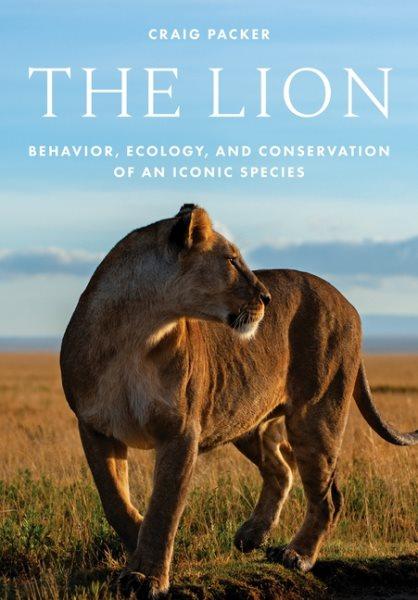
An authoritative, accessible, and gorgeously illustrated exploration into the lives of these remarkable animalsLions are the only social cat. They hunt together, raise cubs together, and defend territories together against neighbors and strangers. Lions also rest atop their ecological pyramid, with profound impacts on competitors and prey alike, but their future is far from assured. Craig Packer interweaves his discoveries from more than forty years of researchincluding a substantial body of new findingsto provide an unforgettable portrait of the African lion. He shares insights into the intricacies of lion life from birth until death and describes efforts to conserve lions in an increasingly crowded continent. With a wealth of breathtaking photographs by Daniel Rosengren, The Lion sheds light on a host of intriguing scientific questions, such as why males have manes, why lions are social, how sociality limits and stabilizes lion populations, how close inbreeding affects lion health, why lions become man-eaters, how lions and people can best be protected from each other, and how to ensure the lions survival into the next century.Engagingly written by the worlds foremost expert on African lionsIntegrates a wealth of findings from two of the most comprehensive field studies on any animalFeatures hundreds of stunning photographs that capture a broad range of lion behaviors, ecological interactions, and conservation challengesBlends vivid field anecdotes and graphics to give the reader a sense of adventuring into the lions world Autorid: Craig Packer
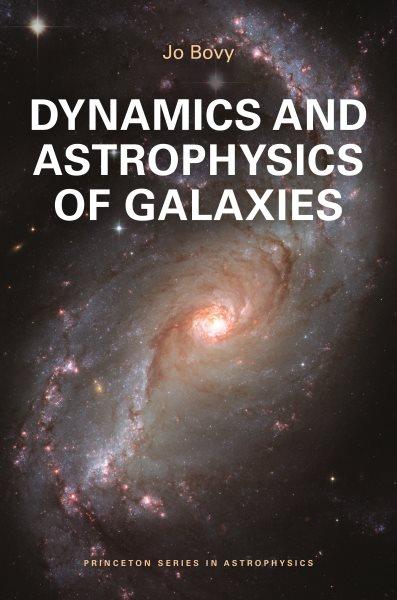
A modern textbook on galactic dynamics that encourages hands-on learning using the latest computational methodsThis book provides an in-depth introduction to the dynamics, formation, and evolution of galaxies. Starting with the basics of galactic structure and galactic dynamics, it helps students develop a sophisticated understanding of the orbital structure of spirals, ellipticals, and other types of galaxies. The book demonstrates how observations led to the discovery that galaxies are dominated by dark matter and explores in detail how structure evolves from the primordial universe to form the halos that host galaxies when the gravitational attraction of an overdense region overcomes cosmological expansion. Dynamics and Astrophysics of Galaxies uses simple yet realistic models to illustrate the many galactic processes observed today through hierarchical merging and gas accretion, gas cooling and star formation, and internal evolution due to bars, spiral structure, and chemical enrichment.Covers topics ranging from the gravitational potentials of spherical, disk, and ellipsoidal systems to the properties of orbits in different mass distributions, equilibrium models of galaxies, chemical evolution, gravitational lensing, the growth of structure, hierarchical galaxy formation, disk (in)stability, bars, and spiralsIncludes nearly 200 exercises, enabling students to apply the concepts discussed in the book while honing their analytic and computational skillsAccompanied by an online version of the book that includes interactive visualizations and executable Python codeAn ideal textbook for graduate students and advanced undergraduates and an invaluable reference for researchers Autorid: Jo Bovy