Metoda nauki języka hiszpańskiego Impresiones odnosi się do podejścia zorientowanego na działanie, które promuje komunikację w klasie oraz pracę zespołową poprzez inną dynamikę grupy i wspólne działania. Jej tematy i dialogi przybliżają studentom róż
Book 1 introduces the child to the keyboard, staves, clefs, simple time signatures, note values and rests. Reading encompasses notes to a 5th above and a 5th below Middle C. The notes A and E are introduced first, played by a braced 3rd finger of each hand. This encourages free movement of the whole arm from the shoulder, and develops a natural, balanced hand position, before the 5-finger position is gradually mastered. The first line of the treble stave and the fifth line of the bass stave are highlighted, and further lines are similarly treated as the child learns more notes. Staccato, slurs, ties, upbeats and repeat signs are all
In Book 2 three new notes in each hand are mastered up to High C and down to Low C and the child experiences changes of hand position within a tune. Quavers are introduced in all the time signatures covered in Book 1. Sharps and flats are included, but no mention is made yet of keys, key signatures, scales or triads. Dynamic markings are now in Italian, while tempo indications are still in English.
Book 3 introduces the concepts of key, key signature, scales, triads, tones and semitones in a novel and exciting way each key is a group of characters or objects with note-names i.e. a band, a birthday party, a clothes-line with garments. Certain notes belong, while all other notes accidentals are outsiders. Transposition is a natural outcome of this concept, with a tune moving from one group to another. The child masters eight new notes up to High G and down to Low F, which facilitates the playing of more adventurous repertoire. The semiquaver, semiquaver rest, dotted crotchet and dotted quaver are introduced, and tempo markings are
Book 4 reinforces and revises all concepts learned in Books 1-3. It contains attractive repertoire in various styles and from different periods. Each piece has a comprehensive preparation section covering the musical, technical and structural matters which will be encountered. The aim is to cultivate critical thinking and musical awareness in the student. As in previous books, the child is actively involved through the use of writing, colouring, tracing and pasting, thereby making the preparation an enjoyable activity. The standard of the repertoire approaches that of Grade 1.
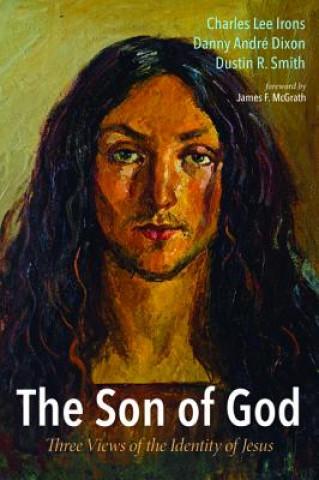
This is a multi-view book in which representatives of differing viewpoints make a positive statement of their case, followed by responses from the others, and concluding with a rebuttal by the original author. The topic at hand in this book is the identity of Jesus (also known as Christology). What is the meaning of Jesus's identity as ""the Son of God""? Charles Lee Irons argues that the title ""Son of God"" denotes his ontological deity from a Trinitarian perspective. Danny Andre Dixon and Dustin R. Smith challenge this view from two different non-Trinitarian viewpoints. Smith argues that Jesus is the authentically human Son of God, the Davidic Messiah, who did not possess a literal preexistence prior to his virgin birth. Dixon argues that Jesus is God's preexistent Son in the sense that God gave him life or existence at some undefined point prior to creation. The authors engage the topic from the perspective that reverences the authority and inspiration of Scripture as the final arbiter of this debate. The literature of early Judaism is also engaged in order to try to understand the extent to which the New Testament's Christology may have been influenced by or operated within the context of Jewish conceptions of divine secondary beings as agents of God. ""The Son of God: Three Views of the Identity of Jesus provides a scintillating account of the most important question of all: who is Jesus? Is he God, is he semi-divine, or merely a human being? The authors offer some rigorous debate over scripture, theology, and church history. Sparks fly and no quarter is given in an engaging and at times even enraging debate on a very important subject."" --Michael F. Bird, Lecturer in Theology at Ridley College, Melbourne, Australia ""The portrayal of Jesus as the Son of God in the Bible is a supremely important topic in Christian theology. In this volume the authors engage the biblical data seriously and come to their own conclusions honestly. This book will not only expose the readers to the wider theological perspectives on the identity of Jesus, but also help come to a deeper understanding of who Jesus is."" --Aquila H. I. Lee, Visiting Professor, Torch Trinity Graduate University; Lecturer, Ezra Bible Institute of Graduate Studies, South Korea. ""There are at least three ways to revere Jesus, and these three are definitely not one. This book is full of surprises, from the unexpected areas of agreement, to the way the Arian and Socinian views differ so starkly from each other in their fundamental principles, to the way the Trinitarian view leans now toward one interlocutor, now toward the other, and finally stands alone."" --Fred Sanders, Professor of Theology, Torrey Honors Institute, Biola University Charles Lee Irons, PhD, is the Senior Research Administrator at The Charles R. Drew University of Medicine and Science. Danny Andre Dixon, MA, MEd, is an English Language Arts Teacher at Fort Stockton High School in Fort Stockton, Texas. Dustin R. Smith, PhD, is an Instructor at the Atlanta Bible College in McDonough, Georgia.
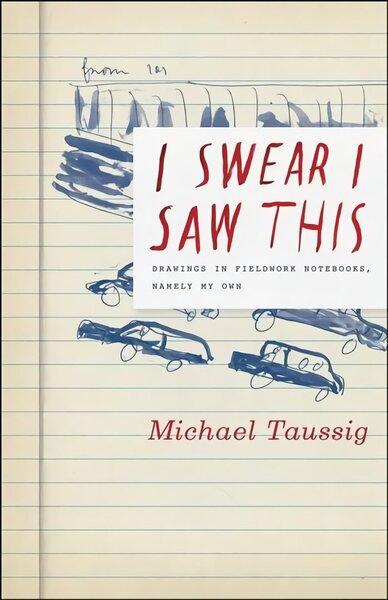
I Swear I Saw This records visionary anthropologist Michael Taussigs reflections on the fieldwork notebooks he kept through forty years of travels in Colombia. Taking as a starting point a drawing he made in Medellin in 2006as well as its caption, I swear I saw thisTaussig considers the fieldwork notebook as a type of modernist literature and the place where writers and other creators first work out the imaginative logic of discovery. Notebooks mix the raw material of observation with reverie, juxtaposed, in Taussigs case, with drawings, watercolors, and newspaper cuttings, which blend the inner and outer worlds in a fashion reminiscent of Brion Gysin and William Burroughss surreal cut-up technique. Focusing on the small details and observations that are lost when writers convert their notes into finished pieces, Taussig calls for new ways of seeing and using the notebook as form. Memory emerges as a central motif in I Swear I Saw This as he explores his penchant to inscribe new recollections in the margins or directly over the original entries days or weeks after an event. This palimpsest of afterthoughts leads to ruminations on Freuds analysis of dreams, Prousts thoughts on the involuntary workings of memory, and Benjamins theories of historyfieldwork, Taussig writes, provokes childhood memories with startling ease. I Swear I Saw This exhibits Taussigs characteristic verve and intellectual audacity, here combined with a revelatory sense of intimacy. He writes, drawing is thus a depicting, a hauling, an unraveling, and being impelled toward something or somebody. Readers will exult in joining Taussig once again as he follows the threads of a tangled skein of inspired associations. Autorid: Michael Taussig
Did you know that some brave birds help crocodiles clean their teeth, or that beavers use their claws to comb their fur? Can you imagine if your bath was full of snow instead of warm water? Surprisingly, polar bears still get hot, so the snow helps them cool off while also cleaning their fur! Discover the sweet, snuggly, and sometimes surprising ways animals wash themselves - and each other - in this gentle introduction to non-fiction. Perfect for readers from 3+, this beautifully illustrated book shows all kinds of animals from around the world. Amazing facts are accompanied by simple questions, encouraging children to think about their own bathtime and how similar - or different - it is to the way animals wash. With gently informative text from award-winning author and travel-writer Ben Lerwill, and adorable wildlife illustration by Maribel Lechuga, this is the perfect first non-fiction for young readers, and an ideal book to share together as you wind down after a bath and before bed. Autorid: Ben Lerwill, Maribel Lechuga
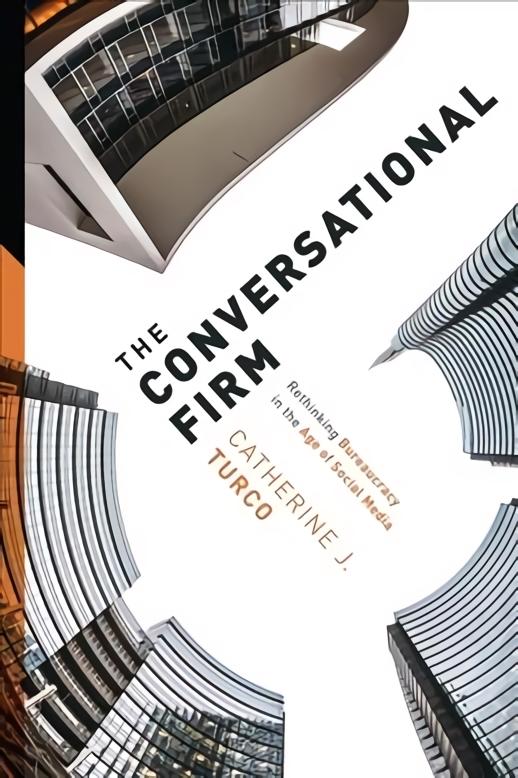
A fast-growing social media marketing company, TechCo encourages all of its employees to speak up. By promoting open dialogue across the corporate hierarchy, the firm has fostered a uniquely engaged workforce and an enviable capacity for change. Yet the path hasn't always been easy. TechCo has confronted a number of challenges, and its experience reveals the essential elements of bureaucracy that remain even when a firm sets out to discard them. Through it all, TechCo serves as a powerful new model for how firms can navigate today's rapidly changing technological and cultural climate.Catherine J. Turco was embedded within TechCo for ten months. The Conversational Firm is her ethnographic analysis of what worked at the company and what didn't. She offers multiple lessons for anyone curious about the effect of social media on the corporate environment and adds depth to debates over the new generation of employees reared on social media: Millennials who are carrying their technological habits and expectations into the workplace. Marshaling insights from cultural and economic sociology, organizational theory, economics, technology studies, and anthropology, The Conversational Firm offers a nuanced analysis of corporate communication, control, and culture in the social media age. Autorid: Catherine J. Turco
Classroom Assessment for Student Learning helps readers gather accurate information about students’ achievement and use the assessment process and its results effectively to improve achievement. This user-friendly guide is full of practical tips, activities, and real-world examples of what assessment for learning looks like in today’s classrooms. The 3rd Edition continues to focus on five keys to quality classroom assessment, with an enhanced emphasis on the formative use of classroom assessment results. The keys help readers 1) establish a clear assessment purpose to meet the information needs of all intended users; 2) base instruction and assessment on clear learning targets; 3) design or select all assessments to meet standards of accuracy; 4) communicate summative and formative results effectively; and 5) involve students in the assessment process and in using results to further learning. Also available with the Enhanced Pearson eText* The Enhanced Pearson eText is: Engaging. The new interactive, multimedia learning features were developed by the authors and other subject-matter experts to deepen and enrich the learning experience. Convenient. Enjoy instant online access from your computer or download the Pearson eText App to read on or offline on your iPad® and Android® tablet.** Affordable. Experience the advantages of the Enhanced Pearson eText along with all the benefits of print for 40% to 50% less than a print bound book. *The Enhanced eText features are only available in the Pearson eText format. They are not available in third-party eTexts or downloads. **The Pearson eText App is available on Google Play and in the App Store. It requires Android OS 3.1-4, a 7” or 10” tablet, or iPad iOS 5.0 or later. Note: You are purchasing a standalone product; the Enhanced Pearson eText does not come packaged with this content. Students, if interested in purchasing this title with the Enhanced Pearson eText, ask your instructor to confirm the correct package ISBN and Course ID. Instructors, contact your Pearson representative for more information. If you would like to purchase both the physical text and Enhanced Pearson eText search for: 0135178983 / 9780135178980 Classroom Assessment for Student Learning: Doing It Right - Using It Well Plus Enhanced Pearson eText -- Access Card Package Package consists of: 0134899164 / 9780134899169 Classroom Assessment for Student Learning: Doing It Right - Using It Well, Pearson eText -- Access Card 0135185572 / 9780135185575 Classroom Assessment for Student Learning: Doing It Right - Using It Well Autorid: Jan Chappuis
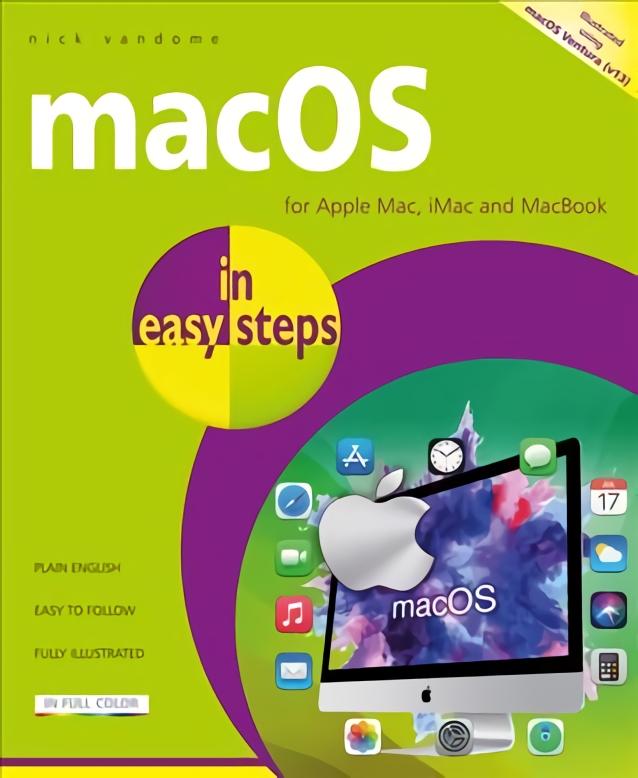
Illustrated using macOS Ventura, this latest edition of the acclaimed guide helps you get more from your Mac as you quickly get up to speed on key new features, navigation, setup, maintenance and more. Original. macOS in easy steps is perfect for those wanting to quickly get a grasp of the macOS operating system. Illustrated using macOS Ventura.macOS in easy steps is the latest edition of this acclaimed guide thatll help you get more from your Mac. It covers:Getting around a Mac, iMac or MacBook, and setting it up to suit the way you work.Apps to help with everyday tasks and for entertainment and communication. Backing up, security and maintenance. Key new features in the latest version macOS Ventura. Ideal for newcomers to the stylish world of Apple Macs and for those seeking to get more from their Mac computer. Autorid: Nick Vandome
With his signature clear and direct style, internationally bestselling author Richard Webster presents this portable primer to confident pendulum dowsing. As part of Llewellyn's Little Books series, its compact size makes it an ideal on-the-go companion for quick dowsing references. Learn what a pendulum is and how to interpret its movements to unlock answers, locate what's lost, and sharpen your intuition. Richard leads you through nearly two dozen exercises, prompting you to balance chakras, manifest love, and psychically connect with your pet. Packed with a variety of practical applications, this concise guide also helps you delve into past lives, glimpse future trends, and foster spiritual growth. Whether you're a beginner or seeking a handy resource, Llewellyn's Little Book of Pendulums empowers you to fearlessly integrate dowsing into your daily life. Autorid: Richard Webster
The way some introductory acting books are written, it seems that a literal leg break is your best option. In The Young Actor's Handbook, Jeremy Kruse, an actor, writer, producer, and director who teaches method acting, acting for camera, improvisation, and sketch comedy at The Lee Strasberg Theatre and Film Institute in New York, mends this mangled genre, distilling invaluable lessons and years of experience down to a lean, mean, intuitive hundred page primer.Rather than bludgeoning the uninitiated with dense paragraphs, vague concepts, and opaque examples, The Young Actor's Handbook ignites the beginning actor's creative soul with inspirational acting exercises, acting theory, writing exercises, and insight into what it means to be an actor. This concise and pragmatic manual will guide and inform the young actor, beginning actor, novice acting teacher, or anyone who wants to understand acting through a broad and diverse survey of essential knowledge. The teachings of Richard Boleslavsky, Stella Adler, Sanford Meisner, Uta Hagen, Michael Shurtleff, Lee Strasberg, and Constantin Stanislavsky are eloquently and accessible rendered, as are basics of script analysis, camera technique, the audition mindset, agent acquisition, and the actor's life.Whether you're a curious novice, veteran acting teacher, or even an interested observer, The Young Actor's Handbook will enhance your understanding of this vast and rewarding craft.
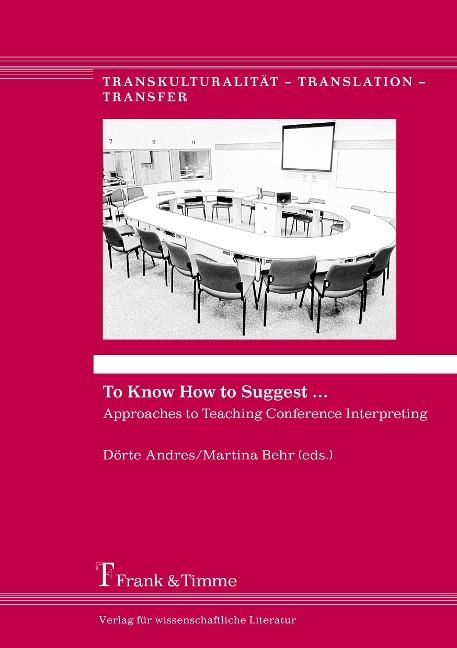
The importance of didactic training in conference interpreting has become the subject of increased discussion. This collective volume provides overviews of theories and examples of training practices and tools for a didactic approach to the development of interpreting competence. This book is geared towards new institutions offering interpreter training, teachers just starting out in conference interpreter training and who lack experience, as well as experienced interpreter training practitioners who may be interested in theory-based training. This volume does not aim to present in-depth scientific theories. Individual theoretical perspectives are discussed where they provide the basis for a specific application in interpreter training. The contributions are meant to serve as suggestions to provide a new perspective on various topics.
"Leonardo Da Vinci's Note-Books" offers a profound glimpse into the mind of one of history's greatest polymaths. This collection brings together the extensive observations, scientific inquiries, and artistic reflections of Leonardo da Vinci, a figure synonymous with the Italian Renaissance. Spanning a vast array of subjects-including anatomy, botany, geology, hydraulics, and mechanics-these writings reveal Leonardo's insatiable curiosity and his pioneering spirit. The text is not merely a record of facts but a testament to his belief in the unity of art and science.Readers will find detailed studies on the nature of light and shadow, the laws of perspective, and the intricate workings of the human body. The notebooks also contain personal musings, philosophical fragments, and visionary designs for machines far ahead of their time. By exploring these pages, one gains insight into the creative process and the rigorous empirical method that underpinned his masterpieces. This work remains an essential resource for students of art history, the history of science, and anyone fascinated by the intellectual legacy of the original Renaissance Man. Its enduring value lies in its documentation of a genius who sought to understand the fundamental laws of the universe through observation and reason.This work has been selected by scholars as being culturally important, and is part of the knowledge base of civilization as we know it. This work was reproduced from the original artifact, and remains as true to the original work as possible. Therefore, you may see the original copyright references, library stamps (as most of these works have been housed in our most important libraries around the world), and other notations in the work.This work is in the public domain in the United States of America, and possibly other nations. Within the United States, you may freely copy and distribute this work, as no entity (individual or corporate) has a copyright on the body of the work.As a reproduction of a historical artifact, this work may contain missing or blurred pages, poor pictures, errant marks, etc. Scholars believe, and we concur, that this work is important enough to be preserved, reproduced, and made generally available to the public. We appreciate your support of the preservation process, and thank you for being an important part of keeping this knowledge alive and relevant.