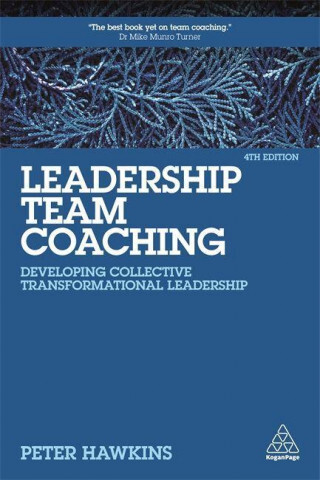
Organizations are most effective when the teams responsible for their success work together collectively and in a dynamic relationship with the rest of the company. For those involved in developing leadership teams, understanding coaching practices and techniques is essential for enabling the best performance.Leadership Team Coaching provides a comprehensive roadmap for team coaching, explaining all the key elements alongside practical tools and techniques for developing international and virtual teams, executive and non-executive boards and project and account teams in all types of organizations. Featuring case studies and insights from organizations including Deloitte and General Electric (GE), it also contains guidance on choosing the best team coach, creating a team-based culture and common pitfalls to avoid.This fully updated fourth edition of Leadership Team Coaching contains new material on agile teaming, using digital team coaching apps and AI, and training team leaders to coach their own team. It remains an indispensable resource for coaches and senior leaders as well as for those studying coaching as part of a degree or coaching qualification.
La vida en Bruguera con la dictadura de Franco como telón de fondo y la salida de sus dibujantes estrella para fundar 'Tío Vivo', una nueva revista que les permitiera conseguir mayores recursos, mantener el control creativo de sus personajes... ?lograr una mayor libertad, en definitiva? como metáfora del régimen franquista, es el marco y la esencia de 'El invierno del dibujante', de Paco Roca, editada por primera vez a finales de 2010.Esta nueva edición 10.º aniversario sale con una docena de páginas de extras que incluyen una historieta corta de seis páginas, la ilustración de portada ampliada a cubierta completa, diversos carteles realizados con los personajes de la historia y hasta una carta de agradecimiento de Francisco González Ledesma, uno de los protagonistas de la historia, al autor valenciano por la publicación del cómic.En la España de 1957 ser historietista era un oficio. No eran artistas, eran obreros de la viñeta. Cobraban a tanto por página ?o por viñeta?, trabajaban a destajo, siguiendo unos patrones establecidos e inamovibles. Renunciaban a sus originales y a sus derechos de autor a cambio del dinero cobrado. Pero en ese 1957 ocurrió algo que quebró la monotonía y sembró la esperanza.Cinco extraordinarios historietistas, famosos por sus personajes, osaron rebelarse. Tras año y medio de trabajo gráfico y de documentación, Paco Roca consiguió reflejar con gran fidelidad el ambiente de la época y recrear a sus protagonistas con un gran verismo. En cierta forma, confiesa el propio Paco Roca, esta es la obra que siempre quiso hacer: ?Los tebeos de la Editorial Bruguera fueron los que me hicieron empezar a amar los cómics y como muchos de mi generación, de las anteriores y de las posteriores, crecí con todos sus personajes; capitán Trueno, Mortadelo, Zipi y Zape, Anacleto... Desde pequeño me preguntaba qué había detrás de ellos, cómo eran sus creadores, cómo trabajaban y cómo era aquella editorial?.'El invierno del dibujante', que cuenta ya con siete ediciones y más de 27.000 ejemplares vendidos en castellano, ha servido de alguna manera para cumplir el sueño infantil del dibujante valenciano, especialmente en la parte del intenso trabajo de documentación que ha tenido que desarrollar: ?Unir los trozos de la historia a partir de los recuerdos de dibujantes y demás personas relacionadas con la editorial para intentar ser lo más fiel posible a los hechos ha sido la parte más complicada de este álbum, pero también la más apasionante?, subraya Roca.
New York Times BestsellerThe greatest Southern storyteller of our time, New York Times bestselling author Rick Bragg, tracks down the greatest rock and roller of all time, Jerry Lee Lewis--and gets his o
This thoroughly revised and updated Fourth Edition of a time-honored text provides the reader with a comprehensive introduction to the field of scanning electron microscopy (SEM), energy dispersive X-ray spectrometry (EDS) for elemental microanalysis, electron backscatter diffraction analysis (EBSD) for micro-crystallography and focused ion beams. Students and academic researchers will find the text to be an authoritative and scholarly resource, while SEM operators and a diversity of practitioners - engineers, technicians, physical and biological scientists, clinicians, and technical managers - will find that every chapter has been overhauled to meet the more practical needs of the technologist and working professional. In a break with the past, this Fourth Edition de-emphasizes the design and physical operating basis of the instrumentation, including the electron sources, lenses, detectors, etc. In the modern SEM, many of the low level instrument parameters are now controlled and optimized by the microscope's software, and user access is restricted. Although the software control system provides efficient and reproducible microscopy and microanalysis, the user must understand the parameter space wherein choices are made to achieve effective and meaningful microscopy, microanalysis, and micro-crystallography. Therefore, special emphasis is placed on beam energy, beam current, electron detector characteristics and controls, and ancillary techniques such as energy dispersive x-ray spectrometry (EDS) and electron backscatter diffraction (EBSD). With 13 years between the publication of the third and fourth editions, new coverage reflects the many improvements in the instrument and analysis techniques. The SEM has evolved into a powerful and versatile characterization platform in which morphology, elemental composition, and crystal structure can be evaluated simultaneously. Extension of the SEM into a "dual beam" platform incorporating both electron and ion columns allows precision modification of the specimen by focused ion beam milling. New coverage in the Fourth Edition includes the increasing use of field emission guns and SEM instruments with high resolution capabilities, variable pressure SEM operation, theory, and measurement of x-rays with high throughput silicon drift detector (SDD-EDS) x-ray spectrometers. In addition to powerful vendor- supplied software to support data collection and processing, the microscopist can access advanced capabilities available in free, open source software platforms, including the National Institutes of Health (NIH) ImageJ-Fiji for image processing and the National Institute of Standards and Technology (NIST) DTSA II for quantitative EDS x-ray microanalysis and spectral simulation, both of which are extensively used in this work. However, the user has a responsibility to bring intellect, curiosity, and a proper skepticism to information on a computer screen and to the entire measurement process. This book helps you to achieve this goal. Realigns the text with the needs of a diverse audience from researchers and graduate students to SEM operators and technical managersEmphasizes practical, hands-on operation of the microscope, particularly user selection of the critical operating parameters to achieve meaningful resultsProvides step-by-step overviews of SEM, EDS, and EBSD and checklists of critical issues for SEM imaging, EDS x-ray microanalysis, and EBSD crystallographic measurementsMakes extensive use of open source software: NIH ImageJ-FIJI for image processing and NIST DTSA II for quantitative EDS x-ray microanalysis and EDS spectral simulation.Includes case studies to illustrate practical problem solvingCovers Helium ion scanning microscopyOrganized into relatively self-contained modules - no need to "read it all" to understand a topic
Originally published in 1976, this book examines how and why local government reforms came about and what influences, pressures and compromises were involved. At the time of publication it provided the most detailed account so far of the process by which the 1972 Local Government Act was approved by Parliament following the Redcliffe-Maud report and two White Papers. At the same time, as a case study of the British policy-making process, it examines more general issues about the political manoeuvring of groups in conflict, the concept of government by Commission and the range of strategies which were open to Government decision makers. The book will prove essential reading for students of the history of British Government policy-making and political processes, and of administrative change and innovation. Originally published in 1976, this book examines how and why local government reforms came about and what influences, pressures and compromises were involved. At the time of publication it provided the most detailed account so far of the process by which the 1972 Local Government Act was approved by Parliament. Autorid: Bruce Wood
"How writers respond to a cosmology in evolution in the sixteenth century and how literature and space implicate each other are the guiding issues of this volume in which sixteen authors explore the topic of space in its multiform incarnations and representations. The volume's first section features the early modern exploration and codification of urban and rural spaces as well as maritime and industrial expanses: "Space and Territory: Geographies in Texts" thus contributes to a history of spatial consciousness. The construction of local, national, political, public, and private places is highlighted in "Space and Politics: Literary Geographies"; the contributors in this segment show how built forms as architectural or literary constructions and spatial orientation are intertwined. "Space and Gender: Geopoetical Approaches" traces the experience of gender as political, territorial, and communicative exploration; the essays in this division deal with social organization and its symbolic analysis, resulting in literary texts featuring what could be called psychological production theories. The development of ethical approaches adapted to or critical of colonial expansion is analyzed in "Space and Ethics: Geocritical Ventures"; here we encounter early modern globalization where locals, explorers, immigrants, adventurers, and intellectuals remake themselves in new places, engage in or meet with resistance, or attempt to rework local sociopolitical systems while reassessing those they are familiar with. "The Space of the Book, the Book as Space: Printing, Reading, Publishing" analyzes the tactile object of the book as an arena for commerce, politics, and authorial experimentation"-- How writers respond to a cosmology in evolution in the sixteenth century and how literature and space implicate each other are the guiding issues of this volume in which sixteen authors explore the topic of space in its multiform incarnations and representations. The volume's first section features the early modern exploration and codification of urban and rural spaces as well as maritime and industrial expanses: "Space and Territory: Geographies in Texts" thus contributes to a history of spatial consciousness. The construction of local, national, political, public, and private places is highlighted in "Space and Politics: Literary Geographies"; the contributors in this segment show how built forms as architectural or literary constructions and spatial orientation are intertwined. "Space and Gender: Geopoetical Approaches" traces the experience of gender as political, territorial, and communicative exploration; the essays in this division deal with social organization and its symbolic analysis, resulting in literary texts featuring what could be called psychological production theories. The development of ethical approaches adapted to or critical of colonial expansion is analyzed in "Space and Ethics: Geocritical Ventures"; here we encounter early modern globalization where locals, explorers, immigrants, adventurers, and intellectuals remake themselves in new places, engage in or meet with resistance, or attempt to rework local sociopolitical systems while reassessing those they are familiar with. "The Space of the Book, the Book as Space: Printing, Reading, Publishing" analyzes the tactile object of the book as an arena for commerce, politics, and authorial experimentation. Autorid: Dorothea Heitsch, Jeremie C. Korta
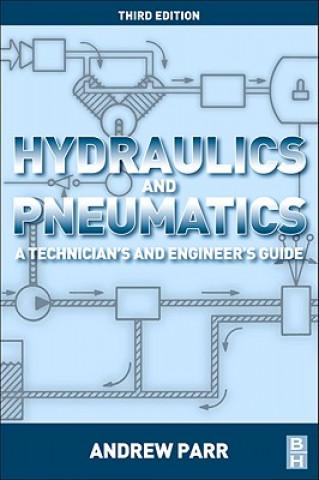
Nearly all industrial processes require objects to be moved, manipulated or subjected to some sort of force. Such movements and manipulations are frequently accomplished by means of devices driven by liquids (hydraulics) or air (pneumatics), the subject of this book. "Hydraulics and Pneumatics" is written by a practicing process control engineer as a guide to the successful operation of hydraulic and pneumatic systems for all engineers and technicians working with them. Keeping mathematics and theory to a minimum, this practical guide is thorough but accessible to technicians without an advanced engineering background, and offers clear, complete coverage of the latest pumps, valves and other hydraulic and pneumatic equipment Designed to serve as an introduction to those who are training and a day-to-day reference for use on the job, the book also offers an essential section on industrial safety and compliance with regulation. This title covers both hydraulic and pneumatic machinery, with a practical, practitioner-led approach that does not demand great theoretical and mathematical understanding.It includest thorough and updated coverage of safety standards, helping control engineers and shop floor managers to ensure their operations are in compliance with regulations. It includes more abundant referencing, new and updated web-links, look-up tables and graphical keys that offer even easier referencing while providing quick access to other related materials.
Donjoy Rotulax - elastne põlvekinnitus põlvekaela ja põlveliigese stabiliseerimiseks. Sageli kasutatakse põlvekaela ebastabiilsuse või põlvetraumaga, et hoida põlvekaela õiges asendis ja vähendada põlvevalu ning ebamugavust. Elastne põlvekinnitus on soovitatav: Üldiseks stabiliseerimiseks pärast ägedat põlvevigastust Pärast põlveoperatsiooni Propriocepsia ja närvi stimuleerimiseks kompressiooni ajal Elastse põlvekinnituse omadused ja eelised: Anatoomiliselt vormitud, õhku läbilaskev elastne põlvekinnitus. Silikoonist põlvekaela tugi suurema stabiilsuse saavutamiseks. Sobib nii vasakule kui paremale jalale. Ei sisalda lateksit. Järkjärguline kompressioon. Avarama kinnituspiirkonna pakkumine mugavuse tagamiseks. Külgmised tugevdused tagavad suurema stabiilsuse. Saab valida avatud või suletud põlvekaela. Elastset põlvekinnitust kasutatakse tavaliselt: Iga päev Jah Taastusravi pärast operatsiooni Ei Profülaktika Jah Kontaktsport Ei Ekstreemspordid Ei Millistes spordialadel soovitatakse seda põlvekinnitust kasutada? Tennise jaoks Jah Suusatamine Ei Motokross Ei Golf Jah Jalgpall Jah Korvpall Jah Jalgrattasõit Jah Võrkpall Jah Veespordialad Ei Muud spordialad Jah Mitte spordiala Jah Kuidas valida põlvekaitse suurust? Mõõdetakse reieümbermõõt 15 cm põlve kohal. Rotulaxi elastse põlvekinnituse suuruste tabel on toodud allpool: Suurus Reieümbermõõt, 15 cm kõrgemal põlvekohast (cm) 1 = XS 35 – 38 cm 2 = S 39 – 42 cm 3 = M 43 – 46 cm 4 = L 47 – 49 cm 5 = XL 50 – 53 cm 6 = XXL 54 – 57 cm