TIME-ATTACK CHALLENGE!Pristella is minutes away from disaster, and Subaru is the only one who has any idea what's coming. Sirius, the Archbishop of Wrath, intends to use her insidious power to commit an act of terror—in the name of love. To have any hope of saving the city's residents, Subaru will first need to figure out how to handle the shortest time limit that Return by Death has ever given him. Will his powerful allies and newfound skills be enough to keep the Water Gate City safe from catastrophe?
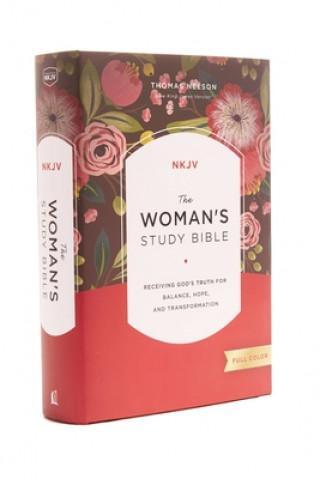
With this redesigned, full-color edition of Thomas Nelson's best-selling, The Woman's Study Bible, women of all ages can experience the renewal, hope, and transformation that only God's Word can bring.
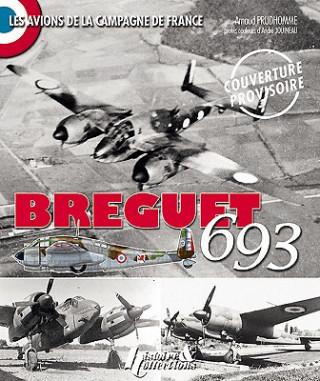
Derived from the Breguet 690 which was built at the beginning of 1936, the Breguet 693 had its baptism by fire in May 1940: eleven aircraft of the GBA 1/54 were engaged in the region of Maastricht against the Germans. Unfortunately the ground assault tactic utilized proved to be disastrous, rendering the aircraft particularly vulnerable and ten among them, decimated by the flak, never returned.
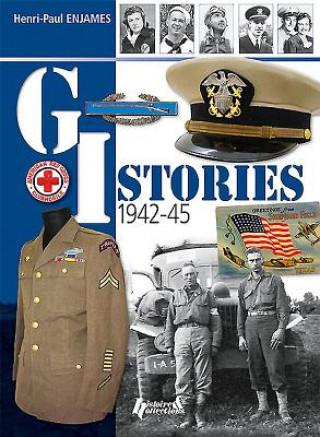
Among the many Americans who fought to liberate Europe in 1944, some arrived on the battlefield with no combat experience while others were already veterans of the North African and Italian campaigns. This book traces the career of fifty soldiers, who, during the conflict held a variety of positions: shock troops, bomber pilot, quartermaster aboard a destroyer or chaplain in a motorized cavalry unit. Several nurses and a telephone operator are included and demonstrate the commitment of the female staff. A short genealogical study precedes each story, allowing the reader to discover the origins and family background of each personnel. A study of official records as well as archival documents kept by the soldier helps trace his military career from draft to theater. The author offers additional perspective through historical newspapers and walking units, providing valuable information on the progress of the fighting that would lead to victory and homecoming for the luckiest. At a time when many veterans of World War II are quickly diminishing, it is important to treasure these moving testimonies of a painful past.
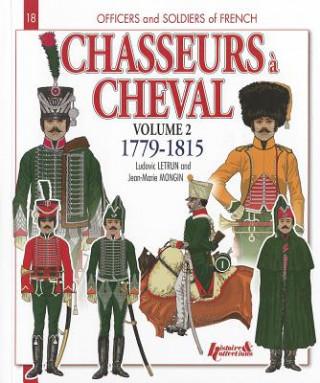
The Chasseurs a cheval, a type of French light cavalry, date from 1743 when an independent unit (Fischer's Volunteer Company of Chasseurs) was raised during the Austrian War of Succession to counter the pandurs and Croats employed as irregulars by the Austrian army. Originally a mixed corps of light infantry and horsemen, this force proved sufficiently effective to warrant the creation of a single corps: Dragoons-chasseurs de Conflans. In 1776 this and other volunteer ""legions"" had their mounted elements converted into 24 squadrons of Chasseurs a cheval, each of which was attached to one of the existing dragoon regiments of the Royal cavalry. In 1779 these squadrons were amalgamated into six regiments, each of which was given a regional title (1st Chasseurs des Alpes, 2nd Chasseurs des Pyrenees, etc). In 1788 six dragoon regiments were converted to Chasseurs a cheval and during the period of the Revolutionary Wars the number was again increased, to twenty-five. This second volume follows them as they brigade with the Hussars in all the great theatres of operation at the beginning of the Empire.Here we deal with the missions given over to the light cavalry before, during, and after the battle. As for the uniform part, the book shows how their uniform evolved from being a mere copy of the Hussars' to becoming with time totally specific to the Chasseur a Cheval Arm.
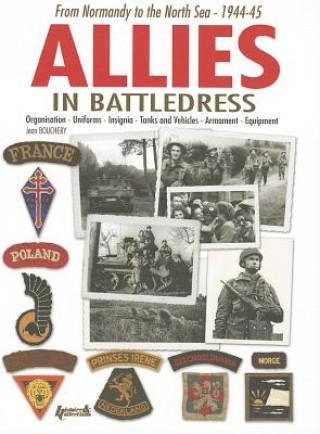
This is the third volume of the vast trilogy devoted to the Allied troops under the Anglo-Canadian command of the 21st Army Group. The aim of this book is to discover the distinguishing features of those volunteers who donned British battledress: Belgians, Luxemburgers, Frenchmen, Dutchmen, Poles, Norwegians, Czechs and Danes and who were engaged from the Normandy beaches to well into the heart of the Reich. It is intended for all sorts of amateurs of history: collectors, model-makers, historians and reconstitution groups.