This volume, originally published in 1966, contains essays from the 1930s and is valuable not only in the context of the history of thought. It provides an excellent introduction to the general theory of employment, interest and money and reflect the mo
Popular husband-and-wife bloggers and podcasters present their debut cookbook in which they serve up 100 nourishing recipes with a Mediterranean flair and share their top 10 lessons for a lifelong approach to enjoying cooking and a healthy approach to food. 15,000 first printing. Popular husband-and-wife bloggers and podcasters (acouplecooks.com) offer 100 recipes with an emphasis on easy prep, whole foods, and healthy dishes--and getting into the kitchen together.A love story at its finest, Alex and Sonja Overhiser first fell for each other--and then the kitchen. In a matter of months, the writer-photographer duo went from eating fast and frozen food to regularly cooking vegetarian meals from scratch. In the process, they found they had more energy, slept better, and were happier. Together, the two unraveled a joy-filled, "pretty simple" approach to home cooking that they share on their nationally-renowned website and podcast, A Couple Cooks.The pair's debut cookbook, A Couple Cooks--Pretty Simple Cooking, is a terrific combination of spirited writing, nourishing recipes with a Mediterranean flair, and vibrant photography. Recipes include 100 functional and creative recipes for every aspect of a home-cooked lifestyle, heavy on the vegetables and flavor, with an eye toward moving veggies to the center of the plate. All recipes are vegetarian, with plenty of vegan and gluten-free options. Intended for eaters of all kinds who want to eat more vegetables, Sonja and Alex dubbed the book a "vegetarian cookbook for non-vegetarians"--and it stuck.At the book's heart are the couple's top ten lessons for a life-long approach to enjoying cooking and a healthy approach to food. Each lesson is meditative and inspired, featuring a corresponding custom watercolor drawing by author and blogger Ashley Rodriguez. It's a beautiful coffee table book that's food for thought, at the same time providing real food recipes for eating around the table. Autorid: Sonja Overhiser, Alex Overhiser
An international expert in hospice and palliative care shares innovative and compassionate approaches for managing serious illness, explaining key medical approaches while offering advice on how to make informed decisions about the best possible care. Original. 10,000 first printing. Presents guidance on providing optimal quality of care and wellness for people who have been diagnosed with serious illnesses, addressing the needs of both the patient and the caregiver. For a time of growing concern about living well with serious illness and getting the best possible end-of-life care, Life After the Diagnosis delivers a compassionate and sensitive guide for patients, families, and caregivers.In Life After the Diagnosis, Dr. Steven Z. Pantilat, a renowned international expert in palliative care, shares innovative approaches for dealing with serious illness, outlines the steps that patients should take, and demystifies the medical system. He makes sense of what doctors say, what they actually mean, and how to get the best information to help make the best medical decisions. Dr. Pantilat covers everything from the first steps after the diagnosis and finding the right caregiving and support, to planning your future so your loved ones don't have to. He offers advice on how to tackle the most difficult treatment decisions and discussions and shows readers how to choose treatments that help more than they hurt, stay consistent with their values and personal goals, and live as well as possible for as long as possible. Autorid: Steven Z. Pantilat
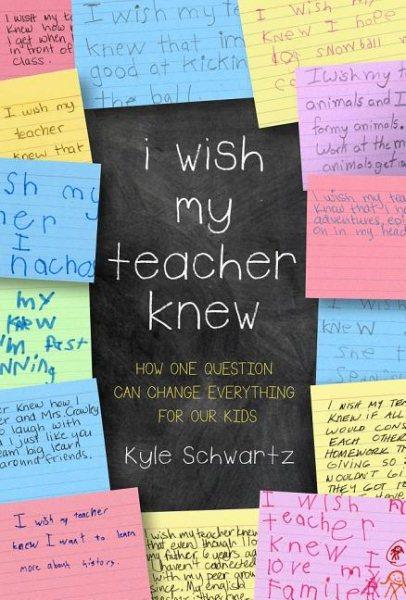
One day, third-grade teacher Kyle Schwartz asked her students to fill-in-the-blank in this sentence: I wish my teacherknew _____." The results astounded her. Some answers were humorous, others were heartbreaking-all were profoundly moving and enlightening. The results opened her eyes to the need for educators to understand the unique realities their students face in order to create an open, safe and supportive place in the classroom. When Schwartz shared her experience online, #IWishMyTeacherKnew became an immediate worldwide viral phenomenon. Schwartz's book tells the story of #IWishMyTeacherKnew, including many students' emotional and insightful responses, and ultimately provides an invaluable guide for teachers, parents, and communities. Autorid: Kyle Schwartz
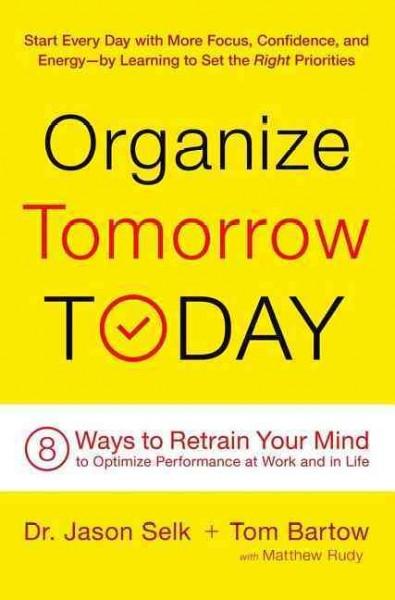
How do both elite athletes and business leaders climb to the top? Contrary to what you might think, it's effective habits rather than innate talent that are their keys to success. Dr. Jason Selk,director of mental training for the 2011 World Series Champions, the St. Louis Cardinals,and star business coach Tom Bartow combine the most effective elements of both their disciplines to offer an organizational improvement plan that anyone can learn and apply immediately.They outline eight fundamental ways to get organized, including the "time paradox," which allows precision to set your schedule free, and a two-minute mental training drill that will start your day with focus, confidence, and energy. Organize Tomorrow Today helps readers to move past their performance roadblocks and achieve more productive lives. Autorid: Jason Selk, Matthew Rudy, Tom Bartow
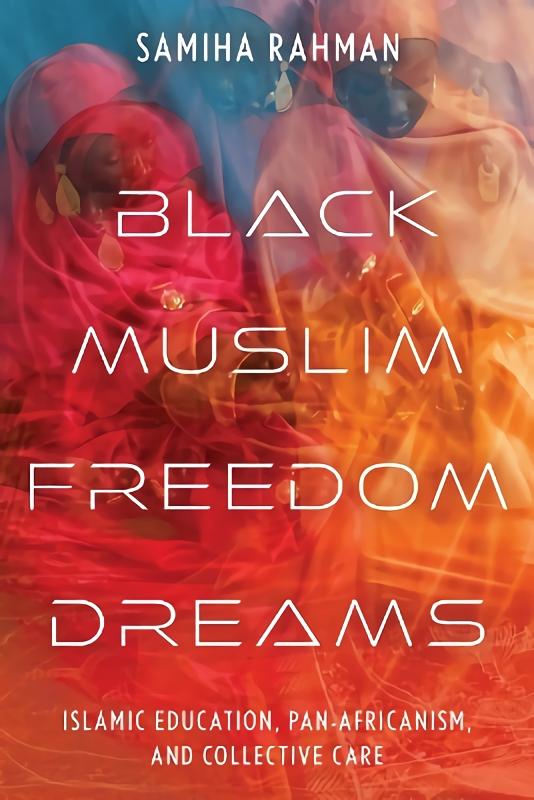
Explores three generations of Black American Muslims pursuing education and liberation beyond the borders of the United StatesSince the 1970s, hundreds of Black American Muslims in the Tijani Sufi order have sought refuge in a new world that would nurture their racial, religious and gendered identities away from anti-Black and anti-Muslim racism in the United States. This new world is in Medina Baye, a city in Senegal that is the headquarters of a pan-African Sufi movement with tens of millions of members in Africa alone. Drawing on a decade and a half of ethnographic engagement, Black Muslim Freedom Dreams explores the Islamic educational opportunities created for and by Black American Muslims in Medina Baye, chronicling the dreams, sacrifices, struggles, and joys of young people and parents who live, learn, and strive for liberation between the United States and Senegal. The volume traces their journeys between these two worlds, zooming in to vividly portray everyday Black American and West African religious life, and zooming out to map the sociopolitical landscapes, educational conditions and Islamic and pan-African ideologies that shape believers' perspectives.Black Muslim Freedom Dreams argues that Black Muslims experiences of Islamic education and pan-African exchange are oriented towards collective care a radical way of being and belonging through which believers journey on the path towards Allahs love by caring for one another and addressing the material inequities that constrain their communities. This notion disrupts narratives of religion that are limited to systems of personal belief, showcasing instead how their educational experiences foster a collective responsibility and solidarity. The book offers a compelling account of how Black Muslims engage with transnational religious and racial networks to build liberatory communities beyond the United States. Autorid: Samiha Rahman
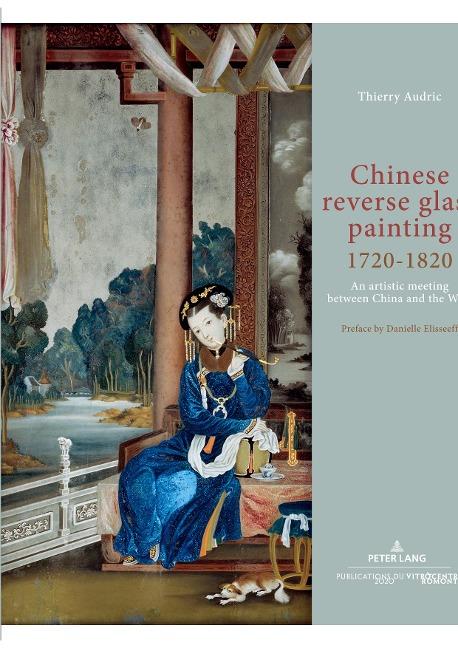
Displaying a talent for combining aesthetic sensibility with scientific rigor, the author has given new life to something that once excited European passions: an original, non-academic art at the forefront of the ¿new technology¿ of the time. For decades, aristocrats of the Old World and then American collectors (the latter at the end of the eighteenth and beginning of the nineteenth centuries) spent countless sums on the purchase of these works, which were worth a fortune. These wealthy collectors of curiosities of all types were also most certainly great dreamers seeking a worthy setting for their dreams. Unbeknownst to them, their endeavours had much greater scope, creating and nourishing the conditions for a rare encounter between two worlds: a golden age of atypical collaboration, a combined adventure between China and Europe.
This collection of essays and articles, written between 2019 and 2023 for such outlets as The Daily Beast and The Center for European Policy Analysis (CEPA), illuminates recent Russian international affairs through the lens of Moscow¿s propaganda tactics. For more than two decades, the Kremlin¿s agitators have been tasked to lay, in advance, the groundwork for various domestic and foreign actions by the regime of Vladimir Putin. Thus, Russian state-controlled media provides crucial clues for deciphering the¿often sinister¿goals that the government of Russia was and is planning to pursue abroad, from election interference to military invasions. The goal of the sum of these activities is the establishment of a new world order¿with Russia at its helm. Before the large invasion of 24 February 2022, Russian state media portrayed the West as incapable of opposing Russian aggression. Putin¿s propagandists cheered for war against Ukraine, predicting it would be quick and victorious. Misreading the ability of the West to unite and miscalculating Russiäs capabilities in confronting determined Ukrainians, Russia ended up in a quagmire of its own creation. In 2023, Putin¿s decorated propagandists face the possibility of future scrutiny and potential prosecutions for their proactive incitement of genocide. They unravel, along with the Kremlin, having to tell multiple conflicting stories and condemn the same players they used to lionize. Backed into the corner, they resort to nuclear threats and demand even more blood from Ukraine, whose only crime is its desire for democracy and freedom.
During the four decades the Iron Curtain divided the author¿s native Germany, over 1,200 rare animal and plant species found refuge in the highly militarized border strip¿today¿s Grünes Band or Green Belt. After three decades abroad, Lange uses the 1,400-kilometer-long Green Belt as a prism to investigate the human, social, and ecological stories surrounding the former borderland. Using an anthropological and journalistic approach, Lange presents multifaceted perspectives on life along the border, the fall of the Berlin Wall, and the societal echoes of the German division and the process of Reunification. Pivoting to the present, the book addresses questions of migration, identity, and belonging in light of the proliferation of militarized borders today. Lange concludes by pointing to the glimpse the Green Belt offers into much older landscapes for clues about the ecological dimension of home.
From the books and heretics burnt on the pyres of the Inquisition to self-immolations at protest rallies, from the massive burning of oil on the global scale to inflammatory speech, from the imagery of revolutionary sparks ready to ignite the spirits of the oppressed to car bombings in the Middle East―fire proves to be an indispensable element of the political. To account for this elemental source of heat and light, Pyropolitics delineates a semantico-discursive field, replete with the literal and metaphorical mentions and uses of fires, flames, sparks, immolations, incinerations, and burning in political theory and practices.Relying on classical political theory, literature, theology, contemporary philosophy, and an analysis of current events, Michael Marder argues that geopolitics, or the politics of the Earth, has always had an unstable, at once shadowy and blinding, underside―pyropolitics, or the politics of fire. If this obscure double of geopolitics is, increasingly, dictating the rules of the game today, then it is crucial to learn to speak its language, to discern its manifestations, and to project where our world ablaze is heading.Previously published by Rowman and Littlefield, this edition has a new foreword from Slavoj Žižek and three new chapters.
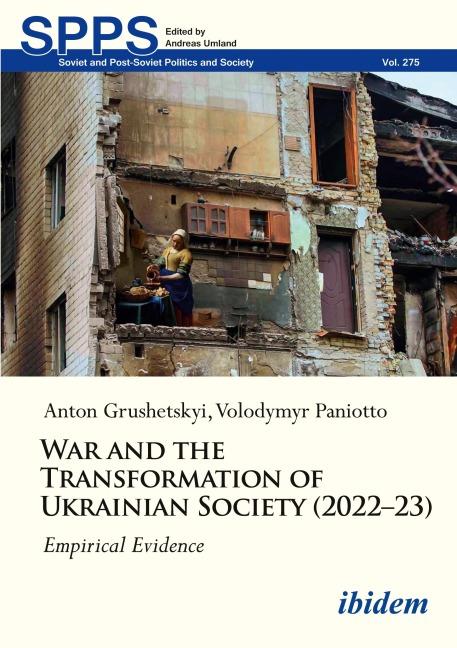
This book examines the profound transformation that has occurred in Ukrainian society as a result of Russia’s large-scale invasion of Ukraine on February 24th, 2022. The authors―two renowned sociologists and directors of the Kyiv International Institute of Sociology―document and explain the post-Soviet evolution of Ukrainians’ views, values, and behavior. Utilizing data from hundreds of opinion surveys from 1991 to 2023, they analyze how the war affected the formation of Ukrainian national identity, geopolitical orientations, society’s readiness to resist, attitudes towards the state and its institutions, as well as other aspects.This timely study highlights socio-economic transitions, migration moods, the moral-psychological state of the population as well as the changing media and Internet consumption among Ukrainians. It also examines the thorny issue of possible social tension that may arise in post-war Ukraine.The volume is not only an invaluable source of public opinion data, but constitutes also as a basis for further analysis of the post-war reality. It offers an essential tool for understanding the challenges and opportunities facing Ukraine on its path to recovery and development. Most of the data from the studies used have been transferred to the National Data Bank “Kyiv Archive”, which provides scholars with the opportunity to conduct more detailed research.
The importance of Belarus to European security has increased in recent years, but the history and identity of the country have yet to be uncovered by the broader public. Throughout the centuries, the various rulers of Belarus have intentionally silenced its national history to distance Belarus from its European context. This historical book aims to demonstrate that Russian assimilation policies and the labeling of Belarus as "Russia's little brother" have been elements of a deliberate imperialistic policy, as Belarus shares most of its history with Poland and Lithuania. The Russian invasion of Ukraine dominated international headlines in 2022. Belarus officially supported Russia in the war, yet hundreds of Belarusian volunteers enlisted in the Ukrainian army. Meanwhile, the Belarusian opposition organized itself in Poland and Lithuania, and a concrete wall emerged along the border with Belarus. Is Belarus destined to remain isolated from Europe and an extension of Russian geopolitics, or can it restore its historical connections to Poland and Lithuania? How have Belarusians defined their identity, and how have their international relations evolved over the centuries? Toni Stenström provides a new and unique insight into one of Europe's most unknown countries.