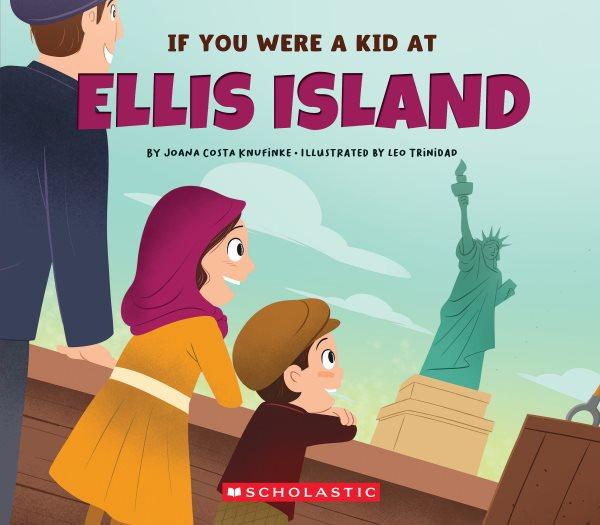
What was it like to be a kid traveling through Ellis Island?Most people in the United States can trace their origins to somewhere else. This means that either they or their ancestors were immigrants. The most important gateway for immigrants during the early 20th century was Ellis Island. This immigration station on a tiny island in New York Harbor welcomed more than 12 million people to America! Many of them were kids!Join Isabella and Alberto as they journey from Italy to the United States through Ellis Island. Share their struggles, fears, and hopes as they go through an experience shared with millions of Americans.ABOUT THIS SERIES:Step back in time to the most relevant historical moments with the best-selling series, If You Were a Kid! In an exciting blend of fiction and nonfiction, a fictionalized narrative teaches history through the eyes of kids, while informational text introduces readers to key factual information. With engaging text, illustrations, and photos on every page, If You Were a Kid will spark readers curiosity and imagination, making learning about our past an accessible and unforgettable experience. Autorid: Joana Costa Knufinke, Leo Trinidad
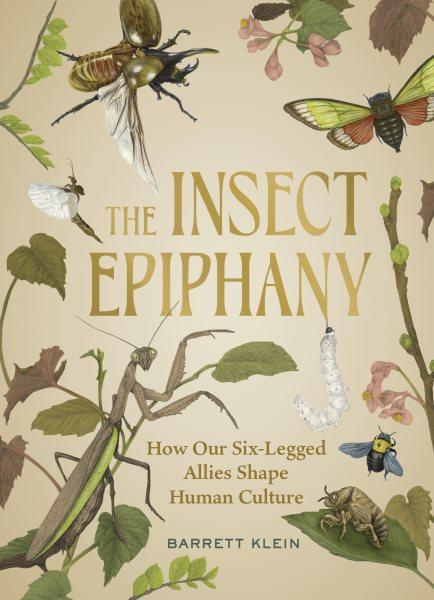
From an entomologist comes a buzz-worthy exploration of the many ways insects have affected human society, history and culture. Illustrations. From entomologist Barrett Klein comes a buzz-worthy exploration of the many ways insects have affected human society, history, and culture Insects surround us. They fuel life on Earth through their roles as pollinators, predators, and prey, but rarely do we consider the outsize influence they have had on our culture and civilization. Their anatomy and habits inform how we live, work, create art, and innovate. Featuring nearly 250 color imagesfrom ancient etchings to avant-garde art, from bug-based meals to haute coutureThe Insect Epiphany proves that our world would look very different without insects, not just because they are crucial to our ecosystems, but because they have shaped and inspired so many aspects of what makes us human. Autorid: Barrett Klein
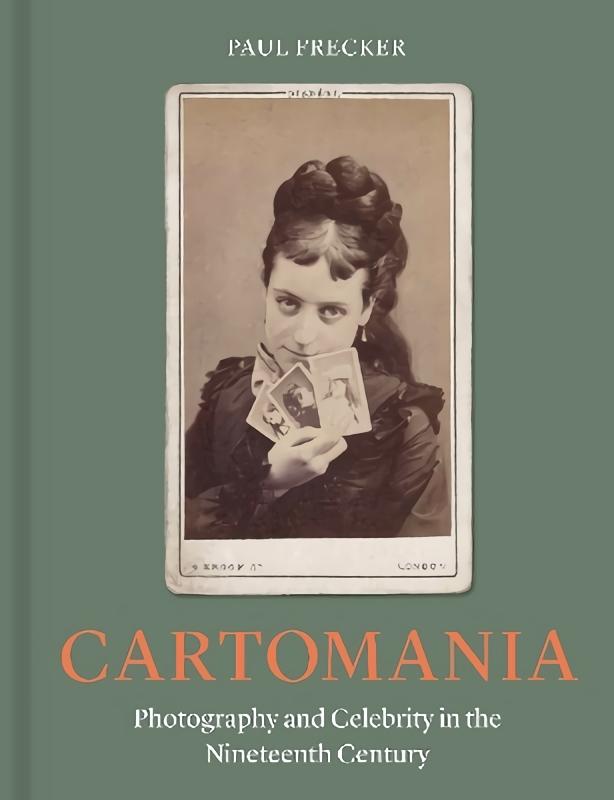
'This eye-opening and frequently jaw-dropping history of the phenomenon opens up a set of fascinating peepholes on to a now vanished world' Spectator Cartomania was a photographic phenomenon that seized the public imagination at the beginning of the 1860s. Small portraits, dubbed cartes de visite, were avidly exchanged with friends and family, quickly earning a reputation as 'the paper currency of social intercourse'. Compiled into albums and prominently displayed in the home to peruse, assess and discuss, this first explosion of commercial portraiture proved a wildly popular craze, particularly once celebrities embraced the new format. Paul Frecker's lavishly illustrated book brings fresh insight into the careers of the enterprising men and women who established studios and into the lives of those who passed before their cameras. With unparalleled depth of research and evocative prose, he vividly brings to life the photographers and many of their subjects. From reigning queens and visiting sultans to grieving mothers and nefarious criminals, all life lies within. Whether dressed in their best or in fancy dress, cartomania's devotees and their often extraordinary stories are laid bare in this fascinating view of mid-Victorian society. Autorid: Paul Frecker
Stuart Hall was one of the most insightful and incisive critics of the Thatcher era. In this essential selection of his essays during the period, he elaborates both how Thatcher's rise to power exploited weakness in the left, but also how the left itself can refresh itself in the shadow of defeat. This collection is as vital today as it was in 1988. Through the essays Hall shows how Thatcher has exploited discontent with Labour's record in office and with aspects of the welfare state to devise a potent authoritarian, populist ideology. This ranges through the formation of the SDP, inner city riots, the Falklands War and the signficance of Antonio Gramsci. He suggests that Thatcherism is skillfully employing the restless and individualistic dynamic of consumer capitalism to promote a swingeing programme of 'regressive modernization'. In response he elaborates a new politics for the Left as it is with the project of the Right. Hall insists that the Left can no longer trade on inherited politics and tradition. Socialists today must be as radical as modernity itself. Valuable pointers to a new politics are identified in the experience of feminism, the campaigns of the GLC and the world-wide response to Band Aid. Autorid: Stuart Hall
Mining continues to evolve and today's paradigms are 'sustainable' and 'responsible mining', mining that is profitable but protects the environment, human rights, and health. Mining: A Very Short Introduction covers these developments and looks to the future to see where mining ideally will go.
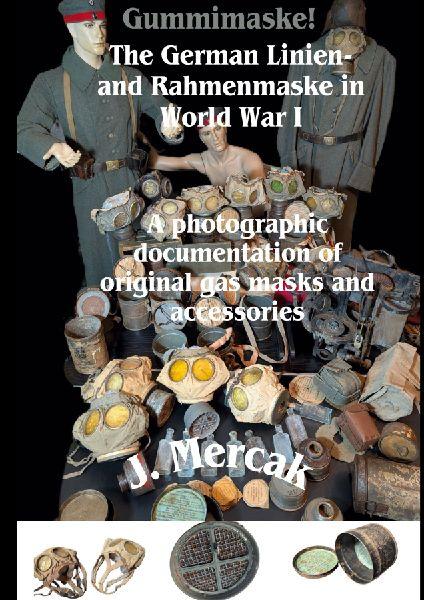
This first volume traces the development of the German rubber mask (Gummimaske) from 1915 to 1917.With the help of high-quality photographic material (90% of original exhibits from the author¿s own collection and over 300 color illustrations) and by incorporating findings from the specialized literature, the distinctive features of line and frame gas masks (Stamps, material properties, filter systems, tins) are meticulously analyzed over 80 pages and presented in text and images. The volume is rounded out by a presentation of other rare artifacts from the gas war like the variants of the Segeltuchtasche, the rare Zweischichteneinsatz or Atemschutzgerät Dräger 1910.For collectors, by collectors: With this photographic documentation, J. Mercak aims to make his (first) contribution to support collectors in their research on German gas masks from World War I. Clear and accessible texts that allow readers to quickly understand the key features of Gummimaske, i.e. the Line Gas Mask and the Frame Gas Mask of Type 1 and 2 and at the same time, you will delve into details yoüve probably never read before (red crosses on the eye pieces, Gothic marking on the line gas mask, Hybrid/transition model line and frame mask with full inscription Draeger)
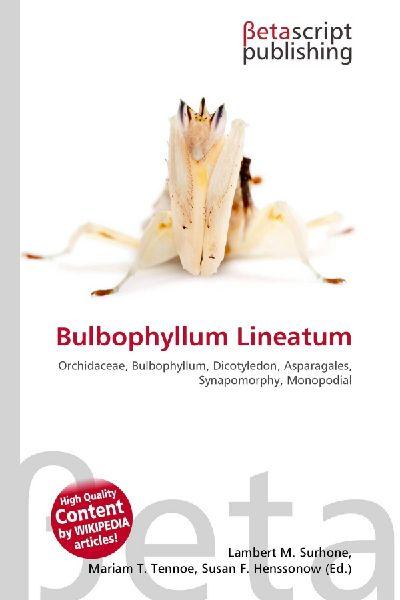
Please note that the content of this book primarily consists of articles available from Wikipedia or other free sources online. Bulbophyllum lineatum is a species of orchid in the genus Bulbophyllum.Orchidaceae, usually referred to as the Orchid family, is a morphologically diverse and widespread family of dicots in the order Asparagales. It is currently believed to be the largest family of flowering plants with between 21,950 and 26,049 currently accepted species, found in 880 genera.
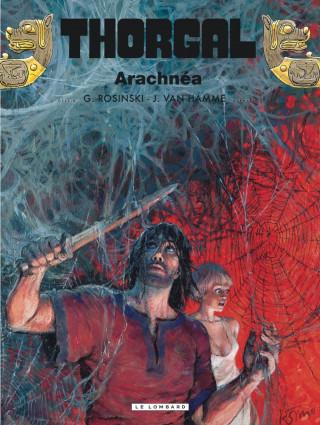
Séparés des autres membres de leur famille par une tempête, Thorgal et safille abordent dans une île de rêve. Isolée du reste du monde par lesBrumes du Néant, cette île paradisiaque est sous la dépendance totale deson immortelle et suprême maîtresse : Arachnéa. En échange des bienfaitsdont elle les gratifie, cette redoutable déesse exige que deux fois paran, aux équinoxes d'automne et de printemps, les habitants lui fournissentun jeune homme capable de la féconder et de lui insuffler ainsi l'énergieindispensable pour survivre dans l'éternité...
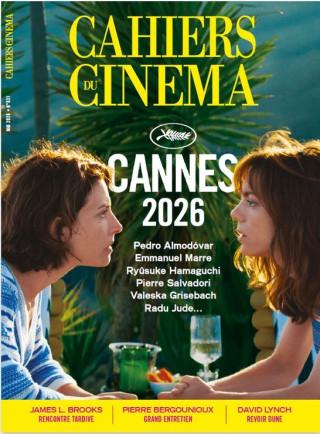
Loupiotes foraines, spots d’un club de strip-tease madrilène : les sorties cannoises du mois (La Vénus électrique de Pierre Salvadori, Autofiction de Pedro Almodóvar) ainsi que les promesses du programme de cette 79e édition (l’intrigant doublé Full Phil/Le Vertige de Quentin Dupieux, et le non moins spécial Double Freedom de Lisandro Alonso) constituent l’événement du numéro de mai, ouvert sur un entretien avec Pedro Almodóvar et clos par un écho de Cannes 1954 : cette année-là, prestige critique d’alors oblige, le rédacteur en chef des Cahiers, André Bazin, siégeait au jury et racontait les coulisses du palmarès.La rédaction propose un défrichage, heureuse de revoir des cinéastes rares (comme l’Allemande Valeska Grisebach ou le Coréen Na-hong Jin) ou d’autres « non abonnés » à la Croisette (le Roumain Radu Jude), et impatiente de voir les nouveaux films de Riyûsuke Hamaguchi (qui nous livre un texte sur sa fascination pour les acteurs français) et d’Emmanuel Marre (dont Notre salut aborde une période récurrente ces temps-ci sur les écrans : l’Occupation sous l’angle de la collaboration).Etty, Un balcon à Limoges, Bait, Collapse et Toutes mes sœurs, les films du Cahier critique, s’interrogent tous sur le regard posé sur leurs protagonistes, à travers le temps et la pluralité des points de vue.Les deux grands entretiens de ce numéro décidément riche en paroles et écrits de cinéastes partagent une réflexion sur le rapport aux images mais aussi les façons de filmer : James L. Brooks, dont le réjouissant Ella McCay sort furtivement en salle après une série de péripéties, évoque son goût du collectif et les conditions très différentes qu’il obtient à la télévision et au cinéma, mais aussi son amour des livres. Quant à l’écrivain Pierre Bergounioux, il retrace l’improbable naissance de sa cinéphilie dans la Corrèze d’après-guerre et sa passion pour Fellini.Le Journal de mai, riche en découvertes dans d’autres festivals (Fifoi, Cinéma du réel, Cinélatino et Ecrans mixtes), détaille un Gugusse de Méliès retrouvé, fête la réouverture de la Cinémathèque de Toulouse, s’interroge sur les rapports entre psychanalyse et cinéma muet, questionne le rôle du montage dans les documentaires de l’intime, et rend hommage à Nathalie Baye. Reprises et livres s’intéressent ce mois-ci à David Lynch, Carlos Dieges, Maurice Pialat et Luigi Comencini.