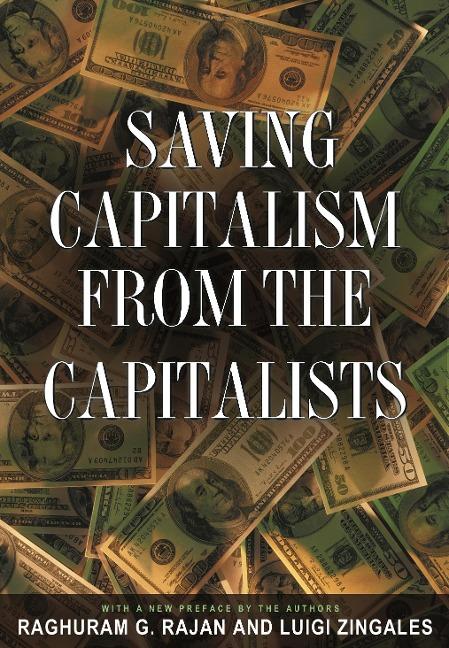
 Princeton University Press Saving Capitalism from the Capitalists: Unleashing the Power of Financial Markets to Create Wealth and Spread Opportunity Capitalism's biggest problem is the executive in pinstripes who extols the virtues of competitive markets with every breath while attempting to extinguish them with every action. Saving Capitalism from the Capitalists is a groundbreaking book that will radically change our understanding of the capitalist system, particularly the role of financial markets. They are the catalyst for inspiring human ingenuity and spreading prosperity. The perception of many, especially in the wake of never-ending corporate scandals, is that financial markets are parasitic institutions that feed off the blood, sweat, and tears of the rest of us. The reality is far different. -Vibrant financial markets threaten the sclerotic corporate establishment and increase corporate mobility and opportunity. They are the reason why entrepreneurship flourishes and companies like The Home Depot and Wal-Mart--mere fly specks a quarter of a century ago--have surged as they have.-They mean personal freedom and economic development for more people. Throughout history, and in most of the world today, the record is one of financial oppression. Elites restrict access to capital and severely limit not only general economic development but that of individuals as well.-Open borders help check the political and economic elites and preserve competitive markets. The greatest danger of the antiglobalization movement is that it will keep the rich rich and the poor poor. Globalization forces countries to do what is necessary to make their economies productive, not what is best for incumbent elites. Open borders limit the ability of domestic politics to close down competition and to retard financial and economicgrowth.-Markets are especially susceptible in economic downturns when the establishment can exploit public anger to restrict competition and access to capital. While markets must be free to practice "creative destruction," Rajan and Zingales demonstrate the political and economic importance of a sustainable distribution of wealth and a baseline safety net. Capitalism needs a heart for its own good! There are no iron laws of economics that condemn countries like Bangladesh to perpetual poverty or the United States to perpetual prosperity. The early years of the twentieth century saw vibrant, open financial markets that were creating widespread prosperity. Then came the "Great Reversal" during the Great Depression. It can--and will--happen again, unless there is greater understanding of what markets do, who benefits, and who really wants to either limit them or shut them down. Saving Capitalism from the Capitalists breaks free of traditional ideological arguments of the right and left and points to a new way of understanding and spreading the extraordinary wealth-generating capabilities of capitalism. | 1 | 71,99 € | Vaata | ||
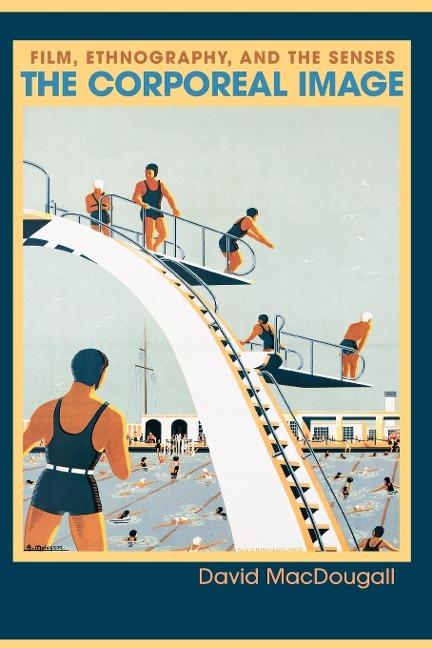 Princeton University Press The Corporeal Image: Film, Ethnography, and the Senses In this book, David MacDougall, one of the leading ethnographic filmmakers and film scholars of his generation, builds upon the ideas from his widely praised Transcultural Cinema and argues for a new conception of how visual images create human knowledge in a world in which the value of seeing has often been eclipsed by words. In ten chapters, MacDougall explores the relations between photographic images and the human body-the body of the viewer and the body behind the camera as well as the body as seen in ethnography, cinema, and photography. In a landmark piece, he discusses the need for a new field of social aesthetics, further elaborated in his reflections on filming at an elite boys' school in northern India. The theme of the school is taken up as well in his discussion of fiction and nonfiction films of childhood. The book's final section presents a radical view of the history of visual anthropology as a maverick anthropological practice that was always at odds with the anthropology of words. In place of the conventional wisdom, he proposes a new set of principles for visual anthropology. These are essays in the classical sense--speculative, judicious, lucidly written, and mercifully jargon-free. The Corporeal Image presents the latest ideas from one of our foremost thinkers on the role of vision and visual representation in contemporary social thought. | 1 | 64,05 € | Vaata | ||
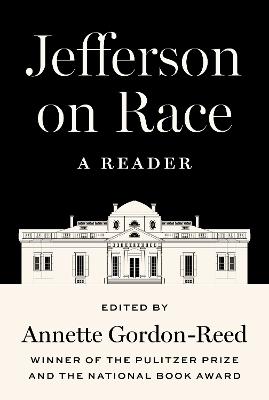 Princeton University Press Jefferson on Race: A Reader GTIN: 9780691122069 Raamatud From The New York Timesbestselling and Pulitzer Prizewinning author of The Hemingses of Monticello, a groundbreaking collection of Thomas Jeffersons writings on race that every American should readAmong Americas Founding Fathers, none was more deeply, personally, or controversially entangled with race and slavery than Thomas Jefferson. The man whose Declaration of Independence proclaimed that all men are created equal enslaved more than 600 people of African descent even as he acknowledged the injustice of slavery, saw himself as its opponent, and condemned it in his writings. How is this possible? In Jefferson on Race, Pulitzer Prizewinning historian Annette Gordon-Reed gathers Jeffersons most revealing writings about African Americans, slavery, and Native Americans, enabling readers as never before to directly explore his complex and contradictory thoughts, feelings, and decisions on these subjectsthe most hotly debated aspect of his legacy.These selections come from Jeffersons public and private writings, letters, and plantation records, as well as accounts by contemporaries, including his son Madison Hemings and three other people formerly enslaved at Monticello. The book documents Jeffersons ideas aboutand self-image in relation toAfrican Americans, slavery, and Native Americans, as well as his conduct, including interactions with individual Black and Native people. The writings show how Jefferson responded to living in a multiracial slave society while professing progressive ideals, and how his views on race and slavery were shaped by his experiences with enslaved Black people.Jefferson on Race is essential reading for anyone seeking to understand Jeffersons conflicted attitudesand the impact of race and slavery on American history. Autorid: Thomas Jefferson, Annette Gordon-Reed | 1 | 29,00 € | Vaata | ||
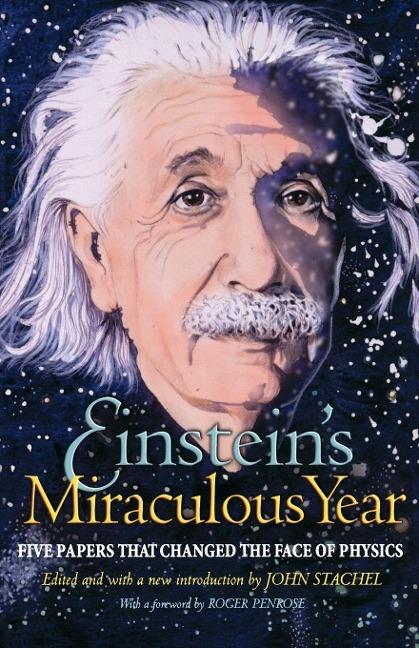 Princeton University Press Einstein's Miraculous Year: Five Papers That Changed the Face of Physics After 1905, Einstein's miraculous year, physics would never be the same again. In those twelve months, Einstein shattered many cherished scientific beliefs with five extraordinary papers that would establish him as the world's leading physicist. This book brings those papers together in an accessible format. The best-known papers are the two that founded special relativity: On the Electrodynamics of Moving Bodies and Does the Inertia of a Body Depend on Its Energy Content? In the former, Einstein showed that absolute time had to be replaced by a new absolute: the speed of light. In the second, he asserted the equivalence of mass and energy, which would lead to the famous formula E = mc2 . The book also includes On a Heuristic Point of View Concerning the Production and Transformation of Light, in which Einstein challenged the wave theory of light, suggesting that light could also be regarded as a collection of particles. This helped to open the door to a whole new world--that of quantum physics. For ideas in this paper, he won the Nobel Prize in 1921. The fourth paper also led to a Nobel Prize, although for another scientist, Jean Perrin. On the Movement of Small Particles Suspended in Stationary Liquids Required by the Molecular-Kinetic Theory of Heat concerns the Brownian motion of such particles. With profound insight, Einstein blended ideas from kinetic theory and classical hydrodynamics to derive an equation for the mean free path of such particles as a function of the time, which Perrin confirmed experimentally. The fifth paper, A New Determination of Molecular Dimensions, was Einstein's doctoral dissertation, and remains among his most cited articles. It shows how to calculate Avogadro's number and the size of molecules. These papers, presented in a modern English translation, are essential reading for any physicist, mathematician, or astrophysicist. Far more than just a collection of scientific articles, this book presents work that is among the high points of human achievement and marks a watershed in the history of science. Coinciding with the 100th anniversary of the miraculous year, this new paperback edition includes an introduction by John Stachel, which focuses on the personal aspects of Einstein's youth that facilitated and led up to the miraculous year. | 1 | 55,74 € | Vaata | ||
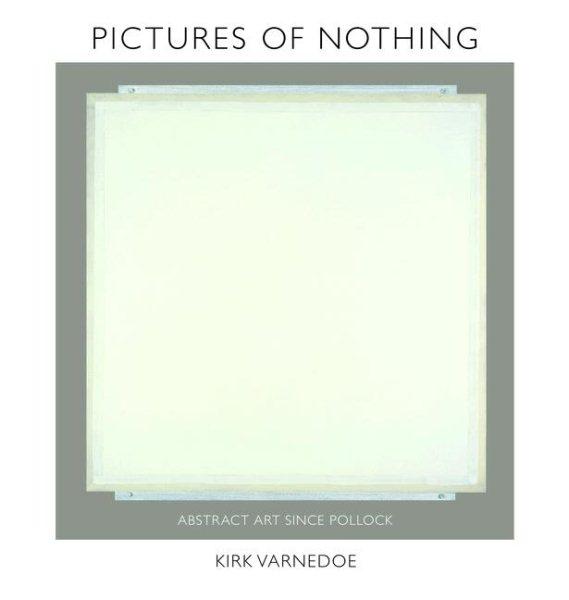 Princeton University Press Pictures of Nothing: Abstract Art since Pollock GTIN: 9780691126784 Raamatud "What is abstract art good for? What's the use - for us as individuals, or for any society - of pictures of nothing, of paintings and sculptures or prints or drawings that do not seem to show anything except themselves?" In this account of abstract art since Jackson Pollock, art historian Kirk Varnedoe, the former chief curator of painting and sculpture at the Museum of Modern Art, asks these and other questions as he frankly confronts the uncertainties we may have about the nonrepresentational art produced in the last five decades. He makes a compelling argument for its history and value, much as E.H. Gombrich tackled representation fifty years ago in Art and Illusion, another landmark A.W. Mellon Lectures volume. Realizing that these lectures might be his final work, Varnedoe conceived of them as a statement of his faith in modern art and as the culminating example of his lucidly pragmatic and philosophical approach to art history. He delivered the lectures, edited and reproduced here with their illustrations to overflowing crowds at the National Gallery of Art in Washington in the spring of 2003, just months before his death.With brilliance, passion, and humor, Varnedoe addresses the skeptical attitudes and misunderstandings that we often bring to our experience of abstract art. Resisting grand generalizations, he makes a deliberate and scholarly case for abstraction - showing us that more than just pure looking is necessary to understand the self-made symbolic language of abstract art. Proceeding decade by decade, he brings alive the history and biography that inform the art while also challenging the received wisdom about distinctions between abstraction and representation, modernism and postmodernism, and minimalism and pop. The result is a fascinating and ultimately moving tour through a half a century of abstract art, concluding with an unforgettable description of one of Varnedoe's favorite works. "What is abstract art good for? What's the use--for us as individuals, or for any society--of pictures of nothing, of paintings and sculptures or prints or drawings that do not seem to show anything except themselves?" In this invigorating account of abstract art since Jackson Pollock, eminent art historian Kirk Varnedoe, the former chief curator of painting and sculpture at the Museum of Modern Art, asks these and other questions as he frankly confronts the uncertainties we may have about the nonrepresentational art produced in the last five decades. He makes a compelling argument for its history and value, much as E. H. Gombrich tackled representation fifty years ago inArt and Illusion, another landmark A. W. Mellon Lectures volume. Realizing that these lectures might be his final work, Varnedoe conceived of them as a statement of his faith in modern art and as the culminating example of his lucidly pragmatic and philosophical approach to art history. He delivered the lectures, edited and reproduced here with their illustrations, to overflowing crowds at the National Gallery of Art in Washington in the spring of 2003, just months before his death.With brilliance, passion, and humor, Varnedoe addresses the skeptical attitudes and misunderstandings that we often bring to our experience of abstract art. Resisting grand generalizations, he makes a deliberate and scholarly case for abstraction--showing us that more than just pure looking is necessary to understand the self-made symbolic language of abstract art. Proceeding decade by decade, he brings alive the history and biography that inform the art while also challenging the received wisdom about distinctions between abstraction and representation, modernism and postmodernism, and minimalism and pop. The result is a fascinating and ultimately moving tour through a half century of abstract art, concluding with an unforgettable description of one of Varnedoe's favorite works. Autorid: Kirk Varnedoe, Adam Gopnik, Earl A. Powell | 1 | 86,70 € | Vaata | ||
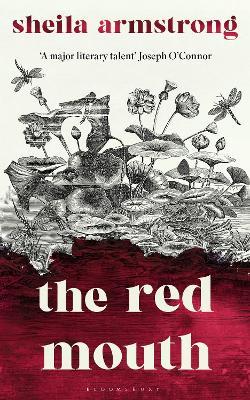 Bloomsbury Publishing PLC Red Mouth GTIN: 9781526691125 Raamatud 'An absolute tour de force ... One of the most powerful writers at work today' COLIN WALSH 'When the book burners knock on your door, this is one to hide in the flour barrel' ANNIE PROULX 'Ill read almost anything in sentences so finely made' SARAH MOSS 'Songlike in its beauty ... A work of uncanny power and great depth' LOUISE KENNEDY From a rising star in literary fiction comes a story of two discoveries made deep in an Irish bogland, threading together four lives across time. When a dog finds a strange, alien antler in a restored bog, the owners first thought is to keep it for himself. But when he realises the value of his find, he is drawn back to the rich peat to keep searching. It is not one stag skeleton that is buried there, but dozens an ancient dying ground of the Great Irish Elk. Other things have surfaced from the bog: prehistoric settlements, bronze cauldrons, ancient butter, iron weapons and the mutilated body of a two-thousand-year-old female. Fifty years ago, a young archaeologist named her Belroe Woman, and dedicated his life to telling the story of her sacrificial death. While state and public treat the bog body as a national treasure, others must reckon with its otherworldly influence over their lives: the peat-cutter who first unearthed her and carries this discovery like a curse; the archaeologists daughter who grows up in the shadow of the bogs strange magnetism; and the young environmental scientist whose work draws her back to where it all began. Haunting and lyrical, The Red Mouth - an béal rua - is the story of two discoveries and the four strangers who become intertwined in their wake. The deep time of the bog is both mystical and sinister: those bound to it must decide what to bury - and what to unearth. Autorid: Sheila Armstrong | 1 | 22,05 € | Vaata | ||
 Princeton University Press Wittgenstein on the Arbitrariness of Grammar GTIN: 9780691123912 Raamatud What is the nature of a conceptual scheme? Are there alternative conceptual schemes? If so, are some more justifiable or correct than others? The later Wittgenstein already addresses these fundamental philosophical questions under the general rubric of "grammar" and the question of its "arbitrariness" - and does so with great subtlety. This book explores Wittgenstein's views on these questions. Part I interprets his conception of grammar as a generalized (and otherwise modified) version of Kant's transcendental idealist solution to a puzzle about necessity.It also seeks to reconcile Wittgenstein's seemingly inconsistent answers to the question of whether or not grammar is arbitrary by showing that he believed grammar to be arbitrary in one sense and non-arbitrary in another. Part II focuses on an especially central and contested feature of Wittgenstein's account: a thesis of the diversity of grammars. The author discusses this thesis in connection with the nature of formal logic, the limits of language, and the conditions of semantic understanding or access.Strongly argued and cleary written, this book will appeal not only to philosophers but also to students of the human sciences, for whom Wittgenstein's work holds great relevance. | 1 | 48,69 € | Vaata | ||
 Independently Published 20 Polish Short Stories for Beginners GTIN: 9798298769112 Raamatud Learn Polish by Experiencing Its Culture.Imagine learning Polish not just from grammar rules, but by stepping into the daily lives of its people. This book offers 20 simple stories that immerse you in Polish culture, tradition, and values.This collection is designed to build your foundational vocabulary and reading confidence as you explore the culture. The stories are written in simple, clear language, allowing you to learn naturally.Each story features:A clear text in easy-to-read Polish.A detailed Vocabulary List to build your personal dictionary.Reading Comprehension Questions to sharpen your understanding.A full English Translation for clarity and review. With this book, you won't just be reading simple texts; you'll be building a practical foundation in the Polish language by experiencing its culture, one story at a time. | 1 | 16,79 € | Vaata |


Otsing: 69112
108 toodet
1 | 71,99 € | Vaata | |||
1 | 64,05 € | Vaata | |||
| 1 | 29,00 € | Vaata | ||
1 | 55,74 € | Vaata | |||
Princeton University Press Pictures of Nothing: Abstract Art since Pollock GTIN: 9780691126784 Raamatud | 1 | 86,70 € | Vaata | ||
| 1 | 22,05 € | Vaata | ||
Princeton University Press Wittgenstein on the Arbitrariness of Grammar GTIN: 9780691123912 Raamatud | 1 | 48,69 € | Vaata | ||
| 1 | 16,79 € | Vaata |