Language: English, Binding: Hardback, Number of pages: 288, Publishers: Princeton University Press, Author: Britt Bunyard, ISBN-13: 9780691229843, Date of issue: 2022
Language: English, Binding: Hardback, Number of pages: 400, Publishers: Princeton University Press, Author: Herman Shugart,Peter White,Sassan Saatchi, ISBN-13: 9780691226743, Date of issue: 2022
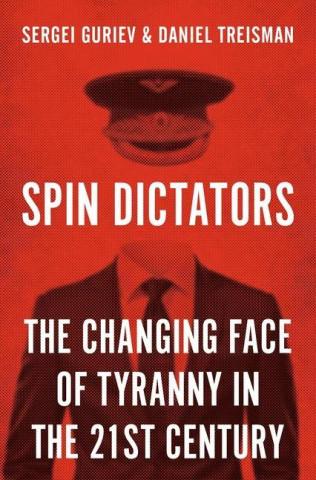
Language: English, Binding: Paperback, Number of pages: 368, Publishers: Princeton University Press, Author: Daniel Treisman,Sergei Guriev, ISBN-13: 9780691224473, Date of issue: 2023
Language: English, Binding: Paperback, Number of pages: 424, Publishers: Princeton University Press, Author: Amy B. Zegart, ISBN-13: 9780691223070, Date of issue: 2023
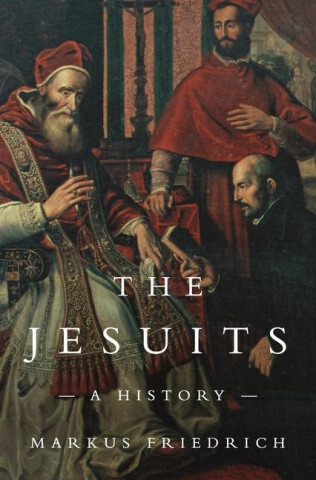
Language: English, Binding: Paperback, Number of pages: 872, Publishers: Princeton University Press, Author: Markus Friedrich,John Noël Dillon, ISBN-13: 9780691226200, Date of issue: 2023
Language: English, Binding: Paperback, Number of pages: 328, Publishers: Princeton University Press, Author: Jason K. Stearns, ISBN-13: 9780691224510, Date of issue: 2023
Do you want to learn how to write the Hebrew letters with the proper stroke technique?Do you need a trustworthy resource to teach your small children to trace the Hebrew alphabet?Then this workbook is the perfect companion for your studies
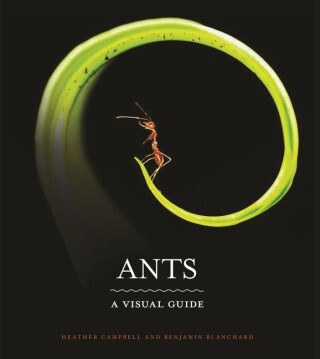
Language: English, Binding: Hardback, Number of pages: 224, Publishers: Princeton University Press, Author: Benjamin Blanchard, ISBN-13: 9780691228525, Date of issue: 2023
Language: English, Binding: Hardback, Number of pages: 240, Publishers: Princeton University Press, Author: John Bothwell, ISBN-13: 9780691228549, Date of issue: 2023
Language: English, Binding: Paperback, Number of pages: 392, Publishers: Princeton University Press, Author: Mary Beard, ISBN-13: 9780691225876, Date of issue: 2023
Language: English, Binding: Paperback, Number of pages: 224, Publishers: PRINCETON UNIV PR, Author: Daniel E. Martínez Pi?a, ISBN-13: 9780691221052, Date of issue: 2021
Ce volume explore les premières œuvres électroniques de la compositrice française Éliane Radigue, dont l'approche radicale du feedback, de la synthèse analogique et de la composition sur bande a longtemps résisté à l'interprétation historique et technique. Combinant des textes clés, des documents primaires nouvellement traduits, des entretiens approfondis et des essais de commande, ce recueil interroge la pratique compositionnelle idiosyncrasique de la compositrice, qui englobe et confronte en même temps la nature itérative de la bande magnétique, les subtilités de l'amplification et l'expérience même de l'écoute.Parmi ces contributions, le violoncelliste Charles Curtis, proche collaborateur de Radigue, présente un aperçu approfondi des premières expériences de la compositrice avec les techniques de feedback et la synthèse analogique, de son évolution vers la composition pour des instruments non amplifiés et des interprètes en direct, ainsi que de ses conceptions esthétiques uniques du temps et de la présence. Un certain nombre de conversations détaillées entre la compositrice et les chercheurs Georges Haessig, Patrick de Haas, Ian Nagoski et Bernard Girard fournissent des informations cruciales sur ses méthodes de travail à différents moments de sa carrière. Dagmar Schwerk, spécialiste des sciences religieuses, se penche sur Kyema, l'œuvre de Radigue réalisée en 1988 à l'aide d'un synthétiseur, dans le contexte de la pensée bouddhiste tibétaine et de son histoire, tandis que les textes des musiciens Daniel Silliman et Madison Greenstone examinent, de manière sensiblement différente, les caractéristiques techniques de la pratique sonore de Radigue. Des esquisses d'œuvres non réalisées, des critiques contemporaines, des programmes de concert et d'autres documents permettant de retracer l'histoire de l'interprétation des premières œuvres de Radigue sont présentés ensemble pour la première fois. L'anthologie se termine par une table ronde entre Curtis, Greenstone et Anthony Vine, qui démêle le nœud de paradoxes au centre de la pratique artistique de Radigue pour retracer le fil de son « ethos de résistance ».
Language: English, Binding: Hardback, Number of pages: 288, Publishers: Princeton University Press, Author: Dale Greenwalt, ISBN-13: 9780691221144, Date of issue: 2023
Language: English, Binding: Hardback, Number of pages: 408, Publishers: Princeton University Press, Author: David Edmonds, ISBN-13: 9780691225234, Date of issue: 2023
Language: English, Binding: Hardback, Number of pages: 40, Publishers: Penguin Young Readers Group, Author: Scott Magoon, ISBN-13: 9780593691229, Date of issue: 2025
Language: English, Binding: Hardback, Number of pages: 248, Publishers: Princeton University Press, Author: M. D. Usher,M. D. Usher, ISBN-13: 9780691229850, Date of issue: 2022
Language: English, Binding: Paperback, Number of pages: 488, Publishers: Princeton University Press, Author: Kosuke Imai,Nora Webb Williams, ISBN-13: 9780691222288, Date of issue: 2022
Jungs lectures on consciousness and the unconsciousin English for the first timeBetween 1933 and 1941, C. G. Jung delivered a series of public lectures at the Swiss Federal Institute of Technology (ETH) in Zurich. Intended for a general audience, these lectures addressed a broad range of topics, from dream analysis and yoga to the history of psychology. They are at the center of Jungs intellectual activity in this period and provide the basis of his later work. Here for the first time in English is Jungs introduction to his core psychological theories and methods, delivered in the summer of 1934.With candor and wit, Jung shares with his audience the path he himself took to understanding the nature of consciousness and the unconscious. He describes their respective characteristics using examples from his clinical experience as well as from literature, his travels, and everyday life. For Jung, consciousness is like a small island in the ocean of the unconscious, while the unconscious is part of the primordial condition of humankind. Jung explains various methods for uncovering the contents of the unconscious, in particular talk therapy and dream analysis.Complete with explanations of Jungian concepts and terminology, Consciousness and the Unconscious painstakingly reconstructs and translates these talks from detailed shorthand notes by attendees, making a critical part of Jungs work available to todays readers. Autorid: C. G. Jung, Ernst Falzeder
"For many decades, "social revolutions" have been a major focus of social scientific work. Defined by Theda Skocpol in her classic work States and Social Revolutions as "rapid, basic transformations of a society's state and class structures that are accompanied and in part carried through by mass based revolts from below," these types of revolutions have become much less frequent, which has led some political scientists to believe that the age of revolutions is over. Yet as Beissinger argues, while social revolutions are on the decline, another, unrecognized type is on the rise: the "urban civic" revolution. These rebellions (the revolutions in Tunisia and Ukraine, for example) are characterized not by armed rebellion, widespread street-fighting, or urban rioting, but instead by attempts to mobilize as many people as possible in central urban spaces in a concentrated period of time-paralyzing commerce, administration, and society through the power of numbers with the hope of inducing regime collapse. Because much of the theory and understanding of revolutionary activity-and its outcome-is still based around work on social revolutions, social science is working with an outdated understanding of how revolutions happen, and the shape they may take in the future. This book seeks to address this and to demonstrate that revolution as a mass political project of regime-change has actually become more frequent. Using data on the outcomes of 343 revolutionary episodes around the world from 1900 to 2014, Beissinger develops a theory of urban revolution, places this explosion of urban revolutionary contention into global historical perspective, and shows how these revolutions happen and whether and when they succeed. He focuses on how the spatial context of revolt (namely, the city) alters the character of revolutions and the options states have in addressing and repressing them. Crucially, Beissinger argues, cities present certain advantages to revolutionaries; as they succeed, and as urbanization continues, revolutions may see more success than they have historically"-- How and why cities have become the predominant sites for revolutionary upheavals in the contemporary worldExamining the changing character of revolution around the world, The Revolutionary City focuses on the impact that the concentration of people, power, and wealth in cities exercises on revolutionary processes and outcomes. Once predominantly an urban and armed affair, revolutions in the twentieth century migrated to the countryside, as revolutionaries searched for safety from government repression and discovered the peasantry as a revolutionary force. But at the end of the twentieth century, as urban centers grew, revolution returned to the cityaccompanied by a new urban civic repertoire espousing the containment of predatory government and relying on visibility and the power of numbers rather than arms.Using original data on revolutionary episodes since 1900, public opinion surveys, and engaging examples from around the world, Mark Beissinger explores the causes and consequences of the urbanization of revolution in the late twentieth and early twenty-first centuries. Beissinger examines the compact nature of urban revolutions, as well as their rampant information problems and heightened uncertainty. He investigates the struggle for control over public space, why revolutionary contention has grown more pacified over time, and how revolutions involving the rapid assembly of hundreds of thousands in central urban spaces lead to diverse, ad hoc coalitions that have difficulty producing substantive change.The Revolutionary City provides a new understanding of how revolutions happen and what they might look like in the future. Autorid: Mark R. Beissinger
Part memoir, part manifesto, the author, in this thought-provoking book on race, technology and justice, recounts her personal experiences and those of her family, showing how seemingly minor decisions and habits could spread virally and have exponentially positive effects. An inspiring vision of how we can build a more just worldone small change at a timeA book as urgent as the moment that produced it.Jelani Cobb, Columbia Journalism SchoolLong before the pandemic, Ruha Benjamin was doing groundbreaking research on race, technology, and justice, focusing on big, structural changes. But the twin plagues of COVID-19 and anti-Black police violence inspired her to rethink the importance of small, individual actions. Part memoir, part manifesto, Viral Justice is a sweeping and deeply personal exploration of how we can transform society through the choices we make every day.Vividly recounting her personal experiences and those of her family, Benjamin shows how seemingly minor decisions and habits could spread virally and have exponentially positive effects. She recounts her fathers premature death, illuminating the devastating impact of the chronic stress of racism, but she also introduces us to community organizers who are fostering mutual aid and collective healing. Through her brothers experience with the criminal justice system, we see the trauma caused by policing practices and mass imprisonment, but we also witness family members finding strength as they come together to demand justice for their loved ones. And while her own challenges as a young mother reveal the vast inequities of our healthcare system, Benjamin also describes how the support of doulas and midwives can keep Black mothers and babies alive and well.Born of a stubborn hopefulness, Viral Justice offers a passionate, inspiring, and practical vision of how small changes can add up to large ones, transforming our relationships and communities and helping us build a more just and joyful world. Autorid: Ruha Benjamin
An updated and expanded new edition of an authoritative book on flight dynamics and control system design for all types of current and future fixed-wing aircraftSince it was first published, Flight Dynamics has offered a new approach to the science and mathematics of aircraft flight, unifying principles of aeronautics with contemporary systems analysis. Now updated and expanded, this authoritative book by award-winning aeronautics engineer Robert Stengel presents traditional material in the context of modern computational tools and multivariable methods. Special attention is devoted to models and techniques for analysis, simulation, evaluation of flying qualities, and robust control system design.Using common notation and not assuming a strong background in aeronautics, Flight Dynamics will engage a wide variety of readers, including aircraft designers, flight test engineers, researchers, instructors, and students. It introduces principles, derivations, and equations of flight dynamics as well as methods of flight control design with frequent reference to MATLAB functions and examples. Topics include aerodynamics, propulsion, structures, flying qualities, flight control, and the atmospheric and gravitational environment.The second edition of Flight Dynamics features up-to-date examples; a new chapter on control law design for digital fly-by-wire systems; new material on propulsion, aerodynamics of control surfaces, and aeroelastic control; many more illustrations; and text boxes that introduce general mathematical concepts.Features a fluid, progressive presentation that aids informal and self-directed studyProvides a clear, consistent notation that supports understanding, from elementary to complicated conceptsOffers a comprehensive blend of aerodynamics, dynamics, and controlPresents a unified introduction of control system design, from basics to complex methodsIncludes links to online MATLAB software written by the author that supports the material covered in the book Autorid: Robert F. Stengel
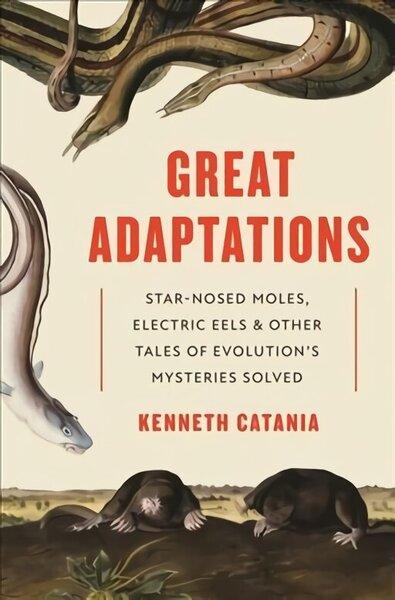
"The irresistible enthusiasm of Great Adaptations couldnt come at a better time."David P. Barash, Wall Street Journal"Be very amazed."Carl Safina, author of Beyond Words and Becoming WildHow one scientist unlocked the secrets behind some of natures most astounding animalsFrom star-nosed moles that have super-sensing snouts to electric eels that paralyze their prey, animals possess unique and extraordinary abilities. In Great Adaptations, Kenneth Catania presents an entertaining and engaging look at some of natures most remarkable creatures. Telling the story of his biological detective work, Catania sheds light on the mysteries behind the behaviors of tentacled snakes, tiny shrews, zombie-making wasps, and more. He shows not only how studying these animals can provide deep insights into how life evolved, but also how scientific discovery can be filled with adventure and fun.Beginning with the star-nosed mole, Catania reveals what the creatures nasal star is actually for, and what this tells us about how brains work. He explores how the deceptive hunting strategy of tentacled snakes leads prey straight to their mouths, how eels use electricity to control other animals, and why emerald jewel wasps make zombies out of cockroaches. He also solves the enigma of worm gruntinga traditional technique in which earthworms are enticed out of the groundby teaming up with professional worm grunters. Catania demonstrates the merits of approaching science with an open mind, considers the role played by citizen scientists, and illustrates that most animals have incredible, hidden abilities that defy our imagination.Examining some strange and spectacular creatures, Great Adaptations offers a wondrous journey into natures grand designs. Autorid: Kenneth Catania
"An iconoclastic history of the first two decades after independence in India. Nehru's India brings a provocative but nuanced set of new interpretations to the history of early independent India. Drawing from her extensive research over the past two decades, Taylor Sherman reevaluates the role of Jawaharlal Nehru, India's first prime minister, in shaping the nation. Sherman argues that the ideas, policies, and institutions most strongly associated with Nehru-nonalignment, secularism, socialism, democracy, the strong state, and high modernism-have lost their explanatory power. They have become myths. Sherman examines seminal projects from the time and also introduces readers to little-known personalities and fresh case studies, including India's continuedengagement with overseas Indians, the importance of Buddhism in secular India, the transformations in industry and social life brought about by bicycles, a riotous and ultimately doomed attempt to prohibit the consumption of alcohol in Bombay, the early history of election campaign finance, and the first state-sponsored art exhibitions. The author also shines a light on underappreciated individuals, such as Apa Pant, the charismatic diplomat who influenced foreign policy from Kenya to Tibet, and Urmila Chowdhury, the rebellious architect who helped oversee the building of Chandigarh. Tracing and critiquing developments in this formative period in Indian history, Nehru's India offers a fresh and definitive exploration of the nation's early postcolonial era"-- An iconoclastic history of the first two decades after independence in IndiaNehrus India brings a provocative but nuanced set of new interpretations to the history of early independent India. Drawing from her extensive research over the past two decades, Taylor Sherman reevaluates the role of Jawaharlal Nehru, Indias first prime minister, in shaping the nation. She argues that the notion of Nehru as the architect of independent India, as well as the ideas, policies, and institutions most strongly associated with his premiershipnonalignment, secularism, socialism, democracy, the strong state, and high modernismhave lost their explanatory power. They have become myths.Sherman examines seminal projects from the time and also introduces readers to little-known personalities and fresh case studies, including Indias continued engagement with overseas Indians, the importance of Buddhism in secular India, the transformations in industry and social life brought about by bicycles, a riotous and ultimately doomed attempt to prohibit the consumption of alcohol in Bombay, the early history of election campaign finance, and the first state-sponsored art exhibitions. The author also shines a light on underappreciated individuals, such as Apa Pant, the charismatic diplomat who influenced foreign policy from Kenya to Tibet, and Urmila Eulie Chowdhury, the rebellious architect who helped oversee the building of Chandigarh.Tracing and critiquing developments in this formative period in Indian history, Nehrus India offers a fresh and definitive exploration of the nations early postcolonial era. Autorid: Taylor C. Sherman
Written by pioneers in the field, this practical book presents an authoritative yet accessible overview of the methods and applications of causal inference. The text provides a thorough introduction to the basics of the theory for non-time-varying treatments and the generalization to complex longitudinal data.
A richly illustrated exploration of Hannah Wilkes provocative art and trailblazing feminismOne of the most groundbreaking artists to emerge in American art in the 1960s, Hannah Wilke consistently challenged the prevailing narratives of womens bodies and their representation throughout her career, until her untimely death in 1993. Wilke established a uniquely feminist iconography in virtually all of the mediums she engaged withpainting, sculpture, photography, video, and performance artand offered a life-affirming expression of vitality and bodily pleasure in her work.Hannah Wilke: Art for Lifes Sake highlights the artists full range of expression, bringing together photographs, works on paper, video, and examples of Wilkes sculptures in clay and other, nonconventional materials such as latex, kneaded erasers, and chewing gum. New object photography brings clarity to Wilkes boundary-crossing art practice, making many of her rarely shown works accessible to readers for the first time. The book features a previously unpublished 1975 interview with Wilke by art critic and historian Cindy Nemser as well as a narrative chronology of Wilkes art and life with many previously unpublished archival photographs. It includes essays by Glenn Adamson, Connie Butler, and Tamara Schenkenberg, and responses to Wilkes work by contemporary artists Hayv Kahraman, Nadia Myre, Jeanine Oleson, and Catherine Opie.Offering fresh perspectives on this influential artist, Hannah Wilke: Art for Lifes Sake sheds new light on Wilkes technical and formal virtuosity, her important role in shaping postwar American art, and the nuance and poignancy of her feminist subject matter.Published in association with the Pulitzer Arts FoundationExhibition SchedulePulitzer Arts Foundation, St. LouisJune 4, 2021January 16, 2022 Autorid: Tamara Schenkenberg, Donna Wingate, Glenn Adamson, Connie Butler, Tamara Schenkenberg
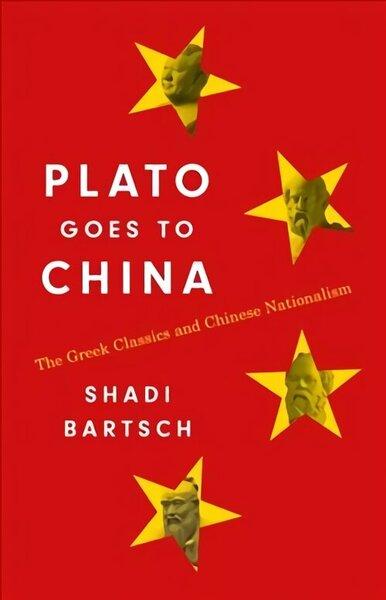
The surprising story of how Greek classics are being pressed into use in contemporary China to support the regimes political agendaAs improbable as it may sound, an illuminating way to understand todays China and how it views the West is to look at the astonishing ways Chinese intellectuals are interpretingor is it misinterpreting?the Greek classics. In Plato Goes to China, Shadi Bartsch offers a provocative look at Chinese politics and ideology by exploring Chinese readings of Plato, Aristotle, Thucydides, and other ancient writers. She shows how Chinese thinkers have dramatically recast the Greek classics to support Chinas political agenda, diagnose the ills of the West, and assert the superiority of Chinas own Confucian classical tradition.In a lively account that ranges from the Jesuits to Xi Jinping, Bartsch traces how the fortunes of the Greek classics have changed in China since the seventeenth century. Before the Tiananmen Square crackdown, the Chinese typically read Greek philosophy and political theory in order to promote democratic reform or discover the secrets of the success of Western democracy and science. No longer. Today, many Chinese intellectuals use these texts to critique concepts such as democracy, citizenship, and rationality. Platos Noble Lie, in which citizens are kept in their castes through deception, is lauded; Aristotles Politics is seen as civic brainwashing; and Thucydidess criticism of Athenian democracy is applied to modern America.What do antiquitys dead white men have left to teach? By uncovering the unusual ways Chinese thinkers are answering that question, Plato Goes to China opens a surprising new window on China today. Autorid: Shadi Bartsch